
Cardiac Marker Analyzer Market Trends, Size & Growth by 2034
Cardiac Marker Analyzer Market Size and Forecasts (2021–2034), Global and Regional Share, Trends, and Growth Opportunity Analysis Report Coverage : by Type (Troponin Test, CK-MB Test, BNP Test, Myoglobin Test); End-User (Hospitals, Diagnostic Laboratories, Clinics, Point-of-Care Facilities, Home Care Settings); and Geography (North America, Europe, Asia Pacific, and South and Central America)
- Status : Data Released
- Report Code : TIPRE00040874
- Category : Life Sciences
- No. of Pages : 150
- Available Report Formats :


- Last update date : September 07, 2026


2025 Market Size
US$ 273.32 Mn
Base year value
2034 Forecast
US$ 419.86 Mn
Projected by 2034
CAGR 2026-2034
4.89 %
Growth rate
Addressable Market
US$ 3,146.87 Mn
(2026-2034)
The Cardiac Marker Analyzer market was valued at US$ 273.32 million in 2025 and is expected to reach US$ 419.86 million by 2034; it is estimated to record a CAGR of 4.89% during 2026-2034.
Cardiac Marker Analyzer Market Assessment and Insights
- North America: Representing a modelled 36–39% share in 2025, North America is forecast to expand at a CAGR of 4.8–5.4% during 2026–2034, supported by emergency testing volumes, laboratory automation, and mature reimbursement structures.
- US: Accounting for 82–85% of North American revenue in 2025, the US is projected to register a 4.9–5.5% CAGR during 2026–2034 as hospitals modernize high-sensitivity troponin workflows.
- Europe: Europe held an estimated 27–30% share in 2025 and is expected to grow at 4.5–5.1% during 2026–2034, led by Germany, the UK, France, Italy, and Spain.
- Asia Pacific: Asia Pacific represented a modelled 23–26% share in 2025 and is forecast to record a 6.4–7.1% CAGR during 2026–2034, with China, Japan, India, and South Korea leading adoption.
- Largest Segment: Troponin Test accounted for an estimated 48–52% market share in 2025 and is projected to expand at a CAGR of 5.6–6.2% during 2026–2034.
- High Growth Segment: Point-of-Care Facilities represented a modelled 13–16% market share in 2025 and are expected to grow at a CAGR of 7.0–7.8% during 2026–2034.
- Key companies analyzed in detail: Roche Diagnostics International Ltd., Abbott Laboratories, Siemens Healthineers AG, Beckman Coulter, Inc., Thermo Fisher Scientific Inc., FUJIFILM Wako Pure Chemical Corporation, Sysmex Corporation, QuidelOrtho Corporation, LSI Medience Corporation, and Randox Laboratories Ltd.
Source: The Insight Partners' analysis based on proprietary research, government publications, company annual reports, investor presentations, industry databases, and expert interviews.
The use of cardiac markers tests has gone from being relatively slower and more individualized immunological tests to becoming automated and more sensitive devices that are able to perform multiple tests while delivering results at greater accuracy even when dealing with low concentrations of substances. In turn, production has moved towards more standardized reagents kits, compact analysis machines, connection software, and calibration services that decrease human intervention. The vendors start developing the test menu based on the immunochemistry systems that are already in place for laboratories to consolidate their testing.
Throughout the forecast period, faster growth rates are expected in the hospital networks of Asian cities, the Gulf region, as well as in secondary cities that are not served. The government investment in the field of emergency medicine, laboratory accreditation, and domestic manufacture of diagnostics will increase the installed base. The approval of high-sensitivity tests and standardized pathways for diagnosing the acute coronary syndrome will provide an advantage for procurement processes; however, the country-specific data needs might cause delays in market entry.
Cardiac Marker Analyzer Market Report Scope
| Report Attribute | Details |
|---|---|
| Market size in 2025 | US$ 273.32 Million |
| Market Size by 2034 | US$ 419.86 Million |
| Global CAGR (2026 - 2034) | 4.89% |
| Historical Data | 2021-2024 |
| Forecast period | 2026-2034 |
Cardiac Marker Analyzer Market Analysis
One of the leading drivers of Cardiac Marker Analyzer market growth is the requirement to make decisions related to patient care faster and improve diagnostic outcomes for those experiencing chest pain, breathlessness, or myocardial injury. An analyzer adds value only if sample acquisition, test processing, results validation, and clinical decisions work as a single chain. The hospitals stay key procurers; however, assay manufacturers, components producers, distributors, accreditation organizations, and service providers affect availability. Instrument placement is economically more attractive for vendors in case there is a guaranteed regular use of reagents.
Moreover, high-sensitivity assays modify the procurement criteria. In laboratories, it becomes more common to evaluate the precision of detection, time to result, throughput, calibration stability, interferences, and connectivity than to base the purchasing decision on the price of the instrument. While compact systems fit facilities with moderate demands, high-throughput analyzers continue being essential for tertiary hospitals. The risks associated with supply are connected to the access to specialized antibodies, interferences, lot consistency, quality control, and registration period of the country. Diversification of the production and regional stockpiling become strategically significant.
According to the Cardiac Marker Analyzer Market analysis, the competition is based on the credibility of the assay, reach of the installed platform, service, and the ability to provide a fast clinical protocol. Roche Diagnostics International Ltd., Abbott Laboratories, and Siemens Healthineers AG have an advantage because of immunoassay ecosystems. Beckman Coulter, Inc. and QuidelOrtho Corporation compete through their laboratory workflows. The relevance of Sysmex Corporation and LSI Medience Corporation should be mentioned considering the importance of the diagnostics in Asia.
The investments are made into the development of high-sensitivity troponin, multiplexing, small sample volume, middleware, and quality control. Thermo Fisher Scientific Inc. contributes to the ecosystem by providing technologies and laboratory infrastructures. FUJIFILM Wako Pure Chemical Corporation and Randox Laboratories Ltd. provide specialized reagents, controls, and assays. Competitive positioning is based on full-workflow economics. Companies that are capable of combining analyzers, assays, controls, trainings, cybersecurity, and guarantees of uptime can influence purchasing committees better than isolated instrument suppliers.
● REPORT CUSTOMIZATION
Tailor This Report To Align With Your Specific Business Requirements
This report can be customized to align precisely with your business objectives, scope, and target markets. Customization options include tailored segmentation, geography, competitive analysis, and strategic insights to support informed decision-making.
Customize This Report →WHAT YOU CAN ADJUST
- ● Segmentations
- ● Geography
- ● Competitive Analysis
- ● Language Preferences
Cardiac Marker Analyzer Market: Strategic Insights
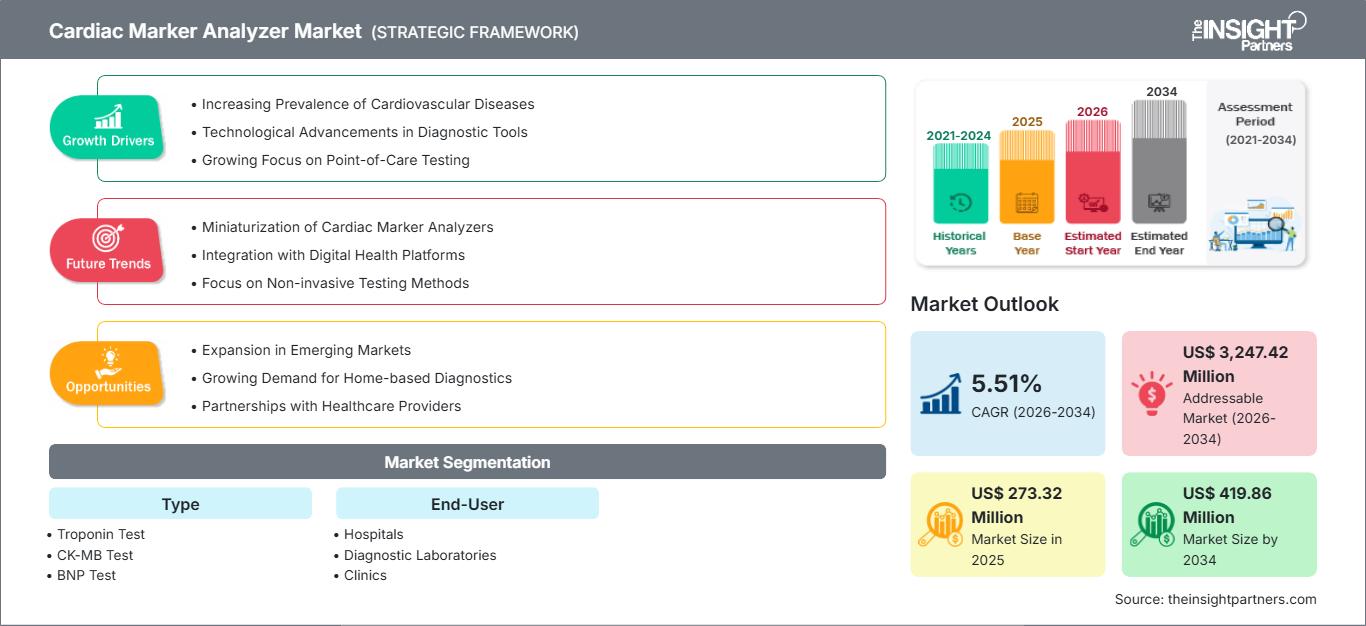
Regional Insights
North America Cardiac Marker Analyzer Market
North America represented a modelled 36–39% of global revenue in 2025 and is forecast to expand at a CAGR of 4.8–5.4% during 2026–2034. Cardiac Marker Analyzer Market shares are derived from extensive hospital networks, well-established laboratory reimbursement models, well-defined emergency algorithms, and analyzer accessibility. Serial testing is being driven by high-sensitivity troponin adoption, and BNP and NT-proBNP algorithms facilitate heart failure diagnosis and patient stratification.
Replacement spending is pushing purchases in favor of connected analyzers featuring automated quality control, bi-directional data transfer, and fast turnaround times. Canada benefits from laboratory modernization initiatives and centralized buying, while Mexico provides a growth area within private hospitals and diagnostics chains in cities. Regional expansion is constrained by a mature installed base, buying centralization, and stringent validation rules. However, ongoing reagent consumption, crowded emergency departments, and the need for efficient management of low-risk patients can ensure that investments continue.
U.S. Cardiac Marker Analyzer Market
The US represented an estimated 82–85% of North American revenue in 2025 and is projected to grow at a CAGR of 4.9–5.5% during 2026–2034. High emergency care testing volumes, laboratory consolidation, and use of high-sensitivity troponin algorithms drive demand. Testing facilities now consider analyzers based on result reproducibility, system integration into electronic medical records, productivity, reagent efficiency, and capacity to facilitate fast serial testing without disturbing standard immunoassays.
Commercial presence in this space is represented by Roche Diagnostics International Ltd., Abbott Laboratories, Siemens Healthineers AG, Beckman Coulter, Inc., and QuidelOrtho Corporation through installed systems, test menus, servicing networks, and distributors. Purchasing shifts towards multiyear reagent contracts and common platforms at the level of hospital networks. Applications evolve beyond acute myocardial infarction diagnosis to one-year cardiovascular risk assessment, perioperative myocardial injury testing, and heart failure management. Approvals for new generation high-sensitivity assays will accelerate platform rivalry but will provide more options for laboratories to consolidate assays.
Europe Cardiac Marker Analyzer Market
Europe accounted for a modelled 27–30% share in 2025 and is expected to register a 4.5–5.1% CAGR during 2026–2034. Germany is the key market, owing to its lab base, cardiac capabilities, and standardization of high-sensitivity tests. Procurement will increasingly stress compliance, analytical performance, workflow optimization, and interoperability under evolving in vitro diagnostic guidelines in Europe.
In the UK, there are well-defined chest pain pathways and procurement structures, but budget control makes total-cost evaluation more important. In Germany, there is interest in automation and core laboratories, as well as the replacement of old immunoassay instruments. In France, public hospital purchasing and independent laboratories drive demand for scalable analyzer setups.
Italy and Spain provide opportunities via regional hospital upgrades and emergency care investment, while fragmented procurement prolongs sales cycles. In France, Italy, and Spain, laboratory consolidation, rapid triaging, and connected diagnostics will be increasingly important. In general, in Europe, test performance, post-market surveillance, and vendor track record will play a larger role than price alone for instruments.
APAC Cardiac Marker Analyzer Market
Asia Pacific represented an estimated 23–26% share in 2025 and is projected to deliver a 6.4–7.1% CAGR during 2026–2034. China leads regional revenue through hospital scale and expanding diagnostics capacity, while Japan supports premium automated testing through established laboratory standards.
South Korea favors connected, high-throughput systems, whereas India presents demand for compact analyzers serving tier-two cities and private diagnostic networks. Australia maintains mature emergency-care testing practices. Local manufacturing incentives, hospital construction, wider insurance coverage, and policies supporting earlier cardiovascular diagnosis are expected to accelerate adoption, although pricing pressure and variable regulatory pathways remain material considerations.
Middle East & Africa Cardiac Marker Analyzer Market
The Middle East and Africa region is forecast to grow at a modelled CAGR of 5.7–6.5% during 2026–2034. Saudi Arabia leads through hospital expansion, diagnostic localization, and investment in emergency-care infrastructure, while the UAE supports premium laboratory automation and connected point-of-care systems.
South Africa remains the principal sub-Saharan market, supported by private laboratories and tertiary hospitals. The Rest of MEA presents selective opportunities where dependable distribution, service coverage, electricity continuity, and reagent storage can be maintained. Healthcare infrastructure investment, rather than energy demand itself, will determine analyzer deployment across the region.
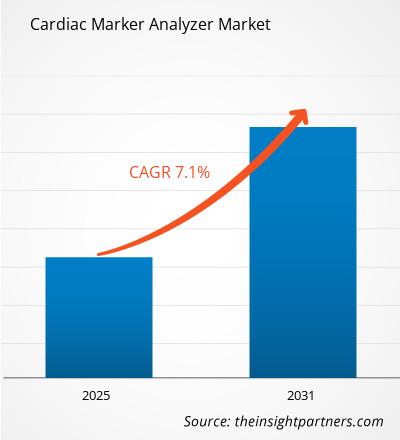
Segmentation Analysis
Type
Type is projected to expand at a modelled CAGR of 5.3–5.9% during 2026–2034. The Cardiac Marker Analyzer Market scope by type reflects different clinical windows, disease pathways, and testing priorities. Troponin is central to myocardial injury assessment, BNP supports heart failure evaluation, and CK-MB or myoglobin can provide complementary information in selected workflows. Platform vendors are prioritizing assay consolidation, sensitivity, calibration stability, and rapid reporting.
- Troponin Test: Troponin testing holds the strongest strategic position because high-sensitivity assays support early myocardial injury detection, serial measurement protocols, and rapid disposition decisions in emergency and acute-care environments.
- CK-MB Test: CK-MB demand persists in selected reinfarction assessments, cardiac procedure monitoring, and institutions retaining established protocols, although routine acute myocardial infarction workflows increasingly prioritize cardiac troponin.
- BNP Test: BNP testing remains important for diagnosing and stratifying suspected heart failure, assessing ventricular stress, and supporting clinical decisions for patients presenting with dyspnea across hospitals and clinics.
- Myoglobin Test: Myoglobin provides an early but less cardiac-specific signal of muscle injury, retaining selective value within multi-marker panels and facilities using combined results to support rapid preliminary assessment.
End-User
End-User demand is expected to increase at a modelled CAGR of 5.5–6.1% during 2026–2034. Adoption varies with testing volume, required turnaround, staffing, connectivity, and capital availability. Hospitals favor integrated platforms, diagnostic laboratories prioritize throughput and automation, while decentralized settings require simple operation and rapid results. Growth will depend on clinical governance that ensures portable analyzer results remain traceable, quality controlled, and interpretable within broader care pathways.
- Hospitals: Hospitals command the largest installed base because emergency departments, intensive care units, and cardiology services require continuous analyzer availability, rapid serial testing, and integration with central laboratory systems.
- Diagnostic Laboratories: Diagnostic laboratories prioritize throughput, assay-menu breadth, automation, and reagent efficiency, making them important purchasers of scalable systems that process cardiac markers alongside routine immunochemistry workloads.
- Clinics: Clinics require compact, dependable analyzers for patients presenting with cardiovascular symptoms, but adoption depends on test volume, referral pathways, operator training, quality assurance, and economic justification.
- Point-of-Care Facilities: Point-of-care facilities represent the fastest-growing end-user category as portable analyzers shorten sample transport, support immediate triage, and extend cardiac testing into ambulances, urgent-care centers, and remote facilities.
- Home Care Settings: Home care remains an emerging setting where simplified sampling, remote supervision, quality control, and clinician connectivity must improve before cardiac-marker analysis can progress beyond specialized monitoring programs.
Opportunity Snapshot
| End-User | Revenue Contribution (High/Medium/Low) | Trend Tag | Adoption Stage (Emerging/Scaling/Mature) |
| Hospitals | High | Workflow Consolidation | Mature |
| Diagnostic Laboratories | High | Lab Automation | Mature |
| Clinics | Medium | Compact Testing | Scaling |
| Point-of-Care Facilities | Medium | Rapid Triage | Scaling |
| Home Care Settings | Low | Remote Monitoring | Emerging |
Cardiac Marker Analyzer Market Growth Drivers and Impact Analysis
Rising Cardiovascular Burden and Emergency Testing
Despite being the number one killer in the world, cardiovascular diseases continue to present a need for diagnostic tools that can distinguish myocardial infarction from other heart problems. In addition, troponin analyzers have a direct effect on how quickly an emergency department operates because the ability to do accurate analysis at low concentrations allows faster diagnosis of patients. On the other hand, BNP analyzers make sense when breathing problems could be due to the heart as well as non-heart causes. Hospitals face the challenge of increasing numbers of patients with symptoms of heart problems but no proportional increase in beds or staff. The imbalance is in favor of analyzers that shorten reporting, allow serial testing, and link with clinical systems.
Expansion of High-Sensitivity Troponin Protocols
The Cardiac Marker Analyzer Market forecast shows that uptake of high-sensitivity troponin in clinical practice is driving change in analyzer specifications and purchasing processes. The laboratory will need accuracy in low-level analysis, good interference handling, sex-specific references where required, and reproducibility in sequential testing. This is motivating assay changes even when the existing analyzers are still functional. The high-sensitivity assay process also allows for better use of resources through differentiation of low-risk and high-risk cases. The vendors get a competitive advantage if new assays run on existing analyzers since their customers would not have to replace whole laboratory equipment. Some of the effects of this trend are stiff competition for instrument placement, extended reagent contracts, and more focus on clinical validation. Manufacturers without high-sensitivity assays may lose wider immunoassay contracts.
Decentralization of Acute Cardiac Diagnostics
The trend of testing is moving toward the patient with emergency departments, urgent care centers, ambulances, and remote facilities seeking quicker decisions. The use of portable cardiac marker analyzers avoids transportation time and may prove beneficial in situations where the central laboratories are far away or busy. The business opportunity associated with these analyzers is not just about selling devices since every installation will create a recurring revenue stream for cartridges, controls, calibrators, and services. The adoption of portable cardiac marker analyzers, however, is contingent upon good governance. There will have to be training programs for operators, connectivity, quality control, and protocols for handling abnormal findings. In cases where manufacturers can offer easy-to-use instruments with laboratory-level traceability, these issues can be more easily addressed.
Cardiac Marker Analyzer Market Future Trends
Multiplexed Cardiac Risk Assessment
Cardiac Marker Analyzer Market trends indicate a shift towards analyzers that have the ability to integrate myocytic damage, ventricular stress, inflammation, and other risk factors from minimal sample volume. Future generations of such analyzers will give less importance to one positive threshold value and more importance to biomarker profiling that includes symptoms, age, kidney status, and other clinical factors. The multiplexing approach will help in distinguishing between acute myocardial infarction, heart failure, lung disorders, and non-cardiac sources of chest pain. Clinical performance and reimbursement of vendors along with clear decision-making support system will decide their commercial success. Vendors who innovate validated panels without complicating workflows can establish differentiated reagent menus.
Connected Decision Support Across Care Settings
The analyzers of tomorrow will more and more take on the role of diagnostic nodes that are networked together rather than isolated analysis instruments. Middleware solutions can ensure that quality control status is established, results are sent out, unexpected deviations are highlighted, and serial sample collection is coordinated. Assistance in making decisions regarding the interpretation of the concentration changes may also aid the clinical personnel without interfering in their decisions and maintaining assay-specific thresholds. The connectivity capabilities will be especially useful when there is an expansion of point-of-care testing throughout the hospital departments or community centers operating within one laboratory management system.
Cardiac Marker Analyzer Market Opportunities
Tier-Two City and Regional Hospital Expansion
Compact analyzers, where regional hospitals have an appropriate environment of stable reagent supply, represent a realistic option for Asia Pacific, Latin America, the Middle East, and certain areas of Africa. Attention needs to be paid to the markets where emergency rooms are growing, while specimen transfer to reference labs is still rather slow. The ideal solution involves low maintenance, consumable at room temperature where possible, remote support, and a modular menu of assays. Training and parts service of local distributors will play no less role than the price of equipment itself. Hospital consortia, diagnostic chains, and government procurement agencies can help set up reference centers and gain more familiarity.
Integrated Heart Failure Testing and Monitoring
Heart failure pathways provide an opportunity to extend analyzer utilization beyond acute myocardial infarction assessment. BNP testing can support diagnosis, severity assessment, and selected follow-up workflows across hospitals, specialist clinics, and community services. Manufacturers should invest in platforms that connect natriuretic peptide results with troponin measurements, renal-function data, and longitudinal patient records. Commercial strategies can target cardiology networks and integrated delivery systems rather than individual laboratories alone. Opportunity is strongest where providers are measured on readmissions, emergency utilization, or care coordination. Successful deployment requires clear clinical protocols and evidence that testing changes management. Vendors combining assays, connectivity, education, and quality assurance can establish recurring revenue across broader cardiovascular care pathways.
Recent Developments
- November 2025: QuidelOrtho Corporation received US FDA 510(k) clearance for the VITROS hs Troponin I Reagent Pack, intended to quantify cardiac troponin I in heparinized human plasma as an aid in myocardial infarction diagnosis. The clearance enables US laboratories operating VITROS Systems to add high-sensitivity troponin testing within established workflows, with commercial rollout scheduled to begin later in 2025.
- September 2025: Roche Diagnostics announced results from the TSIX study program evaluating its sixth-generation Elecsys Troponin T high-sensitivity assay following CE Mark approval. The program included more than 13,000 participants from the US, China, Japan, and Europe and evaluated reference limits and clinical performance for acute myocardial infarction assessment, supporting broader standardized emergency-care application.
- October 2024: Siemens Healthineers AG obtained an expanded US FDA-cleared prognostic claim for the Atellica IM High-Sensitivity Troponin I assay. In addition to assisting acute myocardial infarction diagnosis, the test can support assessment of major adverse cardiac event and mortality risk at defined intervals extending to one year after an emergency-department presentation.
Frequently Asked Questions

- Comprehensive Market Sizing and Forecast Analysis
- Detailed Segmentation Analysis
- In-Depth Market Dynamics Assessment
- Regional and Country-Level Insights
- Competitive Landscape and Company Benchmarking
- Strategic Business Intelligence
Recent Reports
Testimonials

The Insight Partners provided valuable market intelligence that supported our global go-to-market strategy. Their team was professional, responsive, and attentive to our feedback, providing thoughtful analysis and helpful methodological clarifications throughout the project.
Junmo Kim Chief Financial Officer (CFO), Enertech Co., Ltd.
The Insight Partners' SCADA System Market report is comprehensive, with valuable insights on current trends and future forecasts. The team was highly professional, responsive, and supportive throughout. We are very satisfied and highly recommend their services.
RAN KEDEM Partner, Reali Technologies LTDs
I requested a report on a very specific software market and the team produced the report in a few days. The information was very relevant and well presented. I then requested some changes and additions to the report. The team was again very responsive and I got the final report in less than a week.
JEAN-HERVE JENN Chairman, Future Analytica
We worked with The Insight Partners for an important market study and forecast. They gave us clear insights into opportunities and risks, which helped shape our plans. Their research was easy to use and based on solid data. It helped us make smart, confident decisions. We highly recommend them.
PIYUSH NAGPAL Sr. Vice President, High Beam Global
The Insight Partners delivered insightful, well-structured market research with strong domain expertise. Their team was professional and responsive throughout. The user-friendly website made accessing industry reports seamless. We highly recommend them for reliable, high-quality research services
YUKIHIKO ADACHI CEO, Deep Blue, LLC.
This is the first time I have purchased a market report from The Insight Partners.While I was unsure at first, I visited their web site and felt more comfortable to take the risk and purchase a market report.I am completely satisfied with the quality of the report and customer service. I had several questions and comments with the initial report, but after a couple of dialogs over email with their analyst I believe I have a report that I can use as input to our strategic planning process.Thank you so much for taking the extra time and making this a positive experience.I will definitely recommend your service to others and you will be my first call when we need further market data.
JOHN SUZUKI President and Chief Executive Officer, Board Director, BK Technologies
I wish to appreciate your support and the professionalism you displayed in the course of attending to my request for information regarding to infectious disease IVD market in Nigeria. I appreciate your patience, your guidance, and the fact that you were willing to offer a discount, which eventually made it possible for us to close a deal. I look forward to engaging The Insight Partners in the future, all thanks to the impression you have created in me as a result of this first encounter.
DR CHIJIOKE ONYIA MANAGING DIRECTOR, PineCrest Healthcare Ltd.Reason to Buy
- Informed Decision-Making
- Understanding Market Dynamics
- Competitive Analysis
- Identifying Emerging Markets
- Customer Insights
- Market Forecasts
- Risk Mitigation
- Boosting Operational Efficiency
- Strategic Planning
- Investment Justification
- Tracking Industry Innovations
- Aligning with Regulatory Trends





 Get Free Sample for