Self-Adherent Wraps Market Demand, Trends & Forecast by 2034
Self-Adherent Wraps Market Size and Forecast (2021 - 2034), Global and Regional Share, Trend, and Growth Opportunity Analysis Report Coverage: By Type (Sterile and Non-Sterile) and End Use [Hospitals, Specialty Clinics, Household Healthcare (Pharmacies, Online, and Other Household Healthcare), and Others]
Historic Data: 2021-2024 | Base Year: 2025 | Forecast Period: 2026-2034- Report Date : Apr 2026
- Report Code : TIPRE00025929
- Category : Consumer Goods
- Status : Upcoming
- Available Report Formats :


- No. of Pages : 150

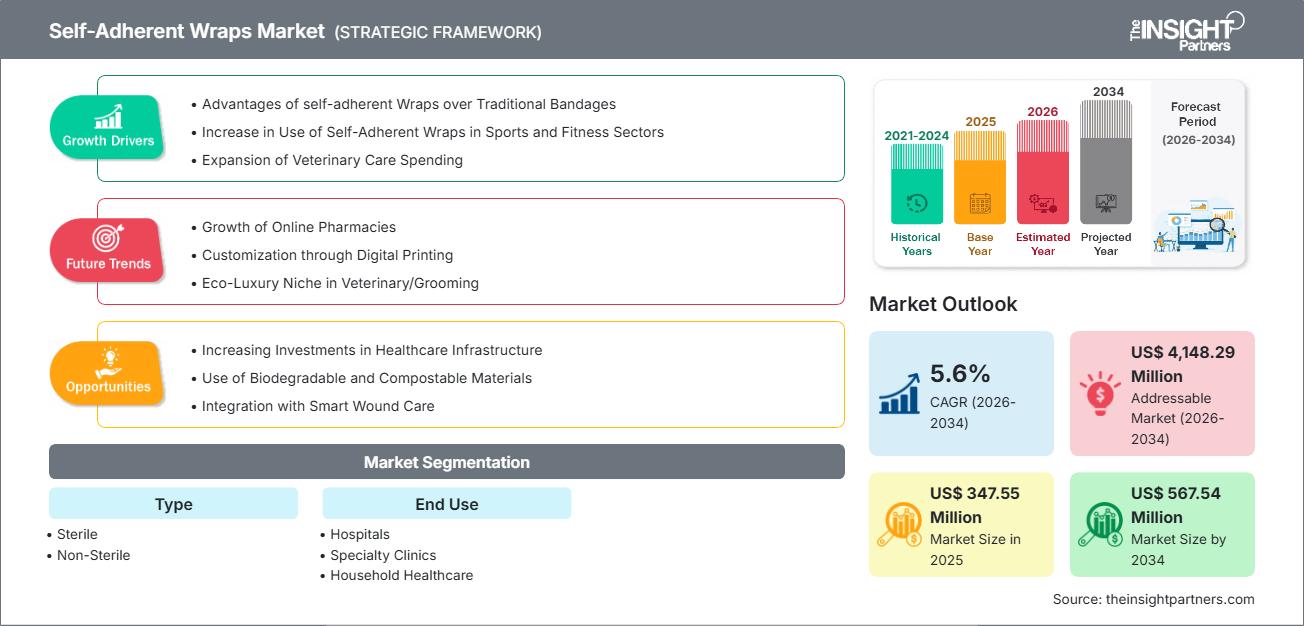
The global Self-Adherent Wraps market size is projected to reach US$ 567.54 million by 2034 from US$ 347.55 million in 2025. The market is anticipated to register a CAGR of 5.6% during the forecast period 2026–2034. Key market dynamics include an increasing global incidence of sports-related injuries, a rising geriatric population requiring chronic wound management, and a growing preference for easy-to-use medical consumables in home care settings. Additionally, the market is expected to benefit from the expansion of surgical procedures worldwide, advancements in material science leading to latex-free and antimicrobial variants, and the increasing adoption of cohesive bandages in veterinary medicine for animal wound care.
Self-Adherent Wraps Market Analysis
The self-adherent wraps market analysis indicates a strategic shift toward specialized medical textiles that balance compression with breathability. As healthcare providers seek to reduce post-operative complications, there is a clear move toward procurement of sterile, high-tension wraps for clinical environments. Strategic opportunities are emerging in the retail-ready medical segment, where ergonomic packaging and varied color palettes appeal to athletes and home care users. The analysis also suggests that market participants should focus on diversifying their material portfolios to include hypoallergenic and eco-friendly fabrics to mitigate the risks associated with latex sensitivities. To gain a competitive edge, companies must streamline their distribution through digital health platforms and pharmacy chains, ensuring product availability for the growing self-care consumer demographic.
Self-Adherent Wraps Market Overview
Self-adherent wraps are transitioning from a traditional hospital consumable to a versatile tool across sports, clinical, and veterinary sectors. These wraps, characterized by their ability to stick to themselves without the need for clips or pins, are increasingly utilized for compression, immobilization, and securing primary dressings. The landscape is dominated by a mix of multinational medical device corporations and regional manufacturers focusing on cost-effective production. With the rise of outpatient surgeries and the aging in place trend, demand is shifting toward products that offer ease of application and removal. While North America and Europe remain mature markets with high penetration, the Asia-Pacific region is emerging as a high-growth corridor due to improving healthcare infrastructure and a surge in fitness-related activities. For instance, the market in the US is characterized by high consumer awareness and a robust sports medicine culture. Growth is driven by the extensive network of outpatient surgical centers and a strong retail presence in pharmacies. There is a notable trend toward latex-free, premium-grade wraps that cater to a safety-conscious patient population.
Customize This Report To Suit Your Requirement
Get FREE CUSTOMIZATIONSelf-Adherent Wraps Market: Strategic Insights
-
Get Top Key Market Trends of this report.This FREE sample will include data analysis, ranging from market trends to estimates and forecasts.
Self-Adherent Wraps Market Drivers and Opportunities
Market Drivers:
- Rising Incidence of Sports and Physical Activities: As global participation in athletics and recreational fitness increases, so does the frequency of sprains and strains. Self-adherent wraps are a preferred choice for immediate compression and support due to their portability and ease of use.
- Growing Geriatric Population and Chronic Wound Prevalence: The aging population is more susceptible to venous leg ulcers and other conditions requiring consistent compression therapy. This demographic shift sustains a steady demand for soft, non-irritating wraps in long-term care facilities.
- Advancements in Material Science: The development of lightweight, water-resistant, and highly elastic materials has improved patient comfort. The introduction of cohesive bandages that do not adhere to skin or hair has expanded their utility in both human and animal healthcare.
Market Opportunities:
- Expansion in Veterinary Healthcare: There is a significant opportunity for manufacturers to target the veterinary segment. Self-adherent wraps are ideal for animals as they do not stick to fur, making them essential for post-injury care in pets and livestock.
- Integration of Antimicrobial Properties: Developing wraps infused with silver or other antimicrobial agents presents a lucrative opportunity to capture the advanced wound care segment, specifically for preventing secondary infections in surgical sites.
- D2C and E-commerce Growth: Developing consumer-centric branding for online retail allows companies to bypass traditional hospital procurement hurdles and reach the active lifestyle and first-aid kits market directly.
Self-Adherent Wraps Market Report Segmentation Analysis
The Self-Adherent Wraps Market share is analyzed across various segments to provide a clearer understanding of its structure, growth potential, and emerging trends. Below is the standard segmentation approach used in most industry reports:
By Type:
- Sterile: Primarily utilized in operating rooms and for direct wound contact. This segment is driven by stringent clinical protocols and the need to prevent surgical site infections.
- Non-Sterile: The more common variant used for support, compression, and securing secondary dressings in sports medicine, veterinary clinics, and general household first aid.
By End Use:
- Hospitals: Represent the largest consumption segment, where wraps are used across various departments, including orthopedics, emergency care, and post-surgical recovery.
- Specialty Clinics: Includes orthopedic centers and sports medicine clinics that require high-performance wraps for specific injury management and rehabilitation.
- Household Healthcare: A rapidly growing channel encompassing pharmacies and online retail, catering to individuals managing minor injuries or chronic conditions at home.
- Others: Includes veterinary clinics, rehabilitation centers, and military medical units that require durable and versatile cohesive bandages.
By Geography:
- North America
- Europe
- Asia Pacific
- South & Central America
- Middle East & Africa
Self-Adherent Wraps Market Report Scope
| Report Attribute | Details |
|---|---|
| Market size in 2025 | US$ 347.55 Million |
| Market Size by 2034 | US$ 567.54 Million |
| Global CAGR (2026 - 2034) | 5.6% |
| Historical Data | 2021-2024 |
| Forecast period | 2026-2034 |
| Segments Covered |
By Type
|
| Regions and Countries Covered |
North America
|
| Market leaders and key company profiles |
|
Self-Adherent Wraps Market Players Density: Understanding Its Impact on Business Dynamics
The Self-Adherent Wraps Market is growing rapidly, driven by increasing end-user demand due to factors such as evolving consumer preferences, technological advancements, and greater awareness of the product's benefits. As demand rises, businesses are expanding their offerings, innovating to meet consumer needs, and capitalizing on emerging trends, which further fuels market growth.
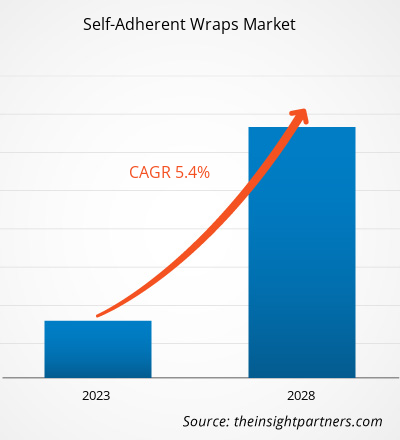
Self-Adherent Wraps Market Share Analysis by Geography
Asia-Pacific is expected to grow fastest in the coming years. Emerging markets in South & Central America, the Middle East, and Africa also have many untapped opportunities for medical consumable manufacturers and sports medicine providers to expand.
The self-adherent wraps market is undergoing a significant transformation, moving from a standard clinical commodity to a global high-value medical textile. Growth is driven by the rising incidence of sports-related injuries, a surge in self-care healthcare trends, and the expansion of the professional veterinary care sector. Below is a summary of market share and trends by region:
North America
- Market Share: Holds the largest share globally, characterized by a highly developed healthcare infrastructure and a robust sports medicine culture.
- Key Drivers:
- An extensive network of outpatient surgical centers and ambulatory care facilities.
- High consumer awareness regarding advanced wound care and latex-free safety standards.
- Strong retail presence in major pharmacy chains and specialized athletic outlets.
- Trends: Scaling of premium-grade, hypoallergenic wraps and the successful integration of cohesive bandages into high-end home recovery kits for post-operative patients.
Europe
- Market Share: Maintains a significant global position, anchored by stringent regulatory frameworks and a strong focus on chronic wound management.
- Key Drivers:
- High domestic demand for compression therapy due to a large geriatric population.
- Established manufacturing base and strict CE marking protocols for medical textiles.
- Robust government healthcare reimbursement policies for advanced wound dressings.
- Trends: A strategic shift toward sustainable and biodegradable materials to comply with environmental regulations. There is also an increasing focus on antimicrobial-infused wraps to reduce hospital-acquired infections.
Asia-Pacific
- Market Share: The fastest-growing region, with China and India acting as primary engines for market expansion due to massive population bases.
- Key Drivers:
- Rapid urbanization and rising disposable incomes are leading to increased participation in fitness and organized sports.
- Government-supported initiatives focused on modernizing provincial healthcare facilities.
- Growing demand for cost-effective but high-quality medical consumables in emerging private hospitals.
- Trends: Heavy reliance on e-commerce platforms and B2B digital procurement for medical supplies. The region is also seeing a rise in the use of self-adherent wraps in the expanding local pet care and veterinary industries.
South and Central America
- Market Share: An emerging market with a growing healthcare sector in countries like Brazil, Argentina, and Chile.
- Key Drivers:
- Increasing awareness of specialized injury management and the benefits of cohesive bandages over traditional tapes.
- Modernization of small-scale clinics into commercial-grade surgical centers to supply urban centers.
- Rising interest in professional sports training and rehabilitation among middle-to-high income segments.
- Trends: Growth of retail-ready boutique brands in pharmacies and the introduction of colorful, patterned wraps to differentiate from the standard clinical market.
Middle East and Africa
- Market Share: A developing market with a strategic focus on formalizing commercial medical supply chains.
- Key Drivers:
- Growing prevalence of orthopedic procedures and emergency care requirements in arid and industrial zones.
- High demand for durable, heat-resistant medical textiles suitable for regional climates.
- Strategic investments in Healthcare Cities to improve local health security and reduce reliance on international imports.
- Trends: Implementation of modern procurement technologies to formalize the medical distribution market, coupled with a focus on high-performance wraps for the expanding sports medicine and trauma segments.
High Market Density and Competition
Competition is intensifying due to the presence of established leaders such as 3M Co, Cardinal Health Inc, PRIMED Medical Products Inc, Johnson & Johnson Consumer Inc, Walgreens Co, Dynarex Corp, Milliken & Co., Medline Industries LP, and Essity AB, which also contribute to a diverse and rapidly expanding market landscape.
This competitive environment pushes vendors to differentiate through:
- Advanced Material Science and Hypoallergenic Branding: Positioning self-adherent wraps as superior alternatives by emphasizing latex-free and breathable fabric technologies that minimize skin irritation and medical adhesive-related skin injuries (MARSI) for sensitive-skin demographics.
- Specialized Product Diversification: Expanding beyond generic medical use to include high-compression sports wraps, visual tension-indicator bandages for clinical accuracy, and high-durability variants specifically designed for the veterinary and animal health sectors.
- Integrated Supply Chain Excellence: Managing end-to-end production—from the sourcing of cohesive polymers to domestic manufacturing and direct-to-hospital distribution. This approach ensures stringent quality control, reliable lead times, and compliance with global sterilization standards.
- Technological Integration in Processing: Utilizing precision coating and advanced spray-drying techniques to enhance the self-clinging property without leaving residue, catering to the growing demand for high-performance, multi-functional bandages in the nutraceutical and surgical recovery markets.
Opportunities and Strategic Moves
- Partner with high-end retail channels and e-commerce platforms to tap into the surging demand for professional-grade first aid and gentle-removal bandages in the North American and European homecare markets.
- Incorporate sustainable manufacturing practices and biodegradable material certifications to appeal to eco-conscious healthcare systems and younger consumers seeking environmentally responsible medical consumables.
- Target emerging veterinary and sports medicine corridors in the Asia-Pacific region through strategic alliances with local distributors to capture market share in high-growth pet care and fitness segments.
Major Companies operating in the Self-Adherent Wraps Market are:
- 3M Co
- Cardinal Health Inc
- PRIMED Medical Products Inc
- Johnson & Johnson Consumer Inc
- Walgreens Co
- Dynarex Corp
- Milliken & Co
- Medline Industries LP
- Essity AB
- Steroplast Healthcare Ltd
- Performance Health Holding Inc
Disclaimer: The companies listed above are not ranked in any particular order.
Self-Adherent Wraps Market News and Recent Developments
- In November 2025, Cardinal Health strengthened its healthcare platform by acquiring Solaris Health in a $1.9 billion transaction. As part of its expanded portfolio, the company now offers self‑adherent cohesive bandages engineered for easy hand‑tearing and breathable, secure support.
- In January 2024, Medline acquired United Medco. This strategic transaction marked a significant milestone in Medline's growth of its Health Plans business by augmenting the company's best-in-class distribution capabilities. The move expanded Medline's ability to deliver essential clinical products, including its specialized self-adherent wraps, directly to members through enhanced supplemental benefit offerings.
Self-Adherent Wraps Market Report Coverage and Deliverables
The Self-Adherent Wraps Market Size and Forecast (2021–2034) report provides a detailed analysis of the market covering below areas:
- Self-Adherent Wraps Market size and forecast at global, regional, and country levels for all the key market segments covered under the scope
- Self-Adherent Wraps Market trends, as well as market dynamics such as drivers, restraints, and key opportunities
- Detailed PEST and SWOT analysis
- Self-Adherent Wraps Market analysis covering key market trends, global and regional framework, major players, regulations, and recent market developments
- Industry landscape and competition analysis covering market concentration, heat map analysis, prominent players, and recent developments in the Self-Adherent Wraps Market.
- Detailed company profiles
Frequently Asked Questions

- Historical Analysis (2 Years), Base Year, Forecast (7 Years) with CAGR
- PEST and SWOT Analysis
- Market Size Value / Volume - Global, Regional, Country
- Industry and Competitive Landscape
- Excel Dataset
Recent Reports
Testimonials

The Insight Partners' SCADA System Market report is comprehensive, with valuable insights on current trends and future forecasts. The team was highly professional, responsive, and supportive throughout. We are very satisfied and highly recommend their services.
RAN KEDEM Partner, Reali Technologies LTDs
I requested a report on a very specific software market and the team produced the report in a few days. The information was very relevant and well presented. I then requested some changes and additions to the report. The team was again very responsive and I got the final report in less than a week.
JEAN-HERVE JENN Chairman, Future Analytica
We worked with The Insight Partners for an important market study and forecast. They gave us clear insights into opportunities and risks, which helped shape our plans. Their research was easy to use and based on solid data. It helped us make smart, confident decisions. We highly recommend them.
PIYUSH NAGPAL Sr. Vice President, High Beam Global
The Insight Partners delivered insightful, well-structured market research with strong domain expertise. Their team was professional and responsive throughout. The user-friendly website made accessing industry reports seamless. We highly recommend them for reliable, high-quality research services
YUKIHIKO ADACHI CEO, Deep Blue, LLC.
This is the first time I have purchased a market report from The Insight Partners.While I was unsure at first, I visited their web site and felt more comfortable to take the risk and purchase a market report.I am completely satisfied with the quality of the report and customer service. I had several questions and comments with the initial report, but after a couple of dialogs over email with their analyst I believe I have a report that I can use as input to our strategic planning process.Thank you so much for taking the extra time and making this a positive experience.I will definitely recommend your service to others and you will be my first call when we need further market data.
JOHN SUZUKI President and Chief Executive Officer, Board Director, BK Technologies
I wish to appreciate your support and the professionalism you displayed in the course of attending to my request for information regarding to infectious disease IVD market in Nigeria. I appreciate your patience, your guidance, and the fact that you were willing to offer a discount, which eventually made it possible for us to close a deal. I look forward to engaging The Insight Partners in the future, all thanks to the impression you have created in me as a result of this first encounter.
DR CHIJIOKE ONYIA MANAGING DIRECTOR, PineCrest Healthcare Ltd.Reason to Buy
- Informed Decision-Making
- Understanding Market Dynamics
- Competitive Analysis
- Identifying Emerging Markets
- Customer Insights
- Market Forecasts
- Risk Mitigation
- Boosting Operational Efficiency
- Strategic Planning
- Investment Justification
- Tracking Industry Innovations
- Aligning with Regulatory Trends




 Get Free Sample For