
Wastewater Treatment Market Demand, Size & Forecast by 2034
Coverage: by Treatment Technology (Reverse Osmosis (RO) Membrane, Micro-Filtration (MF) Membrane, Ultra-Filtration (UF) Membrane, Nano-Filtration (NF) Membrane, Membrane Bio-Reactor (MBR), Chlorination, and Activated Sludge); Treatment Process (Biological, Chemical, Bio-Solids, and Others); End-User (Industrial, Commercial, Residential, and Government), and Geography (North America, Europe, Asia Pacific, and South and Central America)
- Status : Data Released
- Report Code : TIPRE00002828
- Category : Manufacturing and Construction
- No. of Pages : 150
- Available Report Formats :


- Last update date : September 28, 2026


2025 Market Size
US$ 365.38 Bn
Base year value
2034 Forecast
US$ 629.43 Bn
Projected by 2034
CAGR 2026-2034
6.23 %
Growth rate
Addressable Market
US$ 4,502.96 Bn
(2026-2034)
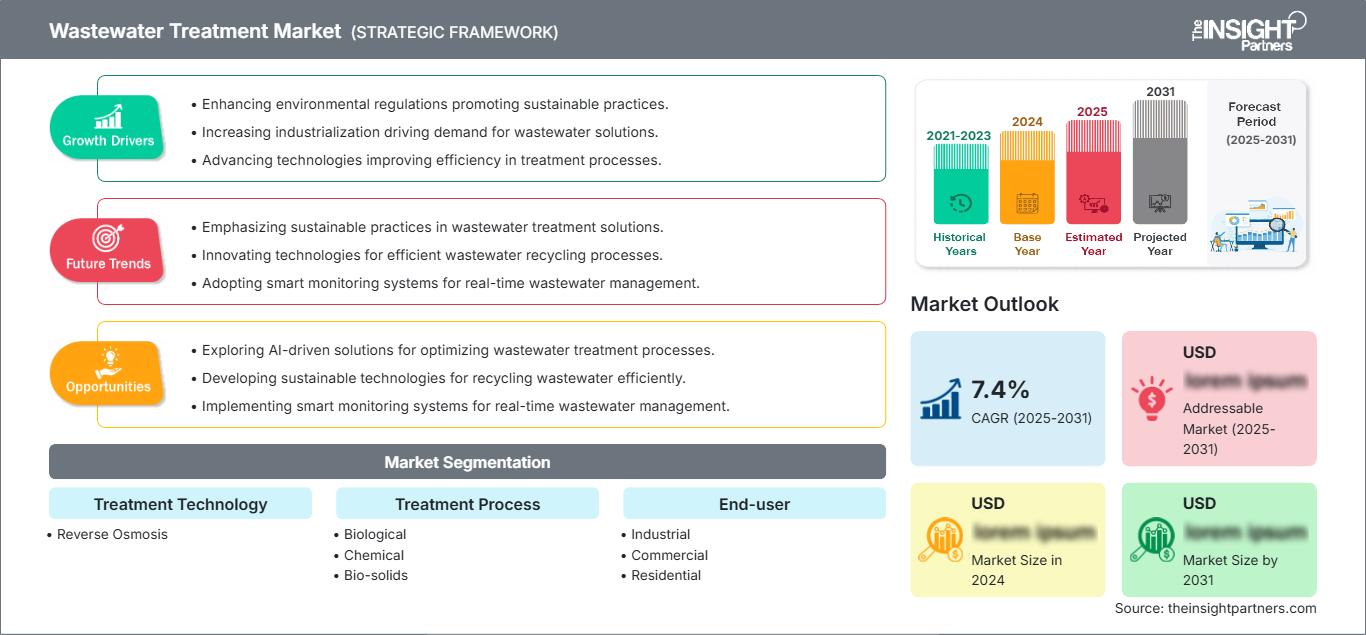
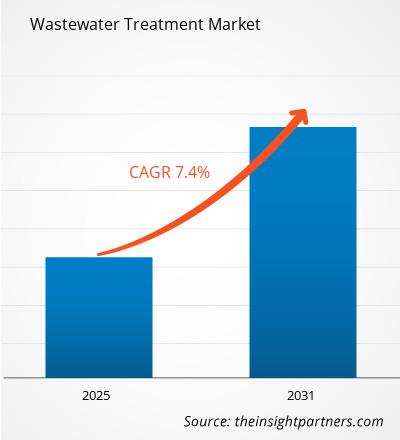
The wastewater treatment market was valued at US$ 365.38 billion in 2025 and is projected to reach US$ 629.43 billion by 2034, registering a CAGR of 6.23% from 2026 to 2034. Demand is expanding as municipalities, industrial operators, commercial facilities, and governments strengthen treatment capacity to comply with tighter discharge standards, address water scarcity, and increase reuse of treated effluent.
North America remains a leading regional market, supported by aging infrastructure upgrades, industrial water-reuse initiatives, and increased investment in membrane-based and digital treatment systems. The wastewater treatment market size is being shaped by long-term utility modernization, stricter effluent limits, and growing use of advanced biological, chemical, and reverse osmosis technologies across municipal and industrial facilities.
Wastewater Treatment Market Assessment and Insights
- North America: North America accounted for an estimated 36–39% share in 2025 and is expected to grow at a CAGR of 5.8–6.4% during 2026–2034, driven by infrastructure renewal, reuse mandates, and the adoption of advanced treatment.
- U.S.: The U.S. represented nearly 78–82% of North America demand in 2025, supported by strong municipal spending, industrial reuse projects, and membrane technology deployment.
- Europe: Europe held an estimated 25–28% share in 2025, with Germany, the UK, France, Italy, and Spain leading adoption through stricter nutrient-removal rules and circular-water policies.
- Asia Pacific: Asia Pacific represented an estimated 24–27% share in 2025 and is projected to post a CAGR of 6.8–7.5% through 2034, led by China, India, Japan, South Korea, and Australia.
- Largest Segment: Biological treatment held the largest process share at an estimated 42–45% in 2025, supported by municipal sewage treatment needs and cost-effective organic load reduction.
- High Growth Segment: Reverse osmosis is expected to record a CAGR of 7.2–8.1% during 2026–2034 as reuse, desalination-linked treatment, and high-quality industrial water recovery increase.
- Key companies analyzed in detail: Ashland Inc., Aquatech International LLC, BWT Holding GmbH, Buckman Laboratories International, Inc., Calgon Carbon Corporation, Culligan International Company, Dow Inc., GE Water and Process Technologies, 3M Company, and SUEZ SA.
Source: The Insight Partners' analysis based on proprietary research, government publications, company annual reports, investor presentations, industry databases, and expert interviews.
The market has evolved from conventional contaminant removal toward integrated treatment platforms that combine biological processing, chemical conditioning, sludge optimization, reverse osmosis, disinfection, and digital monitoring. Utilities are prioritizing resilience and lifecycle cost reduction, while industrial users are adopting closed-loop water systems to reduce freshwater withdrawals and maintain operational permits in water-stressed regions.
The Wastewater Treatment Market report indicates that, over the forecast period, investment is expected to shift toward higher-efficiency treatment trains, decentralized systems, and resource recovery models. Emerging economies are expanding basic sewage coverage, while mature markets are upgrading treatment plants to control nutrients, manage PFAS, enable water reuse, and achieve energy-positive operations. These factors support the sustained market growth across regional markets and end-user categories.
Wastewater Treatment Market Report Scope
| Report Attribute | Details |
|---|---|
| Market size in 2025 | US$ 365.38 Billion |
| Market Size by 2034 | US$ 629.43 Billion |
| Global CAGR (2026 - 2034) | 6.23% |
| Historical Data | 2021-2024 |
| Forecast period | 2026-2034 |
Wastewater Treatment Market Analysis
The demand is influenced by urbanization trends, industrial growth, water shortages, and regulatory requirements. The municipal system is the mainstay of the supply chain, although there is also growing investment from industries engaged in chemicals, pharmaceuticals, food processing, energy production, oil and gas, and electronics. There is a highly interdependent ecosystem involving equipment vendors, specialty chemical producers, engineering firms, and operations companies. They cater to both greenfield and brownfield projects.
The supply chain dynamics are increasingly driven by technological integration, with reverse osmosis membranes, biological reactor technologies, sludge treatment technologies, activated carbon, and monitoring platforms integrated into systems to improve output quality and reduce costs. Wastewater treatment market analysis indicates that customers are moving from single-equipment procurement toward service-led, performance-based models that improve compliance certainty and plant availability.
Competition is widespread, with international water technology firms, chemical firms, and regional players competing across equipment, chemicals, services, and turnkey solutions. Some of the firms that have a position in membranes, processes, water quality, and long-term services are SUEZ SA, Aquatech International LLC, Dow Inc., 3M Company, Culligan International Company, and BWT Holding GmbH.
The investment strategy focuses on water reuse, membranes, digital asset management, and sludge-to-energy solutions. Differentiation is based on lifecycle services, low energy intensity, modularity and knowledge of industrial applications. This particular form of positioning is extremely relevant when municipal customers are looking for affordable upgrades and when industries require reliable compliance due to more stringent wastewater discharge regulations.
● REPORT CUSTOMIZATION
Tailor This Report To Align With Your Specific Business Requirements
This report can be customized to align precisely with your business objectives, scope, and target markets. Customization options include tailored segmentation, geography, competitive analysis, and strategic insights to support informed decision-making.
Customize This Report →WHAT YOU CAN ADJUST
- ● Segmentations
- ● Geography
- ● Competitive Analysis
- ● Language Preferences
Wastewater Treatment Market: Strategic Insights
Regional Insights
North America wastewater treatment market
North America is expected to maintain a 36–39% share in 2025, supported by extensive municipal infrastructure, high industrial water consumption, and growing adoption of reuse. The regional CAGR is estimated at 5.8–6.4% during 2026–2034, with demand centered on tertiary treatment, nutrient removal, membrane filtration, and digital monitoring.
Utilities are replacing aging assets while industrial operators invest in advanced treatment to control discharge risk and reduce freshwater dependence. The wastewater treatment market share in North America is reinforced by established service providers, strong regulatory enforcement, and rising capital allocation for resilient water infrastructure.
U.S. wastewater treatment market
The U.S. accounted for an estimated 78–82% of North America demand in 2025 and is projected to grow at a CAGR of 5.9–6.5% through 2034. Funding from the city, industrial growth, increased water demand from semiconductors, and reuse programs are all contributing to increased demand for more sophisticated biological and membrane systems.
The company's presence is widespread within all areas of equipment, chemicals, engineering, and operations. The demand is being driven by existing installed capacity, more stringent effluent regulations, and the use of technologies that enhance asset performance.
Europe wastewater treatment market
Europe held an estimated 25–28% share in 2025 and is forecast to grow at a CAGR of 5.4–6.1% during 2026–2034. Leading demand is seen in Germany owing to a sophisticated municipal network, stringent industrial treatment standards and well-developed sludge management systems. The UK and France are planning investments in sewage system enhancement, stormwater management, and nutrient reduction. Italy and Spain are making efforts in reuse-oriented treatment investments, especially in water-stressed regions. Circular economy goals, stringent discharge regulations, and energy production from wastewater treatment systems are enhancing market maturity levels.
APAC wastewater treatment market
Asia Pacific represented an estimated 24–27% share in 2025 and is projected to grow at a CAGR of 6.8–7.5% through 2034. China continues to be the market leader due to the development of municipal wastewater treatment plants, industrial complexes, and environmental compliance. India is developing its sewage treatment facilities to cover infrastructure gaps in its cities.
Japan, South Korea, and Australia are concentrating on water reuse, industrial water recovery, and efficient plant operation. Urbanization, industrialization, and policy support for clean discharge have made APAC the fast-growing region in terms of opportunities for technology providers.
Middle East & Africa wastewater treatment market
The Middle East and Africa market is projected to grow at a CAGR of 6.3–7.0% during 2026–2034. Saudi Arabia and the United Arab Emirates take the lead in the reuse of water, wastewater from desalination, and utilities modernization, whereas South Africa is focusing on reliable municipal operations and wastewater from industries.
Scarcity of water, water requirements of the energy sector, growing population, and infrastructure development are the drivers that will underpin the market in the future. Growing emphasis is now being placed on treated wastewater reuse for landscaping, industrial purposes, agricultural irrigation, and district cooling.
Segmentation Analysis
Treatment Technology
Treatment Technology is expected to grow at a CAGR of 6.4–7.1% during 2026–2034. The wastewater treatment market scope is widening as facilities combine filtration, reverse osmosis, disinfection, and digital controls to meet higher effluent quality standards. Technology selection increasingly depends on reuse targets, contaminant profile, energy requirements, and lifecycle cost.
- Reverse Osmosis: Reverse osmosis is gaining strategic importance in high-quality reuse, desalination-linked treatment, and industrial recycling, where dissolved solids removal and consistent water quality are essential.
Treatment Process
The treatment process is projected to grow at a CAGR of 5.9–6.6% during 2026–2034. Biological systems remain central to municipal and industrial organic load reduction, while chemical processes support coagulation, disinfection, pH adjustment, and contaminant control. Bio-solids handling is gaining importance as operators seek resource recovery and lower disposal risk.
- Biological: Biological treatment leads to adoption due to its suitability for municipal sewage, food processing effluent, and organic contaminant reduction in cost-sensitive large-scale plants.
- Chemical: Chemical processes are important for disinfection, phosphorus removal, coagulation, odor control, and industrial wastewater streams with variable contaminant profiles.
- Bio-solids: Bio-solids management is becoming more strategic as utilities pursue dewatering, stabilization, energy recovery, and compliant disposal under stricter environmental rules.
End-user
End-user demand is expected to grow at a CAGR of 6.1–6.8% during 2026–2034. Industrial users are expanding onsite treatment and reuse to reduce permit risk and water intensity. Government and municipal buyers continue to fund large-scale infrastructure, while commercial and residential systems support decentralized treatment, water quality improvement, and local reuse.
- Industrial: Industrial users show strong demand for reliable treatment, reuse, and compliance solutions across chemicals, power, food processing, pharmaceuticals, electronics, and oil and gas.
- Commercial: Commercial facilities adopt treatment systems for campuses, hospitality, healthcare, and institutional buildings where water reuse and cost control are rising priorities.
- Residential: Residential demand is linked to decentralized systems, community-scale treatment, water quality awareness, and sanitation improvements in expanding urban and peri-urban areas.
- Government: Government buyers anchor large municipal projects, sewer upgrades, public sanitation programs, and regulatory initiatives that improve access to compliant wastewater infrastructure.
Opportunity Snapshot
| End-user | Revenue Contribution | Trend Tag | Adoption Stage |
| Industrial | High | Closed Loop | Scaling |
| Commercial | Medium | Onsite Reuse | Scaling |
| Residential | Low | Decentralized Systems | Emerging |
| Government | High | Utility Renewal | Mature |
Wastewater Treatment Market Growth Drivers and Impact Analysis
Tighter Discharge Standards and Reuse Mandates
Regulatory Pressure: The other major driver for growth is regulatory pressure since the requirements for the discharge of wastewater in terms of nutrients, pathogens, heavy metals, new contaminants, and industrial chemicals have become stricter. There are investments in advanced biological treatments, chemicals, and membranes, along with digital monitoring, to avoid any fines and obtain the permit to operate. There is also reuse, which increases the need for water suitable for industrial or irrigation purposes.
Aging Infrastructure and Municipal Upgrade Cycles
Most developed countries have established sewer systems dating back several decades and therefore face challenges with replacement and rehabilitation. Old pipes, excessive inflow, infiltration, aging infrastructure, and outdated equipment create overflow concerns for these municipalities. This challenge has been addressed through investments in upgrades to pumping stations, clarifiers, aeration systems, sludge management, and control systems. These projects support recurring demand for equipment, engineering services, chemicals, and operations support across the wastewater treatment market.
Industrial Water Security and Circular Operations
Industrial facilities are viewing wastewater as an asset rather than as waste that needs to be disposed of. Sectors with high water consumption are implementing reuse systems to minimize their freshwater intake, ensure continued production, and meet their sustainability objectives. Methods such as reverse osmosis, bio-polishing, zero liquid discharge technology, and intelligent control will assist industrial facilities in recovering water and minimizing effluent volumes.
Wastewater Treatment Market Future Trends
Digital Plant Optimization
Wastewater treatment market trends increasingly point toward connected plants that use sensors, automation, predictive analytics, and remote monitoring. Digital technology is being used by the operators to optimize aeration, chemical dosing, maintenance and sludge management. Digital technologies ensure high availability and less variability in operations, particularly for larger municipal networks and complicated industrial operations. With increasing labor and financial constraints, digital technology is expected to be an essential part of any upgrade to wastewater facilities.
Resource Recovery from Wastewater
In the future, plant operators will be able to generate greater value from their wastewater streams through energy, nutrients, and recyclable water. Processes such as anaerobic digestion, biogas upgrading, phosphorus recovery, and sludge-to-biochar are increasingly popular in utilities looking to reduce their carbon footprint and operational costs. This will take treatment plants toward being resource recovery centers and increase the need for technology and engineering.
Wastewater Treatment Market Opportunities
Industrial Reuse Systems in Water-Stressed Regions
The wastewater Treatment market Forecasts indicate a strong opportunity in industrial reuse systems where water availability constrains manufacturing growth. Treatment is needed for semiconductor factories, refineries, chemical plants, food processing facilities, and power plants that need high-quality water returned to their systems. Companies that are capable of modular reverse osmosis, biological polishing, and online instrumentation can capitalize on these facilities' needs to reduce risk, discharge volume, and environmental impact.
Decentralized Treatment for Expanding Urban Areas
The decentralized method of treating waste is gaining momentum in places where installing sewers is too expensive, time-consuming, or simply impossible. Small-scale solutions can serve residential areas, campuses, industries, and peripheral areas, while providing an option for on-site reuse. Such possibilities are particularly applicable in developing countries lacking proper sanitation, as well as in developed nations seeking sustainability.
Frequently Asked Questions

- Comprehensive Market Sizing and Forecast Analysis
- Detailed Segmentation Analysis
- In-Depth Market Dynamics Assessment
- Regional and Country-Level Insights
- Competitive Landscape and Company Benchmarking
- Strategic Business Intelligence
Recent Reports
Testimonials

The Insight Partners provided valuable market intelligence that supported our global go-to-market strategy. Their team was professional, responsive, and attentive to our feedback, providing thoughtful analysis and helpful methodological clarifications throughout the project.
Junmo Kim Chief Financial Officer (CFO), Enertech Co., Ltd.
The Insight Partners' SCADA System Market report is comprehensive, with valuable insights on current trends and future forecasts. The team was highly professional, responsive, and supportive throughout. We are very satisfied and highly recommend their services.
RAN KEDEM Partner, Reali Technologies LTDs
I requested a report on a very specific software market and the team produced the report in a few days. The information was very relevant and well presented. I then requested some changes and additions to the report. The team was again very responsive and I got the final report in less than a week.
JEAN-HERVE JENN Chairman, Future Analytica
We worked with The Insight Partners for an important market study and forecast. They gave us clear insights into opportunities and risks, which helped shape our plans. Their research was easy to use and based on solid data. It helped us make smart, confident decisions. We highly recommend them.
PIYUSH NAGPAL Sr. Vice President, High Beam Global
The Insight Partners delivered insightful, well-structured market research with strong domain expertise. Their team was professional and responsive throughout. The user-friendly website made accessing industry reports seamless. We highly recommend them for reliable, high-quality research services
YUKIHIKO ADACHI CEO, Deep Blue, LLC.
This is the first time I have purchased a market report from The Insight Partners.While I was unsure at first, I visited their web site and felt more comfortable to take the risk and purchase a market report.I am completely satisfied with the quality of the report and customer service. I had several questions and comments with the initial report, but after a couple of dialogs over email with their analyst I believe I have a report that I can use as input to our strategic planning process.Thank you so much for taking the extra time and making this a positive experience.I will definitely recommend your service to others and you will be my first call when we need further market data.
JOHN SUZUKI President and Chief Executive Officer, Board Director, BK Technologies
I wish to appreciate your support and the professionalism you displayed in the course of attending to my request for information regarding to infectious disease IVD market in Nigeria. I appreciate your patience, your guidance, and the fact that you were willing to offer a discount, which eventually made it possible for us to close a deal. I look forward to engaging The Insight Partners in the future, all thanks to the impression you have created in me as a result of this first encounter.
DR CHIJIOKE ONYIA MANAGING DIRECTOR, PineCrest Healthcare Ltd.Reason to Buy
- Informed Decision-Making
- Understanding Market Dynamics
- Competitive Analysis
- Identifying Emerging Markets
- Customer Insights
- Market Forecasts
- Risk Mitigation
- Boosting Operational Efficiency
- Strategic Planning
- Investment Justification
- Tracking Industry Innovations
- Aligning with Regulatory Trends





 Get Free Sample for