
Welding Equipment Market Share, Growth & Demand by 2034
Coverage: By Type (Arc welding, Resistance welding, Oxyfuel welding, Ultrasonic welding, Others); End-user (Aerospace, Automotive and transport, Construction, Power generation, Oil and Gas, Others) , and Geography (North America, Europe, Asia Pacific, and South and Central America)
- Status : Data Released
- Report Code : TIPRE00005298
- Category : Manufacturing and Construction
- No. of Pages : 150
- Available Report Formats :


- Last update date : September 28, 2026


2025 Market Size
US$ 21.82 Bn
Base year value
2034 Forecast
US$ 29.11 Bn
Projected by 2034
CAGR 2026-2034
3.25 %
Growth rate
Addressable Market
US$ 231.22 Bn
(2026-2034)
The global Welding Equipment market was valued at US$ 21.82 billion in 2025 and is expected to reach US$ 29.11 billion by 2034; it is estimated to record a CAGR of 3.25% during 2026-2034.
Welding Equipment Market Assessment and Insights
- North America: The region is estimated to represent 27–29% share in 2025 and grow at a 4.0–4.4% CAGR between 2026–2034, supported by infrastructure renewal, advanced manufacturing, aerospace, automotive, and energy-sector fabrication requirements.
- US: The US is estimated to account for 78–81% of North American demand in 2025 and expand at a 4.0–4.4% CAGR, supported by industrial modernization and infrastructure investment.
- Europe: Europe is estimated at 25–27% share in 2025 and is projected to grow at 3.2–3.6% CAGR, led by Germany, Italy, France, the UK, and Spain, where automotive, machinery, energy, and industrial fabrication remain important users.
- Asia Pacific: Asia Pacific is estimated at 35–38% share in 2025 and is projected to grow at 4.1–4.5% CAGR, with China, Japan, South Korea, and India providing the strongest manufacturing and infrastructure demand.
- Largest Segment: Arc welding is estimated to hold a 68–72% market share in 2025 and grow at a 3.7–4.1% CAGR through 2034 because of its versatility across fabrication environments.
- High Growth Segment: Aerospace is estimated to hold an 11–14% share in 2025 and expand at a 4.6–5.0% CAGR as aircraft production and precision fabrication requirements increase.
- Key companies analyzed in detail: Air Liquide S.A.; Arcon Welding Equipment LLC; Denyo Co., Ltd.; Fronius International GmbH; Illinois Tool Works Inc.; Kemppi Oy; Obara Corporation; Panasonic Corporation; The Lincoln Electric Company; Tianjin Bridge Welding Materials Co., Ltd.; ESAB Corporation; OTC DAIHEN Inc.
Source: The Insight Partners' analysis based on proprietary research, government publications, company annual reports, investor presentations, industry databases, and expert interviews.
Welding equipment market evolution increasingly reflects the convergence of power electronics, automation, digital controls, sensing, and robotic integration. Traditional arc welding systems continue to be essential because they can handle various materials under different conditions, whereas automated and computer-controlled systems ensure consistency. Factory settings have also begun incorporating features such as monitoring, programming capabilities, and collaboration in an effort to increase production speeds without sacrificing joint strength. Equipment manufacturers today compete based on their services, energy-saving measures, and software-driven process control in addition to their systems' performance capacity.
Looking ahead, welding equipment market development will increasingly follow industrial investment in emerging manufacturing centers and infrastructure-intensive economies. There exist several markets, including India, Southeast Asia, Mexico, and selected parts of the Middle East, where there is a need for reliable joining technology due to the need for transportation infrastructure, energy facilities, construction, and manufacturing. There is also a likelihood of investments being made in machines that are able to accommodate different geometries and reduced batch sizes.
Welding Equipment Market Report Scope
| Report Attribute | Details |
|---|---|
| Market size in 2025 | US$ 21.82 Billion |
| Market Size by 2034 | US$ 29.11 Billion |
| Global CAGR (2026 - 2034) | 3.25% |
| Historical Data | 2021-2024 |
| Forecast period | 2026-2034 |
Welding Equipment Market Analysis
The welding equipment market growth is closely connected to the industrial production cycle because welding is embedded in fabrication, assembly, repair, and maintenance activities. The demand comes from equipment manufacturers, automobile manufacturers, construction contractors, shipyards, energy firms, and specialist fabricators. The value chain includes power source suppliers, automation vendors, suppliers of welding torches and accessories, gas manufacturers, distributors, system integrators, and service providers. The supply chain is hence characterized by semiconductors, electronics, transformers, motors, controllers, steel fabrication, and specialized consumables.
In this ecosystem, the equipment choice depends on the material thickness, shape of joints, volume of production, deposition rate, portability of the equipment, skills of operators, and the quality of output. Arc-based equipment dominates industrial use while resistance equipment is still significant for large-volume sheet metal assembly. Oxyfuel equipment still finds application in certain cuttings and fabrication environments, while ultrasonic welding is utilized in certain specialized cases. Thus, there is a need to balance standard products and custom-made solutions, which offer possibilities of modular design.
The welding equipment market analysis also indicates a competitive structure in which scale, engineering expertise, distribution reach, and process knowledge influence purchasing decisions. Lincoln Electric Company and Illinois Tool Works Inc. adopt broad industrial positioning; Fronius International GmbH, on the other hand, concentrates on advanced process technology, automation, and digital assistance. Panasonic Corporation and Obara Corporation bring about additional automation and automotive-based focus, whereas Kemppi Oy relies on digitally enabled welding equipment. Air Liquide S.A. introduces the additional perspective of industrial gases and application support.
At the same time, competition is moving from standalone equipment to integrated solutions where manufacturers incorporate power supplies with robots, sensors, software, fume control equipment, remote monitoring, and applications engineering. The positioning strategy in the contemporary environment is determined by lifecycle value, technical support, operator training, and integration capabilities. Small specialists may compete through tailored solutions and regional expertise; larger suppliers can benefit from installed base, procurement relationships, and global engineering. Capital investment is consequently favoring suppliers capable of demonstrating productivity, reliability, and measurable process control, according to the Welding Equipment Market report.
● REPORT CUSTOMIZATION
Tailor This Report To Align With Your Specific Business Requirements
This report can be customized to align precisely with your business objectives, scope, and target markets. Customization options include tailored segmentation, geography, competitive analysis, and strategic insights to support informed decision-making.
Customize This Report →WHAT YOU CAN ADJUST
- ● Segmentations
- ● Geography
- ● Competitive Analysis
- ● Language Preferences
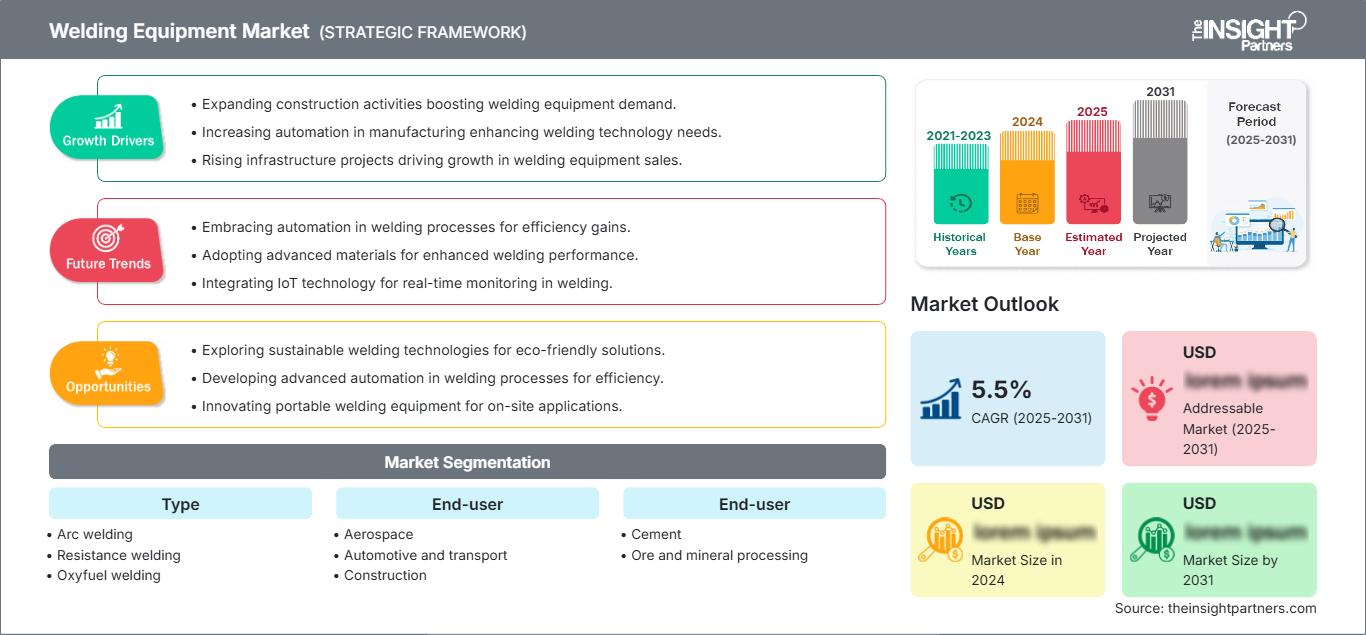
Welding Equipment Market: Strategic Insights
Regional Insights
North America Welding Equipment Market
North America is estimated to hold a 27–29% of the Welding Equipment Market share in 2025 and expand at a 4.0–4.4% CAGR through 2034. The region benefits from established automotive, aerospace, construction, energy, and heavy-equipment manufacturing bases. Infrastructure rehabilitation is supporting structural fabrication, while replacement of aging machinery is encouraging investment in digitally controlled and automated systems. Demand is also supported by energy infrastructure, industrial facilities, and transportation projects.
The US represents the dominant portion of regional demand, while Canada and Mexico broaden the manufacturing ecosystem. Mexico benefits from automotive and industrial supply-chain localization, whereas Canada contributes through energy, infrastructure, transportation, and resource-related fabrication. Across the region, automated cells, robotic welding, process monitoring, and equipment capable of improving operator productivity are gaining importance. Skilled-labor constraints further strengthen the business case for automation, particularly in repetitive production environments.
U.S. Welding Equipment Market
The U.S. is estimated to represent 78–81% of North American demand in 2025 and expand at a 4.0–4.4% CAGR through 2034. Its industrial base supports sustained requirements from automotive, aerospace, construction, defense, oil and gas, power generation, and machinery manufacturing. Infrastructure rehabilitation and manufacturing modernization encourage the replacement of older equipment with systems offering higher efficiency, programmable control, automation compatibility, and improved process consistency.
The competitive environment includes The Lincoln Electric Company, Illinois Tool Works Inc., Panasonic Corporation, and other international suppliers with established US operations. Applications increasingly include robotic body assembly, structural fabrication, aerospace components, energy infrastructure, and maintenance activities. Equipment purchasing is increasingly influenced by total operating cost, service availability, operator training, and integration capabilities rather than initial purchase price alone. Regulatory emphasis on worker protection also supports upgrades where older equipment presents operational limitations.
Europe Welding Equipment Market
Europe is estimated to account for 25–27% share of the Welding Equipment Market in 2025 and grow at a 3.2–3.6% CAGR through 2034. Germany remains the leading industrial hub, supported by machinery, automotive, and engineered products. The UK maintains demand across aerospace, construction, energy, and infrastructure. France combines aerospace and transport manufacturing with industrial fabrication, while Italy and Spain provide important automotive, machinery, construction, and metalworking applications. Regional purchasing increasingly emphasizes energy efficiency, automation, traceability, and worker safety.
APAC Welding Equipment Market
Asia Pacific is estimated to represent 35–38% share in 2025 and grow at a 4.1–4.5% CAGR through 2034. China remains the leading market, supported by extensive manufacturing, construction, shipbuilding, automotive, and infrastructure activity. Japan and South Korea contribute advanced automotive, electronics, machinery, and shipbuilding capabilities, while India and Australia provide expanding infrastructure, energy, mining, and manufacturing demand.
Middle East & Africa Welding Equipment Market
The Middle East and Africa Welding Equipment Market demand is supported by energy infrastructure, construction, industrial diversification, mining, and transportation projects. Saudi Arabia and the UAE are important regional markets because of large infrastructure and industrial programs, while South Africa contributes through mining, manufacturing, power, and construction. The Rest of MEA provides smaller but diverse requirements across fabrication and maintenance activities.
The regional market is expected to expand at a 3.0–3.4% CAGR through 2034. Saudi Arabia is positioned as a leading growth center as industrial localization and infrastructure development broaden fabrication requirements. Equipment suppliers are increasingly targeting portable systems, robust field equipment, automation, and solutions compatible with demanding outdoor operating environments.
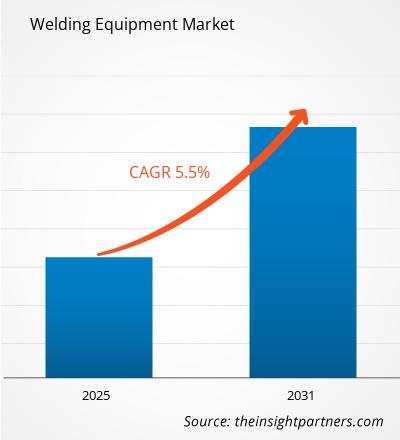
Segmentation Analysis
Type
Type represents a fundamental purchasing criterion because each welding technology addresses different material, productivity, portability, and precision requirements. Arc welding is expected to remain the leading category, while resistance, oxyfuel, and ultrasonic solutions retain specialized roles. The overall type segment is projected to expand at a 3.7–4.1% CAGR during 2026–2034 as manufacturers replace aging equipment and introduce automated systems.
- Arc welding: Arc welding remains the broadest technology category because it supports structural fabrication, machinery, automotive production, maintenance, and construction. Its flexibility and established operator base sustain widespread adoption.
- Resistance welding: Resistance welding is strategically important for high-volume sheet-metal joining, particularly automotive manufacturing. Automated equipment supports repeatable joints and fast cycle times in production environments requiring consistent throughput.
- Oxyfuel welding: Oxyfuel systems retain relevance in field fabrication, maintenance, cutting-related activities, and applications where portability and straightforward operation are more important than advanced automation capabilities.
- Ultrasonic welding: Ultrasonic welding addresses specialized joining requirements where localized energy and controlled bonding are valuable. Its relevance is strongest in applications involving thin materials, assemblies, and precision-oriented production.
End-user
End-user demand is closely connected to capital expenditure, production volumes, material requirements, and infrastructure activity. This segment is projected to grow at a 3.8–4.2% CAGR through 2034, with aerospace showing the strongest expansion because of precision and quality requirements.
- Aerospace: Aerospace manufacturers require controlled, repeatable joining for lightweight and high-strength structures. Precision equipment, process monitoring, and advanced automation are strategically important where quality assurance and traceability are critical.
- Automotive and transport: Automotive and transportation manufacturing creates high-volume demand across body, chassis, structural, and component applications. Automation and resistance technologies remain important for repeatability, cycle-time control, and production scalability.
- Construction: Construction applications favor robust equipment capable of operating across fabrication shops and field environments. Portable arc systems remain important, while larger contractors increasingly adopt productivity-enhancing equipment.
- Power generation: Power generation requires reliable welding for structural, pressure-related, piping, maintenance, and equipment fabrication applications. Purchasing priorities emphasize reliability, quality control, and compatibility with demanding operating conditions.
- Oil and gas: Oil and gas applications require equipment for pipelines, storage facilities, processing plants, maintenance, and structural fabrication. Durability, field portability, process reliability, and suitability for regulated environments influence procurement.
Opportunity Snapshot
| End-user | Revenue Contribution | Trend Tag | Adoption Stage |
| Aerospace | Medium | Precision Joining | Scaling |
| Automotive and transport | High | Robotic Welding | Mature |
| Construction | High | Field Fabrication | Mature |
| Power generation | Medium | Plant Upgrades | Scaling |
| Oil and gas | Medium | Pipeline Welding | Mature |
| Others | Low | Flexible Fabrication | Scaling |
Welding Equipment Market Growth Drivers and Impact Analysis
Industrial Automation and Skilled-Labor Constraints
Automated welding is becoming popular among manufacturers since successful manufacturing requires repeatability, cycle time control, and low dependence on skilled operators. Labor shortages raise the importance of robotic workstations, cobots, programmable power supplies, systems with sensors, and databases of parameter settings. The business implications go beyond equipment purchases, as automation leads to a need for systems integration, software, maintenance, training, and process engineering. Companies offering ease of programming and batch size reduction capabilities can help overcome adoption barriers for midsize manufacturers. Automation helps make the manufacturing process visible through gathering information about weld parameters and equipment use. Thus, business decisions are being made not only considering machine specifications but also its efficiency, consistency of results, and productivity.
Infrastructure Modernization and Industrial Capital Investment
There is continuous demand for welding due to infrastructure development programs, which involve bridges, transportation systems, buildings, utility networks, energy plants, pipelines, and industrial plants. The replacement of aging equipment contributes further to maintenance and fabrication needs, thereby creating demand for both portable and stationary welding equipment. This effect is especially prominent in cases of infrastructure investments that come with the support of local manufacturing initiatives. There is a need for equipment that would be able to work effectively in the tough field environment and would be able to deliver consistent results regardless of the material being welded. Similar demands exist due to industrial investments in the form of equipment, power generation, construction equipment, and processing plants.
Advanced Materials and Higher-Precision Fabrication
The increased use of lightweight alloys, high-strength steel, engineered parts, and complicated geometry is raising the demands that are put upon the welding machines. The automotive, aerospace, energy, and machinery companies require more precise control over the heat input, depth of fusion, deformation, and consistency. It encourages the implementation of digitally controlled power supply systems, special torches, precise sensors, and advanced process design. The effect is most pronounced in cases when there is a high value of the part and the welding failure causes significant expenses either in operation or under warranty. In this case, the equipment manufacturers have an opportunity to gain an advantage not only through the price of the hardware but also by providing knowledge of the welding processes and their applications.
Welding Equipment Market Future Trends
Intelligent Welding Systems and Process Digitalization
The welding equipment market trends are moving toward systems that continuously capture, interpret, and use process data. Future platforms will increasingly connect welding power sources, robots, sensors, inspection equipment, production software, and maintenance systems within unified manufacturing environments. Machine learning may help in recommendations for parameters, defect identification, predictive maintenance, and adaptive control, whereas cloud connectivity might provide opportunities for remote diagnostics and performance analysis of entire fleets. Further, there is going to be increasing interoperability between welding machines and factory execution systems, which will allow connecting weld quality to production documentation. For small fabricators, there is a possibility of offering user-friendly and programmed advanced features without the need for significant automation knowledge. Companies with convenient usability and solid data infrastructure will have an opportunity to capitalize on the needs of manufacturers looking for productivity improvements.
Lower-Emission and Energy-Efficient Fabrication
Future purchasing considerations will take into account energy use, materials efficiency, fume control, and environmental impact. The adoption of better inverters and welding settings will save electricity and shielding gas, respectively, while producing less spatter, waste work, and filler metal waste. Machines will be designed to feature energy-efficient stand-by modes, better heat dissipation, recyclability, and environmental friendliness. Fume control and safety will become an integral part of the machine package as companies look for safe manufacturing facilities. Sustainability reporting can also prompt industrial customers to measure their energy use and process waste related to the machine equipment. Eventually, suppliers will start competing based on energy and materials efficiency, besides productivity and quality.
Welding Equipment Market Opportunities
Integrated Automation for Medium-Sized Fabricators
welding equipment market opportunities are expanding among medium-sized fabricators that need automation but cannot justify highly customized production cells. Modular robotic systems, collaborative robots, offline programming, simplified fixtures, and preconfigured welding packages can reduce installation complexity and shorten deployment periods. Suppliers can address this opportunity by combining equipment, software, training, service, and application engineering into scalable packages. Financing and leasing models could further reduce the initial capital barrier for smaller manufacturers. The strongest commercial prospects are likely to arise where manufacturers experience recurring labor shortages, high-volume repetitive joints, or quality variation between operators. Solutions that can move between product families and support smaller batches may generate stronger returns than fixed automation designed for a single product configuration.
Localized Service and Application Engineering Networks
The welding equipment market forecasts indicate that geographic expansion will increasingly depend on service capabilities rather than product availability alone. Buyers operating in emerging manufacturing centers need installation, commissioning, process qualification, spare parts, troubleshooting, operator training, and preventive maintenance. Suppliers can strengthen regional positions by developing application laboratories, technical centers, distributor partnerships, and mobile service teams close to industrial clusters. India, Southeast Asia, Mexico, Saudi Arabia, and selected African markets provide opportunities where manufacturing capacity is expanding but specialist engineering resources remain unevenly distributed. Local technical support can shorten equipment downtime and improve customer confidence in advanced systems. Companies that establish strong service ecosystems can therefore build recurring revenue while creating defensible customer relationships beyond the initial equipment sale.
Frequently Asked Questions

- Comprehensive Market Sizing and Forecast Analysis
- Detailed Segmentation Analysis
- In-Depth Market Dynamics Assessment
- Regional and Country-Level Insights
- Competitive Landscape and Company Benchmarking
- Strategic Business Intelligence
Recent Reports
Testimonials

The Insight Partners provided valuable market intelligence that supported our global go-to-market strategy. Their team was professional, responsive, and attentive to our feedback, providing thoughtful analysis and helpful methodological clarifications throughout the project.
Junmo Kim Chief Financial Officer (CFO), Enertech Co., Ltd.
The Insight Partners' SCADA System Market report is comprehensive, with valuable insights on current trends and future forecasts. The team was highly professional, responsive, and supportive throughout. We are very satisfied and highly recommend their services.
RAN KEDEM Partner, Reali Technologies LTDs
I requested a report on a very specific software market and the team produced the report in a few days. The information was very relevant and well presented. I then requested some changes and additions to the report. The team was again very responsive and I got the final report in less than a week.
JEAN-HERVE JENN Chairman, Future Analytica
We worked with The Insight Partners for an important market study and forecast. They gave us clear insights into opportunities and risks, which helped shape our plans. Their research was easy to use and based on solid data. It helped us make smart, confident decisions. We highly recommend them.
PIYUSH NAGPAL Sr. Vice President, High Beam Global
The Insight Partners delivered insightful, well-structured market research with strong domain expertise. Their team was professional and responsive throughout. The user-friendly website made accessing industry reports seamless. We highly recommend them for reliable, high-quality research services
YUKIHIKO ADACHI CEO, Deep Blue, LLC.
This is the first time I have purchased a market report from The Insight Partners.While I was unsure at first, I visited their web site and felt more comfortable to take the risk and purchase a market report.I am completely satisfied with the quality of the report and customer service. I had several questions and comments with the initial report, but after a couple of dialogs over email with their analyst I believe I have a report that I can use as input to our strategic planning process.Thank you so much for taking the extra time and making this a positive experience.I will definitely recommend your service to others and you will be my first call when we need further market data.
JOHN SUZUKI President and Chief Executive Officer, Board Director, BK Technologies
I wish to appreciate your support and the professionalism you displayed in the course of attending to my request for information regarding to infectious disease IVD market in Nigeria. I appreciate your patience, your guidance, and the fact that you were willing to offer a discount, which eventually made it possible for us to close a deal. I look forward to engaging The Insight Partners in the future, all thanks to the impression you have created in me as a result of this first encounter.
DR CHIJIOKE ONYIA MANAGING DIRECTOR, PineCrest Healthcare Ltd.Reason to Buy
- Informed Decision-Making
- Understanding Market Dynamics
- Competitive Analysis
- Identifying Emerging Markets
- Customer Insights
- Market Forecasts
- Risk Mitigation
- Boosting Operational Efficiency
- Strategic Planning
- Investment Justification
- Tracking Industry Innovations
- Aligning with Regulatory Trends





 Get Free Sample for