
3D Cell Culture Scaffolds Market Growth, Demand & Size by 2034
Coverage: By Type (Collagen Scaffolds, Gelatin Scaffolds, Hydrogel Scaffolds,Nanofiber Scaffolds, Polycaprolactone Scaffolds, Polystyrene Scaffolds) Application (Oncology, Drug Discovery, Tissue engineering, Stem Cell Research, Regenerative Medicine And Others) End user (Biotechnology and Pharmaceutical Organizations, Research laboratories and Institutes, Hospitals and Diagnostic Centers) and Geography\n, and Geography (North America, Europe, Asia Pacific, and South and Central America)
- Status : Data Released
- Report Code : TIPBT00002651
- Category : Life Sciences
- No. of Pages : 150
- Available Report Formats :


- Last update date : July 30, 2026


2025 Market Size
US$ 728.56 Mn
Base year value
2034 Forecast
US$ 1,815.98 Mn
Projected by 2034
CAGR 2026-2034
10.68 %
Growth rate
Addressable Market
US$ 11,268.24 Mn
(2026-2034)
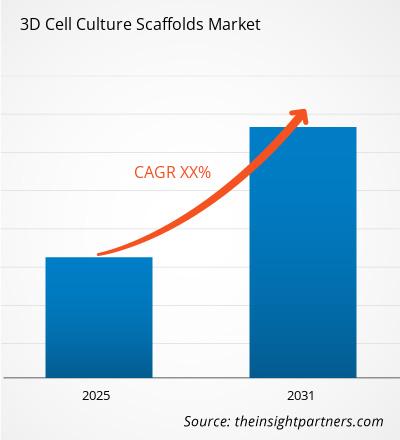
The 3D cell culture scaffolds market size was valued at US$ 728.56 Million in 2025 and is projected to reach US$ 1,815.98 Million by 2034, registering a CAGR of 10.68% during 2026–2034. As demand is increasing for the scaffold material that helps researchers develop biologically relevant 3-D models for oncology applications, drug screening, tissue engineering, stem cell differentiation, and regenerative medicine processes.
In North America, 3D cell culture scaffolds market growth is driven by R&D in the pharmaceutical industry, translational research linked to NIH, development of cancer models, and the drive for human-relevant nonclinical testing. This market in North America is expected to expand with a CAGR of 10.1 to 10.9 percent from 2026 to 2034. FDA NAM roadmap promotes organ-on-a-chip technologies, advanced in vitro tests, and human models.
3D Cell Culture Scaffolds Market Assessment and Insights
- North America held 40–43% of the 3D cell culture scaffolds market share in 2025 and is projected to grow at a CAGR between 2026–2034 of 10.1–10.9%, supported by biopharma screening, oncology research, and scaffold-based organoid workflows.
- US represented 87–90% of North America in 2025 and is expected to grow at a CAGR between 2026–2034 of 10.0–10.8%, led by cancer centers, CROs, and drug discovery laboratories.
- Europe accounted for 27–30% share in 2025 and is forecast to expand at a CAGR between 2026–2034 of 9.5–10.3%, with Germany, the UK, Switzerland, France, and the Netherlands leading adoption.
- Asia Pacific captured 21–24% share in 2025 and is projected to grow at a CAGR between 2026–2034 of 11.6–12.5%, driven by China, Japan, South Korea, India, and Australia.
- Largest Segment Hydrogel Scaffolds held 31–35% market share in 2025 and is expected to grow at a CAGR range of 10.6–11.4% during 2026–2034 due to organoid and matrix use.
- High Growth Segment Nanofiber Scaffolds represented 14–17% share in 2025 and is forecast to grow at a CAGR range of 12.2–13.1% during 2026–2034 as biomimetic matrices advance.
- Key companies analyzed in detail: Thermo Fisher Scientific Inc., Corning Incorporated, Merck KGaA, Lonza Group AG, REPROCELL Inc., TissUse GmbH, InSphero AG, Synthecon, Inc., 3D Biotek LLC, and CN Bio Innovations Limited.
Source: The Insight Partners' analysis based on proprietary research, government publications, company annual reports, investor presentations, industry databases, and expert interviews.
The market has moved from merely attaching substrates to creating matrix systems with controlled stiffness, porosity, degradation, diffusion, and matrix-cell signaling. Selection of materials for scaffold construction is increasingly based on the type of tissue, imaging requirements, cell retrieval, assay applicability, and reproducibility considerations. The market for 3D cell culture scaffolds is also impacted by advances in manufacturing processes for matrices without animal components, defined hydrogels, polymer scaffolds, and pre-format plates.
Potential drivers for future demand include regulatory approval of human-relevant tests, increased adoption of such methods in the Asia Pacific region’s CRO networks, and funding for organoids, tumor spheroids, and stem cell systems. Research into cancer continues to be a structural driver of demand, given that the WHO and IARC estimate 20 million new cancer cases and 9.7 million deaths in 2022.
3D Cell Culture Scaffolds Market Report Scope
| Report Attribute | Details |
|---|---|
| Market size in 2025 | US$ 728.56 Million |
| Market Size by 2034 | US$ 1,815.98 Million |
| Global CAGR (2026 - 2034) | 10.68% |
| Historical Data | 2021-2024 |
| Forecast period | 2026-2034 |
3D Cell Culture Scaffolds Market Analysis
Growth of the market for 3D cell culture scaffolds is fueled by the necessity to develop more realistic models of tissue architecture, drug delivery, oxygen gradients, ECM, and cell differentiation. Growth is further supported by FDA's acknowledgment that in vitro advanced systems could increase prediction accuracy while decreasing the usage of animals in nonclinical testing.
Value Chain actors include manufacturers of biopolymers, scaffolds' makers, suppliers of cell-culture plates, matrix creators, suppliers of imaging equipment, automation providers, CROs, pharmaceutical laboratories and academic institutions. Favorable supply trends exist for those who deliver uniformity, sterilization, well-defined protocols, scalability and compatibility with microscopy, high-content screening and biochemical testing.
Industry participants include global suppliers of the life science products and dedicated suppliers of 3D cell models. Market analysis of 3D cell culture scaffolds reveals Thermo Fisher Scientific Inc., Corning Incorporated, Merck KGaA, and Lonza Group AG as key competitors through matrices, media and other consumables and lab facilities across the globe.
REPROCELL Inc., TissUse GmbH, InSphero AG, Synthecon, Inc., 3D Biotek LLC, and CN Bio Innovations Limited enhance their specialty positions by means of organoids, microphysiological systems, rotating bioreactors, microtissues, and scaffold-based models. Differentiation strategies rely on factors such as reproducibility of the model, relevance, simplicity of workflow, validation support, and applicability to discovery and translational research.
● REPORT CUSTOMIZATION
Tailor This Report To Align With Your Specific Business Requirements
This report can be customized to align precisely with your business objectives, scope, and target markets. Customization options include tailored segmentation, geography, competitive analysis, and strategic insights to support informed decision-making.
Customize This Report →WHAT YOU CAN ADJUST
- ● Segmentations
- ● Geography
- ● Competitive Analysis
- ● Language Preferences
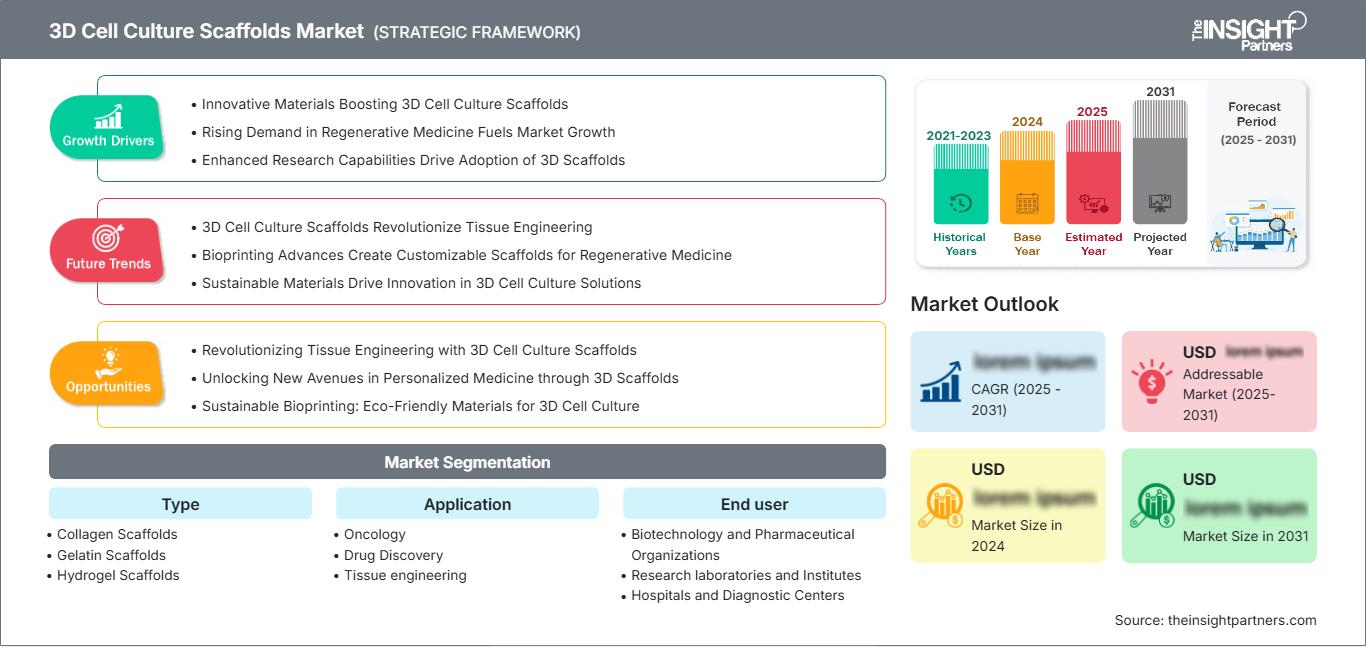
3D Cell Culture Scaffolds Market: Strategic Insights
Regional Insights
North America 3D cell culture scaffolds Market
North America held 40–43% share in 2025 and is projected to grow at a CAGR of 10.1–10.9% during 2026–2034. It has been facilitated with pharmaceutical research and development activities, cancer research institutions, the use of advanced microscopes, and early introduction of organoids and microphysiological systems. The FDA’s new approach methodology efforts have contributed to demand creation for scaffold-based human models in assessing the safety of drugs.
The market share of the 3D cell culture scaffolds in North America has been bolstered by the availability of robust supplier network and investments in high-throughput screening techniques. According to Corning, 3D cell culture allows researchers to achieve better pre-clinical results as well as factors of tumor biology not captured through 2D cell culture, such as diffusion gradients and biophysical environment.
U.S. 3D cell culture scaffolds Market
The U.S. represented 87–90% of North America in 2025 and is expected to grow at a CAGR of 10.0–10.8% during 2026–2034. Its scale reflects oncology discovery programs, translational medicine funding, contract research activity, and adoption of scaffold systems for stem cell, toxicity, tumor, and organoid studies.
Presence of companies is extensive and includes Thermo Fisher Scientific Inc., Corning Incorporated, Merck KGaA, Lonza Group AG, InSphero AG, 3D Biotek LLC, Synthecon, Inc., and CN Bio Innovations Limited. These work with laboratories through direct selling and distributors. Uses include cancer spheroids, tissue scaffolds, hepatic models, regeneration, and assay-ready matrices.
Europe 3D cell culture scaffolds Market
Europe accounted for 27–30% share in 2025 and is expected to grow at a CAGR of 9.5–10.3% during 2026–2034. Germany is the leading country due to biomaterials expertise, pharmaceutical research, and engineering strength. The UK contributes through organoid research, CRO services, and non-animal testing interest.
The market in Germany is influenced by university-industry collaborations, scaffolding manufacturing expertise, and requirements for matrices in cancer research and tissue engineering. Translational research and human disease models are key aspects in the UK market. InSphero AG is the Swiss entry, and microphysiological systems and organ-on-chip are what the Dutch promote.
France, Italy, and Spain are growing through the development of their cancer biology, regenerative medicine, and stem cell laboratories. There is active involvement of public research in France, biomaterials and scaffold engineering in Italy, and increased utilization of 3D models in oncology screening in Spain. Procurement is still based on evidence.
APAC 3D cell culture scaffolds Market
APAC held 21–24% share in 2025 and is projected to grow at a CAGR of 11.6–12.5% during 2026–2034. Chinese companies gain leadership based on quantity by developing biotechnology breakthroughs, local production of reagents, and cancer research and development, whereas Japanese, Korean, Indian, and Australian companies take part in the industry by means of regenerative medicine efforts, CROs, and academic research.
It is due to such elements as clinical research outsourcing, stem cells research, and drug screening that the industry receives its boost. The Japanese provide excellent quality of cell culture materials as well as foundation for regenerative medicine, and Indians offer inexpensive discovery solutions.
Middle East & Africa 3D cell culture scaffolds Market
Middle East & Africa is projected to grow at a CAGR of 8.2–9.0% during 2026–2034. Saudi Arabia leads demand through research hospitals, biotechnology investment, and healthcare modernization. Innovation clusters, educational collaborations, and top-notch laboratory facilities drive the UAE’s progress.
South Africa drives the use in Africa via biomedical research in universities and oncology studies linked to diagnostics. The rest of the MEA region is at an early stage owing to cost of consumables, lack of specialist training, and small biopharmaceutical markets. In Gulf countries, healthcare investments facilitate sophisticated lab acquisitions.
Segmentation Analysis
Type
The Type segment is expected to grow at a CAGR of 10.3–11.1% during 2026–2034. 3D cell culture scaffolds market scope across scaffold types is defined by material origin, stiffness, porosity, cell adhesion profile, degradation behavior, optical clarity, and compatibility with downstream assays. Hydrogel and collagen systems remain widely used, while nanofiber and polymer scaffolds are expanding in tissue engineering and regenerative research.
- Collagen Scaffolds remain important because collagen provides cell-adhesive cues, extracellular matrix familiarity, and broad use across epithelial, stromal, tumor, and tissue engineering models.
- Gelatin Scaffolds support cost-effective, biocompatible culture environments with tunable properties. Demand is linked to hydrogel blending, tissue engineering, and applications requiring softer matrix behavior.
- Hydrogel Scaffolds hold the largest position because they enable organoid embedding, diffusion control, tunable stiffness, and tissue-like hydration for cancer, stem cell, and regenerative models.
- Nanofiber Scaffolds are gaining demand because fibrous architecture mimics extracellular matrix topography. They are strategically relevant for migration, differentiation, wound healing, and engineered tissue studies.
- Polycaprolactone Scaffolds support longer-term tissue engineering because of mechanical strength and slow degradation. Their importance is strongest in bone, cartilage, and structural regenerative models.
- Polystyrene Scaffolds provide familiar, scalable, and cost-effective culture formats. Their role remains practical where researchers need standardized plates and reproducible cell attachment behavior.
Application
The Application segment is projected to grow at a CAGR of 10.5–11.3% during 2026–2034. Demand is strongest in oncology and drug discovery because scaffold systems improve tumor architecture, compound diffusion, matrix signaling, and resistance modeling. Tissue engineering, stem cell research, and regenerative medicine also benefit as materials become more defined and assay-compatible.
- Oncology generates high demand through tumor spheroids, organoids, invasion assays, stromal co-cultures, and drug-resistance studies where matrix conditions influence treatment response.
- Drug Discovery uses scaffold models to improve screening relevance, toxicity prediction, and candidate prioritization. Adoption is strongest where 3D assays integrate with imaging and automated workflows.
- Tissue engineering relies on scaffolds to guide cell organization, mechanical support, and extracellular matrix deposition in engineered constructs for repair and disease modeling.
- Stem Cell Research uses scaffold systems to support differentiation, lineage commitment, organoid formation, and microenvironment control, making material consistency critical for reproducible outcomes.
- Regenerative Medicine benefits from scaffolds that support tissue repair, cell delivery, and construct maturation. Commercial value is linked to translational validation and clinically relevant biomaterials.
End User
The End user segment in the 3D cell culture scaffolds market report is forecast to grow at a CAGR of 10.2–11.0% during 2026–2034. Biotechnology and pharmaceutical organizations dominate spending because they require standardized scaffold formats for screening and translational research. Research laboratories and institutes drive method development, while hospitals and diagnostic centers are gradually exploring patient-derived models.
- Biotechnology and Pharmaceutical Organizations generate the highest revenue contribution through drug screening, toxicology, oncology modeling, and assay development requiring reproducible scaffold-based systems.
- Research laboratories and Institutes remain strategically important because they develop new biomaterials, organoid protocols, disease models, and tissue engineering methods that expand future commercial demand.
- Hospitals and Diagnostic Centers are emerging users where patient-derived organoids, tumor profiling, and translational diagnostics require controlled matrices and clinically linked culture workflows.
Opportunity Snapshot
| Segment Name | Revenue Contribution | Trend Tag | Adoption Stage |
| Oncology | High | Tumor Matrix | Scaling |
| Drug Discovery | High | Predictive Screening | Scaling |
| Tissue engineering | Medium | Scaffold Design | Scaling |
| Stem Cell Research | Medium | Organoid Support | Scaling |
3D Cell Culture Scaffolds Market Growth Drivers and Impact Analysis
Regulatory Momentum for Human-Relevant In Vitro Models
FDA’s roadmap to reduce animal testing in preclinical safety studies is a key structural driver because it highlights organ-on-chip systems, advanced in vitro assays, computational modeling, and other new approach methodologies. These systems often require controlled scaffolds, hydrogels, or extracellular matrix materials to support tissue-like organization. The 3D cell culture scaffolds market benefits as pharmaceutical teams seek models that improve predictive relevance, reduce late-stage failures, and generate more human-specific toxicity or efficacy signals. Real-world impact is strongest where scaffold-based cultures support repeatable liver, tumor, cardiac, skin, and stem cell assays suitable for decision-making and documentation.
Growing Cancer Research and Precision Oncology Demand
Cancer-model demand remains a major growth driver because scaffold systems help recreate tumor architecture, stromal interaction, matrix stiffness, and compound penetration. WHO and IARC estimated about 20 million new cancer cases and 9.7 million deaths in 2022, creating sustained pressure for more predictive oncology tools. Scaffold-enabled tumor models support drug-response testing, invasion assays, biomarker exploration, and resistance studies that two-dimensional culture often underrepresents. The market impact is recurring demand for hydrogels, collagen matrices, coated cultureware, and imaging-compatible scaffold systems. Suppliers that offer validated oncology workflows and batch consistency are positioned for stronger adoption in pharma and research laboratories.
Need for Reproducible Tissue Engineering Platforms
Tissue engineering requires scaffolds that balance biocompatibility, porosity, degradation, strength, and manufacturability. Corning notes that cell scaffolding supports organized cell and tissue growth and enables research across cancer biology, drug discovery, human disease physiology, and tissue engineering. Thermo Fisher Scientific describes AlgiMatrix as an animal-free porous alginate bioscaffold designed for higher-fidelity models and applications including tumor spheroids, hepatocyte studies, co-culture, high-throughput screening, and stem cell differentiation. The market impact is rising demand for ready-to-use scaffold plates and defined materials that reduce preparation time and improve cross-site reproducibility.
3D Cell Culture Scaffolds Market Future Trends
Defined and Animal-Free Scaffold Materials
Defined and animal-free systems will shape 3D cell culture scaffolds market trends as researchers seek better reproducibility, ethical sourcing, and regulatory alignment. Animal-derived matrices remain widely used, but lot variability can affect organoid growth, drug response, and assay comparability. Thermo Fisher Scientific’s AlgiMatrix positioning as an animal-origin-free scaffold illustrates demand for chemically defined alternatives that maintain nutrient delivery and workflow compatibility. Future material development will emphasize tunable stiffness, synthetic peptide functionalization, xeno-free manufacturing, optical clarity, and standardized release testing. Vendors that reduce biological variability while preserving tissue-like behavior will be preferred in pharmaceutical and translational workflows.
Scaffold Integration with Microphysiological Systems
Scaffolds are expected to integrate more closely with organ-on-chip and perfused culture systems as users require dynamic flow, immune interaction, and barrier function. CN Bio’s PhysioMimix Core launch in 2025 combined single-organ, multi-organ, and higher-throughput configurations within one microphysiological system, reflecting demand for scalable tissue environments. Future scaffold formats will need to support perfusion, imaging, sampling, and long-duration culture without disrupting cell morphology. This trend favors hydrogel, nanofiber, and engineered polymer systems that can interface with microfluidic devices while providing stable, reproducible matrices for ADME, toxicity, oncology, and inflammation models.
3D Cell Culture Scaffolds Market Opportunities
Validated Oncology Scaffold Kits
3D cell culture scaffolds market Forecasts indicate strong opportunity in ready-to-use oncology scaffold kits that combine matrices, plates, protocols, and assay readouts. Cancer researchers need reproducible tumor microenvironments for invasion, metastasis, immune interaction, and therapy-resistance studies. Corning’s 3D culture resources emphasize tumor biology features such as diffusion gradients and biophysical environment, which scaffold-based systems can better capture than flat cultures. Companies can differentiate by offering cancer-type-specific matrices, compatible imaging recommendations, standardized drug-response assays, and validated workflows for high-throughput screening. Commercial success will depend on reproducibility, ease of use, and evidence that kits improve translational confidence.
APAC Biopharma and CRO Workflow Expansion
Asia Pacific offers a major opportunity as China, Japan, South Korea, India, and Australia expand biopharmaceutical R&D, organoid studies, and outsourced discovery services. CN Bio’s partnership with Pharmaron to validate and integrate PhysioMimix technology across global R&D workflows illustrates how CRO adoption can accelerate advanced 3D systems. Scaffold suppliers can improve penetration through local distribution, application support, automation-compatible formats, and cost-tiered product lines. The opportunity is strongest in oncology screening, liver toxicity, regenerative medicine, and stem cell workflows where standardized matrices can reduce experimental failure and support repeatable service delivery.
Recent Developments
- May 2026: InSphero AG acquired PhenoVista Biosciences, Inc., a California-based high-content imaging and phenotypic assay services provider. The acquisition expanded InSphero’s U.S. footprint and strengthened capabilities in predictive in vitro models, advanced 3D biology, oncology, neuroscience, fibrosis, safety assessment, microphysiological systems, and image-based assay workflows.
- October 2025: CN Bio Innovations Limited launched PhysioMimix Core, an all-in-one organ-on-chip system combining single-organ, multi-organ, and higher-throughput configurations within one scalable microphysiological system. The platform supports up to 288 samples simultaneously and works with existing PhysioMimix accessories, validated protocols, consumables, and organ model kits.
- September 2025: Corning Incorporated hosted its 2025 3D Cell Culture Summit roadshow across San Diego, Houston, Toronto, and Cambridge. The program focused on advanced 3D models, patient-derived organoids, CNS drug discovery, cardiac spheroids, workflow optimization, and practical methods for moving 3D cultures toward higher-throughput research settings.
Frequently Asked Questions

- Comprehensive Market Sizing and Forecast Analysis
- Detailed Segmentation Analysis
- In-Depth Market Dynamics Assessment
- Regional and Country-Level Insights
- Competitive Landscape and Company Benchmarking
- Strategic Business Intelligence
Recent Reports
Testimonials

The Insight Partners' SCADA System Market report is comprehensive, with valuable insights on current trends and future forecasts. The team was highly professional, responsive, and supportive throughout. We are very satisfied and highly recommend their services.
RAN KEDEM Partner, Reali Technologies LTDs
I requested a report on a very specific software market and the team produced the report in a few days. The information was very relevant and well presented. I then requested some changes and additions to the report. The team was again very responsive and I got the final report in less than a week.
JEAN-HERVE JENN Chairman, Future Analytica
We worked with The Insight Partners for an important market study and forecast. They gave us clear insights into opportunities and risks, which helped shape our plans. Their research was easy to use and based on solid data. It helped us make smart, confident decisions. We highly recommend them.
PIYUSH NAGPAL Sr. Vice President, High Beam Global
The Insight Partners delivered insightful, well-structured market research with strong domain expertise. Their team was professional and responsive throughout. The user-friendly website made accessing industry reports seamless. We highly recommend them for reliable, high-quality research services
YUKIHIKO ADACHI CEO, Deep Blue, LLC.
This is the first time I have purchased a market report from The Insight Partners.While I was unsure at first, I visited their web site and felt more comfortable to take the risk and purchase a market report.I am completely satisfied with the quality of the report and customer service. I had several questions and comments with the initial report, but after a couple of dialogs over email with their analyst I believe I have a report that I can use as input to our strategic planning process.Thank you so much for taking the extra time and making this a positive experience.I will definitely recommend your service to others and you will be my first call when we need further market data.
JOHN SUZUKI President and Chief Executive Officer, Board Director, BK Technologies
I wish to appreciate your support and the professionalism you displayed in the course of attending to my request for information regarding to infectious disease IVD market in Nigeria. I appreciate your patience, your guidance, and the fact that you were willing to offer a discount, which eventually made it possible for us to close a deal. I look forward to engaging The Insight Partners in the future, all thanks to the impression you have created in me as a result of this first encounter.
DR CHIJIOKE ONYIA MANAGING DIRECTOR, PineCrest Healthcare Ltd.Reason to Buy
- Informed Decision-Making
- Understanding Market Dynamics
- Competitive Analysis
- Identifying Emerging Markets
- Customer Insights
- Market Forecasts
- Risk Mitigation
- Boosting Operational Efficiency
- Strategic Planning
- Investment Justification
- Tracking Industry Innovations
- Aligning with Regulatory Trends





 Get Free Sample for