
Antibiotic Stewardship Biomarkers Market Growth, Size & Forecast by 2034
Coverage: By Type (Blood Biomarkers, Urine Biomarkers); Application (Diagnostics, Drug Discovery, Personalized Medicine, Others) , and Geography (North America, Europe, Asia Pacific, and South and Central America)
- Status : Data Released
- Report Code : TIPRE00023261
- Category : Life Sciences
- No. of Pages : 150
- Available Report Formats :


- Last update date : August 24, 2026


2025 Market Size
US$ 20.65 Bn
Base year value
2034 Forecast
US$ 44.06 Bn
Projected by 2034
CAGR 2026-2034
8.78 %
Growth rate
Addressable Market
US$ 289.81 Bn
(2026-2034)
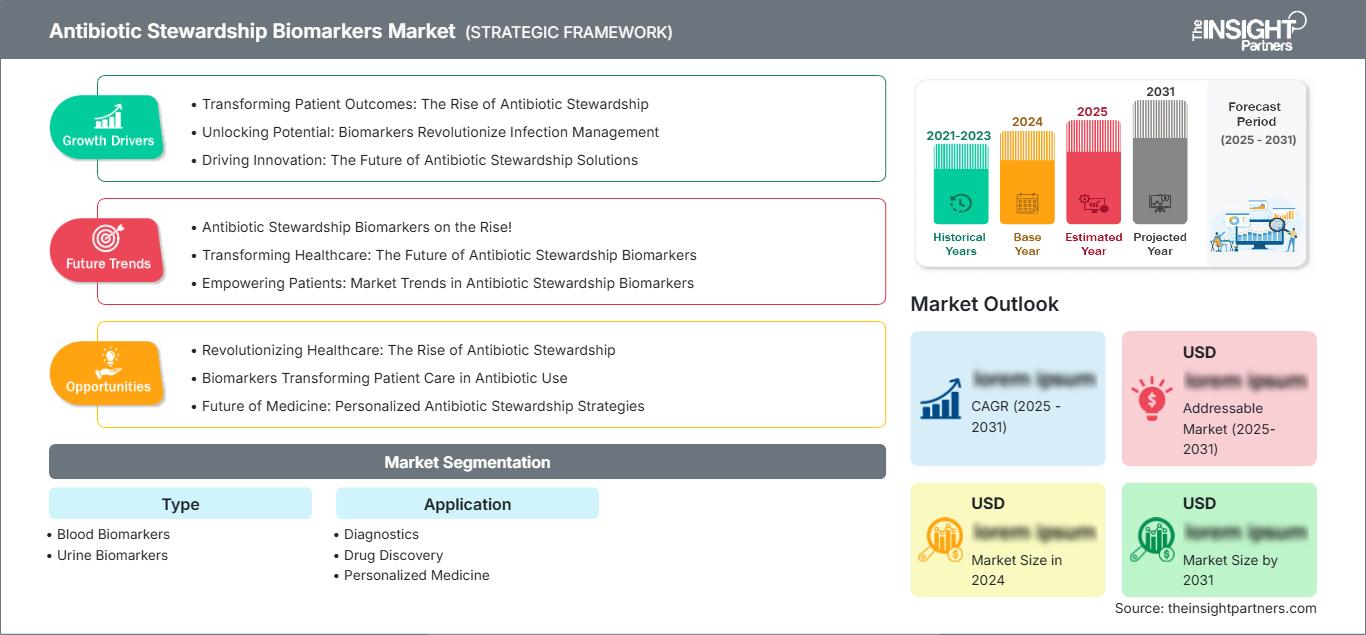
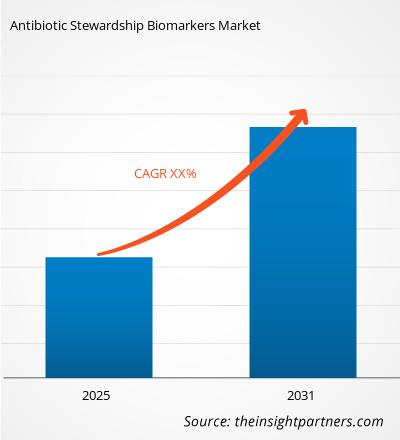
The antibiotic stewardship biomarkers market is projected to expand from US$ 20.65 Billion in 2025 to US$ 44.06 Billion by 2034, registering a CAGR of 8.78% during 2026–2034. The market consists of biomarker assays which aid in the determination of infection, antimicrobial selection, therapy management, and stewardship, wherein the blood and urine biomarkers help to diagnose and develop therapies for infectious diseases in the hospitals and laboratories. North America holds the scope for continuous growth owing to the growing integration of rapid diagnostic data in antimicrobial stewardship programs.
The antibiotic stewardship biomarkers market size is driven by growing acceptance of laboratory developed tests, point-of-care diagnosis, clinical decision support systems, and reimbursement models favoring quick distinction between bacterial infection and non-bacterial infection.
Antibiotic Stewardship Biomarkers Market Assessment and Insights
- North America: North America is estimated to account for 35–39% share in 2025, supported by advanced clinical laboratories and stewardship infrastructure, with the region projected to grow at a 7.8–8.6% CAGR between 2026–2034.
- US: The US represents approximately 78–83% of North America's 2025 market, with adoption supported by hospital stewardship programs and rapid diagnostic integration, growing at a 7.9–8.7% CAGR between 2026–2034.
- Europe: Europe is estimated at 27–31% share in 2025, led by Germany, the UK, France, and Italy, with diagnostic stewardship policies and laboratory modernization supporting a 7.1–7.9% CAGR between 2026–2034.
- Asia Pacific: Asia Pacific represents approximately 21–25% share in 2025, led by China, Japan, South Korea, India, and Australia, and is expected to expand at a 9.0–9.8% CAGR between 2026–2034.
- Largest Segment: Blood Biomarkers is estimated to hold a 58–63% market share in 2025, reflecting established clinical utility and broader hospital adoption, with a 8.1–8.9% CAGR from 2026–2034.
- High Growth Segment: Personalized Medicine is projected to represent a 20–24% market share in 2025, with expanding biomarker-guided treatment strategies supporting a 9.4–10.2% CAGR from 2026–2034.
- Key companies analyzed in detail: Basilea Pharmaceutica Ltd., Melinta Therapeutics, Wockhardt Limited, Theravance Biopharma, Inc., QIAGEN N.V., Roche, Abbott, Bio-Rad Laboratories, Thermo Fisher Scientific, and Danaher Corporation.
Source: The Insight Partners' analysis based on proprietary research, government publications, company annual reports, investor presentations, industry databases, and expert interviews.
The antibiotic stewardship biomarkers market has moved away from the use of traditional inflammatory biomarkers towards biomarker testing that integrates immunoassays, molecular testing, antimicrobial susceptibility, and clinical information. Automation has increased reproducibility, while multiplex technology has made it possible for the laboratories to analyze infection-related biomarker data along with pathogen data. The production dynamics are also moving towards standardization of reagents, scalability to cartridges, and platforms that can support decentralized testing. This helps biomarker testing play an important part in stewardship decision-making rather than being just a confirmation test.
Future development is expected to be centered around quick sample-to-answer workflows, access in resource-limited areas, and better integration with the hospital information systems. The emerging markets in Asia Pacific and Latin America present possibilities due to increased microbiology capabilities and development of national AMR programs. Regulatory focus on diagnostic stewardship would help in validating clinically relevant biomarkers, while precision medicine and infectious disease diagnostics investments would increase the demand for tests that connect biomarker data to treatment.
Antibiotic Stewardship Biomarkers Market Report Scope
| Report Attribute | Details |
|---|---|
| Market size in 2025 | US$ 20.65 Billion |
| Market Size by 2034 | US$ 44.06 Billion |
| Global CAGR (2026 - 2034) | 8.78% |
| Historical Data | 2021-2024 |
| Forecast period | 2026-2034 |
Antibiotic Stewardship Biomarkers Market Analysis
Demand for the antibiotic stewardship biomarkers growth is being shaped by the need to reduce unnecessary antibiotic exposure while maintaining timely treatment for serious bacterial infections. Hospitals, diagnostic laboratories, pharmaceutical developers, and academic research centers form the principal ecosystem. Value chain in the antibiotic stewardship biomarkers market considerations range from discovery and sample preparation to assays, instrumentation, clinical validation, and routine testing. Current blood tests are advantaged through existing laboratory setup, and the use of urine biomarkers is becoming important in infection pathways in the urinary tract. Performance, speed, multiplex capability, automation readiness, and clinical utility studies now drive suppliers’ competition.
Supply factors include reagent manufacturing, installed bases of instruments, validation, and availability of quality clinical samples. Big companies in diagnostics can leverage on their existing network of distribution and labs, whereas specialists compete through unique biomarker offerings. Cost factors increasingly weigh procurement considerations in terms of total test cost versus individual test cost, especially if rapid tests reduce hospital stays or misuse of antibiotics. Diagnostic stewardship by WHO is an additional framework for ensuring effective integration of testing results.
Competitive Positioning in the antibiotic stewardship biomarkers market consists of a combination of diagnostic scope, assay capability, biomarker expertise, and workflow integration. QIAGEN and Roche have their own platforms in molecular and laboratories diagnostics, while Abbott, Bio-Rad Laboratories, and Thermo Fisher Scientific have wide capabilities in diagnostics and analytics. On the other hand, Danaher Corporation has a range that encompasses microbiology, molecular diagnostics, and laboratory automation.
The investment is increasingly moving towards multiplex diagnostics, rapid resistance phenotyping, and biomarker platforms that would help optimize treatment. The competitive differentiation is moving from individual analytes to workflows that will enable combination of host response and pathogen identification information. Collaboration of diagnostic providers, hospitals, pharmaceuticals, and research laboratories can speed up the clinical validation process. The firms with existing laboratory infrastructure will be able to bring new biomarkers to market quicker, whereas specialized developers can focus on specific infection pathways with clinical proof of stewardship value.
● REPORT CUSTOMIZATION
Tailor This Report To Align With Your Specific Business Requirements
This report can be customized to align precisely with your business objectives, scope, and target markets. Customization options include tailored segmentation, geography, competitive analysis, and strategic insights to support informed decision-making.
Customize This Report →WHAT YOU CAN ADJUST
- ● Segmentations
- ● Geography
- ● Competitive Analysis
- ● Language Preferences
Antibiotic Stewardship Biomarkers Market: Strategic Insights
Regional Insights
North America antibiotic stewardship biomarkers market
North America is projected to have a share of 35–39% in the antibiotic stewardship biomarkers market in 2025 and continue growing with CAGR of 7.8–8.6% during 2034. Its strengths include developed hospital labs, antimicrobial stewardship teams, efficient reimbursement system, and high need for rapid evidence-based practice. While US hospitals remain the key source of adoption, Canada will contribute through public health laboratories and standardized antimicrobial stewardship programs. Increasingly, biomarker tests are being assessed based on their effect on prescribers' decision-making process rather than analytical value only.
The region has a good diagnostic research capacity and well-developed laboratory infrastructure. Integration with EHR can make biomarker results more valuable by connecting the outcome of the test with prescribers and alerts in clinical workflow. Academic medical centers become critical sites for biomarker validation, while commercial laboratories facilitate widespread biomarker testing. Growth will thus be strongly linked to evidence, reimbursement, and workflow integration, rather than volume increase only.
U.S. antibiotic stewardship biomarkers Market
US holds around 78-83% of North America’s share in 2025 and expected to witness a growth rate of 7.9-8.7% CAGR. Large hospital groups, infectious diseases departments, clinical laboratories, and point-of-care tests contribute to form a robust commercialization platform. Companies such as Abbott, Bio-Rad Laboratories, Thermo Fisher Scientific, QIAGEN, Roche, and Danaher Corporation offer diagnostic capabilities in laboratory and molecular diagnostic platforms.
Growing trends in the application are focused on faster identification of bacteria infection, treatment management, and evaluation of the risk of developing resistance. Automated platforms are also gaining popularity in clinical laboratories which help in reducing manual intervention and provide standardized results. Economic rationale of the market is not just limited to sales revenue as early optimization of treatment can help reduce the length of stay, antimicrobials usage, and infection control strategies.
Europe antibiotic stewardship biomarkers Market
Europe contributes about 27–31% of market shares and is forecast to grow at a rate of 7.1–7.9% CAGR, with Germany emerging as the major national market. Antimicrobial resistance strategy, quality lab requirements, diagnostic stewardship, and public sector healthcare procurement contribute to the regional demand.
The UK has a well-established program of antimicrobial stewardship along with healthcare procurement and solid academic research presence. Germany has a well-developed lab infrastructure and demand for automated diagnostic tools. Other key markets in Europe are France, Italy, and Spain. Demand is driven by national strategies of AMR, development of laboratories and adoption of rapid diagnostic tools. The European regulatory landscape is expected to encourage assays with clear analytical and clinical data.
APAC antibiotic stewardship biomarkers Market
The APAC region holds around 21–25% market share in 2025 and is projected to register a 9.0–9.8% CAGR to emerge as the highest growing major region. The major regional drivers are construction of hospitals, automation of laboratories, surveillance of infectious diseases, and AMR initiatives on national level. China is leading the regional market, with Japan and South Korea as second and third major countries due to highly developed laboratory infrastructure. India represents an important future growth driver due to increased diagnosis capabilities and AMR initiatives, and Australia serves as a mature benchmark region.
Industrial investments in diagnostics and infrastructure in APAC region will facilitate biomarker tests availability in major urban areas and subsequently smaller healthcare facilities.
Middle East & Africa antibiotic stewardship biomarkers Market
The Middle East & Africa is a relatively small yet growing market, where there is more demand in Saudi Arabia, the UAE, South Africa and major cities throughout the region. Healthcare reform in the region, centralization and the development of hospital infrastructure provide growth opportunities in the region.
South Africa offers a significant test bed and surveillance center; the whole region has varying access to microbiological services and diagnostics. The uptake of biomarkers will increase as healthcare facilities build up their laboratory facilities and infection control capabilities. Regional growth in the market is forecast based on hospital upgrades and infectious diseases focus, but affordability and staffing issues need to be addressed in terms of commercializing products.
Segmentation Analysis
Type
The Type segment is expected to expand at a 8.2–9.0% CAGR from 2026–2034. Blood Biomarkers currently command the largest position because hospitals already have established blood collection, immunoassay, and chemistry workflows. Urine Biomarkers provide an important complementary pathway, particularly for urinary infections, where rapid host-response information can support antibiotic prescribing decisions. The antibiotic stewardship biomarkers scope is therefore broadening from centralized laboratory testing toward faster, clinically integrated workflows.
- Blood Biomarkers: Blood biomarkers maintain strong clinical relevance because inflammatory and host-response measurements can be incorporated into existing hospital laboratory pathways. Their strategic value increases when results are delivered rapidly enough to influence initial or reassessment-stage prescribing decisions.
- Urine Biomarkers: Urine biomarkers address an important infection pathway and can support more targeted assessment of urinary disease. Their development is strategically relevant where conventional culture requires additional time and clinicians need earlier evidence for treatment decisions.
Application
The Application segment is projected to grow at a 8.9–9.7% CAGR from 2026–2034. Diagnostics remains the principal application because biomarkers can directly influence clinical treatment decisions. Drug Discovery benefits from biomarkers used for patient stratification, pharmacodynamic assessment, and candidate evaluation. Personalized Medicine is gaining importance as developers seek measurable biological signals that can distinguish patients with different infection risks or treatment responses. The antibiotic stewardship biomarkers analysis therefore increasingly connects diagnostics with precision therapeutic development.
- Diagnostics: Diagnostics represents the core commercial application, using biomarker results to support infection assessment, treatment selection, de-escalation, and monitoring. Hospitals remain important customers because stewardship teams can directly incorporate actionable results into antimicrobial management pathways.
- Drug Discovery: Drug discovery applications use biomarkers to evaluate mechanisms, treatment response, and patient characteristics. Their strategic importance lies in improving clinical trial design and identifying measurable endpoints for anti-infective development programs.
- Personalized Medicine: Personalized medicine uses patient-specific biological information to refine therapeutic decisions. Biomarker-guided approaches can support treatment selection where disease severity, host response, or resistance risk varies substantially between individuals.
Opportunity Snapshot
| Application | Revenue Contribution | Trend Tag | Adoption Stage |
|---|---|---|---|
| Diagnostics | High | Rapid Triage | Mature |
| Drug Discovery | Medium | Trial Stratification | Scaling |
| Personalized Medicine | Medium | Patient Stratification | Scaling |
Antibiotic Stewardship Biomarkers Market Growth Drivers and Impact Analysis
Rising antimicrobial resistance and treatment complexity
Increasing resistance makes empirical antibiotic selection more difficult, creating demand for objective biological evidence that can support treatment decisions. The commercial impact extends beyond identifying infection because stewardship teams require information that helps determine whether therapy should be initiated, continued, narrowed, or stopped. Biomarkers can reduce uncertainty when conventional clinical signs are nonspecific, particularly in older patients and individuals with multiple conditions. Their value is strongest when results are available within the clinical decision window. As resistance surveillance becomes more sophisticated, laboratories are also expected to combine biomarker information with pathogen and susceptibility data. This creates opportunities for suppliers capable of integrating host-response assays into broader infectious disease testing workflows and hospital decision-support systems.
Expansion of diagnostic stewardship programs
Healthcare systems are increasingly treating diagnostic quality as a component of antimicrobial stewardship rather than a separate laboratory function. This shift creates direct market opportunities because biomarker tests can become embedded in standardized clinical pathways, emergency department protocols, and hospital stewardship algorithms. The impact is particularly significant when testing helps distinguish bacterial infection from conditions where antibiotics provide limited benefit. Implementation can also improve laboratory utilization by directing confirmatory testing toward patients with a stronger clinical indication. Suppliers that demonstrate measurable changes in antibiotic prescribing, turnaround time, or patient management can strengthen the economic case for adoption. Consequently, clinical evidence is becoming an important competitive factor alongside sensitivity, specificity, automation, and reagent stability.
Growth of rapid and decentralized diagnostic workflows
The movement toward faster and more decentralized testing is expanding the addressable setting for stewardship biomarkers. Conventional centralized laboratory workflows can delay treatment decisions, particularly where specimens must be transported or testing queues are long. Compact analyzers, automated immunoassays, and near-patient platforms can shorten this interval and potentially bring biomarker testing closer to emergency, outpatient, and primary-care settings. The market impact depends on maintaining analytical quality while simplifying sample preparation and interpretation. Lower infrastructure requirements can also support adoption in regional hospitals and emerging economies. Developers that combine stable reagents, simple operation, connectivity, and rapid reporting can address a broader customer base than companies focused exclusively on high-complexity reference laboratories.
Antibiotic Stewardship Biomarkers Market Future Trends
Host-response biomarkers will become more integrated with pathogen testing
The antibiotic stewardship biomarkers market trends are likely to move toward combined host-response and pathogen workflows rather than isolated biomarker measurements. Future systems may provide clinicians with a more complete infection profile by combining inflammatory signals, pathogen identification, and resistance information within one workflow. This integration could reduce the interpretive burden associated with individual test results and support more consistent prescribing decisions. Multiplex systems may also enable simultaneous assessment of several biological signals, improving differentiation between infection states. Connectivity with laboratory information systems and electronic health records will become increasingly important because clinical utility depends on delivering actionable information at the right point in the care pathway. The strongest platforms will therefore combine analytical performance with workflow intelligence.
Biomarker algorithms will increasingly support individualized antimicrobial decisions
Algorithm-assisted interpretation is expected to become more important as biomarker panels become broader and datasets become richer. Instead of presenting isolated concentrations, future platforms may combine biomarker values with symptoms, patient characteristics, pathogen information, and previous treatment history to generate clinically interpretable risk assessments. Such systems could help stewardship teams identify patients suitable for antibiotic de-escalation or additional testing. The development pathway will require careful clinical validation, transparent decision logic, and controls against inappropriate automation. Regulatory expectations for software-supported diagnostics may also increase. Vendors with access to large clinical datasets and established laboratory platforms will have an advantage in validating these models across diverse patient populations and healthcare environments.
Antibiotic Stewardship Biomarkers Market Opportunities
Expansion into emerging-market laboratory networks
The antibiotic stewardship biomarkers market Forecasts indicate a substantial opportunity to extend testing into secondary hospitals and regional laboratory networks where microbiology capacity is developing but clinical demand is high. Investors and suppliers can prioritize platforms that require limited infrastructure, tolerate variable operating conditions, and use standardized consumables. Partnerships with national laboratories, hospital groups, and local distributors can accelerate deployment while reducing service barriers. India, Southeast Asia, Latin America, and selected Middle Eastern markets offer particularly relevant pathways because healthcare systems are investing in diagnostic capacity while confronting antibiotic resistance. Commercial models based on reagent rental, centralized procurement, or managed laboratory services could lower upfront capital requirements. Local manufacturing and regional supply chains may further improve affordability and continuity of reagent availability.
Integrated stewardship platforms for hospital decision support
The antibiotic stewardship biomarkers Report opportunity extends beyond individual assays toward integrated platforms that connect testing with antimicrobial management. Hospitals increasingly need actionable information rather than disconnected laboratory results, creating opportunities for vendors to combine biomarker testing, pathogen identification, susceptibility data, and clinical decision support. Such platforms could provide standardized recommendations for escalation, de-escalation, or repeat testing while maintaining clinician oversight. Commercial value can be strengthened through recurring reagent revenue, software subscriptions, workflow contracts, and service agreements. Developers should prioritize interoperability with laboratory information systems and electronic health records, cybersecurity, and evidence demonstrating clinical utility. Strategic partnerships with health systems can provide the longitudinal data required to refine algorithms and demonstrate measurable stewardship outcomes.
Recent Developments
- July 2026: QIAGEN N.V. expanded its QIAstat-Dx bloodstream infection offering in Europe with the CE-IVDR-certified BCID GN Plus AMR Panel. The panel detects 13 gram-negative bacterial targets and 18 antimicrobial resistance markers from positive blood cultures, complementing the company's existing gram-positive and fungal AMR panel. QIAGEN stated that the combined offering supports results in about one hour for patient management and antimicrobial stewardship.
- December 2025: Roche received CE Mark approval for its automated mass spectrometry reagent pack for antibiotic drug monitoring. The approval expanded Roche's automated in-vitro diagnostic menu to 39 tests, including therapeutic drug monitoring for antibiotics. The development strengthens the company's positioning in standardized laboratory workflows where rapid and reproducible measurements can support antimicrobial treatment monitoring and clinical decision-making.
- November 2025: Bio-Rad Laboratories, Inc. published updated infectious disease testing materials focused on antimicrobial resistance and laboratory detection workflows. The company highlighted the importance of rapid, reliable testing for resistance confirmation and appropriate antibiotic selection, emphasizing the role of clinical laboratories in reducing delays that can contribute to inappropriate antimicrobial use and supporting broader AMR surveillance activities.
Frequently Asked Questions

- Comprehensive Market Sizing and Forecast Analysis
- Detailed Segmentation Analysis
- In-Depth Market Dynamics Assessment
- Regional and Country-Level Insights
- Competitive Landscape and Company Benchmarking
- Strategic Business Intelligence
Recent Reports
Testimonials

The Insight Partners' SCADA System Market report is comprehensive, with valuable insights on current trends and future forecasts. The team was highly professional, responsive, and supportive throughout. We are very satisfied and highly recommend their services.
RAN KEDEM Partner, Reali Technologies LTDs
I requested a report on a very specific software market and the team produced the report in a few days. The information was very relevant and well presented. I then requested some changes and additions to the report. The team was again very responsive and I got the final report in less than a week.
JEAN-HERVE JENN Chairman, Future Analytica
We worked with The Insight Partners for an important market study and forecast. They gave us clear insights into opportunities and risks, which helped shape our plans. Their research was easy to use and based on solid data. It helped us make smart, confident decisions. We highly recommend them.
PIYUSH NAGPAL Sr. Vice President, High Beam Global
The Insight Partners delivered insightful, well-structured market research with strong domain expertise. Their team was professional and responsive throughout. The user-friendly website made accessing industry reports seamless. We highly recommend them for reliable, high-quality research services
YUKIHIKO ADACHI CEO, Deep Blue, LLC.
This is the first time I have purchased a market report from The Insight Partners.While I was unsure at first, I visited their web site and felt more comfortable to take the risk and purchase a market report.I am completely satisfied with the quality of the report and customer service. I had several questions and comments with the initial report, but after a couple of dialogs over email with their analyst I believe I have a report that I can use as input to our strategic planning process.Thank you so much for taking the extra time and making this a positive experience.I will definitely recommend your service to others and you will be my first call when we need further market data.
JOHN SUZUKI President and Chief Executive Officer, Board Director, BK Technologies
I wish to appreciate your support and the professionalism you displayed in the course of attending to my request for information regarding to infectious disease IVD market in Nigeria. I appreciate your patience, your guidance, and the fact that you were willing to offer a discount, which eventually made it possible for us to close a deal. I look forward to engaging The Insight Partners in the future, all thanks to the impression you have created in me as a result of this first encounter.
DR CHIJIOKE ONYIA MANAGING DIRECTOR, PineCrest Healthcare Ltd.Reason to Buy
- Informed Decision-Making
- Understanding Market Dynamics
- Competitive Analysis
- Identifying Emerging Markets
- Customer Insights
- Market Forecasts
- Risk Mitigation
- Boosting Operational Efficiency
- Strategic Planning
- Investment Justification
- Tracking Industry Innovations
- Aligning with Regulatory Trends





 Get Free Sample for