
Bioresorbable Vascular Scaffold Market Trends, Size & Growth by 2034
Coverage: By Product Type (Synthetic, Biological); Material Type (Metal, Polymer); Application (Coronary Artery Stents, Peripheral Artery Stents, Others); End User (Hospitals, Ambulatory Surgical Centers, Cardiac Centers, Others) , and Geography (North America, Europe, Asia Pacific, and South and Central America)
- Status : Data Released
- Report Code : TIPRE00028546
- Category : Life Sciences
- No. of Pages : 150
- Available Report Formats :


- Last update date : November 03, 2026


2025 Market Size
US$ 478.83 Mn
Base year value
2034 Forecast
US$ 936.16 Mn
Projected by 2034
CAGR 2026-2034
7.73 %
Growth rate
Addressable Market
US$ 6,369.46 Mn
(2026-2034)
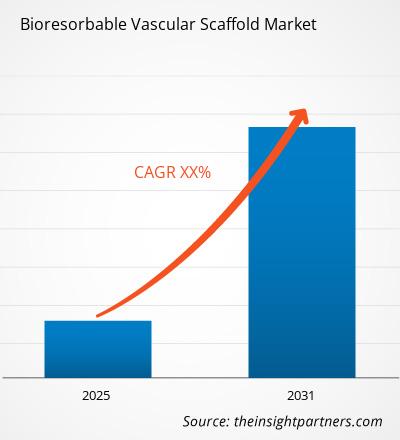
The bioresorbable vascular scaffold market was valued at US$ 478.83 Million in 2025 and is projected to reach US$ 936.16 Million by 2034, expanding at a CAGR of 7.73% during 2026–2034. Growth is supported by demand for temporary arterial support, wider treatment of peripheral artery disease, advances in resorbable metals and polymers, and clinical interest in preserving future intervention options after scaffold degradation. Adoption remains dependent on durable evidence and procedural consistency.
In North America, the bioresorbable vascular scaffold market size is expected to increase at approximately ~7% CAGR through 2034. The region benefits from established interventional cardiology and vascular surgery infrastructure, high procedural volumes, and active clinical evaluation of resorbable technologies. Peripheral applications are gaining relevance as clinicians seek alternatives that address recoil and dissection without leaving a permanent metallic implant in small or difficult-to-treat vessels.
Bioresorbable Vascular Scaffold Market Assessment and Insights
Regional Outlook
- North America: ~37% of the global bioresorbable vascular scaffold market share in 2025 | ~7% CAGR through 2034. Market position: North America leads through advanced catheterization infrastructure, extensive cardiovascular research, established reimbursement pathways, and growing clinical use of resorbable scaffolds for below-the-knee peripheral interventions.
- US: ~88% of North American market revenue in 2025 | ~7% CAGR through 2034. Market position: The US anchors regional demand through high intervention volumes, pivotal clinical trials, specialist cardiac and vascular centers, and early adoption of FDA-cleared peripheral scaffold technology.
- Europe: ~32% of the global market in 2025 | ~7% CAGR through 2034. Market position: Europe maintains a strong position through CE-marked technologies, multicountry clinical studies, and experienced interventional centers in Germany, the UK, France, Italy, and Spain.
- Asia Pacific: ~24% of the global market in 2025 | ~10% CAGR through 2034. Market position: Asia Pacific is the fastest-growing region, supported by cardiovascular procedure expansion, local device development, hospital investment, and increasing treatment access in China, Japan, South Korea, India, and Australia.
Segment Outlook
- Synthetic: ~91% Share in 2025 | ~8% CAGR through 2034. Market position: Synthetic scaffolds lead because engineered polymers and degradable metals provide controllable mechanical strength, drug-release capability, resorption behavior, manufacturability, and delivery-system compatibility.
- Peripheral Artery Stents: ~43% Share in 2025 | ~10% CAGR through 2034. Market position: Peripheral applications record stronger growth as resorbable platforms address recoil, dissection, restenosis, and future-treatment limitations in below-the-knee and other challenging vascular anatomies.
Competitive Coverage
Abbott Laboratories, Cook Group Incorporated, Boston Scientific Corporation, B. Braun SE, Medtronic plc, MicroPort Scientific Corporation, Getinge AB, Becton, Dickinson and Company, Theragenics Corporation, REVA Medical, LLC
Methodology
The Insight Partners follows Data Collection & Secondary Research, Primary Research, Data Analysis, and Data Triangulation & Final Review to validate market estimates and insights.
Source: The Insight Partners' analysis based on proprietary research, government publications, company annual reports, investor presentations, industry databases, and expert interviews.
Vascular scaffolds have gone through significant evolution from thicker strut polymeric coronary implants to thinner struts, biodegradable magnesium devices, radioopaque scaffolds, and drug-eluting peripheral stents. While early designs have shown the technical feasibility of temporary vessel support, it has been proven that strut thickness, delivery, lesion selection, radial strength, and degradation characteristics play a major role in the success of such medical devices. Future design priorities are likely to be focused on low-profile delivery, high-expansion compatibility, accurate positioning, reliable radial strength, and predictable degradation once the vessel heals.
During the forecast period through 2034, peripheral artery disease is expected to become an important market contributor in the field of below-the-knee procedures in patients with chronic limb-threatening ischemia. Investments are likely to focus more on products that can be proved with randomized trials and post-marketing surveillance, along with real-world clinical usage of new technology. Increasing clinical importance is expected for the Asia Pacific region in terms of increased procedures as well as product development.
Bioresorbable Vascular Scaffold Market Report Scope
| Report Attribute | Details |
|---|---|
| Market size in 2025 | US$ 478.83 Million |
| Market Size by 2034 | US$ 936.16 Million |
| Global CAGR (2026 - 2034) | 7.73% |
| Historical Data | 2021-2024 |
| Forecast period | 2026-2034 |
Bioresorbable Vascular Scaffold Market Analysis
Market growth in bioreabsorbable vascular scaffolds is driven by the clinical need for a device to help the artery heal without imposing permanent limitations on the treated vessel. The temporary scaffold can accommodate the issues of acute recoil and dissection, while allowing future interventions when the scaffolding dissolves. The demand is high in situations where permanent metal devices can affect future treatments, vessel mobility, or imaging. Nevertheless, there are expectations from hospitals that such benefits are actually delivering results in terms of patency, limb salvage, and thrombosis results.
The ecosystem comprises biomaterial suppliers, drug-coating providers, scaffolding developers, delivery catheter producers, contract manufacturing companies, imaging technology companies, clinical research organizations, hospitals, and specialty centers. Material demands are tough since parameters like the molecular weight of the polymer, alloy used, strut design, uniformity of coating, sterilization, shelf-life, and balloon properties determine clinical behavior.
Analysis of the bioresorbable vascular scaffold market suggests a trend in competitive positioning towards clinically proven solutions offering distinct material platforms. Abbott Laboratories holds a strong position in below-the-knee therapies, whereas REVA Medical, LLC develops radiopaque polymer scaffolds. B. Braun SE is represented in the market through vascular intervention collaborations, and big cardiovascular firms like Medtronic plc, Boston Scientific Corporation, Cook Group Incorporated, and Becton, Dickinson and Company offer related procedural and commercial competencies.
Priority investments involve pivotal studies, large size matrices, longer scaffold lengths, post-market data, physician education, and intravascular imaging techniques. Companies able to consistently deliver solid performance with their products in clinical practice can minimize adoption obstacles. In this respect, strategic differentiation will be much less related to the resorbable platform per se than performance versus balloon angioplasty, drug-coated balloons, and drug-eluting stents.
● REPORT CUSTOMIZATION
Tailor This Report To Align With Your Specific Business Requirements
This report can be customized to align precisely with your business objectives, scope, and target markets. Customization options include tailored segmentation, geography, competitive analysis, and strategic insights to support informed decision-making.
Customize This Report →WHAT YOU CAN ADJUST
- ● Segmentations
- ● Geography
- ● Competitive Analysis
- ● Language Preferences
Bioresorbable Vascular Scaffold Market: Strategic Insights
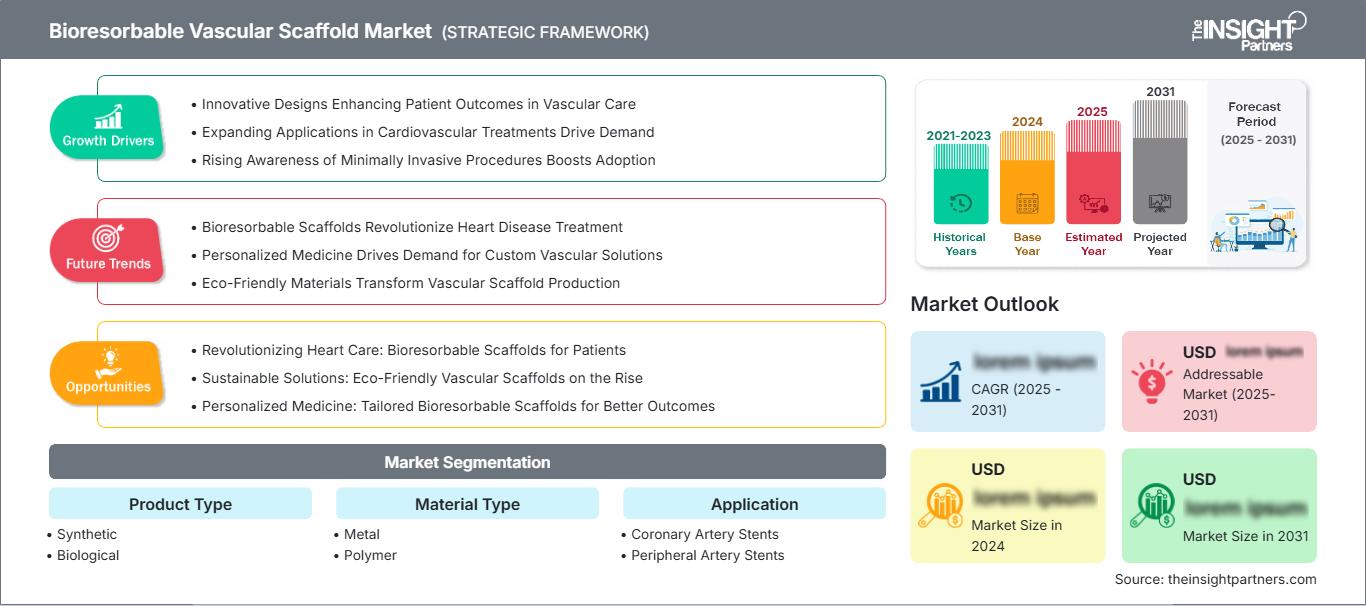
Regional Insights
North America bioresorbable vascular scaffold market
North America is expected to expand at approximately ~7% CAGR through 2034. The area brings together interventional cardiology, vascular surgery, clinical research, and regulation. The demand requires the use of devices for peripheral artery therapy, especially below the knee, due to small vessel sizes, diffuse nature of the disease, vessel recoil, and the risk of repeated interventions.
The bioresorbable vascular scaffolds share in the market is expected to be about 37% in 2025. This is supported by the use of FDA-approved peripheral technology and ongoing pivotal studies of novel coronary and peripheral devices. However, the adoption is evidence-based. The hospitals evaluate the performance in terms of target lesion revascularization, patency, limb salvage, scaffold thrombosis, deliverability, and total treatment cost before introducing any new technology. Canada has specialist centers and research efforts, while the US leads in commercialization and trials.
U.S. bioresorbable vascular scaffold market
The US generated approximately ~88% of North American revenue in 2025 and is projected to grow at ~7% CAGR through 2034. Peripheral intervention represents an important source of demand following the introduction of drug-eluting resorbable scaffolds for below-the-knee disease. The country also hosts major randomized studies intended to support future regulatory applications for polymeric and magnesium platforms.
Abbott Laboratories, Boston Scientific Corporation, Medtronic plc, Becton, Dickinson and Company, Theragenics Corporation, and REVA Medical, LLC have either direct or indirect exposure to the US vascular intervention market. Early adoption has been primarily limited to hospitals or cardiac/vascular centers with imaging capacity and trained staff. Greater adoption in the future will be contingent upon consistent performance results, reimbursement, availability, and proper training of operators on vessel size, lesion preparation, and delivery.
Europe bioresorbable vascular scaffold market
Europe accounted for approximately ~32% of global revenue in 2025 and is forecast to register ~7% CAGR through 2034. The region provides an important environment for early commercialization and multicountry clinical evidence. Germany is the leading country in Europe, supported by advanced cardiovascular care, medical-device engineering, and the presence of B. Braun SE and other vascular technology developers.
There is expertise in the UK with vascular high-volume centers and clinical research. The contribution from France is adoption through well-established hospital networks and interventionalists. Italy has had investigators in coronary and peripheral stent trials, whereas Spain provides cath lab facilities and involvement in European clinical trials.
Demand in Europe is for resorbable coronary and peripheral devices, albeit varying in adoption by indication and country reimbursement policies. Platforms with CE-marking can be made available before others in certain markets, but commercial success requires further validation past the approval stage. Market success increasingly factors post-market performance, scaffold visualization, ease of use, lesion suitability, and resorption rates.
APAC bioresorbable vascular scaffold market
Asia Pacific held an estimated ~24% of global revenue in 2025 and is projected to record the fastest regional CAGR of ~10% through 2034. China is the leading country in Asia Pacific, supported by local device innovation, large cardiovascular treatment volumes, and rising hospital access to advanced intervention.
Japan has a strength in procedures, and South Korea has a medical-device research capability. India has an expanding base of interventions and demand for low-cost technology solutions. Australia is equipped with the trial process and specialized vascular centers. Growth in the region will be fostered through regulatory approval, manufacturing capacity, local studies, and treatment of CAD and PAD.
Middle East & Africa bioresorbable vascular scaffold market
The Middle East & Africa market is projected to grow at approximately ~8% CAGR through 2034 from a relatively small base. Saudi Arabia is positioned as the leading country in the Middle East & Africa due to hospital investment, cardiovascular care expansion, and healthcare modernization. The UAE supports adoption through advanced private hospitals and specialist treatment access.
South Africa remains an important intervention center within Africa, while uptake across the rest of the region will remain concentrated in tertiary hospitals. Energy-backed infrastructure investment can improve hospital capacity, but sustainable adoption requires trained interventionists, imaging systems, reimbursement, regulatory pathways, and dependable distribution. Near-term use will focus on carefully selected patients at high-capability centers.
Segmentation Analysis
Product Type
The bioresorbable vascular scaffold market scope covers engineered and biologically derived platforms differentiated by mechanical strength, degradation mechanism, tissue interaction, and manufacturing consistency. Product selection depends on target artery, lesion complexity, support duration, drug-elution requirements, visibility, and delivery profile. Synthetic scaffolds are projected to expand at approximately ~8% CAGR during 2026–2034 because manufacturers can adjust composition and geometry to achieve application-specific performance.
- Synthetic: Synthetic platforms use engineered polymers or degradable metals to provide reproducible strength and controlled resorption. Their scalability, drug-coating compatibility, and ability to support precise device architecture make them central to commercial development.
- Biological: Biological scaffolds use naturally derived or bioengineered materials intended to support tissue compatibility and remodeling. Commercial use remains more limited because variability, sterilization, storage, and mechanical-strength requirements complicate vascular deployment.
Material Type
Material choices determine radial strength, recoil, strut thickness, visibility, inflammatory response, and resorption timing. Developers must maintain support long enough for healing while avoiding prolonged vessel caging. Material innovation is therefore closely connected to clinical performance and delivery-system design. Metal platforms are expected to record approximately ~10% CAGR through 2034 as magnesium technologies combine familiar mechanical behavior with controlled degradation.
- Metal: Resorbable magnesium systems provide metal-like radial support and can accommodate thinner structures than early polymeric platforms. Their value depends on homogeneous corrosion, coating performance, delivery characteristics, and predictable completion of resorption.
- Polymer: Polymeric scaffolds offer adaptable degradation and drug-release properties. Newer systems focus on thinner struts, radiopacity, higher expansion tolerance, and improved strength to address limitations associated with first-generation coronary devices.
Application
Application dynamics reflect differences between coronary and peripheral anatomy, lesion length, vessel movement, procedural alternatives, and clinical evidence. Coronary use remains highly selective, while peripheral disease offers growing opportunities where balloon angioplasty may provide limited durability and permanent stents may restrict future treatment. Peripheral Artery Stents are projected to increase at ~10% CAGR through 2034.
- Coronary Artery Stents: Coronary scaffolds provide temporary support after percutaneous intervention while seeking to restore vessel function following resorption. Adoption depends on comparative safety, lesion selection, precise sizing, and long-term evidence against contemporary drug-eluting stents.
- Peripheral Artery Stents: Peripheral scaffolds address recoil and dissection while preserving options for repeat treatment. Below-the-knee disease is particularly relevant because patients often present with small vessels, diffuse lesions, and chronic limb-threatening ischemia.
End User
End-user adoption depends on procedural volume, specialist expertise, imaging access, reimbursement, and institutional willingness to introduce emerging implants. Hospitals remain the primary purchasing setting, while specialized centers offer concentrated expertise. Cardiac Centers are expected to register approximately ~9% CAGR through 2034 as complex interventions increasingly move toward dedicated, imaging-enabled facilities.
- Hospitals: Hospitals lead adoption because they integrate intervention, diagnostic imaging, vascular surgery, intensive care, and follow-up. Product committees require regulatory approval, clinical evidence, training, reliable supply, and clear economic justification.
- Ambulatory Surgical Centers: Ambulatory centers offer potential for selected lower-risk interventions where local regulations permit. Adoption requires predictable deployment, experienced specialists, appropriate emergency-transfer pathways, and reimbursement that supports advanced device use.
- Cardiac Centers: Cardiac centers combine focused intervention volumes with specialized teams and advanced imaging. These institutions are positioned to evaluate new coronary technologies, refine implantation protocols, and participate in structured evidence-generation programs.
Opportunity Snapshot
| Application | Revenue Contribution | Trend Tag | Adoption Stage |
| Coronary Artery Stents | High | Vessel Restoration | Scaling |
| Peripheral Artery Stents | High | BTK Scaffolding | Scaling |
Bioresorbable Vascular Scaffold Market Growth Drivers and Impact Analysis
Need for temporary support without permanent vessel caging
Permanent implants can restrict natural vessel movement and complicate future intervention after the immediate need for structural support has passed. Bioresorbable scaffolds are designed to address acute recoil and dissection, deliver antiproliferative therapy where applicable, and then gradually disappear. The approach is relevant for younger patients and for arteries likely to require repeat treatment. Its commercial impact depends on clinical proof rather than theoretical benefit. Manufacturers must demonstrate that temporary support produces sufficient patency and acceptable safety during degradation. This requirement increases the importance of randomized trials, long-term follow-up, and imaging evidence, while favoring companies capable of financing extended development programs.
Rising treatment of below-the-knee peripheral disease
Chronic limb-threatening ischemia presents a major treatment challenge because below-the-knee vessels are small, lesions can be long or calcified, and restenosis may result in repeat intervention or limb loss. Balloon angioplasty has traditionally been used, but recoil and limited durability create opportunities for temporary scaffolding. Resorbable devices can provide acute support without leaving a permanent metal structure across future treatment zones. Commercial demand is therefore shifting toward extended lengths, smaller diameters, strong radial performance, and drug elution. Successful outcomes in complex peripheral populations can expand use beyond highly selected coronary lesions and create a broader clinical foundation for the technology.
Improvement in materials and delivery-system performance
Newer scaffolds use refined polymers, degradable magnesium, thinner struts, radiopaque materials, and delivery systems designed to improve crossing and placement. These changes directly address limitations observed with early technologies, including poor visibility, restricted expansion, and procedural sensitivity. Better device profiles may reduce the gap between scaffold implantation and conventional stent deployment. Market impact includes wider lesion eligibility, shorter learning curves, and stronger interest from clinicians who previously viewed resorbable devices as technically demanding. Material and delivery advances must remain coordinated because enhanced degradation alone carries limited value if the device cannot be implanted predictably in tortuous or calcified anatomy.
Bioresorbable Vascular Scaffold Market Future Trends
Peripheral-first commercialization of next-generation scaffolds
Bioresorbable vascular scaffold market trends indicate that peripheral applications will play a larger role in near-term commercialization. Below-the-knee intervention presents a clear clinical mechanism for temporary support because recoil must be controlled while future treatment access remains valuable. Product development will increasingly emphasize longer scaffolds, small-vessel compatibility, full radiopacity, and drug release appropriate for peripheral disease. Coronary applications will continue to advance, but their adoption threshold remains high due to strong performance from current drug-eluting stents. Peripheral evidence can provide manufacturers with commercial experience, post-market data, and physician familiarity that aids future expansion into additional vascular territories.
Combination of resorption with imaging-guided precision
Future use will increasingly integrate scaffold selection with optical coherence tomography, intravascular ultrasound, quantitative angiography, and physiology assessment. Imaging allows clinicians to evaluate vessel dimensions, plaque characteristics, expansion, and apposition more accurately than angiography alone. This is important because undersizing, incomplete expansion, or poor lesion preparation can compromise scaffold performance. Device companies may respond by developing procedure-planning tools, digital sizing guidance, and structured implantation protocols. Wider imaging integration could improve outcome consistency, although it may initially concentrate adoption in specialist centers with appropriate equipment and expertise.
Bioresorbable Vascular Scaffold Market Opportunities
Expansion into complex peripheral lesions
The bioresorbable vascular scaffold market Forecasts support investment in longer-length and broader-diameter portfolios for peripheral intervention. Long lesions, diffuse below-the-knee disease, and anatomies involving repeated treatment remain commercially attractive but technically demanding. Manufacturers can address these opportunities through stronger scaffolds, greater expansion tolerance, improved visibility, and configurations that reduce the number of implants required. Evidence programs should include complex patients rather than only idealized lesions. Partnerships with vascular centers can support protocol development, operator education, and post-market registries that demonstrate whether performance remains consistent outside controlled trials.
Evidence-led entry into the US coronary segment
Next-generation magnesium and polymer technologies create an opportunity to rebuild clinical confidence in temporary coronary scaffolding. Developers should prioritize randomized comparison with current drug-eluting stents, consistent implantation protocols, and follow-up extending beyond complete resorption. Commercial preparation must also include physician training, imaging support, reimbursement analysis, and manufacturing capacity. A successful US entry would provide access to a large intervention base, but approval alone would not ensure adoption. Manufacturers must identify patient and lesion groups where temporary support offers measurable value beyond available permanent implants.
Recent Developments
- October 2026: REVA Medical, LLC presented a live below-the-knee intervention using two MOTIV sirolimus-eluting bioresorbable scaffolds and late-breaking subgroup results from its pivotal trial. The randomized study evaluated the polymer scaffold against balloon angioplasty in patients with chronic limb-threatening ischemia, including patients with tissue loss.
- October 2026: Teleflex Incorporated received FDA Breakthrough Device Designation for the Freesolve resorbable magnesium scaffold for percutaneous coronary intervention. The device uses a magnesium alloy with a bioabsorbable drug-eluting coating, while the BIOMAG-III pivotal program is intended to support future US regulatory applications.
- May 2025: Abbott Laboratories, clinical and economic evidence presented for the Esprit below-the-knee resorbable scaffold indicated sustained benefits compared with balloon angioplasty in chronic limb-threatening ischemia. The FDA-approved everolimus-eluting platform provides temporary vessel support while preserving future treatment options after polymer resorption.
Frequently Asked Questions

- Comprehensive Market Sizing and Forecast Analysis
- Detailed Segmentation Analysis
- In-Depth Market Dynamics Assessment
- Regional and Country-Level Insights
- Competitive Landscape and Company Benchmarking
- Strategic Business Intelligence
Recent Reports
Testimonials

The Insight Partners provided valuable market intelligence that supported our global go-to-market strategy. Their team was professional, responsive, and attentive to our feedback, providing thoughtful analysis and helpful methodological clarifications throughout the project.
Junmo Kim Chief Financial Officer (CFO), Enertech Co., Ltd.
The Insight Partners' SCADA System Market report is comprehensive, with valuable insights on current trends and future forecasts. The team was highly professional, responsive, and supportive throughout. We are very satisfied and highly recommend their services.
RAN KEDEM Partner, Reali Technologies LTDs
I requested a report on a very specific software market and the team produced the report in a few days. The information was very relevant and well presented. I then requested some changes and additions to the report. The team was again very responsive and I got the final report in less than a week.
JEAN-HERVE JENN Chairman, Future Analytica
We worked with The Insight Partners for an important market study and forecast. They gave us clear insights into opportunities and risks, which helped shape our plans. Their research was easy to use and based on solid data. It helped us make smart, confident decisions. We highly recommend them.
PIYUSH NAGPAL Sr. Vice President, High Beam Global
The Insight Partners delivered insightful, well-structured market research with strong domain expertise. Their team was professional and responsive throughout. The user-friendly website made accessing industry reports seamless. We highly recommend them for reliable, high-quality research services
YUKIHIKO ADACHI CEO, Deep Blue, LLC.
This is the first time I have purchased a market report from The Insight Partners.While I was unsure at first, I visited their web site and felt more comfortable to take the risk and purchase a market report.I am completely satisfied with the quality of the report and customer service. I had several questions and comments with the initial report, but after a couple of dialogs over email with their analyst I believe I have a report that I can use as input to our strategic planning process.Thank you so much for taking the extra time and making this a positive experience.I will definitely recommend your service to others and you will be my first call when we need further market data.
JOHN SUZUKI President and Chief Executive Officer, Board Director, BK Technologies
I wish to appreciate your support and the professionalism you displayed in the course of attending to my request for information regarding to infectious disease IVD market in Nigeria. I appreciate your patience, your guidance, and the fact that you were willing to offer a discount, which eventually made it possible for us to close a deal. I look forward to engaging The Insight Partners in the future, all thanks to the impression you have created in me as a result of this first encounter.
DR CHIJIOKE ONYIA MANAGING DIRECTOR, PineCrest Healthcare Ltd.Reason to Buy
- Informed Decision-Making
- Understanding Market Dynamics
- Competitive Analysis
- Identifying Emerging Markets
- Customer Insights
- Market Forecasts
- Risk Mitigation
- Boosting Operational Efficiency
- Strategic Planning
- Investment Justification
- Tracking Industry Innovations
- Aligning with Regulatory Trends





 Get Free Sample for