
Cancer Stem Cells Market Demand, Size & Forecast by 2034
Cancer Stem Cells Market Size and Forecasts (2021–2034), Global and Regional Share, Trends, and Growth Opportunity Analysis Report Coverage : by Cancer Type (Breast, Blood, Lung, Brain, Colorectal, Pancreatic, Bladder, Liver, Other Cancer Types); Application (Targeted Cancerous Stem Cells, Stem Cell-Based Cancer Therapy); and Geography (North America, Europe, Asia Pacific, and South and Central America)
- Status : Data Released
- Report Code : TIPRE00040695
- Category : Life Sciences
- No. of Pages : 150
- Available Report Formats :


- Last update date : August 13, 2026


2025 Market Size
US$ 3.53 Bn
Base year value
2034 Forecast
US$ 7.49 Bn
Projected by 2034
CAGR 2026-2034
8.72 %
Growth rate
Addressable Market
US$ 49.39 Bn
(2026-2034)
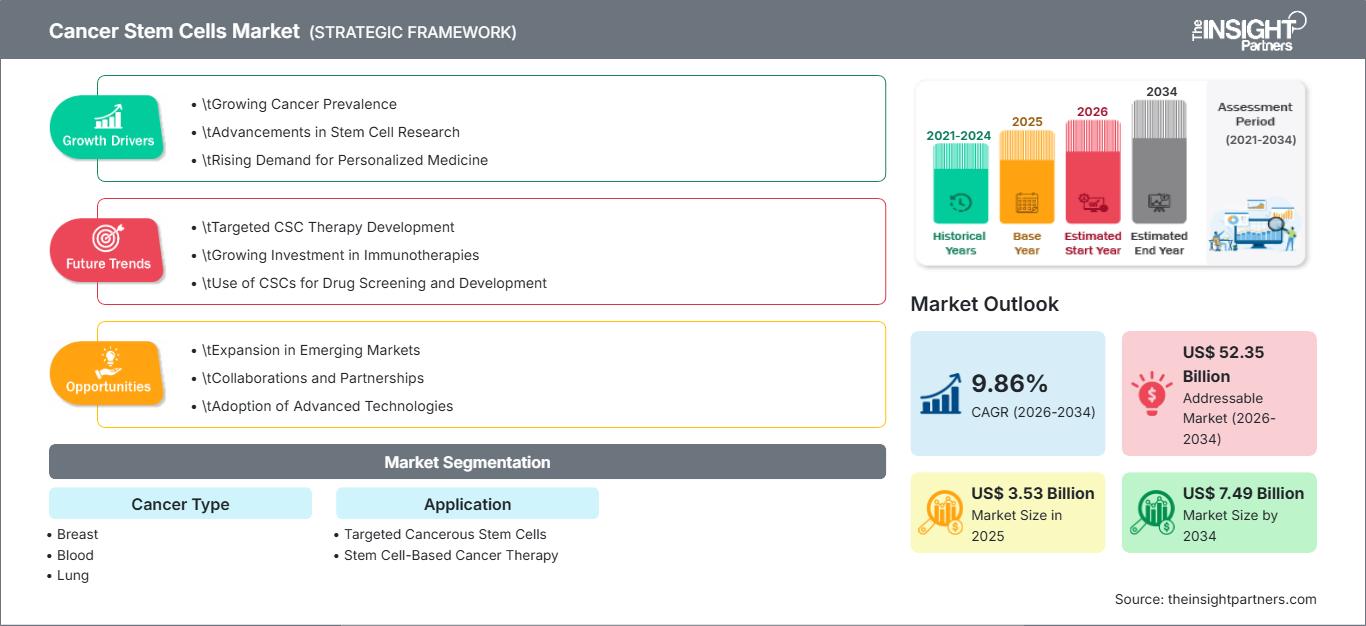
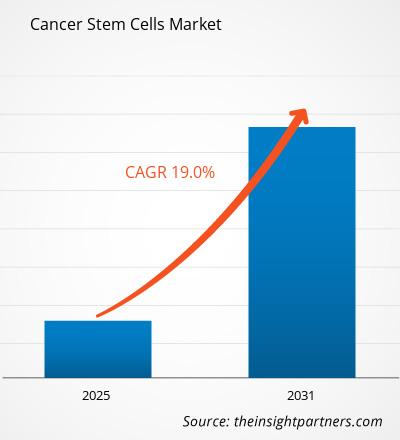
The Cancer Stem Cells market was valued at US$ 3.53 billion in 2025 and is expected to reach US$ 7.49 billion by 2034; it is estimated to record a CAGR of 8.72% during 2026-2034.
Cancer Stem Cells Market Assessment and Insights
- North America accounted for 38–41% share in 2025 and is growing at a CAGR between 2026–2034 of 8.9–9.4%, supported by NIH-funded oncology science, active cell therapy pipelines, and high adoption of tumor spheroid models.
- US held 82–85% of North America in 2025 and is growing at a CAGR between 2026–2034 of 9.0–9.5%, led by clinical translation, biobank networks, and oncology platform investments.
- Europe captured 25–28% share in 2025 and is growing at a CAGR between 2026–2034 of 8.3–8.8%, with Germany, the UK, and France leading translational oncology, regenerative medicine infrastructure, and academic-industry collaborations.
- Asia Pacific represented 20–23% share in 2025 and is growing at a CAGR between 2026–2034 of 10.8–11.5%, led by China, Japan, South Korea, India, and Australia through cancer screening expansion and cell therapy manufacturing.
- Largest Segment Application: Targeted Cancerous Stem Cells held 58–62% market share in 2025, with a CAGR range of 9.2–9.8% during 2026–2034, reflecting drug discovery demand.
- High Growth Segment Application: Stem Cell-Based Cancer Therapy held 38–42% market share in 2025, with a CAGR range of 10.5–11.2% during 2026–2034, driven by clinical-stage programs.
- Key companies analyzed in detail: Thermo Fisher Scientific Inc., STEMCELL Technologies Canada Inc., Novartis AG, Bristol Myers Squibb Company, AbbVie Inc., OncoOne Research & Development GmbH, AstraZeneca plc, Cellerant Therapeutics Inc., Gilead Sciences Inc., Fate Therapeutics Inc., Century Therapeutics Inc., Marker Therapeutics Inc.
Source: The Insight Partners' analysis based on proprietary research, government publications, company annual reports, investor presentations, industry databases, and expert interviews.
With the market advancing from mere stemness analysis to discovery platforms combining tumor organoids, flow cytometry, single-cell sequencing, xenografts, and high content screening, production trends are also evolving as reagents suppliers and therapy developers focus on standardized media, defined matrices, GMP compatibility, and automation of cells. As a result, reproducibility is enhanced while batch-to-batch variation is limited, which is one of the issues of the field in question.
In the future, expansion into other regions besides the US and Western Europe is anticipated as Asia Pacific is developing its capabilities for oncology trials and manufacturing of cellular therapies. Regulatory guidance for advanced therapy medicinal products, potency tests, and biologic comparability is also developing. All of these, along with higher incidence of cancer and investments into precision medicine, are likely to fuel the adoption of cancer stem cell platforms.
Cancer Stem Cells Market Report Scope
| Report Attribute | Details |
|---|---|
| Market size in 2025 | US$ 3.53 Billion |
| Market Size by 2034 | US$ 7.49 Billion |
| Global CAGR (2026 - 2034) | 8.72% |
| Historical Data | 2021-2024 |
| Forecast period | 2026-2034 |
Cancer Stem Cells Market Analysis
Cancer Stem Cells Market growth is driven by demand from oncology programs aimed at treating relapse, metastasis, and drug resistance. The World Health Organization and International Agency for Research on Cancer estimated almost 20 million new cancer cases and 9.7 million cancer deaths in 2022. The number of new cases will reach nearly 35 million per year by 2050, driving the demand for sophisticated cancer models and treatment options.
Supply and demand environment consists of cell culture reagents suppliers, antibodies suppliers, contract research organizations, cancer centers, biobanks, sequencing services, and therapy companies. The supply environment favors those companies that can provide validated stem cell media, reproducible assay platforms, and efficient cell processing technologies. Increasing number of oncology programs using patient-derived models creates opportunities for the suppliers providing quality documentation and technology support.
There are two areas of competition which include facilitating technology and therapeutic translation. Therm Fisher Scientific Inc. and STEMCELL Technologies Canada Inc. are competing using their reagents, media, antibodies, and workflow solutions, while Novartis AG, Bristol Myers Squibb Company, AbbVie Inc., AstraZeneca plc, and Gilead Sciences Inc. link cancer stem cell biology and oncology pipelines. The Cancer Stem Cells Market Report also shows the impact of specialization momentum in companies such as Cellerant Therapeutics Inc., Fate Therapeutics Inc., Century Therapeutics Inc., and Marker Therapeutics Inc.
Investments have become focused on platforms which would help in reducing attrition in clinics through early modeling of resistance during the discovery process. The strategic positions have shifted from the asset-only programs towards those which would integrate capabilities including biomarker discovery, immune-cell engineering, and the manipulation of stemness pathways.
● REPORT CUSTOMIZATION
Tailor This Report To Align With Your Specific Business Requirements
This report can be customized to align precisely with your business objectives, scope, and target markets. Customization options include tailored segmentation, geography, competitive analysis, and strategic insights to support informed decision-making.
Customize This Report →WHAT YOU CAN ADJUST
- ● Segmentations
- ● Geography
- ● Competitive Analysis
- ● Language Preferences
Cancer Stem Cells Market: Strategic Insights
Regional Insights
North America Cancer Stem Cells Market
The market share in North America was 38–41% in 2025 and expected to record a CAGR of 8.9–9.4% between 2026 to 2034. The region has an advantage of dense oncology research centers, big cancer biobanks, easy availability of advanced instrumentation, and a high number of clinical stage sponsors for cell therapies. The market share is prominent in areas where academic hospitals and biotech companies are working together on development of tumor models, immune assays, and translational end points.
Other factors that drive the regional forecast include the need for improving the durability of cancer treatment due to the reimbursement-based pressure. Developers of drugs are using cancer stem cell assays for identifying resistance mechanisms prior to expensive clinical trials. Research in breast, blood, lung, and colorectal cancers are prominent while research in pancreatic and brain cancers are emerging due to high chance of recurrence in spite of advanced diagnostics.
U.S. Cancer Stem Cells Market
In 2025, the United States was estimated to account for 82% to 85% of North America. Growth rate for 2026–2034 is forecast to be 9.0% to 9.5%, indicating a compound annual growth rate (CAGR). US market strength is due to the availability of top-tier cancer centers, NIH-funded research consortia, immuno-oncology innovators, and cell therapy manufacturing facilities. Usage is high in targeted stem cells assay for drug resistance study.
The United States is also represented by companies such as Thermo Fisher Scientific Inc., Bristol Myers Squibb Company, AbbVie Inc., Gilead Sciences Inc., Fate Therapeutics Inc., Century Therapeutics Inc., and Marker Therapeutics Inc., which operate within research tools, biologics, cell therapy, or oncology space. The adoption patterns in the US are shifting towards evaluating residual disease, tumor recurrence model, and combinational approach of stemness biology with immune targets.
Europe Cancer Stem Cells Market
Europe had a market share of 25-28% in 2025, and it is anticipated to grow at a rate of 8.3-8.8% CAGR in 2026-2034. Germany leads Europe due to translational oncology centers, GMP cell-processing facilities, and robust clinical development criteria. The UK's contribution in the field includes cancer genomics, organoids research, and early-phase clinical trials mainly for colorectal, hematologic, and lung cancers.
Other major countries that propel Europe's growth include France, Italy, and Spain because of their respective cancer policy strategies, research collaborations between hospitals, and increased involvement in multicenter oncology clinical trials. France actively participates in immuno-therapy and precision medicine trials, whereas Italy and Spain are increasing their utilization of tumor model for treatment choices.
APAC Cancer Stem Cells Market
The share of APAC was estimated between 20-23% in 2025 and projected to expand at a CAGR of 10.8-11.5% from 2026 to 2034. China will dominate the region owing to its growing oncology studies, onshore biomanufacturing, and governmental support of innovative treatments. Contributions from Japan and South Korea include regenerative medicine platforms, whereas India and Australia will provide oncology research services.
Drivers for the industry are cost-effective clinical development, bigger populations, and investments in cell therapy manufacturing. Precision medicine policies, along with biotech manufacturing policies, will speed up the market growth. With the increase in cancer screenings in the region, the demand for stem cell therapy platforms is anticipated to grow.
Middle East & Africa Cancer Stem Cells Market
Middle East & Africa is forecasted to witness a CAGR of 7.5–8.1% between 2026–2034, wherein Saudi Arabia is the main adopter of the technology within the region. UAE is developing specialty hospitals and medical tourism, and South Africa is contributing in terms of oncology research from academia. However, Rest of MEA is still in its early phase but slowly building capabilities in diagnostics and therapy.
Programs aimed at energy-related diversification within Gulf nations are having an indirect impact on biomedical infrastructure development in the country. Saudi Arabia and UAE are investing in life science clusters, tertiary care, and precision medicine projects. Adoption within the region is focused on research collaborations, advanced reagents import, and oncology centers.
Segmentation Analysis
Cancer Type
The cancer type segment is expected to grow at a CAGR of 9.4–10.0% during 2026–2034. This Cancer Stem Cells Market scope reflects widening research across high-burden cancers and difficult-to-treat tumors where recurrence, metastasis, and therapy resistance remain major clinical challenges. Breast, blood, lung, colorectal, pancreatic, and brain cancers attract the highest platform demand because each has defined stemness markers and active translational research pathways.
- Breast cancer applications remain significant because tumor heterogeneity, dormancy, and metastatic relapse studies require stem-cell-enriched models for screening endocrine resistance, chemotherapy escape, and targeted combinations.
- Blood cancer research benefits from established stem and progenitor biology, supporting leukemia, lymphoma, and myeloma studies that connect malignant clones with relapse and minimal residual disease.
- Lung cancer use is expanding as researchers examine resistant cell subpopulations after targeted therapy, immunotherapy, and radiation, particularly in non-small cell lung cancer models.
- Brain cancer studies prioritize glioblastoma stem-like cells because recurrence is common, standard therapy response is limited, and blood-brain barrier biology complicates drug delivery.
- Colorectal cancer applications are strong in organoid platforms, metastasis modeling, and Wnt pathway studies, helping developers evaluate targeted therapies and patient-specific response patterns.
- Pancreatic cancer represents a strategically important area because dense stroma, late diagnosis, and chemoresistance make stemness-linked assays valuable for discovery and combination testing.
- Bladder cancer research uses cancer stem cell markers to explore recurrence after local therapy, aggressive phenotypes, and biomarkers for advanced or muscle-invasive disease.
- Liver cancer studies focus on tumor initiation, chronic inflammation links, and therapy resistance, especially in hepatocellular carcinoma where recurrence after treatment remains frequent.
Application
The application segment is projected to grow at a CAGR of 9.8–10.4% during 2026–2034. Targeted cancerous stem cells currently account for the larger installed base because they are used across screening, pathway validation, biomarker discovery, and toxicity assessment. Stem cell-based cancer therapy is growing faster as clinical developers explore engineered immune cells, progenitor-derived platforms, and approaches designed to eliminate tumor-initiating populations.
- Targeted Cancerous Stem Cells applications hold the larger commercial position, supported by drug screening, antibody validation, pathway inhibition studies, and biomarker programs focused on resistant tumor-initiating cells.
- Stem Cell-Based Cancer Therapy applications are scaling as companies test engineered cell products, immune-mediated approaches, and regenerative platforms designed to improve durability in oncology treatment.
Opportunity Snapshot
| Application | Revenue Contribution | Trend Tag | Adoption Stage |
| Targeted Cancerous Stem Cells | High | Resistance Mapping | Mature |
| Stem Cell-Based Cancer Therapy | Medium | Cell Therapy | Scaling |
Cancer Stem Cells Market Growth Drivers and Impact Analysis
Rising Need to Address Relapse and Therapy Resistance
Relapse remains one of the strongest scientific and commercial drivers because cancer stem-like cells can survive conventional treatment and repopulate tumors. This creates direct demand for assays that identify resistant subpopulations, test pathway inhibitors, and evaluate combination regimens before clinical escalation. The impact is visible across breast, colorectal, lung, pancreatic, and brain cancer programs, where recurrence materially affects survival and treatment cost. Developers are increasingly incorporating stemness markers, organoids, and single-cell profiling into discovery workflows to improve confidence in target selection. For suppliers, this supports demand for validated antibodies, specialized media, extracellular matrices, and reproducible cell culture protocols used in oncology research.
Expansion of Advanced Oncology Models in Drug Discovery
Drug discovery teams are moving beyond two-dimensional cancer cell lines toward spheroids, organoids, patient-derived xenografts, and co-culture systems that better reflect tumor architecture. This shift improves biological relevance and helps screen compounds against resistant cell states, immune interactions, and microenvironmental signals. The market impact is strongest in preclinical workflows, where reproducibility and predictive value influence program continuation decisions. Reagent and platform suppliers benefit when they provide standardized kits, defined media, automation-compatible formats, and validated readouts. Pharmaceutical companies also gain by reducing late-stage attrition linked to poor translation from simple models to patient tumors.
Growth in Cell Therapy and Precision Oncology Infrastructure
The expansion of cell therapy manufacturing, high-throughput sequencing, and precision oncology centers is improving the technical foundation for cancer stem cell research. Hospitals and biopharma sponsors increasingly need connected workflows that move from sample acquisition to characterization, engineering, potency testing, and clinical monitoring. This strengthens demand for GMP-compatible reagents, cryopreservation solutions, analytics, and contract manufacturing support. The commercial effect is a broader customer base that includes academic centers, biotech start-ups, pharmaceutical companies, and specialized service providers. As infrastructure matures, more programs can translate stemness biology into targeted therapeutics, companion diagnostics, and personalized response assessment.
Cancer Stem Cells Market Future Trends
Integration of Single-Cell Multiomics with Functional Stemness Assays
A major shift in Cancer Stem Cells Market trends will be the integration of single-cell RNA sequencing, spatial biology, proteomics, and functional assays in the same discovery workflow. This combination allows researchers to map rare tumor-initiating cells, interpret signaling states, and validate whether molecular signatures translate into aggressive behavior. The trend will increase demand for high-quality sample preparation, lineage tracing, multiplex imaging, and bioinformatics solutions. As datasets mature, companies will use these insights to select targets, stratify patients, and design combinations that suppress both bulk tumor cells and resistant stem-like populations.
Greater Use of Patient-Derived Models for Therapy Selection
Patient-derived organoids, xenografts, and ex vivo tumor cultures are expected to become more central in oncology decision support and translational research. These models allow investigators to preserve tumor heterogeneity and test therapeutic sensitivity in a biologically relevant setting. Their use will expand in pancreatic, colorectal, breast, and brain cancer programs where standard models often fail to predict resistance. Commercial adoption will depend on turnaround time, cost, reproducibility, and clinical evidence. Suppliers that enable automated culture, standardized readouts, and scalable sample logistics will be positioned to benefit from this trend.
Cancer Stem Cells Market Opportunities
Scalable Platforms for Emerging Oncology Research Hubs
Emerging research hubs in China, India, the Gulf states, and Southeast Asia offer meaningful opportunities for companies that can provide affordable, standardized, and training-supported cancer stem cell platforms. Cancer Stem Cells Market Forecasts indicate that adoption will be strongest where hospitals are expanding precision oncology and local biotechnology firms are building discovery pipelines. Suppliers can create value through modular assay kits, localized distribution, technical education, and partnerships with academic cancer centers. The strongest opportunities are likely in tumor organoids, validated antibodies, stem cell media, and workflow packages designed for laboratories moving from basic research toward translational studies.
Development of Combination Therapies Targeting Stemness Pathways
Therapeutic developers have an opportunity to design combinations that target stemness pathways alongside immune checkpoints, antibody-drug conjugates, targeted agents, or chemotherapy. This strategy addresses the biological limits of treatments that shrink tumors but leave resistant subpopulations intact. Investment is likely to focus on Notch, Wnt, Hedgehog, epithelial-mesenchymal transition, and niche signaling pathways when supported by patient-derived evidence. Companies that pair mechanistic biomarkers with functional validation can improve trial design and patient selection. The opportunity is commercially important because durable response remains a key differentiator in competitive oncology categories.
Recent Developments
- May 2026: Gilead Sciences Inc. and Kite Pharma reported new ASCO and EHA 2026 data across antibody-drug conjugates and cell therapy in oncology, while also highlighting acquisition-related progress around Arcellx and anito-cel. The update indicates continued strategic investment in oncology cell therapy platforms relevant to advanced hematologic cancer treatment.
- March 2026: Marker Therapeutics Inc. reported year-end 2025 results and highlighted Phase 1 APOLLO data for MT-601, including a 66% objective response rate in relapsed non-Hodgkin lymphoma and 50% complete responses. The company also referenced pancreatic cancer research using multi-antigen targeted T cells.
- February 2026: Fate Therapeutics Inc. reported 2025 business updates, including early activity for FT836, a MICA/B-targeted off-the-shelf CAR T-cell therapy, where one colorectal cancer patient showed greater than 50% reduction in CEA levels with tumor reduction across all target lesions.
Frequently Asked Questions

- Comprehensive Market Sizing and Forecast Analysis
- Detailed Segmentation Analysis
- In-Depth Market Dynamics Assessment
- Regional and Country-Level Insights
- Competitive Landscape and Company Benchmarking
- Strategic Business Intelligence
Recent Reports
Testimonials

The Insight Partners' SCADA System Market report is comprehensive, with valuable insights on current trends and future forecasts. The team was highly professional, responsive, and supportive throughout. We are very satisfied and highly recommend their services.
RAN KEDEM Partner, Reali Technologies LTDs
I requested a report on a very specific software market and the team produced the report in a few days. The information was very relevant and well presented. I then requested some changes and additions to the report. The team was again very responsive and I got the final report in less than a week.
JEAN-HERVE JENN Chairman, Future Analytica
We worked with The Insight Partners for an important market study and forecast. They gave us clear insights into opportunities and risks, which helped shape our plans. Their research was easy to use and based on solid data. It helped us make smart, confident decisions. We highly recommend them.
PIYUSH NAGPAL Sr. Vice President, High Beam Global
The Insight Partners delivered insightful, well-structured market research with strong domain expertise. Their team was professional and responsive throughout. The user-friendly website made accessing industry reports seamless. We highly recommend them for reliable, high-quality research services
YUKIHIKO ADACHI CEO, Deep Blue, LLC.
This is the first time I have purchased a market report from The Insight Partners.While I was unsure at first, I visited their web site and felt more comfortable to take the risk and purchase a market report.I am completely satisfied with the quality of the report and customer service. I had several questions and comments with the initial report, but after a couple of dialogs over email with their analyst I believe I have a report that I can use as input to our strategic planning process.Thank you so much for taking the extra time and making this a positive experience.I will definitely recommend your service to others and you will be my first call when we need further market data.
JOHN SUZUKI President and Chief Executive Officer, Board Director, BK Technologies
I wish to appreciate your support and the professionalism you displayed in the course of attending to my request for information regarding to infectious disease IVD market in Nigeria. I appreciate your patience, your guidance, and the fact that you were willing to offer a discount, which eventually made it possible for us to close a deal. I look forward to engaging The Insight Partners in the future, all thanks to the impression you have created in me as a result of this first encounter.
DR CHIJIOKE ONYIA MANAGING DIRECTOR, PineCrest Healthcare Ltd.Reason to Buy
- Informed Decision-Making
- Understanding Market Dynamics
- Competitive Analysis
- Identifying Emerging Markets
- Customer Insights
- Market Forecasts
- Risk Mitigation
- Boosting Operational Efficiency
- Strategic Planning
- Investment Justification
- Tracking Industry Innovations
- Aligning with Regulatory Trends





 Get Free Sample for