
LNG Bunkering Market Size, Growth & Trends by 2034
Coverage: By Product Type (Ship-to-Ship, Truck-to-Ship, Port-to-Ship, Portable Tanks); Application (Container Fleet, Tanker Fleet, Cargo Fleet, Ferries, Inland Vessels, Others); and Geography (North America, Europe, Asia Pacific, South & Central America, and Middle East & Africa)
- Status : Data Released
- Report Code : TIPRE00009530
- Category : Automotive and Transportation
- No. of Pages : 150
- Available Report Formats :


- Last update date : June 11, 2026


2025 Market Size
US$ 1.28 Bn
Base year value
2034 Forecast
US$ 3.52 Bn
Projected by 2034
CAGR 2026-2034
11.90 %
Growth rate
Addressable Market
US$ 21.07 Bn
(2026-2034)
The global LNG bunkering market size is projected to reach US$ 3.52 billion by 2034 from US$ 1.28 billion in 2025. The market is anticipated to register a CAGR of 11.90% during the forecast period 2026–2034.
Key market dynamics include the stringent IMO 2020 sulfur cap regulations, the implementation of FuelEU Maritime standards, and a significant shift toward LNG as a primary transitional fuel. Additionally, the market is expected to benefit from the expansion of ship-to-ship bunkering infrastructure, the rising number of LNG-dual fuel vessel orders, and the increasing availability of bio-LNG to further reduce greenhouse gas intensity.
LNG Bunkering Market Analysis
The LNG bunkering market analysis shows a decisive transition from experimental pilot projects to mainstream maritime infrastructure. The market is moving toward long-term supply contracts to mitigate price volatility caused by geopolitical shifts. Strategic opportunities are emerging in the development of Green Corridors, where specialized shipping routes are supported by dedicated LNG refueling hubs. The analysis also notes that market expansion depends heavily on the scaling of Ship-to-Ship transfer capabilities, which currently dominate the market due to their operational flexibility. Competitive differentiation is increasingly defined by a supplier's ability to offer integrated digital platforms for real-time fuel tracking, safety monitoring, and carbon intensity reporting.
LNG Bunkering Market Overview
LNG bunkering has evolved from a niche solution for small ferries to a critical requirement for global container and tanker fleets. The market includes specialized LNG Bunkering Vessels, high-capacity port terminals, and flexible truck-to-ship operations. Both state-owned energy giants and independent commodity traders compete in this market, leveraging advanced cryogenic technology and global logistics networks. Growing demand for low-emission transport among cargo owners has increased the popularity of LNG, as it reduces sulfur oxide emissions and nitrogen oxides. Europe leads in revenue due to its early regulatory adoption, while Asia-Pacific is advancing rapidly through infrastructure investments in hubs like Singapore and Shanghai. The United States market is expanding as a pivotal hub for maritime decarbonization, fueled by abundant domestic shale gas and strategic port infrastructure. Federal incentives and stringent coastal emission standards drive the adoption of dual-fuel vessels, while major coastal gateways evolve into versatile refueling centers for international trade fleets.
Market Assessment and Insights
- Global market for LNG Bunkering was valued at US$ 1.28 Billion in 2025
- Annual market size is expected to reach US$ 3.52 Billion by 2034
- Total addressable market (TAM) during 2026-2034 is projected to reach approximately US$ 21.07 Billion
- Market is anticipated to register a CAGR of 11.9% during the forecast period
- The United States represents a key market, supported by Unlocking LNG Bunkering: Sustainable Solutions for Shipping's Future, Navigating Growth: Key Trends in the LNG Bunkering Sector, Fueling Change: Innovations Driving LNG Bunkering Expansion, as well as evolving industry dynamics
- Market analysis covers North America, Europe, Asia-Pacific, South and Central America, Middle East and Africa, with growth evaluated across the forecast period
- Market opportunities such as LNG Bunkering: Pioneering Sustainable Shipping Solutions, Future of LNG Bunkering: Innovations Driving Cleaner Oceans, LNG Bunkering Growth: Empowering Green Maritime Economies are expected to influence market dynamics and addressable market
- Report profiles industry participants, including Eagle LNG, ENGIE, EVOL LNG, Gazprom Neft PJSC, Harvey Gulf International Marine, LLC, KANON Loading Equipment B.V., KLAW LNG, Nauticor GmbH and Co. KG, Shell International B.V., Titan LNG, while analyzing competitive strategies and innovation developments
-
Source: The Insight Partners' analysis based on proprietary research, government publications, company annual reports, investor presentations, industry databases, and expert interviews.
● REPORT CUSTOMIZATION
Tailor This Report To Align With Your Specific Business Requirements
This report can be customized to align precisely with your business objectives, scope, and target markets. Customization options include tailored segmentation, geography, competitive analysis, and strategic insights to support informed decision-making.
Customize This Report →WHAT YOU CAN ADJUST
- ● Segmentations
- ● Geography
- ● Competitive Analysis
- ● Language Preferences
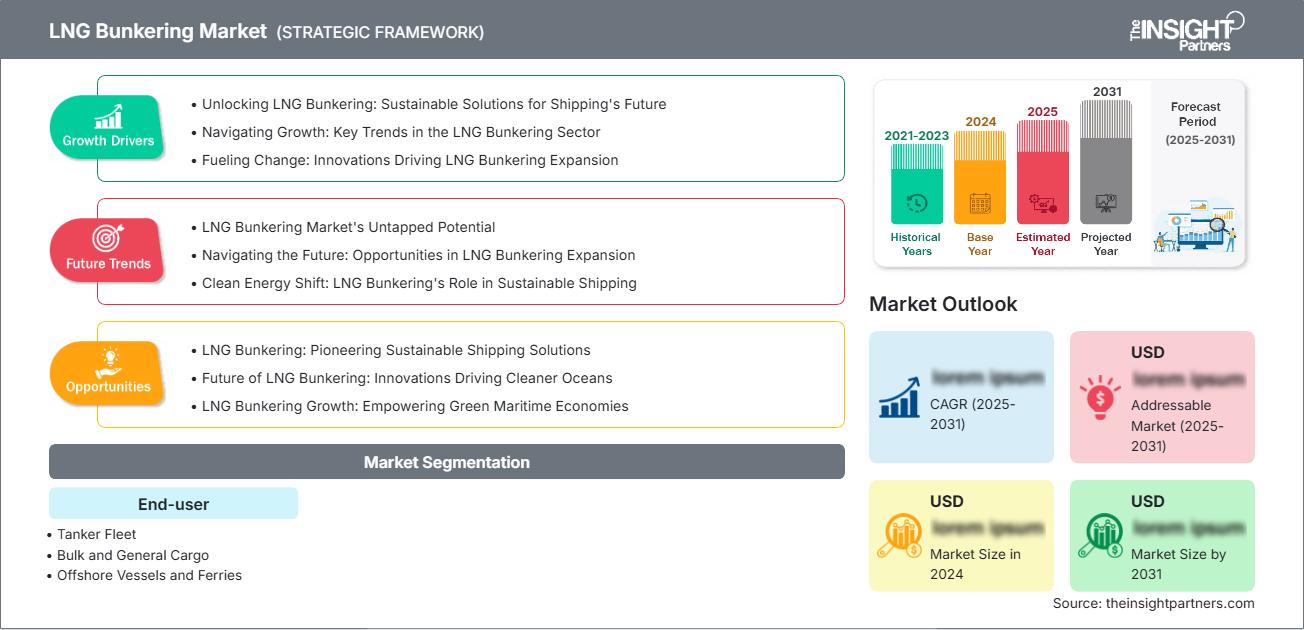
LNG Bunkering Market: Strategic Insights
-
Get Top Key Market Trends of this report.This FREE sample will include data analysis, ranging from market trends to estimates and forecasts.
LNG Bunkering Market Drivers and Opportunities
Market Drivers:
- Stringent Environmental Mandates: Regulations such as the IMO goal to reduce total annual GHG emissions are forcing shipowners to abandon heavy fuel oil in favor of LNG.
- Expansion of LNG-Fueled Fleets: A record surge in newbuild orders for LNG-powered container ships and bulk carriers provides a guaranteed, long-term demand base for bunkering services.
- Infrastructure Maturity: The presence of LNG bunkering facilities in over 220 ports worldwide has significantly reduced range anxiety for international shipping operators.
Market Opportunities:
- Transition to Bio-LNG and Synthetic LNG: There is a massive opportunity for providers to offer carbon-neutral bio-LNG, allowing shipowners to meet tightening emission targets without hardware changes.
- Growth in Arctic and North American Routes: Easing restrictions on LNG bunkering in the US and the opening of new northern trade routes create high-margin opportunities for specialized bunkering services.
- Digitalization of Bunkering Operations: Developing automated, AI-driven bunkering systems can improve safety and efficiency, offering a competitive edge in high-traffic ports.
LNG Bunkering Market Report Segmentation Analysis
The LNG Bunkering Market share is analyzed across various segments to provide a clearer understanding of its structure, growth potential, and emerging trends. Below is the standard segmentation approach used in most industry reports:
By Product Type:
- Ship-to-Ship: The dominant volume driver, preferred for its ability to bunk large vessels during cargo operations, minimizing port stays and maximizing efficiency.
- Truck-to-Ship: A cost-effective solution for smaller vessels and ports with emerging infrastructure, offering high flexibility for low-volume transfers.
- Port-to-Ship: Essential for fixed-route vessels; utilizes established port infrastructure and high-capacity pipelines for stable and rapid refueling.
- Portable Tanks: A versatile niche segment allowing for the transport of fuel via ISO tanks, providing solutions for vessels without fixed LNG tanks or in remote locations.
By Application:
- Container Fleet: A primary driver of market growth as global shipping lines transition their massive container fleets to dual-fuel engines to meet consumer demand for green logistics.
- Tanker Fleet: A significant market share holder due to the inherent synergy of transporting energy products and using LNG as a propulsion fuel.
- Cargo Fleet: Increasing adoption within bulk and general cargo sectors to maintain competitiveness in international trade corridors.
- Ferries: Early adopters of LNG technology that continue to see steady demand, particularly in European and North American coastal waters.
- Inland Vessels: A growing segment driven by river transport regulations in regions like the Rhine and the Yangtze.
- Others: Includes specialized vessels such as cruise ships, research vessels, and offshore support vessels.
By Geography:
- North America
- Europe
- Asia Pacific
- South & Central America
- Middle East & Africa
LNG Bunkering Market Report Scope
| Report Attribute | Details |
|---|---|
| Market size in 2025 | US$ 1.28 Billion |
| Market Size by 2034 | US$ 3.52 Billion |
| Global CAGR (2026 - 2034) | 11.90% |
| Historical Data | 2021-2024 |
| Forecast period | 2026-2034 |
| Segments Covered |
By Product Type
|
| Regions and Countries Covered |
North America
|
| Market leaders and key company profiles |
|
LNG Bunkering Market Players Density: Understanding Its Impact on Business Dynamics
The LNG Bunkering Market is growing rapidly, driven by increasing end-user demand due to factors such as evolving consumer preferences, technological advancements, and greater awareness of the product's benefits. As demand rises, businesses are expanding their offerings, innovating to meet consumer needs, and capitalizing on emerging trends, which further fuels market growth.
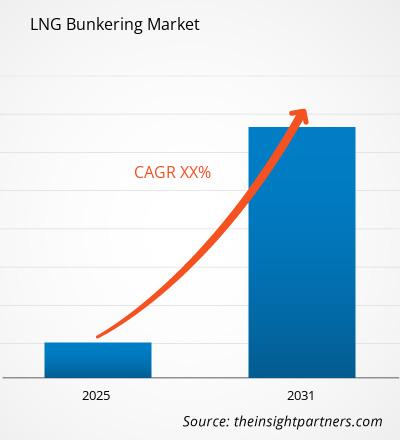
LNG Bunkering Market Share Analysis by Geography.
Asia-Pacific is expected to grow fastest in the coming years. Emerging markets in South & Central America, the Middle East, and Africa also have many untapped opportunities for low-carbon fuel providers and shipping fleet operators to expand.
The LNG bunkering market is undergoing a significant transformation, moving from a niche Northern European solution to a global maritime standard. Growth is driven by the IMO 2030 and 2050 decarbonization targets, a surge in dual-fuel vessel orders, and the expansion of cryogenic fueling infrastructure across major trade lanes. Below is a summary of market share and trends by region:
1. North America
- Market Share: Holds the global share, driven by abundant domestic natural gas supplies and major infrastructure developments in the Gulf Coast and Florida.
- Key Drivers:
- Relaxation of regulatory restrictions on LNG bunkering operations by the U.S. Department of Energy.
- Dominance of the Caribbean cruise industry, which is rapidly adopting LNG-powered luxury vessels.
- Development of specialized LNG bunkering hubs in Jacksonville and Port Fourchon to serve the Jones Act fleet.
- Trends: Scaling of truck-to-ship operations for regional coastal vessels and the successful integration of digital twin technology to monitor fuel efficiency and safety.
2. Europe
- Market Share: Holds a significant share globally, anchored by long-standing Emission Control Areas (ECAs) in the North Sea and Baltic Sea.
- Key Drivers:
- Implementation of the EU ETS and FuelEU Maritime regulations, which penalize high-carbon marine fuels.
- Established bunkering ecosystems in major ports like Rotterdam, Antwerp-Bruges, and Algeciras.
- Strong government subsidies for the construction of LNG bunkering vessels and shore-side infrastructure.
- Trends: A strategic shift toward bio-LNG and synthetic LNG blending to meet tightening net-zero mandates. There is also an increasing focus on multi-fuel bunkering hubs that can handle LNG alongside ammonia or methanol.
3. Asia-Pacific
- Market Share: The fastest-growing region, with Singapore acting as the world's premier LNG bunkering hub.
- Key Drivers:
- Massive consumer demand and industrial output in China and Southeast Asia necessitate high-volume container trade.
- Heavy government backing in China, Japan, and South Korea for port initiatives and fleet modernization.
- Strategic location of Singapore and Shanghai along the busiest east-west trade routes.
- Trends: Rapid deployment of large-scale ship-to-ship bunkering vessels (LNGBVs) to service mega-container ships and the use of blockchain for transparent fuel quality and quantity reporting.
4. South and Central America
- Market Share: Emerging market with a growing sector in countries like Brazil and Panama.
- Key Drivers:
- Strategic importance of the Panama Canal as a refueling stop for trans-oceanic LNG-powered vessels.
- Modernization of port facilities in Brazil to support the export of commodities via cleaner-burning bulk carriers.
- Rising interest in Mediterranean-style diet logistical chains requiring refrigerated, LNG-powered transport.
- Trends: Growth of boutique bunkering solutions for specialized offshore support vessels (OSVs) serving deep-water oil and gas fields.
5. Middle East and Africa
- Market Share: Developing market with deep roots in LNG production, transitioning toward formalized bunkering services.
- Key Drivers:
- Proximity to major gas reserves allows for cost-competitive fuel pricing in the Suez Canal and Jebel Ali.
- Strategic investments in Smart Port infrastructure to reduce reliance on traditional crude oil exports.
- High demand for LNG bunkering to support regional industrial growth and local energy security.
- Trends: Implementation of modular and mobile bunkering units to scale capacity quickly without the need for massive fixed terminal investments.
High Market Density and Competition
Competition is intensifying due to the presence of established leaders such as Shell plc, TotalEnergies SE, PETRONAS, and Gazprom Neft. Global energy majors, alongside regional technical experts like Gasum and Crowley, contribute to a diverse and rapidly expanding market landscape.
This competitive environment pushes vendors to differentiate through:
- Global Network Expansion: Positioning bunkering vessels and securing licenses across multiple continents to provide a seamless fueling experience for global liners.
- Multi-Fuel Capability: Designing infrastructure that can pivot from fossil LNG to bio-LNG or synthetic variants, ensuring long-term asset viability.
- End-to-End Transparency: Managing the entire supply chain from liquefaction to delivery, emphasizing ethical sourcing and carbon-intensity tracking to meet shipowner ESG goals.
- Technological Leadership: Utilizing sub-cooling and advanced boil-off gas (BOG) management to reduce fuel waste and operational risks during transfer.
Opportunities and Strategic Moves
- Form Strategic Joint Ventures: Partner with port authorities and rival energy firms to share the high capital costs of bunkering vessels and storage terminals.
- Incorporate Green LNG Variants: Pivot toward bio-LNG and e-methane to appeal to environmentally conscious cargo owners and meet upcoming global GHG reduction targets.
Major Companies operating in the LNG Bunkering Market are:
- Eagle LNG
- ENGIE
- EVOL LNG
- Gazprom Neft PJSC
- Harvey Gulf International Marine, LLC
- KANON Loading Equipment B.V.
- KLAW LNG
- Nauticor GmbH and Co. KG
- Shell International B.V.
- Titan LNG
Disclaimer: The companies listed above are not ranked in any particular order.
LNG Bunkering Market News and Recent Developments
- In April 2026, Sawgrass LNG & Power announced the successful completion of the first-ever shore-to-ship liquefied natural gas (LNG) bunkering operation at Port Everglades in Fort Lauderdale. This milestone represents a significant step forward in expanding LNG as a marine fuel solution in South Florida and reinforces Port Everglades' support for next-generation marine fuels used by its cruise and cargo customers.
- In July 2025, TotalEnergies and CMA CGM Group entered into an agreement to develop a 50/50 logistics joint venture dedicated to the implementation and operation of a liquefied natural gas (LNG) bunker supply solution at the port of Rotterdam, in the Netherlands. This strategic partnership reflects the shared ambition of both French companies to work jointly towards the acceleration of the energy transition in the maritime sector.
LNG Bunkering Market Report Coverage and Deliverables
The LNG Bunkering Market Size and Forecast (2021–2034) report provides a detailed analysis of the market covering below areas:
- LNG Bunkering Market size and forecast at global, regional, and country levels for all the key market segments covered under the scope
- LNG Bunkering Market trends, as well as market dynamics such as drivers, restraints, and key opportunities
- Detailed PEST and SWOT analysis
- LNG Bunkering Market analysis covering key market trends, global and regional framework, major players, regulations, and recent market developments
- Industry landscape and competition analysis covering market concentration, heat map analysis, prominent players, and recent developments in the LNG Bunkering Market.
- Detailed company profiles
Frequently Asked Questions

- Comprehensive Market Sizing and Forecast Analysis
- Detailed Segmentation Analysis
- In-Depth Market Dynamics Assessment
- Regional and Country-Level Insights
- Competitive Landscape and Company Benchmarking
- Strategic Business Intelligence
Recent Reports
Testimonials

The Insight Partners' SCADA System Market report is comprehensive, with valuable insights on current trends and future forecasts. The team was highly professional, responsive, and supportive throughout. We are very satisfied and highly recommend their services.
RAN KEDEM Partner, Reali Technologies LTDs
I requested a report on a very specific software market and the team produced the report in a few days. The information was very relevant and well presented. I then requested some changes and additions to the report. The team was again very responsive and I got the final report in less than a week.
JEAN-HERVE JENN Chairman, Future Analytica
We worked with The Insight Partners for an important market study and forecast. They gave us clear insights into opportunities and risks, which helped shape our plans. Their research was easy to use and based on solid data. It helped us make smart, confident decisions. We highly recommend them.
PIYUSH NAGPAL Sr. Vice President, High Beam Global
The Insight Partners delivered insightful, well-structured market research with strong domain expertise. Their team was professional and responsive throughout. The user-friendly website made accessing industry reports seamless. We highly recommend them for reliable, high-quality research services
YUKIHIKO ADACHI CEO, Deep Blue, LLC.
This is the first time I have purchased a market report from The Insight Partners.While I was unsure at first, I visited their web site and felt more comfortable to take the risk and purchase a market report.I am completely satisfied with the quality of the report and customer service. I had several questions and comments with the initial report, but after a couple of dialogs over email with their analyst I believe I have a report that I can use as input to our strategic planning process.Thank you so much for taking the extra time and making this a positive experience.I will definitely recommend your service to others and you will be my first call when we need further market data.
JOHN SUZUKI President and Chief Executive Officer, Board Director, BK Technologies
I wish to appreciate your support and the professionalism you displayed in the course of attending to my request for information regarding to infectious disease IVD market in Nigeria. I appreciate your patience, your guidance, and the fact that you were willing to offer a discount, which eventually made it possible for us to close a deal. I look forward to engaging The Insight Partners in the future, all thanks to the impression you have created in me as a result of this first encounter.
DR CHIJIOKE ONYIA MANAGING DIRECTOR, PineCrest Healthcare Ltd.Reason to Buy
- Informed Decision-Making
- Understanding Market Dynamics
- Competitive Analysis
- Identifying Emerging Markets
- Customer Insights
- Market Forecasts
- Risk Mitigation
- Boosting Operational Efficiency
- Strategic Planning
- Investment Justification
- Tracking Industry Innovations
- Aligning with Regulatory Trends





 Get Free Sample for