
Absorbable Cardiac Stent Market Size, Share & Demand by 2034
Coverage: By Material (Metal, Polymer); Application (Coronary Artery Disease, Peripheral Artery Disease); End User (Hospitals and Clinics, Research and Academics Institutes, Others), and Geography (North America, Europe, Asia Pacific, and South and Central America)
- Status : Data Released
- Report Code : TIPRE00014432
- Category : Life Sciences
- No. of Pages : 150
- Available Report Formats :


- Last update date : July 14, 2026


2025 Market Size
US$ 452.10 Mn
Base year value
2034 Forecast
US$ 1,170.78 Mn
Projected by 2034
CAGR 2026-2034
11.15 %
Growth rate
Addressable Market
US$ 7,162.75 Mn
(2026-2034)
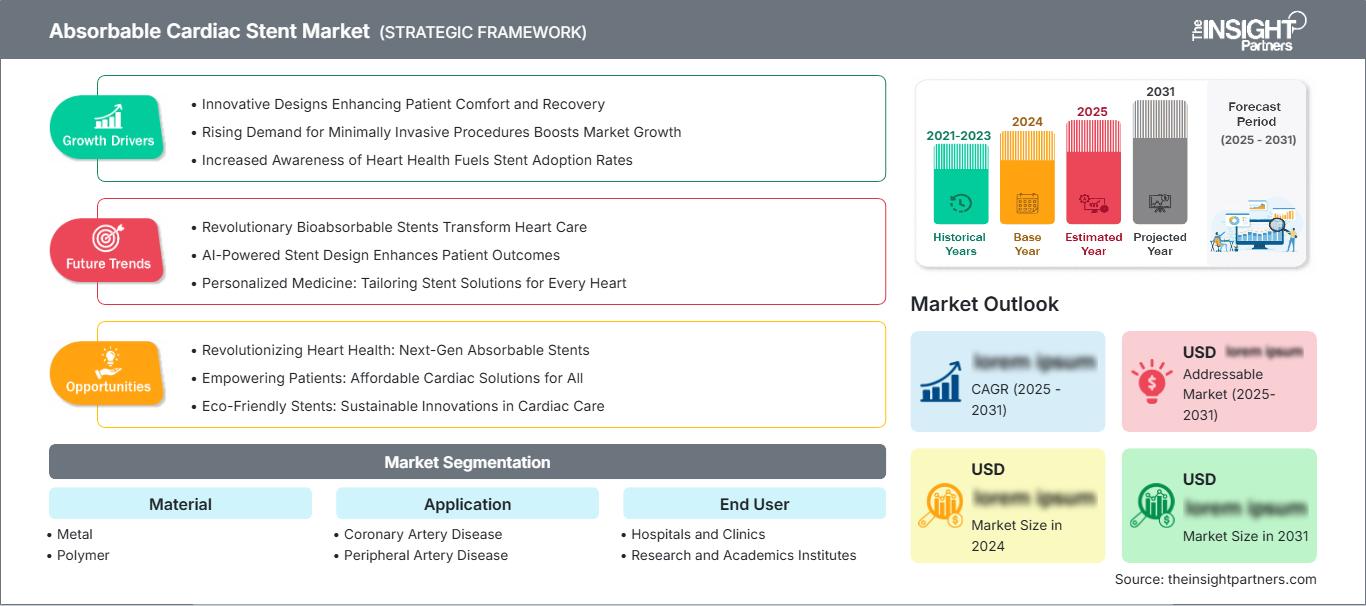
The absorbable cardiac stent market size was valued at US$ 452.10 Million in 2025 and is projected to reach US$ 1,170.78 Million by 2034, registering a CAGR of 11.15% during 2026–2034. Demand is linked to bioresorbable coronary and peripheral scaffolds designed to provide temporary vessel support, drug delivery, and eventual resorption across coronary artery disease and peripheral artery disease applications.
Across North America, the absorbable cardiac stent market size is supported by advanced interventional cardiology infrastructure, high chronic limb-threatening ischemia burden, and early adoption of next-generation resorbable scaffold systems. The region is expected to grow at a CAGR range of 10.2–10.9% during 2026–2034, driven by below-the-knee peripheral approvals, clinical trial expansion, and hospital demand for technologies that preserve future revascularization options.
Absorbable Cardiac Stent Market Assessment and Insights
- North America held 38–41% of the absorbable cardiac stent market share in 2025 and is growing at a CAGR between 2026–2034 of 10.2–10.9%, supported by FDA-backed innovation pathways, PAD treatment demand, and large interventional cardiology networks.
- US represented 83–87% of North America in 2025 and is growing at a CAGR between 2026–2034 of 10.4–11.1%, led by CLTI treatment and coronary trial activity.
- Europe accounted for 28–31% share in 2025 and is growing at a CAGR between 2026–2034 of 9.7–10.4%, with Germany, the UK, France, and Italy leading adoption.
- Asia Pacific held 21–24% share in 2025 and is growing at a CAGR between 2026–2034 of 12.4–13.2%, driven by China, Japan, South Korea, India, and Australia.
- Largest Segment Polymer held 56–60% market share in 2025, growing at a CAGR range of 10.8–11.6% during 2026–2034 due to established coronary scaffold evidence.
- High Growth Segment Peripheral Artery Disease held 31–35% market share in 2025, growing at a CAGR range of 13.0–13.8% during 2026–2034 as BTK indications expand.
- Key companies analyzed in detail: Abbott Laboratories, BIOTRONIK SE & Co. KG, REVA Medical, LLC, Elixir Medical Corporation, B. Braun Melsungen AG, KYOTO MEDICAL PLANNING Co., Ltd., Boston Scientific Corporation, Medtronic plc, Terumo Corporation, Meril Life Sciences Pvt. Ltd.
Source: The Insight Partners' analysis based on proprietary research, government publications, company annual reports, investor presentations, industry databases, and expert interviews.
The absorbable cardiac stent market trends has evolved past the problems inherent in first-generation scaffolds to include thin struts, increased radiopacity, controlled degradation, greater radial strength, and enhanced lesion deliverability. Polymer technology is still prevalent, while the use of magnesium and iron metal-based systems for resorption in temporary scaffolding is rising in interest. Market dynamics will be driven by precise laser cutting, polymer extrusion, drug coating consistency, catheter compatibility, sterilization validation, and the lengthy process of developing clinical data for absorbable cardiac stents.
The absorbable cardiac stent market growth potential lies in regulatory authorities hastening the adoption of new technologies needed for treating chronic limb-threatening ischemia and complex coronary diseases. New regions are opening up for access to percutaneous coronary intervention, while established markets demand devices which heal vessels without leaving implants behind. Investments are expected to focus on larger lesions, below-the-knee applications, enhanced crossing profiles, and randomized comparative trials between resorbable scaffolds and current drug-eluting stents.
Absorbable Cardiac Stent Market Report Scope
| Report Attribute | Details |
|---|---|
| Market size in 2025 | US$ 452.10 Million |
| Market Size by 2034 | US$ 1,170.78 Million |
| Global CAGR (2026 - 2034) | 11.15% |
| Historical Data | 2021-2024 |
| Forecast period | 2026-2034 |
Absorbable Cardiac Stent Market Analysis
Procedure demand is grounded on coronary artery disease, peripheral artery disease, diabetic vascular disease, and older patient populations that require repeated revascularization. The absorbable cardiac stent market growth is supplemented by the attractiveness of the temporary scaffolding concept, where vessel support and anti-proliferative drugs administration are carried out without implanting the permanent metal scaffold. The value chain consists of biomaterial suppliers, drug coating companies, catheter makers, clinical development organizations, interventional cardiologists, hospital cath labs, and regulatory agencies. Supply side dynamics support players who manage to provide mechanical efficacy, consistent degradation, lesion-specific size range, and prolonged clinical follow up since physician’s confidence is key to the technology uptake.
Analysis of the absorbable cardiac stent market report highlights the progress made by Abbott Laboratories in developing peripheral resorbable scaffolds and BIOTRONIK SE & Co. KG and REVA Medical, LLC in developing their magnesium and polymer platforms. Contributors of Elixir Medical Corp., Meril Life Sciences Pvt. Ltd., KYOTO MEDICAL PLANNING Co., Ltd., Terumo Corp., Boston Scientific Corp., Medtronic PLC, and B. Braun Melsungen AG include their expertise in coronary interventions, biomaterials, distribution capabilities, or neighboring vascular devices. The focus for strategic investment is in visualization of the scaffold, thinner devices, rapid healing, and applications where stents preclude future treatments.
● REPORT CUSTOMIZATION
Tailor This Report To Align With Your Specific Business Requirements
This report can be customized to align precisely with your business objectives, scope, and target markets. Customization options include tailored segmentation, geography, competitive analysis, and strategic insights to support informed decision-making.
Customize This Report →WHAT YOU CAN ADJUST
- ● Segmentations
- ● Geography
- ● Competitive Analysis
- ● Language Preferences
Absorbable Cardiac Stent Market: Strategic Insights
Regional Insights
North America Absorbable cardiac stent market
North America held 38–41% share in 2025 and is projected to grow at a CAGR range of 10.2–10.9% during 2026–2034. Adoption is supported by advanced cath lab density, strong clinical trial infrastructure, and demand for innovative options in chronic limb-threatening ischemia, where vessel recoil, restenosis, and repeat intervention risk remain significant challenges.
The absorbable cardiac stent market share in North America is reinforced by FDA breakthrough pathways, Medicare technology payment mechanisms, and specialist vascular centers evaluating resorbable scaffolds against balloon angioplasty and drug-eluting stents. Abbott Laboratories, BIOTRONIK SE & Co. KG, REVA Medical, LLC, Boston Scientific Corporation, Medtronic plc, and Terumo Corporation are relevant through product development, vascular intervention networks, or strategic acquisition interest.
U.S. Absorbable cardiac stent market
The U.S. represented 83–87% of North America in 2025 and is expected to grow at a CAGR range of 10.4–11.1% during 2026–2034. Demand is strongest in pivotal studies, below-the-knee peripheral artery disease treatment, high-risk coronary cases, and centers managing diabetic vascular disease and limb salvage programs.
Company presence is concentrated around interventional cardiology and peripheral vascular portfolios. Abbott Laboratories has strengthened the BTK resorbable category, while BIOTRONIK SE & Co. KG and REVA Medical, LLC have used regulatory designations and trial evidence to support future commercialization. Hospitals increasingly evaluate scaffold use by patency, limb salvage, reintervention avoidance, and long-term vessel optionality.
Europe Absorbable cardiac stent market
Europe accounted for 28–31% share in 2025 and is forecast to grow at a CAGR range of 9.7–10.4% during 2026–2034. Germany leads because of high interventional cardiology capacity, early CE-mark adoption, and clinician familiarity with resorbable technologies. The UK emphasizes evidence-based uptake and productivity improvement in vascular services.
Germany’s demand reflects advanced coronary and peripheral intervention practice, strong clinical research networks, and access to CE-marked bioresorbable systems. France and Italy show selective adoption in specialized centers treating complex coronary and peripheral lesions, while Spain remains more tender-sensitive. Regional growth depends on registry outcomes, HTA review, and confidence that newer scaffolds avoid first-generation safety concerns.
APAC Absorbable cardiac stent market
APAC held 21–24% share in 2025 and is expected to grow at a CAGR range of 12.4–13.2% during 2026–2034. China is the leading country, supported by large PCI volumes, expanding peripheral intervention, and local vascular device manufacturing. Japan and South Korea sustain premium demand for advanced interventional products.
India and Australia create different growth pathways. India benefits from domestic stent innovation, physician training, and competitive manufacturing by companies such as Meril Life Sciences Pvt. Ltd., while Australia emphasizes quality-based specialist adoption. Regional policy support for cardiovascular care, insurance expansion, and cath lab capacity strengthens the long-term runway.
Middle East & Africa Absorbable cardiac stent market
Middle East & Africa is projected to grow at a CAGR range of 9.3–10.0% during 2026–2034, led by Saudi Arabia. Specialty cardiac investments, diabetes-related vascular disease, and tertiary hospital expansion in Saudi Arabia and the UAE support selective use of advanced coronary and peripheral intervention technologies.
South Africa remains the most structured African market because of private hospital networks and established cardiology referral systems. Rest of MEA adoption is uneven, with affordability and specialist access limiting uptake. Gulf infrastructure investment, funded by broader economic diversification programs, supports premium cath lab modernization and future resorbable scaffold evaluation.
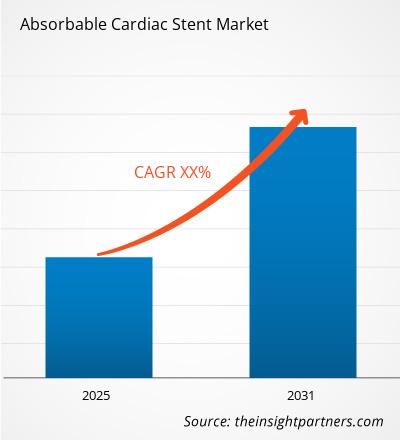
Segmentation Analysis
Material
Material is expected to grow at a CAGR range of 11.0–11.7% during 2026–2034. The absorbable cardiac stent market scope under this segment is defined by radial strength, degradation profile, drug compatibility, strut thickness, radiopacity, and vessel healing response. Material selection strongly influences lesion suitability, procedural confidence, and the balance between short-term scaffolding and long-term vessel restoration.
- Metal platforms, including magnesium and iron-based scaffold concepts, are strategically important because they provide stronger temporary mechanical support, improved radiographic visibility, and potential utility in peripheral lesions needing recoil resistance.
- Polymer platforms remain the broader commercial base because PLLA and proprietary polymer systems have established coronary evidence, controlled resorption behavior, and flexibility for drug-eluting scaffold design.
Application
Application is expected to grow at a CAGR range of 11.2–11.9% during 2026–2034. Coronary artery disease provides the established clinical foundation, while peripheral artery disease is increasingly important as BTK and CLTI treatment needs expand. Adoption depends on lesion complexity, vessel size, calcification, deliverability, operator training, and evidence against contemporary drug-eluting stents or balloon-based therapies.
- Coronary Artery Disease remains the principal indication base, supported by ongoing interest in restoring vessel function, treating younger patients, and avoiding permanent metallic implants in selected lesions.
- Peripheral Artery Disease is expanding rapidly as resorbable scaffolds address below-the-knee vessel recoil, recurrent obstruction, and future treatment preservation in chronic limb-threatening ischemia.
End User
End User is expected to grow at a CAGR range of 10.9–11.5% during 2026–2034. Hospitals and clinics dominate because absorbable stent implantation requires advanced cath labs, imaging, lesion preparation tools, and trained interventional cardiologists. Research and academics institutes remain strategically important because they generate trial evidence, imaging follow-up, and protocol refinement for next-generation scaffold use.
- Hospitals and Clinics generate the largest clinical use because they manage coronary interventions, peripheral revascularization, emergency cardiovascular care, and multidisciplinary limb salvage programs requiring advanced device inventories.
- Research and Academics Institutes support technology validation through randomized studies, OCT and IVUS imaging, degradation analysis, long-term outcomes reporting, and physician training for precise scaffold implantation.
Opportunity Snapshot
| Application | Revenue Contribution | Trend Tag | Adoption Stage |
| Coronary Artery Disease | High | Vessel Restore | Scaling |
| Peripheral Artery Disease | Medium | Limb Salvage | Emerging |
Absorbable Cardiac Stent Market Growth Drivers and Impact Analysis
Rising Burden of CAD, PAD, and Diabetes-Linked Vascular Disease
The growing occurrence of coronary and peripheral artery diseases presents a persistent medical need for revascularization devices that facilitate vascular repair but do not permanently restrict subsequent treatment possibilities. Conditions such as diabetes, smoking, kidney diseases, and elderly patients present a greater risk of complicated lesions and repeated interventions, particularly in arteries beneath the knee. Biodegradable stents fulfill an unmet medical need through their provision of temporary mechanical strength and drug release until absorption occurs. The practical significance lies in the need at specialized vascular clinics for alternatives to balloon angioplasty and non-biodegradable stents. The manufacturers gain when evidence emerges that the use of biodegradable stents improves patency rates and avoids repetition of the procedure.
Improved Scaffold Engineering and Clinical Confidence
The new technology aims at overcoming some of the problems faced by previous generations of bioresorbable scaffolds regarding thick struts, scaffold thrombosis, deliverability, and slow degradation. Some of the innovations include thin designs, enhanced radiopacity, magnesium alloy, proprietary polymers, optimized drug coatings, and more effective catheter delivery systems. The technological advancements are important because the clinicians need devices that expand uniformly, that can be accurately positioned, and can work effectively in preparing lesions. The effect of clinical advancements is the growing level of confidence seen in the recent studies where emphasis has been put on proper insertion of the scaffold, intravascular imaging, and follow-up.
Regulatory Support for Unmet Peripheral Vascular Indications
The regulatory programs that help develop breakthrough technology are driving advancements in the field of chronic limb-threatening ischemia and below-the-knee disease due to the inconsistency in the results obtained from the treatment options available so far. The effect of the program is seen in the speed at which clinical trials advance, in addition to better reimbursement cases and interest from investors for peripheral resorbable scaffold platforms. Hospitals are provided with technology that will be able to provide scaffolding, drug release, and ultimately, freedom of vessels. Technology companies with regulatory programs aligned with clinical goals like limb salvage and wound healing will be more readily adopted.
Absorbable Cardiac Stent Market Future Trends
Shift Toward Lesion-Specific Resorbable Scaffold Selection
Some of the most significant absorbable cardiac stents market trends are going to be related to patient selection based on the nature of the lesion instead of a full-scale switch from metallic drug-eluting stents. Intervenors are likely to take into account such factors as vessel diameter, degree of calcification, lesion length, diabetes, imaging results, and requirements for further treatment when choosing whether a scaffold is required. In this case, those manufacturers who can offer a reliable method of implantation, imaging, and various sizes for coronary and BTK vessels will have an edge.
Integration of Imaging-Guided Implantation Protocols
Future use will increasingly depend on intravascular imaging, lesion preparation, and precision deployment protocols. OCT and IVUS can help confirm vessel sizing, plaque morphology, scaffold expansion, and apposition, which are especially important for bioresorbable technologies. This trend will make training and procedural discipline central to commercialization. Manufacturers may bundle education, proctoring, and digital case libraries with product launches to reduce operator variability. Imaging-guided adoption should improve outcomes, strengthen registry data, and support payer confidence. It will also raise barriers for low-evidence products that cannot demonstrate consistent procedural performance.
Absorbable Cardiac Stent Market Opportunities
Below-the-Knee Peripheral Revascularization Expansion
The absorbable cardiac stent market forecast indicate a strong opportunity in below-the-knee peripheral revascularization, particularly for chronic limb-threatening ischemia. Manufacturers can invest in scaffold lengths, radial strength, flexible delivery systems, and evidence packages tailored to infrapopliteal anatomy. Commercial success will require partnerships with vascular specialists, wound-care networks, and diabetic limb salvage programs. The opportunity is action-oriented because hospitals increasingly evaluate technologies by limb salvage, wound healing, and reintervention reduction. Companies that combine clinical trial data, reimbursement support, and focused physician training can build defensible positions in a segment where permanent implants are often clinically debated..
Next-Generation Coronary Platforms for Selected Patients
Coronary scaffolds still offer opportunity when used in carefully selected younger patients, non-complex lesions, and centers with imaging-guided expertise. Developers can differentiate through thinner struts, faster endothelialization, shorter resorption timelines, and improved visibility. Investment should focus on randomized trials against current drug-eluting stents, long-term vasomotion evidence, and simplified implantation workflows. Commercial strategies must avoid overbroad claims and instead target patient groups where leaving no permanent metal is meaningful. Companies with strong cath lab relationships can combine product innovation with education, registries, and post-market surveillance to rebuild confidence in coronary bioresorbable technologies.
Recent Developments
- August 2025: Abbott Laboratories received CE Mark in Europe for the Esprit BTK Everolimus Eluting Resorbable Scaffold System for below-the-knee peripheral artery disease. Abbott stated that more than 50 million people in Europe live with PAD, and LIFE-BTK two-year data showed 48% fewer repeat procedures versus balloon angioplasty.
- September 2025: REVA Medical, LLC announced positive 36-month MOTIV bioresorbable scaffold study results for below-the-knee artery disease. The update supported the company’s tyrosine polycarbonate scaffold platform for peripheral vascular applications and reinforced its positioning in chronic limb-threatening ischemia, where temporary scaffolding and future vessel treatment flexibility are important.
- February 2025: BIOTRONIK SE & Co. KG launched the BIOMAG-LL pre-market study to assess Freesolve resorbable magnesium scaffold performance in long de novo coronary lesions. The 100-patient European study evaluates longer scaffold lengths, with follow-up planned through five years, supporting broader coronary use cases for magnesium-based resorbable technology.
Frequently Asked Questions

- Comprehensive Market Sizing and Forecast Analysis
- Detailed Segmentation Analysis
- In-Depth Market Dynamics Assessment
- Regional and Country-Level Insights
- Competitive Landscape and Company Benchmarking
- Strategic Business Intelligence
Recent Reports
Testimonials

The Insight Partners' SCADA System Market report is comprehensive, with valuable insights on current trends and future forecasts. The team was highly professional, responsive, and supportive throughout. We are very satisfied and highly recommend their services.
RAN KEDEM Partner, Reali Technologies LTDs
I requested a report on a very specific software market and the team produced the report in a few days. The information was very relevant and well presented. I then requested some changes and additions to the report. The team was again very responsive and I got the final report in less than a week.
JEAN-HERVE JENN Chairman, Future Analytica
We worked with The Insight Partners for an important market study and forecast. They gave us clear insights into opportunities and risks, which helped shape our plans. Their research was easy to use and based on solid data. It helped us make smart, confident decisions. We highly recommend them.
PIYUSH NAGPAL Sr. Vice President, High Beam Global
The Insight Partners delivered insightful, well-structured market research with strong domain expertise. Their team was professional and responsive throughout. The user-friendly website made accessing industry reports seamless. We highly recommend them for reliable, high-quality research services
YUKIHIKO ADACHI CEO, Deep Blue, LLC.
This is the first time I have purchased a market report from The Insight Partners.While I was unsure at first, I visited their web site and felt more comfortable to take the risk and purchase a market report.I am completely satisfied with the quality of the report and customer service. I had several questions and comments with the initial report, but after a couple of dialogs over email with their analyst I believe I have a report that I can use as input to our strategic planning process.Thank you so much for taking the extra time and making this a positive experience.I will definitely recommend your service to others and you will be my first call when we need further market data.
JOHN SUZUKI President and Chief Executive Officer, Board Director, BK Technologies
I wish to appreciate your support and the professionalism you displayed in the course of attending to my request for information regarding to infectious disease IVD market in Nigeria. I appreciate your patience, your guidance, and the fact that you were willing to offer a discount, which eventually made it possible for us to close a deal. I look forward to engaging The Insight Partners in the future, all thanks to the impression you have created in me as a result of this first encounter.
DR CHIJIOKE ONYIA MANAGING DIRECTOR, PineCrest Healthcare Ltd.Reason to Buy
- Informed Decision-Making
- Understanding Market Dynamics
- Competitive Analysis
- Identifying Emerging Markets
- Customer Insights
- Market Forecasts
- Risk Mitigation
- Boosting Operational Efficiency
- Strategic Planning
- Investment Justification
- Tracking Industry Innovations
- Aligning with Regulatory Trends





 Get Free Sample for