
Absorbable Hemostat Market Growth, Share & Trends by 2034
Coverage: By Product (Thrombin based, Cellulose based, Collagen based, Gelatin based Hemostat); Formulation (Matrix and gel hemostats, Sheet and pad hemostat, Powder hemostat, Sponge hemostat); Application (General surgery, Orthopedic surgery, Cardiovascular surgery, Reconstructive Surgery); End User (Hospitals, Clinics, Ambulatory Surgical Centers, Others), and Geography (North America, Europe, Asia Pacific, and South and Central America)
- Status : Data Released
- Report Code : TIPRE00015191
- Category : Life Sciences
- No. of Pages : 150
- Available Report Formats :


- Last update date : July 15, 2026


2025 Market Size
US$ 24.23 Bn
Base year value
2034 Forecast
US$ 40.09 Bn
Projected by 2034
CAGR 2026-2034
5.75 %
Growth rate
Addressable Market
US$ 291.42 Bn
(2026-2034)
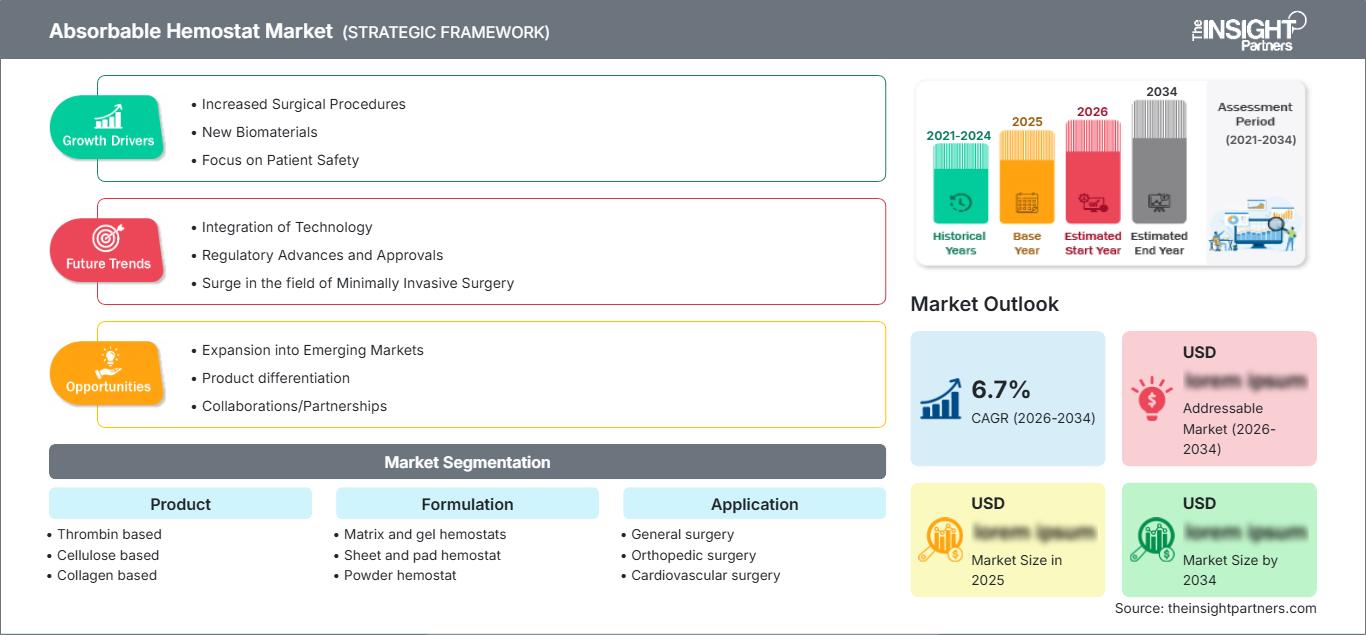
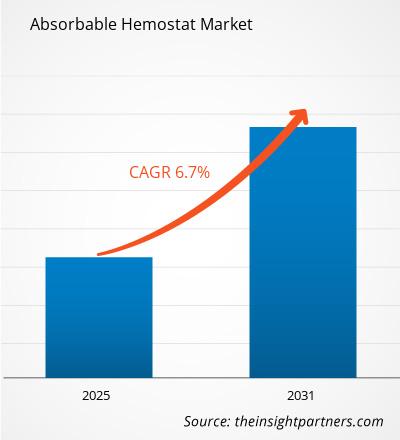
The absorbable hemostat market size was valued at US$ 24.23 Billion in 2025 and is projected to reach US$ 40.09 Billion by 2034, registering a CAGR of 5.75% during 2026–2034. The market covers thrombin based, cellulose based, collagen based, and gelatin based hemostats used across general surgery, orthopedic surgery, cardiovascular surgery, and reconstructive surgery, with demand concentrated in hospitals, clinics, ambulatory surgical centers, and other care settings.
Within North America, the absorbable hemostat market size is supported by high surgical procedure intensity, strong hospital procurement systems, and broad use of adjunctive bleeding-control products in complex operating rooms. The region is expected to grow at a CAGR range of 5.2–5.8% during 2026–2034, reflecting increased use of matrix, gel, pad, powder, and sponge hemostats in minimally invasive and high-risk surgical pathways.
Absorbable Hemostat Market Assessment and Insights
- North America held 41–44% of the absorbable hemostat market share in 2025 and is growing at a CAGR between 2026–2034 of 5.2–5.8%, supported by complex surgical case volume, blood management programs, and advanced hospital purchasing protocols.
- US represented 80–84% of North America in 2025 and is growing at a CAGR between 2026–2034 of 5.3–5.9%, led by cardiovascular, orthopedic, and general surgery demand.
- Europe accounted for 26–29% share in 2025 and is growing at a CAGR between 2026–2034 of 4.8–5.4%, with Germany, the UK, France, and Italy leading adoption.
- Asia Pacific held 20–23% share in 2025 and is growing at a CAGR between 2026–2034 of 6.6–7.4%, driven by China, Japan, South Korea, India, and Australia.
- Largest Segment Matrix and gel hemostats held 34–38% market share in 2025, growing at a CAGR range of 5.9–6.5% during 2026–2034 due to broad procedural utility.
- High Growth Segment Ambulatory Surgical Centers held 13–16% market share in 2025, growing at a CAGR range of 7.0–7.8% during 2026–2034 as surgeries shift outpatient.
- Key companies analyzed in detail: Ethicon, Inc., Baxter International Inc., Teleflex Incorporated, B. Braun Melsungen AG, 3-D Matrix Medical Technology, RESORBA Medical GmbH, Arch Therapeutics, Inc., Hemostasis, LLC, MedTrade Products Limited, Integra LifeSciences Holdings Corporation.
Source: The Insight Partners' analysis based on proprietary research, government publications, company annual reports, investor presentations, industry databases, and expert interviews.
From passive gauze-like devices, the absorbable hemostat market has shifted towards biomaterial-based products that aid faster clotting, provide effective sealing of diffuse bleedings and have minimal invasive capabilities. Competitive factors in the market have moved from efficacy to absorption rate, conformity, applicators, hemostatic efficacy, effectiveness with patients receiving anticoagulants and ease of storage. In terms of absorbable hemostat manufacturing operations, production dynamics involve acquisition of collagen, oxidized cellulose preparation, thrombin production, gelatin matrix preparation, sterilization verification and packaging controls.
Future absorbable hemostat market penetration will be influenced by increase in surgical capacity in Asia Pacific, healthcare investments in Gulf and emphasis on patient blood management by institutions. Expectations from the regulatory side regarding biologics, animal-derived products and resorbable polymers will benefit companies with clinical evidence and post-market performance tracking abilities. Future investment will be directed at room temperature products, laparoscopic delivery platforms, powder products and products that save time, reduce risks of transfusion and complications cost.
Absorbable Hemostat Market Report Scope
| Report Attribute | Details |
|---|---|
| Market size in 2025 | US$ 24.23 Billion |
| Market Size by 2034 | US$ 40.09 Billion |
| Global CAGR (2026 - 2034) | 5.75% |
| Historical Data | 2021-2024 |
| Forecast period | 2026-2034 |
Absorbable Hemostat Market Analysis
Demand for surgical intervention will still be the primary determinant because it is critical in controlling bleeding which determines the visibility in surgery, chances of undergoing transfusion, procedure time, and recovery period after surgery. The absorbable hemostat market trends will be facilitated by the implementation of patient blood management programs in hospitals especially those that involve cardiovascular, orthopedics, liver surgery, trauma, gynecology, and reconstructive surgeries.
The value chain involves biomaterial producers, thrombin derived from either plasma or recombinant sources, collagen and gelatin manufacturers, sterilization services providers, device assemblers, hospitals value analysis team, and distribution channels within surgery specialties. The absorbable hemostat market supply dynamics will benefit firms that have credible sourcing, predictable absorption pattern, wide range of product forms, and stable availability of their stock.
The absorbable hemostat market report clearly indicates that Ethicon, Inc. and Baxter International Inc. position themselves in terms of biosurgery portfolios, whereas Teleflex Incorporated has positioned itself in terms of enhanced hemostasis indications and positioning due to trauma. B. Braun Melsungen AG, Integra LifeSciences Holdings Corporation, RESORBA Medical GmbH, Hemostasis, LLC, Arch Therapeutics, Inc., MedTrade Products Limited, and 3-D Matrix Medical Technology position themselves in terms of biomaterial platforms, surgical specialties, distribution partnerships, or niche positions. The strategic investment is targeted at products which help cut back on preparation processes and facilitate minimally invasive implantation techniques.
● REPORT CUSTOMIZATION
Tailor This Report To Align With Your Specific Business Requirements
This report can be customized to align precisely with your business objectives, scope, and target markets. Customization options include tailored segmentation, geography, competitive analysis, and strategic insights to support informed decision-making.
Customize This Report →WHAT YOU CAN ADJUST
- ● Segmentations
- ● Geography
- ● Competitive Analysis
- ● Language Preferences
Absorbable Hemostat Market: Strategic Insights
Regional Insights
North America Absorbable hemostat market
North America held 41–44% share in 2025 and is projected to grow at a CAGR range of 5.2–5.8% during 2026–2034. The region benefits from high procedure intensity, advanced surgical suites, strong trauma care networks, and consistent purchasing of adjunctive hemostats for general, cardiovascular, orthopedic, and reconstructive procedures.
The absorbable hemostat market share in North America is reinforced by patient blood management programs, value analysis committees, and adoption of products that improve surgical workflow. Ethicon, Inc., Baxter International Inc., Teleflex Incorporated, Integra LifeSciences Holdings Corporation, and B. Braun Melsungen AG remain relevant because hospitals increasingly evaluate hemostats by time-to-control, storage burden, product waste, and complication avoidance.
U.S. Absorbable hemostat market
The U.S. represented 80–84% of North America in 2025 and is expected to grow at a CAGR range of 5.3–5.9% during 2026–2034. Demand is strongest in cardiovascular surgery, orthopedic joint procedures, spine interventions, trauma surgery, and high-volume general surgery where bleeding control affects length of stay and transfusion exposure.
Company presence is broad through direct sales teams, hospital contracts, and specialty distributors. Ethicon, Inc., Baxter International Inc., Teleflex Incorporated, Hemostasis, LLC, Arch Therapeutics, Inc., and Integra LifeSciences Holdings Corporation participate across cellulose, collagen, gelatin, powder, and sealant-adjacent categories. Application trends favor ready-to-use formats, laparoscopic applicators, and products designed for diffuse oozing rather than focal arterial bleeding.
Europe Absorbable hemostat market
Europe accounted for 26–29% share in 2025 and is forecast to grow at a CAGR range of 4.8–5.4% during 2026–2034. Germany remains the leading country because of advanced hospital infrastructure, strong specialty surgery volume, and established medtech quality expectations. The UK emphasizes theater efficiency, backlog reduction, and standardized procurement.
Germany’s demand is shaped by complex abdominal, orthopedic, and cardiovascular procedures where surgeons require reliable adjunctive hemostasis. France and Italy show stable hospital uptake in public and private systems, while Spain remains more tender-sensitive but increasingly focused on minimally invasive surgery support. Regional growth depends on HTA scrutiny, CE compliance, and evidence linking products to reduced transfusion or resource use.
APAC Absorbable hemostat market
APAC held 20–23% share in 2025 and is expected to grow at a CAGR range of 6.6–7.4% during 2026–2034. China is the leading country, supported by expanding tertiary hospitals, rising surgical volumes, and domestic biomaterial manufacturing. Japan and South Korea sustain premium demand through advanced surgical practice.
India and Australia add complementary growth paths. India is driven by broader insurance coverage, private hospital investment, and expanding surgical access, while Australia emphasizes quality-controlled procurement and hospital safety standards. Policy support for healthcare infrastructure, local manufacturing, and specialist training strengthens long-term adoption, although pricing pressure remains significant.
Middle East & Africa Absorbable hemostat market
Middle East & Africa is projected to grow at a CAGR range of 5.6–6.3% during 2026–2034, led by Saudi Arabia. Advanced hospital projects, trauma services, and specialty surgical programs in Saudi Arabia and the UAE are increasing demand for reliable absorbable bleeding-control products across general, orthopedic, and reconstructive procedures.
South Africa remains the most structured African market due to private hospital networks and established distributor systems. Rest of MEA adoption is uneven, constrained by public budgets, import dependency, and limited advanced surgical capacity. Gulf infrastructure investment, supported by energy-linked fiscal strength and healthcare diversification, continues to favor premium surgical technologies.
Segmentation Analysis
Product
Product is expected to grow at a CAGR range of 5.5–6.1% during 2026–2034. The absorbable hemostat market forecast under this segment is defined by mechanism of action, bleeding severity, absorption time, tissue compatibility, and surgical specialty. Product choice varies by whether clinicians need active coagulation support, passive matrix formation, sealing behavior, or localized application in difficult anatomy.
- Thrombin based products support faster clot formation in procedures where active coagulation assistance is needed, particularly when conventional compression, cautery, or suturing is limited by access or tissue fragility.
- Cellulose based products remain widely used for capillary and venous oozing because oxidized regenerated cellulose formats are familiar, conformable, absorbable, and available across sheets, powders, and specialty configurations.
- Collagen based products are strategically important in broad surgical fields because collagen promotes platelet adhesion, supports clot structure, and can be supplied as pads or patches for targeted placement.
- Gelatin based Hemostat products maintain relevance in irregular bleeding sites because gelatin matrices can swell, conform to tissue surfaces, and work with thrombin or endogenous clotting factors.
Formulation
Formulation is expected to grow at a CAGR range of 5.7–6.3% during 2026–2034. Demand differs by bleeding pattern, delivery route, and procedural workflow. Matrix and gel products support complex cavities, sheets and pads address broad surfaces, powders reach diffuse oozing sites, and sponges provide simple handling for open surgical fields.
- Matrix and gel hemostats offer high procedural value because they conform to irregular anatomy, support active bleeding control, and are frequently used in orthopedic, spine, cardiovascular, and abdominal surgery.
- Sheet and pad hemostat products remain essential where surgeons need compression, barrier formation, or surface coverage across broad bleeding areas in open and minimally invasive procedures.
- Powder hemostat formats are gaining relevance for diffuse oozing, laparoscopic access, and uneven surfaces where broad, controlled distribution can improve contact with the bleeding source.
- Sponge hemostat products provide economical and familiar handling, supporting routine use in open procedures, wound beds, and areas needing absorbent mechanical support.
Application
Application is expected to grow at a CAGR range of 5.6–6.2% during 2026–2034. General surgery generates broad demand, while cardiovascular and orthopedic surgery drive premium product selection because bleeding can be difficult to control and costly to manage. Reconstructive surgery adds specialized needs for tissue preservation, aesthetic outcomes, and controlled healing.
- General surgery represents a broad use base across abdominal, gastrointestinal, hepatobiliary, hernia, and trauma procedures where diffuse oozing and tissue-plane bleeding require adjunctive support.
- Orthopedic surgery relies on absorbable hemostats in joint replacement, spine, trauma, and reconstructive procedures where cancellous bone and soft-tissue bleeding can affect visibility and transfusion risk.
- Cardiovascular surgery requires dependable hemostasis because anticoagulation, bypass use, graft sites, and sternal bleeding increase complexity and demand products with predictable performance.
- Reconstructive Surgery uses hemostats to improve surgical field control, protect delicate tissues, limit hematoma risk, and support healing in plastic, maxillofacial, and tissue repair procedures.
End User
End User is expected to grow at a CAGR range of 5.8–6.4% during 2026–2034. Hospitals dominate because complex procedures, emergency care, and specialist departments require broad hemostat inventories. Clinics use smaller quantities for minor procedures, while ambulatory surgical centers are gaining importance as orthopedic, general surgery, and reconstructive cases migrate into cost-efficient outpatient settings.
- Hospitals generate the highest revenue contribution because they manage complex, high-acuity, emergency, and multidisciplinary procedures requiring multiple hemostat types across operating rooms.
- Clinics support recurring demand for minor surgical interventions, wound management, dermatologic procedures, and outpatient care where simple absorbable formats improve procedural efficiency.
- Ambulatory Surgical Centers are strategically important as selected orthopedic, gynecology, general surgery, and reconstructive procedures shift to outpatient workflows requiring standardized bleeding-control products.
Opportunity Snapshot
| Segment Name | Revenue Contribution | Trend Tag | Adoption Stage |
| Hospitals | High | Blood Stewardship | Mature |
| Clinics | Medium | Minor Surgery | Scaling |
| Ambulatory Surgical Centers | Medium | Outpatient OR | Scaling |
| Others | Low | Specialty Access | Emerging |
Absorbable Hemostat Market Growth Drivers and Impact Analysis
Expansion of Complex Surgical Procedures
An increase in the complexity of surgeries like cardiothoracic surgery, orthopedic surgery, reconstructive surgery, trauma surgery, and abdominal surgery is creating the necessity for additional techniques for hemostasis apart from the existing ligation, cauterization, and compression. Many complex surgeries have to deal with friable tissue, anticoagulated patients, uneven surfaces, or deep cavity where the traditional technique may not be sufficient. The absorbable hemostats assist surgeons in controlling diffuse hemorrhage in addition to providing visibility during the process and minimizing the interruption in the procedure. The benefits are seen in high-acuity hospitals who monitor operating room efficiency and costs due to complications.
Patient Blood Management and Transfusion Reduction
Patient Blood Management has become one of the key quality metrics for the hospital since the transfusion raises the cost, consumes resources, and adds complication to recovery. Absorbable hemostatic agents are part of this approach because they allow for quick control of intraoperative bleeding and reduction of need for more resource-consuming measures. This metric is particularly important for orthopedic joint replacement, spine surgery, cardiovascular procedures, as well as liver and abdominal surgeries where the blood loss can be significant. The market effects can be observed from the value analysis processes that analyze the cost-effectiveness of the entire procedure, not just the cost of the product acquisition.
Shift Toward Ready-to-Use and Minimally Invasive Formats
It is becoming more common to have products that entail fewer preparations, have storage at room temperature, and provide precise delivery through laparoscopic or endoscopic procedures. Products such as ready-to-use powder, pads, sponges, matrices, and gels simplify preparation and assist nurses in maintaining good OR flow. It is especially relevant in ambulatory surgery centers and high volume hospitals, where case turn around times are strictly controlled. Market effects include higher need for applicator innovation, wider shelf-stable product portfolio, and multi-specialty products. Companies that will minimize product preparation process can win adoption and training advantages, and increase their share in standard OR sets.
Absorbable Hemostat Market Future Trends
Evidence-Based Selection by Bleeding Type
The best-absorbable hemostats will be driven by the need for evidence-based hemostat selection based on bleeding nature, site, and risk category. The hospitals are anticipated to classify hemostat utilization in terms of oozing, bleeding, cavity bleeding, bone bleeding, and minimal invasive entry instead of regarding them all as commodities. This will benefit those vendors who offer algorithms, clinical education, and evidence of their products. Adoption will be much more controlled by comparison done by value analysis committees in terms of efficacy, wastage, inventory, and complications.
Growth of Shelf-Stable and Low-Preparation Products
In the future, the purchase of items that simplify OR logistics without compromising on the clinical efficacy will be a norm. Items that require no refrigeration, quick retrieval from storage and those which will not cause wastage of stock will include shelf stable hemostats, room temperature pads, pre-loaded applicators and powders that are delivered in a controlled way. This is both an operational and clinical issue, because hospitals want to have few varieties of products and fast case setup. There will be need for suppliers to integrate innovative biocompatibility technology with improved packaging, labeling and education of surgeons.
Absorbable Hemostat Market Opportunities
Procedure-Specific Hemostasis Protocols
Absorbable Antimicrobial Hemostatic Envelope Market forecasts suggest there will be a good opportunity for procedurespecific protocols that specify the type of hemostat that is suitable for certain types of bleeding, specialties, and risks. Manufacturers can collaborate with hospitals to develop standardized guidelines for the use of hemostats for orthopedics, cardiovascular surgery, general surgery, and reconstruction. Priority investments for the companies include education of hospital personnel, specialty-based evidence portfolios, operating room checklists, and bundle products for common procedures. Such an opportunity is realistic since it enhances uniformity of product use without being indiscriminate.
Ambulatory Surgical Center Portfolio Expansion
Surgical facilities provide an increasingly valuable opportunity since there is a trend in the orthopedic, reconstructive, gynecological and general surgeries going to the outpatient setting. Such facilities need efficient management of small inventories, predictable pricing, ease-of-use, and time-saving products. The manufacturers can benefit from providing small package sizes, procedure-ready kits, distributor managed replenishment systems and training for a lean staff. This business opportunity is different from working with hospitals since ASCs look at the value of the products through turn-over efficiency and simple inventory management.
Recent Developments
- May 2025: Baxter International Inc. launched Hemopatch Sealing Hemostat with room-temperature storage, a collagen pad approved for hemostasis and sealing in open and minimally invasive surgery. The company highlighted three-year shelf life, direct operating room accessibility, and absorption with replacement by host tissue, improving logistical flexibility for surgical teams.
- April 2025: Teleflex Incorporated received U.S. FDA 510(k) clearance for expanded indications of the QuikClot Control+ Hemostatic Device to include all grades of internal and external bleeding. The clearance was supported by real-world evidence from 603 emergency, trauma, and surgical patients and expands addressable use across general, gynecologic, orthopedic, and surgical bleeding settings.
- November 2024: Integra LifeSciences Holdings Corporation received U.S. FDA 510(k) clearance for the use of CUSA Clarity Ultrasonic Surgical Aspirator System in cardiac surgeries. While not an absorbable hemostat launch, the clearance expanded Integra’s surgical technology relevance in high-bleeding-risk procedures where tissue management and adjunctive hemostasis are closely linked.
Frequently Asked Questions

- Comprehensive Market Sizing and Forecast Analysis
- Detailed Segmentation Analysis
- In-Depth Market Dynamics Assessment
- Regional and Country-Level Insights
- Competitive Landscape and Company Benchmarking
- Strategic Business Intelligence
Recent Reports
Testimonials

The Insight Partners' SCADA System Market report is comprehensive, with valuable insights on current trends and future forecasts. The team was highly professional, responsive, and supportive throughout. We are very satisfied and highly recommend their services.
RAN KEDEM Partner, Reali Technologies LTDs
I requested a report on a very specific software market and the team produced the report in a few days. The information was very relevant and well presented. I then requested some changes and additions to the report. The team was again very responsive and I got the final report in less than a week.
JEAN-HERVE JENN Chairman, Future Analytica
We worked with The Insight Partners for an important market study and forecast. They gave us clear insights into opportunities and risks, which helped shape our plans. Their research was easy to use and based on solid data. It helped us make smart, confident decisions. We highly recommend them.
PIYUSH NAGPAL Sr. Vice President, High Beam Global
The Insight Partners delivered insightful, well-structured market research with strong domain expertise. Their team was professional and responsive throughout. The user-friendly website made accessing industry reports seamless. We highly recommend them for reliable, high-quality research services
YUKIHIKO ADACHI CEO, Deep Blue, LLC.
This is the first time I have purchased a market report from The Insight Partners.While I was unsure at first, I visited their web site and felt more comfortable to take the risk and purchase a market report.I am completely satisfied with the quality of the report and customer service. I had several questions and comments with the initial report, but after a couple of dialogs over email with their analyst I believe I have a report that I can use as input to our strategic planning process.Thank you so much for taking the extra time and making this a positive experience.I will definitely recommend your service to others and you will be my first call when we need further market data.
JOHN SUZUKI President and Chief Executive Officer, Board Director, BK Technologies
I wish to appreciate your support and the professionalism you displayed in the course of attending to my request for information regarding to infectious disease IVD market in Nigeria. I appreciate your patience, your guidance, and the fact that you were willing to offer a discount, which eventually made it possible for us to close a deal. I look forward to engaging The Insight Partners in the future, all thanks to the impression you have created in me as a result of this first encounter.
DR CHIJIOKE ONYIA MANAGING DIRECTOR, PineCrest Healthcare Ltd.Reason to Buy
- Informed Decision-Making
- Understanding Market Dynamics
- Competitive Analysis
- Identifying Emerging Markets
- Customer Insights
- Market Forecasts
- Risk Mitigation
- Boosting Operational Efficiency
- Strategic Planning
- Investment Justification
- Tracking Industry Innovations
- Aligning with Regulatory Trends





 Get Free Sample for