
Account Based Ticketing Market Size, Trends & Growth by 2034
Coverage: By Product Type (Phone, Other Devices); Application (Commercial, Government), and Geography (North America, Europe, Asia Pacific, and South and Central America)
- Status : Data Released
- Report Code : TIPRE00015837
- Category : Technology, Media and Telecommunications
- No. of Pages : 150
- Available Report Formats :


- Last update date : August 06, 2026


2025 Market Size
US$ 1.38 Bn
Base year value
2034 Forecast
US$ 3.87 Bn
Projected by 2034
CAGR 2026-2034
12.11 %
Growth rate
Addressable Market
US$ 22.97 Bn
(2026-2034)
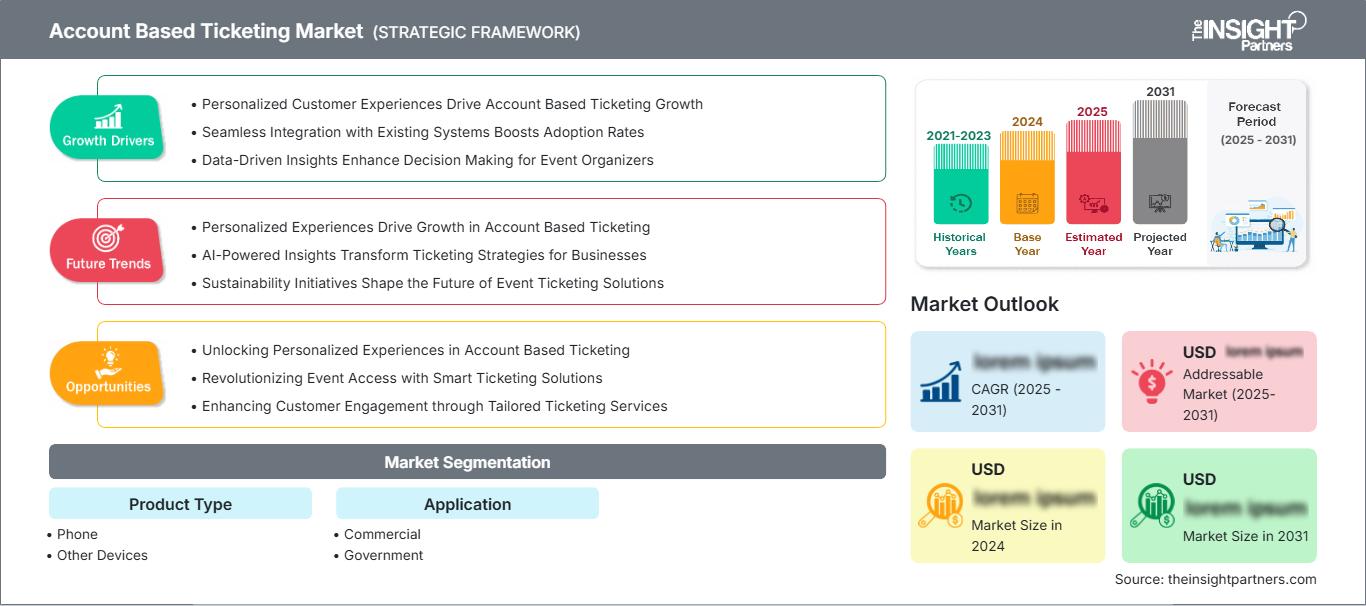
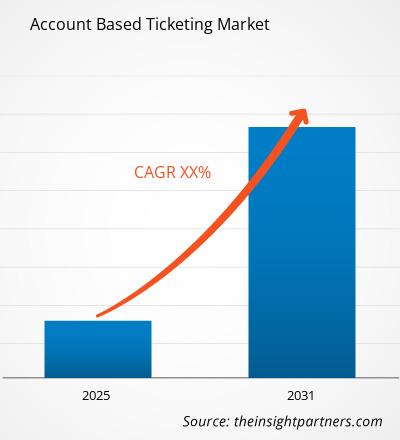
The account based ticketing market was valued at US$ 1.38 Billion in 2025 and is projected to reach US$ 3.87 Billion by 2034, expanding at a CAGR of 12.11% during 2026–2034. The market is being shaped by the migration from card-centric fare collection systems to digital identity-based mobility platforms, enabling passengers to travel using credentials linked to centralized accounts rather than physical tickets. Growing investments in smart mobility ecosystems and integrated transit infrastructure continue to strengthen long-term market expansion.
Across North America, transit agencies are accelerating adoption of cloud-based fare management environments, open payment frameworks, and multimodal travel integration. The account based ticketing market size in the region continues to benefit from modernization programs across rail, metro, and bus networks. Market momentum is supported by increasing smartphone penetration, deployment of contactless payment acceptance, and public transportation authorities seeking operational efficiency through centralized customer account management systems.
Account Based Ticketing Market Assessment and Insights
- North America: Strong digital transit infrastructure and widespread contactless payment adoption position the region as the leading revenue contributor. Share in 2025: 36–40% and CAGR between 2026–2034: 11.0–12.5%.
- US: Large-scale transit modernization initiatives and investments in intelligent transportation systems support sustained growth. Share in 2025: 78–82% of North America and CAGR between 2026–2034: 11.5–13.0%.
- Europe: Advanced rail networks and interoperable mobility programs drive adoption across the UK, Germany, France, Italy, and Spain. Share in 2025: 28–32% and CAGR between 2026–2034: 11.0–12.0%.
- Asia Pacific: Rapid urbanization and smart city investments across China, Japan, South Korea, India, and Australia support expansion. Share in 2025: 22–26% and CAGR between 2026–2034: 13.0–14.5%.
- Largest Segment: Commercial applications dominate deployment owing to extensive use within public transit operators and private mobility providers. Market share in 2025: 68–72% and CAGR 2026–2034: 11.5–12.5%.
- High Growth Segment: Phone solutions benefit from growing mobile wallet adoption and digital ticketing preferences. Account based ticketing market share in 2025: 58–62% and CAGR 2026–2034: 13.0–14.0%.
- Key companies analyzed in detail: Apple Inc.; BT Group plc; CPI Card Group Inc.; Giesecke+Devrient GmbH; Google LLC; Masabi Ltd.; Rambus Inc.; Samsung Electronics Co., Ltd.; Scheidt & Bachmann GmbH; TixTrack, Inc.
Source: The Insight Partners' analysis based on proprietary research, government publications, company annual reports, investor presentations, industry databases, and expert interviews.
Advancements in cloud computing, contactless payments, mobile authentication, and mobility-as-a-service architectures have transformed fare collection ecosystems over the past decade. Transit operators increasingly favor centralized account management structures that reduce dependence on proprietary physical ticket media while improving passenger convenience. Software-led innovation, combined with expanding open-loop payment acceptance, has enabled broader deployment across municipal transport systems, commuter rail services, and multimodal mobility networks.
Looking ahead, account based ticketing market deployment activity is expected to intensify in developing urban regions where public transportation investments remain a strategic priority. Regulatory emphasis on digital inclusion, data security, and interoperable mobility services is encouraging technology providers and transport authorities to collaborate on scalable fare management frameworks. Increasing private-sector involvement in smart infrastructure projects is likely to unlock new commercialization opportunities throughout the forecast period.
Account Based Ticketing Market Report Scope
| Report Attribute | Details |
|---|---|
| Market size in 2025 | US$ 1.38 Billion |
| Market Size by 2034 | US$ 3.87 Billion |
| Global CAGR (2026 - 2034) | 12.11% |
| Historical Data | 2021-2024 |
| Forecast period | 2026-2034 |
Account Based Ticketing Market Analysis
The account based ticketing market growth trajectory is supported by the increasing need for frictionless passenger journeys across transportation networks. Traditional fare collection systems often depend on dedicated hardware and physical media that elevate maintenance costs and operational complexity. Account-centric architectures allow transit agencies to process fare calculations in centralized back-office environments, enabling flexible pricing, mobility integration, and real-time customer engagement. Growing demand for contactless travel experiences following accelerated digital payment adoption has further strengthened implementation activity globally.
Supply-side dynamics continue to evolve as software providers, payment processors, network operators, mobile platform companies, and transportation authorities develop integrated mobility ecosystems. Expansion of cloud infrastructure enables scalability while reducing implementation barriers for transit operators seeking long-term modernization. Interoperable systems capable of supporting multiple transportation modes are increasingly becoming a procurement priority across metropolitan transit projects.
The competitive environment remains moderately consolidated, with technology innovation and platform interoperability serving as principal differentiators. The account based ticketing market analysis indicates that vendors increasingly compete through software capabilities, cybersecurity functions, real-time analytics tools, and customer engagement features. Strategic partnerships between fare collection providers and transit authorities have become essential for securing long-duration deployment contracts and recurring service revenues.
Companies such as Apple Inc., Google LLC, Samsung Electronics Co., Ltd., and Rambus Inc. contribute advanced payment and authentication technologies that support evolving digital transit experiences. Meanwhile, Masabi Ltd., TixTrack, Inc., Scheidt & Bachmann GmbH, Giesecke+Devrient GmbH, CPI Card Group Inc., and BT Group plc continue to strengthen market positioning through platform enhancements, transportation-focused digital solutions, and investments in cloud-connected fare management systems. Increasing investment in smart transportation programs is expected to intensify competition throughout the forecast period.
● REPORT CUSTOMIZATION
Tailor This Report To Align With Your Specific Business Requirements
This report can be customized to align precisely with your business objectives, scope, and target markets. Customization options include tailored segmentation, geography, competitive analysis, and strategic insights to support informed decision-making.
Customize This Report →WHAT YOU CAN ADJUST
- ● Segmentations
- ● Geography
- ● Competitive Analysis
- ● Language Preferences
Account Based Ticketing Market: Strategic Insights
Regional Insights
North America Account Based Ticketing Market
North America represented the largest regional contributor, accounting for 36–40% account based ticketing market share in 2025. Major transportation authorities across the United States and Canada are replacing legacy fare collection infrastructure with cloud-based systems capable of supporting open-loop payments, digital wallets, and mobility integration. The region benefits from strong financial technology ecosystems, widespread contactless payment adoption, and advanced communication networks that facilitate deployment.
Regional expansion is projected at a CAGR of 11.0–12.5% during 2026–2034. Transit agencies continue to prioritize operational efficiency while enhancing passenger convenience through centralized account management. Large metropolitan transport operators increasingly utilize data-driven fare optimization and customer engagement tools, supporting sustained demand for advanced account-based ticketing platforms throughout rail, metro, and bus transportation systems.
U.S. Account Based Ticketing Market
The United States accounted for 78–82% of North American revenue in 2025, making it the most influential national market in the region. Continued investment in smart transportation infrastructure, modernization of public transit networks, and integration of payment technologies support market expansion. Major metropolitan areas increasingly deploy digital fare systems to improve commuter experiences while reducing administration costs.
Growth in the country is expected to remain robust, with a CAGR of 11.5–13.0% between 2026–2034. Technology providers maintain strong operational presence across transit projects, while government-supported infrastructure programs encourage broader adoption of digital mobility solutions. Rising utilization of mobile ticketing applications and account-based fare systems is expected to reinforce long-term deployment opportunities across urban transportation networks.
Europe Account Based Ticketing Market
Europe accounted for 28–32% of global account based ticketing market revenue in 2025 and remains one of the most technologically advanced transportation markets. The United Kingdom leads regional deployment activity due to extensive adoption of contactless transit payments and integrated ticketing programs. Germany is strengthening its position through investments in smart rail infrastructure and digital mobility modernization initiatives.
Regional growth is projected at a CAGR of 11.0–12.0% through 2034. France, Italy, and Spain continue expanding digital fare collection projects to support urban mobility goals and improve operational efficiency. Interoperability objectives, environmental transport policies, and growing passenger expectations for seamless travel experiences are encouraging transportation authorities across the region to accelerate transition toward centralized fare management environments.
APAC Account Based Ticketing Market
Asia Pacific represented 22–26% of global account based ticketing market revenue in 2025 and is expected to demonstrate the strongest expansion profile. China leads deployment volumes, while Japan and South Korea benefit from mature digital transportation ecosystems.
The region is forecast to expand at a CAGR of 13.0–14.5% during 2026–2034. India and Australia are increasing investments in smart mobility platforms, integrated transit systems, and digital payment infrastructure, creating favorable conditions for broad account-based ticketing adoption.
Middle East & Africa Account Based Ticketing Market
The Middle East & Africa market remains comparatively smaller but demonstrates increasing adoption across major urban transportation projects. Saudi Arabia and the United Arab Emirates continue investing in smart city development, advanced transit infrastructure, and digital public services.
Regional growth is anticipated at a CAGR of 10.0–11.5% through 2034. South Africa and other developing markets are gradually introducing modern fare collection technologies as governments prioritize transportation efficiency and urban mobility modernization initiatives.
Segmentation Analysis
Product Type
The Product Type segment will grow at a CAGR of 12.4% to 13.4% between 2026 and 2034. Device-based authentication is an integral part of digital fare collection strategies, as transit companies prioritize user-friendliness and interoperability. The account based ticketing market scope continues to grow owing to increased use of mobile-first travel experiences, digital identity solutions, and contactless access methods. Vendors are increasingly integrating payment, identity management, and ticketing services into unified platforms to improve the passenger experience and operational efficiency.
- Phone – Smartphones represent the leading deployment category due to widespread mobile wallet usage, integrated authentication capabilities, and growing passenger preference for managing travel, payments, and transit accounts through a single digital interface.
- Other Devices – Wearables, smart cards linked to back-office accounts, connected devices, and alternative credentials remain important where multimodal access, accessibility requirements, or institutional transit programs require flexible user authentication options.
Application
The Applications segment is anticipated to exhibit a CAGR of 11.8% to 12.8% between 2026 and 2034. Growth is facilitated by the demand for scalable solutions to collect fares from a wide array of passengers and transport. Centralized account management increases fare flexibility, reduces costs, and promotes integration with multimodal transport systems. Both public and private entities continue investing in the development of digital ticketing systems as part of mobility modernization efforts.
- Commercial – The dominant application area benefits from extensive deployment across metro, rail, bus, ferry, and private mobility services. Commercial operators prioritize revenue optimization, customer engagement analytics, and seamless digital payment acceptance.
- Government – Government agencies increasingly deploy modern fare management systems within publicly funded transportation projects to improve accessibility, reduce administrative complexity, and support broader smart mobility and urban development objectives.
Opportunity Snapshot
| Application | Revenue Contribution | Trend Tag | Adoption Stage |
| Commercial | High | Open Payments | Mature |
| Government | Medium | Smart Transit | Scaling |
Account Based Ticketing Market Growth Drivers and Impact Analysis
Expansion of Contactless and Open-Loop Payment Ecosystems
Transit authorities worldwide are increasingly adopting open-loop payment ecosystems that permit passengers to use bank cards, digital wallets, and mobile devices directly for fare transactions. This shift also helps minimize reliance on proprietary ticketing media, enabling greater convenience and reduced infrastructure maintenance. Banks, payment processing firms, and technology companies are working closely with transportation companies to implement this change. With increasing city populations, transportation systems need to be highly efficient and have low transaction costs. Account-based systems allow fares to be computed centrally, accommodate different fare structures, and facilitate integration across modes of transport. Such factors have made the adoption of modern ticketing systems by transit operators very appealing.
Growing Investments in Smart Transportation Infrastructure
Governments and municipalities are allocating significant budgets to upgrade their transport systems to improve mobility efficiency, sustainability, and ease for commuters. Account-based ticketing technology aligns well with smart cities by facilitating mobility services, data analytics, and interoperability across various transport modes through account-based fare collection. Transportation organizations are increasingly adopting cloud-based technologies in place of traditional ticketing systems to meet the future needs of mobility. On top of that, digital transformation efforts in the transportation sector emphasize automation, real-time passenger interaction, and operational transparency. All these developments create a favorable environment for providers of scalable fare management solutions. There will be increasing demand for a centralized account-based ticketing system in the coming years.
Rising Demand for Mobility-as-a-Service Integration
Consumers increasingly expect transportation solutions that enable them to plan their journeys, pay fares, manage tickets, and receive customer service from a single platform. The mobility-as-a-service framework has been pushing for the unification of public transport, shared mobility, regional trains, and other alternative modes of transportation. The use of account-based ticketing enables the creation of an underlying technological framework for such an ecosystem by providing credential and fare-processing capabilities across different services. It provides transportation companies with better customer retention, deeper passenger insights, and greater flexibility in their pricing models. The capability to unify transportation services via account management also increases accessibility and convenience for customers.
Account Based Ticketing Market Future Trends
Artificial Intelligence Supporting Dynamic Fare Optimization
The account based ticketing market trends increasingly indicate movement toward artificial intelligence-enabled fare management systems. Future systems will use predictive analysis, demand modeling, and passenger flow forecasting to optimize pricing and service delivery strategies. In the future, transport providers will try out even more sophisticated algorithms that can help formulate optimal pricing strategies based on congestion and utilization levels. With increasing amounts of data, intelligent tools for better decision-making are expected to help improve revenue management and customer experience simultaneously. Those vendors that introduce advanced analytics into their account management systems will gain an edge over competitors.
Expansion of Cloud-Native Mobility Platforms
Cloud-native deployment models are expected to become more prominent as transportation authorities focus on scalability, security, and resilience. In the future, ticketing systems will be designed around flexible platforms that enable quick, easy updates and integration, and support real-time service scaling. The companies are increasingly moving away from siloed fare payment systems to flexible, adaptable ones that can adapt to changing mobility needs. Cloud computing environments also provide easier access to data and easy integration with payment platforms and customer interaction systems from external parties. With increasing connectivity within urban transport systems, cloud-based account-based systems are believed to be flexible enough to support multimodal mobility experiences.
Account Based Ticketing Market Opportunities
Expansion Across Emerging Urban Transit Networks
There are numerous opportunities for vendors offering account-based fare management systems in urbanizing regions across Asia, the Middle East, Africa, and some Latin American nations. In most developing countries, rather than upgrading their transportation networks, they create new ones, which is why they can implement digital ticketing systems immediately. Account based ticketing market forecasts suggest that future investments in smart mobility initiatives will be focused more on cloud-based platforms able to provide multimodal integration and open payments. Companies that can cooperate with governments, transit authorities, and infrastructure providers at an early stage may enter into long-term contracts and set future technology standards. The increasing use of smartphones, online banking, and contactless payment solutions adds to the value of account-based mobility ecosystems.
Development of Integrated Regional Mobility Ecosystems
A significant investment opportunity exists in the creation of integrated mobility ecosystems that connect rail operators, bus systems, ferry services, micro-mobility providers, and regional transportation authorities through unified account architectures. Transportation authorities are becoming more concerned with offering an easy way to collect fares and increasing convenience across different transit providers. Such vendors, which can provide an interoperable system, robust analytics, and real-time passenger interaction capabilities, have an opportunity to be part of this paradigm shift. An integrated mobility system also offers many opportunities to earn recurring revenue through software, additional value-added services, and improved customer relationship management. In the development of sustainable transport systems, integrated account-based ticketing will be a key part of future mobility infrastructure.
Frequently Asked Questions

- Comprehensive Market Sizing and Forecast Analysis
- Detailed Segmentation Analysis
- In-Depth Market Dynamics Assessment
- Regional and Country-Level Insights
- Competitive Landscape and Company Benchmarking
- Strategic Business Intelligence
Recent Reports
Testimonials

The Insight Partners provided valuable market intelligence that supported our global go-to-market strategy. Their team was professional, responsive, and attentive to our feedback, providing thoughtful analysis and helpful methodological clarifications throughout the project.
Junmo Kim Chief Financial Officer (CFO), Enertech Co., Ltd.
The Insight Partners' SCADA System Market report is comprehensive, with valuable insights on current trends and future forecasts. The team was highly professional, responsive, and supportive throughout. We are very satisfied and highly recommend their services.
RAN KEDEM Partner, Reali Technologies LTDs
I requested a report on a very specific software market and the team produced the report in a few days. The information was very relevant and well presented. I then requested some changes and additions to the report. The team was again very responsive and I got the final report in less than a week.
JEAN-HERVE JENN Chairman, Future Analytica
We worked with The Insight Partners for an important market study and forecast. They gave us clear insights into opportunities and risks, which helped shape our plans. Their research was easy to use and based on solid data. It helped us make smart, confident decisions. We highly recommend them.
PIYUSH NAGPAL Sr. Vice President, High Beam Global
The Insight Partners delivered insightful, well-structured market research with strong domain expertise. Their team was professional and responsive throughout. The user-friendly website made accessing industry reports seamless. We highly recommend them for reliable, high-quality research services
YUKIHIKO ADACHI CEO, Deep Blue, LLC.
This is the first time I have purchased a market report from The Insight Partners.While I was unsure at first, I visited their web site and felt more comfortable to take the risk and purchase a market report.I am completely satisfied with the quality of the report and customer service. I had several questions and comments with the initial report, but after a couple of dialogs over email with their analyst I believe I have a report that I can use as input to our strategic planning process.Thank you so much for taking the extra time and making this a positive experience.I will definitely recommend your service to others and you will be my first call when we need further market data.
JOHN SUZUKI President and Chief Executive Officer, Board Director, BK Technologies
I wish to appreciate your support and the professionalism you displayed in the course of attending to my request for information regarding to infectious disease IVD market in Nigeria. I appreciate your patience, your guidance, and the fact that you were willing to offer a discount, which eventually made it possible for us to close a deal. I look forward to engaging The Insight Partners in the future, all thanks to the impression you have created in me as a result of this first encounter.
DR CHIJIOKE ONYIA MANAGING DIRECTOR, PineCrest Healthcare Ltd.Reason to Buy
- Informed Decision-Making
- Understanding Market Dynamics
- Competitive Analysis
- Identifying Emerging Markets
- Customer Insights
- Market Forecasts
- Risk Mitigation
- Boosting Operational Efficiency
- Strategic Planning
- Investment Justification
- Tracking Industry Innovations
- Aligning with Regulatory Trends





 Get Free Sample for