
Actinic Keratosis Treatment Market Size, Share & Growth by 2034
Coverage: By Drug Class (Nucleoside Metabolic Inhibitors, Nonsteroidal Anti-inflammatory Drugs (NSAIDs), Immune Response Modifiers, Photoenhancers); End User (Hospitals, Dermatologist Clinics, Oncology Centers, Ambulatory Surgical Centers, Others), and Geography (North America, Europe, Asia Pacific, and South and Central America)
- Status : Data Released
- Report Code : TIPRE00004410
- Category : Life Sciences
- No. of Pages : 150
- Available Report Formats :


- Last update date : July 15, 2026


2025 Market Size
US$ 7.54 Bn
Base year value
2034 Forecast
US$ 10.45 Bn
Projected by 2034
CAGR 2026-2034
3.70 %
Growth rate
Addressable Market
US$ 81.74 Bn
(2026-2034)
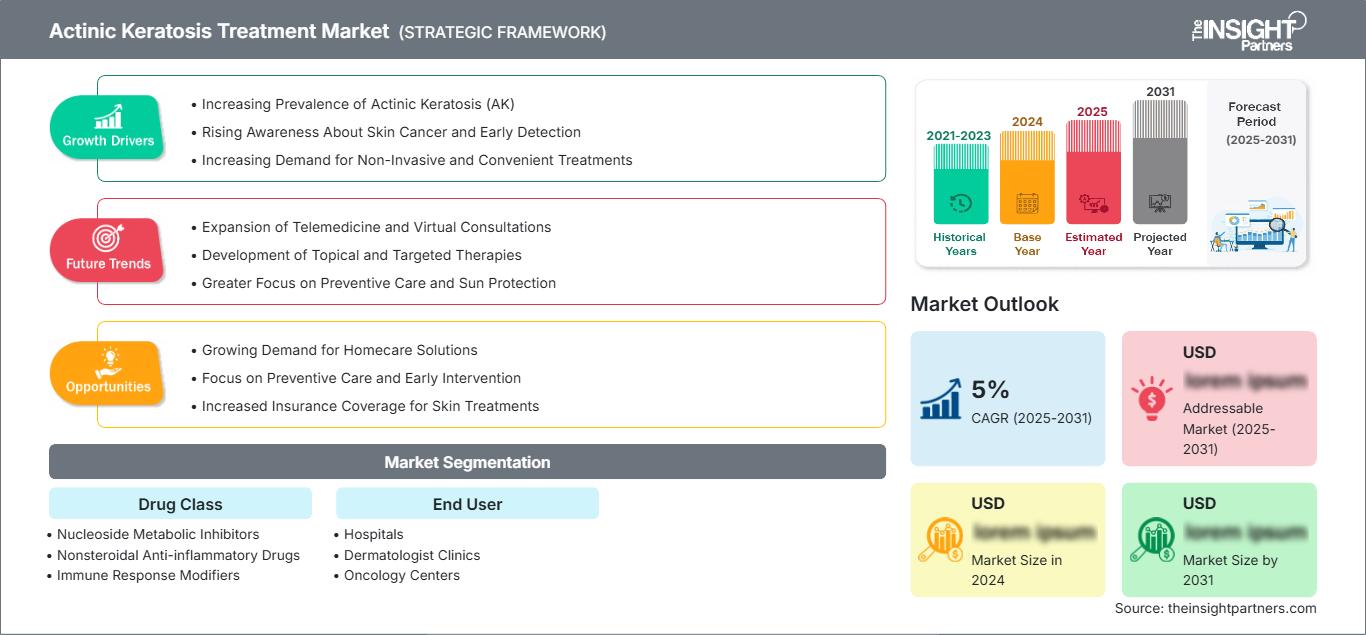
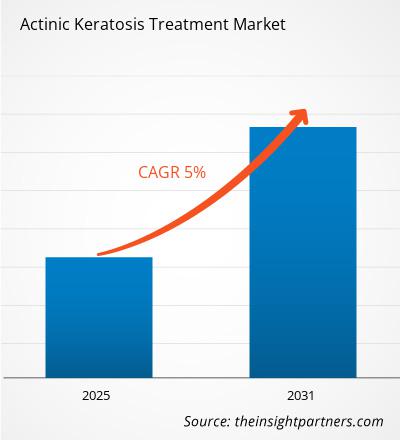
The Actinic Keratosis Treatment Market size was valued at US$ 7.54 Billion in 2025 and is projected to reach US$ 10.45 Billion by 2034, expanding at a CAGR of 3.70% during 2026–2034. The market is driven by consistent demand for lesion-based and field-based treatments that target pre-cancerous lesions in sun-exposed skin, which have been proven through visits to dermatologists, use of photodynamic therapy, use of topical drugs, and progression monitoring to squamous cell carcinoma.
Actinic keratoses treatment market size in North America is underpinned by strong diagnosis rates, wide availability of dermatologists, and aging population with cumulative exposure to ultraviolet radiation. It is expected that the region will record a 3.5% - 3.9% CAGR in 2026-2034 owing to increased demand for field cancerization management, photodynamic therapy, and topical drugs targeting immune and metabolic pathways.
Actinic Keratosis Treatment Market Assessment and Insights
- North America: The Actinic keratosis treatment market share in 2025 is estimated at 42–44%, with CAGR between 2026–2034 at 3.5–3.9%, supported by high dermatology utilization, strong topical therapy adoption, and established photodynamic treatment infrastructure.
- US: Share in 2025 is estimated at 86–90% of North America, with CAGR between 2026–2034 at 3.4–3.8%, reflecting high outpatient dermatology volumes and branded therapy access.
- Europe: Share in 2025 is estimated at 27–29%, with CAGR between 2026–2034 at 3.0–3.4%; Germany, the UK, France, Italy, and Spain lead through mature dermatology networks and public reimbursement.
- Asia Pacific: Share in 2025 is estimated at 18–20%, with CAGR between 2026–2034 at 4.5–4.9%; Australia, Japan, China, South Korea, and India benefit from sun-exposure awareness and specialist expansion.
- Largest Segment: Immune Response Modifiers held a market share range of 32–36% in 2025, with CAGR between 2026–2034 at 3.6–4.0%, due to field-directed use in recurrent lesions.
- High Growth Segment: Photoenhancers held a market share range of 20–24% in 2025, with CAGR between 2026–2034 at 4.7–5.1%, supported by photodynamic therapy adoption in dermatology clinics.
- Key companies analyzed in detail: Bausch Health Companies Inc., LEO Pharma A/S, Apotex Inc., Novartis AG, Biofrontera Inc., Sun Pharmaceutical Industries Limited, Viatris Inc., Hill Dermaceuticals, Inc., Tolmar, Inc., Perrigo Company plc.
Source: The Insight Partners' analysis based on proprietary research, government publications, company annual reports, investor presentations, industry databases, and expert interviews.
The trend in treatment has shifted from lesion-by-lesion destruction to field treatment, wherein clinicians treat clinically apparent lesions and the photodamaged skin around them. Production considerations depend on product stability, availability of generics, manufacturing processes of the photosensitizer, device incorporation and work-flow within the dermatologist’s office. The regimen has more and more been influenced by the physician's preference for shorter regimens, cosmetic considerations, adherence, and the capability of treating multiple lesions on the face, scalp, arms, and hands.
Further advances are anticipated in countries where there has been increased recognition of the need for non-melanoma skin cancer prevention and increased access to dermatologists. Favorable regulatory winds include ongoing reviews of label expansion, pharmacovigilance for topicals and quality considerations for photodynamic therapy devices. The investment trend will be towards large field sizes, shorter regimens, devices used in the doctor’s office, and patient education on actinic damage reducing cancer risk.
Actinic Keratosis Treatment Market Report Scope
| Report Attribute | Details |
|---|---|
| Market size in 2025 | US$ 7.54 Billion |
| Market Size by 2034 | US$ 10.45 Billion |
| Global CAGR (2026 - 2034) | 3.70% |
| Historical Data | 2021-2024 |
| Forecast period | 2026-2034 |
Actinic Keratosis Treatment Market Analysis
Demand gets reinforced due to cumulative ultraviolet exposure, aging populations, immunosuppression, and repeat lesions demanding repeated interventions of dermatology. It explains growth prospects in actinic keratosis treatment market, as there will be numerous prescriptions, cryotherapy re-treatments, field therapy, or photodynamic treatments needed. Value chain participants include dermatologists, referring physicians, hospitals, ASCs, oncology clinics, topical drug manufacturers, equipment providers, specialty distributors, and retail pharmacies.
Supply side gives an advantage to the firms that will be able to provide reliable products and clinical support for field-directed decision-making on treatment. Metabolic nucleoside inhibitors, non-steroid anti-inflammatory drugs, immune response modifiers, and photo enhancers have their own role depending on lesion burden, tolerability, adherence, and familiarity with treatment methods. Photodynamic therapy connects drug and equipment supply process, and therefore clinic processes and reimbursement become crucial.
The actinic keratosis treatment market report reveals rivalry between dermatology specialty branded drug producers and generics producers. Bausch Health Companies Inc., LEO Pharma A/S, Biofrontera Inc., Sun Pharmaceutical Industries Limited, and Hill Dermaceuticals, Inc. influence branded and photodynamic therapy strategies while Apotex Inc., Viatris Inc., Perrigo Company plc, and Tolmar, Inc. affect the affordable and extensive distribution.
Positioning strategy depends on the period of treatment, evidence of clearance, safety concerns, cosmetic results, and flexibility of field size. Novartis AG still holds its relevance due to its wide capabilities in the fields of dermatology and oncology. Investments are focused on clinical studies related to broader anatomical areas, better light sources, wider field use topically, and support for patients who may discontinue treatment because of side effects.
● REPORT CUSTOMIZATION
Tailor This Report To Align With Your Specific Business Requirements
This report can be customized to align precisely with your business objectives, scope, and target markets. Customization options include tailored segmentation, geography, competitive analysis, and strategic insights to support informed decision-making.
Customize This Report →WHAT YOU CAN ADJUST
- ● Segmentations
- ● Geography
- ● Competitive Analysis
- ● Language Preferences
Actinic Keratosis Treatment Market: Strategic Insights
Regional Insights
North America Actinic keratosis treatment market
North America accounted for an estimated 42–44% share in 2025 and is projected to grow at a 3.5–3.9% CAGR during 2026–2034. The region benefits from high dermatology access, strong awareness of sun-induced precancerous lesions, and clinical familiarity with topical therapy, cryotherapy, and photodynamic therapy. Demand is reinforced by older adults and immunocompromised patients requiring repeated lesion evaluation.
The actinic keratosis treatment market share in North America is further facilitated by the outpatient dermatologist density and accessibility of office-based procedures in the United States. The Canadian component comes from structured specialty referrals and public insurance for certain treatments. This adoption occurs most successfully when dermatologists take a proactive approach in treating field cancerization, taking into account all aspects mentioned above.
U.S. Actinic keratosis treatment market
The U.S. represented 86–90% of North America in 2025 and is expected to expand at a 3.4–3.8% CAGR through 2034. The demand is supported by the large volume of dermatology visits, substantial private insurance penetration, and wide availability of topical prescription products. Clinic-based care still plays an important role among those patients who have many lesions on their face and scalp.
Companies operate in both prescription and procedural spaces. The competitors are Sun Pharmaceutical Industries Limited, Biofrontera Inc., Bausch Health Companies Inc., LEO Pharma A/S, Viatris Inc., and Perrigo Company plc. The application trends are moving towards more extensive field-based treatment, short courses of therapy, preservation of cosmetic effects, and surveillance of patients at high risk.
Europe Actinic keratosis treatment market
Europe held an estimated 27–29% share in 2025 and is forecast to grow at a 3.0–3.4% CAGR during 2026–2034. The UK benefits from general practitioner referral systems, dermatology triage, and skin cancer awareness. Germany is the leading country, supported by specialist density, reimbursement coverage, and established use of prescription field therapies.
The contribution from France, Italy, and Spain arises from their well-established dermatology systems, their high population exposure to the sun, and an increasing emphasis on early management of precancerous lesions. There is a prevalence of lesions in southern Europe due to their outdoor culture and exposure to ultraviolet rays, which results in a recurring demand.
APAC Actinic keratosis treatment market
APAC accounted for an estimated 18–20% share in 2025 and is projected to grow at a 4.5–4.9% CAGR during 2026–2034. Australia leads because of high ultraviolet exposure, strong skin cancer screening culture, and mature dermatology practice.
Growth among Japan, China, South Korea, and India comes from increasing awareness, availability of private dermatological treatment, and increased availability of topical drug therapies. The industrial factors responsible for growth include generic production and the increased presence of drugs in pharmacies. Policy emphasis on cancer prevention and early referral by specialists improves lesion recognition.
Middle East & Africa Actinic keratosis treatment market
Middle East & Africa is expected to grow at a 3.1–3.5% CAGR during 2026–2034, led by Saudi Arabia. The UAE, South Africa, and Rest of MEA contribute through private dermatology clinics, imported products, and gradually improving skin cancer awareness.
Energy-fueled investment in the provision of healthcare within the Gulf region assists in developing dermatology clinics, aesthetic medicine, and availability of office technologies. South Africa is still an essential part of the sub-regional care center. There are restrictions like unequal accessibility to specialists, lack of reimbursement for field treatments, and varying awareness of precancerous lesions.
Segmentation Analysis
Drug Class
The Drug Class segment is expected to grow at a 3.5–3.9% CAGR during 2026–2034. The actinic keratosis treatment market trends across this segment is shaped by lesion count, anatomical site, field cancerization, treatment duration, local reaction tolerance, and clinician preference. Photoenhancers are gaining relevance where photodynamic therapy enables office-controlled treatment, while topical therapies remain central for home-based field management.
- Nucleoside Metabolic Inhibitors: This sub-segment remains important for field treatment where clinicians seek established lesion reduction, although multi-week courses require adherence support and counseling on inflammatory skin reactions.
- Nonsteroidal Anti-inflammatory Drugs: This sub-segment has selective use where tolerability and gradual lesion improvement are prioritized, particularly among patients needing less intensive inflammatory response.
- Immune Response Modifiers: This sub-segment holds the strongest position because immune-mediated activity supports field therapy across recurring lesions, especially where clinicians manage broader photodamaged skin.
- Photoenhancers: This sub-segment is strategically important because photosensitizers support photodynamic therapy, combining topical drug activation with controlled light exposure and specialist supervision.
End User
The End User segment is projected to grow at a 3.4–3.8% CAGR during 2026–2034. Demand is concentrated in dermatologist clinics because diagnosis, lesion grading, field therapy selection, cryotherapy, and photodynamic procedures are typically managed by specialists. Hospitals and oncology centers remain important for complex, immunocompromised, or cancer-adjacent cases, while ambulatory surgical centers support procedural throughput.
- Hospitals: This sub-segment supports complex cases, immunosuppressed patients, biopsy-linked evaluation, and treatment coordination when lesions coexist with broader oncology or dermatologic comorbidity.
- Dermatologist Clinics: This sub-segment dominates because lesion diagnosis, topical prescriptions, photodynamic therapy, cryotherapy, and recurring surveillance are usually managed in outpatient specialist settings.
- Oncology Centers: This sub-segment is relevant for high-risk patients, especially when actinic damage coexists with prior skin cancer, transplant-related immunosuppression, or suspected malignant transformation.
- Ambulatory Surgical Centers: This sub-segment supports procedural efficiency for selected dermatologic interventions, biopsies, lesion-directed treatment, and coordinated outpatient management of recurring lesions.
Opportunity Snapshot
| Segment Name | Revenue Contribution | Trend Tag | Adoption Stage |
| Hospitals | Medium | Complex Care | Mature |
| Dermatologist Clinics | High | Field Therapy | Mature |
| Oncology Centers | Medium | Cancer Surveillance | Scaling |
| Ambulatory Surgical Centers | Medium | Procedural Throughput | Scaling |
Actinic Keratosis Treatment Market Growth Drivers and Impact Analysis
Rising Burden of Chronic Ultraviolet Skin Damage
Exposure to ultraviolet light remains the key driver since actinic keratosis commonly occurs in body parts that are exposed to the sun all year long including the face, scalp, forearms, and hands. Aging demographics result in an increase in the patient base, and exposure to outdoor work and recreational activities, as well as immunosuppression, contribute to risk factors. The commercial implications include repeat visits to the dermatologist, repeat prescription of medication, cryotherapy sessions, and field directed treatments. Doctors tend to treat large photodamaged regions instead of individual lesions due to subclinical changes around the keratosis lesion.
Shift Toward Field-Directed Treatment Strategies
The use of field directed therapy has been increasing due to the presence of multiple lesions in addition to the sun damage in the skin around them, where destruction of these lesions individually will not suffice in the treatment of the disease. There is a selection of therapies for lesions based on lesion count, location, aesthetic consideration, duration of treatment, and chances of compliance. Market effects would be an increased demand for products such as immune response modifier, nucleoside metabolic inhibitor, and photodynamic therapy which target visible and invisible lesions in a specific area.
Growth of Dermatology Clinics and Office-Based Procedures
Specialized dermatology clinics are essential for diagnosis and treatment, as the decision-making process relies on the ability to differentiate actinic keratosis from any other skin lesions such as squamous cell carcinoma, among others. Infrastructure development in ambulatory dermatology facilities will result in improved capacity to perform cryotherapy, photodynamic therapy, biopsies, and follow-ups. This translates into higher demand for clinic-ready supplies, sensitizers, light units, and medications. An ambulatory setting also promotes time-efficient workflow, small-sized equipment, and a definite treatment duration. The supplier whose services are aligned with these requirements gains an advantage in specialized practices.
Actinic Keratosis Treatment Market Future Trends
Short-Course and Larger-Field Treatment Design
Emerging trends for the market for future actinic keratosis treatment would include shortening of treatment periods and increased field size. This is based on the reason that patients abandon their topical treatments when their local reaction, inconvenience, or inflammation affects their day-to-day activities. In addition, larger fields would be more relevant since actinic keratosis damages are not limited to small regions only. Therefore, dermatology clinics may opt for the medications which can provide treatments for the scalp, face, neck, trunk, and extremities in fewer number of visits.
Digital Skin Surveillance and Risk-Stratified Follow-Up
There is hope that digital technologies can be used to document lesions, schedule follow-ups, and stratify risks among those who experience recurrent effects from excessive exposure to sunlight. Good imaging, teledermatology screening, and electronic reminders will allow healthcare providers to check how the lesion responded to photodynamic or topical treatments. Digital technologies cannot become a replacement for biopsies and consultations with specialists but can ensure better continuity between visits. Stratified risk follow-up will be particularly helpful for immunocompromised individuals, people working outside, and those with past history of skin cancers.
Actinic Keratosis Treatment Market Opportunities
Photodynamic Therapy Expansion in Dermatologist Clinics
PDT growth presents an obvious investment case for specialized centers interested in the controlled treatment of field cancerization in an office setting. PDT treatment of actinic keratosis treatment market forecast shows greater value creation if photosensitizer use, light delivery, appointment scheduling, and payment processes are all tied together. Miniature LED technology and broader anatomical data may help achieve greater efficiency and patient buy-in. The manufacturers can focus on training, maintenance, and minimization of process variability in dermatological specialty practices. The best market potential is found in North America, Europe, and Australia with established specialty reach, patient knowledge, and procedure infrastructure.
Affordable Generic and OTC-Adjacent Access Pathways
Affordability remains an actionable opportunity because actinic keratosis often requires repeated care over many years. Generic suppliers and pharmacy-focused companies can improve access through reliable availability, patient counseling, and cost-effective topical options. This is especially relevant in markets where patients delay treatment because of out-of-pocket expense or limited specialist availability. Companies can invest in pack-size optimization, dermatologist education, and pharmacy adherence materials that explain expected local reactions. The opportunity does not depend on premium innovation alone; it depends on making evidence-based treatment easier to start, complete, and repeat when clinically necessary.
Recent Developments
- February 2026: Biofrontera Inc. announced positive Phase 3 results for Ameluz photodynamic therapy in actinic keratoses on the extremities, neck, and trunk, meeting the primary endpoint with statistically significant superiority over vehicle gel. The trial enrolled 172 patients and evaluated larger treatment fields intended to support future label expansion.
- May 2025: Sun Pharmaceutical Industries Limited received U.S. FDA premarket approval for its next-generation LED BLU-U Blue Light Photodynamic Therapy Illuminator, used with LEVULAN KERASTICK for minimally to moderately thick actinic keratoses of the face, scalp, or upper extremities. The model features LED panels, a compact footprint, and five-panel flexibility.
- March 2025: Biofrontera Inc. completed patient enrollment in its Phase 3 study of Ameluz photodynamic therapy for actinic keratoses on the extremities, neck, and trunk. The study enrolled 172 patients and assessed one to three tubes of product over treatment areas up to approximately 240 cm².
Frequently Asked Questions

- Comprehensive Market Sizing and Forecast Analysis
- Detailed Segmentation Analysis
- In-Depth Market Dynamics Assessment
- Regional and Country-Level Insights
- Competitive Landscape and Company Benchmarking
- Strategic Business Intelligence
Recent Reports
Testimonials

The Insight Partners' SCADA System Market report is comprehensive, with valuable insights on current trends and future forecasts. The team was highly professional, responsive, and supportive throughout. We are very satisfied and highly recommend their services.
RAN KEDEM Partner, Reali Technologies LTDs
I requested a report on a very specific software market and the team produced the report in a few days. The information was very relevant and well presented. I then requested some changes and additions to the report. The team was again very responsive and I got the final report in less than a week.
JEAN-HERVE JENN Chairman, Future Analytica
We worked with The Insight Partners for an important market study and forecast. They gave us clear insights into opportunities and risks, which helped shape our plans. Their research was easy to use and based on solid data. It helped us make smart, confident decisions. We highly recommend them.
PIYUSH NAGPAL Sr. Vice President, High Beam Global
The Insight Partners delivered insightful, well-structured market research with strong domain expertise. Their team was professional and responsive throughout. The user-friendly website made accessing industry reports seamless. We highly recommend them for reliable, high-quality research services
YUKIHIKO ADACHI CEO, Deep Blue, LLC.
This is the first time I have purchased a market report from The Insight Partners.While I was unsure at first, I visited their web site and felt more comfortable to take the risk and purchase a market report.I am completely satisfied with the quality of the report and customer service. I had several questions and comments with the initial report, but after a couple of dialogs over email with their analyst I believe I have a report that I can use as input to our strategic planning process.Thank you so much for taking the extra time and making this a positive experience.I will definitely recommend your service to others and you will be my first call when we need further market data.
JOHN SUZUKI President and Chief Executive Officer, Board Director, BK Technologies
I wish to appreciate your support and the professionalism you displayed in the course of attending to my request for information regarding to infectious disease IVD market in Nigeria. I appreciate your patience, your guidance, and the fact that you were willing to offer a discount, which eventually made it possible for us to close a deal. I look forward to engaging The Insight Partners in the future, all thanks to the impression you have created in me as a result of this first encounter.
DR CHIJIOKE ONYIA MANAGING DIRECTOR, PineCrest Healthcare Ltd.Reason to Buy
- Informed Decision-Making
- Understanding Market Dynamics
- Competitive Analysis
- Identifying Emerging Markets
- Customer Insights
- Market Forecasts
- Risk Mitigation
- Boosting Operational Efficiency
- Strategic Planning
- Investment Justification
- Tracking Industry Innovations
- Aligning with Regulatory Trends





 Get Free Sample for