
Activated Aspartate Aminotransferase Market Trends, Share & Demand by 2034
Coverage: By Type (10x52 mL, 10x16 mL); Application (Hospitals, Clinics, Other), and Geography (North America, Europe, Asia Pacific, and South and Central America)
- Status : Data Released
- Report Code : TIPRE00015172
- Category : Life Sciences
- No. of Pages : 150
- Available Report Formats :


- Last update date : July 16, 2026


2025 Market Size
US$ 238.09 Mn
Base year value
2034 Forecast
US$ 378.48 Mn
Projected by 2034
CAGR 2026-2034
5.29 %
Growth rate
Addressable Market
US$ 2,797.43 Mn
(2026-2034)
The Activated aspartate aminotransferase market size was valued at US$ 238.09 Million in 2025 and is projected to reach US$ 378.48 Million by 2034, expanding at a CAGR of 5.29% during 2026–2034. There is constant demand for reagents in the market that are utilized in clinical chemistry testing, liver function testing, myocardial enzyme testing, and general biochemistry processes in hospitals.
The market size of the activated aspartate aminotransferase market in North America is expected to grow at a CAGR of 4.8-5.2% during 2026-2034 because of the high levels of clinical chemistry automation and quality liver function tests, along with a well-established cycle of analyzer replacements.
Activated Aspartate Aminotransferase Market Assessment and Insights
- North America: The activated aspartate aminotransferase market share in 2025 is estimated at 31–33%, with CAGR between 2026–2034 at 4.8–5.2%, supported by automated chemistry platforms, high liver panel utilization, and strict laboratory quality requirements.
- US: Share in 2025 is estimated at 82–86% of North America, with CAGR between 2026–2034 at 4.7–5.1%, reflecting high analyzer penetration and hospital laboratory purchasing scale.
- Europe: Share in 2025 is estimated at 24–26%, with CAGR between 2026–2034 at 4.4–4.8%; Germany, the UK, France, Italy, and Spain lead through standardized biochemistry workflows and reimbursement-backed testing.
- Asia Pacific: Share in 2025 is estimated at 32–34%, with CAGR between 2026–2034 at 6.1–6.5%; China, Japan, India, South Korea, and Australia benefit from IVD manufacturing strength and laboratory modernization.
- Largest Segment: 10x52 mL held a market share range of 58–62% in 2025, with CAGR between 2026–2034 at 5.0–5.4%, due to higher-volume hospital laboratory use.
- High Growth Segment: Clinics held a market share range of 28–32% in 2025, with CAGR between 2026–2034 at 5.8–6.2%, supported by decentralized biochemistry testing and outpatient disease monitoring.
- Key companies analyzed in detail: Audit Diagnostics, Abbott Laboratories, Beckman Coulter, Inc., Shino-Test Corporation, Guizhou Angel Medical Equipment Co., Ltd., Biosino Bio-Technology and Science Incorporation, Hefei Tianyi Biotechnology Institute, Yangzhou Comay Bio-Medical Electronics Co., Ltd., Beijing Jin Hao Pharmaceutical Co., Ltd., Anhui Daqian Biological Engineering Co., Ltd.
Source: The Insight Partners' analysis based on proprietary research, government publications, company annual reports, investor presentations, industry databases, and expert interviews.
Activated Aspartate aminotransferase Market trends of activated aspartate aminotransferase has changed the industry trend from the use of manual tests to automated reagents, standardized procedures, and analyzers' consumables. The manufacture of these reagents is done using liquid stable reagents, cofactors, standardization of calibrators, cold chain transportation, and compatibility with high throughput chemistry analyzers. Kits that help in minimizing test repeats, lot-to-lot consistency, and adherence to international standards for clinical chemistry are preferred in hospitals.
Future development is expected in the Asia Pacific markets and other regions where there is an increasing number of hospitals and diagnostic laboratories. The tailwinds include the registration of IVD products, quality system certification, and traceability of clinical chemistry reagents.
Activated Aspartate Aminotransferase Market Report Scope
| Report Attribute | Details |
|---|---|
| Market size in 2025 | US$ 238.09 Million |
| Market Size by 2034 | US$ 378.48 Million |
| Global CAGR (2026 - 2034) | 5.29% |
| Historical Data | 2021-2024 |
| Forecast period | 2026-2034 |
Activated Aspartate Aminotransferase Market Analysis
Rare prevalence results in a unique but high-level demand environment, where acquired hemophilia A demand is driven by the continued importance of AST testing within liver profile analysis, cardiac enzyme analysis, medication therapy monitoring, and metabolic profiling. This drives activated aspartate aminotransferase market growth through hospitals and clinics running regular biochemistry profiles on patients suffering from hepatitis, alcoholic liver damage, cirrhosis, muscle damage, myocardial infarction, and general health check-ups. Ecosystem participants include reagent makers, analyzer makers, hospitals, clinics, procurement bodies, distributors, and quality control suppliers.
The supply will be determined by the reliability of reagents, kit sizes, compatibility of analyzers, and good cold chain management. Kits of larger size are ideal for those hospitals with high throughput, but small sized kits are appropriate for clinics and labs with fewer samples. International guidelines for chemistry recommend testing methods that use the activation of AST using pyridoxal-5-phosphate due to their capacity to minimize variations caused by deficiency of vitamin B6.
Market analysis of activated aspartate aminotransferase shows that there is competitive market made up of international diagnostic companies and regional reagent producers. The companies such as Abbott Laboratories and Beckman Coulter, Inc. influence the standardized chemistry platforms, but Audit Diagnostics and Shino-Test Corporation offer diversified reagent sources. Biosino Bio-Technology and Science Incorporation and Yangzhou Comay Bio-Medical Electronics Co., Ltd. supplement the manufacturing capabilities in China.
It seems that strategic positioning is becoming more and more connected to the laboratory process than solely to the reagent price. There are competitors such as Guizhou Angel Medical Equipment Co., Ltd., Hefei Tianyi Biotechnology Institute, Beijing Jin Hao Pharmaceutical Co., Ltd., and Anhui Daqian Biological Engineering Co., Ltd. who compete via domestic distribution, cost-efficient supplies, and assistance to regional laboratories.
● REPORT CUSTOMIZATION
Tailor This Report To Align With Your Specific Business Requirements
This report can be customized to align precisely with your business objectives, scope, and target markets. Customization options include tailored segmentation, geography, competitive analysis, and strategic insights to support informed decision-making.
Customize This Report →WHAT YOU CAN ADJUST
- ● Segmentations
- ● Geography
- ● Competitive Analysis
- ● Language Preferences
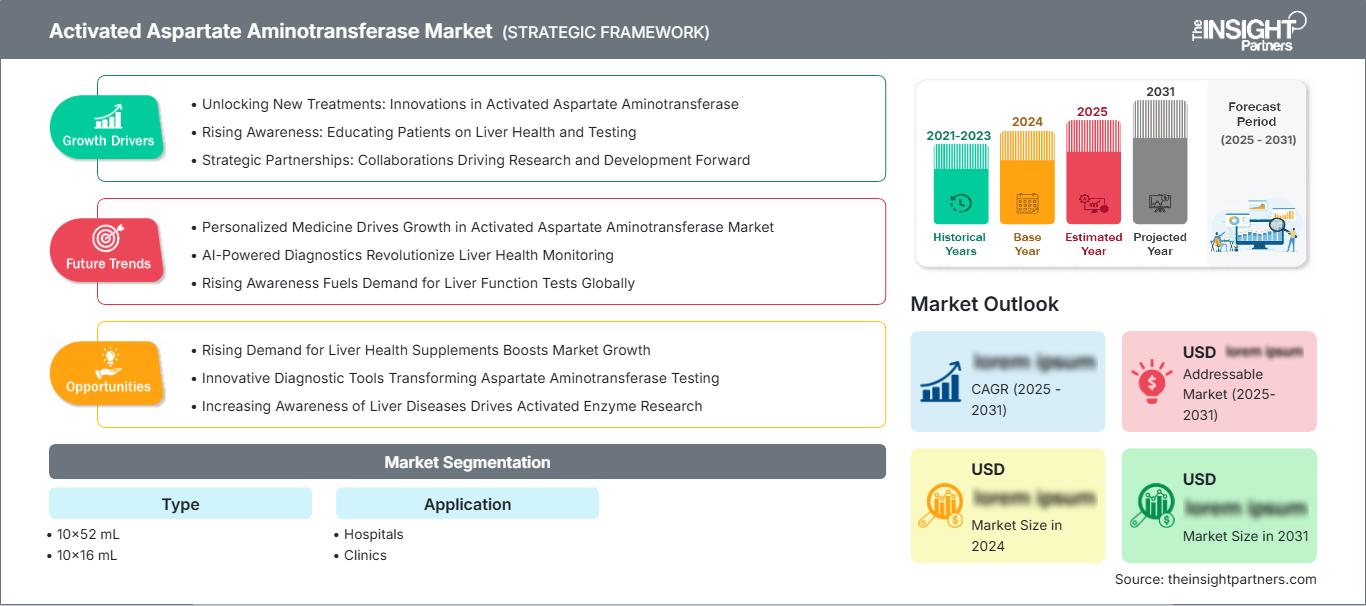
Activated Aspartate Aminotransferase Market: Strategic Insights
Regional Insights
North America Activated aspartate aminotransferase market
North America accounted for an estimated 31–33% share in 2025 and is projected to grow at a 4.8–5.2% CAGR during 2026–2034. The region benefits from high clinical chemistry automation, centralized hospital laboratories, and frequent use of liver function panels in primary care, emergency medicine, hepatology, cardiology, and medication safety monitoring.
In North America, too, the market share of activated aspartate aminotransferase is further backed by the stringent measures taken towards quality management, proficiency testing, and standardization of analyzers. The bigger laboratory networks prefer to use reagent kits that have consistent precision and accuracy levels along with standardized reports. Canada makes its contribution through procurement from hospitals and accessibility of tests to the general public.
U.S. Activated aspartate aminotransferase market
The U.S. represented 82–86% of North America in 2025 and is expected to expand at a 4.7–5.1% CAGR through 2034. Demand is anchored by high outpatient testing, emergency department biochemistry panels, chronic liver disease monitoring, and integrated laboratory information systems that manage large testing volumes efficiently.
Company presence is most dominant amongst suppliers and distributors who utilize the company’s platform. Abbott Laboratories and Beckman Coulter Inc. provide support for chemistry workflows in hospitals and large reference laboratories, whereas the smaller suppliers serve niche, open channel, and distributor-driven demands. Application trends focus on liver function assessments, drug toxicity tests, and metabolic profiles including AST.
Europe Activated aspartate aminotransferase market
Europe held an estimated 24–26% share in 2025 and is forecast to grow at a 4.4–4.8% CAGR during 2026–2034. The UK benefits from structured primary care testing and hospital biochemistry networks. Germany is the leading country, supported by high laboratory automation, strong clinical chemistry standards, and consistent demand for liver enzyme panels.
The contribution from France, Italy, and Spain will be through public health laboratories, hospital laboratories, and diagnostics. In Europe, the buyer will pay attention to the reagent's CE mark, traceability, quality documentation, and method comparisons. The market is growing moderately rather than rapidly because the testing is already saturated, but the aging population and liver disease screening will keep the demand for reagents alive.
APAC Activated aspartate aminotransferase market
APAC accounted for an estimated 32–34% share in 2025 and is projected to grow at a 6.1–6.5% CAGR during 2026–2034. China leads by volume, supported by domestic reagent makers, hospital expansion, and large routine biochemistry demand.
Growth in Japan, India, South Korea, and Australia is made possible by laboratory upgrades, disease screening, and availability of specialist diagnostic services. Industrial features include manufacturing of IVDs locally, automation of analysis and efficient reagent production. Encouraging healthcare and medical device policies in the nation help boost the value chain.
Middle East & Africa Activated aspartate aminotransferase market
Middle East & Africa is expected to grow at a 4.2–4.6% CAGR during 2026–2034, led by Saudi Arabia. The UAE, South Africa, and Rest of MEA contribute through hospital investment, imported analyzers, and improving clinical laboratory infrastructure.
Healthcare improvement projects in Gulf nations that are blessed with vast energy resources depend on the presence of a centrally located lab system, automated chemistry systems, and increased capacity of tests. The nation acts as a sub-regional diagnostics center. Difficulties that could inhibit its adoption include importation dependency, requirement of reagent storage, and non-uniform quality assessment participation.
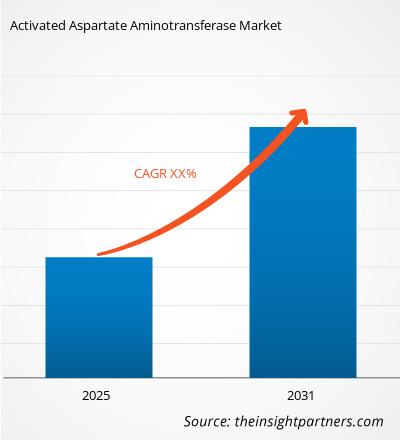
Segmentation Analysis
Type
The Type segment is expected to grow at a 5.1–5.5% CAGR during 2026–2034. The activated aspartate aminotransferase market forecast across this segment is shaped by laboratory throughput, analyzer configuration, reagent stability, storage space, and purchasing frequency. Higher-volume packs support centralized hospital laboratories, while smaller packs reduce wastage for clinics and moderate-volume diagnostic facilities.
- 10x52 mL: This sub-segment dominates demand because high-throughput laboratories require larger reagent volumes, fewer cartridge changes, and predictable inventory planning for routine liver enzyme testing.
- 10x16 mL: This sub-segment is important for clinics and smaller laboratories where lower daily sample volumes make compact reagent packs more economical and help reduce expiry-related wastage.
Application
The Application segment is projected to grow at a 5.3–5.7% CAGR during 2026–2034. Hospitals remain the main users because emergency care, inpatient monitoring, hepatology, cardiology, and preoperative evaluation generate large AST testing volumes. Clinics are gaining relevance as outpatient monitoring expands for chronic liver disease, metabolic syndrome, medication safety, and preventive health checks.
- Hospitals: This sub-segment holds the strongest position because centralized laboratories process high daily volumes of liver function panels, emergency biochemistry tests, and inpatient monitoring samples.
- Clinics: This sub-segment is expanding as outpatient physicians request more routine chemistry testing for chronic disease follow-up, medication monitoring, and early referral decisions.
Opportunity Snapshot
| Application | Revenue Contribution | Trend Tag | Adoption Stage |
| Hospitals | High | Lab Automation | Mature |
| Clinics | Medium | Outpatient Testing | Scaling |
Activated Aspartate Aminotransferase Market Growth Drivers and Impact Analysis
Growing Routine Liver Function Testing Volumes
The primary factor driving the need for routine liver tests is that AST forms part of the common biochemical test panels used within emergencies, in-patient, out-patient and preventative care services. Increased interest in diseases such as hepatitis, fatty liver disease, alcohol induced liver damage, drug induced liver damage and metabolic syndrome has resulted in increased need for repeated tests. This will lead to a steady use of reagents by the hospitals and clinics. Preference is given to activated AST reagents in cases where laboratories require high assay accuracy via Pyridoxal-5-phosphate assisted techniques.
Automation of Clinical Chemistry Laboratories
There is increasing growth of clinical chemistry automation due to the rising needs for higher throughput, shorter turnaround times, minimal handling, and improved quality control in labs. Automated instruments create an increased need for reagent kits that match the analytical instrument, calibrators, controls, and maintenance-driven logistics for supplies. In reality, there is an increased need for purchasing of packages that are compatible with the particular instrument, for instance 10 x 52 mL at hospitals and 10 x 16 mL for smaller laboratories.
Expansion of Outpatient and Clinic-Based Biochemistry Testing
The demand for testing through clinics is rising due to chronic diseases becoming more patient-centric. Doctors track liver enzymes in relation to statin medications, diabetes, hepatis, and possible injury to the liver due to alcohol and medicines. This necessitates smaller kits of reagents which fit the testing requirements and cut wastage. Market implications involve increased activity on the part of distributors, wider procurement by clinics, and greater need for documentation of reagents which is easier. Clinics will enjoy faster decision-making in case of high levels of AST which suggest problems with the liver, muscles, and heart.
Activated Aspartate Aminotransferase Market Future Trends
Method Harmonization and Quality-Aligned Reagent Selection
Activated aspartate aminotransferase market trends in the future would be dominated by aspects of standardization, traceability, and more convergence with clinical chemistry quality systems. There is an ever-increasing requirement for minimizing platform-to-platform variation and achieving consistency in results in different hospitals. In the case of the use of activated AST that relies on pyridoxal-5-phosphate, there will be continued importance in those cases when the clinical interpretation needs to be consistent regardless of the patient’s vitamin B6 status. Thus, procurement choices will be influenced by accuracy, bias, calibration traceability, quality control, and proficiency test results.
Localized Manufacturing and Regional Supply Resilience
It is anticipated that the manufacturing of reagents within the region will gain prominence as the health systems lessen their reliance on distance-based supply chains. The Asia Pacific suppliers can enhance their presence in both local and overseas markets by means of efficient manufacturing, assistance in registering reagents, and appropriate formulae for the analyzers. Manufacturing within the region could help in decreasing time delays, maintaining price stability, and assisting the public hospitals to acquire these products. But it would be achieved through proper quality control, cold chain capability, and suitable documentation accepted by the hospital labs.
Activated Aspartate Aminotransferase Market Opportunities
Analyzer-Reagent Bundling for Hospital Networks
The bundling of the analyzer and the reagent offers a concrete business opportunity for the suppliers who cater to the hospital laboratories network. As per the forecasts for the market of activated aspartate aminotransferase market, there will be higher value added where chemistry analyzers, reagents, controls, calibrators, service contracts, and trainings are sold together as one package. It offers benefits to the hospitals as well as the suppliers as hospitals get easier procurement as well as lesser disruption to their workflows, whereas vendors can ensure recurring sales of the reagents.
Clinic-Focused Pack Sizes and Distributor Support
Smaller laboratories and clinics require reagent forms suited to moderate volume testing without exacerbating wastage through expiry. Opportunity lies in marketing 10x16 mL kits, simplified instruction sets, distributor management of restocking, and education on quality control. This strategy works well in decentralized markets for healthcare services where there is an expansion of out-patient testing while laboratory expenses are limited. Manufacturers can help clinics in these settings through compatibility data in open channels and coordination of cold chain delivery systems. The opportunity is financially feasible since growth of clinic testing is widespread and moderate volume based.
Recent Developments
- June 2026: Novo Nordisk A/S announced that new hemophilia portfolio data, including phase 3 April 2026: Biosino Bio-Technology and Science Incorporation – announced that its subsidiary’s ZS-2000 Fully Automatic Biochemical Analyzer obtained a PRC medical device registration certificate, qualifying the product for legal launch, sale, and use in China. The analyzer is intended for quantitative clinical chemistry testing, including liver function and myocardial enzyme parameters.
- November 2025: Abbott Laboratories – FDA establishment listing records identified Abbott GmbH registered products including Activated Aspartate Aminotransferase for Alinity c and ARCHITECT systems, as well as Alinity c Activated Aspartate Aminotransferase Reagent Kit listings. The listing supports continued regulated-market availability of activated AST reagents for clinical chemistry use.
- March 2025: Beckman Coulter, Inc. announced U.S. FDA clearance of the DxC 500i Clinical Analyzer, an integrated clinical chemistry and immunoassay system. The launch strengthened Beckman Coulter’s near-patient and satellite laboratory automation portfolio, supporting workflows where routine chemistry assays and related liver-function testing require compact, integrated systems.
Frequently Asked Questions

- Comprehensive Market Sizing and Forecast Analysis
- Detailed Segmentation Analysis
- In-Depth Market Dynamics Assessment
- Regional and Country-Level Insights
- Competitive Landscape and Company Benchmarking
- Strategic Business Intelligence
Recent Reports
Testimonials

The Insight Partners provided valuable market intelligence that supported our global go-to-market strategy. Their team was professional, responsive, and attentive to our feedback, providing thoughtful analysis and helpful methodological clarifications throughout the project.
Junmo Kim Chief Financial Officer (CFO), Enertech Co., Ltd.
The Insight Partners' SCADA System Market report is comprehensive, with valuable insights on current trends and future forecasts. The team was highly professional, responsive, and supportive throughout. We are very satisfied and highly recommend their services.
RAN KEDEM Partner, Reali Technologies LTDs
I requested a report on a very specific software market and the team produced the report in a few days. The information was very relevant and well presented. I then requested some changes and additions to the report. The team was again very responsive and I got the final report in less than a week.
JEAN-HERVE JENN Chairman, Future Analytica
We worked with The Insight Partners for an important market study and forecast. They gave us clear insights into opportunities and risks, which helped shape our plans. Their research was easy to use and based on solid data. It helped us make smart, confident decisions. We highly recommend them.
PIYUSH NAGPAL Sr. Vice President, High Beam Global
The Insight Partners delivered insightful, well-structured market research with strong domain expertise. Their team was professional and responsive throughout. The user-friendly website made accessing industry reports seamless. We highly recommend them for reliable, high-quality research services
YUKIHIKO ADACHI CEO, Deep Blue, LLC.
This is the first time I have purchased a market report from The Insight Partners.While I was unsure at first, I visited their web site and felt more comfortable to take the risk and purchase a market report.I am completely satisfied with the quality of the report and customer service. I had several questions and comments with the initial report, but after a couple of dialogs over email with their analyst I believe I have a report that I can use as input to our strategic planning process.Thank you so much for taking the extra time and making this a positive experience.I will definitely recommend your service to others and you will be my first call when we need further market data.
JOHN SUZUKI President and Chief Executive Officer, Board Director, BK Technologies
I wish to appreciate your support and the professionalism you displayed in the course of attending to my request for information regarding to infectious disease IVD market in Nigeria. I appreciate your patience, your guidance, and the fact that you were willing to offer a discount, which eventually made it possible for us to close a deal. I look forward to engaging The Insight Partners in the future, all thanks to the impression you have created in me as a result of this first encounter.
DR CHIJIOKE ONYIA MANAGING DIRECTOR, PineCrest Healthcare Ltd.Reason to Buy
- Informed Decision-Making
- Understanding Market Dynamics
- Competitive Analysis
- Identifying Emerging Markets
- Customer Insights
- Market Forecasts
- Risk Mitigation
- Boosting Operational Efficiency
- Strategic Planning
- Investment Justification
- Tracking Industry Innovations
- Aligning with Regulatory Trends





 Get Free Sample for