
Acute Agitation And Aggression Treatment Market Size, Demand & Growth by 2034
Acute Agitation And Aggression Treatment Market Size and Forecasts (2021–2034), Global and Regional Share, Trends, and Growth Opportunity Analysis Report Coverage : by Drug Class (Anti-Psychotics, Benzodiazepines); Route of Administration (Oral, Intramuscular); End Users (Hospitals, Ambulatory Surgical Centers, Psychiatric Care Facilities); and Geography (North America, Europe, Asia Pacific, and South and Central America)
- Status : Data Released
- Report Code : TIPRE00040057
- Category : Life Sciences
- No. of Pages : 150
- Available Report Formats :


- Last update date : July 30, 2026


2025 Market Size
US$ 5.34 Bn
Base year value
2034 Forecast
US$ 6.61 Bn
Projected by 2034
CAGR 2026-2034
2.4 %
Growth rate
Addressable Market
US$ 54.21 Bn
(2026-2034)
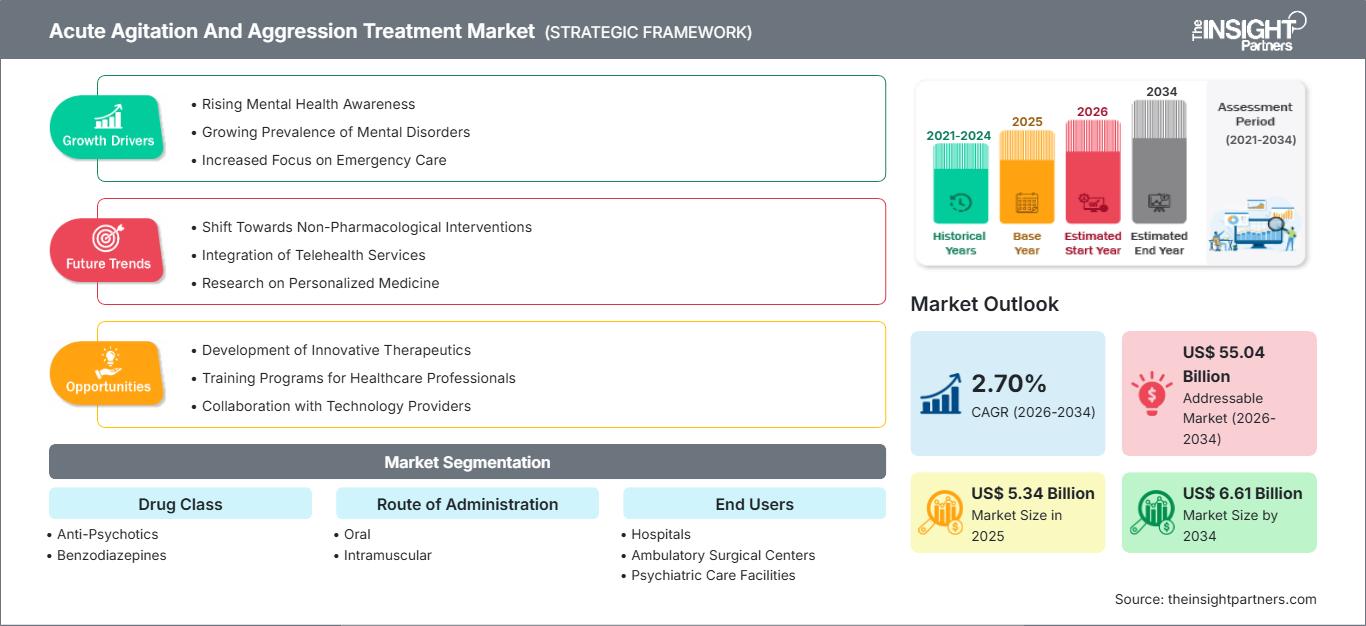
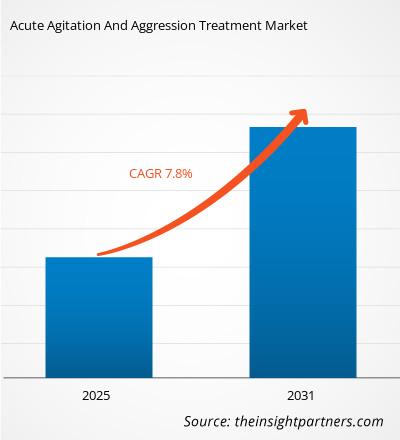
The Acute Agitation And Aggression Treatment market was valued at US$ 5.34 billion in 2025 and is expected to reach US$ 6.61 billion by 2034; it is estimated to record a CAGR of 2.4% during 2026-2034.
Acute Agitation And Aggression Treatment Market Assessment and Insights
- North America held 39–42% share in 2025 and is projected to grow at a CAGR between 2026–2034 of 2.4–3.0%, supported by emergency psychiatry protocols, inpatient behavioral health networks, and broad branded and generic drug availability.
- US represented 87–90% of North America in 2025 and is expected to grow at a CAGR between 2026–2034 of 2.3–2.9%, led by crisis stabilization units and psychiatric emergency services.
- Europe accounted for 25–28% share in 2025 and is forecast to expand at a CAGR between 2026–2034 of 2.1–2.7%, with Germany, the UK, France, Italy, and Spain leading standardized psychiatric care.
- Asia Pacific captured 21–24% share in 2025 and is projected to grow at a CAGR between 2026–2034 of 3.2–3.8%, driven by China, Japan, India, South Korea, and Australia.
- Largest Segment Anti-Psychotics held 66–70% market share in 2025 and is expected to grow at a CAGR range of 2.3–2.9% during 2026–2034 due to broad acute psychiatric use.
- High Growth Segment Intramuscular represented 38–42% share in 2025 and is forecast to grow at a CAGR range of 3.0–3.6% during 2026–2034 as emergency care settings prioritize rapid onset.
- Key companies analyzed in detail: Eli Lilly and Company, Pfizer Inc., GSK plc, Teva Pharmaceutical Industries Ltd., Otsuka Holdings Co., Ltd., Viatris Inc., Johnson & Johnson Services, Inc., Novartis AG, H. Lundbeck A/S, and Amneal Pharmaceuticals LLC.
Source: The Insight Partners' analysis based on proprietary research, government publications, company annual reports, investor presentations, industry databases, and expert interviews.
The market has evolved from restraint-heavy crisis management toward structured de-escalation supported by targeted pharmacologic intervention when safety risks persist. Product dynamics are shaped by oral dissolving tablets, injectable formulations, generic substitution, adverse-event monitoring, and hospital formulary controls. The acute agitation and aggression treatment market remains mature, but clinical expectations are shifting toward faster calming, lower oversedation risk, and clearer protocols for patients with respiratory, cardiac, geriatric, or substance-use complexity.
Future demand will be shaped by psychiatric emergency capacity, outpatient crisis programs, and policy pressure to reduce avoidable restraint and seclusion. Growth in Asia Pacific and selected Middle Eastern health systems will reflect expanding psychiatric infrastructure rather than major molecule-driven acceleration. Regulatory focus on antipsychotic safety, benzodiazepine dependence, and dementia-related risk will keep prescribing more protocolized and evidence-sensitive.
Acute Agitation And Aggression Treatment Market Report Scope
| Report Attribute | Details |
|---|---|
| Market size in 2025 | US$ 5.34 Billion |
| Market Size by 2034 | US$ 6.61 Billion |
| Global CAGR (2026 - 2034) | 2.4% |
| Historical Data | 2021-2024 |
| Forecast period | 2026-2034 |
Acute Agitation And Aggression Treatment Market Analysis
Demand is linked to schizophrenia relapse, bipolar mania, dementia-related behavioral symptoms, intoxication, withdrawal, delirium differentials, and emergency department crowding. The acute agitation and aggression treatment market growth is restrained by generic pricing, but supported by recurring acute episodes and institutional need for reliable calming agents. WHO estimates that schizophrenia affects approximately 23 million people globally, and psychosis care gaps remain substantial.
Value chain activities include sourcing of active pharmaceutical ingredients, finished dose production, hospital procurement, implementation of guidelines for psychiatry, pharmacy inventory, emergency room procedures, and pharmacovigilance. The nature of supply is such that it favors companies that are capable of maintaining the supply of oral and intramuscular medications.
The competitive landscape is broad and price-sensitive. Acute agitation and aggression treatment market analysis shows Eli Lilly and Company, Teva Pharmaceutical Industries Ltd., Viatris Inc., Amneal Pharmaceuticals LLC, and Pfizer Inc. competing through legacy antipsychotic or benzodiazepine portfolios, generics, and institutional supply reliability.
Otsuka Holdings Co., Ltd. and H. Lundbeck A/S strengthen branded psychiatry visibility through brexpiprazole, while Johnson & Johnson Services, Inc. is expanding relevance in schizophrenia management through lumateperone and long-acting portfolios. GSK plc and Novartis AG remain important through broad pharmaceutical scale, hospital access, and therapeutic-area relationships.
● REPORT CUSTOMIZATION
Tailor This Report To Align With Your Specific Business Requirements
This report can be customized to align precisely with your business objectives, scope, and target markets. Customization options include tailored segmentation, geography, competitive analysis, and strategic insights to support informed decision-making.
Customize This Report →WHAT YOU CAN ADJUST
- ● Segmentations
- ● Geography
- ● Competitive Analysis
- ● Language Preferences
Acute Agitation And Aggression Treatment Market: Strategic Insights
Regional Insights
North America Acute Agitation and Aggression Treatment Market
North America held 39–42% share in 2025 and is projected to grow at a CAGR of 2.4–3.0% during 2026–2034. Regional adoption is supported by psychiatric emergency services, hospital protocols, behavioral health crisis response teams, and broad availability of oral and injectable antipsychotics and benzodiazepines. Treatment decisions emphasize rapid calming, patient safety, and cardiorespiratory monitoring.
The acute agitation and aggression treatment market share in North America is reinforced by high diagnosed mental illness prevalence, psychiatric hospitalization pressure, and emergency department reliance on standardized medication order sets. CDC-related public health reporting shows a major behavioral health burden, while WHO highlights limited access to effective care globally, supporting institutional focus on crisis stabilization.
U.S. Acute agitation and aggression treatment Market
The U.S. represented 87–90% of North America in 2025 and is expected to grow at a CAGR of 2.3–2.9% during 2026–2034. The size depends on the high volume of patients coming to the emergency department, coverage by insurance companies of psychiatric admission, high usage of generics, and protocols used in hospitals.
Company presence is more prominent in hospital formularies, wholesalers, and retail pharmacies. Eli Lilly and Company, Teva Pharmaceutical Industries Ltd., Viatris Inc., Amneal Pharmaceuticals LLC, Johnson & Johnson Services, Inc., Otsuka Holdings Co., Ltd., and H. Lundbeck A/S are important for acute and maintenance psychiatry. The areas of application include schizophrenia, bipolar mania, agitation associated with dementia, and behavior disorders caused by intoxication.
Europe Acute Agitation and Aggression Treatment Market
Europe accounted for 25–28% share in 2025 and is forecast to expand at a CAGR of 2.1–2.7% during 2026–2034. Germany is at the forefront of all three, benefiting from structured psychiatric care, hospital formularies, and strong medication governance. The UK focuses on restraint minimization, crisis teams, and safer rapid tranquilization practice.
The German market depends on inpatient psychiatry capacity, generic medicines, and standardized prescribing guidelines. Physicians prescribe antipsychotic drugs and benzodiazepines cautiously, taking into account both rapid action and risks of excessive sedation. In the UK, medication use remains refined by protocols of mental health trusts, in which training, monitoring, and documentation play a key role in the treatment of agitated patients.
In France, Italy, and Spain, steady adoption takes place within hospital emergency departments, community psychiatry, and geriatric behavioral disorders. France stresses the importance of specialist-based medicine review, whereas Italy and Spain utilize the regional health care system and psychiatric clinics. Value growth remains consistent because most therapies have already been validated.
APAC Acute Agitation and Aggression Treatment Market
APAC held 21–24% share in 2025 and is projected to grow at a CAGR of 3.2–3.8% during 2026–2034. China takes the lead on regional volumes due to a large number of people and increased hospital facilities, whereas Japan, South Korea, India, and Australia have their contributions in terms of psychiatric networks and the development of emergency medicine.
Industries and policies involved include mental health services expansion, generic manufacturing, and increased diagnoses of severe mental disorders. Japan and Australia have acute psychiatry more protocolized, whereas India and Southeast Asia have potential growth in terms of affordable hospitals.
Middle East & Africa Acute agitation and aggression treatment Market
The Middle East & Africa is projected to grow at a CAGR of 2.6–3.2% during 2026–2034. Demand leadership in the region is characterized by the leadership shown by Saudi Arabia regarding tertiary hospitals, investment in psychiatry, and the development of emergency services. Demand leadership in the UAE is driven by private hospitals, mental health clinics, and behavioral health in the context of medical tourism.
The country leading the demand in the African continent is South Africa in terms of both the public and private networks of psychiatry. The remaining MEA region suffers from shortages of specialists, hospital accessibility, and medication problems. Investments in healthcare with regard to energy in the Gulf countries lead to the modernization of emergency departments.
Segmentation Analysis
Drug Class
The Drug Class segment is expected to grow at a CAGR of 2.2–2.8% during 2026–2034. acute agitation and aggression treatment market scope across drug classes is defined by onset speed, route flexibility, safety profile, diagnosis, intoxication status, and monitoring capacity. Antipsychotics dominate psychiatric agitation, while benzodiazepines remain important where anxiety, stimulant intoxication, or withdrawal-related agitation influences clinical decision-making.
- Anti-Psychotics dominate due to wide use in schizophrenia, bipolar mania, dementia-related behavioral symptoms, and psychosis-associated agitation. Their strategic importance reflects clinician familiarity, injectable options, and formulary availability.
- Benzodiazepines remain essential for selected acute presentations, particularly severe anxiety, catatonia considerations, withdrawal, and stimulant-related agitation. Their value is balanced against sedation, respiratory depression, and dependence concerns.
Route of Administration
The Route of Administration segment is projected to grow at a CAGR of 2.5–3.1% during 2026–2034. Route choice depends on urgency, patient cooperation, aspiration risk, symptom severity, staff safety, and monitoring resources. Oral therapies support collaborative calming, while intramuscular options are critical when rapid intervention is required and oral administration is not feasible.
- Oral administration is preferred when patients can participate in care, reducing invasiveness and supporting therapeutic engagement. Orally disintegrating formats are strategically useful in supervised crisis settings.
- Intramuscular administration is crucial in high-risk episodes requiring rapid medication delivery. It supports emergency departments and psychiatric units where refusal, severe agitation, or immediate safety concerns limit oral use.
End Users
The End Users segment is forecast to grow at a CAGR of 2.6–3.2% during 2026–2034. Hospitals remain the largest utilization environment because they manage emergency presentations, medical comorbidities, intoxication, and inpatient psychiatric crises. Psychiatric care facilities drive repeat protocol use, while ambulatory surgical centers have limited but relevant demand for perioperative behavioral emergencies.
- Hospitals generate the highest revenue contribution due to emergency departments, inpatient psychiatry, intensive monitoring, and complex comorbid patients requiring rapid assessment before medication selection.
- Ambulatory Surgical Centers use treatments selectively for perioperative distress, emergence agitation, or behavioral events that require stabilization before transfer or discharge decisions.
- Psychiatric Care Facilities are strategically important because they manage recurrent agitation in severe mental illness, dementia-related behavioral symptoms, and crisis admissions requiring trained staff and medication protocols.
Opportunity Snapshot
| Segment Name | Revenue Contribution | Trend Tag | Adoption Stage |
| Hospitals | High | ED Protocols | Mature |
| Ambulatory Surgical Centers | Low | Perioperative Stabilization | Emerging |
| Psychiatric Care Facilities | High | Crisis Units | Scaling |
Acute Agitation And Aggression Treatment Market Growth Drivers and Impact Analysis
Persistent Severe Mental Illness and Crisis Episodes
The presence of serious mental disorders leads to repeated crises of symptoms, which necessitate urgent diagnosis and treatment. According to the WHO, there are about 23 million patients with schizophrenia worldwide, while more than two-thirds of patients with psychosis do not receive proper care in specialist services, and many of them become exposed to potential relapse or untreated episodes of symptoms. The acute agitation and aggression management market gets its advantage since emergency rooms and psychiatry wards have to keep a constant supply of antipsychotics and benzodiazepines despite the already mature pricing of medications.
Emergency Department Safety and Restraint Reduction
Modern-day hospitals are looking for solutions that can tranquilize the patient without much physical restraint, risk of injuries to hospital personnel, and prolonged stay in the facility. Agitation can be difficult to treat from a clinical perspective since it can come about due to psychosis, mania, intoxication, delirium, dementia, pain, or injury. The 2025 umbrella review stressed that acute psychomotor agitation treatment in the emergency or psychiatric department revolves around control in hours as opposed to days. As such, the quick-acting oral and intramuscular drug treatment paths can be used. The biggest market impact will be felt by hospitals using standardized medication kits, order sets, observation guidelines, and event documentation.
Continued Clinical Reliance on Established Drug Classes
Antipsychotics and benzodiazepines continue to be the first-line pharmacologic therapies because they have been used for decades in emergency psychiatry and are readily available. Even though the current research recognizes traditional therapies as critical, their disadvantages include excessive sedation, extrapyramidal symptoms, respiratory side effects, tolerance, and restrictions regarding usage in elderly and medically unstable patients. Nevertheless, the segment profits from such therapy since multiple formulas need to be kept in stock at all times in case they become necessary. However, development is slow due to the existence of generics, which gives an edge in terms of accessibility and dosing to companies that provide their formulas on a larger scale.
Acute Agitation And Aggression Treatment Market Future Trends
More Patient-Specific Rapid Tranquilization Protocols
More patient-specific rapid tranquilization will define acute agitation and aggression treatment market trends as clinicians move away from uniform dosing toward risk-stratified protocols. Future hospital pathways will give greater weight to age, QT risk, respiratory status, intoxication, pregnancy, dementia, and prior medication exposure. This shift is supported by updated clinical literature emphasizing safety trade-offs across antipsychotics and benzodiazepines, along with the need for rapid control in hours. Formularies will increasingly prefer options that fit electronic decision support, monitoring prompts, and restraint-reduction audits. Manufacturers can benefit by supplying clear dosing materials, compatible formulations, and education aligned with emergency psychiatry workflows.
Greater Linkage Between Acute Stabilization and Maintenance Care
The future approach for treating conditions will focus on the correlation between acute treatment and the prevention of relapse. According to the Johnson & Johnson press release in April 2026, the FDA gave approval for the expanded label of CAPLYTA for the prevention of relapse in schizophrenia, which has been proven to have a 63 percent lower relapse rate over a period of six months. The development is important since relapse triggers agitation and hospitalization along with emergency medication. The need for medication evaluation, long-acting treatment, discharge plan, and medication adherence will be increasing in hospitals and psychiatric centers.
Acute Agitation And Aggression Treatment Market Opportunities
Protocol Support for Behavioral Emergency Units
Acute agitation and aggression treatment market Forecasts indicate the strongest opportunity lies in behavioral emergency units and crisis stabilization centers that require standardized medication pathways. Suppliers can provide formulary packs, dosage information, training for staff, adverse event reporting mechanisms, and a summary of evidence for oral and intramuscular medications for these facilities. This is important since the facility needs to find the right balance between quick tranquilization, patients' rights, monitoring of respiration, and minimizing the use of restraints. It will be more about the availability of the medication than the pricing of the molecules that makes the company successful in their business.
Emerging Market Psychiatric Infrastructure Expansion
Emerging markets provide an opportunity to build capability in terms of increasing beds for psychiatry, building emergency rooms, and providing psychotropic drugs. There is growing capability in behavioral healthcare facilities in China, India, Southeast Asia, Saudi Arabia, and the UAE, but their acceptance would depend on costs, staffing capabilities, and drug availability. Manufacturers can help provide access through the availability of generic drugs, local partnerships, and training for hospitals on drug use. The opportunity exists where there is growth in admission of psychiatric patients, and crisis care is shifting from ad hoc to procedural treatment. Growth would come from reducing stigma and connecting with outpatient services.
Recent Developments
- April 2026: Johnson & Johnson Services, Inc. announced U.S. FDA approval of a supplemental New Drug Application for CAPLYTA, lumateperone, supported by long-term data for relapse prevention in adults with schizophrenia. The company reported a 63 percent reduced relapse risk versus placebo and 84 percent of patients relapse-free over six months.
- September 2025: Teva Pharmaceutical Industries Ltd. presented long-term safety data from the completed Phase 3 SOLARIS trial for olanzapine LAI, TEV-'749, reporting no suspected or confirmed post-injection delirium/sedation syndrome events through Week 56 and additional UZEDY data relevant to hospitalized schizophrenia care.
- July 2025: Otsuka Holdings Co., Ltd. and H. Lundbeck A/S issued an update after the U.S. FDA Psychopharmacologic Drugs Advisory Committee voted on the REXULTI and sertraline supplemental application for adult PTSD, following Phase 2 and Phase 3 trials that evaluated brexpiprazole combination therapy.
Frequently Asked Questions

- Comprehensive Market Sizing and Forecast Analysis
- Detailed Segmentation Analysis
- In-Depth Market Dynamics Assessment
- Regional and Country-Level Insights
- Competitive Landscape and Company Benchmarking
- Strategic Business Intelligence
Recent Reports
Testimonials

The Insight Partners provided valuable market intelligence that supported our global go-to-market strategy. Their team was professional, responsive, and attentive to our feedback, providing thoughtful analysis and helpful methodological clarifications throughout the project.
Junmo Kim Chief Financial Officer (CFO), Enertech Co., Ltd.
The Insight Partners' SCADA System Market report is comprehensive, with valuable insights on current trends and future forecasts. The team was highly professional, responsive, and supportive throughout. We are very satisfied and highly recommend their services.
RAN KEDEM Partner, Reali Technologies LTDs
I requested a report on a very specific software market and the team produced the report in a few days. The information was very relevant and well presented. I then requested some changes and additions to the report. The team was again very responsive and I got the final report in less than a week.
JEAN-HERVE JENN Chairman, Future Analytica
We worked with The Insight Partners for an important market study and forecast. They gave us clear insights into opportunities and risks, which helped shape our plans. Their research was easy to use and based on solid data. It helped us make smart, confident decisions. We highly recommend them.
PIYUSH NAGPAL Sr. Vice President, High Beam Global
The Insight Partners delivered insightful, well-structured market research with strong domain expertise. Their team was professional and responsive throughout. The user-friendly website made accessing industry reports seamless. We highly recommend them for reliable, high-quality research services
YUKIHIKO ADACHI CEO, Deep Blue, LLC.
This is the first time I have purchased a market report from The Insight Partners.While I was unsure at first, I visited their web site and felt more comfortable to take the risk and purchase a market report.I am completely satisfied with the quality of the report and customer service. I had several questions and comments with the initial report, but after a couple of dialogs over email with their analyst I believe I have a report that I can use as input to our strategic planning process.Thank you so much for taking the extra time and making this a positive experience.I will definitely recommend your service to others and you will be my first call when we need further market data.
JOHN SUZUKI President and Chief Executive Officer, Board Director, BK Technologies
I wish to appreciate your support and the professionalism you displayed in the course of attending to my request for information regarding to infectious disease IVD market in Nigeria. I appreciate your patience, your guidance, and the fact that you were willing to offer a discount, which eventually made it possible for us to close a deal. I look forward to engaging The Insight Partners in the future, all thanks to the impression you have created in me as a result of this first encounter.
DR CHIJIOKE ONYIA MANAGING DIRECTOR, PineCrest Healthcare Ltd.Reason to Buy
- Informed Decision-Making
- Understanding Market Dynamics
- Competitive Analysis
- Identifying Emerging Markets
- Customer Insights
- Market Forecasts
- Risk Mitigation
- Boosting Operational Efficiency
- Strategic Planning
- Investment Justification
- Tracking Industry Innovations
- Aligning with Regulatory Trends





 Get Free Sample for