
Acute Repetitive Seizures Market Share, Growth & Forecast by 2034
Acute Repetitive Seizures Market Size and Forecasts (2021 - 2034), Global and Regional Share, Trends, and Growth Opportunity Analysis Report Coverage : by Product (USL-261, NRL-1, AZ-002, Diastat Rectal Gel); Route of Administration (Intranasal, Rectal, Oral); Distribution Channel (Hospital pharmacies, Retail pharmacies, Online pharmacies); and Geography (North America, Europe, Asia Pacific, and South and Central America)
- Status : Data Released
- Report Code : TIPRE00040751
- Category : Life Sciences
- No. of Pages : 150
- Available Report Formats :


- Last update date : July 28, 2026


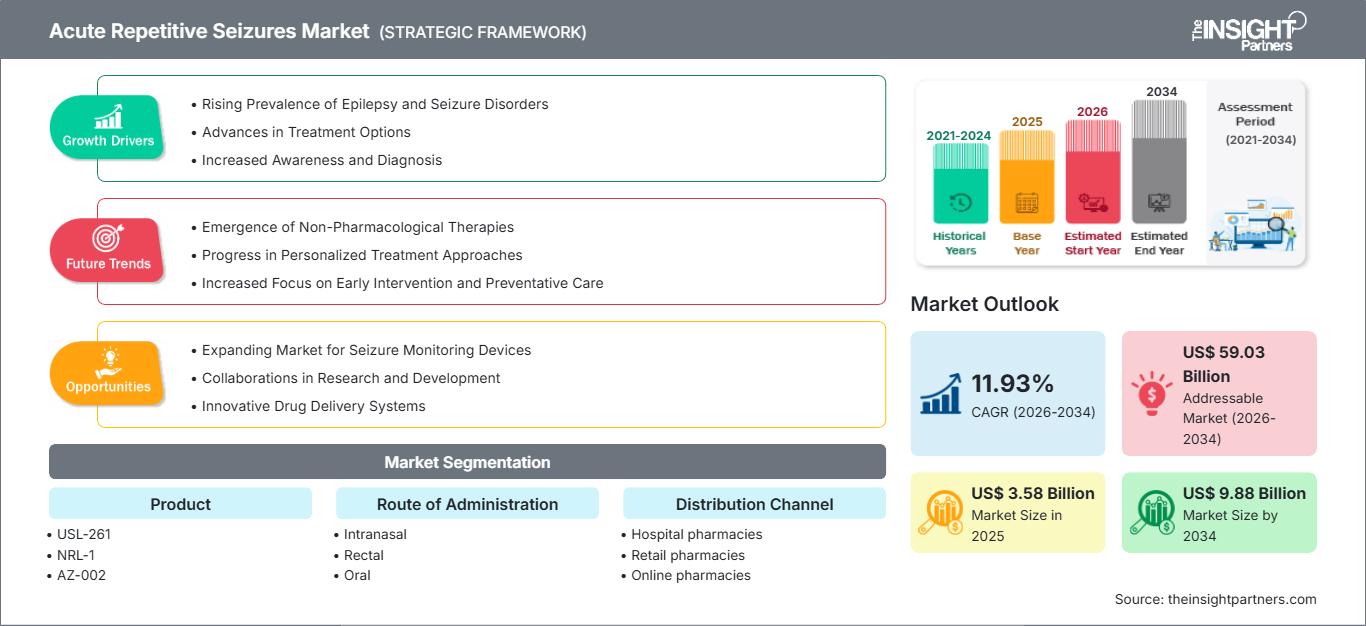
2025 Market Size
US$ 3.58 Bn
Base year value
2034 Forecast
US$ 9.88 Bn
Projected by 2034
CAGR 2026-2034
11.93 %
Growth rate
Addressable Market
US$ 59.03 Bn
(2026-2034)
The Acute Repetitive Seizures Market is witnessing significant expansion as emergency seizure management solutions, rescue medications, and patient-centric delivery technologies continue advancing across healthcare systems. The market was valued at US$ 3.58 Billion in 2025 and is projected to reach US$ 9.88 Billion by 2034, registering a CAGR of 11.93% from 2026–2034. Growth is supported by increasing seizure disorder awareness, rising demand for rapid intervention therapies, and improvements in acute care management approaches.
North America remains a leading contributor due to advanced neurological care infrastructure, established pharmaceutical distribution networks, and strong adoption of emergency seizure treatment options. The region is estimated to expand at a CAGR range of 11.0–12.5% during 2026–2034, supported by increasing epilepsy management initiatives, improved access to rescue therapies, and continued investments in innovative drug delivery platforms. The Acute Repetitive Seizures Market size is further influenced by expanding specialty care services.
Acute Repetitive Seizures Market Assessment and Insights
- North America accounted for an estimated share of 38–42% in 2025 and is expected to grow at a CAGR range of 11.0–12.5% between 2026–2034. The region benefits from advanced neurological healthcare systems, strong pharmaceutical presence, and rapid adoption of emergency seizure therapies.
- US represented the dominant country-level contribution within North America with an estimated share of 80–84% of the regional market in 2025 and is projected to expand at a CAGR range of 11.2–12.8% during 2026–2034. Strong healthcare infrastructure and specialty treatment access support growth.
- Europe held an estimated share of 27–31% in 2025 and is anticipated to register a CAGR range of 10.5–12.0% through 2026–2034. Germany, the UK, France, Italy, and Spain contribute through established neurological care systems and pharmaceutical accessibility.
- Asia Pacific captured an estimated share of 18–22% in 2025 and is expected to grow at a CAGR range of 12.0–13.5% from 2026–2034. China, Japan, South Korea, and India are advancing adoption through healthcare modernization and expanding epilepsy management capabilities.
- Largest Segment: Product - Diastat Rectal Gel held an estimated market share of 35–40% in 2025, supported by established rescue therapy usage, and is expected to grow at a CAGR range of 10.5–11.8% during 2026–2034.
- High Growth Segment: Product - USL-261 represented an estimated market share of 12–16% in 2025 and is projected to expand at a CAGR range of 13.0–14.5% between 2026–2034 due to increasing interest in intranasal emergency seizure treatments.
- Key companies analyzed in detail: UCB S.A., Neurelis Inc., Bausch Health Companies Inc., Veriton Pharma, AdvaCare Pharma Limited, Aquestive Therapeutics, Lupin Limited, Takeda Pharmaceutical Company Limited, Teva Pharmaceutical Industries Ltd., and Aquestive Therapeutics Inc.
Source: The Insight Partners' analysis based on proprietary research, government publications, company annual reports, investor presentations, industry databases, and expert interviews.
Trajectory for Acute Repetitive Seizures Market Development is characterized by the shift from traditional rescue drugs to more effective and user-friendly emergency therapy drugs. Drug delivery systems are becoming more efficient, stable, and easier to use due to the efforts of pharmaceutical manufacturers. Both intranasal and oral administration routes are being considered, along with existing rectal methods, because of the ability to make the process of handling an emergency simpler. The market ecosystem involves pharmaceutical companies, healthcare institutions, caregivers, specialty pharmacies, and regulatory authorities.
The expansion of the Acute Repetitive Seizures Market in the future will be affected by factors like increased neurological healthcare investments, increased diagnosis of the condition, and increased availability of emergency treatments in developing nations. The rise in the use of innovative therapies that are regulated, along with the increased adoption of home management approaches for seizures, will open up more opportunities in the market.
Acute Repetitive Seizures Market Report Scope
| Report Attribute | Details |
|---|---|
| Market size in 2025 | US$ 3.58 Billion |
| Market Size by 2034 | US$ 9.88 Billion |
| Global CAGR (2026 - 2034) | 11.93% |
| Historical Data | 2021-2024 |
| Forecast period | 2026-2034 |
Acute Repetitive Seizures Market Analysis
The Acute Repetitive Seizures Market growth is driven by increasing prevalence of epilepsy-related emergencies, rising awareness of seizure rescue protocols, and growing demand for rapid therapeutic intervention. The healthcare professionals have now placed greater emphasis on providing drugs that can be easily administered during the seizure period and minimize the danger posed by extended periods of seizures. The supply chain includes the pharmaceutical firms, API suppliers, drug delivery systems companies, hospitals, pharmacies, and end consumers. Supply factors are driven by innovation in formulations, approvals, and manufacturing.
There is also an increase in the demand for rescue treatments that are convenient and provide assistance to caregivers and patients who are not in hospitals. There are efforts by the pharmaceutical firms to develop new delivery systems. The hospitals and specialty clinics are still adoption centers, while pharmacies are increasingly becoming adoption centers. These ecosystem developments are strengthening the integration of emergency seizure management solutions across healthcare settings.
Competitive strategies within the Acute Repetitive Seizures Market analysis indicate increasing focus on product differentiation, regulatory progress, and expansion of emergency treatment portfolios. Companies such as UCB S.A., Neurelis Inc., and Aquestive Therapeutics are advancing seizure rescue solutions through innovative formulations and delivery technologies. Bausch Health Companies Inc., Takeda Pharmaceutical Company Limited, and Teva Pharmaceutical Industries Ltd. contribute through established pharmaceutical capabilities and global healthcare networks.
Investment trends are centered on improving treatment convenience, strengthening commercial availability, and developing next-generation seizure management solutions. Market participants are pursuing partnerships, clinical advancements, and regional expansion strategies to enhance competitive positioning. Companies, including Lupin Limited, Veriton Pharma, and AdvaCare Pharma Limited, are contributing to broader pharmaceutical accessibility through specialized healthcare offerings. The competitive environment is shaped by innovation capabilities, regulatory compliance, manufacturing efficiency, and the ability to address unmet emergency care requirements.
● REPORT CUSTOMIZATION
Tailor This Report To Align With Your Specific Business Requirements
This report can be customized to align precisely with your business objectives, scope, and target markets. Customization options include tailored segmentation, geography, competitive analysis, and strategic insights to support informed decision-making.
Customize This Report →WHAT YOU CAN ADJUST
- ● Segmentations
- ● Geography
- ● Competitive Analysis
- ● Language Preferences
Acute Repetitive Seizures Market: Strategic Insights
Regional Insights
North America Acute Repetitive Seizures Market
North America maintained an estimated share of 38–42% in 2025 and is projected to expand at a CAGR range of 11.0–12.5% from 2026–2034. The region benefits from advanced neurological treatment facilities, strong pharmaceutical infrastructure, and higher adoption of emergency seizure management solutions. The Acute Repetitive Seizures Market share remains supported by specialist care availability, established reimbursement systems, and increased awareness of rescue therapies.
The US represents the primary contributor within North America, supported by epilepsy care networks, clinical research activity, and the strong presence of pharmaceutical companies developing seizure treatment solutions. Canada contributes by improving neurological healthcare services and increasing access to specialized therapies. Healthcare providers are increasingly integrating emergency seizure medications into treatment plans, while caregivers are gaining awareness regarding rapid response approaches. Regional growth is expected to continue as innovative delivery methods gain acceptance.
U.S. Acute Repetitive Seizures Market
The US accounted for an estimated 80–84% share of the North American market in 2025 and is expected to grow at a CAGR range of 11.2–12.8% during 2026–2034. The country benefits from advanced healthcare infrastructure, strong epilepsy treatment programs, and extensive pharmaceutical distribution channels. Increasing emphasis on emergency seizure response is supporting demand for rescue medications across hospitals, clinics, and community care settings.
Companies including UCB S.A., Neurelis Inc., and Aquestive Therapeutics have strengthened market presence through innovative seizure management products and drug delivery approaches. Growing utilization of intranasal therapies is improving treatment convenience, while specialty pharmacies support broader access to prescription medicines. The healthcare system’s focus on improving neurological outcomes and reducing emergency complications continues influencing adoption patterns across the country.
Europe Acute Repetitive Seizures Market
Europe represented an estimated share of 27–31% in 2025 and is forecast to register a CAGR range of 10.5–12.0% between 2026 and 2034. Structured healthcare systems, neurological research facilities, and a pharmaceutical regulatory framework are some of the advantages of this particular region. Germany continues to be one of the key markets because of the high level of medical facilities, healthcare expenditures and specialty treatment availability. The demand in the UK is growing because of better management of the epileptic condition.
The development of the German market is driven by neurological facilities, innovations in pharmacy, and accessibility of healthcare services. The UK has been continuously implementing advanced seizure management through the programs of clinical awareness and healthcare development. The countries such as France, Italy, and Spain have been growing gradually due to the higher rates of diagnosis and treatment.
APAC Acute Repetitive Seizures Market
APAC accounted for an estimated share of 18–22% in 2025 and is expected to grow at a CAGR range of 12.5–13.5% from 2026–2034. China is one of the most prominent markets owing to better healthcare infrastructure, heightened awareness of neurodegenerative diseases, and increased pharmaceutical availability.
Other countries such as Japan, South Korea, India, and Australia, have also made contributions through health care upgrades, increased specialists, and better treatment plans. There is potential for growth in this region as companies concentrate on cost-effective medications and distribution methods.
Middle East & Africa Acute Repetitive Seizures Market
The Middle East & Africa region represented a developing market position in 2025 and is projected to expand at a CAGR range of 9.5–10.5% between 2026–2034. The rise of Saudi Arabia and the UAE has been due to the investments and the modernization of the health care infrastructure.
The other country is South Africa, which is an important market because of the health care services that they provide, along with neurological care. Growth in the RoMEA region will be because of the increased accessibility of medicine, increased pharmaceutical distribution, and investments in health care.
Segmentation Analysis
Product
The Product segment of the Acute Repetitive Seizures Market scope is expected to register a CAGR range of 11.5–12.5% during 2026–2034. Growth is influenced by increasing demand for rapid rescue medications, improved emergency seizure management protocols, and the development of alternative delivery approaches. Pharmaceutical companies are focusing on enhancing therapeutic convenience, reducing administration challenges, and improving caregiver confidence through specialized formulations designed for acute seizure situations.
- USL-261 solutions are gaining attention due to their intranasal delivery approach, supporting rapid administration during seizure emergencies and improving usability for caregivers and patients requiring immediate intervention.
- NRL-1 represents an advanced rescue therapy approach designed around intranasal delivery technology, with development focused on improving treatment accessibility and simplifying emergency seizure management.
- AZ-002 contributes to innovation within rescue medication development by exploring alternative therapeutic approaches for acute seizure control and improving options available for emergency response situations.
- Diastat Rectal Gel remains an established rescue treatment option due to long-term clinical familiarity, caregiver experience, and continued use in specific patient populations requiring immediate seizure intervention.
Route of Administration
The Route of Administration segment is projected to expand at a CAGR range of 11.8–12.8% from 2026–2034. The Acute Repetitive Seizures Market scope within this segment is shaped by demand for convenient, reliable, and faster administration methods. Healthcare providers and caregivers increasingly prefer delivery routes that support emergency use outside hospital environments while maintaining therapeutic effectiveness.
- Intranasal administration is gaining importance because it offers ease of use, rapid application, and improved acceptance among caregivers managing seizure episodes in home and community settings.
- Rectal administration continues to maintain clinical relevance due to established therapeutic experience and suitability for patients where alternative emergency delivery options may not be appropriate.
- Oral administration supports ongoing treatment strategies and may contribute to patient management where swallowing ability and clinical conditions allow medication intake through conventional pathways.
Distribution Channel
The Distribution Channel segment is anticipated to grow at a CAGR range of 11.0–12.0% between 2026–2034. Expansion is supported by increasing availability of prescription seizure therapies, improved pharmacy networks, and greater emphasis on timely access to emergency medications. Distribution strategies are evolving as manufacturers strengthen partnerships with healthcare providers and digital pharmacy platforms.
- Hospital pharmacies remain important distribution points because they support emergency care environments, specialist recommendations, and direct access to seizure management therapies.
- Retail pharmacies contribute significantly by improving community-level availability and supporting continued access for patients requiring prescribed rescue medications outside hospital settings.
- Online pharmacies are expanding through digital healthcare adoption, offering convenience, prescription fulfillment support, and improved accessibility for patients managing chronic neurological conditions.
Opportunity Snapshot
| Segment Name | Revenue Contribution | Trend Tag | Adoption Stage |
|---|---|---|---|
| Hospital pharmacies | High | Emergency Access | Scaling |
| Retail pharmacies | Medium | Community Supply | Scaling |
| Online pharmacies | Low | Digital Fulfillment | Emerging |
Acute Repetitive Seizures Market Growth Drivers and Impact Analysis
Increasing Prevalence of Epilepsy and Seizure Disorders
The increasing incidence of epilepsy and seizures among people has resulted in an increase in demand for quick intervention therapies. It is evident from the current health system's focus on formulating emergency responses for handling any complications caused by seizures. There is an increase in the number of diagnoses, enhanced monitoring of the condition, and the provision of specialist treatment to patients. Pharmaceutical firms have reacted to the changing trends by designing rescue medicines that ensure that medication is easy for patients and caregivers. Increasing awareness about the quick management of seizures is prompting health care providers to formulate their emergency management strategy for seizures.
Advancement in Drug Delivery Technologies
Innovations in drug delivery systems are having a profound impact on seizure management by increasing the efficacy and ease of use of these drugs. Nasal drug delivery and other methods of administration are becoming increasingly important because they offer new opportunities for administering emergency medication outside the healthcare environment. Innovations in drug delivery systems provide caregivers with increased confidence and reduced response time in treating seizures. Companies have been making significant investments in drug delivery system technologies to enhance patient experiences through innovations in formulations and devices. The effects of these innovations reach far beyond hospitals and pharmacies into the home setting, where rapid response is critical.
Expansion of Neurological Healthcare Infrastructure
The increasing availability of neuro-healthcare infrastructure in both emerging and developed countries is adding more chances of making seizure treatment available. There is an improvement in patient identification and management due to the establishment of specialized clinics, better diagnostics, and healthcare workforce training. Countries that are building up their healthcare infrastructure are demanding better and efficient ways of ensuring the availability of pharmaceuticals through distribution network. The companies have started to adapt their approaches to meet the demands of the regional health care needs in the form of collaborations, localized distribution channels, and other means to increase market reach.
Acute Repetitive Seizures Market Future Trends
Integration of Patient-Centered Digital Healthcare Platforms
The Acute Repetitive Seizures Market trends indicate increasing integration of digital healthcare platforms that support patient monitoring, treatment coordination, and caregiver education. The future solutions can include technology solutions that increase the level of communication among patients, their relatives, and healthcare professionals and contribute to personalized approaches to treatment. Digital health ecosystems can be used to make medication adherence monitoring and emergency planning more effective. In addition, pharmaceutical companies will need to look for ways of collaborating with other companies offering digital solutions that would supplement pharmaceutical treatments. This is because pharmaceutical innovations, together with digital innovations, can open up new opportunities in the area.
Development of Advanced Rescue Medication Formulations
Market development in the future will concentrate on novel formulations of rescue medication that will increase the efficiency of treatment, ease, and patient compliance. The technology will be developed in a way that improves the stability, effectiveness, and caregiver-friendliness of the medications. New formulation trends will make it possible to have emergency treatment options in domestic settings while reducing the reliance on the involvement of clinicians. It is probable that future research will be concentrated on developing better ways of delivering medication and making them more user-friendly. As healthcare becomes more decentralized, pharmaceutical industry development will be an integral part of the process of effective epilepsy management.
Acute Repetitive Seizures Market Opportunities
Expansion Through Emerging Healthcare Markets
The Acute Repetitive Seizures Market Forecasts indicate opportunities for pharmaceutical companies to expand into emerging healthcare markets where neurological care infrastructure is improving. Growing healthcare investments, increasing awareness of seizure disorders, and expanding pharmacy networks are creating pathways for broader treatment availability. Companies can strengthen regional presence through partnerships with local distributors, healthcare institutions, and government programs. Market participants focusing on affordability, supply reliability, and regulatory alignment may improve accessibility across developing regions. These expansion strategies can support long-term commercial growth while addressing unmet treatment needs. Emerging economies represent important opportunities as healthcare systems continue improving access to specialized neurological therapies.
Strategic Collaborations for Therapeutic Innovation
Strategic collaborations between pharmaceutical companies, research institutions, and healthcare providers represent a significant opportunity for advancing seizure treatment solutions. Partnerships can accelerate clinical development, improve regulatory pathways, and support the commercialization of innovative rescue therapies. Companies investing in collaborative research models may enhance product differentiation and strengthen market positioning. Cooperation across healthcare ecosystems can also support evidence generation, physician education, and broader treatment adoption. As competition increases, organizations that combine scientific capabilities with effective commercialization strategies may achieve stronger market access. These collaborations are expected to influence future innovation by encouraging the development of therapies that address clinical requirements while improving patient and caregiver experiences.
Recent Developments
- March 2025: UCB S.A. announced continued advancement of its epilepsy portfolio through ongoing research and development initiatives focused on improving treatment options for people living with seizure disorders. The company continued strengthening its neuroscience strategy through clinical programs and patient-focused healthcare solutions targeting unmet needs in epilepsy management.
- January 2025: Aquestive Therapeutics progressed commercialization activities related to its innovative oral film technology platform, supporting development efforts for neurological therapies requiring convenient administration methods. The company continued focusing on product candidates designed to improve accessibility and usability for patients requiring rapid treatment interventions.
- September 2024: Neurelis Inc. expanded awareness and support initiatives related to seizure emergency management through continued development and commercialization activities surrounding rescue therapies. The company maintained its focus on improving treatment accessibility and supporting patients, caregivers, and healthcare professionals involved in seizure management.
Frequently Asked Questions

- Comprehensive Market Sizing and Forecast Analysis
- Detailed Segmentation Analysis
- In-Depth Market Dynamics Assessment
- Regional and Country-Level Insights
- Competitive Landscape and Company Benchmarking
- Strategic Business Intelligence
Recent Reports
Testimonials

The Insight Partners' SCADA System Market report is comprehensive, with valuable insights on current trends and future forecasts. The team was highly professional, responsive, and supportive throughout. We are very satisfied and highly recommend their services.
RAN KEDEM Partner, Reali Technologies LTDs
I requested a report on a very specific software market and the team produced the report in a few days. The information was very relevant and well presented. I then requested some changes and additions to the report. The team was again very responsive and I got the final report in less than a week.
JEAN-HERVE JENN Chairman, Future Analytica
We worked with The Insight Partners for an important market study and forecast. They gave us clear insights into opportunities and risks, which helped shape our plans. Their research was easy to use and based on solid data. It helped us make smart, confident decisions. We highly recommend them.
PIYUSH NAGPAL Sr. Vice President, High Beam Global
The Insight Partners delivered insightful, well-structured market research with strong domain expertise. Their team was professional and responsive throughout. The user-friendly website made accessing industry reports seamless. We highly recommend them for reliable, high-quality research services
YUKIHIKO ADACHI CEO, Deep Blue, LLC.
This is the first time I have purchased a market report from The Insight Partners.While I was unsure at first, I visited their web site and felt more comfortable to take the risk and purchase a market report.I am completely satisfied with the quality of the report and customer service. I had several questions and comments with the initial report, but after a couple of dialogs over email with their analyst I believe I have a report that I can use as input to our strategic planning process.Thank you so much for taking the extra time and making this a positive experience.I will definitely recommend your service to others and you will be my first call when we need further market data.
JOHN SUZUKI President and Chief Executive Officer, Board Director, BK Technologies
I wish to appreciate your support and the professionalism you displayed in the course of attending to my request for information regarding to infectious disease IVD market in Nigeria. I appreciate your patience, your guidance, and the fact that you were willing to offer a discount, which eventually made it possible for us to close a deal. I look forward to engaging The Insight Partners in the future, all thanks to the impression you have created in me as a result of this first encounter.
DR CHIJIOKE ONYIA MANAGING DIRECTOR, PineCrest Healthcare Ltd.Reason to Buy
- Informed Decision-Making
- Understanding Market Dynamics
- Competitive Analysis
- Identifying Emerging Markets
- Customer Insights
- Market Forecasts
- Risk Mitigation
- Boosting Operational Efficiency
- Strategic Planning
- Investment Justification
- Tracking Industry Innovations
- Aligning with Regulatory Trends





 Get Free Sample for