
Adult Hemoglobinopathy Testing Market Trends, Demand & Growth by 2034
Coverage: By Variant Type (Variant A2, Variant F); Test Type (HPLC Test, Mass spectrometry, Hb electrophoresis); End User (Hospitals, Reference Laboratories, Academic and Medical Institutes), and Geography (North America, Europe, Asia Pacific, and South and Central America)
- Status : Data Released
- Report Code : TIPRE00016373
- Category : Life Sciences
- No. of Pages : 150
- Available Report Formats :


- Last update date : July 16, 2026


2025 Market Size
US$ 438.51 Mn
Base year value
2034 Forecast
US$ 625.53 Mn
Projected by 2034
CAGR 2026-2034
4.03 %
Growth rate
Addressable Market
US$ 4,833.62 Mn
(2026-2034)
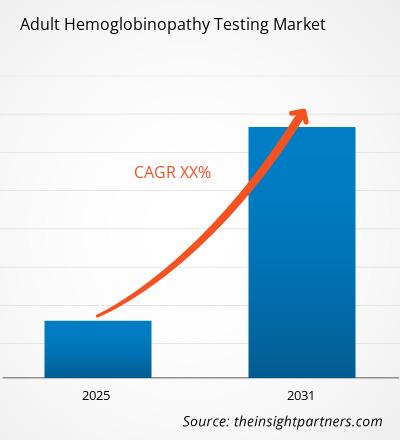
The adult hemoglobinopathy testing market size is valued at US$ 438.51 Million in 2025 and is projected to reach US$ 625.53 Million by 2034, registering a CAGR of 4.03% during 2026–2034. This market is being driven by the rising demand for proper identification of haemoglobin variants, expansion of screening processes, and increasing importance of managing inherited blood diseases. Innovations in the analytical instruments have enhanced the ability to detect adult haemoglobin problems in the diagnosis and research laboratories.
Growing health care expenditure in the North American region is fueling the growth of the adult hemoglobinopathy testing market size by making improvements in laboratory facilities, adopting molecular diagnostics and increasing hematology research work. The regional market is projected to grow with a CAGR of 3.8–4.5% between 2026 and 2034.
Adult Hemoglobinopathy Testing Market Assessment and Insights
- North America: North America held an estimated 40–44% share in 2025 and is expected to expand at a CAGR between 3.8–4.5% during 2026–2034. The region benefits from advanced diagnostic infrastructure, established haematology networks, and adoption of sophisticated testing platforms.
- US: The US accounted for approximately 86–90% share of North America in 2025 and is projected to grow at a CAGR between 3.9–4.6% during 2026–2034 due to strong laboratory capabilities and clinical research activity.
- Europe: Europe represented an estimated 26–30% share in 2025 and is anticipated to register a CAGR between 3.5–4.2% during 2026–2034. Germany, the United Kingdom, France, Italy, and Spain are contributing through screening initiatives and diagnostic modernization.
- Asia Pacific: Asia Pacific accounted for approximately 18–22% share in 2025 and is forecast to grow at a CAGR between 4.5–5.3% during 2026–2034. China, Japan, India, South Korea, and Australia are strengthening testing adoption through healthcare expansion.
- Largest Segment: HPLC Test represented an estimated 42–46% market share in 2025 and is expected to grow at a CAGR between 4.2–4.8% during 2026–2034 due to broad laboratory acceptance.
- High Growth Segment: Mass spectrometry accounted for approximately 18–22% market share in 2025 and is projected to expand at a CAGR between 5.0–5.7% during 2026–2034 through advanced analytical capabilities.
- Key companies analyzed in detail: Bio-Rad Laboratories, Inc., Thermo Fisher Scientific Inc., PerkinElmer Inc., Chromsystems Instruments and Chemicals GmbH, BioMedomics, Inc., CapitalBio Technology Inc., Trinity Biotech plc, Streck, Inc., Baxter International Inc., Bluebird Bio, Inc.
Source: The Insight Partners' analysis based on proprietary research, government publications, company annual reports, investor presentations, industry databases, and expert interviews.
Advancements in the technological front in the adult hemoglobinopathy screening space have been through advancements in chromatography, electrophoresis, and molecular diagnosis technologies. The companies operating in the segment are developing devices and tools that can provide accurate results while streamlining work processes and ensuring compatibility with high-throughput labs. Advanced reagent composition, standardized test procedures, and software will help achieve accuracy in interpreting the different types of haemoglobin.
The future growth potential will be driven by increased funding in the diagnostics of rare blood disorders, infrastructural development of healthcare facilities in emerging countries, and uptake of precision haematology. Greater regulatory focus on the accuracy of tests and quality control processes will help develop improved validation procedures. Collaboration between technology developers, hospitals, and research institutes will open up new avenues in the coming years.
Adult Hemoglobinopathy Testing Market Report Scope
| Report Attribute | Details |
|---|---|
| Market size in 2025 | US$ 438.51 Million |
| Market Size by 2034 | US$ 625.53 Million |
| Global CAGR (2026 - 2034) | 4.03% |
| Historical Data | 2021-2024 |
| Forecast period | 2026-2034 |
Adult Hemoglobinopathy Testing Market Analysis
The adult hemoglobinopathy testing market growth is driven by the rising need for diagnosing genetic diseases involving haemoglobin, increased awareness programs, and demand for effective tests. The value chain of the market is comprised of assay providers, reagent suppliers, device makers, reference labs, hospitals, and research institutions. The increasing use of automated analysis technology is enhancing the effectiveness of testing and ensuring accurate identification of haemoglobin variants in adults.
The supply situation depends on the special competencies related to production of reagents, instruments, and laboratory techniques which are standardized. Organizations are working hard in order to provide standardization, distribution, and technical support depending on various requirements. It is caused by healthcare organizations which seek solutions in order to control, study and make clinical decisions on hemoglobin anomalies.
The adult hemoglobinopathy testing market report shows the rising competition among diagnostic technology companies, which concentrate on innovations, portfolio development, and laboratory integrations. Such companies as Bio-Rad Laboratories, Inc., Thermo Fisher Scientific Inc., PerkinElmer Inc., and Trinity Biotech plc create innovative solutions for application in hematology laboratories and in the research setting. The company’s strategy depends on the quality of assays, regulatory compliance, customer service, and international presence.
The investment trend is concentrated on the improvement of detection systems, access to diagnostic services, and creation of innovative analytical platforms. Among such companies Chromsystems Instruments and Chemicals GmbH, BioMedomics, Inc., CapitalBio Technology Inc., Streck, Inc., Baxter International Inc., and Bluebird Bio, Inc. increase their presence in the diagnostics and therapy spheres.
● REPORT CUSTOMIZATION
Tailor This Report To Align With Your Specific Business Requirements
This report can be customized to align precisely with your business objectives, scope, and target markets. Customization options include tailored segmentation, geography, competitive analysis, and strategic insights to support informed decision-making.
Customize This Report →WHAT YOU CAN ADJUST
- ● Segmentations
- ● Geography
- ● Competitive Analysis
- ● Language Preferences
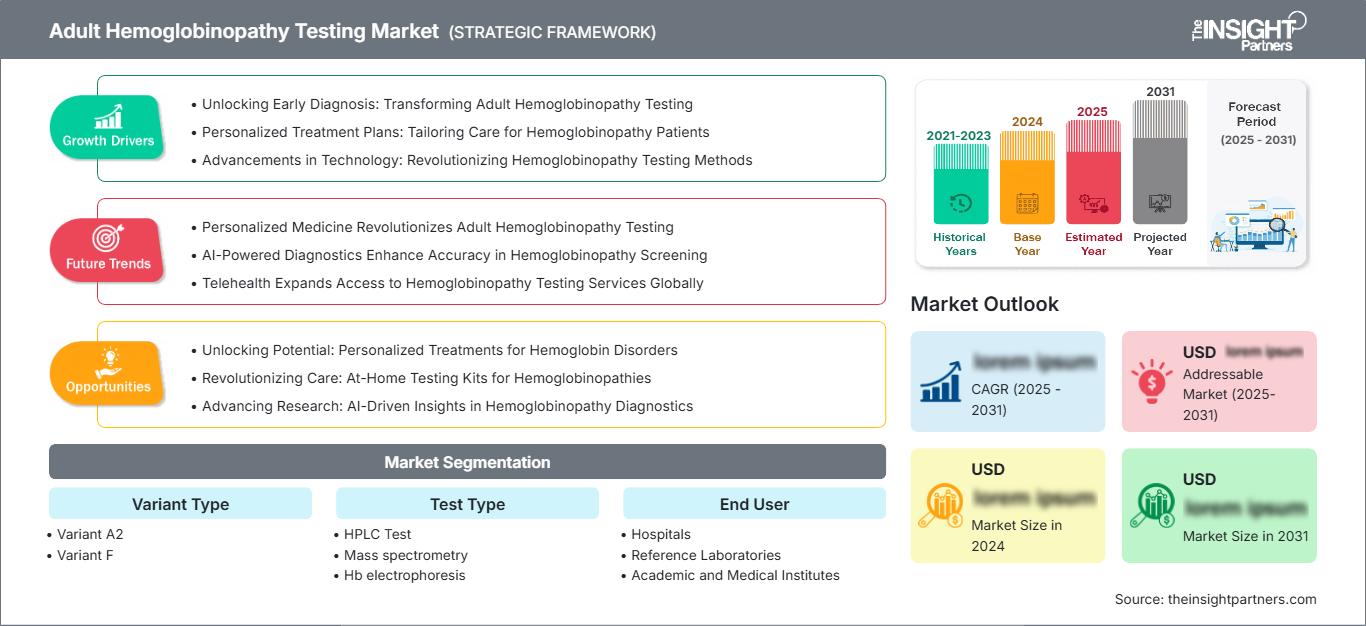
Adult Hemoglobinopathy Testing Market: Strategic Insights
Regional Insights
North America Adult hemoglobinopathy testing market
North America accounted for an estimated 40–44% share in 2025 and is expected to expand at a CAGR between 3.8–4.5% during 2026–2034. There are several advantages of the regional market, such as having diagnostic laboratories, haematology equipment, and automated testing devices. The United States is still considered the leader, which is associated with a high number of clinical sites, research centers, and investments in the health care system.
There is an increasing focus on the management of blood disorders that stimulates adoption in hospitals and laboratories. Canada is also one of the key players due to its modernizing health care systems and laboratory capacity growth. Diagnostic companies in the region pay attention to accuracy, speed of testing, and broad use in clinical practices.
U.S. Adult hemoglobinopathy testing market Market
The US represented approximately 86–90% of the North American market in 2025 and is projected to grow at a CAGR between 3.9–4.6% during 2026–2034. The country benefits from extensive laboratory networks, advanced medical research infrastructure, and strong adoption of specialized haematology testing technologies.
The investigation of haemoglobin variants is becoming more popular because of the development of the technique employed by clinical laboratories and research organizations, such as Bio-Rad Laboratories, Inc., Thermo Fisher Scientific Inc., and PerkinElmer Inc. This trend is attributed to the rising interest in personalized medicine and new ways of disease detection.
Europe Adult hemoglobinopathy testing market Market
Europe represented an estimated 26–30% share in 2025 and is anticipated to grow at a CAGR between 3.5–4.2% during 2026–2034. The area has the advantage of existing healthcare system, diagnostic programs and growing adoption of sophisticated solutions for haematology analysis. Germany is still one of the main players owing to the existence of well-developed laboratory structure, research and testing.
The United Kingdom keeps supporting the regional demand owing to screening programs, modernization of healthcare system and development of diagnostics. Germany's laboratory environment is reinforced by scientific researches and introduction of technologies. France, Italy and Spain are working on increasing adoption through testing in hospitals and development of the diagnostics networks.
APAC Adult hemoglobinopathy testing market Market
Asia Pacific accounted for approximately 18–22% share in 2025 and is projected to grow at a CAGR between 4.5–5.3% during 2026–2034. China is among the foremost markets for the industry owing to developments in the healthcare sector, improvements in diagnostics, and the recognition of inherited blood disorders.
Countries such as Japan, South Korea, India, and Australia are fostering regional development by way of laboratory upgrading, research efforts, and improvement in healthcare accessibility. The development of diagnostics infrastructure and the implementation of healthcare programs supported by the government is fostering the uptake of advanced diagnostic technologies.
Middle East & Africa Adult hemoglobinopathy testing market Market
Middle East & Africa accounted for a smaller portion of the global market in 2025 and is expected to grow at a CAGR between 3.2–4.0% during 2026–2034. Saudi Arabia represents a leading market due to healthcare investments, genetic disorder awareness programs, and improving diagnostic infrastructure.
UAE and South Africa are working on hospital upgrade and lab developments, whereas RO-MEA region is increasingly gaining access to specialized testing facilities. Investments in healthcare infrastructure and public health efforts are helping to promote haemoglobin disorders diagnostic test adoption. Regional growth is further driven by enhanced medical technologies and laboratories specialization.
Segmentation Analysis
Variant Type
The Variant Type segment of the adult hemoglobinopathy testing market is expected to grow at a CAGR between 3.7–4.3% during 2026–2034. Increasing clinical requirements for identifying specific haemoglobin abnormalities are supporting demand for variant-focused testing solutions. Laboratories are adopting accurate detection methods to differentiate clinically significant variants and improve patient management strategies. The segment continues to benefit from advancements in analytical sensitivity and interpretation capabilities.
- Variant A2: Variant A2 testing remains important for identifying beta-thalassemia-related conditions and supporting haematology evaluations. Demand is influenced by diagnostic accuracy requirements, laboratory screening activities, and integration with comprehensive haemoglobin analysis workflows.
- Variant F: Variant F testing supports identification of fetal haemoglobin levels associated with inherited disorders and treatment monitoring. Its application remains significant in clinical assessments requiring detailed haemoglobin profile characterization.
Test Type
The Test Type segment is expected to register a CAGR between 3.9–4.6% during 2026–2034. The adult hemoglobinopathy testing market forecast is expanding as healthcare providers seek reliable analytical platforms with improved accuracy, automation, and scalability. Different testing technologies address varied clinical and research requirements, with laboratories selecting platforms based on workflow needs, sample volume, and reporting capabilities.
- HPLC Test: HPLC testing maintains a strong position due to established laboratory acceptance, reliable separation capabilities, and compatibility with routine haemoglobin variant identification procedures across healthcare facilities.
- Mass spectrometry: Mass spectrometry is gaining attention because of enhanced analytical performance, detailed molecular characterization capabilities, and increasing use in specialized laboratories conducting advanced haematology investigations.
- Hb electrophoresis: Hb electrophoresis continues to support diagnostic workflows through established methodology, cost efficiency, and widespread availability in laboratories evaluating haemoglobin abnormalities.
End User
The End User segment is expected to expand at a CAGR between 3.8–4.5% during 2026–2034. Hospitals, reference laboratories, and academic institutions represent key environments where hemoglobinopathy testing solutions are utilized. Increasing diagnostic demand, research activities, and improvements in healthcare infrastructure are supporting adoption across multiple user categories.
- Hospitals: Hospitals represent a significant user group due to increasing requirements for patient diagnosis, disease monitoring, and integration of testing results into clinical decision-making processes.
- Reference Laboratories: Reference laboratories support centralized testing services by providing specialized analysis capabilities, advanced instrumentation, and expertise required for complex haemoglobin variant identification.
- Academic and Medical Institutes: Academic and medical institutes contribute through research programs, clinical studies, and technology evaluation activities focused on improving understanding of inherited blood disorders.
Opportunity Snapshot
| End User | Revenue Contribution (High/Medium/Low) | Trend Tag | Adoption Stage |
| Hospitals | High | Clinical Testing | Mature |
| Reference Laboratories | Medium | Central Testing | Scaling |
| Academic and Medical Institutes | Medium | Research Expansion | Scaling |
Adult Hemoglobinopathy Testing Market Growth Drivers and Impact Analysis
Increasing Focus on Genetic Blood Disorder Diagnosis
The increased realization about the inheritance of haemoglobin diseases is prompting healthcare delivery systems to improve their ability to diagnose these diseases. Awareness creation about such diseases has resulted in the need for precise diagnosis of haemoglobin disorders especially in places where there is a high occurrence of genetic blood diseases. The availability of specialty labs coupled with technological advancements in test procedures is making diagnostic processes easier. There is therefore a chance for instrument makers to improve the accuracy of these assays and make instruments suitable for various settings.
Expansion of Advanced Laboratory Technologies
Development in analysis platforms is making it easier and more accurate for laboratories to conduct hemoglobinopathy tests. Automated techniques such as liquid chromatography, electrophoresis, and sophisticated molecular methods are allowing the laboratories to cope up with an increase in testing volumes by improving their efficiencies. The benefits of improved efficiencies in terms of reduction in complexity and ease of use are allowing more widespread adoption in the medical field. Providers of technology have started to emphasize on data analysis and reporting.
Rising Demand for Personalized Haematology Solutions
The increased use of personalized medicine practices is driving the need for more accurate and thorough analysis related to haemoglobin disorders. Medical practitioners are looking to have more comprehensive tests performed to aid them in making tailored treatment decisions and disease surveillance. Such a move has led to the rise of innovations aimed at providing such an accurate result in terms of variant identification. The trend has implications for hospitals, research institutions, and specialty labs through their investments in technologies that allow for targeted care delivery.
Adult Hemoglobinopathy Testing Market Future Trends
Integration of Digital Laboratory Management Systems
The future developments in the adult hemoglobinopathy testing trends will see increased use of digital lab management systems in association with diagnostic systems. Software innovations could offer increased help in result interpretation, coordination of processes and improved access to information within the network of healthcare providers. There is increasing trend towards incorporation of technology that allows efficient tracking of samples and standardization of report format. These advancements could prove beneficial for better transparency and cooperation between medical professionals, diagnostic facilities and research organizations.
Growth of Decentralized Diagnostic Approaches
The adult hemoglobinopathy testing market trends will probably entail growing curiosity regarding the development of decentralized tests which can make access easier for people living in underprivileged areas. Mobile and easy-to-use diagnostic techniques can contribute to the extension of screening capacity beyond conventional laboratory settings. Companies are looking into methods that can ensure high accuracy of analysis but require less infrastructure. Such innovations will help increase the availability of tests for genetic blood conditions in new healthcare markets with limited access to laboratories.
Adult Hemoglobinopathy Testing Market Opportunities
Expansion of Diagnostic Access in Emerging Healthcare Markets
Market for adult hemoglobinopathy testing Forecast There exist possibilities for companies that seek to grow their market share in diagnostic solutions through developing diagnostics in countries with emerging healthcare facilities. The new economies are putting efforts in building their laboratory facilities and disease awareness campaigns and also improving access to advanced diagnostic services. Companies can take advantage of these possibilities by designing platforms which would be capable of working in diverse healthcare settings. Collaboration with hospitals and reference laboratories and other public health organizations will aid in rolling out the solutions.
Development of Integrated Testing Platforms
The following are some of the ways in which firms can take advantage of opportunities that may exist through the development of integrated diagnostic systems which will have the elements of performance, automation, and efficient workflow processes. Healthcare establishments will now be looking for products that are able to simplify operations and at the same time provide effective reporting. Funding into technology that is flexible enough to perform a variety of functions may facilitate wider use of such equipment in hospitals, research centers, and reference laboratories.
Recent Developments
- January 2026: Bio-Rad Laboratories, Inc. — expanded its diagnostic technology initiatives by strengthening laboratory solutions supporting hematology and clinical analysis applications. The company continued focusing on analytical accuracy, workflow efficiency, and diagnostic reliability across healthcare laboratories. These activities reflect ongoing efforts to enhance product capabilities for specialized testing environments and support evolving clinical requirements.
- September 2025: Thermo Fisher Scientific Inc. — introduced advancements across its analytical technology portfolio designed to support laboratory efficiency and research applications. The company continued investing in scientific workflows, instrumentation development, and integrated solutions serving healthcare and life science customers. These initiatives support broader adoption of advanced analytical approaches in diagnostic and research environments.
- March 2025: PerkinElmer Inc. — continued expanding its healthcare technology capabilities through diagnostic and laboratory solutions focused on improving testing performance. The company emphasized innovation across clinical applications, analytical technologies, and scientific services. These developments demonstrate continued industry efforts to improve access to reliable diagnostic solutions for healthcare providers and research organizations.
Frequently Asked Questions

- Comprehensive Market Sizing and Forecast Analysis
- Detailed Segmentation Analysis
- In-Depth Market Dynamics Assessment
- Regional and Country-Level Insights
- Competitive Landscape and Company Benchmarking
- Strategic Business Intelligence
Recent Reports
Testimonials

The Insight Partners provided valuable market intelligence that supported our global go-to-market strategy. Their team was professional, responsive, and attentive to our feedback, providing thoughtful analysis and helpful methodological clarifications throughout the project.
Junmo Kim Chief Financial Officer (CFO), Enertech Co., Ltd.
The Insight Partners' SCADA System Market report is comprehensive, with valuable insights on current trends and future forecasts. The team was highly professional, responsive, and supportive throughout. We are very satisfied and highly recommend their services.
RAN KEDEM Partner, Reali Technologies LTDs
I requested a report on a very specific software market and the team produced the report in a few days. The information was very relevant and well presented. I then requested some changes and additions to the report. The team was again very responsive and I got the final report in less than a week.
JEAN-HERVE JENN Chairman, Future Analytica
We worked with The Insight Partners for an important market study and forecast. They gave us clear insights into opportunities and risks, which helped shape our plans. Their research was easy to use and based on solid data. It helped us make smart, confident decisions. We highly recommend them.
PIYUSH NAGPAL Sr. Vice President, High Beam Global
The Insight Partners delivered insightful, well-structured market research with strong domain expertise. Their team was professional and responsive throughout. The user-friendly website made accessing industry reports seamless. We highly recommend them for reliable, high-quality research services
YUKIHIKO ADACHI CEO, Deep Blue, LLC.
This is the first time I have purchased a market report from The Insight Partners.While I was unsure at first, I visited their web site and felt more comfortable to take the risk and purchase a market report.I am completely satisfied with the quality of the report and customer service. I had several questions and comments with the initial report, but after a couple of dialogs over email with their analyst I believe I have a report that I can use as input to our strategic planning process.Thank you so much for taking the extra time and making this a positive experience.I will definitely recommend your service to others and you will be my first call when we need further market data.
JOHN SUZUKI President and Chief Executive Officer, Board Director, BK Technologies
I wish to appreciate your support and the professionalism you displayed in the course of attending to my request for information regarding to infectious disease IVD market in Nigeria. I appreciate your patience, your guidance, and the fact that you were willing to offer a discount, which eventually made it possible for us to close a deal. I look forward to engaging The Insight Partners in the future, all thanks to the impression you have created in me as a result of this first encounter.
DR CHIJIOKE ONYIA MANAGING DIRECTOR, PineCrest Healthcare Ltd.Reason to Buy
- Informed Decision-Making
- Understanding Market Dynamics
- Competitive Analysis
- Identifying Emerging Markets
- Customer Insights
- Market Forecasts
- Risk Mitigation
- Boosting Operational Efficiency
- Strategic Planning
- Investment Justification
- Tracking Industry Innovations
- Aligning with Regulatory Trends





 Get Free Sample for