
Adult T-Cell Leukemia Lymphoma Treatment Market Size, Growth & Trends by 2034
Coverage: By Type (Peripheral T- Cell Lymphoma, Cutaneous T- cell Lymphoma, Anaplastic large cell Lymphoma,T- cell Prolymphocytic leukemia,Others); Treatment (Chemotherapy, Radiation, Surgery, Others); Route of Administration (Oral, Parenteral, Others); Distribution Channel (Hospital pharmacy, Retail Pharmacy, Others); End User (Hospitals, Specialty Clinics, Others), and Geography (North America, Europe, Asia Pacific, and South and Central America)
- Status : Data Released
- Report Code : TIPRE00015267
- Category : Life Sciences
- No. of Pages : 150
- Available Report Formats :


- Last update date : July 16, 2026


2025 Market Size
US$ 135.19 Mn
Base year value
2034 Forecast
US$ 179.3 Mn
Projected by 2034
CAGR 2026-2034
3.19 %
Growth rate
Addressable Market
US$ 1,428.24 Mn
(2026-2034)
The Adult T-Cell Leukemia Lymphoma Treatment Market was valued at US$ 135.19 Million in 2025 and is projected to reach US$ 179.3 Million by 2034, registering a CAGR of 3.19% during 2026–2034. The key market drivers are the specific nature of the pathology, heightened public consciousness about hematological diseases, and further advancements in immunotherapy. Market expansion is being ensured by ongoing developments within immuno-oncology and precision therapy amid low incidence rates of the disease among the population.
In North America, the implementation of treatment regimens is still facilitated by positive healthcare reimbursement models, high prevalence of oncological clinics, and growing participation in clinical studies. The Adult T-Cell Leukemia Lymphoma Treatment Market size in the region continues to benefit from early diagnosis initiatives and growing availability of advanced biologics. Modeled analysis indicates regional growth of approximately 3.3–3.8% through 2034, supported by expanding access to innovative therapies and rising investment in rare hematological disease management.
Adult T-Cell Leukemia Lymphoma Treatment Market Assessment and Insights
- North America: Share in 2025 estimated at 38–42%, supported by advanced oncology infrastructure, strong clinical trial activity, and favorable reimbursement systems. CAGR between 2026–2034 is modeled at 3.3–3.8%.
- US: Represents approximately 78–82% of North American revenue in 2025, supported by major treatment centers and pharmaceutical innovation. CAGR between 2026–2034 is projected at 3.4–3.9%.
- Europe: Share in 2025 estimated at 27–31%, led by Germany, the UK, France, Italy, and Spain. CAGR between 2026–2034 is modeled at 2.9–3.4% due to expanding rare cancer treatment programs.
- Asia Pacific: Share in 2025 estimated at 22–26%, supported by Japan, China, South Korea, and Australia. CAGR between 2026–2034 is projected at 3.8–4.4%, making it the fastest-expanding regional market.
- Largest Segment: Chemotherapy maintains a market share of approximately 46–50% in 2025 owing to established treatment protocols. CAGR between 2026–2034 is estimated at 2.8–3.2%.
- High Growth Segment: Parenteral administration holds a adult leukemia lymphoma treatment market share of 58–62% in 2025 and is expected to grow at a CAGR of 3.8–4.3% through 2034, supported by biologic therapies.
- Key companies analyzed in detail: Johnson & Johnson, Novartis AG, Autolus Therapeutics plc, Genmab A/S, Spectrum Pharmaceuticals, Inc., F. Hoffmann-La Roche Ltd, Bristol-Myers Squibb Company, Shionogi & Co., Ltd., Amgen Inc., BioCryst Pharmaceuticals, Inc., Sorrento Therapeutics, Inc.
Source: The Insight Partners' analysis based on proprietary research, government publications, company annual reports, investor presentations, industry databases, and expert interviews.
Increasing cases of hematological cancers as well as increased awareness about uncommon lymphoid cancers is driving the growth of adult T-cell leukemia-lymphoma market. The use of precision medicine techniques, which enable a more customized therapeutic approach, is another factor impacting the growth of adult T-cell leukemia-lymphoma market.
The supply chain includes pharmaceutical innovators, contract developers, treatment centers, hospitals pharmacies, and research institutes. Increasing demand for advanced manufacturing facilities and cold chain logistics in the manufacturing process of biologicals and cellular therapy drugs is a key feature of the supply chain dynamics.
Positioning based on competitive factors is still determined by clinical differentiation, regulatory advances, and collaborative efforts. The Adult T-Cell Leukemia Lymphoma Treatment Market analysis reveals that those enterprises able to provide evidence of better survival rates and tolerable side effects have more promising market prospects.
Prominent players like Bristol-Myers Squibb Company, F. Hoffmann-La Roche Ltd, Novartis AG, Johnson & Johnson, and Genmab A/S are still putting in effort to foster innovations in the field of oncology. Startups in biotechnology like Autolus Therapeutics plc have come forward to help advance technology.
Adult T-Cell Leukemia Lymphoma Treatment Market Report Scope
| Report Attribute | Details |
|---|---|
| Market size in 2025 | US$ 135.19 Million |
| Market Size by 2034 | US$ 179.3 Million |
| Global CAGR (2026 - 2034) | 3.19% |
| Historical Data | 2021-2024 |
| Forecast period | 2026-2034 |
Adult T-Cell Leukemia Lymphoma Treatment Market Analysis
Rising incidence of hematological malignancies and greater awareness of rare lymphoid cancers are supporting demand across treatment settings. Adult T-Cell Leukemia Lymphoma Treatment Market growth is also influenced by expanding adoption of precision medicine approaches that facilitate more personalized therapeutic strategies. Development of advanced biologics, antibody-based therapies, and cellular treatments continues to reshape the treatment ecosystem.
The value chain spans pharmaceutical innovators, contract development organizations, specialty treatment centers, hospital pharmacies, and research institutions. Supply dynamics are increasingly affected by requirements for advanced manufacturing capabilities and specialized cold-chain logistics needed for biologic products and cellular therapies.
Competitive positioning remains shaped by clinical differentiation, regulatory progress, and strategic collaborations. Adult T-Cell Leukemia Lymphoma Treatment Market analysis indicates that companies capable of demonstrating improved survival outcomes and manageable safety profiles maintain stronger commercial potential. Research partnerships and licensing agreements continue to influence product pipelines and geographic expansion strategies.
Major participants including Bristol-Myers Squibb Company, F. Hoffmann-La Roche Ltd, Novartis AG, Johnson & Johnson, and Genmab A/S continue investing in oncology innovation. Emerging biotech developers such as Autolus Therapeutics plc are helping broaden technological advancement through cellular therapy development and next-generation immunotherapy platforms.
● REPORT CUSTOMIZATION
Tailor This Report To Align With Your Specific Business Requirements
This report can be customized to align precisely with your business objectives, scope, and target markets. Customization options include tailored segmentation, geography, competitive analysis, and strategic insights to support informed decision-making.
Customize This Report →WHAT YOU CAN ADJUST
- ● Segmentations
- ● Geography
- ● Competitive Analysis
- ● Language Preferences
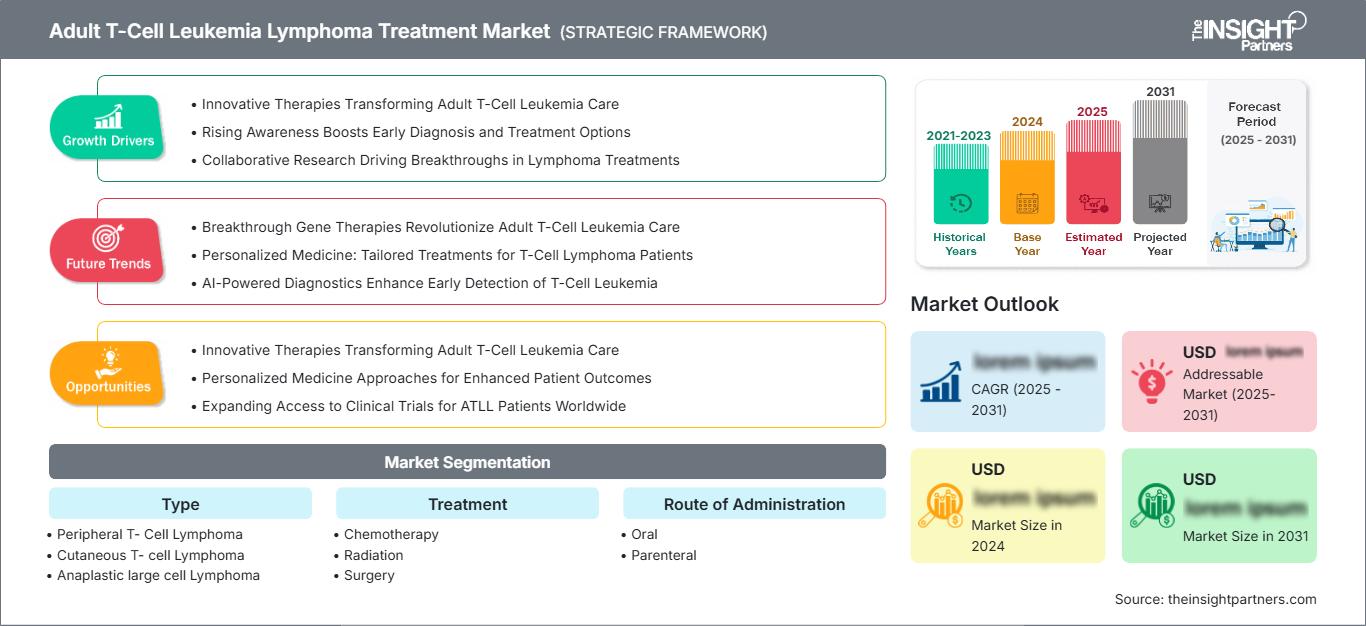
Adult T-Cell Leukemia Lymphoma Treatment Market: Strategic Insights
Regional Insights
North America Adult T-Cell Leukemia Lymphoma Treatment Market
North America is expected to contribute about 38–42% to the global revenue in 2025. This is because North America is the biggest regional market and is fueled by the well-developed treatment structure in hematology, wide availability of specialized oncology centers, good reimbursement processes, and involvement in clinical trials. This region will continue expanding with a CAGR of 3.3–3.8% from 2026 through 2034.
Leading pharmaceutical players such as Bristol-Myers Squibb Company, Johnson & Johnson, Novartis AG, and F. Hoffmann-La Roche Ltd will help to boost innovation in the region. Increased use of immunotherapeutic techniques, increasing use of companion diagnostics, and growing awareness regarding rare T-cell malignancies will boost treatment penetration. Research collaboration between big cancer institutes and biotechnology firms is playing a crucial role in developing specific therapeutic strategies.
U.S. Adult T-Cell Leukemia Lymphoma Treatment Market
The United States accounts for 78–82% of North America market revenue in 2025. High healthcare spend, presence of top-tier cancer facilities, and availability of hematologists make up for good demand in advanced treatment regimens. The market is expected to witness a growth rate of 3.4–3.9% CAGR during the forecast period till 2034.
There is a noticeable transition towards personalized oncology approaches, especially when it comes to relapsed or refractory cases. R&D activities undertaken by companies like Autolus Therapeutics plc, Genmab A/S, Amgen Inc., and Bristol-Myers Squibb Company help diversify the market. Hospitals will remain the main channel of treatment delivery, while improved molecular diagnostics and genetic tests will allow for a better customization of therapy. There is also a fairly developed system of orphan drugs development in the country that stimulates investments into rare hemato-oncology.
Europe Adult T-Cell Leukemia Lymphoma Treatment Market
Europe is estimated to account for 27–31% of global revenue in 2025 and is projected to grow at a CAGR of 2.9–3.4% through 2034. Market expansion is supported by established healthcare systems, increasing utilization of advanced biologic therapies, and growing investment in hematological cancer research.
Germany remains the leading European contributor owing to excellent capabilities of producing pharmaceuticals, presence of well-structured oncology treatment facilities, and accessibility of innovative treatments. Germany's leadership in clinical research further helps drive uptake of new treatment methods.
The demand in the UK is driven by the presence of well-established pathways for cancer treatment along with increasing use of precision medicine projects at specialized treatment centers. Increasing research activities and improved patient identification programs continue to favor market performance.
In the case of France, Italy, and Spain, all together constitute a substantial part of regional demand. The presence of increased reimbursement options, growing oncology collaborations, and adoption of targeted treatment methods continues to drive the development of the market in these countries.
APAC Adult T-Cell Leukemia Lymphoma Treatment Market
Asia Pacific accounts for approximately 22–26% of global revenue in 2025 and is projected to record the fastest regional expansion, with a CAGR of 3.8–4.4% during 2026–2034. Growth is being driven by expanding healthcare infrastructure, improving access to specialty oncology care, and rising awareness of hematological malignancies.
Japan continues to be the dominant regional market owing to better disease awareness and treatment options. China continues to grow due to healthcare reforms and increased spending on medicines. Similarly, South Korea, India, and Australia are all seeing an increase in the use of novel treatments, as more access to cancer care facilities becomes available. The support from governments for rare diseases and oncology innovations will ensure continued growth of the market.
Middle East & Africa Adult T-Cell Leukemia Lymphoma Treatment Market
The Middle East and Africa region represents a smaller yet increasing share of the world’s demand. The market is expected to register a CAGR of 3.0-3.5% over the period from 2026 through 2034 due to modernizing healthcare measures and rising investments in oncology facilities.
Saudi Arabia takes up the leading place in the regional demand, followed by the United Arab Emirates and South Africa. The development of specialized cancer care facilities, the introduction of new drugs, and growing expenditures on healthcare in the public sector make treatment more accessible. Furthermore, closer cooperation between the regional healthcare organizations and international pharma companies helps with accessing innovative treatments.
Segmentation Analysis
Type
Type denotes the classification system that is used for deciding about the treatment modality, making prognosis assessments, and determining treatment pathways. There are wide variations in treatment approaches depending on the types of diseases due to factors like their level of aggressiveness, recurrence rate, and response rate. The type segment is anticipated to witness a growth rate of 3.2 to 3.6 percent between 2026 and 2034.
- Peripheral T- Cell Lymphoma: Represents one of the most clinically significant subtypes due to its aggressive nature and high treatment intensity requirements. Demand is supported by continued use of combination chemotherapy, targeted biologics, and newer immunotherapy regimens.
- Cutaneous T- cell Lymphoma: Benefits from increasing diagnosis rates and growing adoption of targeted therapies. Specialized treatment centers and improved disease monitoring capabilities continue to support patient management and therapeutic utilization.
- Anaplastic large cell Lymphoma: Maintains strong strategic importance due to the availability of targeted treatment approaches and biomarker-driven therapy selection. Clinical research activity continues to expand the therapeutic landscape for eligible patients.
- T- cell Prolymphocytic leukemia: Although relatively rare, this subtype requires highly specialized treatment strategies. Demand is supported by improved diagnostic technologies and increasing focus on individualized treatment pathways for aggressive disease forms.
Treatment
The segment of Treatment is still the highest revenue-generating segment in the market and has shown the potential to achieve CAGR of 3.0-3.4% during the forecast period 2026-2034. There have been several advancements in combination therapies, supportive care, and new biological drugs that are driving the growth in terms of treatment. Chemotherapy has emerged as the most used mode of therapy.
- Chemotherapy: Continues to account for the largest treatment share due to established clinical protocols, widespread physician familiarity, and use as a foundational therapy across multiple disease stages and treatment settings.
- Radiation: Utilized selectively for localized disease management and symptom control. Demand remains concentrated within integrated oncology treatment centers offering multidisciplinary therapeutic approaches.
- Surgery: Represents a comparatively small portion of overall treatment utilization. Surgical procedures are primarily employed for diagnostic evaluation, staging support, or management of selected localized disease presentations.
Route of Administration
The route of administration plays a significant role in the compliance, healthcare usage, and drug accessibility. This segment is estimated to grow at a CAGR of 3.4% to 3.9% between 2026 and 2034 due to the rising use of biologics and oncology drugs.
- Oral: Receives increasing attention because of patient convenience, reduced hospital dependence, and improved treatment flexibility. Adoption is supported by ongoing development of targeted oncology therapies suitable for outpatient use.
- Parenteral: Maintains a dominant position owing to the extensive use of biologics, monoclonal antibodies, and infusion-based therapies. Hospital and specialty oncology centers remain the primary administration settings.
Distribution Channel
The Distribution Channel segment is expected to record a CAGR between 3.1–3.5% during the period 2026 to 2034. Factors driving demand include the intricacies associated with treating patients, the reimbursement systems, and increased production of specialty oncology drugs. Growth in integrated healthcare networks enhances access to medicines.
- Hospital pharmacy: Accounts for the majority of product distribution because many therapies require specialist supervision, infusion services, and coordinated patient monitoring delivered through oncology treatment centers.
- Retail Pharmacy: Growth is supported by increasing availability of oral oncology medicines and decentralized care models. Enhanced patient access and improved prescription fulfillment capabilities contribute to segment development.
Opportunity Snapshot
| Type | Revenue Contribution | Trend Tag | Adoption Stage |
| Peripheral T- Cell Lymphoma | High | Targeted Therapy | Mature |
| Cutaneous T- cell Lymphoma | Medium | Skin Oncology | Scaling |
| Anaplastic large cell Lymphoma | Medium | Biomarker Care | Scaling |
| T- cell Prolymphocytic leukemia | Low | Precision Therapy | Emerging |
| Others | Low | Rare Disease | Emerging |
Adult T-Cell Leukemia Lymphoma Treatment Market Growth Drivers and Impact Analysis
Rising Adoption of Targeted and Immunotherapy-Based Treatments
There is now an increased shift from standard chemotherapy drugs to targeted treatments and other newer strategies in the management of aggressive T-cell cancers. With advances in knowledge regarding the biology of the diseases, there is now the ability to come up with treatments that can increase efficacy while minimizing the level of toxicity. There is now increased focus by pharmaceutical companies on hematology/oncology pipelines that can help fill the current unmet need. With the emergence of more therapies, healthcare providers will have greater access to different types of treatments. There is now a stronger focus on precision medicine, and this is improving treatment outcomes and drug utilization.
Expansion of Specialized Hematology and Oncology Care Infrastructure
The development of specialized centers that cater for the treatment of cancer patients is making diagnosis, follow-ups, and disease management easier for patients. There is a growing trend among various health care providers of increasing spending on specialized oncology facilities such as molecular diagnostics labs and infusion centers among others. This is likely to promote early intervention and stratification of patients. The development of hematologists and oncologists is likely to increase adoption, especially in areas where there has been no sufficient provision of these professionals before. Improvements in the infrastructure of the healthcare sector will also promote clinical trial participation and innovations of drugs. The need for better treatments for Adult T-Cell Leukemia Lymphoma is expected to grow steadily.
Growing Focus on Rare Disease Drug Development Incentives
Policies for orphan drugs development have been instrumental in increasing industry involvement in the area of rare hematology cancer studies. Incentives such as reduced financial risk associated with the process, faster approvals, and market exclusivity increase profitability and thus promote investments by pharmaceutical giants as well as biotech startups. The pipeline for T-cell cancers has continued to grow in terms of new products addressing specific aspects of the diseases. There is an expectation that more research will enhance access to medicines and improve patient outcomes in the future. This is what drives the market growth in the long term.
Adult T-Cell Leukemia Lymphoma Treatment Market Future Trends
Integration of Precision Medicine and Biomarker-Based Treatment Selection
Adult T-Cell Leukemia Lymphoma Treatment Market trends are increasingly shaped by precision medicine approaches that leverage genomic and molecular profiling to support individualized treatment decisions. In the future, there is going to be an increase in use of biomarkers to select the patients who will respond to the particular treatment. With improvements in sequencing and diagnostics technology, there is an improved understanding of the disease and thus there is increased capacity to target certain treatments. Even in drug development, the pharmaceuticals have embraced the use of biomarkers to determine which patients should be included in clinical trials. With the success of personalized treatment, there will be need for improved decision-making process in healthcare.
Expansion of Cellular Therapy and Advanced Immuno-Oncology Platforms
Future innovations will be centered around cellular therapies, innovative immune cells, and immunotherapy technologies for oncology. Research will become more oriented towards making sure that treatment responses are durable, avoiding adverse events, and tackling resistance. Biotech firms will be creating novel treatments which will target unique and specific pathways in diseases. With scalability issues in manufacturing being solved and other commercial obstacles being addressed, such treatments will be reaching more patients. Academic institutions, biotech innovators, and global pharma companies will be working together for the further development of such treatments and their implementation in clinical settings in the next ten years.
Adult T-Cell Leukemia Lymphoma Treatment Market Opportunities
Expansion into Emerging Asia-Pacific Healthcare Markets
Significant investment opportunities exist across Asia-Pacific countries where healthcare infrastructure, cancer diagnosis rates, and specialty treatment access continue to improve. Adult T-Cell Leukemia Lymphoma Treatment Market Forecasts indicate that regional healthcare modernization programs are supporting the adoption of advanced oncology therapies and expanding patient access to specialized care. Countries such as China, India, South Korea, and several Southeast Asian markets are increasing healthcare expenditure while strengthening oncology research capabilities. Pharmaceutical companies that establish early commercial partnerships, distribution networks, and clinical collaborations in these regions may benefit from long-term growth opportunities. Increasing awareness of rare hematological malignancies is expected to further support demand expansion and market penetration.
Development of Combination Therapy and Next-Generation Treatment Platforms
The future prospects for investments are highly dependent on advancements in combination therapies and novel platforms for treatment that could improve outcomes in practice. Combinations of chemotherapy, targeted treatments, monoclonal antibodies, and immunotherapy may provide better results than individual approaches that have been traditionally used. Companies in research and biopharmaceutical industry are looking at possibilities to develop such synergies of treatment that can tackle issues of relapses and resistance. There are also opportunities in companion diagnostics, monitoring, and supportive care for patients. Companies that would be able to create treatment ecosystems by combining several technologies are expected to have competitive advantages while meeting important unmet needs in this oncology field.
Recent Developments
- January 2026: Autolus Therapeutics plc – The firm posted good commercial momentum in relation to AUCATZYL, which recorded preliminary net product sales for 2025 estimated at US$75 million, along with ongoing development of its cell therapy pipeline. There was mention of the growing use of CAR-T technology in treating hematological cancers.
- December 2025: The Bristol-Myers Squibb Company - FDA approval of Breyanzi (lisocabtagene maraleucel) for adult patients with relapsed or refractory marginal zone lymphoma who have received at least two prior lines of systemic therapy has provided the Bristol-Myers Squibb Company with an additional cell therapy in its portfolio.
- December 2025: F Hoffmann-La Roche Ltd – Roche received FDA clearance for the subcutaneous version of Lunsumio VELO (Mosunetuzumab) for the treatment of relapsed or refractory follicular lymphoma following two or more prior treatment lines. The FDA clearance has made the administration faster and enhanced Roche's competitive edge in lymphoma immunotherapy.
Frequently Asked Questions

- Comprehensive Market Sizing and Forecast Analysis
- Detailed Segmentation Analysis
- In-Depth Market Dynamics Assessment
- Regional and Country-Level Insights
- Competitive Landscape and Company Benchmarking
- Strategic Business Intelligence
Recent Reports
Testimonials

The Insight Partners' SCADA System Market report is comprehensive, with valuable insights on current trends and future forecasts. The team was highly professional, responsive, and supportive throughout. We are very satisfied and highly recommend their services.
RAN KEDEM Partner, Reali Technologies LTDs
I requested a report on a very specific software market and the team produced the report in a few days. The information was very relevant and well presented. I then requested some changes and additions to the report. The team was again very responsive and I got the final report in less than a week.
JEAN-HERVE JENN Chairman, Future Analytica
We worked with The Insight Partners for an important market study and forecast. They gave us clear insights into opportunities and risks, which helped shape our plans. Their research was easy to use and based on solid data. It helped us make smart, confident decisions. We highly recommend them.
PIYUSH NAGPAL Sr. Vice President, High Beam Global
The Insight Partners delivered insightful, well-structured market research with strong domain expertise. Their team was professional and responsive throughout. The user-friendly website made accessing industry reports seamless. We highly recommend them for reliable, high-quality research services
YUKIHIKO ADACHI CEO, Deep Blue, LLC.
This is the first time I have purchased a market report from The Insight Partners.While I was unsure at first, I visited their web site and felt more comfortable to take the risk and purchase a market report.I am completely satisfied with the quality of the report and customer service. I had several questions and comments with the initial report, but after a couple of dialogs over email with their analyst I believe I have a report that I can use as input to our strategic planning process.Thank you so much for taking the extra time and making this a positive experience.I will definitely recommend your service to others and you will be my first call when we need further market data.
JOHN SUZUKI President and Chief Executive Officer, Board Director, BK Technologies
I wish to appreciate your support and the professionalism you displayed in the course of attending to my request for information regarding to infectious disease IVD market in Nigeria. I appreciate your patience, your guidance, and the fact that you were willing to offer a discount, which eventually made it possible for us to close a deal. I look forward to engaging The Insight Partners in the future, all thanks to the impression you have created in me as a result of this first encounter.
DR CHIJIOKE ONYIA MANAGING DIRECTOR, PineCrest Healthcare Ltd.Reason to Buy
- Informed Decision-Making
- Understanding Market Dynamics
- Competitive Analysis
- Identifying Emerging Markets
- Customer Insights
- Market Forecasts
- Risk Mitigation
- Boosting Operational Efficiency
- Strategic Planning
- Investment Justification
- Tracking Industry Innovations
- Aligning with Regulatory Trends





 Get Free Sample for