
Aerosol Cans Market Growth, Trends & Demand by 2034
Coverage: By Product Type (Straight Wall Aerosol Cans, Shaped Aerosol Cans, Necked-in Aerosol Cans); Material (Aluminum, Steel, Plastics, Others); Propellant Type (Compressed Gas Propellant, Liquefied Gas Propellant); End use industry (Personal Care, Household Care, Automotive, Healthcare, Others) , and Geography (North America, Europe, Asia Pacific, and South and Central America)
- Status : Data Released
- Report Code : TIPRE00005828
- Category : Chemicals and Materials
- No. of Pages : 150
- Available Report Formats :


- Last update date : July 20, 2026


2025 Market Size
US$ 14.26 Bn
Base year value
2034 Forecast
US$ 17.96 Bn
Projected by 2034
CAGR 2026-2034
2.60 %
Growth rate
Addressable Market
US$ 146.24 Bn
(2026-2034)
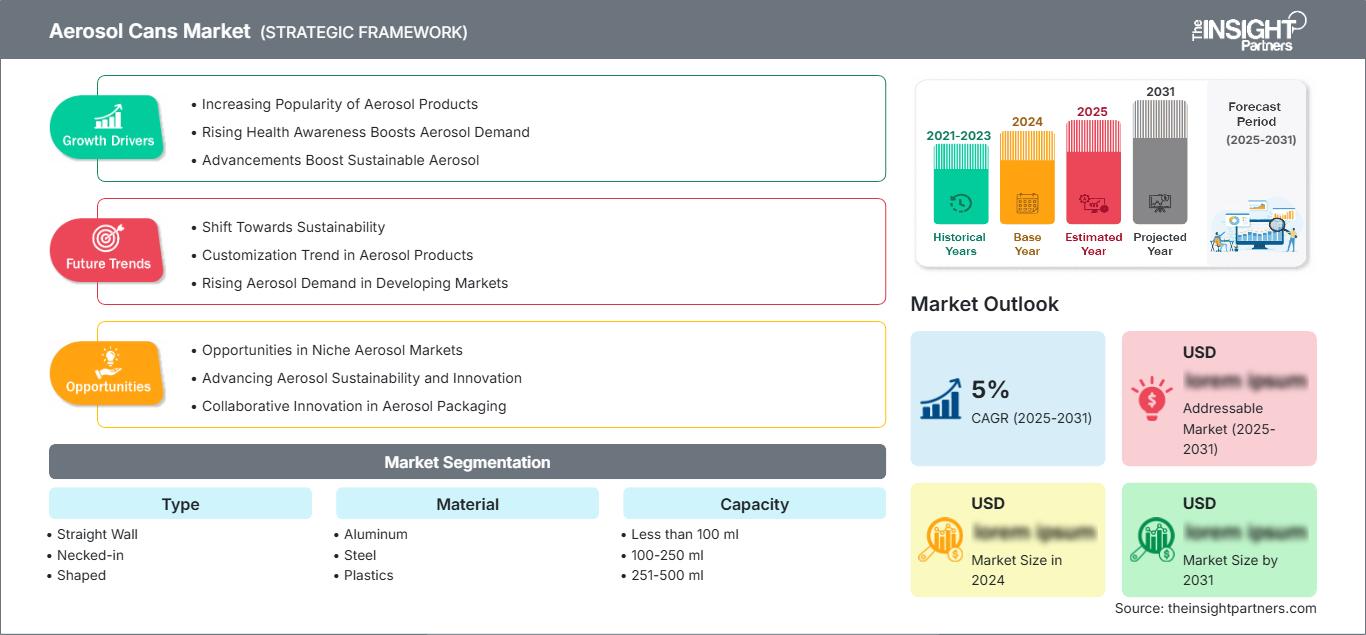
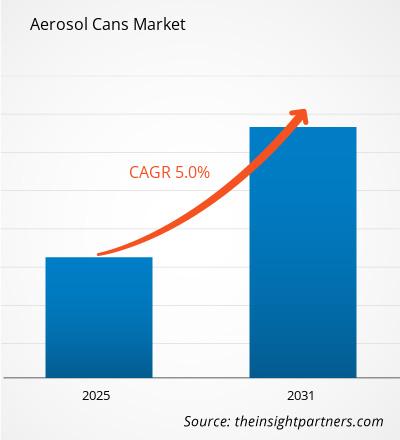
The aerosol cans market size was valued at US$ 14.26 billion in 2025 and is expected to rise to a value of US$ 17.96 billion by 2034, growing at a CAGR of 2.60%. Market growth is driven by continuous demand for products used in personal care, household goods, pharmaceuticals, paint and industrial applications. The use of recyclable materials, light weight packages, and dispensing technology advancements are being considered by manufacturers.
North America is expected to witness a CAGR between 2.0% to 3.0% between 2026 and 2034, propelled by the existing personal care and household goods industry in the region. Growth drivers include increased preference for convenient packaging, recycling of aluminum and investment in sustainable packaging solutions.
Aerosol Cans Market Assessment and Insights
- North America The region maintains a mature packaging ecosystem supported by personal care, household, and pharmaceutical applications. Aerosol cans Market share in 2025 is estimated at 25–30%, with CAGR between 2026–2034 projected at 2.0–3.0% due to sustainable packaging adoption.
- US The country represents the largest regional contributor through established consumer goods and industrial manufacturing sectors. Share in 2025 is estimated at 75–80% of North America, with CAGR between 2026–2034 expected at 2.0–3.0%.
- Europe Germany, the UK, France, Italy, and Spain contribute significantly through advanced packaging manufacturing and recycling infrastructure. Share in 2025 is estimated at 25–30%, growing at a CAGR range of 2.0–3.0% during 2026–2034.
- Asia Pacific China, Japan, India, South Korea, and Southeast Asian economies support expansion through urbanization and consumer product manufacturing. Share in 2025 is estimated at 30–35%, with CAGR between 2026–2034 expected at 3.0–4.0%.
- Largest Segment Aluminum material holds a leading position with a market share range of 45–50% in 2025 and CAGR range of 2.5–3.5% between 2026–2034.
- High Growth Segment Shaped aerosol cans represent a developing segment with a market share range of 15–20% in 2025 and CAGR range of 3.0–4.0% during 2026–2034.
- Key companies analyzed in detail: Aerobal, S. A. de C. V.; Aero-pack Industries, Inc.; Avon Crowncaps and Containers Nigeria Plc; Ball Corporation; Brockway Standard Holdings Corp.; Crown Holdings, Inc.; DS Containers, Inc.; ITW Sexton Can Company, Inc.; Nampak Limited; Spray Products Corporation.
Source: The Insight Partners' analysis based on proprietary research, government publications, company annual reports, investor presentations, industry databases, and expert interviews.
Innovation in aerosol can packaging has seen development in metal forming techniques, coating processes, valve designs, and lighter pack structures. Innovations in material efficiency are being pursued without compromising product integrity and strength. The use of aluminum and steel continues to be dominant because of their sustainability properties. In addition, packaging companies are implementing better controls in production for higher quality products in cosmetics, pharmaceuticals, foods, and industries.
Future trends in the packaging of aerosol can products include shifts to sustainable packaging, expansion of markets, and material recovery regulation pressures. Developing countries are creating more demand because of increased consumption of personal care products and increased retailing. Sustainable innovations in recycling, coating, and production processes may affect future trends in the industry.
Aerosol Cans Market Report Scope
| Report Attribute | Details |
|---|---|
| Market size in 2025 | US$ 14.26 Billion |
| Market Size by 2034 | US$ 17.96 Billion |
| Global CAGR (2026 - 2034) | 2.60% |
| Historical Data | 2021-2024 |
| Forecast period | 2026-2034 |
Aerosol Cans Market Analysis
The expansion of aerosol cans is driven by the extensive applications of aerosols in the personal care industry, household cleaners, pharmaceuticals, automotive industry, and industrial coatings. The industry comprises of raw material suppliers, can manufacturers, coating suppliers, valve manufacturers, fillers, and the brand owners. The rising trend towards easier ways of applying products is still pushing manufacturers to increase their production efficiency and use of sustainable packaging.
Production supply factors include changes in prices of aluminum and steel, recycling, and the production capacities of different regions. Manufacturers are working towards using light weight materials and automation in their processes in order to be more efficient. The trend towards the recyclable packaging material is leading to increased cooperation between manufacturers and consumer goods companies.
According to the market analysis, the competitive environment is determined by manufacturing size, geographical locations, materials, and innovation capability. Companies like Ball Corporation, Crown Holdings, Inc., DS Containers, Inc., and Aerobal, S. A. de C. V. are well-positioned owing to their broad range of packaging capabilities and solution provision for various end-users. Other competitors include Aero-pack Industries, Inc., Nampak Limited, and ITW Sexton Can Company, Inc., all focusing on specialized manufacturing demands.
The investment trend in the market is shifting toward sustainable packaging and recycling processes as well as production processes. Companies are investing heavily in improving their supply chain as well as coming up with new can designs to satisfy changing customer demands. Strategic position relies on achieving a balance between cost-effectiveness and environmental performance.
● REPORT CUSTOMIZATION
Tailor This Report To Align With Your Specific Business Requirements
This report can be customized to align precisely with your business objectives, scope, and target markets. Customization options include tailored segmentation, geography, competitive analysis, and strategic insights to support informed decision-making.
Customize This Report →WHAT YOU CAN ADJUST
- ● Segmentations
- ● Geography
- ● Competitive Analysis
- ● Language Preferences
Aerosol Cans Market: Strategic Insights
Regional Insights
North America Aerosol cans market
North America is estimated to account for 25–30% share in 2025 and is projected to grow at a CAGR range of 2.0–3.0% between 2026–2034. The region benefits from established consumer goods industries, strong retail networks, and mature aerosol packaging infrastructure.
The United States is clearly the leading producer in the area because of the demand from cosmetics, home products, medicine, and other industrial uses. Companies such as Ball Corporation, Crown Holdings, Inc., and DS Containers, Inc. continue to produce goods for their customers both inside and outside the country.
U.S. Aerosol cans Market
The US represents approximately 75–80% of North American demand in 2025 due to its large consumer product sector and established manufacturing base. The country is expected to register a CAGR range of 2.0–3.0% during 2026–2034.
Local production facilities aid in processes such as personal care items, cleaning products, medicines, and car products. Firms are making more efforts to develop packaging that can be recycled, efficient coating systems, and effective manufacturing processes. Efforts from the regulators towards sustainable packaging are pushing firms to increase their efficiency in recycling materials.
Europe Aerosol cans Market
Europe is estimated to hold a 25–30% share in 2025, with a CAGR range of 2.0–3.0% during 2026–2034. Germany remains a leading country due to its advanced packaging industry, automotive sector, and strong recycling infrastructure.
The UK is involved with the manufacturing of personal care and household products. On the other hand, Germany has been assisting in boosting demand in industrial and consumer use sectors. France, Italy, and Spain are constantly embracing the concept of aerosol packaging in cosmetics, food, and healthcare sectors. European sustainability regulations are beginning to affect packaging companies.
APAC Aerosol cans Market
APAC is estimated to represent 30–35% share in 2025 and is expected to grow at a CAGR range of 3.0–4.0% during 2026–2034. China leads regional demand due to extensive manufacturing capacity and consumer product production.
These include cosmetics, medical, industry, and domestic use applications by Japan, South Korea, India, and Australia. The increasing numbers of urban people and modern packaging programs help to facilitate this. Manufacturers in these regions are concentrating more on making lightweight and recyclable packages.
Middle East & Africa Aerosol cans Market
Middle East & Africa is expected to grow at a CAGR range of 2.0–3.0% during 2026–2034, supported by consumer goods expansion and industrial development. Saudi Arabia and UAE represent important markets due to infrastructure investments and diversified manufacturing activities.
South Africa contributes through consumer products and industrial applications, while the Rest of MEA region shows gradual adoption. Energy availability, packaging modernization, and increasing demand for personal care products influence regional opportunities.
Segmentation Analysis
Type
The Type segment includes Straight Wall, Necked-in, and Shaped aerosol cans. This segment is expected to register a CAGR range of 2.5–3.5% during 2026–2034, supported by continued demand for functional designs, improved shelf appeal, and application-specific packaging requirements across personal care, household, pharmaceutical, and industrial products.
- Straight Wall cans remain widely adopted because of their efficient manufacturing process, compatibility with automated filling systems, and suitability for large-volume consumer product categories. Their standardized structure supports cost-effective production across multiple end-use applications.
- Necked-in cans provide improved structural strength and design flexibility through reduced top diameter. They are commonly preferred for products requiring enhanced handling, optimized material usage, and improved branding opportunities in competitive retail environments.
- Shaped cans are gaining attention as brands seek distinctive packaging formats that improve product differentiation. Their customized profiles support premium positioning in cosmetics, personal care, and specialty product categories.
Material
The Material segment covers Aluminum, Steel, and Plastics. This segment is projected to grow at a CAGR range of 2.5–3.5% between 2026–2034. Material selection is influenced by recyclability, cost efficiency, barrier performance, product compatibility, and regulatory requirements affecting packaging sustainability.
The aerosol cans market scope is influenced by increasing adoption of recyclable materials and improvements in lightweight packaging technologies. Aluminum continues gaining importance because of its corrosion resistance and recycling advantages, while steel remains relevant for durability-focused industrial applications.
- Aluminum maintains strong demand due to lightweight characteristics, corrosion resistance, and established recycling infrastructure. It is widely used in personal care, pharmaceutical, and premium consumer packaging applications requiring durability and visual appeal.
- Steel continues supporting industrial and household applications where strength, pressure resistance, and cost efficiency are important. Steel cans remain relevant for paints, automotive products, and large-scale consumer goods categories.
- Plastics serve selected aerosol applications where flexibility, lightweight properties, and alternative design possibilities are required. Demand remains concentrated in specific product categories where compatibility and manufacturing efficiency provide advantages.
Capacity
The Capacity segment includes Less than 100 ml, 100-250 ml, 251-500 ml, and More than 500ml. This segment is expected to expand at a CAGR range of 2.0–3.0% during 2026–2034 due to diverse consumer preferences and application requirements.
- Less than 100 ml cans support travel-size personal care products, promotional packaging, and compact consumer formats. Demand is influenced by convenience-oriented purchasing behavior and increasing interest in portable product solutions.
- 100-250 ml cans represent a widely used capacity range across cosmetics, deodorants, household products, and pharmaceutical applications. Their balance between portability and product volume supports broad market acceptance.
- 251-500 ml cans are preferred for household cleaners, automotive products, and industrial applications requiring greater product quantity. They provide efficient value delivery while maintaining manageable handling characteristics.
- More than 500ml cans serve specialized industrial and commercial applications where larger dispensing volumes are required. Demand is linked to professional cleaning, coatings, and maintenance product usage.
Opportunity Snapshot
| Application | Revenue Contribution | Trend Tag | Adoption Stage |
|---|---|---|---|
| Personal Care | High | Premium Packaging | Mature |
| Household Products | High | Sustainable Cleaning | Mature |
| Pharmaceuticals | Medium | Healthcare Delivery | Scaling |
| Paints and Coatings | Medium | Industrial Sprays | Mature |
| Automotive Products | Medium | Maintenance Sprays | Scaling |
Aerosol Cans Market Growth Drivers and Impact Analysis
Sustainable packaging demand and recycling initiatives
Increasing emphasis on recyclable packaging is driving aerosol producers towards using lighter weight aluminum alternatives, better recovery processes, and efficient manufacturing techniques. The trend towards reducing packaging waste among consumers and regulatory bodies is compelling firms to redesign their products without compromising on the performance and safety aspects. The benefits of aluminum recycling are fueling its increased use in certain consumer product lines as recycled material can lessen the reliance on primary materials. Firms producing packaging materials are utilizing advanced technologies to enhance material efficiency and minimize the impact of the manufacturing process.
Expansion of personal care and household product applications
Increasing consumption of personal care and household products continues supporting aerosol packaging demand across global markets. Deodorants, haircare products, cleaning solutions, and specialty formulations rely on aerosol delivery systems because of convenience, controlled dispensing, and product protection. Urbanization, changing lifestyles, and expanding retail availability are influencing demand patterns, particularly in emerging economies. Manufacturers are responding by developing packaging formats that combine functional performance with improved aesthetics. The growth of premium consumer products is also encouraging the use of customized designs, specialty coatings, and advanced valve technologies. These developments are creating opportunities for packaging suppliers serving consumer-focused industries.
Technological improvements in aerosol manufacturing processes
Advancements in metal forming, printing, coating, and filling technologies are improving manufacturing efficiency and product quality. Aerosol producers are implementing automation and precision processes to reduce material consumption while maintaining pressure performance and durability standards. Improved manufacturing capabilities allow companies to offer customized designs, lightweight structures, and application-specific solutions. These developments are important as brands seek packaging differentiation and operational efficiency. The integration of digital monitoring and advanced production systems is helping manufacturers improve consistency, reduce waste, and optimize supply chains. Technology-driven improvements are expected to support competitiveness across the global aerosol packaging industry.
Aerosol Cans Market Future Trends
Increasing adoption of circular packaging models
Aerosol cans market trends are increasingly influenced by circular economy principles, with manufacturers focusing on recyclable materials, closed-loop systems, and improved recovery processes. Future developments are expected to involve greater collaboration between packaging producers, consumer brands, and recycling networks. Companies are exploring ways to increase recycled content, improve collection efficiency, and reduce environmental impacts associated with packaging production. These initiatives may reshape material sourcing strategies and encourage investment in recycling infrastructure. As sustainability expectations continue evolving, packaging companies are likely to prioritize solutions that combine performance, cost efficiency, and environmental responsibility. Circular packaging approaches will remain a significant factor in long-term industry development.
Growth of customized aerosol packaging formats
Future demand is expected to increase for customized aerosol designs that help brands differentiate products and improve consumer engagement. Manufacturers are developing shaped containers, advanced printing technologies, and specialized finishes to support premium positioning. This trend is particularly relevant in personal care, cosmetics, and specialty consumer categories where packaging appearance influences purchasing decisions. Advances in manufacturing flexibility are allowing producers to create more complex designs without significantly affecting production efficiency. Customized formats may also support improved functionality through ergonomic structures and optimized dispensing systems. As competition increases among consumer product brands, innovative packaging designs will become an important strategic consideration.
Aerosol Cans Market Opportunities
Investment in aluminum-based sustainable packaging solutions
The aerosol cans market Forecasts indicate increasing opportunities for companies investing in aluminum packaging technologies due to sustainability priorities and recycling advantages. Manufacturers developing lightweight aluminum solutions can address demand from personal care, healthcare, and consumer product brands seeking improved environmental performance. Investment opportunities include advanced forming technologies, recycled material integration, and efficient manufacturing processes. Companies that strengthen partnerships with recycling networks and brand owners may improve their competitive position. The transition toward sustainable packaging creates opportunities for innovation across material sourcing, production efficiency, and product design while supporting long-term industry resilience.
Expansion in emerging consumer markets
Emerging markets provide opportunities as rising incomes, urbanization, and retail expansion increase demand for packaged consumer products. Companies can strengthen market presence by developing cost-efficient aerosol solutions tailored to regional preferences and application needs. Growth opportunities exist across personal care, household products, pharmaceuticals, and industrial applications. Local manufacturing investments can improve supply chain responsiveness and reduce logistics challenges. Businesses entering developing markets may benefit from partnerships with regional distributors and consumer product manufacturers. Strategic expansion efforts focused on affordability, sustainability, and product adaptability can support future growth across diverse geographic markets.
Recent Developments
- March 9, 2026: Beiersdorf AG completed the transition of its European aerosol packaging portfolio to cans made from 100% post-consumer recycled aluminium in partnership with Ball Corporation. The initiative, developed from a 2024 pilot project, includes products such as NIVEA MEN deodorant sprays and selected 8×4 sprays, supporting the company’s circular packaging objectives.
- February 27, 2026: Unilever PLC’s Axe brand introduced redesigned aerosol cans featuring a patented spray system developed to provide more controlled application and reduce overspray. The redesign involved changes to the valve, actuator, and spray insert components while maintaining the aluminum can format, improving user experience and dispensing efficiency across its body spray portfolio.
Frequently Asked Questions

- Comprehensive Market Sizing and Forecast Analysis
- Detailed Segmentation Analysis
- In-Depth Market Dynamics Assessment
- Regional and Country-Level Insights
- Competitive Landscape and Company Benchmarking
- Strategic Business Intelligence
Recent Reports
Testimonials

The Insight Partners' SCADA System Market report is comprehensive, with valuable insights on current trends and future forecasts. The team was highly professional, responsive, and supportive throughout. We are very satisfied and highly recommend their services.
RAN KEDEM Partner, Reali Technologies LTDs
I requested a report on a very specific software market and the team produced the report in a few days. The information was very relevant and well presented. I then requested some changes and additions to the report. The team was again very responsive and I got the final report in less than a week.
JEAN-HERVE JENN Chairman, Future Analytica
We worked with The Insight Partners for an important market study and forecast. They gave us clear insights into opportunities and risks, which helped shape our plans. Their research was easy to use and based on solid data. It helped us make smart, confident decisions. We highly recommend them.
PIYUSH NAGPAL Sr. Vice President, High Beam Global
The Insight Partners delivered insightful, well-structured market research with strong domain expertise. Their team was professional and responsive throughout. The user-friendly website made accessing industry reports seamless. We highly recommend them for reliable, high-quality research services
YUKIHIKO ADACHI CEO, Deep Blue, LLC.
This is the first time I have purchased a market report from The Insight Partners.While I was unsure at first, I visited their web site and felt more comfortable to take the risk and purchase a market report.I am completely satisfied with the quality of the report and customer service. I had several questions and comments with the initial report, but after a couple of dialogs over email with their analyst I believe I have a report that I can use as input to our strategic planning process.Thank you so much for taking the extra time and making this a positive experience.I will definitely recommend your service to others and you will be my first call when we need further market data.
JOHN SUZUKI President and Chief Executive Officer, Board Director, BK Technologies
I wish to appreciate your support and the professionalism you displayed in the course of attending to my request for information regarding to infectious disease IVD market in Nigeria. I appreciate your patience, your guidance, and the fact that you were willing to offer a discount, which eventually made it possible for us to close a deal. I look forward to engaging The Insight Partners in the future, all thanks to the impression you have created in me as a result of this first encounter.
DR CHIJIOKE ONYIA MANAGING DIRECTOR, PineCrest Healthcare Ltd.Reason to Buy
- Informed Decision-Making
- Understanding Market Dynamics
- Competitive Analysis
- Identifying Emerging Markets
- Customer Insights
- Market Forecasts
- Risk Mitigation
- Boosting Operational Efficiency
- Strategic Planning
- Investment Justification
- Tracking Industry Innovations
- Aligning with Regulatory Trends





 Get Free Sample for