
Air Transportation Market Trends, Size & Growth by 2034
Coverage: By Transportation Type (Domestic, International), Transportation Mode (Fixed-Wing Aircraft, Rotary-Wing Aircraft), and Geography
- Status : Data Released
- Report Code : TIPRE00007373
- Category : Automotive and Transportation
- No. of Pages : 150
- Available Report Formats :


- Last update date : September 07, 2026


2025 Market Size
US$ 853.93 Bn
Base year value
2034 Forecast
US$ 1,230. Bn
Projected by 2034
CAGR 2026-2034
4.67 %
Growth rate
Addressable Market
US$ 9,722.71 Bn
(2026-2034)
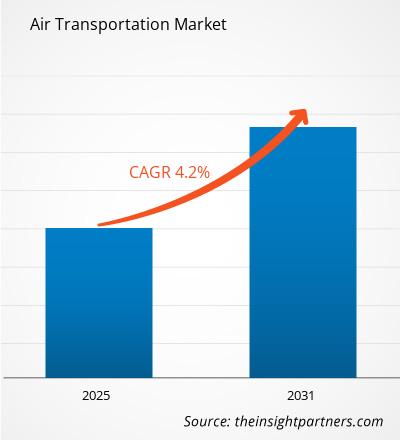
The Air transportation market was valued at US$ 853.93 Billion in 2025 and is projected to reach US$ 1,230 Billion by 2034, expanding at a CAGR of 4.67% during 2026–2034. The industry remains a foundational component of global mobility and trade, supported by growing passenger traffic, cargo movement, fleet modernization programs, and airport infrastructure investments. Network expansion by major carriers and the recovery of international travel corridors continue to reinforce long-term demand across commercial aviation ecosystems.
Across North America, industry participants are benefiting from resilient domestic passenger demand, cargo network optimization, and increasing investments in digital airline operations. The air transportation market size in the region is supported by fleet renewal initiatives, advanced airport infrastructure, and strong airline profitability. Regional expansion is expected to progress at an estimated CAGR of 3.8–4.5% through 2034, aided by sustainability programs and premium travel demand.
Air Transportation Market Assessment and Insights
- North America: Accounted for 31–35% share in 2025 and is expected to grow at a CAGR of 3.8–4.5% during 2026–2034, supported by established airline networks, high passenger volumes, and fleet modernization investments.
- US: Represented 72–76% of North American revenue in 2025 and is anticipated to expand at a CAGR of 3.9–4.6% during 2026–2034, driven by domestic aviation demand and cargo transportation activity.
- Europe: Held 25–29% share in 2025 and is projected to advance at a CAGR of 4.1–4.8% during 2026–2034. Germany, the UK, France, Italy, and Spain remain key aviation hubs.
- Asia Pacific: Captured 28–32% share in 2025 and is forecast to grow at a CAGR of 5.5–6.3% during 2026–2034, led by China, India, Japan, and Southeast Asian markets.
- Largest Segment: International transportation accounted for approximately 56–60% market share in 2025 and is expected to record a CAGR of 4.8–5.4% through 2034 due to expanding cross-border connectivity.
- High Growth Segment: Rotary-wing aircraft transportation represented 10–14% market share in 2025 and is projected to register a CAGR of 5.8–6.6% during 2026–2034, fueled by emergency services and offshore operations.
- Key companies analyzed in detail: Air France-KLM, American Airlines Group Inc., China Southern Airlines Company Limited, Delta Air Lines, Inc., Emirates Group, FedEx Corporation, International Airlines Group S.A., Deutsche Lufthansa AG, Southwest Airlines Co., United Airlines Holdings, Inc.
Source: The Insight Partners' analysis based on proprietary research, government publications, company annual reports, investor presentations, industry databases, and expert interviews.
Innovation in fleet technologies, systems for predictive maintenance, digital ticketing platforms, and fuel efficiency will change the way airlines operate. Airlines are more concerned about optimizing their networks amid capacity utilization, sustainability goals, and improved customer experiences. Increased use of analytics for routing decisions and automated operations has helped to enhance profitability in passenger and cargo aviation operations.
Further development is likely to be characterized by new aviation markets, airport expansion projects, and alternative fuels. The provision of sustainable aviation fuels, air mobility innovations, and regional aviation infrastructure modernization is expected to open up new business opportunities. Regulatory incentives for low-emissions aviation and international connectivity will improve the outlook for the industry.
Air Transportation Market Report Scope
| Report Attribute | Details |
|---|---|
| Market size in 2025 | US$ 853.93 Billion |
| Market Size by 2034 | US$ 1,230. Billion |
| Global CAGR (2026 - 2034) | 4.67% |
| Historical Data | 2021-2024 |
| Forecast period | 2026-2034 |
Air Transportation Market Analysis
The air transportation market growth trajectory is driven by rising international tourism, expanding trade activity, and increasing airline capacity additions. Demand for passengers will continue to be boosted by growing middle classes in developing countries, together with corporate travel. In the supply chain, manufacturers of aircraft, airport companies, maintenance companies, logistics companies, and the airlines themselves all come together to form an integrated transportation system.
Air freight will remain another source of income for airlines, especially in time-critical logistics, pharmaceuticals delivery, and online shopping fulfillment services. Growing e-commerce activity has spurred airlines to improve their dedicated air freight services and utilize the belly space more effectively.
The air transportation market analysis indicates that competition remains concentrated among globally recognized airline groups with extensive international networks and strong brand recognition. Air France-KLM, Delta Air Lines, Inc., Emirates Group, Deutsche Lufthansa AG, International Airlines Group S.A., and United Airlines Holdings, Inc. all remain committed to route diversity, alliances, and fleet upgrades.
Priorities for strategic investments will include purchasing fuel-efficient planes, digital customer engagement systems, and initiatives aimed at reducing carbon emissions. The companies are also enhancing their ancillary revenue sources, cargo operations, and premium services. Competition is now being determined by network coverage, reliability, technology, and retention programs.
● REPORT CUSTOMIZATION
Tailor This Report To Align With Your Specific Business Requirements
This report can be customized to align precisely with your business objectives, scope, and target markets. Customization options include tailored segmentation, geography, competitive analysis, and strategic insights to support informed decision-making.
Customize This Report →WHAT YOU CAN ADJUST
- ● Segmentations
- ● Geography
- ● Competitive Analysis
- ● Language Preferences
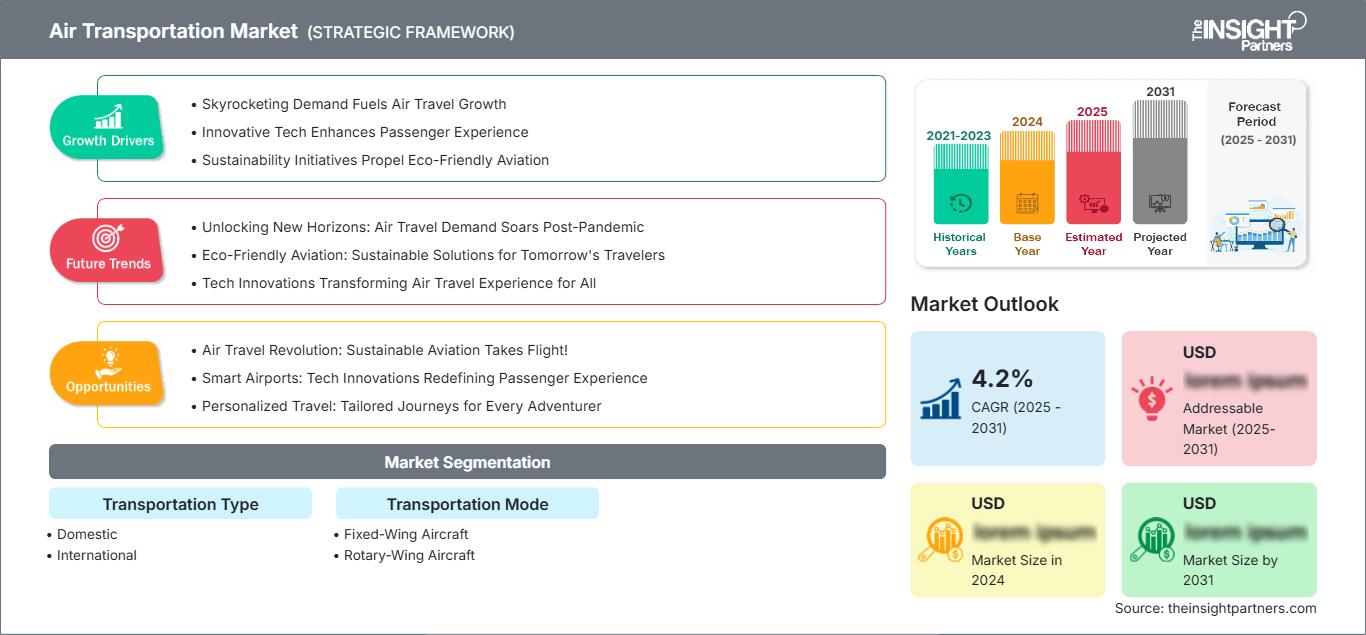
Air Transportation Market: Strategic Insights
Regional Insights
North America Air Transportation Market
North America accounted for 31–35% air transportation market share in 2025 and is projected to advance at a CAGR of 3.8–4.5% during 2026–2034. The presence of mature airports, high domestic travel, and the presence of several leading airlines are key positive factors in this region. Additionally, the level of adoption of digital solutions in the industry, as well as the density of routes, ensures market stability.
Airlines will be actively introducing new-generation planes, implementing predictive maintenance solutions, and improving airport facilities. In addition, cargo operations are also an important part of the aviation industry, especially considering the development of logistics systems and e-commerce.
U.S. Air Transportation Market
The United States represented approximately 72–76% of North American revenue in 2025 and is expected to grow at a CAGR of 3.9–4.6% through 2034. Due to a broad domestic network of routes, strong presence of airlines in the country, and advanced airport infrastructure, the country is well-positioned as the dominant player in the region’s aviation industry.
There are several major airlines operating passenger and cargo flights all over the country, including American Airlines Group Inc., Delta Air Lines, Inc., Southwest Airlines Co., United Airlines Holdings, Inc., and FedEx Corporation. Premium travel demand and business and cargo mobility are still contributing to the market development.
Europe Air Transportation Market
Europe held 25–29% market share in 2025 and is anticipated to record a CAGR of 4.1–4.8% during 2026–2034. Connectivity is highly dense, and there is a well-developed aviation infrastructure. Regulations regarding environmental protection keep encouraging the modernization of fleets and their performance improvement.
The UK and Germany still remain important aviation regions owing to numerous passengers traveling, high demand for business travelers, and the presence of airlines.
London, Frankfurt, and Munich still remain important connectivity hubs both for long-distance and regional flights.
Air traffic in France, Italy, and Spain becomes highly developed owing to the influence of tourism and increasing international connectivity.
International Airlines Group S.A., Deutsche Lufthansa AG, and Air France-KLM occupy dominant positions within the region.
APAC Air Transportation Market
Asia Pacific accounted for 28–32% share in 2025 and is forecast to grow at a CAGR of 5.5–6.3% during 2026–2034. Rapid urbanization, rising disposable incomes, and increasing passenger mobility continue to accelerate aviation demand across the region.
China remains the leading country, while India, Japan, South Korea, and Australia contribute significantly to regional expansion. Airport infrastructure developments, fleet additions, and government support for aviation connectivity strengthen long-term market growth prospects.
Middle East & Africa Air Transportation Market
The Middle East & Africa region is projected to expand at a CAGR of 4.7–5.4% during 2026–2034. Strategic geographic positioning supports transit traffic and long-haul connectivity between major global regions.
The UAE and Saudi Arabia lead regional development through airport expansion and airline investment programs, while South Africa remains an important aviation market. Infrastructure modernization and tourism diversification initiatives continue supporting aviation sector growth.
Segmentation Analysis
Transportation Type
The transportation type segment is expected to expand at a CAGR of 4.6–5.2% during 2026–2034. The air transportation market scope within this segment is broad, encompassing passenger mobility, tourism-related travel, business aviation demand, and global freight movement. Growing international connectivity and airport capacity improvements continue to support segment development.
- Domestic: Maintains strong relevance due to frequency-driven travel demand, regional economic connectivity, and stable passenger traffic across mature as well as emerging aviation markets.
- International: Represents the largest sub-segment, supported by expanding tourism flows, trade routes, global business travel, and increasing airline route networks.
Transportation Mode
The transportation mode segment is projected to grow at a CAGR of 4.8–5.5% during 2026–2034. Technological upgrades, operational efficiency requirements, and mission-specific transportation needs influence adoption patterns across aircraft categories. The segment continues benefiting from fleet modernization and specialized applications.
- Fixed-Wing Aircraft: Dominates market demand due to its central role in commercial passenger transportation, freight logistics, and long-distance connectivity across domestic and international routes.
- Rotary-Wing Aircraft: Gains traction through emergency medical services, offshore energy support, defense mobility, and remote-area transportation requirements across multiple geographies.
Opportunity Snapshot
| Transportation Type | Revenue Contribution | Trend Tag | Adoption Stage |
| Domestic | Medium | Regional Mobility | Mature |
| International | High | Cross-Border Travel | Mature |
Air Transportation Market Growth Drivers and Impact Analysis
Global Recovery of Passenger and Tourism Flows
Increasing international tourism continues to be a significant contributor to the growth of the sector. Travel agencies, airlines, and airports keep developing their capacities to accommodate a higher number of passengers who are being transported on domestic and international routes. High demand for leisure travels, premium travels, and business travels helps in increasing airline revenues and motivates companies to invest in fleet expansion. The growing connection between emerging and developed markets through an increased number of flights also fuels the development of the sector.
Moreover, an increasing number of middle-class individuals, high disposable incomes of consumers, and easy access to online platforms for making travel bookings are other aspects that increase the accessibility of flights to the broader consumer group. Besides that, airlines continue to optimize their schedules, expand their route network, and use more efficient aircraft to ensure the profitability of their operations while at the same time responding to changing preferences of passengers. Thus, these trends continue to ensure the growth of the sector.
Expansion of Air Cargo and E-Commerce Logistics
With the rapid development of the e-commerce fulfillment process, more emphasis is put on air cargo transportation systems. Pharmaceuticals, electronics, fresh food, and valuable goods need fast and reliable transportation solutions in order to ensure their delivery within the shortest period of time. Investments into the improvement of logistics processes are made by the aviation companies: development of cargo terminals, introduction of new technologies that can trace and monitor shipments, automation of warehousing processes, as well as upgrading of the aircraft fleet.
The interconnection of aviation and supply chains plays a significant role in maintaining the demand in stable conditions and providing multiple revenue generation opportunities for the companies when there are passenger traffic changes. Moreover, new solutions like real-time shipment tracking, cold chain logistics, and advanced route optimization contribute to the improved services provided by airlines and help to deliver special goods. With the increasing volumes of global trade processes, air cargo is supposed to remain an important element of logistics networks.
Airport Infrastructure Modernization Programs
Funding from governments and private investors is also being used to build capacity at airports, upgrade terminals, and improve air traffic management. This is necessary in order to cater to the increasing demand for air travel and shipping. Modern airports have played an integral part in facilitating efficient processes and high-quality services at the airports because of the increased investments in technology and infrastructure.
The use of smart airport technology and digital security solutions, along with automation in luggage handling and passenger processing, is helping to ensure better safety and more efficient travel for passengers. The upgraded infrastructure has facilitated more connectivity between different regions, more movement of flights, and improved resiliency within the aviation network. Furthermore, regional airports and transportation connections are also being developed as means of increasing the scope of air travel.
Air Transportation Market Future Trends
Sustainable Aviation Fuel Integration
The air transportation market trends increasingly reflect the industry's transition toward sustainability and emissions reduction. Airlines are expanding procurement agreements for sustainable aviation fuels while governments introduce incentives supporting adoption. Over the coming decade, broader feedstock availability, production scale-up, and regulatory support are likely to improve commercial viability. Organizations are also integrating carbon management initiatives into long-term operating strategies. These developments are expected to influence fleet planning, route economics, supplier relationships, and investment priorities across the global aviation ecosystem.
Digital Aviation Ecosystems and Data-Driven Operations
Artificial Intelligence, predictive analytics, and connectivity in aviation are projected to bring about major changes in airlines' operations through 2034. Maintenance planning that is based on data, dynamic pricing, and increased visibility in terms of operational processes can contribute to increased efficiency and profitability. Passenger experience can be boosted via biometric technology and personalized travel experiences. Airlines that are making substantial investments in their digital transformation programs are likely to secure themselves competitive advantages.
Air Transportation Market Opportunities
Emerging Market Airport Expansion Programs
Large-scale airport infrastructure development projects across Asia, the Middle East, and parts of Africa create substantial investment opportunities. New terminals, runway expansions, and regional connectivity initiatives are expected to increase passenger handling capacity. Investors and infrastructure developers can benefit from growing aviation demand linked to tourism diversification, trade growth, and urbanization. Air transportation market Forecasts indicate particularly attractive opportunities in countries exhibiting sustained economic expansion and rising air travel penetration rates.
Advanced Helicopter and Specialized Aviation Services
Rotary-wing applications continue expanding across emergency response, offshore operations, disaster management, search and rescue, and remote-area connectivity. Increasing demand for rapid transportation and access to difficult-to-reach locations is strengthening the role of helicopters and other specialized rotary-wing aircraft in critical missions. Investors focusing on specialized aviation services may benefit from the growing demand for mission-specific transportation platforms across healthcare, energy, defense, and public safety sectors.
Technological improvements in helicopter safety, fuel efficiency, navigation systems, and operational performance are supporting wider adoption and helping reduce lifecycle operating costs. Partnerships among aviation operators, healthcare providers, government agencies, and energy companies are expected to create favorable conditions for long-term market growth. In addition, rising investments in emergency medical services, offshore wind projects, and disaster-response capabilities are generating new opportunities within specialized aviation segments, supporting sustained demand for advanced rotary-wing solutions.
Frequently Asked Questions

- Comprehensive Market Sizing and Forecast Analysis
- Detailed Segmentation Analysis
- In-Depth Market Dynamics Assessment
- Regional and Country-Level Insights
- Competitive Landscape and Company Benchmarking
- Strategic Business Intelligence
Recent Reports
Testimonials

The Insight Partners' SCADA System Market report is comprehensive, with valuable insights on current trends and future forecasts. The team was highly professional, responsive, and supportive throughout. We are very satisfied and highly recommend their services.
RAN KEDEM Partner, Reali Technologies LTDs
I requested a report on a very specific software market and the team produced the report in a few days. The information was very relevant and well presented. I then requested some changes and additions to the report. The team was again very responsive and I got the final report in less than a week.
JEAN-HERVE JENN Chairman, Future Analytica
We worked with The Insight Partners for an important market study and forecast. They gave us clear insights into opportunities and risks, which helped shape our plans. Their research was easy to use and based on solid data. It helped us make smart, confident decisions. We highly recommend them.
PIYUSH NAGPAL Sr. Vice President, High Beam Global
The Insight Partners delivered insightful, well-structured market research with strong domain expertise. Their team was professional and responsive throughout. The user-friendly website made accessing industry reports seamless. We highly recommend them for reliable, high-quality research services
YUKIHIKO ADACHI CEO, Deep Blue, LLC.
This is the first time I have purchased a market report from The Insight Partners.While I was unsure at first, I visited their web site and felt more comfortable to take the risk and purchase a market report.I am completely satisfied with the quality of the report and customer service. I had several questions and comments with the initial report, but after a couple of dialogs over email with their analyst I believe I have a report that I can use as input to our strategic planning process.Thank you so much for taking the extra time and making this a positive experience.I will definitely recommend your service to others and you will be my first call when we need further market data.
JOHN SUZUKI President and Chief Executive Officer, Board Director, BK Technologies
I wish to appreciate your support and the professionalism you displayed in the course of attending to my request for information regarding to infectious disease IVD market in Nigeria. I appreciate your patience, your guidance, and the fact that you were willing to offer a discount, which eventually made it possible for us to close a deal. I look forward to engaging The Insight Partners in the future, all thanks to the impression you have created in me as a result of this first encounter.
DR CHIJIOKE ONYIA MANAGING DIRECTOR, PineCrest Healthcare Ltd.Reason to Buy
- Informed Decision-Making
- Understanding Market Dynamics
- Competitive Analysis
- Identifying Emerging Markets
- Customer Insights
- Market Forecasts
- Risk Mitigation
- Boosting Operational Efficiency
- Strategic Planning
- Investment Justification
- Tracking Industry Innovations
- Aligning with Regulatory Trends





 Get Free Sample for