
Airway Management Devices Market Key Companies and SWOT Analysis by 2034
Coverage: By Product [Infraglottic Devices (Endotracheal Tubes, Tracheostomy Tubes, and Others), Supraglottic Devices, Resuscitators, Laryngoscopes, Others] and End User (Hospitals, Ambulatory Surgical Care Centers, and Others) and Geography
- Status : Data Released
- Report Code : TIPHE100001284
- Category : Life Sciences
- No. of Pages : 150
- Available Report Formats :


- Last update date : July 16, 2026


2025 Market Size
US$ 2.53 Bn
Base year value
2034 Forecast
US$ 4.70 Bn
Projected by 2034
CAGR 2026-2034
7.1 %
Growth rate
Addressable Market
US$ 32.59 Bn
(2026-2034)
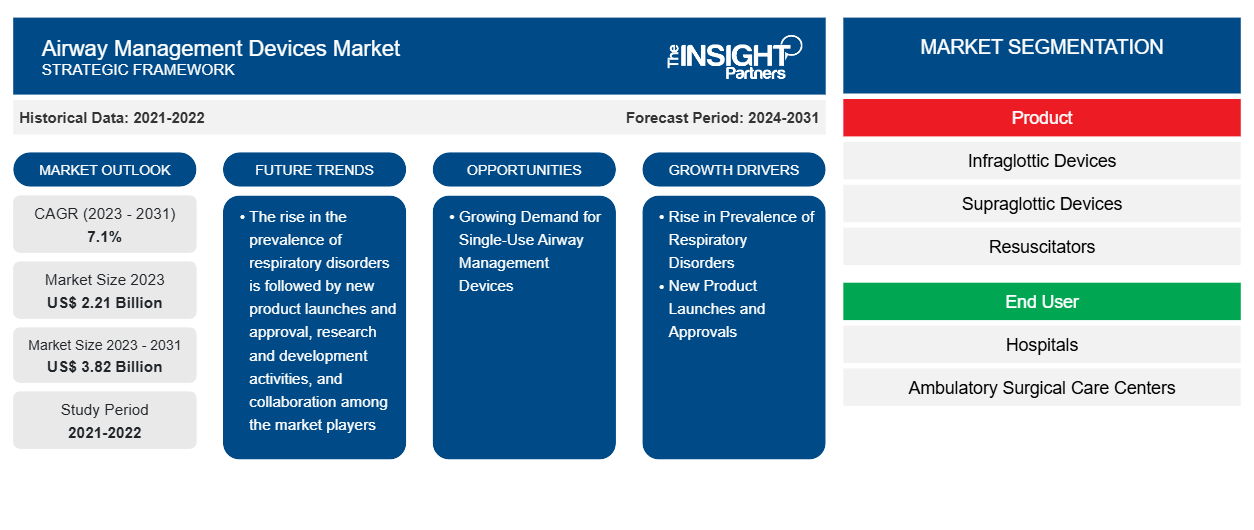
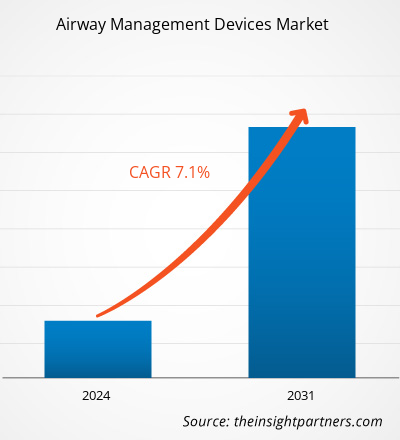
The airway management devices market was valued at US$ 2.53 Billion in 2025 and is projected to reach US$ 4.70 Billion by 2034, expanding at a CAGR of 7.1% during 2026–2034. The market shows continuous adoption in the critical care, emergency medicine, and surgical anesthesia settings, backed by the rise in the number of procedures performed along with respiratory problems. Rising demand for sophisticated airway stabilization solutions is further boosting the airway management devices industry.
North America is expected to expand at a CAGR of 7.0–7.5%, supported by high surgical throughput and strong ICU infrastructure density. The growth in the sector is driven by the rising incidence of chronic respiratory ailments and trauma injuries necessitating the need for emergency airway management. Moreover, the use of standardization and advanced intubation technology is increasingly driving market growth due to investments by hospitals.
Airway Management Devices Market Assessment and Insights
- North America: North America accounts for approximately 40–44% share in 2025, supported by advanced critical care systems and high surgical volumes. The region is projected to grow at a CAGR of 7.0–7.5% (2026–2034), driven by increasing trauma incidence, aging population, and rapid adoption of video-assisted airway technologies across hospitals and emergency response units.
- US: The United States holds nearly 65–70% of North America’s airway management devices market share in 2025, with growth aligned to rising ICU admissions and outpatient surgical expansion. The market is projected to grow steadily at a CAGR of 7.0–7.5%, supported by strong reimbursement frameworks and continuous technological innovation.
- Europe: Europe represents around 25–28% share in 2025, growing at a CAGR of 6.8–7.2%, led by Germany, the UK, France, Italy, and Spain. Demand is driven by structured anesthesia protocols, rising geriatric population, and increasing emphasis on perioperative safety standards across public healthcare systems.
- Asia Pacific: Asia Pacific holds approximately 22–26% share in 2025, expanding at a CAGR of 7.5–8.2%, led by China, India, Japan, South Korea, and Australia. Growth is supported by hospital expansion, rising emergency care access, and increasing investments in surgical infrastructure modernization.
- Largest Segment (Supraglottic Devices): Supraglottic devices account for 34–38% share in 2025, growing at a CAGR of 7.0–7.6%, driven by ease of insertion, reduced airway trauma risk, and increasing use in outpatient and emergency procedures.
- High Growth Segment (Laryngoscopes): Laryngoscopes represent 8–12% share in 2025, growing at a CAGR of 7.8–8.5%, supported by rapid adoption of video laryngoscopy systems and improved visualization in difficult airway management cases.
- Key companies analyzed in detail: Teleflex Incorporated, Smiths Medical, Medtronic, Intersurgical Ltd, Ambu A/S, Medline Industries, Inc, Koninklijke Philips N.V., Armstrong Medical, Mercury Medical
Source: The Insight Partners' analysis based on proprietary research, government publications, company annual reports, investor presentations, industry databases, and expert interviews.
The airway management devices market forecast highlights that the market has evolved significantly from conventional reusable tools to technologically advanced, single-use, and video-assisted systems. Previous reliance on simple laryngoscopes and endotracheal tubes has shifted to systems for airway visualization that incorporate both a laryngoscope and a supraglottic device designed for quick use during an emergency. Companies have turned their attention towards infection control, ergonomics, and integration into digital monitoring devices, which are affecting procurement priorities in hospitals and surgery centers.
The Airway Management Devices market report highlights strong alignment with global surgical expansion and emergency care modernization. An emphasis on patient safety and fewer airway complications through regulation is leading to greater standardization of devices across healthcare organizations. In developing markets in Asia Pacific and Latin America, there is greater capital investment in operating room infrastructure, whereas developed markets are making efforts towards technological advancements and process efficiency.
Airway Management Devices Market Report Scope
| Report Attribute | Details |
|---|---|
| Market size in 2025 | US$ 2.53 Billion |
| Market Size by 2034 | US$ 4.70 Billion |
| Global CAGR (2026 - 2034) | 7.1% |
| Historical Data | 2021-2024 |
| Forecast period | 2026-2034 |
Airway Management Devices Market Analysis
Growth in demand for airway management products is primarily driven by rising rates of respiratory failure, injuries, and anesthesia-related surgeries. The value chain encompasses suppliers of raw materials, manufacturers, distribution channels, and procurement, with hospitals continuing to dominate the application area. Complexity in surgeries and rising ICU admissions have helped create more consistent demand, while ambulatory surgical centers are aiding the faster adoption of portable and disposable airway management products. The airway management devices market size continues to expand due to procedural volume growth and critical care modernization.
Supply dynamics are increasingly driven by innovations in disposable devices, cost-effective production, and regulations. Teleflex Incorporated and Medtronic have shifted their strategy towards diversifying their products within the intubation and supraglottic groups. Ambu A/S is now dominating in single use visualization products and better results in infection control. The market has become consolidated owing to incremental innovations by medical technology corporations rather than disruptive redesigns, which support the market with sustainable growth.
The competitive dynamics indicate that this market is moderately consolidated, as industry leaders have been actively developing video-assisted technologies for airways and training-integrated products. Smiths Medical and Koninklijke Philips N.V. are paying particular attention to the integration of airway monitoring systems, while Intersurgical Ltd and Armstrong Medical prefer cost-efficient consumables for respiratory care. The establishment of strategic partnerships with hospital networks and emergency response organizations is a common practice, as it guarantees long-term procurement agreements. Investments are currently moving towards AI-driven airway visualization and remote guidance systems, as well as disposable device platforms.
● REPORT CUSTOMIZATION
Tailor This Report To Align With Your Specific Business Requirements
This report can be customized to align precisely with your business objectives, scope, and target markets. Customization options include tailored segmentation, geography, competitive analysis, and strategic insights to support informed decision-making.
Customize This Report →WHAT YOU CAN ADJUST
- ● Segmentations
- ● Geography
- ● Competitive Analysis
- ● Language Preferences
Airway Management Devices Market: Strategic Insights
Regional Insights
North America Airway Management Devices Market
North America continues to be the key region in terms of the market due to well-established healthcare infrastructure, high ICU bed capacity, and procedural volumes in emergency as well as elective surgery cases. North America holds a share of about 40-44% in 2025 with a CAGR of 7.0-7.5% from 2026 to 2034. The increase in the demand for devices stems from an increasing burden of respiratory diseases and trauma patients in urban healthcare facilities.
Structural growth is driven by stable reimbursement and technological advancements within the hospital procurement system. The U.S. and Canada are focusing on standardizing airway protocols, thereby ensuring consistency in their adoption across emergency departments. Increased use of training simulators and airway visualization with the help of AI is increasing the proficiency of clinicians. Moreover, the supply chain's maturity and the presence of leading global manufacturers ensure continued product availability.
U.S. Airway Management Devices Market
The United States represents the largest national contributor within North America, accounting for nearly 65–70% of regional demand in 2025. Market growth will be fueled by high rate of surgeries, increase in cases of chronic obstructive pulmonary disease, and more emergencies. Market is expected to grow with a CAGR of 7.0–7.5% (2026–2034) due to rapid adoption of innovative intubation devices and increased number of surgical procedures conducted on an outpatient basis.
Adoption of technology is most notable for video laryngoscopy and disposable airways. Procurement cycles have been led by large hospital chains and trauma centers, with increasing use of digital airway management systems. The presence of major players such as Medtronic and Teleflex Incorporated ensures the successful diffusion of innovation within hospitals. Even ambulatory surgical centers are contributing to growth in demand owing to cost-effective, single-use airway products.
Europe Airway Management Devices Market
Europe holds an estimated 25%–30% share of the market in 2025, supported by developed healthcare systems and strong medical device standards. The region is expected to grow at approximately 5.5%–6.5% CAGR from 2026 to 2034, with Germany representing one of the leading markets.
The UK market is favored by the existing healthcare infrastructure networks and a growing emphasis on preparedness for emergency care. Germany is an adopter because of its highly developed hospitals and health care technology. The French, Italians, and Spanish markets play their role through the development of surgical services and healthcare facilities.
APAC Airway Management Devices Market
APAC is projected to hold a market share of 22%–27% in 2025 and is anticipated to witness growth at a CAGR of 8.0%–9.0% by 2034. Important regions in APAC that are contributing to the growth include China, Japan, South Korea, India, and Australia.
The demand from China is highest due to its investments in the healthcare sector and development of hospitals. India profits from healthcare infrastructure development, and Japan and South Korea are supportive in terms of technological adoption. The government programs enhancing healthcare access and private sector involvement in healthcare are making the region more attractive.
Middle East & Africa Airway Management Devices Market
The Middle East & Africa Airway Management Devices Market represents an emerging opportunity, supported by healthcare infrastructure investments and increasing demand for advanced medical equipment. The region is modelled to grow at approximately 6.0%–7.0% CAGR between 2026 and 2034.
Saudi Arabia and the UAE are key markets due to healthcare modernization programs and investments in specialized medical facilities. South Africa contributes through established healthcare networks, while other MEA countries are gradually improving critical care capacity. Infrastructure development and healthcare diversification initiatives continue supporting adoption.
Segmentation Analysis
Product
The Product segment in the market demonstrates strong clinical relevance due to its direct role in securing and maintaining patient airways across surgical and emergency settings. The segment encompasses infraglottic devices, supraglottic devices, resuscitators, and laryngoscopes, each addressing distinct airway intervention requirements. Rising surgical volumes, increasing ICU admissions, and growth in emergency trauma cases are reinforcing demand consistency. The segment is estimated to expand at a CAGR of 7.0–7.4% (2026–2034), supported by continuous innovation in visualization-enabled and single-use airway technologies. Hospitals are increasingly shifting toward integrated airway systems that improve intubation success rates and reduce procedural complications.
- Infraglottic Devices: These instruments are widely used for airway management, including insertion of a tube into the trachea. The demand for these tools comes from emergency trauma care and anesthesia, which require immediate airway management to stabilize the patient.
- Supraglottic Devices: These are gaining strong traction due to ease of insertion and reduced need for advanced clinical expertise. They are increasingly used in ambulatory surgical centers and emergency settings where fast airway control is required without invasive intubation.
- Resuscitators: These devices play a crucial role in pre-hospital and emergency care environments, especially in cardiac arrest and respiratory failure cases. Adoption is driven by increasing emergency response infrastructure and emphasis on immediate oxygenation support.
- Laryngoscopes: This sub-segment is evolving rapidly with the adoption of video laryngoscopy systems. Enhanced visualization, improved intubation accuracy, and reduced airway trauma risk are key factors driving demand across hospitals and emergency departments.
End User
The End User segment is a critical determinant of adoption patterns in the market, primarily driven by hospitals and ambulatory surgical care centers. Hospitals dominate due to high patient inflow, complex surgical procedures, and strong ICU infrastructure. Ambulatory surgical centers are gaining momentum due to cost efficiency and increasing preference for minimally invasive procedures. The segment is projected to grow at a CAGR of 7.1–7.6% (2026–2034), supported by expansion of outpatient surgical volumes and emergency care accessibility improvements.
- Hospitals: Hospitals remain the primary adoption hub due to high surgical intensity, emergency admissions, and advanced critical care infrastructure. Demand is further reinforced by standardized airway management protocols and increasing investment in video-assisted airway technologies.
- Ambulatory Surgical Care Centers: These centers are witnessing accelerated adoption of portable and disposable airway devices. Growth is driven by outpatient surgical expansion, lower procedural costs, and increasing preference for same-day discharge procedures.
Opportunity Snapshot
| Segment Name | Revenue Contribution | Trend Tag | Adoption Stage |
| Hospitals | High | Critical Care | Mature |
| Ambulatory Surgical Care Centers | Medium | Outpatient Shift | Scaling |
Airway Management Devices Market Growth Drivers and Impact Analysis
Rising Burden of Respiratory and Chronic Diseases
Increasing prevalence of chronic respiratory conditions such as COPD, asthma, and sleep apnea is significantly driving demand in the airway management devices market. Growing numbers of elderly patients, coupled with increasing exposure to pollution, will result in more people requiring airway management during exacerbations of their condition or surgical procedures. Hospitals have observed increased admissions to ICUs owing to respiratory failure, resulting in increased demand for laryngoscopes, supraglottic devices, and resuscitators. Such disease prevalence is creating constant pressure on healthcare systems, leading to investment in airway stabilization equipment.
Expansion of Surgical and Critical Care Procedures
The increasing trend towards elective surgeries and emergencies has been a major factor driving growth in the use of airway devices. The growing incidence of cardiovascular diseases, trauma patients, and cancer surgery has increased the need for anesthetic services. The operating theaters and ICU units are increasingly opting for innovative airway devices to ensure safety and minimize risk during surgeries. The increase in the number of ambulatory surgery centers has been contributing to the demand for portable, disposable airway devices.
Technological Advancements in Airway Visualization Systems
Technological innovation is reshaping the airway management devices market through the introduction of video laryngoscopy, integrated airway monitoring systems, and disposable device platforms. The developments enable better visualization, help reduce the rate of intubation failure, and increase patient safety during complex airway management procedures. Nowadays, manufacturers are increasingly focused on designing ergonomic products and developing AI-guided systems to help physicians work in stressful conditions. The integration of digital feedback technologies is leading to higher training success and improved procedure efficiency. Innovations from market leaders are driving faster replacement cycles of conventional devices.
Airway Management Devices Market Future Trends
Shift Toward Single-Use and Infection-Control-Oriented Devices
A significant airway management devices market trend is the rapid shift toward single-use and disposable airway systems. More hospitals have made preventing infections a top priority as awareness of hospital-acquired infections and cross-contamination has increased. Single-use laryngoscopes, supraglottic tools, and resuscitators are becoming increasingly popular due to their low sterilization requirements and operational effectiveness. Moreover, this change is prompted by the regulatory push to enhance patient safety and reduce costs associated with high-throughput surgery. Thus, manufacturers produce economical disposable products that meet the required efficacy standards.
Integration of Digital and AI-Assisted Airway Management Systems
The integration of digital technologies and artificial intelligence into airway management devices is emerging as a transformative trend. AI-assisted video laryngoscopes are contributing to higher first-pass intubation success rates and fewer procedure-related complications. Real-time imaging, cloud-based platforms, and predictive analytics are contributing to better decision-making by clinicians when performing airway procedures. Many hospitals are opting for smart airway systems that track and analyze data to improve the quality of procedures. AI-assisted airway management will be an important part of healthcare systems around the globe as time passes.
Airway Management Devices Market Opportunities
Expansion in Emerging Healthcare Infrastructure
Developing nations offer major prospects for players in the airway devices industry owing to substantial development in their healthcare infrastructure and increasing availability of surgical services. The nations from the APAC region, Latin America, and some other countries in the Middle East region are undertaking aggressive activities to develop hospitals and improve ICUs as well as emergency services. Such trends have led to the rise in demand for affordable and scalable solutions for airway management. Companies with a strategy of mid-tier prices and robust device portfolio can leverage such market trends effectively. Collaboration with the health care schemes of governments and hospital chains is another factor driving their success.
Growth in Ambulatory and Outpatient Surgical Demand
The expansion of ambulatory surgical centers represents a major growth opportunity in the airway management devices market. The increasing inclination towards same-day surgical procedures is driving demand for lightweight, easy-to-use disposable airway equipment. There is a need for efficient solutions that can reduce infection risks and shorten preparation time. More manufacturers are developing lightweight airway kits that can be used once and thrown away, specifically designed for use in centers offering outpatient surgeries. The value-based health care movement is also pushing the adoption of efficient airway management solutions that will help reduce hospital stays and procedure costs.
Recent Developments
- March 2026: Medtronic plc — Medtronic announced an expanded portfolio update for its airway and respiratory intervention solutions, focusing on next-generation video-assisted intubation platforms and enhanced single-use airway devices. The update emphasizes improved visualization accuracy and workflow efficiency in emergency and surgical settings, alongside expanded training modules for clinicians across hospital networks in North America and Europe. The initiative aligns with increasing demand for infection-control-oriented airway solutions.
- November 2025: Ambu A/S — Ambu A/S introduced enhancements to its single-use bronchoscopy and airway visualization systems, strengthening its position in disposable airway technologies. The development focuses on reducing cross-contamination risks while improving first-pass intubation success rates in critical care environments. The company also expanded distribution agreements across Asia Pacific hospitals to support growing demand for emergency airway management solutions.
- July 2025: Teleflex Incorporated — Teleflex Incorporated expanded its airway management portfolio through product upgrades in supraglottic airway devices and endotracheal tube systems. The development targets improved patient safety and reduced procedure complexity in operating rooms and emergency departments. The company emphasized integration with standardized hospital airway protocols and increased adoption in ambulatory surgical centers globally.
Frequently Asked Questions

- Comprehensive Market Sizing and Forecast Analysis
- Detailed Segmentation Analysis
- In-Depth Market Dynamics Assessment
- Regional and Country-Level Insights
- Competitive Landscape and Company Benchmarking
- Strategic Business Intelligence
Recent Reports
Testimonials

The Insight Partners' SCADA System Market report is comprehensive, with valuable insights on current trends and future forecasts. The team was highly professional, responsive, and supportive throughout. We are very satisfied and highly recommend their services.
RAN KEDEM Partner, Reali Technologies LTDs
I requested a report on a very specific software market and the team produced the report in a few days. The information was very relevant and well presented. I then requested some changes and additions to the report. The team was again very responsive and I got the final report in less than a week.
JEAN-HERVE JENN Chairman, Future Analytica
We worked with The Insight Partners for an important market study and forecast. They gave us clear insights into opportunities and risks, which helped shape our plans. Their research was easy to use and based on solid data. It helped us make smart, confident decisions. We highly recommend them.
PIYUSH NAGPAL Sr. Vice President, High Beam Global
The Insight Partners delivered insightful, well-structured market research with strong domain expertise. Their team was professional and responsive throughout. The user-friendly website made accessing industry reports seamless. We highly recommend them for reliable, high-quality research services
YUKIHIKO ADACHI CEO, Deep Blue, LLC.
This is the first time I have purchased a market report from The Insight Partners.While I was unsure at first, I visited their web site and felt more comfortable to take the risk and purchase a market report.I am completely satisfied with the quality of the report and customer service. I had several questions and comments with the initial report, but after a couple of dialogs over email with their analyst I believe I have a report that I can use as input to our strategic planning process.Thank you so much for taking the extra time and making this a positive experience.I will definitely recommend your service to others and you will be my first call when we need further market data.
JOHN SUZUKI President and Chief Executive Officer, Board Director, BK Technologies
I wish to appreciate your support and the professionalism you displayed in the course of attending to my request for information regarding to infectious disease IVD market in Nigeria. I appreciate your patience, your guidance, and the fact that you were willing to offer a discount, which eventually made it possible for us to close a deal. I look forward to engaging The Insight Partners in the future, all thanks to the impression you have created in me as a result of this first encounter.
DR CHIJIOKE ONYIA MANAGING DIRECTOR, PineCrest Healthcare Ltd.Reason to Buy
- Informed Decision-Making
- Understanding Market Dynamics
- Competitive Analysis
- Identifying Emerging Markets
- Customer Insights
- Market Forecasts
- Risk Mitigation
- Boosting Operational Efficiency
- Strategic Planning
- Investment Justification
- Tracking Industry Innovations
- Aligning with Regulatory Trends





 Get Free Sample for