
Oxygen Therapy Equipment Market Trends, Share & Demand by 2034
Coverage: By Product (Oxygen Concentrators, Oxygen Delivery Devices, Liquid Oxygen Devices, Oxygen Cylinders), Application (COPD, Respiratory Diseases, Asthma, and Others), End User (Hospitals, Ambulatory Surgical Centers and Homecare Settings) , and Geography (North America, Europe, Asia Pacific, and South and Central America)
- Status : Data Released
- Report Code : TIPMD00002254
- Category : Life Sciences
- No. of Pages : 150
- Available Report Formats :


- Last update date : March 23, 2026


2025 Market Size
US$ 3.89 Bn
Base year value
2034 Forecast
US$ 7.10 Bn
Projected by 2034
CAGR 2026-2034
6.91 %
Growth rate
Addressable Market
US$ 49.63 Bn
(2026-2034)
The global Oxygen Therapy Equipment Market size is projected to reach US$ 7.10 billion by 2034 from US$ 3.89 billion in 2025. The market is anticipated to register a CAGR of 6.91% during the forecast period 2026–2034.
Key market dynamics include a rising global incidence of chronic respiratory diseases like COPD and asthma, an aging population requiring long-term respiratory support, and a significant shift toward decentralized home healthcare. Additionally, the market is expected to benefit from the development of high-flow nasal cannula systems, the expansion of healthcare infrastructure in emerging economies, and the increasing integration of digital monitoring tools to improve patient adherence.
Oxygen Therapy Equipment Market Analysis
The oxygen therapy equipment market analysis shows a transition toward high-mobility, patient-centric solutions as healthcare providers seek to reduce hospital readmission rates. Procurement trends indicate the market is moving toward lightweight, long-battery-life devices that support active lifestyles. Strategic opportunities are emerging in the integration of AI and IoT, where smart oxygen systems can adjust flow rates based on real-time physiological data, offering a clear competitive advantage over traditional manual systems. The analysis also notes that market expansion depends on the streamlining of reimbursement policies for home-based care and the efficiency of distribution networks for medical gases. Competitive differentiation now depends on providing integrated service models that combine hardware with telehealth platforms, helping manufacturers secure long-term contracts with large healthcare networks.
Oxygen Therapy Equipment Market Overview
Oxygen therapy equipment has advanced from bulky stationary tanks to sleek, portable, and clinically advanced systems. The oxygen therapy equipment includes high-purity concentrators, liquid oxygen storage, and specialized delivery interfaces. Both global med-tech leaders and regional respiratory specialists compete in this market, utilizing technologies like pressure swing adsorption and pulse-dose delivery. Growing demand for portable oxygen solutions among elderly populations in North America and Europe has increased the popularity of mobile concentrators as a standard for respiratory wellness. North America leads in revenue due to high diagnosis rates and established insurance coverage, while Asia-Pacific region is advancing through rapid hospital expansion and increasing awareness of respiratory health. The US represents a mature and highly developed landscape for respiratory care, characterized by advanced infrastructure and a high prevalence of chronic lung conditions. Market growth is fueled by a rapidly aging population, increasing home healthcare adoption, and a strong regulatory emphasis on technological innovation and portable medical solutions.
Market Assessment and Insights
- Global market for Oxygen Therapy Equipment was valued at US$ 3.89 Billion in 2025
- Annual market size is expected to reach US$ 7.10 Billion by 2034
- Total addressable market (TAM) during 2026-2034 is projected to reach approximately US$ 49.63 Billion
- Market is anticipated to register a CAGR of 6.91% during the forecast period
- The United States represents a key market, supported by Increasing Prevalence of Respiratory Disorders, Rapid Growth in the Geriatric Population, as well as evolving industry dynamics
- Market analysis covers North America, Europe, Asia-Pacific, South and Central America, Middle East and Africa, with growth evaluated across the forecast period
- Market opportunities such as Preference Towards Home-Based Oxygen Therapy, Increasing Focus of Market Players on Emerging Countries, Increasing Usage of Telemedicine and Telemonitoring are expected to influence market dynamics and addressable market
- Report profiles industry participants, including Koninklijke Philips N.V, Smiths Medical (A Division of Smiths Group PLC), Teleflex Incorporated, Linde Healthcare, Fisher & Paykel Healthcare Limited., Invacare Corporation, Inogen, Sunset Healthcare Solutions Inc, Care Enterprise Co., Ltd, Salter Labs, while analyzing competitive strategies and innovation developments
-
Source: The Insight Partners' analysis based on proprietary research, government publications, company annual reports, investor presentations, industry databases, and expert interviews.
● REPORT CUSTOMIZATION
Tailor This Report To Align With Your Specific Business Requirements
This report can be customized to align precisely with your business objectives, scope, and target markets. Customization options include tailored segmentation, geography, competitive analysis, and strategic insights to support informed decision-making.
Customize This Report →WHAT YOU CAN ADJUST
- ● Segmentations
- ● Geography
- ● Competitive Analysis
- ● Language Preferences
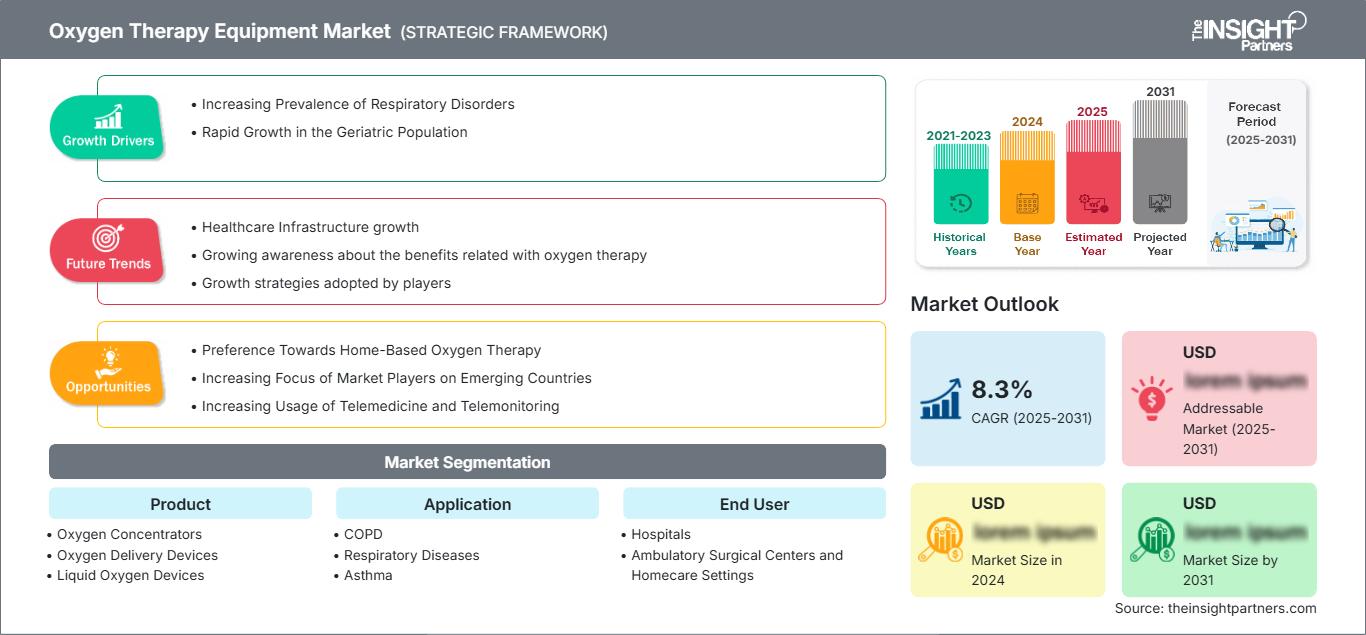
Oxygen Therapy Equipment Market: Strategic Insights
-
Get Top Key Market Trends of this report.This FREE sample will include data analysis, ranging from market trends to estimates and forecasts.
Oxygen Therapy Equipment Market Drivers and Opportunities
Market Drivers:
- Rising Prevalence of Chronic Obstructive Pulmonary Disease: As a leading cause of global morbidity, the high volume of COPD patients requiring supplemental oxygen is the primary driver of market volume.
- Advancements in Portability and Battery Technology: The miniaturization of components has made portable oxygen concentrators more practical for daily use, driving replacement demand for traditional cylinders.
- Shift Toward Home-Based Respiratory Care: Increasing healthcare costs are pushing payers and patients toward home-care settings, where oxygen therapy equipment serves as a cost-effective alternative to prolonged hospital stays.
Market Opportunities:
- Expansion of Telehealth and Remote Monitoring: There is a significant opportunity to embed connectivity features in oxygen devices, allowing clinicians to monitor patient saturation levels and device performance remotely.
- Growth in High-Flow Therapy for Non-ICU Settings: Adapting high-flow nasal cannula technology for use in general wards and home care can improve outcomes for patients with acute respiratory failure.
- Untapped Potential in Emerging Markets: Increasing medical oxygen access in low-and-middle-income countries through government-backed infrastructure projects offers a massive long-term growth corridor.
Oxygen Therapy Equipment Market Report Segmentation Analysis
The Oxygen Therapy Equipment Market share is analyzed across various segments to provide a clearer understanding of its structure, growth potential, and emerging trends. Below is the standard segmentation approach used in most industry reports:
By Product:
- Oxygen Concentrators: The leading segment by revenue, preferred for their ability to provide a continuous supply of oxygen without the need for frequent refills.
- Oxygen Delivery Devices: Includes masks and cannulas; this segment sees consistent demand as essential consumables in every therapy session.
- Liquid Oxygen Devices: Favored for high-flow requirements and long-term stationary use, particularly in clinical settings.
- Oxygen Cylinders: Remains a critical backup and primary source in regions with limited electricity or for short-term emergency use.
By Application:
- COPD: The dominant application segment due to the chronic nature of the disease and the necessity of long-term oxygen therapy for survival.
- Respiratory Diseases: Covers a broad range of conditions, including pneumonia and bronchitis, that require acute oxygen intervention.
- Asthma: A growing segment as severe asthma cases increasingly require supplemental oxygen during exacerbations.
- Others: Includes sleep apnea, cystic fibrosis, and pulmonary hypertension.
By End User:
- Hospitals: The primary channel for acute care, emergency departments, and intensive care units.
- Ambulatory Surgical Centers and Homecare Settings: The fastest-growing end-user segment, driven by the trend of aging-in-place and the availability of portable equipment.
By Geography:
- North America
- Europe
- Asia Pacific
- South & Central America
- Middle East & Africa
Oxygen Therapy Equipment Market Report Scope
| Report Attribute | Details |
|---|---|
| Market size in 2025 | US$ 3.89 Billion |
| Market Size by 2034 | US$ 7.10 Billion |
| Global CAGR (2026 - 2034) | 6.91% |
| Historical Data | 2021-2024 |
| Forecast period | 2026-2034 |
| Segments Covered |
By Product
|
| Regions and Countries Covered |
North America
|
| Market leaders and key company profiles |
|
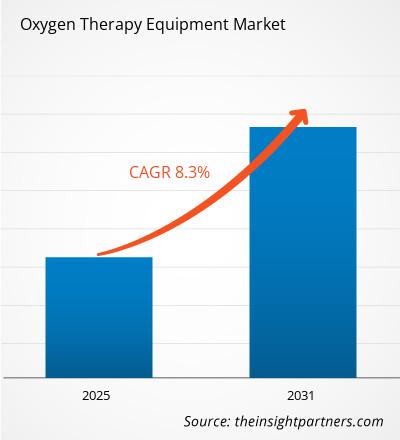
Oxygen Therapy Equipment Market Players Density: Understanding Its Impact on Business Dynamics
The Oxygen Therapy Equipment Market is growing rapidly, driven by increasing end-user demand due to factors such as evolving consumer preferences, technological advancements, and greater awareness of the product's benefits. As demand rises, businesses are expanding their offerings, innovating to meet consumer needs, and capitalizing on emerging trends, which further fuels market growth.
Oxygen Therapy Equipment Market Share Analysis by Geography
Asia-Pacific region is expected to grow fastest in the coming years, while North America and Europe maintain stable dominance due to high diagnosis rates and sophisticated respiratory care networks. Emerging markets in South & Central America, the Middle East, and Africa are increasingly formalizing their oxygen supply chains, offering substantial untapped opportunities for global equipment manufacturers and medical gas suppliers.
The oxygen therapy equipment market is undergoing a significant transformation, moving from a hospital-centric critical care model to a global, patient-led home care ecosystem. Growth is driven by the rising prevalence of COPD and asthma, the surge in demand for portable life-support technologies, and the expansion of the digital health sector. Below is a summary of market share and trends by region:
North America
- Market Share: Holds the largest share globally, anchored by the United States’ highly developed respiratory care infrastructure.
- Key Drivers:
- High incidence of chronic respiratory conditions like COPD and sleep apnea.
- Favorable reimbursement policies for long-term oxygen therapy (LTOT) and homecare equipment.
- Strong presence of industry leaders like Inogen and Invacare driving localized innovation.
- Trends: Rapid transition from stationary cylinders to smart, portable oxygen concentrators (POCs) that integrate with smartphone apps for health tracking.
Europe
- Market Share: Represents a substantial portion of the market, driven by aging populations in nations such as Germany, France, and the UK.
- Key Drivers:
- Strong government-funded healthcare systems prioritizing chronic disease management.
- Stringent quality and safety standards (CE marking) promoting high-performance equipment.
- Rising focus on non-invasive ventilation (NIV) in geriatric care.
- Trends: A strategic shift toward energy-efficient devices and the implementation of tele-monitoring services to reduce the burden on public hospitals.
Asia-Pacific
- Market Share: The fastest-growing region, with a projected growth rate.
- Key Drivers:
- Massive urban populations in China and India are facing high pollution levels and rising smoking rates.
- Rapid expansion of private hospital chains and ambulatory surgical centers.
- Government initiatives to improve medical oxygen security following global health crises.
- Trends: Heavy reliance on e-commerce for retail concentrator sales and a surge in local manufacturing to provide cost-effective alternatives to Western brands.
South and Central America
- Market Share: An emerging market with significant growth in countries like Brazil and Chile.
- Key Drivers:
- Increasing modernization of urban healthcare facilities and emergency response services.
- Growing awareness of the nutritional and physiological benefits of supplemental oxygen for recovery.
- Trends: Expansion of home-based respiratory services and a growing interest in lightweight portable cylinders for rural medical transport.
Middle East and Africa
- Market Share: A developing market with a focus on formalizing commercial medical gas production.
- Key Drivers:
- High demand for robust, heat-resistant equipment suitable for arid climates.
- Strategic investments in healthcare smart cities in the GCC region to reduce reliance on foreign medical imports.
- Trends: Implementation of modern logistics and refrigeration technologies to improve oxygen delivery to remote regions.
High Market Density and Competition
Competition is intensifying due to the presence of established leaders such as Philips Healthcare, Invacare Corporation, and Chart Industries. Regional innovators and niche players also contribute to a diverse and rapidly expanding market landscape. This competitive environment pushes vendors to differentiate through:
- Technical Innovation: Developing pulse-dose technology that synchronizes oxygen delivery with the patient’s breathing pattern to conserve supply and improve comfort.
- Product Diversification: Offering a full spectrum of solutions from heavy-duty hospital systems to ultra-light wearable units for travel.
- Supply Chain Resilience: Establishing local manufacturing and service centers to ensure the rapid delivery of equipment and maintenance services.
- Integrated Digital Platforms: Using cloud-based software to track compliance, which is increasingly required for insurance reimbursement.
Opportunities and Strategic Moves
- Homecare Expansion: Partner with private insurance providers and homecare agencies to capitalize on the shift from hospital stays to long-term at-home respiratory management.
- Emerging Market Penetration: Form strategic joint ventures with local distributors in the APAC and MEA regions to navigate regulatory hurdles and tap into government-funded infrastructure projects.
- Technological Diversification: Invest in high-flow nasal cannula (HFNC) and non-rebreather mask technologies to cater to the growing post-acute care and emergency response segments.
Major Companies operating in the Oxygen Therapy Equipment Market are:
- Koninklijke Philips N.V
- Smiths Medical (A Division of Smiths Group PLC)
- Teleflex Incorporated
- Linde Healthcare
- Fisher & Paykel Healthcare Limited.
- Invacare Corporation
- Inogen
- Sunset Healthcare Solutions Inc
- Care Enterprise Co., Ltd
- Salter Labs
Disclaimer: The companies listed above are not ranked in any particular order.
Oxygen Therapy Equipment Market News and Recent Developments
- In February 2026, Unitaid and PATH announced the launch of a four-year initiative – Innovations for Enhanced Access to Oxygen (INNOVATE) – to pilot breakthrough oxygen technologies and scalable business models aimed at ensuring a reliable, affordable supply of medical oxygen in low- and middle-income countries, where millions of patients still lack access to this lifesaving treatment.
- In June 2025, Inogen, Inc. announced the launch of VoxiTM 5, a new stationary oxygen concentrator (SOC) designed to enhance access to high-quality oxygen therapy for long-term care patients in the United States. As the latest addition to Inogen's product portfolio, Voxi 5 augments the company’s line of portable oxygen concentrators, significantly expanding the market potential while leveraging existing sales channels.
Oxygen Therapy Equipment Market Report Coverage and Deliverables
The Oxygen Therapy Equipment Market Size and Forecast (2021–2034) report provides a detailed analysis of the market covering below areas:
- Oxygen Therapy Equipment Market size and forecast at global, regional, and country levels for all the key market segments covered under the scope
- Oxygen Therapy Equipment Market trends, as well as market dynamics such as drivers, restraints, and key opportunities
- Detailed PEST and SWOT analysis
- Oxygen Therapy Equipment Market analysis covering key market trends, global and regional framework, major players, regulations, and recent market developments
- Industry landscape and competition analysis covering market concentration, heat map analysis, prominent players, and recent developments in the Oxygen Therapy Equipment Market.
- Detailed company profiles
Frequently Asked Questions

- Comprehensive Market Sizing and Forecast Analysis
- Detailed Segmentation Analysis
- In-Depth Market Dynamics Assessment
- Regional and Country-Level Insights
- Competitive Landscape and Company Benchmarking
- Strategic Business Intelligence
Recent Reports
Testimonials

The Insight Partners' SCADA System Market report is comprehensive, with valuable insights on current trends and future forecasts. The team was highly professional, responsive, and supportive throughout. We are very satisfied and highly recommend their services.
RAN KEDEM Partner, Reali Technologies LTDs
I requested a report on a very specific software market and the team produced the report in a few days. The information was very relevant and well presented. I then requested some changes and additions to the report. The team was again very responsive and I got the final report in less than a week.
JEAN-HERVE JENN Chairman, Future Analytica
We worked with The Insight Partners for an important market study and forecast. They gave us clear insights into opportunities and risks, which helped shape our plans. Their research was easy to use and based on solid data. It helped us make smart, confident decisions. We highly recommend them.
PIYUSH NAGPAL Sr. Vice President, High Beam Global
The Insight Partners delivered insightful, well-structured market research with strong domain expertise. Their team was professional and responsive throughout. The user-friendly website made accessing industry reports seamless. We highly recommend them for reliable, high-quality research services
YUKIHIKO ADACHI CEO, Deep Blue, LLC.
This is the first time I have purchased a market report from The Insight Partners.While I was unsure at first, I visited their web site and felt more comfortable to take the risk and purchase a market report.I am completely satisfied with the quality of the report and customer service. I had several questions and comments with the initial report, but after a couple of dialogs over email with their analyst I believe I have a report that I can use as input to our strategic planning process.Thank you so much for taking the extra time and making this a positive experience.I will definitely recommend your service to others and you will be my first call when we need further market data.
JOHN SUZUKI President and Chief Executive Officer, Board Director, BK Technologies
I wish to appreciate your support and the professionalism you displayed in the course of attending to my request for information regarding to infectious disease IVD market in Nigeria. I appreciate your patience, your guidance, and the fact that you were willing to offer a discount, which eventually made it possible for us to close a deal. I look forward to engaging The Insight Partners in the future, all thanks to the impression you have created in me as a result of this first encounter.
DR CHIJIOKE ONYIA MANAGING DIRECTOR, PineCrest Healthcare Ltd.Reason to Buy
- Informed Decision-Making
- Understanding Market Dynamics
- Competitive Analysis
- Identifying Emerging Markets
- Customer Insights
- Market Forecasts
- Risk Mitigation
- Boosting Operational Efficiency
- Strategic Planning
- Investment Justification
- Tracking Industry Innovations
- Aligning with Regulatory Trends





 Get Free Sample for