
Alcohol Dependency Treatment Market Demand, Share & Growth by 2034
Coverage: By Dependency Type (Chronic Non-Addicted Users, Chronic Addicted Users); Severity Type (Mild, Moderate, High); Therapy Type (Congenital Behavioural Therapy, Psychotherapy, Medication); End User (Hospitals, Nursing Homes, Rehabilitation Centers, Assisted Elder Care Settings, Home Based Settings, Others) , and Geography (North America, Europe, Asia Pacific, and South and Central America)
- Status : Data Released
- Report Code : TIPRE00017768
- Category : Life Sciences
- No. of Pages : 150
- Available Report Formats :


- Last update date : July 10, 2026


2025 Market Size
US$ 809.75 Mn
Base year value
2034 Forecast
US$ 1,302.31 Mn
Projected by 2034
CAGR 2026-2034
5.42 %
Growth rate
Addressable Market
US$ 9,577.10 Mn
(2026-2034)
The alcohol dependency treatment market size was valued at US$ 809.75 million in 2025 and is expected to grow to US$ 1,302.31 million by 2034, at a compound annual growth rate of 5.42% from 2026 to 2034. Increasing awareness regarding alcohol use disorder as a chronic illness, advancements in evidence-based medication treatments, and increasing incorporation of behavioral health facilities into mainstream healthcare are some of the factors contributing to the growth of this market.
According to the alcohol dependency treatment market report, North America is expected to maintain its leadership throughout the forecast period, expanding at an estimated CAGR of 5.1-5.6% during 2026-2034. Regional growth is supported by high diagnosis rates, well-established addiction treatment infrastructure, favourable reimbursement mechanisms, and growing adoption of medication-assisted treatment (MAT). Strong investment in mental health programs, increasing acceptance of behavioural interventions, and ongoing clinical research into innovative therapeutics continue reinforcing regional market demand.
Alcohol Dependency Treatment Market Assessment and Insights
- North America: North America accounted for 39-43% share in 2025 and is projected to expand at a CAGR of 5.1-5.6% during 2026-2034. Advanced healthcare infrastructure, favorable reimbursement policies, increasing alcohol dependence diagnosis, and widespread availability of medication-assisted treatment continue supporting regional market leadership.
- U.S.: The U.S. represented 80-84% of the North American market in 2025 and is expected to register a CAGR of 5.2-5.7% during 2026-2034, supported by expanding behavioral health programs, high treatment accessibility, and strong government funding.
- Europe: Europe held 27-31% alcohol dependency treatment market share in 2025 and is anticipated to expand at a CAGR of 5.0-5.5% during 2026-2034. Germany, the United Kingdom, France, and the Nordic countries continue leading regional demand through comprehensive addiction treatment services and supportive public healthcare systems.
- Asia Pacific: Asia Pacific captured 19-23% market share in 2025 and is forecast to register a CAGR of 6.0-6.6% during 2026-2034. China, Japan, Australia, South Korea, and India continue driving regional expansion through increasing healthcare expenditure, improving mental health awareness, and strengthening rehabilitation infrastructure.
- Largest Segment: Therapy Type - Medication accounted for 43-47% market share in 2025 and is expected to grow at a CAGR of 5.4-5.9% during 2026-2034, supported by increasing adoption of approved pharmacotherapies alongside structured behavioral interventions.
- High Growth Segment: End User - Rehabilitation Centers represented 31-35% market share in 2025 and is anticipated to register a CAGR of 6.2-6.8% during 2026-2034, driven by increasing admissions, multidisciplinary treatment models, and expanding residential recovery programs.
- Key companies analyzed in detail: Teva Pharmaceutical Industries Ltd., Alkermes plc, Viatris Inc., Glenmark Pharmaceuticals Limited, Chronos Therapeutics Ltd., Opiant Pharmaceuticals, Inc., Bristol Myers Squibb Company, Otsuka Holdings Co., Ltd., H. Lundbeck A/S, and Kinnov Therapeutics.
Source: The Insight Partners' analysis based on proprietary research, government publications, company annual reports, investor presentations, industry databases, and expert interviews.
The increasing realization that alcohol dependence is a chronic and relapsing neurological disorder has shifted treatment methods from short-term detoxification to long-term disease management. Developments in pharmacology, advances in medication-assisted therapy, and collaboration among psychiatry, addictions, and family medicine professionals are continually improving treatment methods. Digital behavioral interventions, telepsychiatry services, and personalized treatment plans are becoming more common, along with traditional treatments, thereby increasing the market size for alcohol dependence treatment through improved adherence.
Future market growth is expected to benefit from the increase in investment in the healthcare system, coverage of substance abuse disorders by insurance companies, and public health interventions targeting alcohol-related morbidity. The future is expected to bring better treatment outcomes through advanced precision medicine, digital therapeutics, and combination treatments.
Alcohol Dependency Treatment Market Report Scope
| Report Attribute | Details |
|---|---|
| Market size in 2025 | US$ 809.75 Million |
| Market Size by 2034 | US$ 1,302.31 Million |
| Global CAGR (2026 - 2034) | 5.42% |
| Historical Data | 2021-2024 |
| Forecast period | 2026-2034 |
Alcohol Dependency Treatment Market Analysis
The demand for alcohol dependence treatment is expected to remain on an upward trajectory due to the high prevalence of alcohol dependence, increasing understanding of addiction as a chronic illness, and rising availability of evidence-backed pathways of treatment. Public health authorities keep stressing the importance of early identification and comprehensive care in order to address alcohol-induced death, liver diseases, cardiovascular problems, and mental illnesses. Growing awareness among healthcare practitioners and patients has led to increased use of pharmacological treatment alongside psychotherapy. Such trends keep driving the development of the alcohol dependency treatment market in a positive direction.
Alcohol dependency treatment market players include suppliers of active pharmaceutical ingredients, drug manufacturers, contract manufacturers, behavioral health providers, hospitals, rehab facilities, pharmacies, government agencies, and insurance providers. The growing regulatory support for medication-assisted treatment and the increasing cooperation between pharmaceutical companies and behavioral health providers continue to improve supply chain management. Consistent investments in the training of clinicians, patient support programs, and digital integration continue to improve the analysis of the alcohol dependence treatment market.
There is no change in the pattern of competition, in which large firms in the pharmaceutical industry enhance their addiction treatment portfolios through life cycle management and clinical development, among other strategies. This is exemplified by Teva Pharmaceutical Industries Ltd, Alkermes plc, H. Lundbeck A/S, Bristol Myers Squibb Company, Viatris Inc., Glenmark Pharmaceuticals Limited, Otsuka Holdings Co., Ltd, Chronos Therapeutics Ltd., Kinnov Therapeutics, and Opiant Pharmaceuticals, Inc., which keep innovating to create a competitive advantage within the global treatment scenario.
Funding is more focused on future drugs, digital behavioral health integration, biomarker-based therapy selection, and long-lasting drug delivery systems to improve compliance. Organizations continue to build alliances with healthcare organizations, rehabilitation networks, and government-backed addiction services while focusing on generating real-world evidence. Such actions will increase commercial competitive advantage, provide better access to comprehensive care, and support market leadership in the alcohol dependence treatment industry.
● REPORT CUSTOMIZATION
Tailor This Report To Align With Your Specific Business Requirements
This report can be customized to align precisely with your business objectives, scope, and target markets. Customization options include tailored segmentation, geography, competitive analysis, and strategic insights to support informed decision-making.
Customize This Report →WHAT YOU CAN ADJUST
- ● Segmentations
- ● Geography
- ● Competitive Analysis
- ● Language Preferences
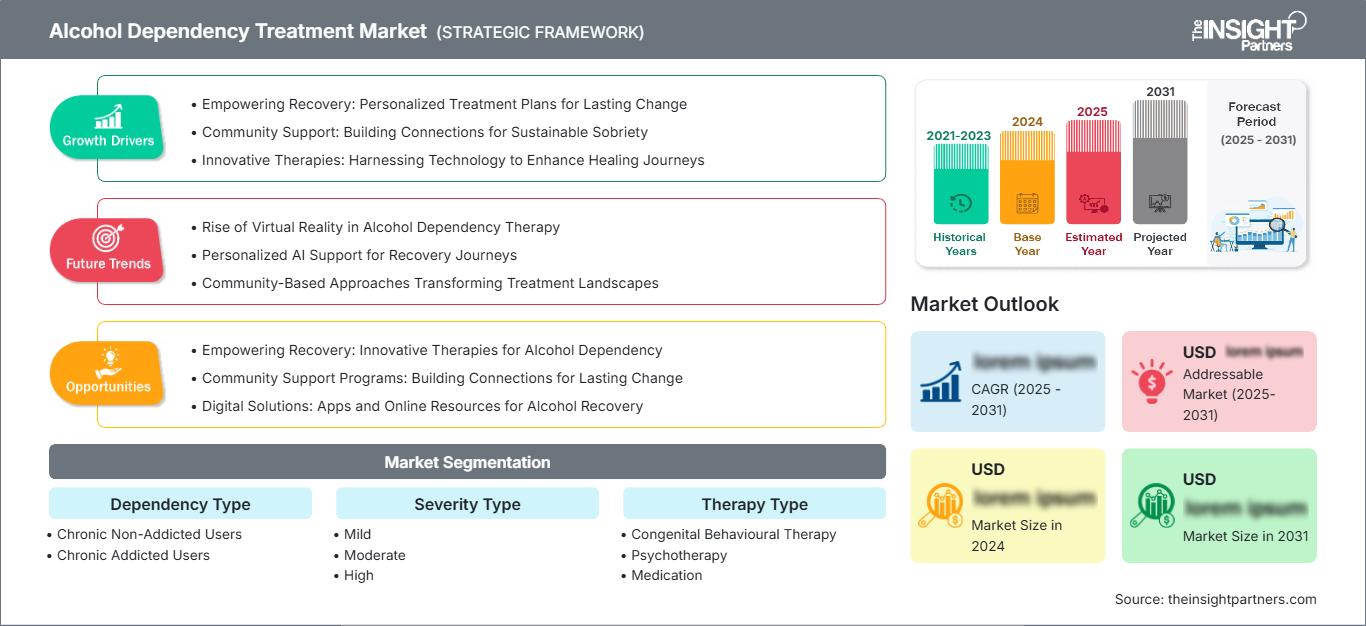
Alcohol Dependency Treatment Market: Strategic Insights
Regional Insights
North America Alcohol Dependency Treatment Market
North America held 39-43% of the global market in 2025 and is expected to record a CAGR of 5.1-5.6% during 2026-2034. This region possesses advanced infrastructure in behavioral healthcare, good reimbursement policies, and rising awareness of alcohol use disorder as a disease that can be treated. Adoption of medication-assisted therapy, rehabilitation services, and psychiatric treatment continues to contribute to market growth. Availability of government funds for substance abuse programs and greater use of telehealth services enhance accessibility of treatment services for both urban and rural populations.
The constant innovation in pharmaceuticals, clinical research, and regulatory processes involved in developing new drugs for addiction therapy is among the factors benefiting the market in this region. Greater cooperation between healthcare providers, insurance companies, and public health organizations is constantly improving diagnosis, treatment, and relapse prevention.
U.S. Alcohol Dependency Treatment Market
The U.S. represented 80-84% of the North American market in 2025 and is expected to expand at a CAGR of 5.2-5.7% during 2026-2034. High alcohol use disorder prevalence, favorable reimbursement coverage, expanding behavioral health services, and increasing government initiatives addressing substance dependence continue driving market demand. Medication-assisted treatment programs are increasingly integrated into primary care settings alongside specialized addiction treatment facilities.
Strong presence of leading pharmaceutical companies, advanced clinical research capabilities, and expanding digital mental health platforms continue strengthening treatment accessibility. Healthcare providers increasingly adopt multidisciplinary recovery models combining medication, psychotherapy, behavioral counseling, and long-term follow-up care, supporting sustained market expansion across the country.
Europe Alcohol Dependency Treatment Market
Europe accounted for 27-31% of the global alcohol dependency treatment market in 2025 and is anticipated to register a CAGR of 5.0-5.5% during 2026-2034. Germany remains the leading regional market due to its comprehensive addiction treatment infrastructure, broad healthcare coverage, and well-established psychiatric care network.
The United Kingdom continues experiencing stable market growth through expanding community-based addiction services, increasing investment in mental health programs, and stronger public awareness regarding alcohol dependency treatment. Integrated healthcare delivery models continue improving patient outcomes across the country.
France, Italy, Spain, and the Nordic countries collectively contribute significantly to regional market expansion through improving access to rehabilitation services, supportive public healthcare systems, and increasing adoption of evidence-based pharmacological treatment. Continued policy initiatives addressing substance abuse are expected to strengthen long-term regional growth.
APAC Alcohol Dependency Treatment Market
Asia Pacific held 19-23% of the global market in 2025 and is projected to record a CAGR of 6.0-6.6% during 2026-2034. China leads regional demand through expanding mental healthcare infrastructure and increasing government attention toward addiction management.
Japan and South Korea continue supporting market expansion through advanced healthcare systems, growing psychiatric services, and increasing adoption of structured rehabilitation programs.
India and Australia continue witnessing rising treatment demand owing to improving healthcare access, expanding behavioral health awareness, and increasing investment in addiction recovery services.
Middle East & Africa Alcohol Dependency Treatment Market
The Middle East & Africa market is expected to expand at a CAGR of 4.5-5.0% during 2026-2034, supported by improving mental healthcare infrastructure, increasing government investment, and growing awareness regarding substance use disorders. Saudi Arabia remains the leading regional market through expanding behavioral healthcare initiatives.
The United Arab Emirates continues strengthening addiction treatment capacity through investment in specialized rehabilitation centers and integrated mental health services.
South Africa and the Rest of the Middle East & Africa continue experiencing gradual expansion through improving healthcare accessibility, increasing rehabilitation programs, and stronger public health initiatives supporting long-term addiction recovery.
Segmentation Analysis
Dependency Type
The Dependency Type segment is projected to register a CAGR of 5.3-5.8% during 2026-2034, supported by increasing clinical diagnosis, wider screening initiatives, and improved access to evidence-based treatment pathways. Healthcare providers are increasingly differentiating treatment strategies according to dependency severity, relapse history, and coexisting psychiatric conditions. Greater emphasis on personalized recovery plans and long-term relapse prevention continues supporting sustained demand across both patient categories.
- Chronic Non-Addicted Users: This group primarily includes individuals exhibiting prolonged harmful alcohol consumption without severe physiological dependence. Early intervention through counseling, behavioral therapy, and preventive medication improves treatment outcomes while reducing progression to severe alcohol use disorder.
- Chronic Addicted Users: Chronic addicted users account for substantial treatment demand owing to higher relapse risk, prolonged dependence, and greater requirement for medication-assisted therapy, structured rehabilitation programs, and multidisciplinary clinical management.
Severity Type
The Severity Type segment is expected to expand at a CAGR of 5.4-5.9% during 2026-2034, driven by increasing utilization of standardized diagnostic tools and individualized treatment protocols. Healthcare professionals continue adopting severity-based treatment planning to improve therapeutic effectiveness, optimize healthcare resources, and reduce relapse frequency through personalized intervention strategies.
- Mild: Patients with mild alcohol dependency generally respond well to early behavioral interventions, outpatient counseling, and psychosocial support, encouraging preventive treatment before progression into severe dependence.
- Moderate: Moderate cases frequently require integrated behavioral therapy alongside pharmacological interventions to reduce alcohol cravings, improve treatment adherence, and minimize relapse rates through continuous clinical monitoring.
- High: High-severity patients typically require intensive inpatient rehabilitation, medication-assisted treatment, psychiatric evaluation, and long-term recovery support owing to significant physical dependence and elevated relapse risk.
Therapy Type
The Therapy Type segment is anticipated to register a CAGR of 5.5-6.0% during 2026-2034, supported by increasing adoption of multidisciplinary treatment models combining behavioral therapies with pharmacological interventions. Clinical guidelines increasingly recommend individualized therapy selection based on patient history, severity, psychiatric comorbidities, and long-term recovery objectives. Medication remains the largest sub-segment, accounting for 43-47% market share in 2025 while expanding at a CAGR of 5.4-5.9% during 2026-2034.
- Congenital Behavioural Therapy: Behavioral interventions focus on modifying harmful drinking patterns through structured counseling, cognitive restructuring, coping strategies, and long-term relapse prevention programs delivered across outpatient and residential settings.
- Psychotherapy: Psychotherapy supports emotional recovery by addressing underlying psychological disorders, motivational challenges, anxiety, depression, and social factors that contribute to alcohol dependence and recurrent relapse.
- Medication: Pharmacological therapies remain the primary treatment approach for moderate and severe alcohol dependence, helping reduce cravings, discourage alcohol consumption, and improve long-term treatment adherence when combined with behavioral support.
End User
The End User segment is projected to expand at a CAGR of 5.8-6.3% during 2026-2034, supported by increasing investment in addiction treatment infrastructure, integrated behavioral healthcare, and multidisciplinary rehabilitation services. Rehabilitation Centers represent the fastest-growing end-user segment, accounting for 31-35% market share in 2025 and registering a CAGR of 6.2-6.8% during 2026-2034, driven by rising patient admissions and comprehensive long-term recovery programs.
- Hospitals: Hospitals provide acute detoxification, medical stabilization, psychiatric consultation, and medication-assisted treatment for patients requiring supervised clinical management during the early stages of alcohol withdrawal.
- Nursing Homes: Nursing homes increasingly manage elderly patients with chronic alcohol dependency through continuous monitoring, medication administration, and coordinated multidisciplinary healthcare services addressing multiple comorbidities.
- Rehabilitation Centers: Rehabilitation centers deliver comprehensive recovery programs integrating detoxification, psychotherapy, behavioral counseling, peer support, and relapse prevention, making them the preferred setting for structured long-term treatment.
- Assisted Elder Care Settings: Assisted living facilities increasingly incorporate addiction management services as aging populations experience alcohol-related health complications requiring continuous medical supervision and behavioral support.
- Home Based Settings: Home-based treatment continues expanding through telemedicine, remote counseling, digital behavioral therapy platforms, and supervised medication programs that improve accessibility while reducing long-term treatment costs.
Opportunity Snapshot
| Segment Name | Revenue Contribution | Trend Tag | Adoption Stage |
| Hospitals | High | Acute Care | Mature |
| Nursing Homes | Medium | Elder Care | Scaling |
| Rehabilitation Centers | High | Integrated Recovery | Scaling |
| Assisted Elder Care Settings | Medium | Long-Term Care | Emerging |
| Home Based Settings | Medium | Telehealth Therapy | Scaling |
Alcohol Dependency Treatment Market Growth Drivers and Impact Analysis
Increasing prevalence of alcohol use disorder worldwide
Increasing levels of alcohol consumption, high prevalence of alcohol use disorder, and increased knowledge about addiction being a chronic disease are some of the factors that are still propelling the need for full-scale treatment facilities. Public health bodies are recognizing alcohol dependence as one of the factors responsible for liver disease, heart problems, neurologic issues, mental disorders, and early death. Government bodies have been expanding their programs related to screenings, rehabilitation facilities, and addiction treatment in their general health care delivery system. Pharmaceutical firms have also responded by making available the necessary drugs and patient assistance programs.
Expansion of medication-assisted treatment programs
The inclusion of medications and psychotherapeutic approaches in medication-assisted therapy has ensured that it has become an essential aspect of evidence-based alcohol dependency management. Current clinical recommendations have included the use of approved medications in combination with psychotherapy. Physicians have continued to adopt medication-assisted therapy in various healthcare settings, including hospitals, rehab centers, and community-based healthcare facilities. Other factors include better acceptance by physicians, better insurance cover, and continuous education activities for the same.
Growing investment in behavioral healthcare infrastructure
One of the significant alcohol dependency treatment market trends is the increasing investments by governments and healthcare agencies in behavioral health systems because of growing problems associated with substance abuse. The construction of new rehabilitation facilities, the development of telemedicine and digital platforms for providing mental healthcare, and specialized treatment centers contribute to improved accessibility and help minimize challenges to recovery. Governments and private-sector entities continue to develop the workforce's potential through clinician training and the implementation of healthcare delivery models that integrate mental health care. There is growing collaboration between drug producers and behavioral health agencies.
Alcohol Dependency Treatment Market Future Trends
Integration of digital therapeutics into addiction management
Digital therapeutics will be increasingly incorporated into traditional alcohol dependency treatments via mobile apps, remote monitoring systems, telepsychiatry, and behavioral interventions that are AI-driven. Medical practitioners have been using digital solutions to improve treatment adherence, detect relapse signs, and enhance patient engagement. Digital coaching, virtual consultations, and ongoing outcome assessment will augment pharmacotherapy and improve recovery rates. Such developments will help shape the future of alcohol dependency treatment trends due to their increased accessibility and personalized nature of care.
Personalized treatment based on precision medicine approaches
Future treatment strategies are increasingly expected to incorporate genetic profiling, biomarker analysis, and precision medicine to optimize therapeutic selection for alcohol dependency. Researchers continue investigating individualized pharmacological responses to improve efficacy while minimizing adverse effects. Advances in neuroscience and addiction biology are supporting development of targeted therapies addressing specific neurochemical pathways associated with alcohol dependence. The alcohol dependency treatment market forecast indicates that greater integration of personalized medicine with behavioral interventions is expected to improve recovery outcomes while supporting long-term innovation across the market.
Alcohol Dependency Treatment Market Opportunities
Expansion of integrated community-based treatment programs
Community-based addiction treatment programs offer tremendous potential for growth because of the growing government focus on behavioral health outside institutional facilities. Models that integrate treatment through outpatient counseling, medication-assisted treatment, peer support, and digital monitoring will help maintain continuity of care and reduce healthcare costs. The development of such programs can help health organizations enhance patient involvement and achieve better results in recovery efforts. The adoption of such programs is likely to increase market share in the alcohol dependence treatment segment.
Development of next-generation pharmacological therapies
There are several lucrative opportunities for pharmaceutical firms creating groundbreaking drugs that work on the brain’s biological mechanisms related to alcohol addiction. The use of sustained-release injectable drugs, new receptor agonists and antagonists, and combined treatments meant to decrease cravings and avoid relapse will increase the efficacy of the therapy. Companies that are conducting clinical trials, securing regulatory approvals, and creating licensing agreements will help to improve their competitive stance. These innovations will help grow the alcohol addiction treatment market.
Recent Developments
- April 2025: Alkermes plc released findings from a Harris Poll survey highlighting that many patients with alcohol use disorder are diagnosed only after significant health or legal consequences. The company used the findings to reinforce awareness initiatives supporting earlier diagnosis and improved access to medication-assisted treatment, including VIVITROL.
- September 2024: Lundbeck A/S continued expanding its neuroscience and brain health research portfolio through strategic investment in neuropsychiatric innovation, strengthening capabilities relevant to addiction-related central nervous system disorders and supporting long-term therapeutic development in alcohol dependency management.
- June 2024: Teva Pharmaceutical Industries Ltd. reinforced its global generics and specialty medicines strategy by expanding manufacturing and portfolio optimization initiatives, supporting broader availability of generic medicines used in addiction treatment programs across multiple healthcare systems.
Frequently Asked Questions

- Comprehensive Market Sizing and Forecast Analysis
- Detailed Segmentation Analysis
- In-Depth Market Dynamics Assessment
- Regional and Country-Level Insights
- Competitive Landscape and Company Benchmarking
- Strategic Business Intelligence
Recent Reports
Testimonials

The Insight Partners' SCADA System Market report is comprehensive, with valuable insights on current trends and future forecasts. The team was highly professional, responsive, and supportive throughout. We are very satisfied and highly recommend their services.
RAN KEDEM Partner, Reali Technologies LTDs
I requested a report on a very specific software market and the team produced the report in a few days. The information was very relevant and well presented. I then requested some changes and additions to the report. The team was again very responsive and I got the final report in less than a week.
JEAN-HERVE JENN Chairman, Future Analytica
We worked with The Insight Partners for an important market study and forecast. They gave us clear insights into opportunities and risks, which helped shape our plans. Their research was easy to use and based on solid data. It helped us make smart, confident decisions. We highly recommend them.
PIYUSH NAGPAL Sr. Vice President, High Beam Global
The Insight Partners delivered insightful, well-structured market research with strong domain expertise. Their team was professional and responsive throughout. The user-friendly website made accessing industry reports seamless. We highly recommend them for reliable, high-quality research services
YUKIHIKO ADACHI CEO, Deep Blue, LLC.
This is the first time I have purchased a market report from The Insight Partners.While I was unsure at first, I visited their web site and felt more comfortable to take the risk and purchase a market report.I am completely satisfied with the quality of the report and customer service. I had several questions and comments with the initial report, but after a couple of dialogs over email with their analyst I believe I have a report that I can use as input to our strategic planning process.Thank you so much for taking the extra time and making this a positive experience.I will definitely recommend your service to others and you will be my first call when we need further market data.
JOHN SUZUKI President and Chief Executive Officer, Board Director, BK Technologies
I wish to appreciate your support and the professionalism you displayed in the course of attending to my request for information regarding to infectious disease IVD market in Nigeria. I appreciate your patience, your guidance, and the fact that you were willing to offer a discount, which eventually made it possible for us to close a deal. I look forward to engaging The Insight Partners in the future, all thanks to the impression you have created in me as a result of this first encounter.
DR CHIJIOKE ONYIA MANAGING DIRECTOR, PineCrest Healthcare Ltd.Reason to Buy
- Informed Decision-Making
- Understanding Market Dynamics
- Competitive Analysis
- Identifying Emerging Markets
- Customer Insights
- Market Forecasts
- Risk Mitigation
- Boosting Operational Efficiency
- Strategic Planning
- Investment Justification
- Tracking Industry Innovations
- Aligning with Regulatory Trends





 Get Free Sample for