
Aloe Vera Drinks Market Share, Growth & Demand by 2034
Coverage: By Flavor (Flavored, Plain); Category (Organic, Conventional); Distribution Channel (Supermarkets and Hypermarkets, Convenience Stores, Online Stores, Others), and Geography (North America, Europe, Asia Pacific, and South and Central America)
- Status : Data Released
- Report Code : TIPRE00015105
- Category : Food and Beverages
- No. of Pages : 150
- Available Report Formats :


- Last update date : August 18, 2026


2025 Market Size
US$ 1.68 Bn
Base year value
2034 Forecast
US$ 3.54 Bn
Projected by 2034
CAGR 2026-2034
8.63 %
Growth rate
Addressable Market
US$ 23.40 Bn
(2026-2034)
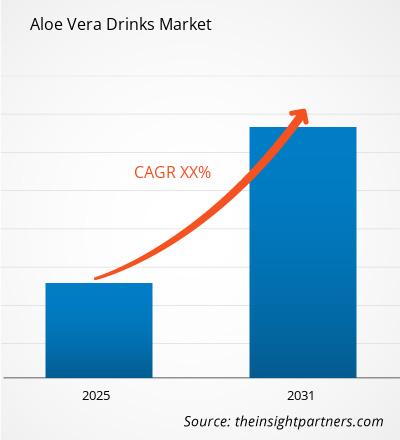
The aloe vera drinks market was valued at US$ 1.68 Billion in 2025 and is projected to reach US$ 3.54 Billion by 2034, expanding at a CAGR of 8.63% during 2026–2034. Rising consumer preference for plant-based functional beverages, growing awareness of digestive wellness, and increasing demand for clean-label hydration solutions continue to support expansion across developed and emerging economies. Product innovation in flavored variants and premium formulations is also strengthening category penetration across retail channels.
Across North America, the aloe vera drinks market size continues to benefit from increasing consumption of functional beverages and a growing focus on sugar reduction. The regional market is estimated to expand at a CAGR of 7.8–8.4% through 2034. Strong retail distribution, increasing organic product availability, and broader wellness-focused purchasing behavior are supporting category development across the United States and Canada.
Aloe Vera Drinks Market Assessment and Insights
- North America: Strong consumer adoption of functional beverages supports regional leadership. Share in 2025 is estimated at 32–36%, with CAGR between 7.8–8.4% during 2026–2034 driven by premium wellness beverage demand and retail expansion.
- US: The country represents the largest regional market with 78–82% of North American revenue in 2025 and CAGR of 7.9–8.5% during 2026–2034, supported by health-conscious consumers.
- Europe: Share in 2025 is estimated at 24–28%, growing at 7.2–7.9% CAGR during 2026–2034. Germany, the UK, France, Italy, and Spain remain major consuming countries.
- Asia Pacific: Regional share reached 29–33% in 2025 and is forecast to grow at 9.6–10.4% CAGR during 2026–2034. China, Japan, South Korea, and India lead consumption growth.
- Largest Segment: Conventional category accounted for 62–66% market share in 2025 and is projected to record 8.0–8.8% CAGR during 2026–2034 due to wider affordability and established distribution.
- High Growth Segment: Organic category held 34–38% market share in 2025 and is anticipated to grow at 9.8–10.6% CAGR during 2026–2034 owing to clean-label preferences.
- Key companies analyzed in detail: ALO Drink, Aloe Farms, Inc., Amb Wellness LLC, GraceKennedy Limited, Houssy Global, JJ Martin Group, Keumkang B&F Co., Ltd., LOTTE Chilsung Beverage Co., Ltd., OKF Corporation, Tulip International Inc.
Source: The Insight Partners' analysis based on proprietary research, government publications, company annual reports, investor presentations, industry databases, and expert interviews.
Aloes diversification into other beverages by combining aloe pulp with fruits, vitamins, herbs, botanicals, and lower sugar content formulations is one of the major changes seen in this industry. Advancements in cultivation facilities, aloe stabilization technology and cold-fill processing have increased shelf life and product quality. The ability of manufacturers to meet rising consumer interest in natural hydration beverages via improved manufacturing processes has been achieved due to all of these changes.
Future prospects for the segment will include premiumization, e-commerce penetration, and increasing demand in Southeast Asia, the Middle East, and selected countries from Latin America. Continued focus on ingredient transparency and natural formulations by regulatory bodies will continue to benefit aloe beverages. Organic sourcing and sustainable packaging, along with the development of functional beverages, will be the major trends seen in the future.
Aloe Vera Drinks Market Report Scope
| Report Attribute | Details |
|---|---|
| Market size in 2025 | US$ 1.68 Billion |
| Market Size by 2034 | US$ 3.54 Billion |
| Global CAGR (2026 - 2034) | 8.63% |
| Historical Data | 2021-2024 |
| Forecast period | 2026-2034 |
Aloe Vera Drinks Market Analysis
The aloe vera drinks market growth trajectory is supported by increasing consumer awareness regarding digestive health, hydration, and natural ingredient consumption. The drinks produced from aloe vera plants are increasingly becoming popular among individuals who prefer substitutes for carbonated drinks and functional beverages. In the process, the value chain includes aloe farming, extraction of gel from aloe, drink production, packing, logistics, and retailing, which provide a chance for vertical integration between producers and suppliers of ingredients.
The supply of such products is still positive owing to increased production of aloe farms in Asia and certain parts of Latin America. Innovations in agriculture and ingredient processing have led to increased supply and uniformity of products. Flavored versions of the drinks are being produced by manufacturers to attract young consumers.
The competitive environment within the aloe vera drinks market analysis highlights a combination of multinational beverage companies and specialized aloe beverage producers. ALO Drink, OKF Corporation, and LOTTE Chilsung Beverage Co., Ltd. continue building their market presence through innovations, international business relationships, and product diversification. Regional firms are also competing by offering local tastes and organic products.
Investments are currently concentrated on developing innovative functional beverages, sustainable packaging solutions, and e-commerce infrastructures. Aloe Farms, Inc., Amb Wellness LLC, GraceKennedy Limited, and Houssy Global remain dedicated to ingredient quality and brands' uniqueness. At the same time, Keumkang B&F Co., Ltd., Tulip International Inc., and JJ Martin Group retain their strategic advantages through export-oriented businesses and growing presence among emerging consumers.
● REPORT CUSTOMIZATION
Tailor This Report To Align With Your Specific Business Requirements
This report can be customized to align precisely with your business objectives, scope, and target markets. Customization options include tailored segmentation, geography, competitive analysis, and strategic insights to support informed decision-making.
Customize This Report →WHAT YOU CAN ADJUST
- ● Segmentations
- ● Geography
- ● Competitive Analysis
- ● Language Preferences
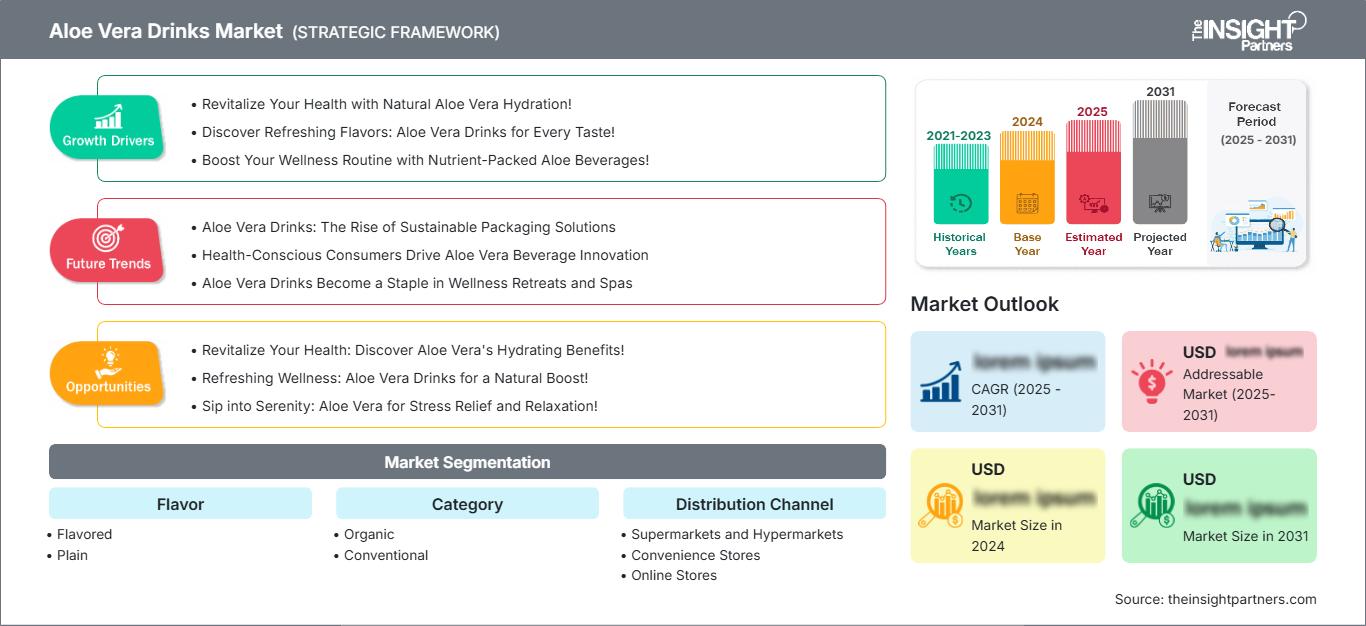
Aloe Vera Drinks Market: Strategic Insights
Regional Insights
North America Aloe Vera Drinks Market
North America accounted for approximately 32–36% aloe vera drinks market share in 2025 and remains the largest regional contributor. Growth is projected at 7.8–8.4% CAGR during 2026–2034, supported by strong consumer demand for clean-label beverages, health-focused purchasing patterns, and availability through large retail networks. Functional hydration products continue gaining visibility within supermarkets, wellness stores, and digital commerce channels.
The region benefits from established beverage innovation ecosystems and advanced distribution infrastructure. Demand for reduced-sugar beverages and naturally derived ingredients continues to support category expansion. Canada is experiencing increased penetration of wellness beverages, while the United States remains the principal revenue generator due to extensive product availability and high consumer awareness regarding digestive health benefits.
U.S. Aloe Vera Drinks Market
The United States represents 78–82% of the North American market revenue in 2025 and is expected to expand at 7.9–8.5% CAGR during 2026–2034. Broad availability across supermarkets, convenience stores, specialty retailers, and online platforms supports consistent consumption growth. Major brands continue introducing flavored and low-calorie offerings to align with evolving consumer preferences.
Product innovation remains a key competitive factor. Wellness positioning, transparent ingredient labeling, and premium packaging have become important purchasing criteria. The presence of ALO Drink, GraceKennedy Limited, and other established participants contributes to strong category visibility. Continued interest in plant-based functional beverages is expected to sustain long-term expansion throughout the forecast period.
Europe Aloe Vera Drinks Market
Europe accounted for 24–28% of global revenue in 2025 and is projected to expand at 7.2–7.9% CAGR during 2026–2034. Germany is the largest national market owing to the high popularity of natural beverages and organic products in this region. For the UK, there is a positive trend of development of the functional beverages market along with the growing preference for healthy alternatives to hydration.
Together, France, Italy, and Spain bring in significant demand growth owing to the growing presence of beverages in retail and premiumization. Ingredient transparency is highly important for regulatory reasons and suits the positioning of aloe-based beverages.
APAC Aloe Vera Drinks Market
Asia Pacific represented 29–33% of global revenue in 2025 and is forecast to record 9.6–10.4% CAGR during 2026–2034, making it the fastest-growing regional market. China, South Korea, and Japan maintain strong consumption levels supported by longstanding familiarity with aloe-based products.
India and Australia are emerging growth centers due to increasing health awareness and retail expansion. Rising disposable incomes, expanding modern trade networks, and growing demand for functional beverages continue supporting market development throughout the region.
Middle East & Africa Aloe Vera Drinks Market
The Middle East and Africa market is projected to grow at 8.5–9.3% CAGR during 2026–2034. Saudi Arabia and the UAE are leading consumers due to increasing interest in premium hydration products and diversified beverage portfolios.
South Africa remains a significant contributor within Africa, supported by expanding retail availability and wellness beverage awareness. Infrastructure investments and growing urban populations continue to strengthen long-term demand across the broader regional market.
Segmentation Analysis
Flavor
The flavor segment is expected to grow at 8.4–9.0% CAGR during 2026–2034. Product differentiation remains a critical strategy for manufacturers seeking broader consumer appeal. Flavor innovation supports adoption among new consumers while improving repeat purchase rates. The aloe vera drinks market scope continues expanding as beverage brands introduce fruit-infused formulations aligned with evolving taste preferences.
- Flavored – Represents the dominant sub-segment due to strong consumer preference for fruit-based and enhanced-taste beverages. Product innovation and premium positioning continue to support shelf visibility across multiple retail environments.
- Plain – Maintains relevance among health-conscious consumers seeking minimal ingredient formulations. Demand is supported by consumers prioritizing authenticity, lower additive content, and traditional aloe beverage consumption.
Category
The category segment is projected to expand at 8.6–9.2% CAGR during 2026–2034. Consumer focus on ingredient sourcing, sustainability, and health credentials continues to influence purchasing patterns. Growth opportunities remain significant for both conventional and organic offerings across mature and emerging markets.
- Organic – Increasingly preferred by consumers seeking certified natural products. Expansion is supported by premium pricing acceptance, clean-label trends, and growing availability through specialty and mainstream retail channels.
- Conventional – Continues generating the largest revenue contribution due to affordability advantages, broader production capacity, and extensive distribution through supermarkets, hypermarkets, and convenience stores.
Distribution Channel
The distribution channel segment is anticipated to register 8.7–9.3% CAGR during 2026–2034. Expanding retail access continues to increase market reach while supporting both impulse purchases and planned wellness-oriented consumption. Omnichannel strategies are becoming increasingly important for brand visibility.
- Supermarkets and Hypermarkets – remain the primary sales channel due to extensive product assortment, promotional activities, and high consumer traffic across developed and developing markets.
- Convenience Stores – Benefit from impulse purchasing behavior and demand for ready-to-consume functional beverages, particularly in urban locations and transportation hubs.
- Online Stores – Experiencing strong momentum through direct-to-consumer models, subscription programs, wider product availability, and increasing digital shopping adoption among health-conscious consumers.
Opportunity Snapshot
| Segments | Revenue Contribution | Trend Tag | Adoption Stage |
| Flavored | High | Fruit Fusion | Mature |
| Plain | Medium | Natural Hydration | Mature |
| Organic | Medium | Clean Label | Scaling |
| Conventional | High | Mass Retail | Mature |
| Supermarkets and Hypermarkets | High | Shelf Expansion | Mature |
| Convenience Stores | Medium | On-the-Go | Scaling |
| Online Stores | Medium | Digital Commerce | Scaling |
Aloe Vera Drinks Market Growth Drivers and Impact Analysis
Growing Functional Beverage Consumption
There is an increasing trend among consumers to look for beverages that provide more than just hydration. Beverages made from aloe have received attention for their benefits in digestive health, natural hydration, and healthy beverages. With growing concerns about over-consumption of sugar and the use of chemicals in food, there is a shift towards plant-based products. This is being accomplished by innovations in products, portions, and positioning.
Expansion of Organized Retail Networks
Modern retail infrastructures are contributing positively towards the availability of products to consumers. The continued growth of supermarkets, hypermarkets, and convenience stores has contributed to an improvement in beverage varieties, hence giving aloe beverages the capability of reaching a larger clientele base. The improved cold chain capabilities facilitate the penetration of the market even in urban and semi-urban areas. Retail development also allows companies to boost their brands through the use of marketing strategies and special shelf positioning.
Increasing Preference for Natural Ingredients
The demand for transparency and purity in ingredients remains one of the factors shaping consumer choices in the buying of beverages. Aloe vera beverages are consistent with the clean label trend, the wellness trend, and plant-based nutrition positioning. There is an increasing focus on ingredients’ source, fewer ingredients, and organic certification by producers due to the rising concern about health among consumers.
Aloe Vera Drinks Market Future Trends
Premium Functional Formulations
The aloe vera drinks market trends landscape indicates stronger demand for combinations of aloe with probiotics, vitamins, botanicals, and immunity-support ingredients. The future product development will concentrate more on multipurpose wellness benefits instead of one-function hydration. Product manufacturers are progressively developing their products under the high-end category of health drinks, catering to consumers who are ready to pay for their functional benefits.
Sustainable Packaging Integration
Sustainability is set to gain more significance in making purchase decisions regarding beverages. Manufacturers will need to increase their usage of recycled materials, lighter packaging, and sustainable sourcing. Sustainability pledges by corporations and changing consumer preferences will most probably shape the design and logistics of the products. Brands that will succeed in combining sustainability with wellness will be more competitively differentiated in the forecast period.
Aloe Vera Drinks Market Opportunities
Expansion into Emerging Urban Markets
Urbanization and rising disposable incomes continue creating attractive opportunities across Southeast Asia, the Middle East, and selected African economies. Increasing awareness regarding wellness beverages supports market entry for global and regional brands. Distribution partnerships, localized flavors, and affordable packaging formats can accelerate adoption. Aloe vera drinks market Forecasts indicate strong long-term potential where modern retail infrastructure and digital commerce penetration are improving simultaneously, creating favorable conditions for volume expansion and category development.
Development of Premium Organic Portfolios
Increasing consumer demand for certified organic beverages can be viewed as a lucrative investment opportunity. Consumers are increasingly equating organic foods with quality and sustainable production practices. Organic aloe production may provide extra revenue to producers through the value-added benefit of premium branding and unique ingredients. The development of certification infrastructure and supply chain visibility could potentially help improve consumer confidence and support premium pricing.
Frequently Asked Questions

- Comprehensive Market Sizing and Forecast Analysis
- Detailed Segmentation Analysis
- In-Depth Market Dynamics Assessment
- Regional and Country-Level Insights
- Competitive Landscape and Company Benchmarking
- Strategic Business Intelligence
Recent Reports
Testimonials

The Insight Partners' SCADA System Market report is comprehensive, with valuable insights on current trends and future forecasts. The team was highly professional, responsive, and supportive throughout. We are very satisfied and highly recommend their services.
RAN KEDEM Partner, Reali Technologies LTDs
I requested a report on a very specific software market and the team produced the report in a few days. The information was very relevant and well presented. I then requested some changes and additions to the report. The team was again very responsive and I got the final report in less than a week.
JEAN-HERVE JENN Chairman, Future Analytica
We worked with The Insight Partners for an important market study and forecast. They gave us clear insights into opportunities and risks, which helped shape our plans. Their research was easy to use and based on solid data. It helped us make smart, confident decisions. We highly recommend them.
PIYUSH NAGPAL Sr. Vice President, High Beam Global
The Insight Partners delivered insightful, well-structured market research with strong domain expertise. Their team was professional and responsive throughout. The user-friendly website made accessing industry reports seamless. We highly recommend them for reliable, high-quality research services
YUKIHIKO ADACHI CEO, Deep Blue, LLC.
This is the first time I have purchased a market report from The Insight Partners.While I was unsure at first, I visited their web site and felt more comfortable to take the risk and purchase a market report.I am completely satisfied with the quality of the report and customer service. I had several questions and comments with the initial report, but after a couple of dialogs over email with their analyst I believe I have a report that I can use as input to our strategic planning process.Thank you so much for taking the extra time and making this a positive experience.I will definitely recommend your service to others and you will be my first call when we need further market data.
JOHN SUZUKI President and Chief Executive Officer, Board Director, BK Technologies
I wish to appreciate your support and the professionalism you displayed in the course of attending to my request for information regarding to infectious disease IVD market in Nigeria. I appreciate your patience, your guidance, and the fact that you were willing to offer a discount, which eventually made it possible for us to close a deal. I look forward to engaging The Insight Partners in the future, all thanks to the impression you have created in me as a result of this first encounter.
DR CHIJIOKE ONYIA MANAGING DIRECTOR, PineCrest Healthcare Ltd.Reason to Buy
- Informed Decision-Making
- Understanding Market Dynamics
- Competitive Analysis
- Identifying Emerging Markets
- Customer Insights
- Market Forecasts
- Risk Mitigation
- Boosting Operational Efficiency
- Strategic Planning
- Investment Justification
- Tracking Industry Innovations
- Aligning with Regulatory Trends





 Get Free Sample for