
Alumina Trihydrate Market Size, Growth & Demand by 2034
Coverage: by End-use (Plastics, Building and Construction, Pharmaceuticals, Paints and Coatings, Glass, Rubber, Others); Application (Flame Retardant, Filler, Antacid, Others) , and Geography (North America, Europe, Asia Pacific, and South and Central America)
- Status : Data Released
- Report Code : TIPRE00005058
- Category : Chemicals and Materials
- No. of Pages : 150
- Available Report Formats :


- Last update date : August 07, 2026


2025 Market Size
US$ 5.18 Bn
Base year value
2034 Forecast
US$ 7.9 Bn
Projected by 2034
CAGR 2026-2034
4.8 %
Growth rate
Addressable Market
US$ 59.37 Bn
(2026-2034)
The global Alumina Trihydrate market was valued at US$ 5.18 billion in 2025 and is expected to reach US$ 7.9 billion by 2034; it is estimated to record a CAGR of 4.8% during 2026-2034.
Alumina Trihydrate Market Assessment and Insights
- North America: North America accounted for 22–25% share in 2025 and is projected to expand at a CAGR of 4.8–5.3% during 2026–2034. Stringent fire protection regulations, mature polymer processing industries, and investments in electrical infrastructure continue to support stable consumption across construction, transportation, and industrial manufacturing.
- US: The US represented 72–76% of the North American market in 2025 and is anticipated to grow at a CAGR of 4.9–5.4% during 2026–2034, driven by increasing demand from cable insulation, engineered plastics, pharmaceuticals, and high-performance building materials.
- Europe: Europe held 24–27% share in 2025 and is expected to register a CAGR of 4.7–5.2% during 2026–2034. Germany, France, Italy, and the UK remain major consumers owing to advanced automotive manufacturing, stringent environmental legislation, and strong demand for halogen-free flame-retardant materials.
- Asia Pacific: Asia Pacific accounted for 40–44% share in 2025 and is forecast to grow at a CAGR of 6.1–6.6% during 2026–2034. China, India, Japan, and South Korea continue to lead regional demand through expanding electronics production, infrastructure development, polymer manufacturing, and pharmaceutical industries.
- Largest Segment: Flame Retardant accounted for 45–49% market share in 2025 and is projected to expand at a CAGR of 5.5–6.0% during 2026–2034, supported by increasing adoption of halogen-free fire protection solutions in plastics, wire and cable, and construction materials.
- High Growth Segment: Building and Construction is expected to record the fastest expansion with a 2025 market share of 20–24% and a CAGR of 6.0–6.5% during 2026–2034, driven by stricter building safety regulations and increasing use of flame-retardant composite materials.
- Key companies analyzed in detail: Albemarle Corporation, Alcoa Corporation, Aluminum Corporation of China Limited (CHALCO), Huber Engineered Materials, LKAB Minerals AB, MAL Hungarian Aluminium Producer and Trading Co., Nabaltec AG, National Aluminium Company Limited (NALCO), Resonac Holdings Corporation (formerly Showa Denko K.K.), Sumitomo Chemical Co., Ltd.
Source: The Insight Partners' analysis based on proprietary research, government publications, company annual reports, investor presentations, industry databases, and expert interviews.
Alumina trihydrate has transformed from being an ordinary mineral used in various industrial applications to a specialty material whose functions are wide-ranging and include compounding of polymers, pharmaceuticals, chemicals used in construction, paints, coatings, and composite materials. Advancements in the field of particle engineering, control of particle size distribution, surface treatment and ultrafine precipitation have improved the thermal stability and dispersibility of this substance. Manufacturers are increasingly becoming aware of high purity and speciality grades of alumina trihydrate which meet the ever-changing demands for flame retardancy, smoke suppressors and efficiency in processing.
Future growth in the market for alumina trihydrate is expected to be spurred by investments in sustainable refinement of alumina, increased use of halogen-free flame retardant materials and growth in the capacity of alumina trihydrate in Asia-Pacific and the Middle East regions. Increasing demands for fire resistance in building materials, development in renewable energy infrastructure and demand for lightweight engineered polymers will present opportunities for manufacturers.
Alumina Trihydrate Market Report Scope
| Report Attribute | Details |
|---|---|
| Market size in 2025 | US$ 5.18 Billion |
| Market Size by 2034 | US$ 7.9 Billion |
| Global CAGR (2026 - 2034) | 4.8% |
| Historical Data | 2021-2024 |
| Forecast period | 2026-2034 |
Alumina Trihydrate Market Analysis
The increasing importance placed on fire safety regulations in the construction, transportation, electronics, and electricity industries will support demand for alumina trihydrate flame retardants in the long term. Moreover, there will be additional support coming from rising consumption of polymer materials, insulation of wires and cables, engineering plastics, and building materials, since the manufacturers now prefer low-smoke and environmentally friendly flame retardants. The value chain continues to be tightly linked with aluminum refining businesses, allowing producers to maintain constant access to raw materials and increase the production efficiency due to vertical integration of mining and refining facilities.
On the supply side, the trends are continuing as producers are expanding the capacities of alumina trihydrate of specialty grade to cover more high-margin applications than commodity grade products. There is an ongoing trend towards more advanced particle size control, surface treatment techniques, and higher purity of production that can meet the needs of pharmaceutical, coating, and engineering plastics industries. Despite energy costs and bauxite availability influencing the production costs, the companies are continuously investing in production optimization and capacity expansions in different regions.
The consolidation among competitors is moderate, with the global players focusing on product differentiation based on specialty formulations, technical services, and regional expansion. Among the key companies covered under the analysis include Albemarle Corporation, Aluminum Corporation of China Limited, Huber Engineered Materials, Nabaltec AG, LKAB Minerals AB, Sumitomo Chemical Co., Ltd., Alcoa Corporation, National Aluminium Company Limited (NALCO), Showa Denko K.K., and MAL Hungarian Aluminium Producer and Trading Company that have been making improvements to their offerings through efficient capacity utilization and new value-added products.
Capital investment trends point towards high-performance alumina trihydrate for use in electric vehicles, renewable energy structures, specialty building materials, and various industrial applications. The companies are making investments in sustainable technology, refining processes for low energy consumption, regional delivery chains, and partnerships with polymer compounders and specialty chemical producers.
● REPORT CUSTOMIZATION
Tailor This Report To Align With Your Specific Business Requirements
This report can be customized to align precisely with your business objectives, scope, and target markets. Customization options include tailored segmentation, geography, competitive analysis, and strategic insights to support informed decision-making.
Customize This Report →WHAT YOU CAN ADJUST
- ● Segmentations
- ● Geography
- ● Competitive Analysis
- ● Language Preferences
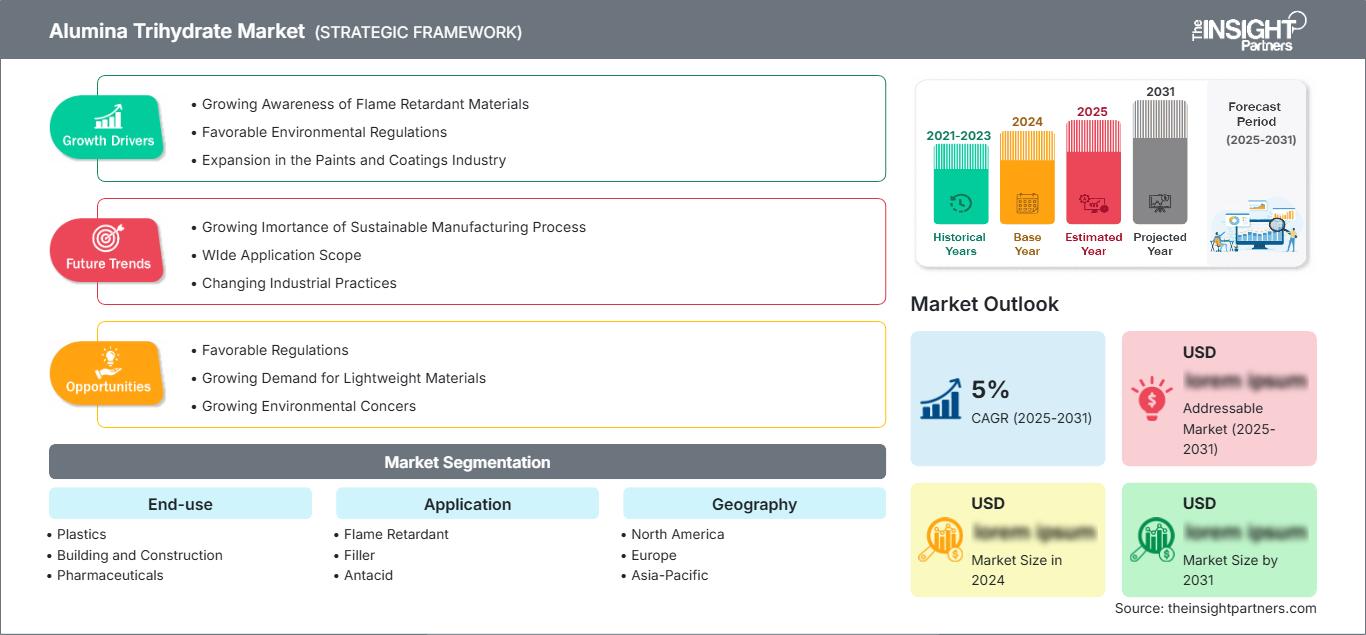
Alumina Trihydrate Market: Strategic Insights
Regional Insights
North America Alumina Trihydrate Market
The North American alumina trihydrate market share was 22–25% in 2025 and is expected to grow at a CAGR of 4.8–5.3% during 2026–2034. The factors fueling the market growth include strict regulations with regards to fire safety in terms of construction materials, electrical goods, transport parts, and consumer products. This region boasts robust processing industry of plastics, specialty chemicals, medicines, and coatings, which employ this material as a non-halogen flame retardant and functional filler.
The largest market share in the region is held by the U.S., whereas Canada supplies its mining, mineral processing, and industrial specialties. The rising focus on sustainability and use of low-smoke and low-toxicity flame-retardant systems has motivated companies to find substitutes for halogenated systems. Apart from that, there are plenty of opportunities arising from infrastructure modernization, renewable energy installation, and electric vehicle manufacturing.
U.S. Alumina Trihydrate Market
In 2025, the US accounted for 72–76% of the North America market and was projected to grow at a CAGR of 4.9–5.4% during 2026–2034. High domestic demand was fueled by applications in wire and cable manufacturing, building products, automotive plastics, drugs, and paint & coatings. The country continues to follow building safety rules that encourage the application of halogen-free flame retardant materials and invests in electrical grid upgrades and infrastructure that drives up consumption in a number of industries.
Large-scale chemical producers, polymer producers and manufacturers of advanced materials are expanding their production capacities according to changing regulatory and customer requirements. Investments in production of electric cars, batteries, alternative power generation infrastructure and data centers increase demand for flame retardant thermoplastics and thermoset resins. Stable availability of raw materials, innovations and product development secure the country’s position in the regional alumina trihydrate market.
Europe Alumina Trihydrate Market
Europe was a 24-27% share in the global market in 2025 and is expected to have a CAGR of 4.7-5.2% from 2026-2034. The growth in Europe is propelled by stringent environmental laws, superior manufacturing abilities, and the extensive use of eco-friendly flame retardants. Germany has been a leader in terms of regional markets on account of its automotive industry, electrical equipment, engineering plastics, and industrial chemicals. Innovation in polymers and coatings also aids in driving demand.
Demand has been stable in the UK because of its infrastructure renovation, healthcare products, cable manufacturing, and coatings, while the growth in construction chemicals, paints, pharmaceuticals, and industrial manufacturing is seen in France, Italy, and Spain. EU policies related to the use of non-halogenated flame retardants and sustainable building materials are encouraging manufacturers to incorporate alumina trihydrate in polymer, coatings, adhesives, and composite materials.
APAC Alumina Trihydrate Market
Asia Pacific accounted for 40–44% of the global market in 2025 and is forecast to expand at a CAGR of 6.1–6.6% during 2026–2034, making it the fastest-growing regional market. China remains the largest producer and consumer owing to its extensive plastics, electrical equipment, aluminum, and construction industries. India is experiencing rapid growth through infrastructure investments and expanding polymer manufacturing, while Japan and South Korea continue focusing on high-value specialty applications.
Australia supports regional supply through abundant bauxite resources and alumina production, strengthening raw material availability for downstream manufacturers. Rising industrialization, urbanization, and government investments in renewable energy, transportation, and smart infrastructure continue driving long-term consumption across the region.
Middle East & Africa Alumina Trihydrate Market
The Middle East & Africa market is projected to grow at a CAGR of 5.5–6.0% during 2026–2034. Saudi Arabia and the UAE are investing in industrial diversification, aluminum value chains, construction materials, and specialty chemicals, supporting gradual increases in alumina trihydrate consumption. South Africa remains an important market through its mining sector and industrial manufacturing base.
Increasing investments in infrastructure, commercial construction, power transmission, and industrial development are creating new opportunities for flame-retardant materials throughout the region. Growing aluminum processing activities and improving manufacturing capabilities are expected to strengthen long-term regional demand while supporting diversification beyond traditional mining applications.
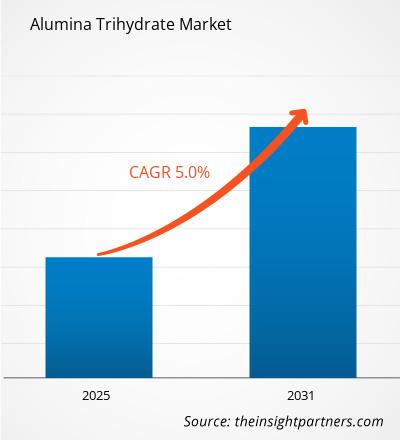
Segmentation Analysis
Application
The Application segment is expected to expand at a CAGR of 5.4–5.9% during 2026–2034. The alumina trihydrate market scope continues to broaden as manufacturers utilize the material across flame-retardant systems, fillers, pharmaceuticals, and specialty industrial products. Demand is primarily supported by regulatory shifts toward halogen-free formulations, technological improvements in polymer compounding, and growing adoption across construction, transportation, healthcare, and electrical applications.
- Flame Retardant: The largest application owing to extensive use in wire and cable compounds, thermoplastics, thermosets, roofing membranes, and building products requiring effective smoke suppression and fire resistance.
- Filler: Widely incorporated into paints, coatings, engineered plastics, rubber compounds, sealants, and composite materials to improve mechanical performance, surface finish, dimensional stability, and cost efficiency.
- Antacid: High-purity pharmaceutical-grade alumina trihydrate remains an important active ingredient in antacid formulations because of its proven safety profile, chemical stability, and controlled neutralization characteristics.
End-use
The End-use segment is anticipated to register a CAGR of 5.6–6.1% during 2026–2034, supported by expanding demand across construction, plastics processing, healthcare, coatings, and industrial manufacturing. Increasing investments in infrastructure, stricter fire safety regulations, and growing production of engineered materials continue to broaden end-use adoption worldwide.
- Plastics: Represents the largest end-use industry, utilizing alumina trihydrate in halogen-free flame-retardant compounds for electrical components, automotive parts, cable insulation, and consumer products.
- Building and Construction: Rapidly expanding demand is driven by fire-resistant panels, insulation materials, roofing products, flooring systems, sealants, and engineered composite materials used in residential and commercial infrastructure.
- Pharmaceuticals: Pharmaceutical manufacturers consume high-purity grades in antacid formulations and specialty healthcare products requiring consistent purity, controlled particle characteristics, and regulatory compliance.
- Paints and Coatings: Used to improve opacity, corrosion resistance, durability, thermal stability, and flame-retardant performance across architectural, industrial, marine, and protective coating applications.
- Glass: Incorporated into specialty glass formulations requiring improved thermal properties, controlled chemistry, and enhanced manufacturing performance across industrial and technical applications.
- Rubber: Applied in rubber compounds to improve flame resistance, processing performance, filler efficiency, and overall durability for industrial, automotive, and electrical products.
Opportunity Snapshot
| End-use | Revenue Contribution | Trend Tag | Adoption Stage |
|---|---|---|---|
| Plastics | High | Halogen-Free | Mature |
| Building and Construction | High | Fire Safety | Scaling |
| Pharmaceuticals | Medium | Healthcare Grade | Mature |
| Paints and Coatings | Medium | Functional Fillers | Scaling |
| Glass | Medium | Specialty Glass | Mature |
| Rubber | Medium | Cable Compounds | Scaling |
| Others | Low | Industrial Uses | Emerging |
Alumina Trihydrate Market Growth Drivers and Impact Analysis
Growing Demand for Halogen-Free Flame Retardant Materials
Increasing global fire safety regulations continue to accelerate the replacement of brominated and halogen-containing flame retardants across electrical, construction, transportation, and consumer electronics industries. Alumina trihydrate releases chemically bound water during thermal decomposition, reducing heat release and smoke generation while remaining environmentally preferable compared to several conventional alternatives. Demand is expanding rapidly in wire and cable insulation, EV battery components, electronic housings, and public infrastructure projects complying with stringent building codes. Regulatory initiatives across Europe, North America, China, Japan, and South Korea continue encouraging adoption of low-smoke, halogen-free material systems, strengthening long-term consumption across polymer compound manufacturers and specialty plastics processors.
Infrastructure Expansion Supporting Construction Material Consumption
Large-scale investments in residential, commercial, industrial, and transportation infrastructure continue to increase demand for engineered stone, paints, coatings, construction composites, insulation products, and roofing materials incorporating alumina trihydrate. Government-backed infrastructure modernization programs across Asia Pacific and the Middle East are driving consumption of flame-retardant construction materials with improved durability and environmental performance. Rising urbanization and increasing adoption of sustainable building standards further encourage manufacturers to formulate mineral-filled products that comply with evolving fire safety requirements. These trends continue supporting consistent demand growth among downstream construction material manufacturers throughout the forecast period.
Expanding Electrical and Electronics Manufacturing Worldwide
Rapid growth in consumer electronics, renewable energy systems, telecommunications infrastructure, and electric vehicles is increasing demand for advanced polymer compounds incorporating alumina trihydrate. Electrical connectors, cables, charging infrastructure, switchgear, and battery systems increasingly require non-halogenated flame-retardant solutions that comply with international safety standards. Manufacturers continue investing in higher-purity grades with optimized particle size distribution to improve dispersion, mechanical performance, and processing efficiency. Continued expansion of electronics manufacturing hubs across China, India, Southeast Asia, South Korea, and Mexico further strengthens long-term market opportunities for high-performance alumina trihydrate products.
Alumina Trihydrate Market Future Trends
Development of Surface-Treated High-Performance Grades
Manufacturers are increasingly investing in surface-modified alumina trihydrate products that provide improved compatibility with engineering plastics, elastomers, coatings, and advanced composite materials. These alumina trihydrate market trends are enabling higher filler loading, better dispersion, lower viscosity, and improved mechanical performance while maintaining flame-retardant efficiency. Continuous innovation in particle engineering and micronization technologies is expected to support premium product development across electrical, automotive, renewable energy, and specialty polymer industries throughout the forecast period.
Growing Adoption in Sustainable Composite Materials
Sustainability initiatives across manufacturing industries are encouraging wider adoption of mineral-based functional fillers that improve product safety while reducing environmental impact. Alumina trihydrate is increasingly incorporated into recyclable composite materials, engineered surfaces, lightweight construction products, and environmentally responsible polymer formulations. Demand is expected to increase further as manufacturers seek alternatives supporting green building certifications, improved recyclability, and compliance with stricter environmental regulations without compromising product performance.
Alumina Trihydrate Market Opportunities
Expansion of Electric Vehicle Charging Infrastructure
Global investments in electric vehicle manufacturing and charging infrastructure continue creating significant opportunities for alumina trihydrate suppliers serving cable compounds, connectors, battery systems, and electrical insulation materials. Alumina trihydrate Market Forecasts indicate sustained demand for high-performance flame-retardant mineral fillers as governments strengthen EV adoption targets and utilities expand charging networks. Producers investing in specialty grades designed for advanced electrical polymers, lightweight materials, and thermal management applications are expected to strengthen competitive positioning while capturing premium value opportunities across emerging mobility markets.
Increasing Penetration into Emerging Healthcare Markets
Growing pharmaceutical manufacturing capacity across Asia Pacific, Latin America, and the Middle East presents attractive opportunities for pharmaceutical-grade alumina trihydrate producers. Rising healthcare expenditure, expanding generic drug production, and increasing demand for gastrointestinal medications continue supporting consumption of high-purity products. Manufacturers capable of maintaining stringent regulatory compliance, consistent product quality, and reliable global supply chains are expected to benefit from expanding pharmaceutical production investments and increasing healthcare accessibility across developing economies.
Recent Developments
- July 22, 2026: Rio Tinto announced a long-term bio-pellet supply agreement with Pyror Pty Ltd to supply renewable biofuel for its Gladstone alumina refineries in Queensland. The initiative supports decarburization of alumina refining operations by replacing fossil fuels with biomass-derived pellets, reinforcing the industry's transition toward lower-carbon alumina production.
- April 29, 2026: Norsk Hydro ASA signed a long-term power purchase agreement (PPA) with Statkraft to secure renewable electricity for its Norwegian aluminum and alumina operations. The agreement strengthens Hydro's low-carbon production strategy while improving long-term energy cost stability for downstream alumina processing facilities.
Frequently Asked Questions

- Comprehensive Market Sizing and Forecast Analysis
- Detailed Segmentation Analysis
- In-Depth Market Dynamics Assessment
- Regional and Country-Level Insights
- Competitive Landscape and Company Benchmarking
- Strategic Business Intelligence
Recent Reports
Testimonials

The Insight Partners provided valuable market intelligence that supported our global go-to-market strategy. Their team was professional, responsive, and attentive to our feedback, providing thoughtful analysis and helpful methodological clarifications throughout the project.
Junmo Kim Chief Financial Officer (CFO), Enertech Co., Ltd.
The Insight Partners' SCADA System Market report is comprehensive, with valuable insights on current trends and future forecasts. The team was highly professional, responsive, and supportive throughout. We are very satisfied and highly recommend their services.
RAN KEDEM Partner, Reali Technologies LTDs
I requested a report on a very specific software market and the team produced the report in a few days. The information was very relevant and well presented. I then requested some changes and additions to the report. The team was again very responsive and I got the final report in less than a week.
JEAN-HERVE JENN Chairman, Future Analytica
We worked with The Insight Partners for an important market study and forecast. They gave us clear insights into opportunities and risks, which helped shape our plans. Their research was easy to use and based on solid data. It helped us make smart, confident decisions. We highly recommend them.
PIYUSH NAGPAL Sr. Vice President, High Beam Global
The Insight Partners delivered insightful, well-structured market research with strong domain expertise. Their team was professional and responsive throughout. The user-friendly website made accessing industry reports seamless. We highly recommend them for reliable, high-quality research services
YUKIHIKO ADACHI CEO, Deep Blue, LLC.
This is the first time I have purchased a market report from The Insight Partners.While I was unsure at first, I visited their web site and felt more comfortable to take the risk and purchase a market report.I am completely satisfied with the quality of the report and customer service. I had several questions and comments with the initial report, but after a couple of dialogs over email with their analyst I believe I have a report that I can use as input to our strategic planning process.Thank you so much for taking the extra time and making this a positive experience.I will definitely recommend your service to others and you will be my first call when we need further market data.
JOHN SUZUKI President and Chief Executive Officer, Board Director, BK Technologies
I wish to appreciate your support and the professionalism you displayed in the course of attending to my request for information regarding to infectious disease IVD market in Nigeria. I appreciate your patience, your guidance, and the fact that you were willing to offer a discount, which eventually made it possible for us to close a deal. I look forward to engaging The Insight Partners in the future, all thanks to the impression you have created in me as a result of this first encounter.
DR CHIJIOKE ONYIA MANAGING DIRECTOR, PineCrest Healthcare Ltd.Reason to Buy
- Informed Decision-Making
- Understanding Market Dynamics
- Competitive Analysis
- Identifying Emerging Markets
- Customer Insights
- Market Forecasts
- Risk Mitigation
- Boosting Operational Efficiency
- Strategic Planning
- Investment Justification
- Tracking Industry Innovations
- Aligning with Regulatory Trends





 Get Free Sample for