
Aluminum Composite Panels Market Trends, Share & Demand by 2034
Coverage: By Type (Fire-resistant, Antibacterial); Application (Building and Construction, Advertising, Transportation) , and Geography (North America, Europe, Asia Pacific, and South and Central America)
- Status : Data Released
- Report Code : TIPRE00004514
- Category : Chemicals and Materials
- No. of Pages : 150
- Available Report Formats :


- Last update date : August 10, 2026


2025 Market Size
US$ 7.25 Bn
Base year value
2034 Forecast
US$ 12.81 Bn
Projected by 2034
CAGR 2026-2034
6.52 %
Growth rate
Addressable Market
US$ 90.68 Bn
(2026-2034)
The aluminum composite panels market was valued at US$ 7.25 billion in 2025 and is projected to reach US$ 12.81 billion by 2034, registering a CAGR of 6.52% during 2026–2034. The market continues to benefit from increasing adoption of lightweight façade materials, modern architectural designs, and infrastructure modernization projects worldwide. Growing investments in commercial buildings, transportation infrastructure, and premium exterior cladding solutions are supporting steady demand across developed and emerging economies.
Across North America, demand remains supported by renovation of commercial infrastructure, stricter building safety regulations, and expanding adoption of energy-efficient façade systems. The aluminum composite panels market size in the region continues to benefit from increasing investments in healthcare, educational, and mixed-use developments. Demand is further reinforced by replacement of aging exterior cladding materials with fire-resistant and sustainable alternatives, resulting in an estimated regional CAGR of 5.6–6.0% through 2034.
Aluminum Composite Panels Market Assessment and Insights
- North America: Accounted for 24–28% share in 2025 and is projected to expand at a CAGR of 5.6–6.0% during 2026–2034, supported by commercial renovation activities, stringent façade regulations, and growing adoption of fire-resistant exterior materials.
- U.S.: Represented 78–82% of the North American market in 2025 and is expected to register a CAGR of 5.7–6.1% owing to rising investments in commercial buildings, transportation hubs, and institutional construction.
- Europe: Held a 25–29% share in 2025 and is forecast to grow at a CAGR of 5.4–5.8%. Germany, the UK, France, Italy, and Spain remain leading consumers because of sustainable construction practices and refurbishment of aging building stock.
- Asia Pacific: Accounted for a 38–42% share in 2025 and is projected to record the highest regional CAGR of 7.2–7.7% through 2034, driven by rapid urbanization, infrastructure investments, and expanding manufacturing activities in China, India, Japan, and Southeast Asia.
- Largest Segment: Building and Construction accounted for 68–72% market share in 2025 and is anticipated to expand at a CAGR of 6.5–6.9%, supported by rising demand for lightweight façade systems and modern architectural cladding.
- High Growth Segment: Fire-resistant panels represented 44–48% market share in 2025 and are projected to grow at a CAGR of 7.1–7.5%, reflecting increasingly stringent fire safety regulations across commercial and public infrastructure.
- Key companies analyzed in detail: 3A Composites GmbH, Aludecor, Alstrong Enterprises India Pvt. Ltd., ALUMAX INDUSTRIAL CO., LTD., Arconic Architectural Products LLC, Mitsubishi Chemical Corporation, Shanghai Yaret Industrial Group Co., Ltd., Shanghai Huayuan Composite New Material Co., Ltd., Mbond Manufacturer Sdn. Bhd., Aldeko Panel, Alutech Industry, ALSTONE, Envitect, Viva Composite Panel Private Limited, VANCO, NORTEM, Guangzhou Xinghe Decorative Material Co., Ltd., Alisign Aluminum Composite Panel, Alexia Panels Pvt. Ltd.
Source: The Insight Partners' analysis based on proprietary research, government publications, company annual reports, investor presentations, industry databases, and expert interviews.
The aluminum composite panels market has evolved from a niche architectural material into a mainstream façade solution as developers increasingly prioritize lightweight construction, durability, and design flexibility. Manufacturing technologies have advanced considerably, enabling improved panel flatness, enhanced coating performance, superior weather resistance, and compliance with increasingly stringent fire safety standards. Producers are simultaneously investing in recyclable aluminum skins, low-emission coating technologies, and automated production lines to improve operational efficiency while meeting sustainability objectives established by governments and commercial building owners.
Looking ahead, growth opportunities are expected to accelerate across Southeast Asia, the Middle East, and Latin America as urban infrastructure investments increase. Rising adoption of green building certifications, higher investments in transportation terminals, and stricter façade safety regulations are encouraging manufacturers to expand regional production capacities while introducing advanced fire-resistant and antibacterial panel solutions tailored for commercial, healthcare, and public infrastructure applications.
Aluminum Composite Panels Market Report Scope
| Report Attribute | Details |
|---|---|
| Market size in 2025 | US$ 7.25 Billion |
| Market Size by 2034 | US$ 12.81 Billion |
| Global CAGR (2026 - 2034) | 6.52% |
| Historical Data | 2021-2024 |
| Forecast period | 2026-2034 |
Aluminum Composite Panels Market Analysis
Increasing investments in commercial infrastructure, transportation facilities, educational institutions, and healthcare projects continue to strengthen aluminum composite panels market growth worldwide. Demand is being supported by the combination of lightweight construction materials, improved energy efficiency, and reduced maintenance requirements compared with conventional façade systems. Expanding green building initiatives across developed economies, coupled with urbanization across emerging countries, continue to stimulate adoption. The market ecosystem encompasses aluminum coil manufacturers, coating suppliers, polymer core producers, composite panel manufacturers, distributors, façade system integrators, architects, engineering firms, and construction contractors that collectively support product innovation and supply chain resilience.
Supply dynamics continue to evolve as manufacturers diversify raw material sourcing while increasing regional production capacities to reduce logistics costs and improve delivery reliability. Aluminum price volatility remains a notable challenge; however, greater recycling rates and long-term procurement agreements are helping stabilize production economics. Investments in automated lamination, digital coating inspection, and environmentally compliant production processes are further improving manufacturing efficiency while supporting premium product differentiation.
Competitive intensity within the aluminum composite panels market analysis remains high as manufacturers compete through product innovation, certification, geographic expansion, and sustainability initiatives. Global participants including 3A Composites GmbH, Mitsubishi Chemical Corporation, Arconic Architectural Products LLC, and ALUMAX INDUSTRIAL CO., LTD. continue strengthening premium product portfolios, while regional manufacturers such as Aludecor, Viva Composite Panel Private Limited, ALSTONE, and Alstrong Enterprises India Pvt. Ltd. focus on localized manufacturing, customized finishes, and rapid customer service to strengthen competitive positioning.
Investment activity increasingly targets fire-resistant core technologies, advanced PVDF coating systems, antimicrobial surface treatments, and recyclable aluminum solutions. Manufacturers are also expanding production facilities in rapidly growing construction markets across Asia Pacific and the Middle East to improve regional supply capabilities. Strategic collaborations with architects, façade consultants, and infrastructure developers are supporting long-term demand while enabling suppliers to address evolving regulatory requirements and sustainability expectations across commercial construction markets.
● REPORT CUSTOMIZATION
Tailor This Report To Align With Your Specific Business Requirements
This report can be customized to align precisely with your business objectives, scope, and target markets. Customization options include tailored segmentation, geography, competitive analysis, and strategic insights to support informed decision-making.
Customize This Report →WHAT YOU CAN ADJUST
- ● Segmentations
- ● Geography
- ● Competitive Analysis
- ● Language Preferences
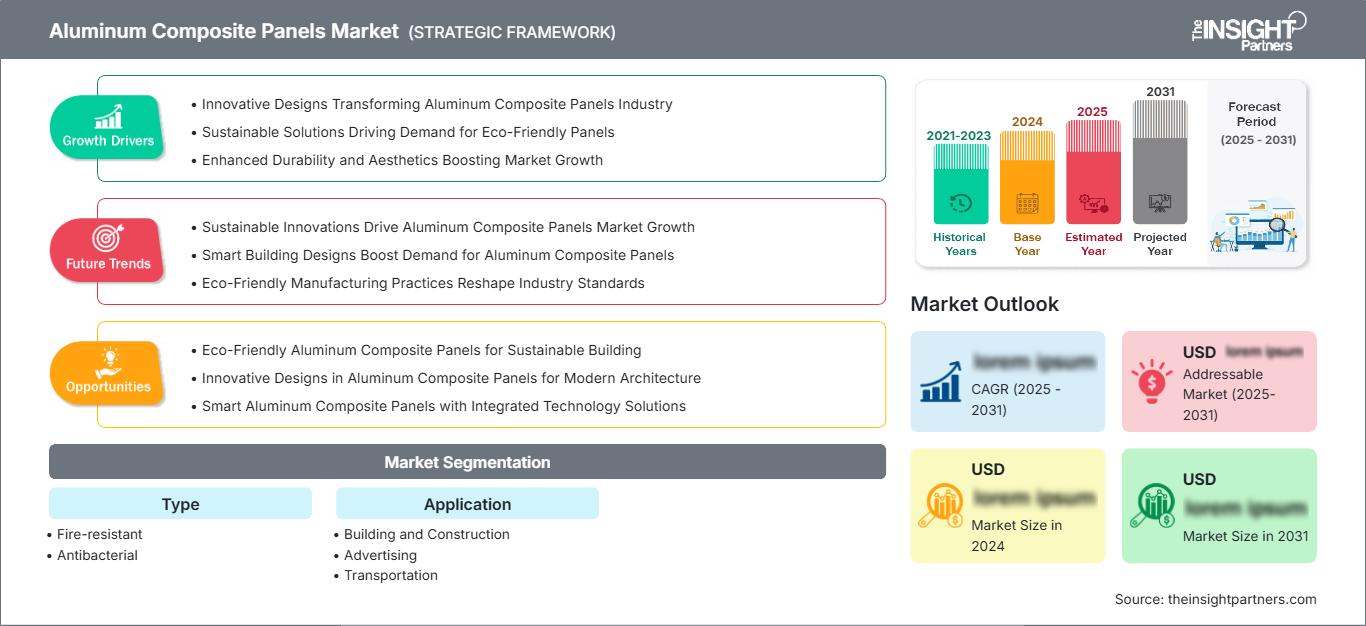
Aluminum Composite Panels Market: Strategic Insights
Regional Insights
North America Aluminum Composite Panels Market
North America accounted for 24–28% of the market share in 2025 and is projected to expand at a CAGR of 5.6–6.0% during 2026–2034. Demand is primarily supported by commercial building renovations, institutional infrastructure upgrades, and increasing emphasis on sustainable façade systems. Building owners continue replacing aging exterior materials with lightweight, corrosion-resistant panels that improve thermal performance while reducing long-term maintenance costs.
The region is also witnessing higher adoption of fire-resistant aluminum composite panels following stricter building safety regulations and updated construction codes. Growing investments in airports, healthcare facilities, educational campuses, and mixed-use developments continue to generate demand. Manufacturers are strengthening regional distribution networks while introducing products with improved recyclability, low-VOC coatings, and higher durability to align with environmental objectives and green building certification programs.
U.S. Aluminum Composite Panels Market
The U.S. represented 78–82% of the North American market in 2025 and is expected to record a CAGR of 5.7–6.1% through 2034. Commercial office redevelopment, healthcare infrastructure modernization, educational facility expansion, and increasing investments in transportation terminals continue to drive market demand. The country also benefits from a strong presence of façade engineering firms, specialized installers, and advanced manufacturing capabilities supporting large-scale architectural projects.
Demand is increasingly shifting toward fire-resistant and sustainable panel systems that comply with evolving building regulations. Companies including Arconic Architectural Products LLC, 3A Composites GmbH, and ALUMAX INDUSTRIAL CO., LTD. maintain strong visibility through distribution partnerships and premium product offerings. Architects increasingly specify aluminum composite panels for high-rise buildings, retail complexes, and public infrastructure because of their design flexibility, weather resistance, and ease of installation compared with traditional façade materials.
Europe Aluminum Composite Panels Market
Europe accounted for a 25–29% share in 2025 and is anticipated to grow at a CAGR of 5.4–5.8% through 2034. Germany remains the leading regional market owing to strong commercial construction activity, advanced manufacturing capabilities, and stringent energy-efficiency regulations encouraging modern façade materials. Continuous renovation of industrial buildings and public infrastructure further supports regional demand.
The UK is witnessing increasing adoption of certified fire-resistant aluminum composite panels following enhanced building safety regulations introduced for high-rise structures. Demand is also supported by commercial refurbishment projects, educational infrastructure investments, and redevelopment of mixed-use properties emphasizing energy-efficient building envelopes.
France, Italy, and Spain collectively contribute significantly through urban redevelopment projects, tourism-related infrastructure, transportation modernization, and commercial construction. Sustainable building initiatives, circular economy objectives, and increasing preference for recyclable construction materials continue encouraging wider adoption of premium aluminum composite panel systems across Southern Europe.
APAC Aluminum Composite Panels Market
Asia Pacific represented 38–42% of the global market in 2025 and is projected to register the highest CAGR of 7.2–7.7% during the forecast period. China continues to lead regional consumption, followed by India, Japan, and South Korea, supported by rapid urbanization, commercial real estate expansion, industrial construction, and government infrastructure investments.
India is emerging as one of the fastest-growing markets due to expanding metro rail projects, airports, smart city initiatives, and commercial developments. Meanwhile, Japan, South Korea, and Australia continue emphasizing sustainable construction materials, premium architectural finishes, and energy-efficient buildings, creating long-term opportunities for technologically advanced aluminum composite panel manufacturers.
Middle East & Africa Aluminum Composite Panels Market
The Middle East & Africa market is expected to expand at a CAGR of 6.0–6.4% through 2034, supported by commercial infrastructure projects, hospitality developments, airports, and mixed-use urban construction. Saudi Arabia remains the largest regional market, benefiting from large-scale economic diversification initiatives, while the UAE continues investing heavily in premium commercial and tourism infrastructure.
South Africa leads demand across Sub-Saharan Africa through commercial construction and institutional building projects, while the rest of the region is gradually adopting modern façade materials for public infrastructure. Growing emphasis on energy-efficient buildings, durable exterior cladding, and aesthetically advanced architectural designs is expected to sustain market expansion across the Middle East and Africa.
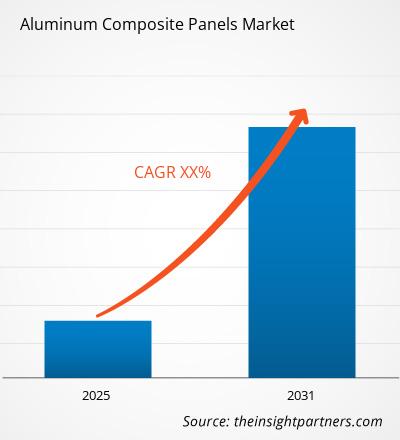
Segmentation Analysis
Type
The Type segment is projected to grow at a CAGR of 6.6–7.0% during 2026–2034. Product innovation is increasingly focused on enhancing fire safety, hygiene, durability, and environmental performance to comply with evolving building regulations. Rising demand from commercial buildings, healthcare facilities, transportation infrastructure, and institutional projects continues to encourage manufacturers to introduce specialized aluminum composite panels with improved functional properties. The aluminum composite panels market scope continues expanding as architects and developers prioritize certified, high-performance façade materials that support sustainable construction objectives.
- Fire-resistant – Fire-resistant aluminum composite panels remain the dominant product category due to stringent building safety regulations worldwide. They are widely specified for commercial towers, airports, hospitals, educational facilities, and public infrastructure requiring enhanced fire performance and regulatory compliance.
- Antibacterial – Antibacterial panels are witnessing increasing adoption across healthcare facilities, pharmaceutical plants, laboratories, food processing facilities, and cleanroom environments where hygienic interior and exterior surfaces contribute to improved sanitation and reduced microbial contamination.
Application
The Application segment is anticipated to register a CAGR of 6.5–6.9% during 2026–2034. Growing investments in urban infrastructure, commercial construction, transportation modernization, and advertising installations continue supporting market expansion. The versatility, lightweight characteristics, weather resistance, and design flexibility of aluminum composite panels enable their adoption across diverse industries seeking durable and aesthetically appealing architectural materials.
- Building and Construction – This remains the largest application owing to extensive use in exterior façades, curtain walls, interior wall cladding, ceilings, canopies, partitions, and architectural renovations across residential, commercial, healthcare, hospitality, and institutional buildings.
- Advertising – Aluminum composite panels are extensively utilized for outdoor signage, digital display structures, billboards, exhibition booths, retail branding, and commercial advertising installations because of their smooth surface finish, printability, durability, and ease of fabrication.
- Transportation – Demand continues increasing across railway stations, metro systems, airports, buses, marine vessels, and commercial vehicle interiors where lightweight construction materials improve fuel efficiency, corrosion resistance, aesthetics, and long-term operational performance.
Opportunity Snapshot
| Application | Revenue Contribution | Trend Tag | Adoption Stage |
| Building and Construction | High | Green Buildings | Mature |
| Advertising | Medium | Digital Signage | Scaling |
| Transportation | Medium | Lightweight Mobility | Emerging |
Aluminum Composite Panels Market Growth Drivers and Impact Analysis
Rapid Urbanization and Green Building Investments Accelerate ACP Adoption
The ongoing urbanization, the rising popularity of commercial real estate, and the growing emphasis on green building materials will ensure continued demand for aluminum composite panels. Governments in the Asia-Pacific, the Middle East, and certain European nations have been emphasizing energy-efficient building construction through new building codes, encouraging architects to use lightweight, efficient thermal insulation materials. Aluminum composite panels are lighter than conventional materials used for facade construction. They are more weather-resistant and offer better design flexibility at lower lifecycle costs than conventional facade cladding materials. The renovation of older commercial buildings is expected to create demand for replacement panels in North America and Europe. Construction of airports, metro stations, hospitals, schools, colleges, and multi-purpose buildings is expected to support the demand.
Fire-Safety Regulations Drive Shift Toward Certified Fire-Resistant Panels
Following multiple global reviews of facade safety requirements, it has become common practice to incorporate fire-resistant aluminum composite panels into the design of high-rise buildings and public structures. Authorities in many countries have tightened requirements for the use of aluminum composite panels, thereby spurring a shift from conventional products to those with mineral fillers and certified fire resistance. This shift has spurred the creation of more effective products and prompted producers to pursue certification and conduct thorough tests. Fire-resistant panels have become one of the fastest-growing premium segments since they allow meeting the safety requirements without sacrificing the aesthetic appearance. As a result, increased awareness among developers, insurers, and facility managers has affected purchasing behavior towards certified products.
Infrastructure Modernization Expands Transportation and Public Sector Applications
Aluminum composite panels have gained traction in applications beyond regular commercial buildings due to the growing number of large-scale infrastructure modernization projects being implemented worldwide. The increased adoption of aluminum composite panels by transportation terminals such as airports, train stations, metros, bus terminals, and walkways can be attributed to their high corrosion resistance, lightweight, and ease of installation. Also, governments are making significant investments in smart cities, where durable, beautiful materials that can withstand diverse climates will be needed. Schools, hospitals, convention centers, and government buildings are now using modern façade systems to improve energy efficiency and enhance architectural aesthetics.
Aluminum Composite Panels Market Future Trends
Growing Adoption of Circular and Low-Carbon Aluminum Solutions
Sustainability has become a defining purchasing criterion across the global construction industry, encouraging manufacturers to increase recycled aluminum content and develop fully recyclable aluminum composite panels. Companies are expanding environmental product declarations, low-carbon aluminum sourcing, and closed-loop recycling initiatives to help customers achieve green building certifications. These aluminum composite panels market trends are also supported by growing investor attention toward environmental performance and lifecycle emissions, prompting greater collaboration between aluminum producers, coating suppliers, and façade manufacturers to reduce overall carbon intensity while maintaining structural performance.
Digital Manufacturing and Customized Architectural Façade Solutions
The increasing adoption of digital printing, automated assembly lines, and precision fabrication technologies is helping companies offer greater customization in their façade systems. Architects are required to use specific colors, textures, metallic and wood finishes, and geometric shapes to distinguish their commercial buildings. The modern manufacturing process not only reduces delivery time but also prevents waste and provides better quality control in line with the customization requirements of particular projects. Moreover, BIM (Building Information Modeling) and digital project planning are improving coordination among panel manufacturers, facade engineers, and constructors, leading to faster installation and improved construction efficiency.
Aluminum Composite Panels Market Opportunities
Growing Investments in Green Commercial Buildings Worldwide
Governments and private developers continue increasing investments in sustainable commercial construction, creating an attractive aluminum composite panels market Forecasts for manufacturers offering certified low-carbon and fire-resistant products. Energy-efficient office buildings, hospitals, educational facilities, airports, and mixed-use developments tend to favor lightweight cladding systems that improve thermal efficiency while lowering life-time maintenance costs. Firms that can offer environmentally friendly ACP panels with high recycling rates and high-quality architectural surfaces are bound to gain a stronger foothold in high-margin infrastructure projects in both mature and emerging economies.
Expansion into High-Performance Interior Architectural Applications
Beyond exterior facades, there is potential for expansion into high-end interior architectural applications, including modular walls, elevators, ceilings, clean rooms, hospitals, labs, airports, hotels, and commercial interior products. The market for decorative and durable building products continues to grow due to the growing need for lightweight panels that offer ease of maintenance, enhanced appearance, moisture resistance, and hygienic resistance. Innovation in building products that incorporate antibacterial coatings, sound-insulating properties, custom finishes, and lighting compatibility will help diversify manufacturers' income streams.
Recent Developments
- December 2025: Golden Aluminum optimized its NEXCAST BlockCaster continuous casting technology, improving aluminum sheet quality, production efficiency, and material consistency. The advancement enhances flat-rolled aluminum availability for downstream architectural applications, including aluminum composite panels and façade systems, while supporting more sustainable manufacturing.
- July 2025: Aludecor Lamination Pvt. Ltd. introduced Alubreeze, India's first home-grown aluminium sun louver system, expanding its architectural façade portfolio beyond aluminium composite panels. The launch strengthens integrated building-envelope solutions focused on solar shading, energy efficiency, and modern façade design, reinforcing demand for complementary aluminium composite panel systems across commercial and institutional construction projects.
Frequently Asked Questions

- Comprehensive Market Sizing and Forecast Analysis
- Detailed Segmentation Analysis
- In-Depth Market Dynamics Assessment
- Regional and Country-Level Insights
- Competitive Landscape and Company Benchmarking
- Strategic Business Intelligence
Recent Reports
Testimonials

The Insight Partners provided valuable market intelligence that supported our global go-to-market strategy. Their team was professional, responsive, and attentive to our feedback, providing thoughtful analysis and helpful methodological clarifications throughout the project.
Junmo Kim Chief Financial Officer (CFO), Enertech Co., Ltd.
The Insight Partners' SCADA System Market report is comprehensive, with valuable insights on current trends and future forecasts. The team was highly professional, responsive, and supportive throughout. We are very satisfied and highly recommend their services.
RAN KEDEM Partner, Reali Technologies LTDs
I requested a report on a very specific software market and the team produced the report in a few days. The information was very relevant and well presented. I then requested some changes and additions to the report. The team was again very responsive and I got the final report in less than a week.
JEAN-HERVE JENN Chairman, Future Analytica
We worked with The Insight Partners for an important market study and forecast. They gave us clear insights into opportunities and risks, which helped shape our plans. Their research was easy to use and based on solid data. It helped us make smart, confident decisions. We highly recommend them.
PIYUSH NAGPAL Sr. Vice President, High Beam Global
The Insight Partners delivered insightful, well-structured market research with strong domain expertise. Their team was professional and responsive throughout. The user-friendly website made accessing industry reports seamless. We highly recommend them for reliable, high-quality research services
YUKIHIKO ADACHI CEO, Deep Blue, LLC.
This is the first time I have purchased a market report from The Insight Partners.While I was unsure at first, I visited their web site and felt more comfortable to take the risk and purchase a market report.I am completely satisfied with the quality of the report and customer service. I had several questions and comments with the initial report, but after a couple of dialogs over email with their analyst I believe I have a report that I can use as input to our strategic planning process.Thank you so much for taking the extra time and making this a positive experience.I will definitely recommend your service to others and you will be my first call when we need further market data.
JOHN SUZUKI President and Chief Executive Officer, Board Director, BK Technologies
I wish to appreciate your support and the professionalism you displayed in the course of attending to my request for information regarding to infectious disease IVD market in Nigeria. I appreciate your patience, your guidance, and the fact that you were willing to offer a discount, which eventually made it possible for us to close a deal. I look forward to engaging The Insight Partners in the future, all thanks to the impression you have created in me as a result of this first encounter.
DR CHIJIOKE ONYIA MANAGING DIRECTOR, PineCrest Healthcare Ltd.Reason to Buy
- Informed Decision-Making
- Understanding Market Dynamics
- Competitive Analysis
- Identifying Emerging Markets
- Customer Insights
- Market Forecasts
- Risk Mitigation
- Boosting Operational Efficiency
- Strategic Planning
- Investment Justification
- Tracking Industry Innovations
- Aligning with Regulatory Trends





 Get Free Sample for