
Amblyopia Treatment Market Demand, Trends & Forecast by 2034
Coverage: By Type (Strabismus Amblyopia, Refractive Amblyopia, Deprivation Amblyopia, Reverse Amblyopia, Others); Product (Eye Patches, Lenses, Eye Drops and Ointments, Surgery); Distribution Channel (Hospital and Retail Pharmacies, Online Distribution, Others), and Geography (North America, Europe, Asia Pacific, and South and Central America)
- Status : Data Released
- Report Code : TIPRE00015969
- Category : Life Sciences
- No. of Pages : 150
- Available Report Formats :


- Last update date : July 15, 2026


2025 Market Size
US$ 4.33 Bn
Base year value
2034 Forecast
US$ 6.25 Bn
Projected by 2034
CAGR 2026-2034
4.17 %
Growth rate
Addressable Market
US$ 48.07 Bn
(2026-2034)
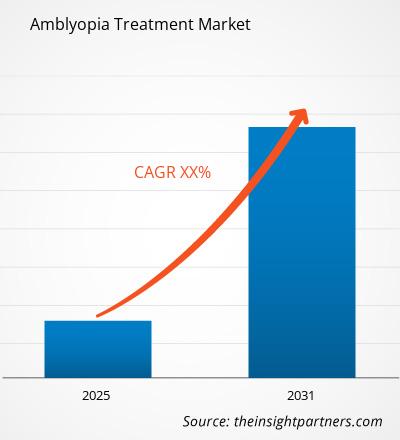
The Amblyopia Treatment Market is projected to reach US$ 4.33 Billion in 2025 and expand to US$ 6.25 Billion by 2034, registering a CAGR of 4.17% during 2026–2034. This is formed through pediatric screening which is constant, occlusions and optical corrections which continue to be used, and digital and binocular treatment which is slowly being adopted.
Across North America, Amblyopia Treatment Market size is supported by structured child vision screening, high optometry access, and payer evaluation of digital therapeutics. The region is estimated to grow at a CAGR range of 4.0–4.5% during 2026–2034, driven by paediatric ophthalmology networks, evidence-based treatment protocols, and faster uptake of prescription lenses, eye drops, and home-based therapeutic platforms.
Amblyopia Treatment Market Assessment and Insights
- North America held 38–41% share in 2025 and is expected to grow at a CAGR of 4.0–4.5% during 2026–2034, supported by paediatric screening, specialist referrals, and strong access to branded optical products.
- U.S. accounted for 82–85% of North America in 2025 and is projected to grow at a CAGR of 3.8–4.3% during 2026–2034 as digital therapies enter broader clinical use.
- Europe represented 27–30% share in 2025 and is likely to grow at a CAGR of 3.7–4.2% during 2026–2034, led by Germany, the UK, France, Italy, and Spain.
- Asia Pacific held 22–25% share in 2025 and is forecast to grow at a CAGR of 5.0–5.6% during 2026–2034, led by China, Japan, India, South Korea, and Australia.
- Largest Segment Refractive Amblyopia accounted for 43–46% market share in 2025 and is projected to grow at a CAGR of 4.0–4.4% during 2026–2034.
- High Growth Segment Online Distribution held 13–16% market share in 2025 and is expected to grow at a CAGR of 6.2–6.8% during 2026–2034.
- Key companies analyzed in detail: Novartis AG, Alcon Inc., Johnson & Johnson Services, Inc., Bausch + Lomb Corporation, CooperVision, Inc., 3M Company, Vivid Vision, Inc., Fresnel Prism & Lens Co., Carl Zeiss Meditec AG, Amblyoptica Holding Pty Ltd.
Source: The Insight Partners' analysis based on proprietary research, government publications, company annual reports, investor presentations, industry databases, and expert interviews.
From single modality patching to multi-layered care, consisting of corrective measures such as refractive correction, occlusion, atropine penalization, special lenses, and surgery on select patients, clinical practices have evolved. The demand for Amblyopia Treatment Market will also be driven by manufacturing consistency in terms of lenses, adhesives, sterile formulations used for ophthalmic treatment, and digital technologies. Product manufacturers are paying attention to user-friendly design and adherence tracking due to the fact that the effectiveness of treatment highly relies on patient adherence to prescribed methods.
Growth is anticipated to be driven by the expansion of vision screening in Asia Pacific, reimbursement models in the United States, and the acceptance of evidence gained outside clinical trials. Investment is centered on binocular digital therapy, ophthalmology workflow and pediatric-friendly delivery systems. The Amblyopia Treatment Market is expected to benefit from public health efforts that emphasize early diagnosis before neural plasticity declines.
Amblyopia Treatment Market Report Scope
| Report Attribute | Details |
|---|---|
| Market size in 2025 | US$ 4.33 Billion |
| Market Size by 2034 | US$ 6.25 Billion |
| Global CAGR (2026 - 2034) | 4.17% |
| Historical Data | 2021-2024 |
| Forecast period | 2026-2034 |
Amblyopia Treatment Market Analysis
Increasing diagnosis is the driving force for the Amblyopia Treatment Market growth because of the screening process during entry to school, pediatric check-ups, and parents' awareness that make undiagnosed patients suitable for treatment. The supply chain consists of optical manufacturers, pharmaceuticals suppliers, manufacturers of the adhesive patches, ophthalmic surgeons, optometrists, pediatric ophthalmologists, pharmacies, and providers of digital therapies. Supply factors do not change since all the major products used in this industry are low-risk, scalable, and marketed via traditional eye-care channels.
The typical care path starts with wearing glasses, patching, atropine, and surgery (if necessary). Research by ophthalmologists' organizations continues to prove the necessity for early intervention, while innovations in home systems help to solve compliance issues. Thus, there is a combination of the old-fashioned products with high revenue per patient and innovative solutions with premium pricing.
The amblyopia treatment market analysis demonstrates that there is a differentiation in the competitive structure between general ophthalmic firms and innovation-driven niche players. Alcon Inc., Johnson & Johnson Services, Inc., Bausch + Lomb Corporation, CooperVision, Inc., and Carl Zeiss Meditec AG operate on vision correction technology and relationships, whereas Vivid Vision, Inc. and Amblyoptica Holding Pty Ltd concentrate on treatment methods innovation.
Current competitive strategy depends not only on pricing but also on scientific research, child-friendliness, and channel synergy. The Novartis AG stays relevant because of its ophthalmology expertise, 3M Company helps to use its products for adhesives and medical materials application purposes, and Fresnel Prism & Lens Co. operates in the field of binocular vision management. Competitive edge will rely on matching the product to compliance.
● REPORT CUSTOMIZATION
Tailor This Report To Align With Your Specific Business Requirements
This report can be customized to align precisely with your business objectives, scope, and target markets. Customization options include tailored segmentation, geography, competitive analysis, and strategic insights to support informed decision-making.
Customize This Report →WHAT YOU CAN ADJUST
- ● Segmentations
- ● Geography
- ● Competitive Analysis
- ● Language Preferences
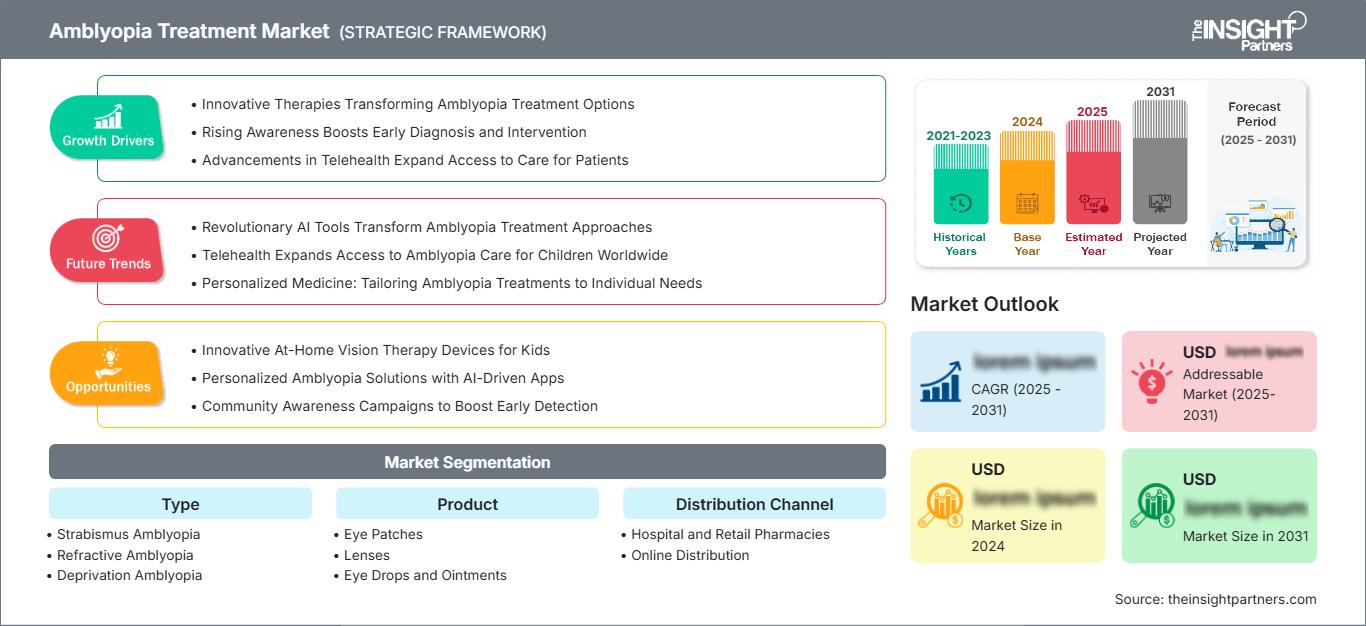
Amblyopia Treatment Market: Strategic Insights
Regional Insights
North America Amblyopia Treatment Market
North America held 38–41% share in 2025 and is forecast to grow at a CAGR of 4.0–4.5% during 2026–2034. The region benefits from routine paediatric vision evaluation, high optometrist density, and strong awareness of amblyopia as a preventable cause of monocular vision loss. The Amblyopia Treatment Market share is also supported by access to branded contact lenses, prescription eye drops, specialty optical devices, and clinical trial participation.
The United States provides the regional demand base, whereas Canada adds its quota through screening done on a provincial basis and referral programs. The digital therapies are more popular than those in most other regions due to familiarity of prescriptive software. Eye drops and patches can be obtained at retail pharmacies; however, online methods are growing with parents demanding repeated supplies.
U.S. Amblyopia Treatment Market
United States represented 82-85% of the North American region in 2025 and was anticipated to grow at a CAGR of 3.8-4.3% between 2026 and 2034. Paediatric ophthalmology networks, optometry chains, and academic institutions play a role in deciding the treatment. The evaluation of digital therapeutics by payers has been on an increasing trend due to the submission of real-world evidence.
The applications have seen a preference for customized lenses, atropine regime, and binocular treatment via VR for children with difficulty adhering to patches. Specialist deficiencies in certain states result in the need for decision support and tele-guided follow-ups. The market is still quite clinical, but adoption speeds up with product capability in providing acuity improvement, ease of use at home, and being used with prescribed drugs.
Europe Amblyopia Treatment Market
In Europe, the region has a 27–30% share in 2025 and will continue to expand with an estimated growth of CAGR of 3.7–4.2% from 2026 to 2034. Germany dominates the region due to the presence of specialized ophthalmology facilities, usage of refractive corrections, and early child check-ups. Public screenings and optometry referrals characterize the UK market, but delays in accessing specialists may occur due to capacity limitations.
Germany has favorable conditions for optical products due to their high penetration and adoption of evidenced-based pediatric ophthalmology. The UK experiences demand for affordable patches, lenses, and digital devices to minimize multiple visits to clinics. France, Italy, and Spain belong to a stable second cluster, where ophthalmologists make diagnoses, have pharmacies for treatment purchases, and increasing online buying trends facilitate the process of treatment continuation.
APAC Amblyopia Treatment Market
The market share of APAC was recorded between 22 and 25 percent in 2025 and is expected to grow at a CAGR of 5.0 – 5.6 percent between 2026 and 2034, which will be the highest growth rate among other significant regional markets. It is led by China owing to its high paediatric patient pool, growing number of eye hospitals, and increasing expenditure on vision correction by parents. The contribution of Japan, South Korea, India, and Australia comes from screening programs, optical retailers, and private ophthalmologists network.
Industrial manufacturing capabilities of lenses and ophthalmic equipment assure a resilient supply in the region. Policy-based child eye health care programs, notably in China and India, have resulted in an increase in diagnostic rates. The online mode of distribution is becoming important owing to repetitive purchases of patches and lenses.
Middle East & Africa Amblyopia Treatment Market
Middle East & Africa is expected to grow at a CAGR of 3.4–3.9% during 2026–2034, with Saudi Arabia leading regional demand. The UAE benefits from private healthcare investment, while South Africa provides the strongest sub-Saharan base for ophthalmology access. Rest of MEA markets remain underpenetrated because screening coverage and specialist availability are uneven.
Healthcare infrastructure investments backed by energy in Gulf countries have increased the capacity of hospitals and access to medical products. In Africa, the need for these products increases based on school screenings, non-profits working towards eye health, and availability of patches and lenses at affordable prices.
Segmentation Analysis
Type
The Type segment is projected to grow at a CAGR of 4.0–4.4% during 2026–2034. Amblyopia Treatment Market scope is broad because clinical presentation differs by cause, severity, and age at diagnosis. Refractive cases dominate routine care, while strabismus and deprivation-related cases require more specialized management. Reverse amblyopia remains comparatively limited but clinically important in monitoring treatment intensity.
- Strabismus Amblyopia is strongly linked to eye misalignment and often requires combined optical correction, patching, atropine, or surgery, making it strategically important for multidisciplinary paediatric ophthalmology practices.
- Refractive Amblyopia remains the largest type because anisometropia and uncorrected refractive errors are frequently detected through school and clinic screening, supporting recurring demand for lenses and follow-up.
- Deprivation Amblyopia represents a smaller but higher-acuity clinical need, often associated with cataract or obstruction, where timely surgery and post-operative visual rehabilitation influence outcomes.
- Reverse Amblyopia is primarily linked to overtreatment of the sound eye, making monitoring protocols, clinician guidance, and caregiver education essential to minimize avoidable vision compromise.
Product
The Product segment is forecast to grow at a CAGR of 3.9–4.3% during 2026–2034. Demand remains concentrated in eye patches and lenses because they form the foundation of first-line management. Eye drops and ointments support pharmacologic penalization, while surgery is reserved for selected structural or alignment-related cases. Product choice reflects severity, adherence risk, clinician preference, and caregiver affordability.
- Eye Patches maintain strong use because occlusion is inexpensive, familiar to clinicians, and widely available, although compliance challenges create opportunities for improved adhesive comfort and child-friendly designs.
- Lenses are central to refractive correction and long-term management, with specialty optics gaining strategic importance where anisometropia, astigmatism, or binocular imbalance must be carefully addressed.
- Eye Drops and Ointments support atropine penalization and adjunctive care, especially for patients who do not tolerate patching well or require alternative adherence-friendly treatment.
- Surgery is critical for selected strabismus or deprivation cases, where alignment correction or removal of visual obstruction can enable subsequent amblyopia therapy to be effective.
Distribution Channel
The Distribution Channel segment is expected to grow at a CAGR of 4.5–5.0% during 2026–2034. Hospital and retail pharmacies remain dominant because prescriptions, ocular safety, and paediatric counseling require professional oversight. Online distribution is expanding rapidly as caregivers reorder patches, lenses, and supportive supplies. The channel mix increasingly reflects convenience, insurance rules, and the rise of home-based treatment models.
- Hospital and Retail Pharmacies remain the core channel for prescribed drops, ointments, patches, and clinician-directed products, benefiting from trust, immediate counseling, and integration with ophthalmology visits.
- Online Distribution is scaling quickly as caregivers seek repeat supplies, subscription convenience, and broader product selection, making it a high-growth route for adherence-focused paediatric treatment support.
Opportunity Snapshot
| Segment Name | Revenue Contribution | Trend Tag | Adoption Stage |
| Eye Patches | High | Comfort Patch | Mature |
| Lenses | High | Custom Optics | Mature |
| Eye Drops and Ointments | Medium | Penalization Care | Scaling |
| Surgery | Medium | Alignment Repair | Scaling |
Amblyopia Treatment Market Growth Drivers and Impact Analysis
Earlier Paediatric Screening Expands Treatable Patient Pools
Increased child vision screening is ensuring that many patients are identified before their visual system loses its ability to respond to treatment. This is due to the fact that outcomes in cases of amblyopia depend very much on the age of the patient at time of intervention, the duration of the treatment and compliance. Programs and initiatives through public health departments, schools and pediatrician referrals have helped improve case detection in North America, Europe and other large Asian countries. This market effect is noticeable in increased baseline levels of usage of corrective eyewear, patches and atropine in children who are going to school. Early identification helps in increasing lifetime value of treatment as patients will require regular check-ups.
Adherence Challenges Accelerate Product Redesign
Inadequate compliance continues to be one of the biggest constraints in amblyopia treatment, especially in cases where the patient needs to wear patches that could be unpleasant or challenging to wear socially. It is becoming a catalyst in the development of improved adhesive materials, patch design, lenses, as well as digital tools aimed at enhancing compliance and making therapy more enjoyable. Clinicians are now looking at how effective the product is in improving compliance among children instead of being guided by therapeutic principles. There will be a move away from commodity treatment tools to differentiated treatment products that help in boosting compliance.
Optical Correction Remains a Scalable Care Foundation
Refractive correction is often the first therapeutic step, giving lenses a durable role across mild, moderate, and combined amblyopia cases. Optical products are scalable because they fit existing optometry workflows, require limited behavior change, and can be updated as children grow. This makes lenses a stable revenue contributor even as digital therapies emerge. The impact extends across the value chain, supporting manufacturers of contact lenses, spectacle lenses, prisms, and specialty optics. In markets with limited paediatric ophthalmologists, optometrists can identify refractive contributors and initiate correction before specialist escalation. This reinforces product demand in both mature regions and high-volume emerging economies where refractive screening is expanding.
Amblyopia Treatment Market Future Trends
Binocular Digital Therapy Moves Toward Routine Care
Amblyopia Treatment Market trends will increasingly include binocular digital therapy as clinicians seek options that improve engagement and support home-based care. The next phase will focus on evidence durability, payer acceptance, and integration with electronic clinical workflows. Digital platforms can track treatment time, support remote monitoring, and provide more child-friendly experiences than conventional patching alone. However, adoption will depend on affordability, headset usability, and clinician confidence in outcomes across age groups. Over the long term, digital therapy is unlikely to replace lenses or patches entirely, but it can become an adjunct for patients with poor adherence, residual deficits, or preference for interactive treatment models.
Data-Guided Personalization Shapes Treatment Protocols
Treatment pathways are expected to become more personalized as clinicians combine visual acuity, binocular function, adherence records, refractive data, and age-based response patterns. This trend will affect both product development and care delivery. Companies may design patches, lenses, drops, or digital programs around narrower patient profiles instead of broad paediatric categories. Decision-support tools can help non-specialist clinicians determine when to continue optical correction, add penalization, adjust patching, or refer for surgery. The market impact will be higher confidence in treatment sequencing and fewer prolonged ineffective regimens. Personalization also supports premium offerings where measurable outcomes can justify higher pricing or reimbursement consideration.
Amblyopia Treatment Market Opportunities
Home-Based Therapy Platforms for Underserved Patients
Amblyopia Treatment Market Forecasts point to meaningful opportunity in home-based treatment models that reduce dependence on frequent specialist visits. This is especially relevant in regions where paediatric ophthalmologists are concentrated in major cities. Companies can invest in caregiver dashboards, adherence tracking, clinician portals, and prescription-linked digital content. The opportunity is not limited to software vendors because patch, lens, and pharmacy suppliers can bundle recurring supplies with home monitoring support. Successful models will need clear clinical protocols, data privacy safeguards, and payer-friendly outcomes evidence. The strongest adoption potential lies in patients who begin with optical correction but require additional therapy without repeated travel burdens.
Emerging-Market Screening and Retail Partnerships
Emerging economies offer an actionable opportunity through partnerships among eye hospitals, schools, optical retailers, pharmacies, and digital health platforms. Large paediatric populations in China, India, Southeast Asia, and parts of the Middle East create substantial untreated demand, but conversion depends on diagnosis and affordable product access. Companies can design tiered offerings that combine low-cost patches, basic refractive correction, and referral pathways for complex cases. Retail pharmacy and optical chains can support repeat purchases and caregiver education. Investment in localized packaging, language-specific instructions, and practitioner training can improve adherence. This opportunity favors companies that combine clinical credibility with distribution discipline and price flexibility.
Recent Developments
- February 2026: CooperVision, Inc. – launched MiSight 1 day in Japan after regulatory authorization, expanding access to a paediatric contact lens platform in a major Asian vision care market. While designed for myopia control, the launch strengthens CooperVision’s paediatric eye care infrastructure, practitioner relationships, and child-focused contact lens adoption across Asia Pacific.
- September 2025: Bausch + Lomb Corporation – launched ASANA gas permeable lenses in the U.S., adding a customizable portfolio covering spherical, aspheric, toric, multifocal, reverse geometry, and keratoconic designs. The launch supports complex vision correction needs and strengthens the company’s specialty lens position in practitioner-led management of paediatric and binocular vision conditions.
- April 2025: Luminopia, Inc. – received FDA clearance expanding its amblyopia treatment label to patients aged 8 to 12 years, widening the indicated age range to 4 to under 13 years. The clearance was supported by real-world evidence from the PUPiL Registry and created a new digital treatment option for older paediatric patients.
Frequently Asked Questions

- Comprehensive Market Sizing and Forecast Analysis
- Detailed Segmentation Analysis
- In-Depth Market Dynamics Assessment
- Regional and Country-Level Insights
- Competitive Landscape and Company Benchmarking
- Strategic Business Intelligence
Recent Reports
Testimonials

The Insight Partners provided valuable market intelligence that supported our global go-to-market strategy. Their team was professional, responsive, and attentive to our feedback, providing thoughtful analysis and helpful methodological clarifications throughout the project.
Junmo Kim Chief Financial Officer (CFO), Enertech Co., Ltd.
The Insight Partners' SCADA System Market report is comprehensive, with valuable insights on current trends and future forecasts. The team was highly professional, responsive, and supportive throughout. We are very satisfied and highly recommend their services.
RAN KEDEM Partner, Reali Technologies LTDs
I requested a report on a very specific software market and the team produced the report in a few days. The information was very relevant and well presented. I then requested some changes and additions to the report. The team was again very responsive and I got the final report in less than a week.
JEAN-HERVE JENN Chairman, Future Analytica
We worked with The Insight Partners for an important market study and forecast. They gave us clear insights into opportunities and risks, which helped shape our plans. Their research was easy to use and based on solid data. It helped us make smart, confident decisions. We highly recommend them.
PIYUSH NAGPAL Sr. Vice President, High Beam Global
The Insight Partners delivered insightful, well-structured market research with strong domain expertise. Their team was professional and responsive throughout. The user-friendly website made accessing industry reports seamless. We highly recommend them for reliable, high-quality research services
YUKIHIKO ADACHI CEO, Deep Blue, LLC.
This is the first time I have purchased a market report from The Insight Partners.While I was unsure at first, I visited their web site and felt more comfortable to take the risk and purchase a market report.I am completely satisfied with the quality of the report and customer service. I had several questions and comments with the initial report, but after a couple of dialogs over email with their analyst I believe I have a report that I can use as input to our strategic planning process.Thank you so much for taking the extra time and making this a positive experience.I will definitely recommend your service to others and you will be my first call when we need further market data.
JOHN SUZUKI President and Chief Executive Officer, Board Director, BK Technologies
I wish to appreciate your support and the professionalism you displayed in the course of attending to my request for information regarding to infectious disease IVD market in Nigeria. I appreciate your patience, your guidance, and the fact that you were willing to offer a discount, which eventually made it possible for us to close a deal. I look forward to engaging The Insight Partners in the future, all thanks to the impression you have created in me as a result of this first encounter.
DR CHIJIOKE ONYIA MANAGING DIRECTOR, PineCrest Healthcare Ltd.Reason to Buy
- Informed Decision-Making
- Understanding Market Dynamics
- Competitive Analysis
- Identifying Emerging Markets
- Customer Insights
- Market Forecasts
- Risk Mitigation
- Boosting Operational Efficiency
- Strategic Planning
- Investment Justification
- Tracking Industry Innovations
- Aligning with Regulatory Trends





 Get Free Sample for