
Amdinocillin Market Size, Share & Trends by 2034
Coverage: By Product (25mg, 50mg, 100mg, 150mg); Application (Urinary Tract Infections, Typhoid, Paratyphoid fever); End User (Hospitals, Clinics, Others) , and Geography (North America, Europe, Asia Pacific, and South and Central America)
- Status : Data Released
- Report Code : TIPRE00019567
- Category : Life Sciences
- No. of Pages : 150
- Available Report Formats :


- Last update date : July 22, 2026


2025 Market Size
US$ 1.28 Bn
Base year value
2034 Forecast
US$ 2.78 Bn
Projected by 2034
CAGR 2026-2034
8.98 %
Growth rate
Addressable Market
US$ 18.15 Bn
(2026-2034)
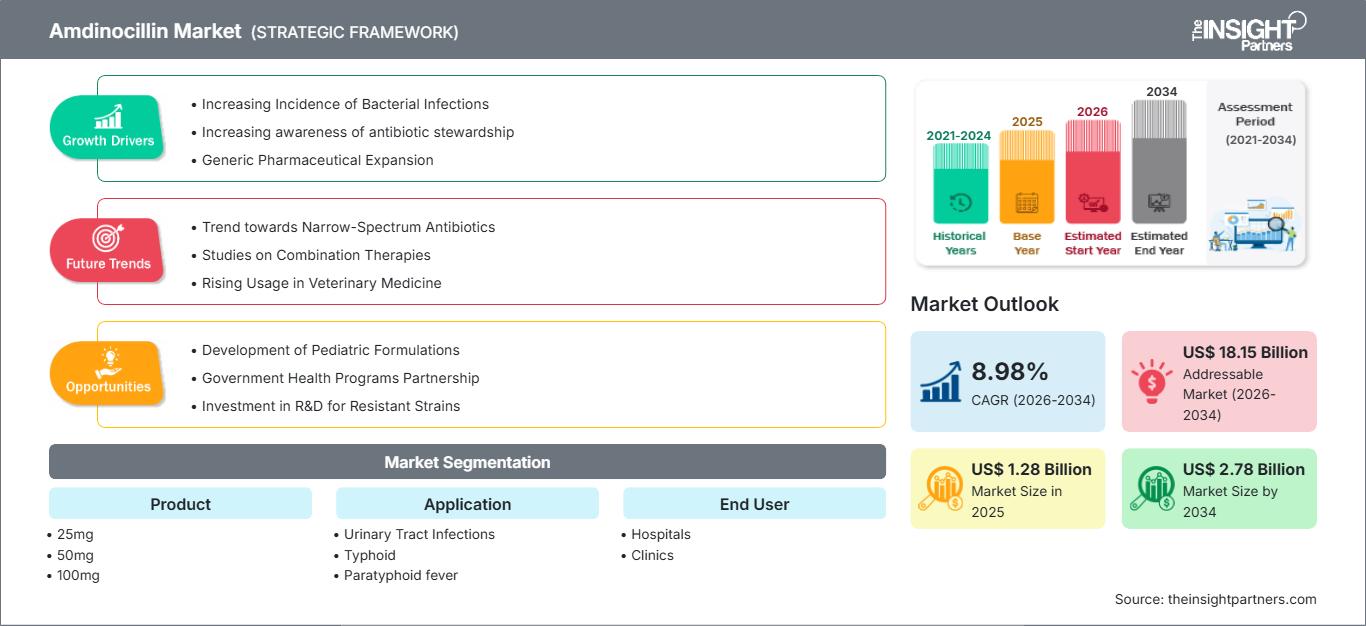
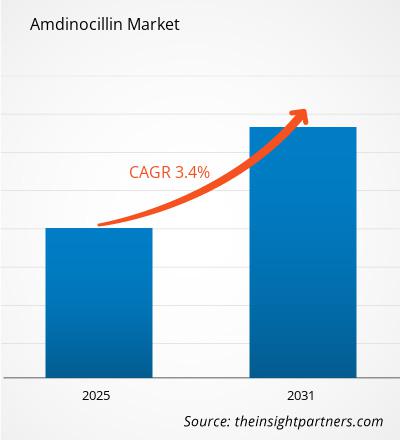
The Amdinocillin Market is projected to grow from US$ 1.28 Billion in 2025 to US$ 2.78 Billion by 2034, registering a CAGR of 8.98% during 2026–2034. The market prospectus indicates growing clinical use of selective beta-lactams as a result of increased resistance towards standard urinary anti-infectives. The demand for the drug is further driven by hospital purchasing, outpatient infection management needs, and antimicrobial stewardship program expansion.
In the North American region, the Amdinocillin Market size is projected to grow with a CAGR of 8.6 to 9.2 percent till 2034 on account of increased availability in the United States of the pivmecillinam drug and increased diagnosis of simple UTIs. Structural demand factors include women’s health prescribing, payers’ awareness of alternative oral antibiotics, and doctor’s preference for narrow spectrum treatment in cases of proven susceptibility.
Amdinocillin Market Assessment and Insights
- North America is estimated to hold 34–38% of the Amdinocillin Market share in 2025 and grow at a CAGR between 8.6–9.2% during 2026–2034, driven by FDA-recognized uUTI treatment pathways, specialist prescribing, and outpatient antimicrobial stewardship adoption.
- US accounts for 78–82% of North America in 2025 and is growing at a CAGR between 8.7–9.3% during 2026–2034, supported by branded launch activity and high UTI treatment volumes.
- Europe holds 28–32% share in 2025 and grows at a CAGR between 7.8–8.4% during 2026–2034, led by the UK, Germany, and Nordic prescribing familiarity with pivmecillinam-based therapies.
- Asia Pacific represents 20–24% share in 2025 and grows at a CAGR between 9.4–10.1% during 2026–2034, led by China, Japan, India, and South Korea as diagnostics and antibiotic access improve.
- Largest Segment: Urinary Tract Infections hold 62–66% market share in 2025, with a CAGR between 9.0–9.6% during 2026–2034, reflecting targeted use in uncomplicated bacterial cystitis.
- High Growth Segment: Clinics hold 30–34% market share in 2025, with a CAGR between 9.5–10.2% during 2026–2034, as outpatient prescribing and rapid urinalysis access expand.
- Key companies analyzed in detail: Novartis AG, Watson Laboratories, Inc., Pfizer Inc., Eisai Co., Ltd., Wyeth LLC, Psycorem, Sigma-Aldrich Co. LLC, VIVAN Life Sciences Pvt. Limited, Utility Therapeutics Ltd., Alembic Pharmaceuticals Limited, Centrient Pharmaceuticals, Aurobindo Pharma Limited.
Source: The Insight Partners' analysis based on proprietary research, government publications, company annual reports, investor presentations, industry databases, and expert interviews.
Market evolution in recent times has been influenced by the focus on narrow-spectrum beta-lactams, availability of oral anti-infectives, and surveillance of antimicrobial resistance. Manufacturers are now geared towards production in line with regulatory-quality standards, whereas distribution is aimed at ensuring supply stability for hospitals and pharmacies. The Amdinocillin Market is also being boosted by demand for laboratory tests, since reference materials and susceptibility test products play a key role in clinical validation, pharmacology and antibiogram development.
Future growth is set to expand across Asia Pacific, Latin America, and certain healthcare systems in the Middle East due to infection surveillance improvement and evidence-based prescribing practices. Investment is likely to go into sourcing of active pharmaceutical ingredients and local packaging and licensing strategies, minimizing risk during launch. Favorable regulatory factors include stewardship guidelines which encourage rational use of antibiotics, and reimbursement acceptance will be a function of clinical benefit and convenience.
Amdinocillin Market Report Scope
| Report Attribute | Details |
|---|---|
| Market size in 2025 | US$ 1.28 Billion |
| Market Size by 2034 | US$ 2.78 Billion |
| Global CAGR (2026 - 2034) | 8.98% |
| Historical Data | 2021-2024 |
| Forecast period | 2026-2034 |
Amdinocillin Market Analysis
The prevalence of community-acquired UTIs, antimicrobial resistance monitoring, and the shift towards targeted oral beta-lactam therapy will continue to propel the Amdinocillin Market into the future. Prescriptions are more prevalent where there is a need for antibiotics other than fluoroquinolones, trimethoprim-sulfamethoxazole, and broad-spectrum antibiotics. The hospital will remain a key place of validation, although prescription in clinics will become more prevalent in regions with fast diagnostics and targeted treatment of the organism.
The supply chain involves API producers, formulations specialists, regulatory licenses owners, reference standards providers, hospital formulary, distributors, and outpatient prescribers. Supply chain operations are affected by beta-lactams separation during production, sterility requirements associated with injection drug platforms and the documentation involved. Due to the fact that amdinocillin and pivmecillinam have a stewardship-relevant profile, reliability of supply is much more critical compared to expansion.
Market positioning is mostly related to large pharmaceutical firms, specialized antibiotic licenses holders, and laboratories suppliers. As per the Amdinocillin Market report, Utility Therapeutics Ltd. and Alembic Pharmaceuticals Limited are key players in terms of availability of branded products in the U.S., but Pfizer Inc., Wyeth LLC, Novartis AG, Eisai Co., Ltd., and Watson Laboratories, Inc. represent the legacy of antibiotics knowledge, experience or history.
Innovations are more focused on companies that can incorporate their dossier, pharmacovigilance system, and reach to the market. Sigma-Aldrich Co. LLC meets research requirements with high purity pivmecillinam, while VIVAN Life Sciences Pvt. Limited, Centrient Pharmaceuticals, and Aurobindo Pharma Limited make the general picture in the beta-lactam industry better. Strategic successes will be achieved through reliability of supply, positioning and geography selection.
● REPORT CUSTOMIZATION
Tailor This Report To Align With Your Specific Business Requirements
This report can be customized to align precisely with your business objectives, scope, and target markets. Customization options include tailored segmentation, geography, competitive analysis, and strategic insights to support informed decision-making.
Customize This Report →WHAT YOU CAN ADJUST
- ● Segmentations
- ● Geography
- ● Competitive Analysis
- ● Language Preferences
Amdinocillin Market: Strategic Insights
Regional Insights
North America Amdinocillin Market
North America is estimated at 34–38% share in 2025, with a CAGR range of 8.6–9.2% through 2034. Demand is anchored by the U.S. approval pathway for pivmecillinam in uncomplicated urinary tract infections and continued concern over resistance in outpatient prescribing. The market share in the region of Amdinocillin represents better reimbursement schemes, guidelines on infections, and formulary assessment capabilities.
Adoption will be achieved from women's clinics, urgent care centers, hospital-based clinics, and specialty pharmacies. Canada plays its role through experience in the use of pivmecillinam, whereas Mexico is more price-sensitive. The stewardship committee will probably choose drugs that leave broader-spectrum antibiotics untouched, particularly if the local antibiogram detects sensitive uropathogens.
U.S. Amdinocillin Market
The U.S. accounts for 78–82% of North America in 2025 and is projected to grow at a CAGR range of 8.7–9.3% during 2026–2034. Commercial dynamics are related to uncomplicated UTIs among adult females in which new oral agents become relevant due to the lack of innovation in antibiotics over the past few years. Alembic Pharmaceuticals Limited and Utility Therapeutics Ltd. are instrumental in the present branded-market access dynamics.
In terms of application, UTIs have become the most prevalent condition driving demand, with clinics and urgent care facilities becoming important due to advances in diagnostic turnaround times. Hospital-based users would be utilizing formulary guidelines for stewardship cases, whereas outpatients will be focusing on tolerability, compliance, and resistance guidance. Reference suppliers such as Sigma-Aldrich Co. LLC would help validate this activity in laboratories.
Europe Amdinocillin Market
Europe holds 28–32% share in 2025 and records a CAGR range of 7.8–8.4% through 2034. The United Kingdom holds a top market position since the primary care pathway and the framework of antimicrobial stewardship promote the prescription of narrow-spectrum therapy whenever possible. The established familiarity of physicians with pivmecillinam facilitates repeat prescriptions, especially in case of uncomplicated cystitis in adult women.
Germany offers the highest diagnostic discipline along with reimbursement structure; that is why it can be called an important stability market. Hospital laboratories and outpatient physicians take into account information about susceptibilities, which promotes targeted usage instead of empiric expansion of usage. France, Italy, and Spain are expected to experience steady growth due to better awareness about resistances, consultation frequency in women’s health, and standardization of the formulary within regional healthcare systems.
In general, Europe’s leadership among countries is alternating between the UK and Germany, depending on channel definitions. The region’s CAGR is smaller than that in the Asia-Pacific region since the adoption is already quite advanced.
APAC Amdinocillin Market
APAC represents 20–24% share in 2025 and is projected to expand at a CAGR range of 9.4–10.1% during 2026–2034. China is the leading country by scale, while Japan and South Korea offer disciplined prescribing environments. India and Australia add growth through outpatient infection management and expanding diagnostic access.
Industrial drivers include regional API capacity, beta-lactam manufacturing expertise, and growing quality-system investments. Policy drivers include antimicrobial stewardship plans and increasing surveillance of resistant Gram-negative pathogens. Adoption remains uneven because pricing, diagnostic access, and reimbursement differ substantially across markets, but higher UTI treatment volumes support long-term opportunity.
Middle East & Africa Amdinocillin Market
The Middle East & Africa region is expected to grow at a CAGR range of 7.2–7.9% during 2026–2034. Saudi Arabia leads demand due to hospital infrastructure, procurement modernization, and antimicrobial stewardship initiatives. The UAE supports private-sector access, while South Africa contributes through infectious disease surveillance and tertiary-care antibiotic protocols.
Energy-linked fiscal capacity in Gulf countries supports healthcare infrastructure spending, specialist clinics, and hospital pharmacy modernization. Rest of MEA remains constrained by affordability and uneven laboratory capacity. Market development will depend on tender inclusion, physician awareness, and stable supply of quality-assured oral antibiotics aligned with national resistance-management priorities.
Segmentation Analysis
Product
The Product segment is expected to grow at a CAGR range of 8.3–9.0% during 2026–2034. The Amdinocillin Market scope across dosage strengths is defined by prescription flexibility, institutional procurement, and formulation availability. Hospitals often evaluate dose standardization for protocol compliance, while clinics focus on convenience, tolerability, and prescriber familiarity. Product differentiation remains moderate because clinical positioning depends more on indication fit and susceptibility than branding alone.
- 25mg products address low-dose research, protocol-specific formulation needs, and controlled procurement settings, making them strategically relevant for laboratory evaluation, limited dosing studies, and niche institutional demand.
- 50mg strength supports flexible prescription planning and selected hospital requirements where titration, treatment duration, or patient-specific dosing considerations influence clinical and procurement decisions.
- 100mg products hold practical importance in organized treatment pathways because they align with mid-strength dispensing needs, pharmacy stocking efficiency, and broader outpatient protocol integration.
- 150mg strength supports higher-dose convenience where clinically appropriate, helping reduce pill burden and improving adherence potential in treatment settings that prioritize simplified oral administration.
Application
The Application segment is projected to grow at a CAGR range of 8.9–9.5% during 2026–2034. Demand is led by urinary tract infections because amdinocillin’s antimicrobial profile is particularly relevant to susceptible uropathogens. Typhoid and paratyphoid fever applications remain more restricted, shaped by local resistance patterns, competing antibiotics, and regional diagnostic capability. Growth depends on evidence-based prescribing and stewardship-aligned inclusion in treatment protocols.
- Urinary Tract Infections dominate application demand because uncomplicated cystitis remains common, outpatient treatment is frequent, and clinicians seek narrower-spectrum alternatives where local susceptibility data support use.
- Typhoid demand is selective, influenced by regional enteric fever burden, antimicrobial susceptibility testing, and competition from established therapies used in public health and hospital protocols.
- Paratyphoid fever remains a specialized application, with clinical use dependent on laboratory confirmation, travel-related infection management, and physician confidence in local resistance evidence.
End User
The End User segment is expected to grow at a CAGR range of 9.1–9.8% during 2026–2034. Hospitals drive formulary validation, pharmacovigilance, and antimicrobial policy integration, while clinics increasingly influence prescription volumes for uncomplicated infections. End-user growth is tied to diagnostic access, payer coverage, physician education, and outpatient treatment efficiency. Clinics are gaining importance as care shifts toward fast evaluation and oral therapy.
- Hospitals remain central to stewardship governance, formulary approval, susceptibility testing, and severe-case evaluation, making them important for clinical credibility and structured antibiotic utilization.
- Clinics are the high-growth end-user channel because uncomplicated UTI diagnosis, women’s health consultations, urgent care visits, and rapid prescribing decisions increasingly occur outside hospital settings.
Opportunity Snapshot
| Application | Revenue Contribution | Trend Tag | Adoption Stage |
| Urinary Tract Infections | High | UTI Stewardship | Scaling |
| Typhoid | Medium | Enteric Control | Emerging |
| Paratyphoid fever | Low | Travel Cases | Emerging |
Amdinocillin Market Growth Drivers and Impact Analysis
Resistance Pressure in Outpatient UTI Treatment
Increasing resistance among pathogens treated by common outpatient antibiotics is resulting in an increased value of targeted oral antibiotics with unique action on susceptible uropathogens. The effect will be more pronounced in women’s health, urgent care, and primary care settings, which prescribe numerous antibiotics due to urinary tract infections. Amdinocillin therapy can limit the prescription of broad-spectrum antibiotics when local antibiogram permits its use. Resistance pressure is an additional factor increasing demand for diagnostics since doctors must be certain of the identity and susceptibility of organisms to switch their treatment regimens. In the course of the forecast period, resistance pressure will affect decisions regarding formulary listing, payer negotiations, and physician training.
Renewed Regulatory Acceptance of Oral Anti-infectives
Recognition of the efficacy of pivmecillinam for therapy in the U.S. has increased faith in the clinical applicability of other existing yet underused oral antibiotics. This generates an immediate market impact through reducing the uncertainties surrounding adoption, promoting plans for commercialization, and providing healthcare practitioners with a reliable treatment regimen for certain uncomplicated UTIs. Its influence is not limited to a single country since other regions may rely on the FDA’s decision when considering their own evidence needs, safety concerns, and reimbursement strategies. Antibiotic firms that have appropriate data packages, manufacturing compliance, and post-launch procedures can benefit more from this driver.
Expansion of Clinic-based Infection Management
There will be a greater pull through the clinic-based channel of care due to quicker diagnosis and treatment of uncomplicated infections. Such centers as urgent care centers, women’s clinics, and primary care groups can help boost prescription volume in case of rapid urinalysis, culture and e-prescribing being introduced. The consequence will be the redistribution of influence from hospital policies only to the decisions made in the outpatient setting. This will have a positive effect on those drugs which are oral, tolerable, and suitable for the short course of treatment regimen. As far as pharmaceutical companies are concerned, this trend will increase the significance of education of physicians, labeling, payer access, and pharmacy availability.
Amdinocillin Market Future Trends
Stewardship-linked Digital Prescribing
Amdinocillin Market trends will increasingly reflect digital prescribing systems that connect diagnosis, local resistance data, allergy history, and formulary rules at the point of care. Over time, electronic health records and clinical decision support tools are expected to guide antibiotic choice more precisely, reducing unnecessary broad-spectrum use. This trend will favor therapies with clear indication boundaries, reliable susceptibility interpretation, and documented safety profiles. Adoption will be most visible in North America, Europe, and digitally advanced Asian healthcare systems, where payers and providers are already measuring antibiotic quality indicators and avoidable prescribing variation.
Localized Supply and Quality Resilience
In the future, procurement plans will be more appreciative of locally-packed antibiotics, quality sourcing of APIs, and supplier redundancy for beta-lactam drugs. Due to the scarcity of antibiotics, hospitals have become more focused on continuity of supply, especially concerning those drugs which are clinically significant but do not have high volume. Manufacturers who are able to prove their quality, segregation process, and reliable delivery will be favored by the hospital and tender procurement processes. This strategy will also lead to collaboration in regions, efficiency in release of batches, and seasonality in inventory planning.
Amdinocillin Market Opportunities
Outpatient UTI Protocol Integration
The strongest near-term opportunity is integration into outpatient UTI protocols where susceptibility patterns, stewardship goals, and patient eligibility align. Amdinocillin Market Forecasts indicate that clinics and urgent care networks can become high-value channels if manufacturers support education, reimbursement clarity, and pharmacy stocking. Investment should focus on clinician decision aids, dosing clarity, culture-linked prescribing workflows, and targeted awareness among women’s health providers. Companies can also collaborate with payers to demonstrate value through reduced inappropriate broad-spectrum use. This opportunity is action-oriented because adoption depends less on broad advertising and more on protocol credibility, access reliability, and measurable treatment outcomes.
Research-grade and Diagnostic Ecosystem Expansion
The second opportunity is to develop the research and diagnosis ecosystem for amdinocillin susceptibility, pharmacology, and resistance surveillance. Reference standards, laboratory reagents, and test kits aid hospitals and research institutes in developing confidence in their clinical practice. Such companies as Sigma-Aldrich Co. LLC can capitalize on the needs of the microbiology laboratories, and the pharmaceutical firms will be indirectly supported by better local evidence. The development of educational efforts within the laboratories, quality reagents, and partnerships with the surveillance networks will increase the trust of prescribers. This opportunity is especially important in Asia Pacific and MEA markets.
Recent Developments
- February 2026: Alembic Pharmaceuticals Limited — Alembic Therapeutics LLC announced the U.S. availability of PIVYA® tablets, 185mg, marking Alembic’s entry into the U.S. branded pharmaceutical market and adding an oral prescription option for adult female patients with uncomplicated urinary tract infections caused by susceptible organisms
- March 2026: Alembic Pharmaceuticals Limited — Alembic Pharmaceuticals reported first prescription-based sale of Pivya® in the U.S. after commercial launch through Alembic Therapeutics LLC. The company positioned the product as its first branded U.S. therapy and a strategic step toward a focused women’s healthcare and specialty prescription portfolio
- April 2024: Utility Therapeutics Ltd. — The U.S. FDA approved Pivya® for adult female patients with uncomplicated urinary tract infections caused by susceptible Escherichia coli, Proteus mirabilis, and Staphylococcus saprophyticus. The approval was based on three controlled clinical trials evaluating composite clinical and microbiological response
Frequently Asked Questions

- Comprehensive Market Sizing and Forecast Analysis
- Detailed Segmentation Analysis
- In-Depth Market Dynamics Assessment
- Regional and Country-Level Insights
- Competitive Landscape and Company Benchmarking
- Strategic Business Intelligence
Recent Reports
Testimonials

The Insight Partners' SCADA System Market report is comprehensive, with valuable insights on current trends and future forecasts. The team was highly professional, responsive, and supportive throughout. We are very satisfied and highly recommend their services.
RAN KEDEM Partner, Reali Technologies LTDs
I requested a report on a very specific software market and the team produced the report in a few days. The information was very relevant and well presented. I then requested some changes and additions to the report. The team was again very responsive and I got the final report in less than a week.
JEAN-HERVE JENN Chairman, Future Analytica
We worked with The Insight Partners for an important market study and forecast. They gave us clear insights into opportunities and risks, which helped shape our plans. Their research was easy to use and based on solid data. It helped us make smart, confident decisions. We highly recommend them.
PIYUSH NAGPAL Sr. Vice President, High Beam Global
The Insight Partners delivered insightful, well-structured market research with strong domain expertise. Their team was professional and responsive throughout. The user-friendly website made accessing industry reports seamless. We highly recommend them for reliable, high-quality research services
YUKIHIKO ADACHI CEO, Deep Blue, LLC.
This is the first time I have purchased a market report from The Insight Partners.While I was unsure at first, I visited their web site and felt more comfortable to take the risk and purchase a market report.I am completely satisfied with the quality of the report and customer service. I had several questions and comments with the initial report, but after a couple of dialogs over email with their analyst I believe I have a report that I can use as input to our strategic planning process.Thank you so much for taking the extra time and making this a positive experience.I will definitely recommend your service to others and you will be my first call when we need further market data.
JOHN SUZUKI President and Chief Executive Officer, Board Director, BK Technologies
I wish to appreciate your support and the professionalism you displayed in the course of attending to my request for information regarding to infectious disease IVD market in Nigeria. I appreciate your patience, your guidance, and the fact that you were willing to offer a discount, which eventually made it possible for us to close a deal. I look forward to engaging The Insight Partners in the future, all thanks to the impression you have created in me as a result of this first encounter.
DR CHIJIOKE ONYIA MANAGING DIRECTOR, PineCrest Healthcare Ltd.Reason to Buy
- Informed Decision-Making
- Understanding Market Dynamics
- Competitive Analysis
- Identifying Emerging Markets
- Customer Insights
- Market Forecasts
- Risk Mitigation
- Boosting Operational Efficiency
- Strategic Planning
- Investment Justification
- Tracking Industry Innovations
- Aligning with Regulatory Trends





 Get Free Sample for