
Aminophylline Market Size, Trends & Growth by 2034
Aminophylline Market Size and Forecasts (2021 - 2034), Global and Regional Share, Trends, and Growth Opportunity Analysis Report Coverage : by Indications (Bronchospasm, Asthma, Emphysema, Chronic Bronchitis); Route of Administration (Oral, Parenteral); Distribution Channel (Hospital Pharmacy, Online Pharmacy, Retail Pharmacy); and Geography (North America, Europe, Asia Pacific, and South and Central America)
- Status : Data Released
- Report Code : TIPRE00040084
- Category : Life Sciences
- No. of Pages : 150
- Available Report Formats :


- Last update date : July 22, 2026


2025 Market Size
US$ 327.64 Mn
Base year value
2034 Forecast
US$ 384.34 Mn
Projected by 2034
CAGR 2026-2034
1.79 %
Growth rate
Addressable Market
US$ 3,225.67 Mn
(2026-2034)
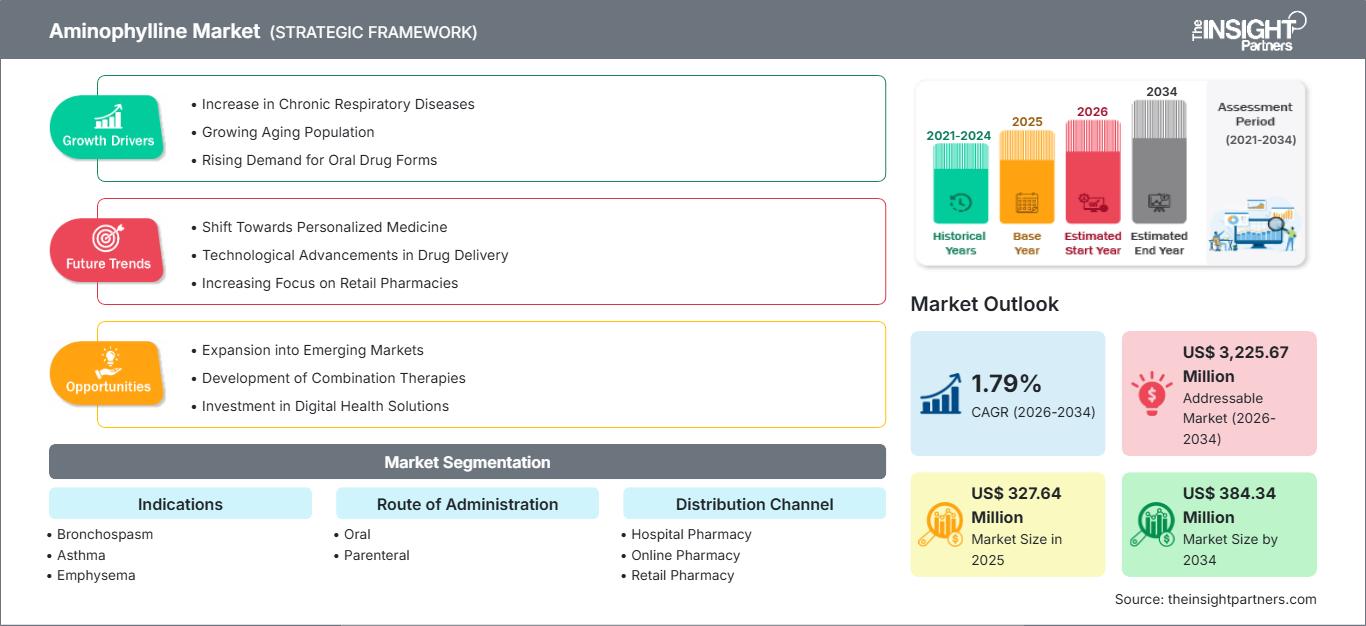
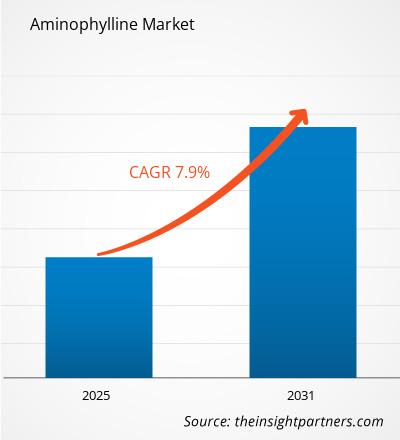
The Aminophylline Market size was valued at US$ 327.64 Million in 2025 and is projected to reach US$ 384.34 Million by 2034, growing at a CAGR of 1.79 % during 2026–2034. Positioned around a known bronchodilator molecule that is used in controlled respiratory management, there is a stable market with demand from hospital formularies, emergency cases, and procurement in cost-conscious health delivery organizations.
The North America Market is forecast to grow within the range of 1.5–1.8% CAGR until 2034 due to existing prescriptive trends and monitoring in respiratory treatment cases. Structural demand is generated from COPD hospital admissions, availability of the injectable formulation in hospitals, and persistence in formulary listings for methylxanthines in clinical cases where needed.
Aminophylline Market Assessment and Insights
- North America held a 35–38% share in 2025 and is expected to grow at a CAGR range of 1.5–1.8% during 2026–2034, supported by hospital-based respiratory care and resilient injectable procurement.
- US accounted for 78–82% of North America in 2025 and is projected to grow at a CAGR range of 1.4–1.7% during 2026–2034, led by emergency-use demand.
- Europe represented a 24–27% share in 2025 and is expected to grow at a CAGR range of 1.3–1.6% during 2026–2034, with Germany, the UK, France, Italy, and Spain leading consumption.
- Asia Pacific held a 26–29% share in 2025 and is forecast to grow at a CAGR range of 2.1–2.5% during 2026–2034, led by China and India, where access-led respiratory treatment supports volume.
- Largest Segment Indications held a market share range of 52–56% in 2025 and is expected to record a CAGR range of 1.6–1.9% during 2026–2034, anchored by asthma and bronchospasm treatment.
- High Growth Segment Distribution Channel held a market share range of 21–24% in 2025 and is expected to grow at a CAGR range of 2.0–2.4% during 2026–2034, supported by online pharmacy adoption.
- Key companies analyzed in detail: Pfizer Inc., Merck KGaA, Endo, Inc., Omega Laboratories Limited, Torque Pharmaceuticals Pvt. Ltd., Actiza Pharmaceutical Private Limited, Teva Pharmaceutical Industries Ltd., Viatris Inc., Hikma Pharmaceuticals PLC, Glenmark Pharmaceuticals Ltd.
Source: The Insight Partners' analysis based on proprietary research, government publications, company annual reports, investor presentations, industry databases, and expert interviews.
The Aminophylline Market has evolved from the general use in chronic respiratory disease treatment towards more focused applications in the medical field, especially with respect to acute care and hospital pharmacy. Production will be driven by the economics of generics manufacture, sterility considerations for injectables and API availability. The technological shift will not be one of new molecular formulations but of quality systems, packaging consistency, batch release times and sourcing visibility for essential medicines.
In the future, new markets are anticipated to contribute to the growth through better respiratory disease diagnosis and increased availability of inexpensive bronchodilators in public hospitals. Favorable regulation factors will consist of essential medicine purchasing discipline, pharmacovigilance-driven dose monitoring and stricter generic quality standards. Hence, the market is likely to be stable and not high growth going forward.
Aminophylline Market Report Scope
| Report Attribute | Details |
|---|---|
| Market size in 2025 | US$ 327.64 Million |
| Market Size by 2034 | US$ 384.34 Million |
| Global CAGR (2026 - 2034) | 1.79% |
| Historical Data | 2021-2024 |
| Forecast period | 2026-2034 |
Aminophylline Market Analysis
There is clinical demand in response to the treatment of acute bronchospasm, COPD flare-ups, and the continuing need for inexpensive respiratory treatments in public and private hospitals. In consequence, growth in the aminophylline market depends on accessibility rather than innovative solutions. Production chains rely on the availability of APIs, sterile vials, hospital bidding processes, and pharmacy inventories; thus, production continuity is an important source of competitiveness.
The ecosystem encompasses API providers, generic producers, sterile injectable producers, distributors, hospital pharmacies, retail pharmacies, and online pharmacies. The narrow therapeutic index ensures that the drug cannot be casually prescribed, but it also strengthens the significance of hospitals. Competitive pressure persists, but formulary and procurement agreements ensure a level of demand in those markets where inhaled drugs are unavailable or unaffordable.
The competitive intensity is driven by generic and injectable manufacturers having already put in place compliance procedures. Pfizer Inc. remains relevant through injectables, whereas Hikma Pharmaceuticals PLC, Teva Pharmaceutical Industries Ltd., Viatris Inc., and Glenmark Pharmaceuticals Ltd. remain relevant because of their wide generic base. Aminophylline Market report shows that differentiators revolve around reliable supply, compliance history, and tenders.
Trends in investments involve investments in the sterile manufacturing capabilities, packaging traceability, and robust sourcing. Companies like Endo, Inc., Omega Laboratories Limited, Torque Pharmaceuticals Pvt. Ltd., and Actiza Pharmaceutical Private Limited have been helping to ensure regional availability through cost and logistics advantages. Positioning should favor companies which have the ability to cater for hospital pharmacies in shortage cycles..
● REPORT CUSTOMIZATION
Tailor This Report To Align With Your Specific Business Requirements
This report can be customized to align precisely with your business objectives, scope, and target markets. Customization options include tailored segmentation, geography, competitive analysis, and strategic insights to support informed decision-making.
Customize This Report →WHAT YOU CAN ADJUST
- ● Segmentations
- ● Geography
- ● Competitive Analysis
- ● Language Preferences
Aminophylline Market: Strategic Insights
Regional Insights
North America Aminophylline Market
North America accounted for a 35–38% share in 2025 and is expected to grow at a CAGR range of 1.5–1.8% during 2026–2034. Demand is concentrated in hospital pharmacies, emergency departments, and respiratory care units where dosing supervision and therapeutic drug monitoring remain important. Aminophylline Market share in the region is supported by mature procurement systems and availability of injectable formats.
The region’s growth profile is constrained by substitution from inhaled beta agonists, corticosteroids, and biologics for selected patients, but maintained by formulary inclusion for severe bronchospasm and COPD exacerbation protocols. Shortage management, domestic inventory visibility, and supplier redundancy influence purchasing behaviour. Canada and Mexico contribute smaller but steady volumes through institutional channels and essential medicine access programs.
U.S. Aminophylline Market
The U.S. represented 78–82% of North America in 2025 and is projected to grow at a CAGR range of 1.4–1.7% during 2026–2034. Hospital pharmacy demand is the primary commercial anchor, supported by injectable use in monitored respiratory episodes and emergency settings. Pfizer Inc., Hikma Pharmaceuticals PLC, Teva Pharmaceutical Industries Ltd., and Viatris Inc. maintain relevance through generic supply capabilities.
Adoption trends are cautious because clinicians balance bronchodilator benefits against adverse-effect monitoring requirements. However, the U.S. market retains strategic importance due to large COPD patient pools, strict procurement standards, and high visibility of drug shortages. Buyers increasingly favor manufacturers with consistent batch availability, transparent resupply timelines, and strong compliance documentation for sterile and oral respiratory products.
Europe Aminophylline Market
Europe held a 24–27% share in 2025 and is expected to grow at a CAGR range of 1.3–1.6% during 2026–2034, with Germany as the leading country. The UK still constitutes a protocol-based market with selective utilization of aminophylline in acute care settings, mostly in cases where first-line treatment options fail or when intense monitoring is feasible.
In Germany, the organized hospital purchasing process coupled with high-quality expectations in generics ensures that this country is a steady market for both injectable and oral formulations. In France, Italy, and Spain, there is continuous demand owing to respiratory hospitals, aging demographics, and national reimbursement programs. However, the price pressure is very high.
APAC Aminophylline Market
Asia Pacific accounted for a 26–29% share in 2025 and is expected to grow at a CAGR range of 2.1–2.5% during 2026–2034. The market leader in this regard is China, whereas India, Japan, South Korea, and Australia add their demand through respiratory treatments offered at hospitals as well as generics.
Supportive policies on essential medicines, increased access to healthcare, and respiratory issues owing to poor air quality contribute towards growing demand. India is supported by domestic production facilities which allow the cost-efficient supply of Aminophylline, although Japan and Australia have more selective use due to advanced respiratory products.
Middle East & Africa Aminophylline Market
Middle East & Africa is expected to grow at a CAGR range of 1.8–2.2% during 2026–2034. Saudi Arabia is the leading country, supported by hospital infrastructure investment, formulary procurement, and respiratory care modernization. The UAE adds demand through private hospital networks and regulated medicine distribution.
South Africa and the Rest of MEA remain access-sensitive markets where affordable generics play a practical role. Energy-linked public investment in Gulf healthcare infrastructure supports institutional purchasing, while uneven access across parts of Africa limits faster uptake. Supply reliability and price stability remain decisive for regional participation.
Segmentation Analysis
Indications
Indications are expected to record a CAGR range of 1.6–1.9% during 2026–2034. This segment defines the Aminophylline Market scope because clinical use is concentrated in respiratory conditions requiring bronchodilation under careful supervision. Demand is strongest where asthma, bronchospasm, emphysema, and chronic bronchitis create recurring hospital presentations, especially among older patients and populations exposed to pollution or smoking-related risks.
- Bronchospasm remains strategically important because aminophylline can be used in acute settings when rapid airway relaxation is required and clinicians can monitor dosing response.
- Asthma contributes steady demand, particularly in severe or refractory episodes where hospital protocols may include methylxanthines as adjunct therapy after first-line treatments.
- Emphysema supports institutional use among older COPD patients, where symptom worsening and exacerbation risk can lead to emergency department treatment.
- Chronic Bronchitis maintains demand through recurring respiratory flare-ups, especially in regions with high smoking exposure, biomass fuel use, and limited access to advanced inhaled therapies.
Route of Administration
Route of Administration is expected to grow at a CAGR range of 1.7–2.0% during 2026–2034. The segment is influenced by care setting, severity, and monitoring requirements. Parenteral administration remains relevant in acute and hospital-based treatment, while oral formats serve controlled use where physicians assess suitability, dosage, and patient adherence.
- Oral formulations support maintenance-oriented prescribing in selected patients, particularly where affordability and availability make established bronchodilators practical within physician-supervised treatment plans.
- Parenteral administration is critical in acute care because injectable aminophylline enables controlled delivery, rapid therapeutic action, and closer monitoring during severe respiratory episodes.
Distribution Channel
Distribution Channel is expected to grow at a CAGR range of 2.0–2.4% during 2026–2034. Channel dynamics reflect the balance between institutional procurement and expanding pharmacy access. Hospital pharmacies dominate acute-use demand, retail pharmacies support prescription fulfillment, and online pharmacies are gaining relevance where regulated digital dispensing improves availability and patient convenience.
- Hospital Pharmacy is the dominant access point because injectable use and monitored respiratory treatment are concentrated in emergency departments, inpatient wards, and critical care settings.
- Online Pharmacy is gaining relevance for prescription-based oral products as digital healthcare adoption improves refill convenience, price comparison, and medicine access in urban markets.
- Retail Pharmacy remains important for local prescription fulfillment, especially in emerging markets where patients rely on neighborhood pharmacies for affordable respiratory medicines.
Opportunity Snapshot
| Indications | Revenue Contribution | Trend Tag | Adoption Stage |
| Bronchospasm | High | Acute Care | Mature |
| Asthma | High | Adjunct Therapy | Mature |
| Emphysema | Medium | COPD Support | Scaling |
| Chronic Bronchitis | Medium | Flare Control | Scaling |
Aminophylline Market Growth Drivers and Impact Analysis
Persistent respiratory disease burden in cost-sensitive care systems
The prevalence of respiratory diseases continues to be the key most enduring force behind the Aminophylline Market, especially in nations where COPD, asthma, biomass smoke, and air pollution maintain high rates of admissions in hospitals. Public health initiatives related to WHO continue to prioritize respiratory disease control efforts, whereas many health care systems still need cost-effective bronchodilators. Although Aminophylline is not the preferred agent under certain advanced guidelines, its low price and known effectiveness make it applicable where resources are limited. It shows the greatest effect in public hospitals and emergency departments that need an alternative when exacerbations occur.
Hospital formulary retention and injectable procurement discipline
The fact that hospital formularies include aminophylline means there is sustained demand as aminophylline is still a known choice for the management of acute respiratory problems, particularly where IV administration of bronchodilator treatment is deemed suitable. Purchasing decisions are now leaning toward vendors who are able to provide consistent batches and documentation along with reliable resupplies. This is due to the possibility of shortages of injectable drugs affecting protocol implementation and leading to substitutions. The practical effect of this can be seen through the decision-making process, which sees hospitals favoring reliability over any cost differentials. Pharmaceutical companies with sterile manufacturing facilities, pharmacovigilance programs, and procurement experience have an advantage.
Generic affordability and broader pharmacy access in emerging markets
Affordability of generics is one of the important drivers that enable the demand in countries which lack advanced inhalation treatments, biological drugs, and specialty pulmonary care in general. Aminophylline has an existing manufacturing infrastructure and relatively affordable pricing that makes it important for bidding processes, prescription from retail pharmacies and hospitals' stock management purposes. Improved accessibility at pharmacies will help patients taking selected oral forms continue their therapy while receiving necessary medical supervision. This factor is important for countries such as those of Asia Pacific, the Middle East, Africa and some parts of Latin America where healthcare development is a long-term process and funds are limited.
Aminophylline Market Future Trends
Greater emphasis on monitored and protocol-based respiratory use
Aminophylline Market trends point toward more disciplined clinical use rather than broad prescribing expansion. Hospitals are expected to refine protocols around therapeutic drug monitoring, patient selection, adverse-event management, and combination therapy. This shift will support demand from trained acute care settings while limiting unsupervised use. The trend improves market quality by aligning aminophylline with cases where clinicians see a specific role, particularly severe bronchospasm or COPD exacerbation requiring close observation. Suppliers may respond by improving labeling support, packaging clarity, and pharmacovigilance communication. The outcome is a smaller but more defensible usage base that prioritizes safety, clinical governance, and institutional purchasing confidence.
Supply resilience becoming a competitive differentiator
The future competition in the industry will involve supply resilience as hospitals and authorities concentrate on maintaining continuity of essential drugs. Injectable drugs are associated with increased difficulties with respect to manufacturing processes, batch release and risks of capacity problems. Manufacturers willing to develop strategies for multi-sourcing, redundancy of active pharmaceutical ingredients, sterilized manufacturing and communication during shortages are likely to gain greater trust from buyers. The issue is especially important for North American and European markets in light of shortage databases, but also for emerging markets due to reliance on imports. For the forecast period, companies' success will be less about pricing and more about reliability and compliance.
Aminophylline Market Opportunities
Institutional tender expansion across emerging healthcare systems
Public hospital procurement offers a practical opportunity for manufacturers that can combine affordability with documented quality. Aminophylline Market Forecasts indicate that incremental demand will come from regions expanding respiratory care capacity, particularly district hospitals and emergency departments. Companies can target tenders by offering stable supply, country-specific registration support, and packaging suited to hospital workflows. Partnerships with local distributors can improve reach while reducing stock-out risk. The opportunity is strongest where governments are strengthening essential medicine lists and increasing access to acute care. Winning strategies will emphasize compliance, delivery reliability, and lifecycle support rather than product novelty, creating room for both global and regional generic suppliers.
Digitally enabled pharmacy access for prescription oral formulations
Regulated business models for online pharmacies offer a chance for the prescription-only form of aminophylline in areas where digital healthcare services are enhancing access to medication. However, this opportunity is not focused on unregulated growth, but rather improved refill procedures, verification of prescriptions, and visibility of availability for those who are already under medical supervision. The manufacturer or distributor can collaborate with licensed e-pharmacies to increase channel transparency and to decrease the risk of counterfeits. The greatest opportunity is present in urban Asia Pacific and selective Middle East regions, which are developing digital pharmacy business models.
Recent Developments
- November 2025: Par Health, Inc. — completed its spin-off from Mallinckrodt to operate as an independent generic pharmaceuticals and sterile injectables company, with capabilities across APIs, sterile injectables, and essential medicines. The development is relevant to institutional injectable supply resilience and generic procurement strategies.
- August 2025: Endo, Inc. — completed its merger with Mallinckrodt, with the companies announcing plans to combine their generics businesses and Endo’s sterile injectables business under Par Health. The transaction strengthened manufacturing scale and portfolio breadth across regulated generic and hospital supply channels.
- March 2025: Pfizer Inc. — ASHP reported that Pfizer’s aminophylline injection shortage, initially linked to manufacturing delays, had both 10 mL and 20 mL vial presentations available as of its March 2025 update. The update highlighted the importance of resupply visibility in hospital injectable procurement.
Frequently Asked Questions

- Comprehensive Market Sizing and Forecast Analysis
- Detailed Segmentation Analysis
- In-Depth Market Dynamics Assessment
- Regional and Country-Level Insights
- Competitive Landscape and Company Benchmarking
- Strategic Business Intelligence
Recent Reports
Testimonials

The Insight Partners provided valuable market intelligence that supported our global go-to-market strategy. Their team was professional, responsive, and attentive to our feedback, providing thoughtful analysis and helpful methodological clarifications throughout the project.
Junmo Kim Chief Financial Officer (CFO), Enertech Co., Ltd.
The Insight Partners' SCADA System Market report is comprehensive, with valuable insights on current trends and future forecasts. The team was highly professional, responsive, and supportive throughout. We are very satisfied and highly recommend their services.
RAN KEDEM Partner, Reali Technologies LTDs
I requested a report on a very specific software market and the team produced the report in a few days. The information was very relevant and well presented. I then requested some changes and additions to the report. The team was again very responsive and I got the final report in less than a week.
JEAN-HERVE JENN Chairman, Future Analytica
We worked with The Insight Partners for an important market study and forecast. They gave us clear insights into opportunities and risks, which helped shape our plans. Their research was easy to use and based on solid data. It helped us make smart, confident decisions. We highly recommend them.
PIYUSH NAGPAL Sr. Vice President, High Beam Global
The Insight Partners delivered insightful, well-structured market research with strong domain expertise. Their team was professional and responsive throughout. The user-friendly website made accessing industry reports seamless. We highly recommend them for reliable, high-quality research services
YUKIHIKO ADACHI CEO, Deep Blue, LLC.
This is the first time I have purchased a market report from The Insight Partners.While I was unsure at first, I visited their web site and felt more comfortable to take the risk and purchase a market report.I am completely satisfied with the quality of the report and customer service. I had several questions and comments with the initial report, but after a couple of dialogs over email with their analyst I believe I have a report that I can use as input to our strategic planning process.Thank you so much for taking the extra time and making this a positive experience.I will definitely recommend your service to others and you will be my first call when we need further market data.
JOHN SUZUKI President and Chief Executive Officer, Board Director, BK Technologies
I wish to appreciate your support and the professionalism you displayed in the course of attending to my request for information regarding to infectious disease IVD market in Nigeria. I appreciate your patience, your guidance, and the fact that you were willing to offer a discount, which eventually made it possible for us to close a deal. I look forward to engaging The Insight Partners in the future, all thanks to the impression you have created in me as a result of this first encounter.
DR CHIJIOKE ONYIA MANAGING DIRECTOR, PineCrest Healthcare Ltd.Reason to Buy
- Informed Decision-Making
- Understanding Market Dynamics
- Competitive Analysis
- Identifying Emerging Markets
- Customer Insights
- Market Forecasts
- Risk Mitigation
- Boosting Operational Efficiency
- Strategic Planning
- Investment Justification
- Tracking Industry Innovations
- Aligning with Regulatory Trends





 Get Free Sample for