
Amniocentesis Needle Market Growth, Trends & Forecast by 2034
Coverage: By Needle Type (100-150 mm Needles, Larger Than 150 mm Needles and Smaller Than 100 mm Needles); Procedure (Amniocentesis Procedures, Amnioreduction Procedures, Amnioinfusion Procedures, Cordocentesis Procedures, and Fetal Blood Transfusion Procedures); End User (Clinics, Diagnostic Laboratories, Hospitals, and Other End Users), and Geography (North America, Europe, Asia Pacific, and South and Central America)
- Status : Data Released
- Report Code : TIPRE00006820
- Category : Life Sciences
- No. of Pages : 150
- Available Report Formats :


- Last update date : July 22, 2026


2025 Market Size
US$ 265.50 Mn
Base year value
2034 Forecast
US$ 431.45 Mn
Projected by 2034
CAGR 2026-2034
5.54 %
Growth rate
Addressable Market
US$ 3,159.32 Mn
(2026-2034)
The Amniocentesis Needle Market was valued at US$ 265.50 Million in 2025 and is projected to reach US$ 431.45 Million by 2034; it is expected to register a CAGR of 5.54% from 2026 to 2034. Growth is supported by continued use of invasive prenatal diagnostics for confirmatory testing, expanding fetal medicine programs, and demand for echogenic, sterile, single-use needles.
North America remains a high-value regional base, with the Amniocentesis Needle Market size supported by advanced maternal-fetal medicine networks, favourable access to ultrasound-guided procedures, and specialist-led prenatal counselling. The region is estimated to grow at a 5.1–5.6% CAGR during 2026–2034, driven by high-risk pregnancy management, strong hospital procurement systems, and sustained demand for confirmatory diagnostics after non-invasive screening.
Amniocentesis Needle Market Assessment and Insights
- North America accounted for 34–37% share in 2025 and is expected to grow at a CAGR of 5.1–5.6% between 2026–2034, supported by specialist fetal medicine units, ultrasound adoption, and established reimbursement pathways.
- US represented 78–82% of North America in 2025 and is projected to grow at a CAGR of 5.0–5.5% between 2026–2034, led by hospital-based genetic counseling and advanced prenatal testing.
- Europe held 27–30% share in 2025 and is expected to grow at a CAGR of 4.8–5.3% between 2026–2034, with Germany, France, the UK, Italy, and Spain leading structured prenatal diagnosis programs.
- Asia Pacific accounted for 23–26% share in 2025 and is projected to grow at a CAGR of 6.2–6.8% between 2026–2034, led by China, Japan, India, South Korea, and Australia.
- Largest Segment 100-150 mm Needles held 52–56% market share in 2025 and is expected to grow at a CAGR of 5.2–5.7% between 2026–2034 due to broad procedural fit.
- High Growth Segment Hospitals held 56–60% market share in 2025 and are projected to grow at a CAGR of 5.8–6.4% between 2026–2034 as complex fetal procedures consolidate in tertiary centers.
- Key companies analyzed in detail: Biopsybell S.r.l., Cook Medical LLC, CooperSurgical, Inc., Laboratoire CCD, Möller Medical GmbH, RI.MOS. S.r.l., Rocket Medical plc, TMT Tıbbi Medikal Malzemeler Sanayi ve Ticaret A.Ş., Tsunami S.r.l., Medline Industries, LP.
Source: The Insight Partners' analysis based on proprietary research, government publications, company annual reports, investor presentations, industry databases, and expert interviews.
Evolution of product development within the Amniocentesis Needle market has seen movement away from generic spinal needles to specially-designed echogenic needles that facilitate better visibility of the needle tip while performing ultrasound-guided operations on fetuses. Manufacturers are also developing more efficient designs in terms of the bevel angles, stiffness of stylet, texture, presence of centimeter marks and hub design for aiding procedure accuracy. Changes in production dynamics can also be seen with European specialists and US distributors ensuring compliance with regard to sterilization, CE marking and FDA standards as well as hospital tenders.
During the forecast period, usage will increase beyond the existing mature diagnostics facilities owing to investments by private maternity care chains, fetal treatment centers and genetic medicine facilities within their overall prenatal care facilities. Favorable regulatory trends regarding single use sterile products, tracing capabilities and safer procedures will benefit manufacturers that have validated manufacturing processes. Incremental growth is likely to be recorded in emerging Asia Pacific and selected Middle Eastern countries.
Amniocentesis Needle Market Report Scope
| Report Attribute | Details |
|---|---|
| Market size in 2025 | US$ 265.50 Million |
| Market Size by 2034 | US$ 431.45 Million |
| Global CAGR (2026 - 2034) | 5.54% |
| Historical Data | 2021-2024 |
| Forecast period | 2026-2034 |
Amniocentesis Needle Market Analysis
The Amniocentesis Needle Market growth is driven by rising use of confirmatory prenatal diagnostics after screening results indicate chromosomal risk, fetal infection assessment, or procedure-specific fluid management requirements. Congenital disorders have been emphasized time and again by the global health organizations as an important pre- and post-natal problem, which underscores the importance of accurate fetal diagnostics.
The value chain consists of stainless steel cannula manufacturers, precision grinding service providers, echogenic surface treatment service providers, sterilization service providers, regulatory consultants, hospital-based sales force, and regional distributors. The dynamics of supply chain work well for the companies that offer multiple lengths and gauges, and also support ultrasound compatibility.
The Amniocentesis Needle Market report indicates a moderately fragmented competitive landscape where specialist European manufacturers compete with diversified women’s health and medical supply companies. Both Cook Medical LLC and CooperSurgical, Inc. enjoy strong reproductive health portfolio products, while Biopsybell S.r.l., Laboratoire CCD, RI.MOS. S.r.l., and Tsunami S.r.l. are competitors that rely on procedure-oriented needle design.
Funding continues to be focused on increasing product visibility, regulatory filings, distribution, and sterile packaging rather than simply automation of production processes. Rocket Medical plc, Möller Medical GmbH, TMT Tıbbi Medikal Malzemeler Sanayi ve Ticaret A.Ş., and Medline Industries, LP improve their access through obstetrics, fetal medicine, and hospital sales channels.
● REPORT CUSTOMIZATION
Tailor This Report To Align With Your Specific Business Requirements
This report can be customized to align precisely with your business objectives, scope, and target markets. Customization options include tailored segmentation, geography, competitive analysis, and strategic insights to support informed decision-making.
Customize This Report →WHAT YOU CAN ADJUST
- ● Segmentations
- ● Geography
- ● Competitive Analysis
- ● Language Preferences
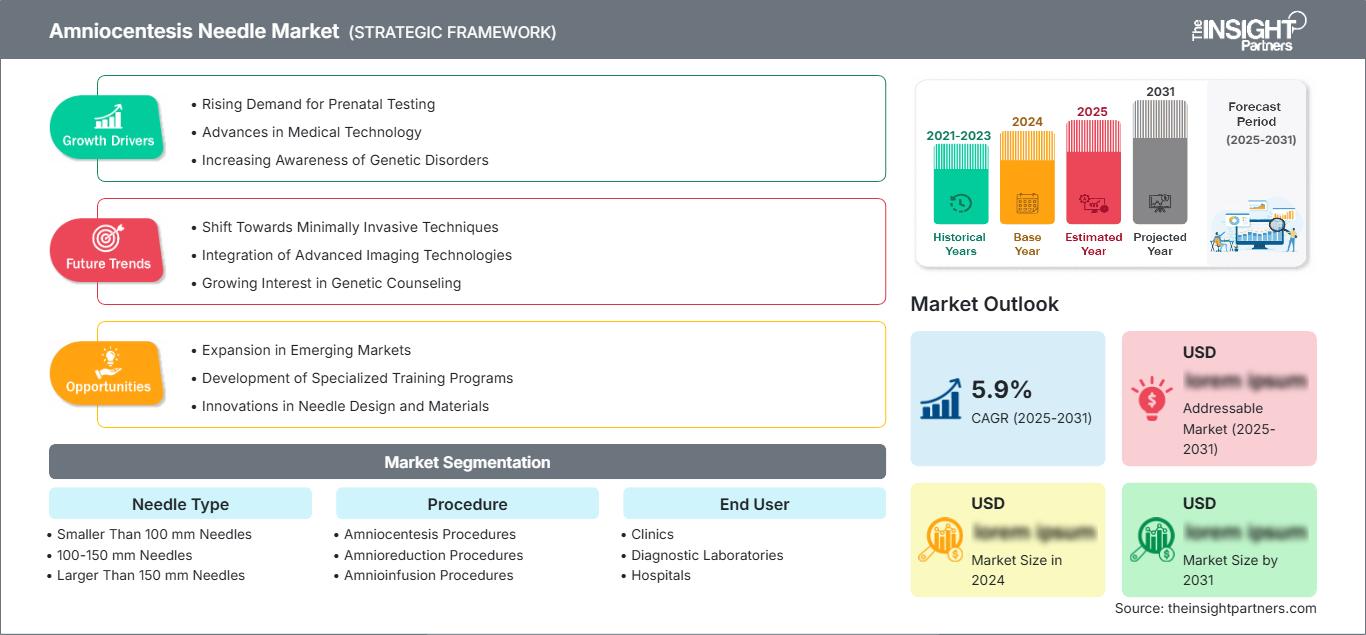
Amniocentesis Needle Market: Strategic Insights
Regional Insights
North America Amniocentesis Needle Market
North America accounted for 34–37% share in 2025 and is expected to register a CAGR of 5.1–5.6% during 2026–2034. The region benefits from high maternal-fetal medicine density, broad availability of ultrasound-guided procedures, and routine genetic counseling pathways. The Amniocentesis Needle Market share in North America is sustained by hospital procurement discipline and demand for sterile, single-use echogenic needles.
Procedure volumes are anchored by tertiary hospitals, academic centers, and specialized prenatal diagnostic clinics. The region also has strong manufacturer presence through Cook Medical LLC, CooperSurgical, Inc., and Medline Industries, LP. Growth is moderate rather than explosive because non-invasive prenatal testing reduces some diagnostic procedures, but positive screens still require confirmatory invasive testing.
U.S. Amniocentesis Needle Market
The U.S. represented 78–82% of North America in 2025 and is projected to grow at a CAGR of 5.0–5.5% during 2026–2034. Demand is led by tertiary hospital networks, maternal-fetal medicine specialists, and genetic counselors who use amniocentesis to confirm abnormal screening results, assess fetal infection, and support pregnancy management decisions.
Company presence is strong, with Cook Medical LLC, CooperSurgical, Inc., and Medline Industries, LP supporting procurement through product availability, procedural documentation, and distributor relationships. Application trends show greater preference for echogenic tip designs, 20–22 gauge needles, and lengths suited to ultrasound-guided transabdominal sampling. Institutional buyers increasingly evaluate visibility, sterility assurance, packaging integrity, and clinician familiarity.
Europe Amniocentesis Needle Market
Europe held 27–30% share in 2025 and is expected to grow at a CAGR of 4.8–5.3% during 2026–2034. Germany is the leading country due to structured prenatal diagnosis, strong hospital infrastructure, and specialized obstetric centers. UK adoption is supported by fetal medicine units and referral pathways for high-risk pregnancies.
France maintains stable demand through established women’s health manufacturers and hospital-led prenatal screening programs, with Laboratoire CCD contributing domestic manufacturing relevance. Germany benefits from strong clinical governance and specialist procurement. Italy and Spain remain important because regional hospitals continue to invest in ultrasound-guided obstetric diagnostics, though public procurement cycles can slow replacement decisions.
APAC Amniocentesis Needle Market
APAC accounted for 23–26% share in 2025 and is projected to grow at a CAGR of 6.2–6.8% from 2026–2034. China is the leading country, supported by large birth volumes, expanding prenatal screening capacity, and investments in maternal health infrastructure. Japan, South Korea, Australia, and India add procedural demand through specialist centers.
Policy-driven hospital upgrades, increasing ultrasound penetration, and wider access to genetic counseling are strengthening the regional base. India and China show the fastest incremental opportunity as private hospitals develop fetal medicine capabilities. Australia and Japan contribute premium demand for high-quality echogenic devices, while South Korea benefits from technologically advanced obstetric care settings.
Middle East & Africa Amniocentesis Needle Market
The Middle East & Africa region is expected to grow at a CAGR of 4.6–5.2% during 2026–2034. Saudi Arabia is the leading market, supported by tertiary hospital expansion, maternal health investment, and specialist obstetric services. The UAE follows with private hospital networks and medical tourism-linked prenatal diagnostics.
South Africa remains the main sub-Saharan market due to established private healthcare capacity and specialist diagnostic centers. Rest of MEA demand is more selective, shaped by access to fetal medicine expertise and ultrasound availability. Energy-backed infrastructure spending in Gulf countries supports hospital modernization, creating a stable base for imported sterile obstetric devices.
Segmentation Analysis
Needle Type
Needle Type is expected to grow at a CAGR of 5.1–5.7% during 2026–2034. This Amniocentesis Needle Market scope covers short, standard, and long needles selected according to maternal anatomy, gestational age, ultrasound access, and procedural depth. Procurement preference is strongest for echogenic, depth-marked, sterile needles that support predictable visualization and controlled entry.
- Smaller Than 100 mm Needles serve selected cases where shallow transabdominal access is sufficient, especially in early gestational procedures or patients with favorable anatomy requiring shorter controlled insertion.
- 100-150 mm Needles dominate adoption because they balance reach, stability, and clinician familiarity across routine amniocentesis, making them strategically important for hospitals and distributors.
- Larger Than 150 mm Needles address complex access needs, higher maternal body mass index, deeper placental positioning, and selected fetal medicine procedures requiring extended needle length.
Procedure
Procedure is projected to grow at a CAGR of 5.3–5.9% during 2026–2034. Amniocentesis remains the core procedure, while adjacent fetal interventions broaden utilization across amnioreduction, amnioinfusion, cordocentesis, and fetal blood transfusion. Procedure selection depends on prenatal diagnosis indication, fetal condition, fluid volume status, and specialist capability.
- Amniocentesis Procedures represent the principal demand base because they support confirmatory chromosomal testing, genetic analysis, infection evaluation, and biochemical assessment after screening or ultrasound findings.
- Amnioreduction Procedures require reliable fluid aspiration tools for managing symptomatic polyhydramnios, supporting maternal comfort, respiratory function, and risk reduction in selected high-volume amniotic fluid cases.
- Amnioinfusion Procedures use controlled access to introduce fluid in selected obstetric contexts, requiring sterile needle performance, procedural accuracy, and careful ultrasound-guided placement.
- Cordocentesis Procedures demand precise echogenic visualization because sampling from the umbilical cord requires advanced operator skill, stable needle control, and stringent procedural safety.
- Fetal Blood Transfusion Procedures are specialized interventions where needle reliability, visualization, and access control support management of fetal anemia in advanced maternal-fetal medicine centers.
End User
End User is expected to grow at a CAGR of 5.5–6.1% during 2026–2034. Hospitals are the dominant purchasing channel because invasive fetal procedures require ultrasound infrastructure, emergency support, blood bank access, and multidisciplinary oversight. Clinics and diagnostic laboratories create additional demand where specialist physicians perform procedures or process prenatal samples.
- Clinics contribute demand through specialist obstetric practices and fetal medicine clinics that perform lower-complexity procedures, particularly in urban settings with established ultrasound capability.
- Diagnostic Laboratories influence adoption indirectly by processing amniotic fluid or fetal samples, supporting partnerships with procedure centers, hospitals, and genetic counseling networks.
- Hospitals dominate procurement because they integrate maternal-fetal specialists, imaging, anesthetic support, neonatal services, and emergency pathways required for higher-risk invasive prenatal procedures.
Opportunity Snapshot
| Segment Name | Revenue Contribution | Trend Tag | Adoption Stage |
| Clinics | Medium | Specialist Care | Scaling |
| Diagnostic Laboratories | Medium | Genetic Testing | Scaling |
| Hospitals | High | Fetal Medicine | Mature |
| Others | Low | Referral Access | Emerging |
Amniocentesis Needle Market Growth Drivers and Impact Analysis
Rising Need for Confirmatory Prenatal Diagnosis
Certainty in diagnosis continues to be an important motivator as screening tools can detect risks without replacing invasive tests for many chromosomal, genetic, infectious and biochemical tests. With an increasing number of pregnant women undergoing cell-free DNA testing and advanced ultrasound imaging, the proportion of those that need to undergo confirmatory tests increases. This shifts the need for devices from being purely procedural in nature to quality-driven and more valuable. More hospitals and fetal medicine clinics are opting for echogenic needles with markings and functional stylets. The impact on the market will result in a steady trend toward the use of branded sterilized devices over generic devices, particularly in areas where genetic counseling and maternal-fetal medicine are part of prenatal care.
Expansion of Maternal-Fetal Medicine Infrastructure
Infrastructure development by specialists is helping build procedural readiness in tertiary hospitals, private maternity chains, and fetal medicine centers. Amniocentesis, cordocentesis, fetal blood transfusions, amnioinfusion, and amnioreduction all need operators skilled in using the equipment and requiring ultrasound guidance to access the body parts. Countries developing their healthcare system, newborns' well-being, and specialist referral networks are likely to standardize procurement of needles required for procedures. This driver has the greatest influence on the market in Asia Pacific and Gulf countries due to improvements in healthcare infrastructure. For the manufacturers, this means increased needs in educational services, distributors' training, and portfolio of various needle lengths.
Preference for Echogenic and Single-Use Devices
More and more physicians are leaning towards echogenic, sterile, and single use needles due to their significance in ultrasound visibility and the control of infections involved in invasive prenatal procedures. Ultrasound visibility decreases risks associated with needle transabdominal placement, whereas single use packaging enhances the sterilization process and makes hospital compliance easier. Thus, differentiating between products is achieved through surface treatment, bevel, ergonomics of hubs, packaging, and documentation. Traceability, certification, and batch uniformity are also becoming more important in procurement activities as hospitals standardize devices. These considerations have implications in the way of competitive positioning, where specialists with fetal medicine specific designs will be able to compete with cheaper manufacturers, and diversified firms will benefit from existing hospital contacts.
Amniocentesis Needle Market Future Trends
Integration with Precision Prenatal Care Pathways
A key direction in Amniocentesis Needle Market trends is closer integration with precision prenatal care pathways that combine ultrasound findings, non-invasive screening, genetic counseling, and confirmatory invasive diagnosis. Future demand will not rely solely on procedure numbers; rather, it will rely on the effectiveness of routing high-risk procedures to proper sampling. Kits can be standardized for particular procedures based on gestational age and preferred by operators. Suppliers who offer detailed instructions, sample-handling equipment, and other educational materials will be more suited for this future trend. Future trends will promote devices that help minimize procedural variability and work well with multidisciplinary fetal-care procedures.
Greater Use of Specialized Needles for Complex Fetal Procedures
Interventions performed on fetuses are predicted to result in an increased demand for specialized needles, which are longer, visible, and procedure-specific. Cordocentesis, fetal transfusions, and specific types of procedures will be demanding more from operators than mere sampling; hence the increased demand for enhanced echogenicity and cannula stability. As the programs on fetal treatment progress in advanced hospitals, the purchasing process will transition from amniocentesis needles used for one-time purposes to a wider portfolio of invasive prenatal access. These trends will occur particularly in affluent countries, and regional centers of excellence that deal with complicated pregnancies using fetal boards.
Amniocentesis Needle Market Opportunities
Hospital Standardization and Procedure Kit Expansion
The strongest near-term opportunity lies in hospital standardization of invasive prenatal procedure kits. Many facilities purchase needles, syringes, drapes, and collection accessories separately, creating scope for bundled procurement that improves readiness and reduces procedural variability. Suppliers can use Amniocentesis Needle Market Forecasts to prioritize hospitals with growing fetal medicine volumes, high-risk pregnancy referrals, and genetic counseling services. Kit-based offerings can also improve distributor economics by raising order value and simplifying inventory. Companies that combine multiple lengths, clear labeling, sterile assurance, and procedure documentation will be well placed to win tenders in tertiary hospitals and private maternity networks.
Emerging Market Access Through Specialist Distribution
There is a chance for suppliers in emerging markets to be able to develop their specialized distribution rather than depending solely on the existing distribution of medical supplies. The need for invasive prenatal testing means that there is a need for clinicians' assurance, education, and product availability. This makes it equally important for distributors to have a strong capacity as well as competitive pricing. It will be worthwhile to focus on the markets in Asia Pacific, the Gulf area, and some chosen Latin American countries because of the improvement in hospitals as well as private maternity clinics with respect to fetal medicine.
Recent Developments
- April 2025: Rocket Medical plc — published Customer Information Bulletin CIB150 covering its Blunt Dissection Insertion Pack, reinforcing the company’s ongoing product communication and regulatory documentation practices for specialist clinical devices. While not limited to amniocentesis, such updates support confidence in sterile procedural portfolios used by hospitals managing invasive women’s health and fetal medicine interventions
- March 2025: Cook Medical LLC — continued commercial availability of its Disposable EchoTip Amniocentesis Needle portfolio, including 20, 21, and 22 gauge options with 9, 12, and 15 cm lengths, with and without sideport configurations. The product line supports ultrasound-guided aspiration of fluid from the amniotic sac through echogenic tip visualization
- 2024: Laboratoire CCD — released its updated medical devices catalogue, highlighting its women’s health and assisted reproductive technology portfolio, including needles for amniocentesis and cordocentesis. The catalogue emphasizes French manufacturing, CE-marked devices, and enhanced echogenicity features such as sandblasted distal tips, triple bevels, and multiple lengths for prenatal procedures
Frequently Asked Questions

- Comprehensive Market Sizing and Forecast Analysis
- Detailed Segmentation Analysis
- In-Depth Market Dynamics Assessment
- Regional and Country-Level Insights
- Competitive Landscape and Company Benchmarking
- Strategic Business Intelligence
Recent Reports
Testimonials

The Insight Partners' SCADA System Market report is comprehensive, with valuable insights on current trends and future forecasts. The team was highly professional, responsive, and supportive throughout. We are very satisfied and highly recommend their services.
RAN KEDEM Partner, Reali Technologies LTDs
I requested a report on a very specific software market and the team produced the report in a few days. The information was very relevant and well presented. I then requested some changes and additions to the report. The team was again very responsive and I got the final report in less than a week.
JEAN-HERVE JENN Chairman, Future Analytica
We worked with The Insight Partners for an important market study and forecast. They gave us clear insights into opportunities and risks, which helped shape our plans. Their research was easy to use and based on solid data. It helped us make smart, confident decisions. We highly recommend them.
PIYUSH NAGPAL Sr. Vice President, High Beam Global
The Insight Partners delivered insightful, well-structured market research with strong domain expertise. Their team was professional and responsive throughout. The user-friendly website made accessing industry reports seamless. We highly recommend them for reliable, high-quality research services
YUKIHIKO ADACHI CEO, Deep Blue, LLC.
This is the first time I have purchased a market report from The Insight Partners.While I was unsure at first, I visited their web site and felt more comfortable to take the risk and purchase a market report.I am completely satisfied with the quality of the report and customer service. I had several questions and comments with the initial report, but after a couple of dialogs over email with their analyst I believe I have a report that I can use as input to our strategic planning process.Thank you so much for taking the extra time and making this a positive experience.I will definitely recommend your service to others and you will be my first call when we need further market data.
JOHN SUZUKI President and Chief Executive Officer, Board Director, BK Technologies
I wish to appreciate your support and the professionalism you displayed in the course of attending to my request for information regarding to infectious disease IVD market in Nigeria. I appreciate your patience, your guidance, and the fact that you were willing to offer a discount, which eventually made it possible for us to close a deal. I look forward to engaging The Insight Partners in the future, all thanks to the impression you have created in me as a result of this first encounter.
DR CHIJIOKE ONYIA MANAGING DIRECTOR, PineCrest Healthcare Ltd.Reason to Buy
- Informed Decision-Making
- Understanding Market Dynamics
- Competitive Analysis
- Identifying Emerging Markets
- Customer Insights
- Market Forecasts
- Risk Mitigation
- Boosting Operational Efficiency
- Strategic Planning
- Investment Justification
- Tracking Industry Innovations
- Aligning with Regulatory Trends





 Get Free Sample for