
Amniotic Membrane Market Challenges, Drivers, Trends and Forecast by 2034
Coverage: by Enzyme (Cryopreserved Amniotic Membrane and Dehydrated Amniotic Membrane), Application (Surgical Wounds, Ophthalmology, and Others), and End User (Hospitals, Ambulatory Surgical Centers, Specialty Clinics, and Research Institute & Academic Institutes), and Geography (North America, Europe, Asia Pacific, and South and Central America)
- Status : Data Released
- Report Code : TIPRE00004712
- Category : Life Sciences
- No. of Pages : 164
- Available Report Formats :


- Last update date : July 22, 2026


2025 Market Size
US$ 3.18 Bn
Base year value
2034 Forecast
US$ 7.75 Bn
Projected by 2034
CAGR 2026-2034
10.4 %
Growth rate
Addressable Market
US$ 48.48 Bn
(2026-2034)
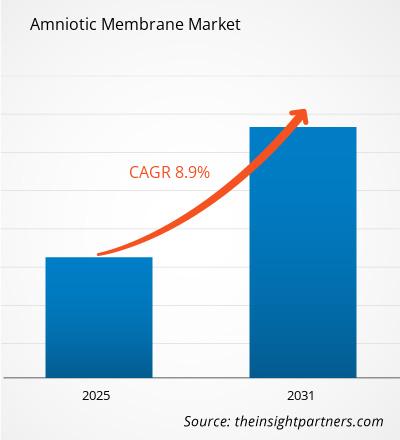
The Amniotic Membrane Market size is projected to grow from US$ 3.18 Billion in 2025 to US$ 7.75 Billion by 2034, recording a CAGR of 10.4% during 2026–2034. Demand is being shaped by broader clinical use of placental tissue allografts in wound management, ophthalmology, and surgical reconstruction, supported by advances in preservation, tissue screening, sterilization, and outpatient biologic care delivery.
Across North America, the Amniotic Membrane Market size is supported by structural demand from chronic wound care, diabetic foot ulcer treatment, and ocular surface repair. The region is estimated to expand at a CAGR range of 9.8–10.2% through 2034, driven by high specialist access, mature tissue banking standards, broader reimbursement familiarity, and adoption of shelf-stable dehydrated products in ambulatory settings.
Amniotic Membrane Market Assessment and Insights
- North America: The region accounted for 39–41% of the Amniotic Membrane Market share in 2025 and is expected to grow at a CAGR of 9.8–10.2% between 2026–2034, supported by advanced wound centers, ophthalmology adoption, and tissue-bank compliance infrastructure.
- US: The country represented 84–86% of North America in 2025 and is expected to grow at a CAGR of 9.6–10.0% between 2026–2034 because of high procedural volumes and provider reimbursement awareness.
- Europe: Europe held 27–29% share in 2025 and is projected to grow at a CAGR of 9.3–9.7% between 2026–2034, with Germany, the UK, France, Italy, and Spain leading adoption.
- Asia Pacific: Asia Pacific accounted for 22–24% share in 2025 and is forecast to grow at a CAGR of 11.7–12.3% between 2026–2034, led by China, Japan, South Korea, India, and Australia.
- Largest Segment: Cryopreserved Amniotic Membrane held a market share of 54–58% in 2025 and is estimated to grow at a CAGR of 9.6–10.0% between 2026–2034.
- High Growth Segment: Dehydrated Amniotic Membrane represented 42–46% share in 2025 and is forecast to grow at a CAGR of 11.3–11.9% between 2026–2034.
- Key companies analyzed in detail: Applied Biologics LLC, Integra LifeSciences Holdings Corporation, Skye Biologics, Inc., MiMedx Group, Inc., Organogenesis Holdings Inc., Smith & Nephew plc, Amniox Medical, Inc., Katena Products, Inc., Amnio Technology, LLC, Surgenex, LLC
Source: The Insight Partners' analysis based on proprietary research, government publications, company annual reports, investor presentations, industry databases, and expert interviews.
The trend for biologic tissue is evolving from simply producing grafts into more standardized forms which maintain the matrix structure, are easier to handle, and make economic sense in terms of distribution. Freeze-dried tissues are useful for acute indications requiring biological action and flexibility, whereas the growing role of dehydrated membranes in wound care clinics is due to their convenience in storage and inventory. These changes impact purchasing behavior in terms of clinical efficacy, graft uniformity, sterility, reimbursement information, and the cost of acquisition.
The future market growth should be more diverse and go beyond the United States and Western Europe as wound centers specializing in surgery and eye hospitals, as well as independent surgeons’ practices, develop in the Asian Pacific and some Middle Eastern regions. Regulatory drivers are strongest in those countries where tissue banking regulations are being developed, donor tracing and biologics are getting regulated. There is increasing interest in controlled processing, large sheets, fenestrations, and training for repeat use in wounds and eyes.
Amniotic Membrane Market Report Scope
| Report Attribute | Details |
|---|---|
| Market size in 2025 | US$ 3.18 Billion |
| Market Size by 2034 | US$ 7.75 Billion |
| Global CAGR (2026 - 2034) | 10.4% |
| Historical Data | 2021-2024 |
| Forecast period | 2026-2034 |
Amniotic Membrane Market Analysis
The Amniotic Membrane Market growth outlook is linked to rising chronic wound prevalence, higher surgical volumes, and increasing preference for regenerative barriers that can support epithelialization while reducing inflammation. The demand chain goes through the tissue recovery facilities, the laboratories processing, distribution companies, the hospitals, and the specialists. Supply is influenced by donor screening, proven sterilization, capacity for cold chain or ambient storage, and the types of products which minimize clinical waste.
Hospitals are still significant in the more complicated surgeries and eye procedures, but the ASCs and specialist centers are ordering at a higher rate as dehydrated tissues are easier to store. The supply chain is increasingly being driven by the services available including reimbursement assistance, coding advice, product education, and case documentation.
Competitive positioning is shaped by evidence depth, channel reach, compliance discipline, and portfolio breadth. The Amniotic Membrane Market report indicates that MiMedx Group, Inc., Organogenesis Holdings Inc., Smith & Nephew plc, and Integra LifeSciences Holdings Corporation compete through clinical credibility and scale, while Applied Biologics LLC, Skye Biologics, Inc., Amnio Technology, LLC, and Surgenex, LLC focus on specialized allograft formats.
Investment is concentrated in next-generation processing, lyophilized tissue, ophthalmic membranes, and surgical graft configurations. Companies with established reimbursement operations and tissue-bank quality systems are better positioned to defend margins because buyers increasingly require predictable supply, audit-ready documentation, and differentiated clinical use cases.
● REPORT CUSTOMIZATION
Tailor This Report To Align With Your Specific Business Requirements
This report can be customized to align precisely with your business objectives, scope, and target markets. Customization options include tailored segmentation, geography, competitive analysis, and strategic insights to support informed decision-making.
Customize This Report →WHAT YOU CAN ADJUST
- ● Segmentations
- ● Geography
- ● Competitive Analysis
- ● Language Preferences
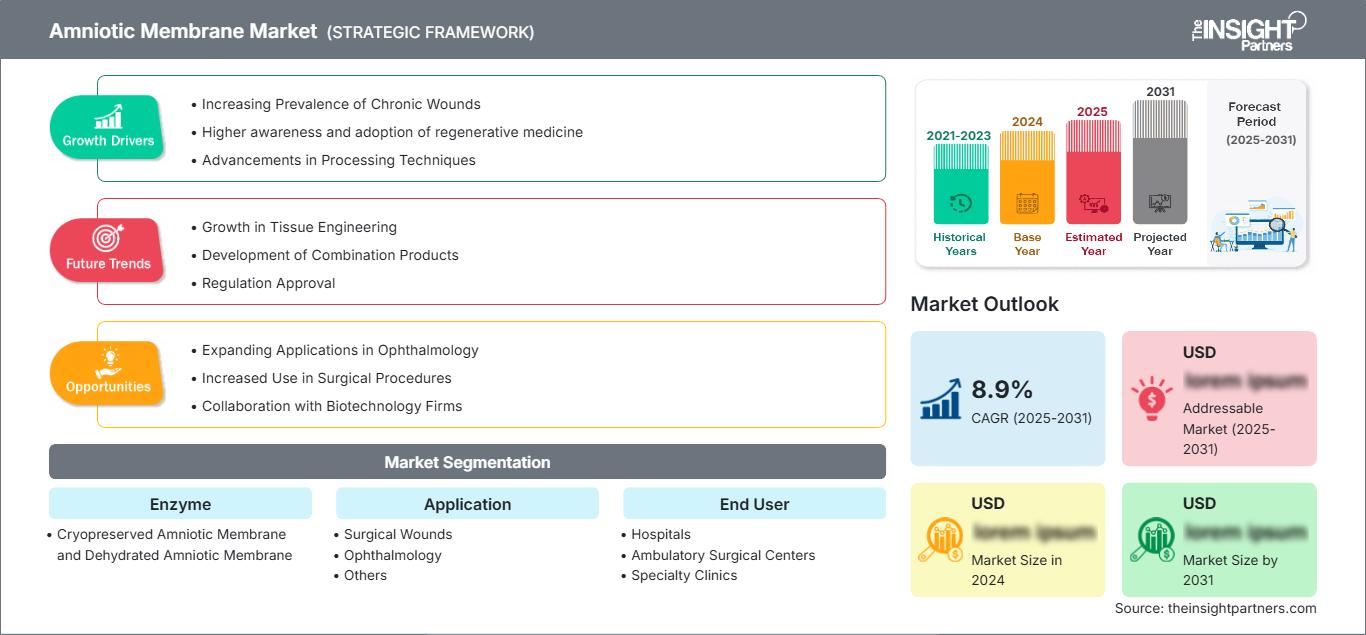
Amniotic Membrane Market: Strategic Insights
Regional Insights
North America Amniotic Membrane Market
North America held 39–41% share in 2025 and is expected to grow at a CAGR of 9.8–10.2% during 2026–2034. The region benefits from advanced wound-care infrastructure, high diabetes burden, established ambulatory surgery networks, and clinician familiarity with amniotic allografts. The Amniotic Membrane Market share in North America is also supported by product coding, tissue-bank accreditation, and strong distribution into podiatry, ophthalmology, and surgical specialties.
The US remains the central demand base, while Canada contributes through hospital-based wound care and ophthalmology use. Regional suppliers are improving supply reliability by expanding dehydrated, fenestrated, and cryopreserved formats. Adoption is strongest where providers can link membrane use with faster wound closure, fewer repeat visits, and better management of diabetic foot ulcers, venous leg ulcers, corneal defects, burns, and post-surgical wounds.
U.S. Amniotic Membrane Market
The US represented 84–86% of North America in 2025 and is forecast to grow at a CAGR of 9.6–10.0% from 2026 to 2034. Demand is concentrated in wound clinics, podiatry practices, ophthalmology centers, and hospital outpatient departments. Large installed bases for diabetic wound management and ocular surface reconstruction create repeat procurement cycles for cryopreserved and dehydrated allografts.
Company presence is particularly strong in the US, with MiMedx Group, Inc., Organogenesis Holdings Inc., Applied Biologics LLC, Amnio Technology, LLC, Surgenex, LLC, and Skye Biologics, Inc. serving different care settings. Clinical use is shifting from episodic grafting toward protocolized wound pathways, where product selection depends on wound depth, exudate level, graft conformability, storage, and documentation required for reimbursement review.
Europe Amniotic Membrane Market
Europe accounted for 27–29% share in 2025 and is expected to expand at a CAGR of 9.3–9.7% during 2026–2034. Germany is the leading country due to specialist wound care pathways, hospital-based ophthalmology expertise, and strong adoption of regulated biologic materials. The UK shows steady uptake through private wound networks, eye hospitals, and surgical centers focused on evidence-backed tissue products.
France, Italy, and Spain contribute through burn care units, ocular reconstructive procedures, and chronic wound treatment linked to aging populations. Procurement remains more institutionally controlled than in the US, making tender access, clinical documentation, and regulatory traceability central to supplier success. European demand favors reliable quality systems, clear donor screening documentation, and products that fit hospital formularies.
APAC Amniotic Membrane Market
APAC held 22–24% share in 2025 and is projected to grow at a CAGR of 11.7–12.3% between 2026 and 2034. China is the leading country, supported by expanding tertiary hospitals, wound-care departments, and domestic tissue-processing capacity. Japan and South Korea add demand through ophthalmology and regenerative medicine capabilities, while India and Australia support growth through private specialty clinics.
Policy drivers include clearer tissue banking oversight, healthcare infrastructure expansion, and greater investment in advanced wound solutions. Industrial growth in sterile processing, medical cold chains, and hospital procurement platforms is improving access to premium allografts. Adoption is still uneven, but clinical education and local partnerships are expected to narrow the gap with mature markets.
Middle East & Africa Amniotic Membrane Market
The Middle East & Africa region is expected to grow at a CAGR of 8.7–9.3% during 2026–2034. Saudi Arabia is the leading country, supported by healthcare infrastructure investment, diabetes management programs, and private hospital expansion. The UAE represents demand in specialty clinics and medical tourism, whereas South Africa facilitates adoption through tertiary wound care and ophthalmology facilities.
Oil-related fiscal capacity in Gulf states is facilitating investment in hospitals, the growth of surgery centers, and the purchase of sophisticated biological materials. The rest of MEA faces challenges related to cost constraints, tissue logistics, and specialist accessibility. Growth will be contingent upon cooperation with distributors, training for clinicians, and proper product formulation.
Segmentation Analysis
Enzyme
Enzyme is projected to grow at a CAGR of 10.0–10.6% during 2026–2034, reflecting demand for differentiated processing and preservation approaches. The Amniotic Membrane Market scope across this segment includes cryopreserved and dehydrated formats, each serving distinct clinical and logistical needs. Hospitals often prioritize biological integrity, while outpatient settings increasingly value room-temperature storage, easier handling, and lower inventory complexity.
- Cryopreserved Amniotic Membrane: This sub-segment leads adoption in complex wounds, ophthalmology, and surgical repair where tissue pliability, biological preservation, and clinician confidence justify higher storage and handling requirements.
- Dehydrated Amniotic Membrane: Demand is rising in outpatient wound care because shelf stability, easier distribution, and varied sheet sizes support broader use in podiatry, ambulatory centers, and specialty clinics.
Application
Application is expected to grow at a CAGR of 10.1–10.7% between 2026 and 2034. Surgical wounds and ophthalmology remain the most commercially relevant use areas because both require protective barriers, inflammation modulation, and tissue support. Use is expanding as clinicians integrate amniotic membranes into wound-bed preparation, ocular surface reconstruction, burn procedures, and post-operative healing pathways.
- Surgical Wounds: This sub-segment benefits from rising reconstruction, burn, and post-operative wound management needs, especially where clinicians seek biologic coverings that support tissue repair and reduce procedural complications.
- Ophthalmology: Adoption is supported by corneal defects, ocular surface disease, and reconstructive surgery, where transparent, thin, and flexible membranes can protect tissue during epithelial healing.
End User
End User is forecast to grow at a CAGR of 9.8–10.4% during 2026–2034. Hospitals continue to handle complex surgical and ophthalmic procedures, while ambulatory surgical centers and specialty clinics are becoming important repeat purchasers. Research institutes and academic institutes support translational studies, clinical validation, and protocol development that influence future adoption.
- Hospitals: Hospitals remain central for severe wounds, burns, high-risk surgeries, and ophthalmic reconstruction because they combine specialist teams, operating rooms, and formal procurement controls.
- Ambulatory Surgical Centers: These centers are scaling demand for easier-to-store products as more wound, eye, and reconstructive procedures shift toward lower-cost outpatient environments.
- Specialty Clinics: Wound care, podiatry, dermatology, and ophthalmology clinics drive repeat utilization because they manage recurring cases and value products with predictable handling profiles.
- Research Institute & Academic Institutes: Academic users support clinical evidence generation, processing studies, and regenerative medicine research that strengthens physician confidence and future product positioning.
Opportunity Snapshot
| Application | Revenue Contribution | Trend Tag | Adoption Stage |
| Surgical Wounds | High | Biologic Closure | Scaling |
| Ophthalmology | High | Ocular Repair | Mature |
| Others | Medium | Adjacent Procedures | Emerging |
Amniotic Membrane Market Growth Drivers and Impact Analysis
Rising Chronic Wound Burden and Diabetic Foot Ulcer Care
Chronic wounds serve as one of the main drivers of demand due to the need for repeat procedures, monitoring, and treatments that aid in changing a stuck wound into one that heals. The increasing prevalence of diabetes, aging populations, vascular problems, and pressure ulcers contribute to the growing strain on the wound care process. There is a need for an amniotic membrane that serves as a biological matrix which assists in granulation and epithelialization where other dressings fall short. The impact in the market can be seen in increased usage in the areas of podiatry, hospital outpatient clinics, and specialized wound clinics. Companies that code properly, have good training and multiple membrane sizes will get repeat orders.
Ophthalmology Adoption in Ocular Surface Reconstruction
This is a robust clinical application since there is a use of amniotic membranes for corneal defects, chemical burns, pterygium excision, persistent epithelial defects, and ocular surface reconstruction. The specialty physicians appreciate membranes which are thin, transparent, and flexible since these membranes help to provide protection to the damaged area and promote the healing of the epithelium. There will be maximum market effect on tertiary eye hospitals, ambulatory eye care facilities, and specialty clinics conducting repeat reconstructive surgery. The increasing aged population and increased diagnoses of dry eye disease complications drive the demand further. Those companies which are offering membrane for ophthalmic use, standardized size, sterile packaging, and easy-to-use in surgery can create differentiation against general wound products.
Shift Toward Outpatient Biologic Procedures
There has been an increasing trend towards care delivery through ambulatory surgical centers, specialty clinics, and hospital outpatient departments as payers and providers are trying to reduce inpatient utilization. This trend enhances availability of prepackaged amniotic membrane products that are shelf stable and have application procedures that are easy to understand. The effects on the market include rapid product turnover, more physician involvement, and increased demand for training driven sales approach. The providers in outpatient settings prefer to have reliable documentation and minimal storage challenges, therefore, dehydrated and lyophilized membranes become more appealing. In addition, there is increased pressure for manufacturers to provide smaller sizes, fenestrated membranes, and stock programs to avoid wastage.
Amniotic Membrane Market Future Trends
Evidence-Linked Reimbursement and Real-World Outcomes
The next phase of Amniotic Membrane Market trends will be shaped by payer scrutiny and evidence-linked reimbursement. Providers will need stronger documentation showing wound closure, visit reduction, pain improvement, or surgical healing outcomes. Pragmatic research, registry work, and comparison studies that capture true-to-life processes rather than idealized ones are the kinds of endeavors companies will focus on. This marks a move for business away from being product driven toward being more concerned with the veracity of outcomes. Firms better equipped with evidence infrastructure can enable doctors to make cases for their membrane selections and ensure coverage. It is clear, therefore, that evidence will be a competitive advantage, particularly in the US and Europe.
Next-Generation Preservation and Procedure-Specific Formats
Future product development will focus on preservation methods that balance biological integrity, shelf life, handling strength, and cost. Lyophilized, fenestrated, and multilayer membranes are likely to gain attention because they address fluid movement, conformability, and product durability. Ophthalmology may see thinner, more transparent formats, while wound care may favor larger sheets and grafts suitable for irregular wound beds. This trend will make portfolio architecture more important than a single product line. Companies that can match tissue format to procedure type, wound depth, exudate level, and care setting will be better placed to serve differentiated clinical demand through 2034.
Amniotic Membrane Market Opportunities
Expansion in Asia Pacific Specialist Wound and Eye Networks
Asia Pacific presents a scalable opportunity as healthcare systems invest in advanced diabetic care, eye hospitals, and private surgical centers. The strongest opportunities lie in countries where provider networks are expanding faster than public hospital capacity. The Amniotic Membrane Market Forecasts indicate that localized distribution, clinician training, and partnerships with tertiary hospitals can accelerate adoption. Suppliers should prioritize China, India, Japan, South Korea, and Australia with market-specific portfolios. Dehydrated products can support broader geographic reach, while cryopreserved products may fit premium hospital channels. Building regulatory alignment, cold-chain optionality, and local evidence will be essential for sustainable commercial entry.
Integrated Wound-Care Pathways for Specialty Clinics
There is a viable business opportunity through specialty clinics, which deal with recurrent wound conditions and are able to develop treatment processes that will be standardized across clinicians. It is possible to create value in this case by adding membranes to a package that includes wound assessment technologies, documentation of reimbursement, training materials, and repeat ordering systems. Such a strategy creates recurring revenue opportunities and relieves the pressure on clinicians to prove the necessity of using biological products on a case-by-case basis. The strongest business opportunity in this respect is provided for podiatry, dermatology, vascular medicine, and wound care clinics.
Recent Developments
- July 2026: Organogenesis Holdings Inc. — The company announced that the US FDA accepted its Biologics License Application for ReNu, a cryopreserved amniotic suspension allograft developed for symptomatic knee osteoarthritis. The FDA assigned a PDUFA target action date of April 24, 2027, marking a significant regulatory milestone for amniotic-based regenerative therapy.
- October 2025: MiMedx Group, Inc. — The company launched EPIXPRESS, a lyophilized human placental-based allograft containing amnion, intermediate, and chorion layers. The product is intended to provide a protective barrier in acute and chronic wounds and features fenestrations designed to facilitate fluid movement in difficult wound environments.
- August 2025: BioLab Holdings, Inc. — The company announced FDA Tissue Reference Group recognition of five amniotic membrane allograft products as HCT/Ps. The recognized products include single-layer, dual-layer, and triple-layer membrane formats designed to cover and protect wounds such as surgical wounds, burns, diabetic foot ulcers, and venous leg ulcers.
Frequently Asked Questions

- Comprehensive Market Sizing and Forecast Analysis
- Detailed Segmentation Analysis
- In-Depth Market Dynamics Assessment
- Regional and Country-Level Insights
- Competitive Landscape and Company Benchmarking
- Strategic Business Intelligence
Recent Reports
Testimonials

The Insight Partners' SCADA System Market report is comprehensive, with valuable insights on current trends and future forecasts. The team was highly professional, responsive, and supportive throughout. We are very satisfied and highly recommend their services.
RAN KEDEM Partner, Reali Technologies LTDs
I requested a report on a very specific software market and the team produced the report in a few days. The information was very relevant and well presented. I then requested some changes and additions to the report. The team was again very responsive and I got the final report in less than a week.
JEAN-HERVE JENN Chairman, Future Analytica
We worked with The Insight Partners for an important market study and forecast. They gave us clear insights into opportunities and risks, which helped shape our plans. Their research was easy to use and based on solid data. It helped us make smart, confident decisions. We highly recommend them.
PIYUSH NAGPAL Sr. Vice President, High Beam Global
The Insight Partners delivered insightful, well-structured market research with strong domain expertise. Their team was professional and responsive throughout. The user-friendly website made accessing industry reports seamless. We highly recommend them for reliable, high-quality research services
YUKIHIKO ADACHI CEO, Deep Blue, LLC.
This is the first time I have purchased a market report from The Insight Partners.While I was unsure at first, I visited their web site and felt more comfortable to take the risk and purchase a market report.I am completely satisfied with the quality of the report and customer service. I had several questions and comments with the initial report, but after a couple of dialogs over email with their analyst I believe I have a report that I can use as input to our strategic planning process.Thank you so much for taking the extra time and making this a positive experience.I will definitely recommend your service to others and you will be my first call when we need further market data.
JOHN SUZUKI President and Chief Executive Officer, Board Director, BK Technologies
I wish to appreciate your support and the professionalism you displayed in the course of attending to my request for information regarding to infectious disease IVD market in Nigeria. I appreciate your patience, your guidance, and the fact that you were willing to offer a discount, which eventually made it possible for us to close a deal. I look forward to engaging The Insight Partners in the future, all thanks to the impression you have created in me as a result of this first encounter.
DR CHIJIOKE ONYIA MANAGING DIRECTOR, PineCrest Healthcare Ltd.Reason to Buy
- Informed Decision-Making
- Understanding Market Dynamics
- Competitive Analysis
- Identifying Emerging Markets
- Customer Insights
- Market Forecasts
- Risk Mitigation
- Boosting Operational Efficiency
- Strategic Planning
- Investment Justification
- Tracking Industry Innovations
- Aligning with Regulatory Trends





 Get Free Sample for