
Ampicillin Market Share, Demand & Growth by 2034
Coverage: By Mode of Administration (Oral, Intravenous and Intramuscular); Disease Indication (Respiratory Tract Infections, Urinary Tract Infections, Gastrointestinal Infections, Sepsis, Meningitis, and Other Disease Indications) , and Geography (North America, Europe, Asia Pacific, and South and Central America)
- Status : Data Released
- Report Code : TIPRE00008222
- Category : Life Sciences
- No. of Pages : 150
- Available Report Formats :


- Last update date : July 28, 2026


2025 Market Size
US$ 1.32 Bn
Base year value
2034 Forecast
US$ 1.92 Bn
Projected by 2034
CAGR 2026-2034
4.21 %
Growth rate
Addressable Market
US$ 14.68 Bn
(2026-2034)
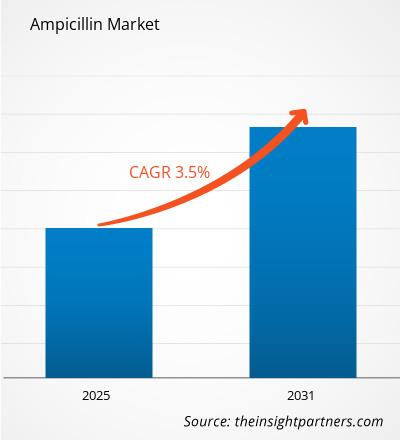
The ampicillin market size was estimated to be US$ 1.32 Billion in 2025 and is expected to grow to US$ 1.92 Billion in 2034, with a CAGR of 4.21% between 2026 and 2034. The market is influenced by the continued clinical use of this broad-spectrum penicillin against various susceptible infections like respiratory, urinary, gastrointestinal, sepsis, and meningitis infections.
In North America, there is an expected growth in the demand of up to a CAGR of 3.6-4.6% till 2034, driven by protocols around infectious diseases, procurement of injectables from hospitals, and the preference for narrow and appropriate beta-lactam antibiotics due to stewardship initiatives. The market value of ampicillin is influenced by generic availability and demand for oral and parenteral formulations.
Ampicillin Market Assessment and Insights
- North America held 28–31% ampicillin market share in 2025 and is projected to grow at a CAGR between 3.6–4.6% during 2026–2034, supported by hospital formulary use, stewardship programs, and stable injectable antibiotic procurement.
- US accounted for 79–83% of North America in 2025 and is forecast to grow at a CAGR between 3.7–4.7% during 2026–2034, driven by hospital and outpatient generic demand.
- Europe represented 24–27% share in 2025 and is projected to grow at a CAGR between 3.3–4.3% during 2026–2034, led by Germany, France, the UK, Italy, and Spain.
- Asia Pacific captured 32–35% share in 2025 and is expected to grow at a CAGR between 4.8–5.8% during 2026–2034, led by India, China, Japan, South Korea, and Australia.
- Largest Segment Intravenous and Intramuscular held 53–56% market share in 2025 and is projected to grow at a CAGR between 4.0–5.0% during 2026–2034.
- High Growth Segment Sepsis held 13–16% market share in 2025 and is projected to grow at a CAGR between 5.0–6.2% during 2026–2034.
- Key companies analyzed in detail: ACS DOBFAR S.p.A., AdvaCare Pharma, Asiatic Drugs & Pharmaceuticals Pvt. Ltd., Aurobindo Pharma Limited, Centrient Pharmaceuticals Netherlands B.V., Fresenius Kabi AG, Iskon Remedies, Orofino Pharmaceuticals Group, Pfizer Inc., Thermo Fisher Scientific Inc.
Source: The Insight Partners' analysis based on proprietary research, government publications, company annual reports, investor presentations, industry databases, and expert interviews.
The demand for ampicillin has progressed from empirical utilization to protocol-based utilization based on susceptibility reports, resistance patterns of the region, and the severity of the infection. Capsules and oral suspensions have an advantage in community and step-down treatment settings, whereas injectables are still significant for hospitalized patients with severe infections. Production considerations include beta-lactam API supply chain integrity, sterile manufacturing, quality audits, pharmacopoeial standards, and channel consistency via government tenders and private distribution channels.
The market environment is expected to be favorable for companies with stable supply chains, good sterile manufacturing capabilities, and alignment with antibiotic stewardship principles. The emerging markets are projected to continue their significance due to higher burden of bacterial infection and need for affordable beta-lactams. Regulatory headwinds are likely to be less concerned about high pricing but rather with assured supply, pharmacovigilance, and AMR reduction.
Ampicillin Market Report Scope
| Report Attribute | Details |
|---|---|
| Market size in 2025 | US$ 1.32 Billion |
| Market Size by 2034 | US$ 1.92 Billion |
| Global CAGR (2026 - 2034) | 4.21% |
| Historical Data | 2021-2024 |
| Forecast period | 2026-2034 |
Ampicillin Market Analysis
The demand drivers for ampicillin will be supported by bacterial infection prevalence, cost-effective generics, and the need for proven first and second line penicillins where there is drug susceptibility. The growth in the ampicillin market has been associated with the treatment of respiratory, urinary, GI, neonatal, and invasive infections, especially when there is a trade-off between efficacy, price, and resistance.
The value chain comprises antibiotic API producers via fermentation, beta-lactam intermediate providers, sterile injectable manufacturers, oral solid dosage form makers, wholesalers, hospitals, retail pharmacies, and public institutions involved in purchasing. The supply side will still be subject to inspection at production facilities, environmental controls, raw materials, and separation of beta-lactams. The buyers have been prioritizing continuity of supplies, documentation validation, and dossier support.
The competitive positioning depends on scale of production, registration base, incorporation of APIs and competitive tenders. According to the ampicillin market analysis, the companies ACS DOBFAR S.p.A., Centrient Pharmaceuticals Netherlands B.V., Aurobindo Pharma Limited, Fresenius Kabi AG, and Pfizer Inc. are relevant in this industry by means of their API, finished dosages, steriles or hospital channel operations.
Experts such as AdvaCare Pharma, Asiatic Drugs & Pharmaceuticals Pvt. Ltd., Iskon Remedies, Orofino Pharmaceuticals Group, and Thermo Fisher Scientific Inc. increase availability, reach, or research infrastructure of the products. Investments go into quality upgrades, management of environment during manufacturing of antibiotics, digital monitoring of batches, and regional registration strategy rather than molecule innovation.
● REPORT CUSTOMIZATION
Tailor This Report To Align With Your Specific Business Requirements
This report can be customized to align precisely with your business objectives, scope, and target markets. Customization options include tailored segmentation, geography, competitive analysis, and strategic insights to support informed decision-making.
Customize This Report →WHAT YOU CAN ADJUST
- ● Segmentations
- ● Geography
- ● Competitive Analysis
- ● Language Preferences
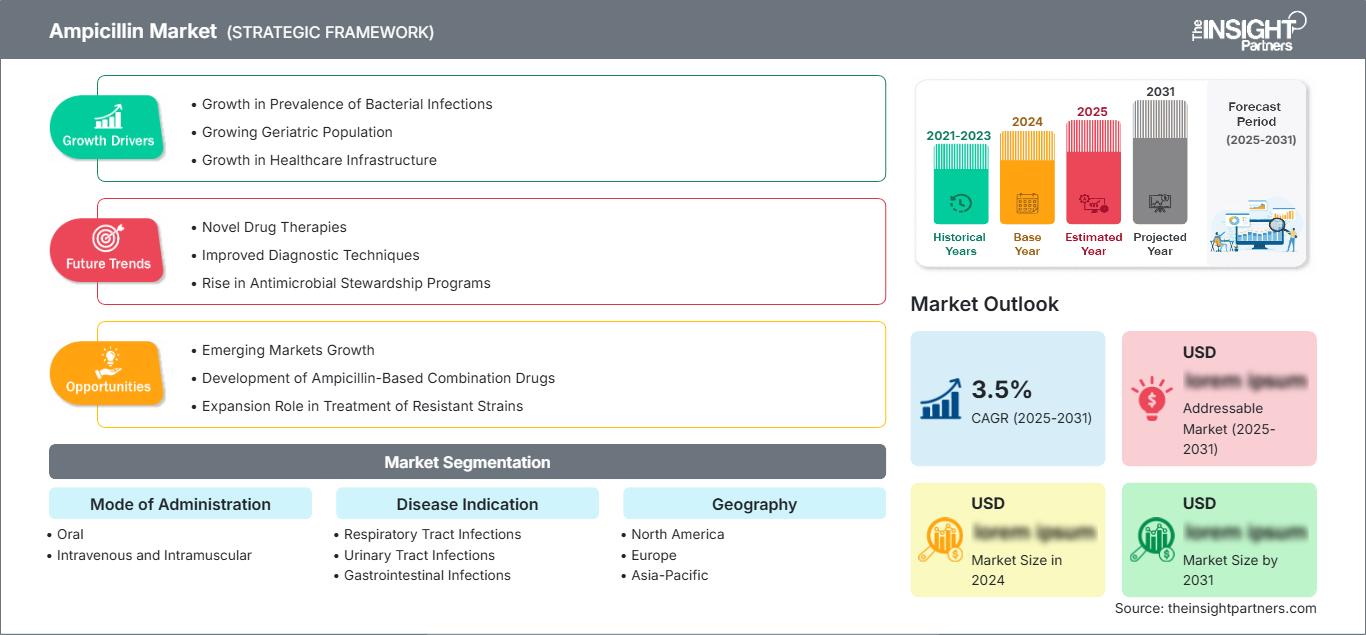
Ampicillin Market: Strategic Insights
Regional Insights
North America ampicillin market
North America had a share of 28-31% in 2025 and is estimated to grow at a CAGR ranging from 3.6-4.6% in 2026-2034. This region has hospital antimicrobial stewardship programs, well-established generic distribution networks, and the use of beta-lactams in injectable form for severe infections. The market for amp is dominated by hospitals, retail generics, and governmental institutions. The growth drivers for this market include susceptibility-based prescribing, protocols for pediatric infections, and contingency planning due to potential shortages. CDC reports over 2.8 million cases of antibiotic-resistant infections in the US annually, emphasizing the need for proper antibiotic choice and stewardship program. Supply companies with FDA-compliant and updated product information get priority.
U.S. ampicillin Market
The U.S. constitutes 79–83% of the North America market in 2025 and will grow at a CAGR of 3.7–4.7% in the years 2026–2034. Market dynamics include the existing generic consumption, hospital injectable consumption, pediatric administration, and condition-specific utilization in respiratory infections, UTIs, gastrointestinal infections, and selected invasive bacterial diseases. Market presence includes the registration of oral capsules from Aurobindo Pharma Limited, injectables from Fresenius Kabi AG, the beta-lactam hospital portfolio from Pfizer Inc., and laboratory and pharmaceutical ecosystem from Thermo Fisher Scientific Inc. The usage trend includes evidence-based usage, antibiotic stewardship compliance, and consistent availability in inpatient treatment pathways.
Europe ampicillin Market
In 2025, Europe constituted 24% to 27% share and is predicted to grow at CAGR 3.3% to 4.3% for 2026 to 2034. In the UK, protocol-based prescribing exists in primary care as well as in hospitals, with the help of stewardship programs that help prevent excessive beta-lactam usage without compromising susceptibility to infection. Procurement by public bodies prefers companies that prove quality and consistent availability. Germany leads in beta-lactams due to their extensive pharmaceutical manufacturing, antibiotic stewardship in hospitals, and robust wholesalers. France, Italy, and Spain ensure consistent demand due to hospital infections, pediatric prescription, and generic prescription. ACS DOBFAR S.p.A. and Centrient Pharmaceuticals Netherlands B.V. provide beta-lactam manufacturing facilities in Europe; competitive pricing helps with efficient manufacturing and dossier compilation.
APAC ampicillin Market
APAC captured 32–35% share in 2025 and is forecast to grow at a CAGR between 4.8–5.8% during 2026–2034. India is the leading country, followed by China, Japan, South Korea, and Australia, supported by large patient pools, generic manufacturing capacity, and hospital antibiotic demand. Industrial policy, API production scale, and broader infectious disease treatment needs support growth. India and China remain central to supply, while Japan and Australia emphasize regulated quality and stewardship. Hospital expansion and public procurement improve access, but resistance surveillance increasingly shapes prescribing discipline.
Middle East & Africa ampicillin Market
The Middle East & Africa segment is expected to see a CAGR of 4.1-5.1% from 2026 to 2034. Adoption of antibiotics in Saudi Arabia and UAE is driven by investments in hospital infrastructure, acquisition of essential medicines, and centralized purchase systems. South Africa is the most advanced country in Africa, with demand driven by public hospitals, private pharmacies, and infections management. Growth in the rest of the MEA region is slow due to factors like reimbursement issues, logistics, diagnostics, and cold chain, but availability of inexpensive beta-lactam remains strategically important.
Segmentation Analysis
Mode of Administration
Mode of Administration is projected to grow at a CAGR between 3.9–4.9% during 2026–2034. Route selection depends on infection severity, absorption needs, care setting, and patient status. The ampicillin market scope is defined by the balance between oral convenience for stable patients and parenteral use in hospitals where bacteremia, meningitis, sepsis, or severe urinary infections require faster systemic exposure and supervised dosing.
- Oral formulations remain important for community treatment, pediatric step-down therapy, and stable infections where susceptibility is confirmed, and gastrointestinal absorption supports adequate therapeutic exposure.
- Intravenous and Intramuscular formulations dominate hospital use because severe infections require controlled dosing, rapid systemic availability, and compatibility with inpatient monitoring and culture-guided treatment protocols.
Disease Indication
Disease Indication is projected to grow at a CAGR between 4.2–5.2% during 2026–2034. Demand varies by pathogen epidemiology, susceptibility patterns, diagnostic access, and treatment guidelines. Ampicillin retains commercial relevance where clinicians need affordable therapy for susceptible organisms, especially in respiratory, urinary, gastrointestinal, bloodstream, and central nervous system infections requiring careful antimicrobial selection.
- Respiratory Tract Infections generate steady demand where susceptible organisms are identified, particularly in pediatric and adult cases requiring cost-effective beta-lactam coverage under stewardship oversight.
- Urinary Tract Infections remain a recurring indication, although local resistance patterns heavily influence prescribing, making culture confirmation important for maintaining therapeutic relevance.
- Gastrointestinal Infections support selective use where Salmonella, Shigella, or enterococcal susceptibility is confirmed, especially in settings with established laboratory-guided treatment pathways.
- Sepsis is strategically important in hospitals because early antimicrobial therapy, susceptibility review, and timely de-escalation influence outcomes and intensive-care antibiotic utilization.
- Meningitis requires careful use because penetration into cerebrospinal fluid improves with meningeal inflammation, making dosing, pathogen identification, and specialist oversight essential.
Opportunity Snapshot
| Segment Name | Revenue Contribution | Trend Tag | Adoption Stage |
|---|---|---|---|
| Respiratory Tract Infections | High | Susceptible RTI | Mature |
| Urinary Tract Infections | Medium | Culture UTI | Mature |
| Gastrointestinal Infections | Medium | Enteric Care | Scaling |
| Sepsis | High | Acute Care | Scaling |
| Meningitis | Medium | CNS Therapy | Mature |
| Other Disease Indications | Low | Protocol Use | Mature |
Ampicillin Market Growth Drivers and Impact Analysis
Essential Antibiotic Role in Susceptible Infections
The continued value of Ampicillin derives from the proven beta-lactam antibiotic whose use is advised for organisms that are sensitive and where guidance permits the use. The reason behind this is that despite the maturity of existing antibiotics, there is a need in cases of respiratory, urogenital, gastro-intestinal, neonatal, blood stream, and central nervous system infections. There is a need for predictable supply of Ampicillin in oral and parenteral forms in hospitals to be able to administer empirical therapy, de-escalation and step down treatment.
Hospital Procurement Prioritizes Reliable Injectables
Injections will be a key driver, since serious infections need rapid exposure to the drug via the systemic route, which requires controlled administration. There is a need for hospitals to have sterile beta-lactams for use in emergency rooms, ICUs, pediatric wards, and infection departments. It will affect the areas of procurement, stocking plans, and selection of suppliers due to the disruption of therapy algorithms, forcing one to use wider drugs in place of beta-lactams. Manufacturers with separate facilities for manufacturing beta-lactams, aseptic processing capability, controlled release times, and good pharmacovigilance systems stand to benefit from hospital contracts.
Stewardship Supports Targeted Use of Older Beta-Lactams
Stewardship will enhance the importance of older antibiotics where susceptibility information supports a specific approach to treatment. Stewardship discourages unnecessary prescriptions, emphasizing the importance of using the least but most effective antibiotic at the right dosage and duration. Stewardship will maintain the usage of ampicillin only in cases where its need is clear and minimizing the use where there is resistance. The business implication is that manufacturers will have an easier time selling products whose labels and prescriptions are based on culture, and hospitals have been taught how to use the drug.
Ampicillin Market Future Trends
Stewardship-Led Prescribing and Resistance Surveillance
The most important ampicillin market trends will center on stewardship-linked prescribing, surveillance data, and diagnostic confirmation. Hospitals and public health systems are expected to rely more on antibiograms, rapid testing, and electronic prescribing checks before selecting older beta-lactams. This trend will not eliminate demand; it will make demand more disciplined and indication-specific. Suppliers may need stronger medical information support, updated labeling readiness, and participation in responsible access programs. Over time, the market will reward products that fit evidence-based pathways rather than broad promotional use, especially in regions tightening AMR governance.
Responsible Antibiotic Manufacturing Becomes a Procurement Factor
Responsible production will increasingly influence purchasing as antibiotic residues, wastewater controls, and environmental AMR risk receive greater attention. Public and institutional buyers are expected to ask more questions about manufacturing standards, effluent management, and supply-chain transparency. This creates a competitive advantage for producers that can document compliance with recognized antibiotic manufacturing expectations and quality audits. The trend is particularly relevant for API suppliers and sterile beta-lactam manufacturers serving Europe, North America, and regulated export markets. Environmental credibility will not replace price, but it can become a differentiator in tenders where multiple generic suppliers meet technical requirements.
Ampicillin Market Opportunities
Quality-Assured Supply for Public Procurement
A durable opportunity lies in supplying public procurement systems that need affordable, reliable, and quality-assured beta-lactam antibiotics. The ampicillin market Forecasts indicate moderate but steady demand, making supply security more important than aggressive product innovation. Companies can invest in dual sourcing, validated API partnerships, dossier harmonization, and sterile capacity resilience to serve hospitals and national tenders. Success depends on meeting pharmacopoeial standards, maintaining predictable delivery, and supporting stewardship-aligned access. Manufacturers that combine competitive pricing with transparent quality documentation can reduce buyer risk and strengthen long-term contracts.
Expansion of Injectable Access in Emerging Markets
Emerging markets offer an opportunity for injectable access because hospitals treating sepsis, meningitis, and complicated infections require dependable parenteral antibiotics. Investment should focus on regional registration, distributor qualification, cold-chain where needed, healthcare-worker education, and packaging suited to public hospital procurement. Companies can improve penetration by partnering with local wholesalers and tender agencies while maintaining international quality standards. The opportunity is strongest where infection burden is high, diagnostics are improving, and governments are strengthening essential medicine lists. Reliable injectable supply can also reduce inappropriate substitution with broader-spectrum agents when ampicillin remains clinically suitable.
Recent Developments
- January 2026: Pfizer Inc. issued a U.S. hospital availability update for Bicillin L-A, a penicillin G benzathine injectable product, stating that allocated supply would continue through wholesalers and that recovery timelines for several prefilled syringe presentations were expected in Q4 2026. The update reinforced the importance of transparent beta-lactam supply communication for hospital planning.
- August 2025: Aurobindo Pharma Limited updated the U.S. DailyMed labeling record for Ampicillin Capsules, USP, covering 250 mg and 500 mg oral strengths under an abbreviated new drug application. The label includes indications for susceptible genitourinary, respiratory, gastrointestinal, and meningitis-related infections, supporting continued regulated availability in the U.S. generic channel.
- May 2025: Centrient Pharmaceuticals Netherlands B.V. published a supply-security perspective emphasizing the risk to Europe’s foundational medicine manufacturing and the need to protect local antibiotic production. The company highlighted resilient and sustainable production as priorities for safeguarding essential antibiotic availability amid pressure on regional manufacturing economics.
Frequently Asked Questions

- Comprehensive Market Sizing and Forecast Analysis
- Detailed Segmentation Analysis
- In-Depth Market Dynamics Assessment
- Regional and Country-Level Insights
- Competitive Landscape and Company Benchmarking
- Strategic Business Intelligence
Recent Reports
Testimonials

The Insight Partners' SCADA System Market report is comprehensive, with valuable insights on current trends and future forecasts. The team was highly professional, responsive, and supportive throughout. We are very satisfied and highly recommend their services.
RAN KEDEM Partner, Reali Technologies LTDs
I requested a report on a very specific software market and the team produced the report in a few days. The information was very relevant and well presented. I then requested some changes and additions to the report. The team was again very responsive and I got the final report in less than a week.
JEAN-HERVE JENN Chairman, Future Analytica
We worked with The Insight Partners for an important market study and forecast. They gave us clear insights into opportunities and risks, which helped shape our plans. Their research was easy to use and based on solid data. It helped us make smart, confident decisions. We highly recommend them.
PIYUSH NAGPAL Sr. Vice President, High Beam Global
The Insight Partners delivered insightful, well-structured market research with strong domain expertise. Their team was professional and responsive throughout. The user-friendly website made accessing industry reports seamless. We highly recommend them for reliable, high-quality research services
YUKIHIKO ADACHI CEO, Deep Blue, LLC.
This is the first time I have purchased a market report from The Insight Partners.While I was unsure at first, I visited their web site and felt more comfortable to take the risk and purchase a market report.I am completely satisfied with the quality of the report and customer service. I had several questions and comments with the initial report, but after a couple of dialogs over email with their analyst I believe I have a report that I can use as input to our strategic planning process.Thank you so much for taking the extra time and making this a positive experience.I will definitely recommend your service to others and you will be my first call when we need further market data.
JOHN SUZUKI President and Chief Executive Officer, Board Director, BK Technologies
I wish to appreciate your support and the professionalism you displayed in the course of attending to my request for information regarding to infectious disease IVD market in Nigeria. I appreciate your patience, your guidance, and the fact that you were willing to offer a discount, which eventually made it possible for us to close a deal. I look forward to engaging The Insight Partners in the future, all thanks to the impression you have created in me as a result of this first encounter.
DR CHIJIOKE ONYIA MANAGING DIRECTOR, PineCrest Healthcare Ltd.Reason to Buy
- Informed Decision-Making
- Understanding Market Dynamics
- Competitive Analysis
- Identifying Emerging Markets
- Customer Insights
- Market Forecasts
- Risk Mitigation
- Boosting Operational Efficiency
- Strategic Planning
- Investment Justification
- Tracking Industry Innovations
- Aligning with Regulatory Trends





 Get Free Sample for