
Analgesics Market Demand, Share & Growth by 2034
Coverage: By Product Type (Non-opioids, Opioids); Route of Administration (Oral, Intravenous, Rectal, Transdermal, Topical); Pain Type (Surgical Pain, Cancer Pain, Neuropathic Pain, Others); Distribution Channel (Hospital Pharmacies, Retail Pharmacies, Drug Store, Others), and Geography (North America, Europe, Asia Pacific, and South and Central America)
- Status : Data Released
- Report Code : TIPRE00007240
- Category : Life Sciences
- No. of Pages : 150
- Available Report Formats :


- Last update date : August 04, 2026


2025 Market Size
US$ 60.34 Bn
Base year value
2034 Forecast
US$ 83.17 Bn
Projected by 2034
CAGR 2026-2034
3.63 %
Growth rate
Addressable Market
US$ 651.80 Bn
(2026-2034)
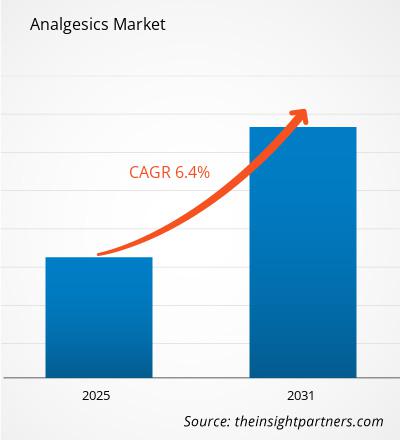
The global Analgesics market was valued at US$ 60.34 billion in 2025 and is expected to reach US$ 83.17 billion by 2034; it is estimated to record a CAGR of 3.63% during 2026-2034.
Analgesics Market Assessment and Insights
- North America held 34–37% share in 2025 and is growing at a CAGR of 3.6–4.1% between 2026–2034, supported by mature hospital formularies, retail access, and strong non-opioid adoption.
- US accounted for 83–86% of North America in 2025 and is growing at a CAGR of 3.7–4.2% between 2026–2034, driven by prescription oversight and OTC brand depth.
- Europe held 27–30% share in 2025 and is growing at a CAGR of 3.3–3.8% between 2026–2034, led by Germany, the UK, and France through regulated pharmacy distribution.
- Asia Pacific held 24–27% share in 2025 and is growing at a CAGR of 5.0–5.6% between 2026–2034, with China, India, Japan, and South Korea expanding access.
- Largest Segment non-opioids held 68–72% market share in 2025 and is growing at a CAGR of 4.2–4.7% between 2026–2034 due to broad OTC and hospital use.
- High Growth Segment topical products held 8–11% market share in 2025 and are growing at a CAGR of 5.7–6.3% between 2026–2034 as localized pain care expands.
- Key companies analyzed in detail: Bayer AG, Novartis AG, GSK plc, Pfizer Inc., Johnson & Johnson Services, Inc., Reckitt Benckiser Group plc, Endo Pharmaceuticals LLC, Sanofi, Eli Lilly and Company, Teva Pharmaceutical Industries Ltd.
Source: The Insight Partners' analysis based on proprietary research, government publications, company annual reports, investor presentations, industry databases, and expert interviews.
Product evolution in the analgesics market has shifted from single-molecule pain relievers toward differentiated formats, including fixed-dose combinations, extended-release formulations, topical patches, and condition-specific consumer products. Manufacturing dynamics are shaped by active pharmaceutical ingredient sourcing, controlled substance compliance, packaging differentiation, and pharmacy channel requirements. Producers must balance affordability with regulatory expectations, pharmacovigilance, and supply continuity, particularly for essential non-opioid drugs used in hospitals and households.
Forward demand will be influenced by emerging market pharmacy penetration, the expansion of primary care networks, and policies supporting safer pain management. Investment is moving toward non-opioid mechanisms, localized delivery, and digital pharmacist engagement. Regulatory tailwinds are expected to favor companies that demonstrate transparent labeling, responsible opioid risk controls, and post-market safety monitoring across prescription and self-care portfolios.
Analgesics Market Report Scope
| Report Attribute | Details |
|---|---|
| Market size in 2025 | US$ 60.34 Billion |
| Market Size by 2034 | US$ 83.17 Billion |
| Global CAGR (2026 - 2034) | 3.63% |
| Historical Data | 2021-2024 |
| Forecast period | 2026-2034 |
Analgesics Market Analysis
The analgesics market growth is anchored in persistent demand for effective pain relief across surgical recovery, cancer care, neuropathic pain, musculoskeletal conditions, and everyday acute pain. WHO and national health agencies consistently identify chronic pain and disabling musculoskeletal disorders as major healthcare burdens, sustaining repeated consumption. The ecosystem includes pharmaceutical manufacturers, API suppliers, contract manufacturers, wholesalers, hospital pharmacies, retail chains, drug stores, physicians, and pharmacists.
Supply dynamics differ by product class. Non-opioids depend on high-volume manufacturing, competitive pricing, and brand trust, while opioids require controlled distribution, monitoring, and strict compliance. Hospitals prioritize evidence-based protocols, and retail channels emphasize package clarity, consumer education, and inventory availability.
The analgesics market analysis shows competition distributed across consumer health leaders, diversified pharmaceutical firms, and companies with prescription pain portfolios. Bayer AG, GSK plc, Reckitt Benckiser Group plc, and Johnson & Johnson Services, Inc. compete through trusted OTC brands, while Pfizer Inc., Novartis AG, Sanofi, Eli Lilly and Company, Teva Pharmaceutical Industries Ltd., and Endo Pharmaceuticals LLC maintain relevance through prescription, specialty, and generic portfolios.
Investment strategies increasingly focus on non-opioid innovation, topical product differentiation, and lifecycle management for established molecules. Strategic positioning depends on brand credibility, pharmacy relationships, regulatory discipline, and evidence generation. Companies with both consumer reach and clinical channel access are better placed to address demand across self-medication, hospital discharge, oncology support, and chronic pain management.
● REPORT CUSTOMIZATION
Tailor This Report To Align With Your Specific Business Requirements
This report can be customized to align precisely with your business objectives, scope, and target markets. Customization options include tailored segmentation, geography, competitive analysis, and strategic insights to support informed decision-making.
Customize This Report →WHAT YOU CAN ADJUST
- ● Segmentations
- ● Geography
- ● Competitive Analysis
- ● Language Preferences
Analgesics Market: Strategic Insights
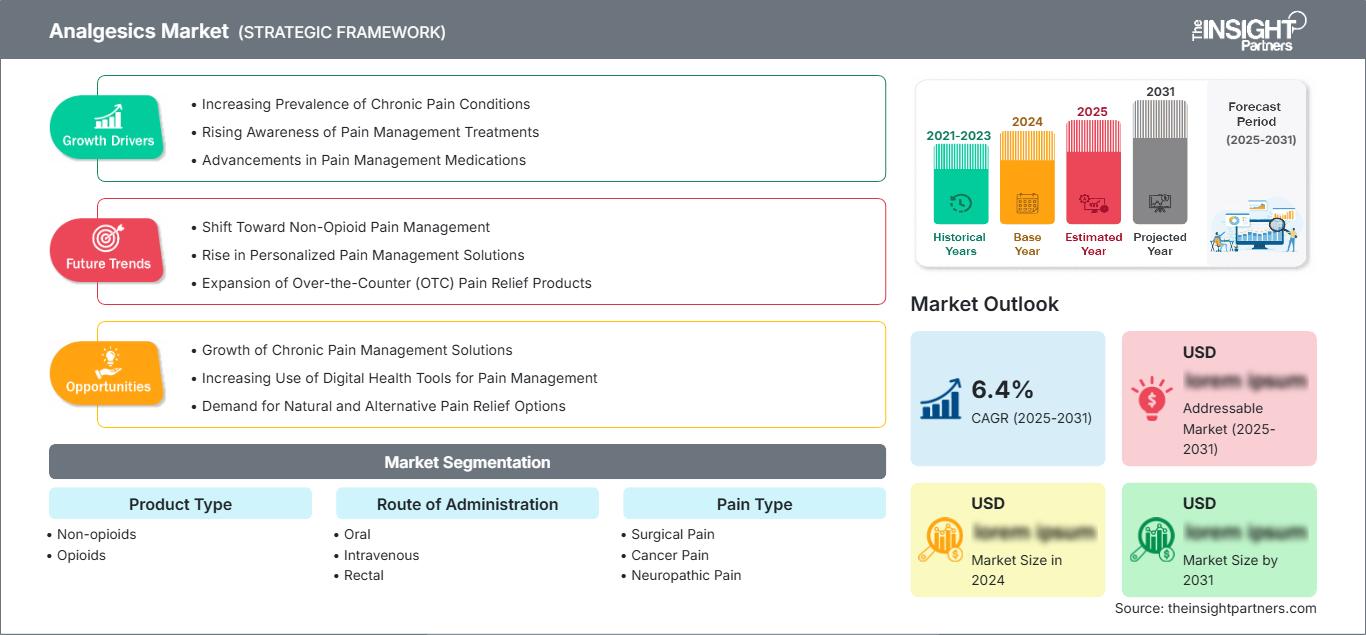
Regional Insights
North America Analgesics Market
North America held 34–37% share in 2025 and is expected to grow at a CAGR of 3.6–4.1% during 2026–2034. The region benefits from robust pharmacy distribution, large prescription volumes, and strong consumer recognition of acetaminophen, ibuprofen, naproxen, topical lidocaine, and combination products. These conditions support the analgesics market share in both self-care and clinician-directed treatment.
Growth is moderated by opioid controls, pricing scrutiny, and mature OTC penetration, yet innovation remains active in non-opioid mechanisms and localized delivery. Hospital systems are emphasizing multimodal pain care after surgery, while retail chains are expanding pharmacist-guided consumer education. Demand is strongest where aging populations, sports injuries, arthritis, and outpatient procedures intersect with convenient product access.
U.S. analgesics Market
The U.S. represented 83–86% of North America in 2025 and is projected to grow at a CAGR of 3.7–4.2% during 2026–2034. The demand for the drugs is backed by retail pharmacy chains, hospital formulary systems, ambulatory surgery centers, and an environment that favors prescription drugs. Over-the-counter non-opioid drugs continue to be used, while controlled prescription products have stricter regulations.
The presence of companies in the market is significant and includes Bayer AG, GSK plc, Johnson & Johnson Services, Inc., Reckitt Benckiser Group plc, Pfizer Inc., Eli Lilly and Company, and Teva Pharmaceutical Industries Ltd., which are active in the consumer, specialty, and generic markets. Demand for application is high in surgical pain, neuropathic pain assessment, cancer pain, arthritis, headaches, and musculoskeletal pain.
Europe analgesics Market
Europe held 27–30% share in 2025 and is expected to expand at a CAGR of 3.3–3.8% during 2026–2034, with Germany leading demand. Pharmacy-driven self-medication and prescription control mechanisms in the NHS in the UK ensure consistent demand for regulated OTC and prescription medications. The influence of pharmacists on brand choice is quite significant.
In Germany, consistent demand results from aging populations, the number of procedures performed in hospitals, and high-quality standards for medicines. It includes dependable non-opioid sources, prescription controls, and medically approved topical products. In France, Italy, and Spain, expansion occurs in a prudent manner, driven by government reimbursement systems, density of retail pharmacies, and hospital pain management protocols.
APAC analgesics Market
APAC held 24–27% share in 2025 and is projected to grow at a CAGR of 5.0–5.6% during 2026–2034. While China drives regional demand through hospital sizes, urban pharmacy growth, and increased chronic illness treatment, Japan focuses on quality, pain management for its aging population, and controlled access to over-the-counter drugs.
India, South Korea, and Australia drive the market further with increased accessibility of medicines through retail pharmacies, strong manufacturing of generics, surgery volumes, and online pharmacies. Insurance programs and efforts to increase drug manufacturing locally help provide more medicines to patients. Suppliers who offer their medicines affordably, with good reputations, and comply with regulations will benefit from additional demand.
Middle East & Africa analgesics Market
The Middle East & Africa is expected to grow at a CAGR of 4.2–4.8% during 2026–2034, led by Saudi Arabia. Growth is driven by investment in hospital infrastructure, the presence of private chain pharmacies, the provision of oncology services, and greater consumption of branded over-the-counter drugs in the Gulf region.
In the UAE, there is great demand for premium pharmacies, while South Africa is still a significant market via its retail and hospital network. RoMEA adoption is patchy due to variability in medicine prices, registration time, and rural reach. Healthcare investment in the Gulf region as a result of energy dollars has enhanced access to hospital pain relief and branded self-medication.
Segmentation Analysis
Product Type
The Product Type segment is expected to grow at a CAGR of 3.9–4.5% during 2026–2034. Demand varies between mass-market non-opioids and regulated opioid therapies used for severe pain. The analgesics market scope is widening as payers, regulators, and clinicians push safer prescribing while manufacturers invest in stronger evidence, package differentiation, and new non-opioid pathways.
- Non-opioids remain the dominant product class because acetaminophen, NSAIDs, and topical agents are widely used for fever, headache, musculoskeletal pain, arthritis, and post-procedure care.
- Opioids retain clinical importance for severe surgical pain, cancer pain, and selected trauma cases, but prescribing is shaped by monitoring, risk mitigation, and controlled dispensing requirements.
Route of Administration
The Route of Administration segment is expected to grow at a CAGR of 4.0–4.6% during 2026–2034. Oral therapy remains central because it is convenient, scalable, and suitable for both OTC and prescription use. Intravenous, rectal, transdermal, and topical formats support specific clinical needs where rapid action, swallowing limitations, localized relief, or sustained dosing are required.
- Oral products dominate everyday pain management because tablets, capsules, liquids, and powders offer convenience, broad availability, flexible dosing, and strong consumer familiarity across pharmacy channels.
- Intravenous administration is important in hospitals, emergency departments, perioperative care, and cancer settings where rapid onset, supervised dosing, and controlled analgesia are clinically required.
- Rectal products serve patients unable to swallow or tolerate oral medication, including pediatric, geriatric, and post-operative populations where alternative dosing routes remain useful.
- Transdermal delivery supports sustained therapy for selected chronic and severe pain needs, offering controlled release, adherence benefits, and reduced dosing frequency under medical supervision.
- Topical products are gaining consumer and clinical relevance for localized muscle, joint, and neuropathic discomfort because they offer targeted relief with limited systemic exposure.
Pain Type
The Pain Type segment is expected to grow at a CAGR of 4.1–4.7% during 2026–2034. Surgical pain remains a major demand generator due to procedure volumes and recovery protocols. Cancer pain and neuropathic pain create more specialized demand, often requiring clinician supervision, combination therapy, and long-term safety monitoring across hospital, oncology, and retail dispensing environments.
- Surgical Pain drives hospital and discharge-related use because procedure recovery requires predictable relief, reduced complications, and alignment with multimodal pain management protocols.
- Cancer Pain requires sustained clinical attention as oncology patients may need complex regimens, palliative support, breakthrough pain control, and careful balancing of efficacy and tolerability.
- Neuropathic Pain represents a specialized treatment area where patients often require long-term therapy, mechanism-specific medicines, and careful switching due to variable response profiles.
Distribution Channel
The Distribution Channel segment is expected to grow at a CAGR of 3.8–4.4% during 2026–2034. Hospital pharmacies are essential for acute and severe pain therapies, while retail pharmacies and drug stores support recurring OTC demand. Channel performance depends on pharmacist counseling, inventory reliability, controlled substance compliance, and the ability to serve both branded and generic products.
- Hospital Pharmacies support surgical, oncology, emergency, and inpatient pain care, where formulary control, monitored administration, and specialist prescribing define product use.
- Retail Pharmacies remain central to non-opioid access because consumers rely on pharmacist advice, familiar brands, and convenient replenishment for recurring pain needs.
- Drug Store channels capture routine OTC purchases, especially for headache, muscle pain, menstrual discomfort, and minor injury relief, supported by visibility and affordability.
Opportunity Snapshot
| Segment Name | Revenue Contribution | Trend Tag | Adoption Stage |
| Surgical Pain | High | Opioid Sparing | Mature |
| Cancer Pain | Medium | Palliative Care | Scaling |
| Neuropathic Pain | Medium | Nerve Targeting | Scaling |
Analgesics Market Growth Drivers and Impact Analysis
Shift Toward Safer Non-Opioid Pain Management
The current trend within healthcare organizations is moving towards pain relief measures that avoid unnecessary opioid exposure while maintaining access in critical medical situations. The move favors increased use of acetaminophen, NSAIDs, topical drugs, and novel pain medications that do not utilize opioids following surgery, dentistry procedures, musculoskeletal conditions, and other outpatient settings. This has commercial significance too in terms of allowing companies to distinguish their brands by safety labeling, formulation, and claims based on science. For retailers, there will be an opportunity to offer improved counseling services, while hospitals get to establish standard multimodal guidelines. Pharmaceutical companies that demonstrate good dose instructions and pharmacovigilance practices will be well placed to take advantage of regulatory trends.
Rising Burden of Chronic and Recurrent Pain Conditions
With aging demographics, pain management associated with cancer survivorship, arthritis, pain associated with diabetes, and a lack of physical activity, there is a rising demand for recurring pain management. The above driver makes possible the constant sales of products that are consumed orally, applied topically, transdermally, and through prescriptions due to the different nature of pains requiring different management routes. The economic aspect of this driver lies in the repeat purchases of OTCs, in prescription treatment, and in the greater participation of pharmacists in drug selection. Companies that have diverse product lines can cover various levels of pain intensity, from mild ones to serious neuropathic and cancer pain.
Expanding Pharmacy Access in Emerging Economies
The expansion of retail pharmacies, the manufacture of generics at a local level, telemedicine, and an increase in insurance coverage have made it easier for people to access medications for pain relief in emerging economies. It is more important from the perspective that these regions have been experiencing growth of urbanization and private health care investments, and hence their mode of drug delivery is changing too. The companies will need to consider changes in packaging, pricing and educating consumers about the products, while remaining compliant with regulations. Distribution through partnerships with pharmacists and distributors will be helpful.
Analgesics Market Future Trends
Non-Opioid Innovation and Mechanism-Based Development
Future drug pipelines are predicted to become more geared toward developing drugs targeting non-opioid receptors, such as peripheral sodium channels, inflammatory responses, and localized administration methods. The analgesics market trends suggest that regulatory agencies and payers will reward companies whose therapies are able to deliver clinically relevant pain relief without posing any risks of dependence. Clinical evidence is going to be essential for development due to the availability of inexpensive and already established solutions on the market. Innovators working with novel mechanisms should prove their clinical benefits in specific types of pain.
Greater Personalization of Pain Relief Formats
Pain management is increasingly focusing on format customization, in which the route, timing, duration, and safety of the medication are tailored to individual requirements. Oral formats are sure to continue their prominence, but the need for topical, transdermal, and mixed formats deserves consideration when local effects or reduced systemic exposure are desirable. Symptoms-based advice from retailers and pharmacists will likely be used as a selection tool, particularly for older individuals and those with polypharmacy. Format development thus becomes more than a packaging issue.
Analgesics Market Opportunities
Evidence-Led OTC Portfolio Expansion
Manufacturers can capture opportunity by expanding OTC portfolios with evidence-led claims, clearer labeling, and condition-specific formats for arthritis, back pain, menstrual discomfort, sports injury, and headache. The analgesics market Forecasts indicate stronger value capture where trusted brands combine convenient access with responsible use education. Investment should prioritize consumer testing, pharmacist materials, and packaging that reduces misuse risk. Companies can also develop topical and combination products that address unmet needs for localized or longer-lasting relief. Success will depend on maintaining regulatory credibility, especially in markets where self-medication is increasing and authorities are monitoring safety communication closely.
Hospital-to-Home Pain Management Pathways
There are opportunities in combining pain management practices in hospitals with pharmacy discharge practices. Patients undergoing surgery, suffering from trauma, or recovering from cancer treatments tend to move from controlled dosage administration to self-administration, putting them at risk of inadequate or excessive dosage or product misuse. Pharmaceutical firms and pharmacies may partner to provide discharge kits, counseling by pharmacists, and digital reminders to help with proper product use. Such practice will not only encourage adherence but will also allow for continued interaction of the patients with non-opioid and topical products.
Recent Developments
- June 2026: Kenvue Inc. introduced PainTalk under the TYLENOL brand to encourage earlier conversations about pain and relief needs. The platform, launched with Mia Hamm and the National Women’s Soccer League connection, strengthens consumer engagement around pain awareness and supports the company’s position in OTC analgesic education and brand-led self-care.
- May 2025: Eli Lilly and Company entered a definitive agreement to acquire SiteOne Therapeutics, Inc., adding STC-004, a Phase 2-ready Nav1.8 inhibitor being studied for pain. The transaction could provide SiteOne shareholders up to US$ 1.0 billion, including upfront and milestone payments, and expands Lilly’s non-opioid pain pipeline.
- January 2025: U.S. Food and Drug Administration approved Journavx, or suzetrigine, 50 mg oral tablets as a first-in-class non-opioid treatment for moderate to severe acute pain in adults. The approval created a new class of pain management medicines targeting peripheral sodium channels and reinforced regulatory support for opioid alternatives.
Frequently Asked Questions

- Comprehensive Market Sizing and Forecast Analysis
- Detailed Segmentation Analysis
- In-Depth Market Dynamics Assessment
- Regional and Country-Level Insights
- Competitive Landscape and Company Benchmarking
- Strategic Business Intelligence
Recent Reports
Testimonials

The Insight Partners' SCADA System Market report is comprehensive, with valuable insights on current trends and future forecasts. The team was highly professional, responsive, and supportive throughout. We are very satisfied and highly recommend their services.
RAN KEDEM Partner, Reali Technologies LTDs
I requested a report on a very specific software market and the team produced the report in a few days. The information was very relevant and well presented. I then requested some changes and additions to the report. The team was again very responsive and I got the final report in less than a week.
JEAN-HERVE JENN Chairman, Future Analytica
We worked with The Insight Partners for an important market study and forecast. They gave us clear insights into opportunities and risks, which helped shape our plans. Their research was easy to use and based on solid data. It helped us make smart, confident decisions. We highly recommend them.
PIYUSH NAGPAL Sr. Vice President, High Beam Global
The Insight Partners delivered insightful, well-structured market research with strong domain expertise. Their team was professional and responsive throughout. The user-friendly website made accessing industry reports seamless. We highly recommend them for reliable, high-quality research services
YUKIHIKO ADACHI CEO, Deep Blue, LLC.
This is the first time I have purchased a market report from The Insight Partners.While I was unsure at first, I visited their web site and felt more comfortable to take the risk and purchase a market report.I am completely satisfied with the quality of the report and customer service. I had several questions and comments with the initial report, but after a couple of dialogs over email with their analyst I believe I have a report that I can use as input to our strategic planning process.Thank you so much for taking the extra time and making this a positive experience.I will definitely recommend your service to others and you will be my first call when we need further market data.
JOHN SUZUKI President and Chief Executive Officer, Board Director, BK Technologies
I wish to appreciate your support and the professionalism you displayed in the course of attending to my request for information regarding to infectious disease IVD market in Nigeria. I appreciate your patience, your guidance, and the fact that you were willing to offer a discount, which eventually made it possible for us to close a deal. I look forward to engaging The Insight Partners in the future, all thanks to the impression you have created in me as a result of this first encounter.
DR CHIJIOKE ONYIA MANAGING DIRECTOR, PineCrest Healthcare Ltd.Reason to Buy
- Informed Decision-Making
- Understanding Market Dynamics
- Competitive Analysis
- Identifying Emerging Markets
- Customer Insights
- Market Forecasts
- Risk Mitigation
- Boosting Operational Efficiency
- Strategic Planning
- Investment Justification
- Tracking Industry Innovations
- Aligning with Regulatory Trends





 Get Free Sample for