
Anti-Viral Therapeutics Market Size, Growth & Trends by 2034
Anti-Viral Therapeutics Market Size and Forecasts (2021–2034), Global and Regional Share, Trends, and Growth Opportunity Analysis Report Coverage : by Drug Type (Herpes Anti-Viral Drugs, Hepatitis Anti-Viral Drugs, HIV Anti-Viral Drugs, Influenza Anti-Viral Drugs, Other Anti-Viral Drugs); Distribution Channel (Hospital Pharmacy, Independent Pharmacy, Drug Store, Online Pharmacy); and Geography (North America, Europe, Asia Pacific, and South and Central America)
- Status : Data Released
- Report Code : TIPRE00040828
- Category : Life Sciences
- No. of Pages : 150
- Available Report Formats :


- Last update date : August 21, 2026


2025 Market Size
US$ 90.09 Bn
Base year value
2034 Forecast
US$ 170.47 Bn
Projected by 2034
CAGR 2026-2034
7.34 %
Growth rate
Addressable Market
US$ 1,174.80 Bn
(2026-2034)
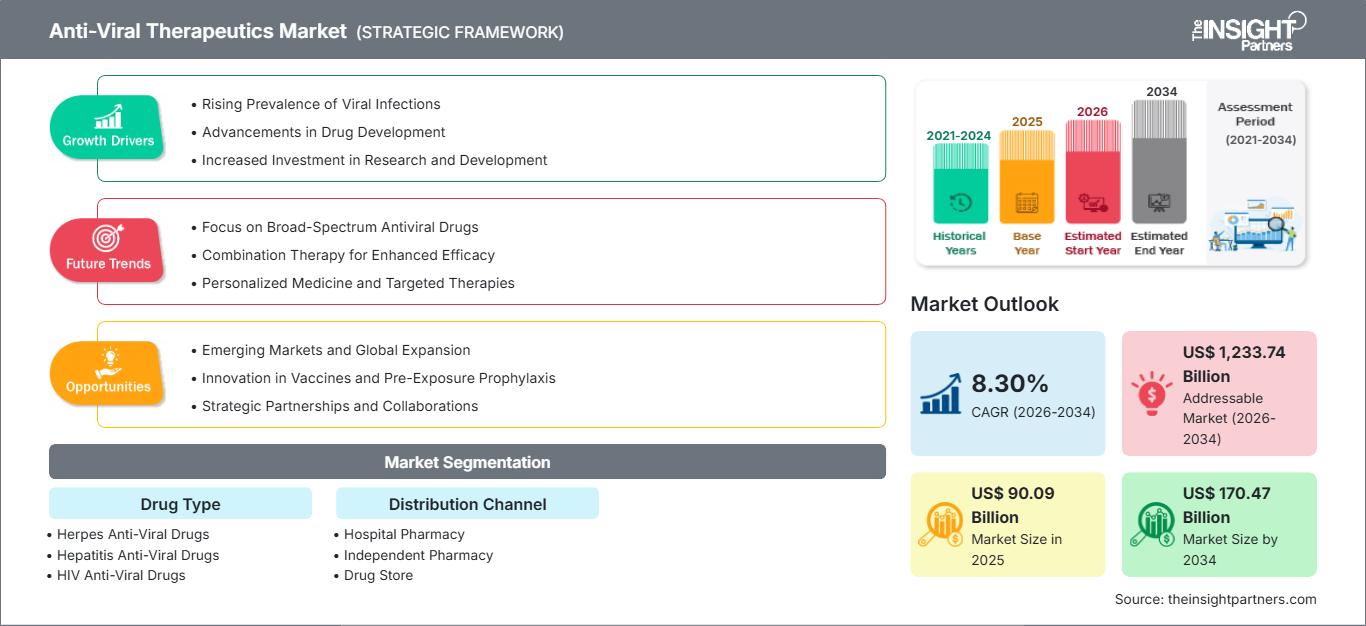
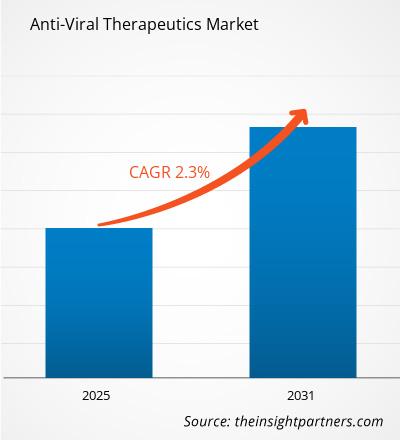
The Anti-Viral Therapeutics market was valued at US$ 90.09 billion in 2025 and is expected to reach US$ 170.47 billion by 2034; it is estimated to record a CAGR of 7.34% during 2026-2034.
Anti-Viral Therapeutics Market Assessment and Insights
- North America: North America is expected to account for 39–43% anti-viral therapeutics Market share in 2025, supported by high treatment access and innovation. The region is projected to grow at a 7.2–8.0% CAGR between 2026–2034 as long-acting and combination therapies expand.
- US: The US is expected to represent 78–82% of North America in 2025, with a 7.3–8.1% CAGR during 2026–2034, driven by specialty treatment adoption and strong pharmaceutical pipelines.
- Europe: Europe is projected to hold 27–31% share in 2025 and grow at a 6.7–7.5% CAGR through 2034. Germany, the UK, France, Italy, and Spain remain important markets because of established infectious-disease programs and public reimbursement.
- Asia Pacific: Asia Pacific is estimated at 18–22% share in 2025 and is forecast to expand at an 8.2–9.2% CAGR during 2026–2034. China, Japan, India, South Korea, and Australia provide the strongest commercial opportunities through expanding diagnosis and treatment access.
- Largest Segment: HIV Anti-Viral Drugs are estimated to command a 45–49% market share in 2025, with an 8.0–8.8% CAGR through 2034, reflecting chronic treatment requirements and regimen innovation.
- High Growth Segment: Online Pharmacy is estimated to represent 8–12% share in 2025 and grow at an 8.8–10.2% CAGR through 2034, supported by digital prescriptions and refill convenience.
- Key companies analyzed in detail: AbbVie Inc., AstraZeneca PLC, Boehringer Ingelheim International GmbH, Bristol-Myers Squibb Company, Cipla Limited, Dr. Reddy's Laboratories Limited, F. Hoffmann-La Roche Ltd., GSK plc, Johnson & Johnson, and Merck & Co., Inc.
Source: The Insight Partners' analysis based on proprietary research, government publications, company annual reports, investor presentations, industry databases, and expert interviews.
The anti-viral therapeutics industry has moved from single-target drugs to combination therapy, direct-acting antivirals, capsid inhibitors, polymerase inhibitors, and long-acting drugs. The production process has also become more specialized, owing to the influence of such factors as active pharmaceutical ingredients, formulation skills, cold chain management, and regulation on supply economics. Generic competition will continue to be an issue in the case of established products, while differentiated products have strong pricing power.
Future growth will be driven by diagnosis and treatment in emerging markets, and accessibility to specialty products. Regulatory bodies are focusing on clinical endpoints, resistance, and patient compliance. Investments are being made in drugs that lower dose frequency, or treat gaps in the treatment of respiratory, hepatic, and chronic viral diseases.
Anti-Viral Therapeutics Market Report Scope
| Report Attribute | Details |
|---|---|
| Market size in 2025 | US$ 90.09 Billion |
| Market Size by 2034 | US$ 170.47 Billion |
| Global CAGR (2026 - 2034) | 7.34% |
| Historical Data | 2021-2024 |
| Forecast period | 2026-2034 |
Anti-Viral Therapeutics Market Analysis
Demand growth in the anti-viral therapeutics market is based on sustained infections that require recurrent or lifetime therapy. The disease environment comprises diagnostic labs, doctors, hospitals, pharmacies, public health programs, manufacturers, contract development firms, and suppliers of active pharmaceutical ingredients. HIV is of great significance, as per the report from the World Health Organization, 40.8 million people had HIV infection at the end of 2024.
There is wide variability in the supply chain for each category of therapeutics. Generic drug makers offer fierce competition in established drugs for HIV and hepatitis, whereas originators focus on innovation in mechanism of action, long acting therapies, and high value specialty indications. Procurement via government programs can affect pricing in developing countries; however, in developed countries, the role of private insurance and specialty pharmacies becomes crucial.
Lifecycles, convenience of treatments, resistance patterns, and robustness of clinical data are now driving competitive positioning in the anti-viral therapeutics market. AbbVie continues to have a strong presence in hepatitis C, whereas GSK has a strong presence in HIV due to its business unit, ViiV Healthcare. Merck & Co., Inc. continues to develop different HIV regimens, and F. Hoffmann-La Roche Ltd. has an important presence in influenza antivirals.
The anti-viral therapeutics market report indicates that there is also a trend towards investment in diversification of portfolios. AstraZeneca PLC, Boehringer Ingelheim International GmbH, Bristol-Myers Squibb Company, Johnson & Johnson, and many other large pharmaceutical companies utilize their infectious disease and specialty medicine capabilities in order to hedge risks associated with development. Cipla Limited and Dr. Reddy's Laboratories Limited offer important capabilities in generics and affordable treatment.
● REPORT CUSTOMIZATION
Tailor This Report To Align With Your Specific Business Requirements
This report can be customized to align precisely with your business objectives, scope, and target markets. Customization options include tailored segmentation, geography, competitive analysis, and strategic insights to support informed decision-making.
Customize This Report →WHAT YOU CAN ADJUST
- ● Segmentations
- ● Geography
- ● Competitive Analysis
- ● Language Preferences
Anti-Viral Therapeutics Market: Strategic Insights
Regional Insights
North America anti-viral therapeutics market
North America is forecast to retain a 39–43% share in 2025 and grow at a CAGR of 7.2–8.0% up to 2034. The US leads regional demand due to widespread specialty prescribing, reimbursement, diagnostics, and quick adoption of new drugs. Canada makes contributions to demand via public purchasing and national treatment programs, even though price mechanisms are more regulated.
The region has good research facilities and a developed pharmaceutical market. The demand tends to shift towards combination therapy, long-acting solutions, and adherence-reducing therapy. Hospitals continue to play an important role in severe cases of influenza and complicated infections, whereas specialty pharmacies take care of high-value chronic therapy. Investment in infectious disease pipelines helps to stay ahead commercially.
U.S. anti-viral therapeutics Market
The US accounts for about 78-82% of the 2025 market for North America and is expected to grow at a CAGR of 7.3-8.1% up to 2034. High pharmaceutical innovation, prescription by specialists, insurance coverage, and high levels of clinical trials drive demand for the condition.
Key players include AbbVie Inc., AstraZeneca PLC, GSK plc, Johnson & Johnson, Merck & Co., Inc., and F. Hoffmann-La Roche Ltd. The trend in application is towards simplification of regimen, long acting therapy, rapid treatment of influenza and management of hepatitis.
Europe anti-viral therapeutics Market
Europe is estimated to represent 27–31% share in 2025 and is forecast to grow at a 6.7–7.5% CAGR through 2034. Germany is the leading market, supported by healthcare infrastructure and specialist treatment capacity. The UK also remains significant because of centralized health-system procurement and established infectious-disease services.
Germany benefits from broad access to specialty medicines and sophisticated hospital networks. The UK emphasizes cost-effective procurement and evidence-based treatment pathways. France, Italy, and Spain contribute through national healthcare systems, expanding diagnosis, and treatment programs for chronic viral diseases. Pricing controls moderate commercial expansion, but innovation in HIV, hepatitis, and influenza maintains Europe as a major market.
APAC anti-viral therapeutics Market
APAC is expected to hold 18–22% share in 2025 and grow at an 8.2–9.2% CAGR through 2034. China leads the region, followed by Japan, South Korea, India, and Australia. Expanding diagnosis and broader treatment access are supporting demand across both chronic and acute viral diseases.
Industrial development is strengthening regional pharmaceutical manufacturing, while government programs improve infectious-disease screening and treatment. India offers strong generic manufacturing capabilities, China combines large patient populations with domestic pharmaceutical expansion, and Japan and Australia support higher-value therapies through developed healthcare systems and regulatory frameworks.
Middle East & Africa anti-viral therapeutics Market
MEA region is expected to grow at a 7.0-8.0% CAGR until 2034, with Saudi Arabia and UAE driving the Gulf demand and South Africa being an important African market for treatments. Healthcare initiatives and improvements in healthcare infrastructure will help drive slow growth.
Healthcare infrastructure modernization drives growth in Saudi Arabia, while UAE focuses on hospital capacity and specialized care. South Africa has a strong infectious disease treatment infrastructure, while the rest of the MEA is driven by affordability, procurement, and supply considerations. The revenues in the energy sector can be used for healthcare infrastructure investments and pharmaceutical access programs.
Segmentation Analysis
Drug Type
The Drug Type segment is expected to grow at an 8.0–8.8% CAGR from 2026–2034. HIV therapies remain the largest category because treatment is generally chronic, while hepatitis and influenza therapies contribute through diagnosis expansion, seasonal treatment requirements, and continuing innovation. Portfolio diversification across viral targets reduces dependence on any single disease area.
- Herpes Anti-Viral Drugs: Demand is supported by recurrent herpes infections and established oral treatment protocols. Lifecycle management increasingly focuses on improved tolerability, convenient dosing, and broader patient access through primary-care channels.
- Hepatitis Anti-Viral Drugs: Direct-acting antivirals have transformed hepatitis C treatment, creating substantial value around diagnosis-to-treatment pathways. Market development increasingly depends on identifying untreated populations and integrating therapy into elimination programs.
- HIV Anti-Viral Drugs: Chronic treatment requirements make this the dominant drug category. Combination therapy, resistance management, and movement toward long-acting or simplified regimens continue to influence physician and patient preferences.
- Influenza Anti-Viral Drugs: Seasonal outbreaks generate recurring treatment demand, while severe disease and high-risk populations support prescription use. Single-dose therapies and earlier treatment protocols can improve adherence and treatment convenience.
- Other Anti-Viral Drugs: This category captures therapies addressing additional viral infections and emerging treatment needs. Development activity remains influenced by outbreak preparedness, novel mechanisms, and repurposing strategies for viruses with limited therapeutic options.
Distribution Channel
The Distribution Channel segment is projected to expand at an 8.1–9.0% CAGR during 2026–2034. Hospital and independent pharmacies remain central for complex and chronic therapies, while online pharmacy adoption is increasing because of prescription digitization, home delivery, refill automation, and greater patient preference for remote healthcare interactions.
- Hospital Pharmacy: Hospital pharmacies remain strategically important for severe infections, inpatient treatment, specialist therapies, and medicines requiring clinical supervision. Institutional procurement also provides an important route for high-value therapies.
- Independent Pharmacy: Independent pharmacies provide community-level access, particularly for established oral therapies and recurring prescriptions. Their proximity to patients supports refill convenience and continued treatment adherence.
- Drug Store: Drug stores remain relevant for commonly prescribed antiviral medicines and consumer-facing pharmacy services. Their role is strongest where prescription access is integrated with broader retail healthcare infrastructure.
- Online Pharmacy: Digital pharmacies are gaining strategic importance through electronic prescriptions, home delivery, automated refills, and remote consultations. Adoption is strongest among digitally engaged patients requiring recurring antiviral treatment.
Opportunity Snapshot
| Distribution Channel | Revenue Contribution (High/Medium/Low) | Trend Tag (MAX 2 words) | Adoption Stage |
|---|---|---|---|
| Hospital Pharmacy | High | Specialty Dispensing | Mature |
| Independent Pharmacy | Medium | Refill Access | Mature |
| Drug Store | Medium | Community Access | Scaling |
| Online Pharmacy | Medium | Digital Refills | Scaling |
Anti-Viral Therapeutics Market Growth Drivers and Impact Analysis
Persistent Global Burden of Chronic Viral Diseases
Persistent viral infections provide a recurring treatment base that distinguishes antivirals from many short-duration therapeutic categories. HIV is the clearest example, with 40.8 million people living with HIV globally at the end of 2024, according to WHO. Long-term treatment creates predictable prescription requirements and supports investment in regimen simplification. Hepatitis adds another structural opportunity because effective direct-acting antivirals can convert diagnosis into curative treatment. Influenza creates seasonal demand, particularly among hospitalized and high-risk patients. Together, these disease patterns diversify revenue exposure across chronic, episodic, and seasonal treatment cycles. Manufacturers can therefore balance portfolios between recurring maintenance therapies and products linked to outbreak or seasonal utilization.
Advances in Long-Acting and Simplified Treatment Regimens
Treatment convenience is becoming a central competitive variable as pharmaceutical companies seek to reduce pill burden and improve adherence. Long-acting injectable or extended-interval approaches can shift treatment from daily administration toward monthly, quarterly, or longer dosing schedules where clinically appropriate. Oral regimens are also becoming simpler through combination products that reduce the number of active medicines required. These changes can strengthen patient persistence while creating differentiated products with stronger lifecycle potential. For manufacturers, simplified regimens can support premium positioning when clinical outcomes, tolerability, and adherence advantages are demonstrated. Healthcare systems may also benefit when fewer administrations reduce logistical demands, although acquisition costs, storage requirements, and administration infrastructure remain important considerations for procurement decisions.
Expansion of Viral Diagnosis and Treatment Access
Improved diagnosis creates a direct pathway to pharmaceutical demand because many viral infections remain underdiagnosed until disease progression or complications occur. Screening programs for HIV and hepatitis can expand the addressable treatment population, while improved respiratory-virus testing can support more appropriate antiviral prescribing. In emerging markets, domestic pharmaceutical production and government procurement can reduce affordability barriers and improve supply continuity. The impact is particularly significant where treatment programs integrate testing, clinical assessment, prescription, and follow-up into a single care pathway. Digital health infrastructure can further reduce missed refills by enabling electronic prescriptions and reminders. As diagnostic capacity expands, manufacturers with broad geographic distribution, affordable formulations, and reliable supply chains can capture incremental treatment volumes.
Anti-Viral Therapeutics Market Future Trends
Shift Toward Longer-Duration Treatment Platforms
The anti-viral therapeutics market trends are increasingly oriented toward treatment platforms that minimize administration frequency without compromising virologic control. During the next decade, pharmaceutical developers are likely to prioritize long-acting oral, injectable, implantable, and extended-release technologies where pharmacokinetic profiles permit. HIV is positioned to lead this transition because treatment is lifelong and adherence remains central to viral suppression. Similar concepts may gradually influence other viral categories as formulation science improves. Commercial success will depend on balancing convenience against manufacturing complexity, storage conditions, administration requirements, resistance risks, and total treatment cost. Companies that demonstrate durable efficacy while reducing treatment frequency can establish differentiated positions and potentially extend product lifecycles beyond conventional daily oral formulations.
Integration of Antivirals With Precision Diagnosis
Future treatment pathways are likely to connect antiviral selection more closely with rapid molecular diagnosis, viral load measurement, resistance testing, and patient-specific clinical characteristics. This approach can reduce inappropriate prescribing and support faster selection of effective therapies, particularly where resistance or genotype influences treatment choice. Artificial intelligence and advanced analytics may also help identify patients requiring escalation or treatment modification. For manufacturers, integration with diagnostics can strengthen clinical differentiation and create opportunities for partnerships with laboratory and digital-health companies. The commercial model could increasingly shift from selling medicines independently toward participating in coordinated testing-to-treatment pathways. Such integration may be especially valuable for health systems seeking measurable outcomes, reduced treatment failure, and more efficient use of high-cost antiviral therapies.
Anti-Viral Therapeutics Market Opportunities
Expansion Into Underserved Treatment Populations
The anti-viral therapeutics market Forecasts indicate meaningful opportunities in countries where diagnosis has expanded faster than treatment access. Manufacturers can address these gaps through tiered pricing, local manufacturing, voluntary licensing, technology transfer, and partnerships with public-health agencies. Generic companies can strengthen their position by combining affordable formulations with reliable distribution and regulatory capabilities. Originator companies can pursue access strategies for innovative therapies while protecting differentiated value through specialized indications. Countries in South Asia, Southeast Asia, Africa, and parts of Latin America offer opportunities where rising healthcare expenditure intersects with substantial untreated viral disease burdens. Investors should prioritize companies capable of navigating public procurement, local registration, supply-chain constraints, and reimbursement complexity rather than relying solely on premium private-market pricing.
Digital Distribution and Decentralized Treatment Models
Digital pharmacy, telemedicine, electronic prescribing, and home delivery can expand access to antiviral therapies beyond conventional hospital settings. These models are particularly relevant for chronic conditions where patients require regular refills but do not need frequent in-person consultations. Manufacturers and distributors can create value through adherence programs, automated refill systems, patient support services, and integrated prescription platforms. Decentralized models may also reduce pressure on specialist facilities by moving routine treatment management into primary care and community settings. Investment opportunities therefore extend beyond drug development into technology-enabled commercialization. Companies that connect pharmacies, physicians, laboratories, and patients can improve continuity of care while generating more predictable refill patterns. Regulatory requirements for digital prescribing and patient data protection remain important market-entry considerations.
Recent Developments
- July 2026: Merck & Co., Inc. announced plans to present new data at AIDS 2026 covering daily, weekly, and monthly HIV treatment and prevention options. The pipeline includes investigational once-weekly islatravir/lenacapavir and once-monthly oral MK-8527, reflecting continued development toward lower-frequency HIV treatment and prevention.
- June 2026: AbbVie Inc. announced European Commission approval of MAVIRET for acute hepatitis C infection in adults and children aged three years and older. The approval extends the role of its pangenotypic direct-acting antiviral into acute HCV treatment and supports earlier intervention after confirmed infection.
- April 2025: F. Hoffmann-La Roche Ltd. reported phase III CENTERSTONE results showing that single-dose Xofluza reduced the odds of influenza transmission to household members by 32%. The findings strengthened the potential public-health role of antiviral treatment beyond symptom management and were submitted to US and European health authorities.
Frequently Asked Questions

- Comprehensive Market Sizing and Forecast Analysis
- Detailed Segmentation Analysis
- In-Depth Market Dynamics Assessment
- Regional and Country-Level Insights
- Competitive Landscape and Company Benchmarking
- Strategic Business Intelligence
Recent Reports
Testimonials

The Insight Partners' SCADA System Market report is comprehensive, with valuable insights on current trends and future forecasts. The team was highly professional, responsive, and supportive throughout. We are very satisfied and highly recommend their services.
RAN KEDEM Partner, Reali Technologies LTDs
I requested a report on a very specific software market and the team produced the report in a few days. The information was very relevant and well presented. I then requested some changes and additions to the report. The team was again very responsive and I got the final report in less than a week.
JEAN-HERVE JENN Chairman, Future Analytica
We worked with The Insight Partners for an important market study and forecast. They gave us clear insights into opportunities and risks, which helped shape our plans. Their research was easy to use and based on solid data. It helped us make smart, confident decisions. We highly recommend them.
PIYUSH NAGPAL Sr. Vice President, High Beam Global
The Insight Partners delivered insightful, well-structured market research with strong domain expertise. Their team was professional and responsive throughout. The user-friendly website made accessing industry reports seamless. We highly recommend them for reliable, high-quality research services
YUKIHIKO ADACHI CEO, Deep Blue, LLC.
This is the first time I have purchased a market report from The Insight Partners.While I was unsure at first, I visited their web site and felt more comfortable to take the risk and purchase a market report.I am completely satisfied with the quality of the report and customer service. I had several questions and comments with the initial report, but after a couple of dialogs over email with their analyst I believe I have a report that I can use as input to our strategic planning process.Thank you so much for taking the extra time and making this a positive experience.I will definitely recommend your service to others and you will be my first call when we need further market data.
JOHN SUZUKI President and Chief Executive Officer, Board Director, BK Technologies
I wish to appreciate your support and the professionalism you displayed in the course of attending to my request for information regarding to infectious disease IVD market in Nigeria. I appreciate your patience, your guidance, and the fact that you were willing to offer a discount, which eventually made it possible for us to close a deal. I look forward to engaging The Insight Partners in the future, all thanks to the impression you have created in me as a result of this first encounter.
DR CHIJIOKE ONYIA MANAGING DIRECTOR, PineCrest Healthcare Ltd.Reason to Buy
- Informed Decision-Making
- Understanding Market Dynamics
- Competitive Analysis
- Identifying Emerging Markets
- Customer Insights
- Market Forecasts
- Risk Mitigation
- Boosting Operational Efficiency
- Strategic Planning
- Investment Justification
- Tracking Industry Innovations
- Aligning with Regulatory Trends





 Get Free Sample for