
Antibiotic Resistance Market Size, Trends & Demand by 2034
Coverage: by Drug Class (Oxazolidinones, Cephalosporins, Tetracyclines, Lipoglycopeptides, Others); Distribution Channel (Hospital Pharmacies, Retail Pharmacies, Drug Stores, Online Pharmacies), and Geography (North America, Europe, Asia Pacific, and South and Central America)
- Status : Data Released
- Report Code : TIPRE00011956
- Category : Life Sciences
- No. of Pages : 150
- Available Report Formats :


- Last update date : August 27, 2026


2025 Market Size
US$ 10.19 Bn
Base year value
2034 Forecast
US$ 16.21 Bn
Projected by 2034
CAGR 2026-2034
5.29 %
Growth rate
Addressable Market
US$ 119.73 Bn
(2026-2034)
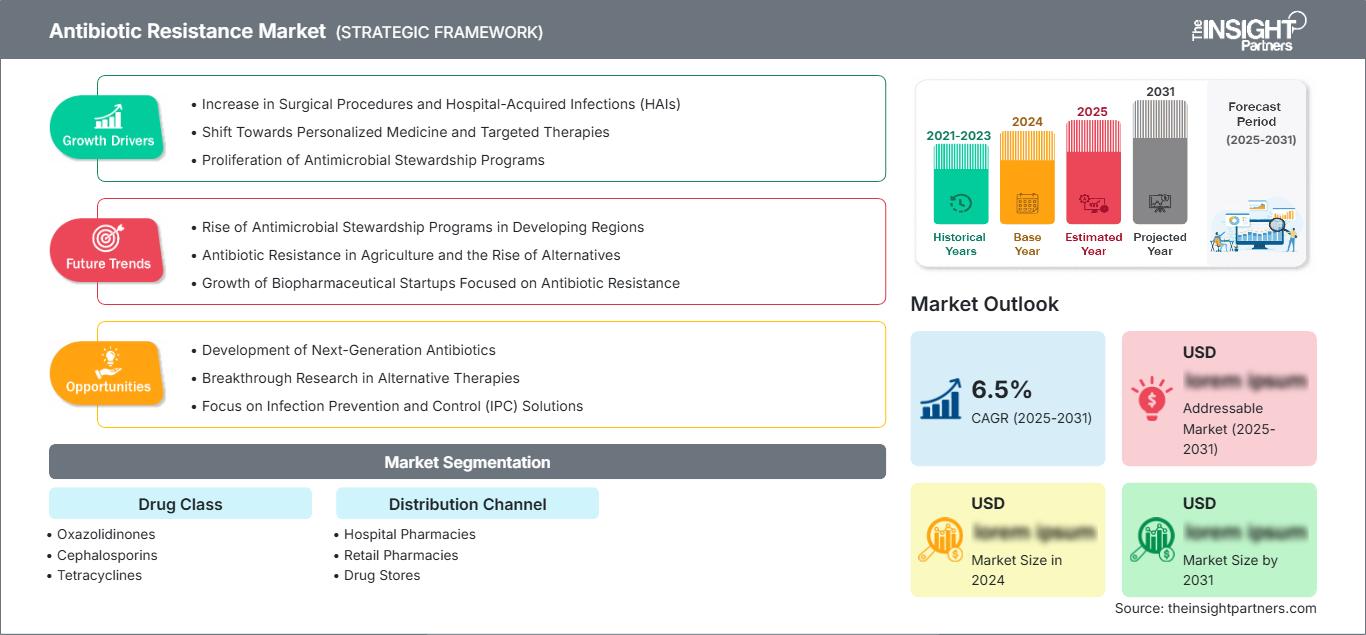
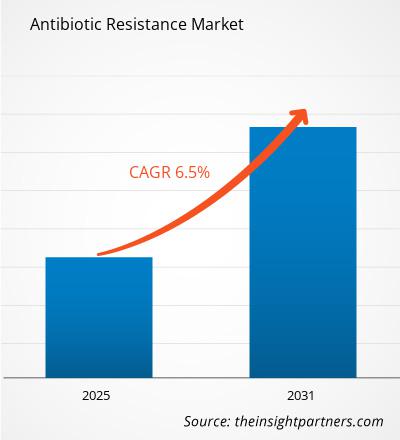
The antibiotic resistance market is positioned for sustained expansion as resistant bacterial infections increase treatment complexity, stewardship programs reshape prescribing, and investment shifts toward differentiated anti-infective therapies. The market was valued at US$ 10.19 Billion in 2025 and is projected to reach US$ 16.21 Billion by 2034, representing a CAGR of 5.29% during 2026–2034. Growth reflects rising clinical need for therapies addressing pathogens with reduced susceptibility to established antibiotics.
North America is expected to remain a structurally important market, supported by high diagnosis rates, sophisticated hospital infrastructure, antimicrobial stewardship programs, and relatively strong access to novel therapies. The antibiotic resistance market size is expected to advance at an estimated 4.7–5.2% CAGR during 2026–2034, with demand concentrated in severe hospital infections, resistant respiratory infections, bloodstream infections, and complicated urinary tract infections.
Antibiotic Resistance Market Assessment and Insights
- North America: North America commanded a 34–38% of the antibiotic resistance market share in 2025 and is likey to expand at a 4.7–5.2% CAGR between 2026–2034, supported by hospital demand, stewardship infrastructure, advanced diagnostics, and reimbursement for differentiated anti-infective therapies.
- US: The US represented 78–82% of North America's 2025 value and projected to grow at a 4.5–5.0% CAGR between 2026–2034, driven by resistant hospital infections and novel antibiotic adoption.
- Europe: Europe held a 27–31% share in 2025 and a 4.8–5.4% CAGR between 2026–2034 is anticipated, largely being led by Germany, France, the UK, Italy, and Spain through coordinated surveillance, stewardship, and public-health procurement.
- Asia Pacific: Asia Pacific held a 24–28% share in 2025 and is expected to grow at a 6.4–7.2% CAGR between 2026–2034, with China, India, Japan, and South Korea benefiting from infection burdens, expanding diagnostics, and healthcare investment.
- Largest Segment: Cephalosporins held a 32–36% market share in 2025 and is likely to grow at a 5.0–5.8% CAGR during 2026–2034, reflecting broad hospital use.
- High Growth Segment: Online Pharmacies represented an 8–12% share in 2025 and is likely to expand at an 11–13% CAGR during 2026–2034 as regulated digital dispensing gains traction.
- Key companies analyzed in detail: Achaogen, Inc.; Basilea Pharmaceutica Ltd.; Entasis Therapeutics; Melinta Therapeutics; Paratek Pharmaceuticals, Inc.; Seres Therapeutics, Inc.; Tetraphase Pharmaceuticals, Inc.; Theravance Biopharma, Inc.; Wockhardt Therapeutics; Innoviva, Inc.
Source: The Insight Partners' analysis based on proprietary research, government publications, company annual reports, investor presentations, industry databases, and expert interviews.
The therapeutic landscape has evolved from dependence on established broad-spectrum antibiotics toward targeted products designed around resistant Gram-positive and Gram-negative pathogens. Advanced cephalosporins, beta-lactamase inhibitor combinations, tetracycline derivatives, and oxazolidinones increasingly emphasize activity against difficult pathogens while preserving clinically useful dosing profiles. Production has also become more specialized, with smaller anti-infective developers relying on licensing, contract manufacturing, and commercial partnerships to control development costs.
The Antibiotic Resistance market forecast highlights growing opportunities in emerging economies, driven by enhanced resistance monitoring, expanding healthcare infrastructure, and stronger government commitments to essential-medicine access. Regulatory support, procurement-based purchasing strategies, antimicrobial innovation funding, and collaborations involving international development organizations are expected to reduce commercialization challenges. Consequently, investment is anticipated to favor innovative therapies that offer novel mechanisms, oral treatment flexibility, targeted spectrum activity, and robust efficacy against high-priority resistant pathogens.
Antibiotic Resistance Market Report Scope
| Report Attribute | Details |
|---|---|
| Market size in 2025 | US$ 10.19 Billion |
| Market Size by 2034 | US$ 16.21 Billion |
| Global CAGR (2026 - 2034) | 5.29% |
| Historical Data | 2021-2024 |
| Forecast period | 2026-2034 |
Antibiotic Resistance Market Analysis
Antibiotic usage is becoming increasingly driven by the outcome of resistance rather than antibiotic consumption. This includes the rise of resistance among pathogens causing blood stream infections, respiratory infections, urinary tract infections, skin infections, and hospital acquired infections, where resistance requires prolonged treatments and care, and drives the antibiotic resistance market. The value chain comprises discovery companies, biotechnology firms, CROs, active ingredient suppliers, specialty manufacturing companies, hospitals, diagnostic laboratories, distributors, and stewardship groups. Supply factors are still limited owing to the need for proper inventory control and antibiotic prescription.
The key demand generators are hospitals due to the nature of resistant infections requiring intravenous drug delivery, susceptibility tests, consultations from infectious disease doctors and monitoring. On the other hand, diagnostic laboratories affect the product choice through susceptibility tests and de-escalation process. The increasing differentiation by manufacturers is through drug formulation, dosing, spectrum, and resistance characteristics rather than broad antibacterial properties. There are additional purchasers such as government organizations and health institutions that drive antibiotic purchases through stewardship, essential medicines and preparedness.
There is a fragmentation of competition among established pharmaceutical firms and specialist developers. There is an improvement in Basilea Pharmaceutica Ltd.'s anti-infectives strategy because of ceftobiprole and pipeline development, whereas there have been efforts by Wockhardt Therapeutics to develop various antibiotics for treatment against resistant organisms. Innoviva, Inc. has added infectious disease commercialization to its pipeline, which includes products for hospital-resistance infections. This means that the antibiotic resistance market research takes into consideration both the size of the company and the innovation capacity of specialists.
There have been many specialized assets developed by small developers, but consolidation has changed their ownership status. Some examples of this are Achaogen, Inc., Entasis Therapeutics, Melinta Therapeutics, and Tetraphase Pharmaceuticals, Inc. It is evident that there is more emphasis in the investment on platforms for multiple anti-infectives candidates, and also strategic partnering will enable companies to have access to hospital sales infrastructure and international distribution networks.
● REPORT CUSTOMIZATION
Tailor This Report To Align With Your Specific Business Requirements
This report can be customized to align precisely with your business objectives, scope, and target markets. Customization options include tailored segmentation, geography, competitive analysis, and strategic insights to support informed decision-making.
Customize This Report →WHAT YOU CAN ADJUST
- ● Segmentations
- ● Geography
- ● Competitive Analysis
- ● Language Preferences
Antibiotic Resistance Market: Strategic Insights
Regional Insights
North America Antibiotic Resistance Market
North America is estimated to account for 34–38% of 2025 revenue and expand at a 4.7–5.2% CAGR through 2034. The US dominates regional demand because hospitals manage substantial volumes of resistant infections and maintain advanced microbiology, susceptibility testing, and stewardship capabilities. Canada contributes through public procurement, centralized health systems, and surveillance-led antibiotic policies.
Reimbursement, specialty hospital pharmacies, and faster adoption of novel antibiotics are positive characteristics of the regional antibiotic resistance market. FDA incentives for new antibiotics that treat certain infections can be financially beneficial for the development process, and CDC surveillance helps to identify priority pathogens. Demand is mostly driven by infections of blood, hospital-acquired pneumonia, complicated urinary tract infection, and difficult-to-treat skin infections.
U.S. Antibiotic Resistance Market
The US represents approximately 78–82% of North America's 2025 value and is projected to grow at a 4.5–5.0% CAGR through 2034. CDC data indicate that more than 2.8 million antimicrobial-resistant infections occur annually, creating a substantial clinical need for effective therapies. Hospitals, specialty pharmacies, and infectious-disease centers remain major purchasing points.
Basilea Pharmaceutica Ltd., Wockhardt Therapeutics, and Innoviva, Inc. are intensifying their efforts in terms of developing their unique antibacterial products. Applications are highly sought after in treating MRSA, Gram negative resistance, complicated UTI, HAP, and bacteremia. In addition, more and more stewardship programs are advocating for selective use which is backed up with microbiology data, thereby giving rise to unique dosage profiles.
Europe Antibiotic Resistance Market
Europe is estimated to hold a 27–31% share in 2025 and grow at a 4.8–5.4% CAGR through 2034. Germany remains a leading country in the antibiotic resistance market because of its substantial hospital infrastructure and specialist infectious-disease services. The UK emphasizes antimicrobial stewardship, surveillance, and health-system coordination, while France combines hospital treatment capacity with national antimicrobial policy.
Italy and Spain will play an active role in terms of hospital procurement, increased resistance monitoring, and demand for treatments for hard-to-treat infections. In terms of regional efforts, European public health programs will help monitor resistant bacteria and promote more rational antibiotic usage. In this way, the antibiotic resistance market development will be influenced by therapy as well as stewardship needs, with Germany likely to maintain its position as the leader in Europe.
APAC Antibiotic Resistance Market
APAC is estimated to represent 24–28% of 2025 revenue and expand at a 6.4–7.2% CAGR. China leads regional value, followed by Japan, South Korea, India, and Australia. Rising diagnostic capacity, hospital expansion, and national AMR programs support increasing demand for resistant-infection therapies.
Pharmaceutical manufacturing industries in China and India are bolstering regional capacities, while policies are encouraging surveillance as well as proper usage of antibiotics. Japan and South Korea have advanced hospitals, while India, on the other hand, has an extensive burden of infections along with growing pharmaceuticals industry.
Middle East & Africa Antibiotic Resistance Market
According to the Antibiotic Resistance Market report, the Middle East and Africa is expected to grow faster than mature regions, supported by hospital infrastructure expansion, infectious-disease programs, and greater availability of microbiology services. Saudi Arabia and the UAE represent important Gulf markets, while South Africa is a leading sub-Saharan market for resistant infection management.
The region's development is influenced by healthcare investment linked to economic diversification, hospital modernization, and energy-sector infrastructure. The antibiotic resistance market in the Rest-of-MEA remains more fragmented, with access, diagnostics, procurement capacity, and specialist availability influencing adoption. A modelled regional CAGR of 7.0–8.0% reflects these improving structural conditions.
Segmentation Analysis
Drug Class
The Drug Class segment is expected to expand at a 4.9–5.7% CAGR during 2026–2034 in the antibiotic resistance market. Demand is increasingly concentrated on classes offering activity against resistant pathogens, established hospital familiarity, and clinically manageable safety profiles. Cephalosporins retain broad relevance, while newer oxazolidinones, tetracyclines, and lipoglycopeptides provide differentiated options for selected resistant infections. Product selection remains strongly dependent on susceptibility results and stewardship protocols.
- Oxazolidinones: Oxazolidinones remain strategically important for resistant Gram-positive infections, particularly where oral bioavailability supports hospital discharge and continuation therapy. Their established clinical role supports consistent specialist utilization.
- Cephalosporins: Cephalosporins maintain a broad hospital position because several generations address different pathogen profiles. Advanced-generation products and beta-lactamase combinations strengthen relevance against resistant Gram-negative and Gram-positive infections.
- Tetracyclines: Tetracyclines benefit from broad clinical familiarity and oral formulations. Newer derivatives are positioned for resistant respiratory, skin, and atypical infections were conventional options face susceptibility or tolerability limitations.
- Lipoglycopeptides: Lipoglycopeptides provide long-acting treatment options for selected resistant Gram-positive infections, potentially reducing administration frequency and supporting outpatient management where clinically appropriate.
Distribution Channel
The Distribution Channel segment is projected to grow at a 6.8–8.0% CAGR during 2026–2034 in the antibiotic resistance market. Hospital Pharmacies remain central because severe resistant infections frequently require controlled dispensing and intravenous treatment. However, retail and digital channels can gain importance for appropriate oral therapies, step-down treatment, and follow-up prescriptions under regulated stewardship frameworks.
- Hospital Pharmacies: Hospital pharmacies are the key channel, since resistant infections often require inpatient treatment, antimicrobial stewardship assessment, prescription based on susceptibility, and inventory coordination.
- Retail Pharmacies: Retail pharmacies support outpatient antibiotic dispensing, particularly for oral therapies prescribed after clinical assessment. Their strategic role depends on prescription controls and adherence to antimicrobial stewardship principles.
- Drug Stores: Drug stores remain relevant where prescription access and local healthcare infrastructure support regulated antibiotic distribution. Their importance varies substantially by national dispensing rules and enforcement.
- Online Pharmacies: Online pharmacies are emerging as a structured channel for legitimate prescription fulfillment, refill convenience, and geographic access, although regulation and antibiotic stewardship remain critical safeguards.
Opportunity Snapshot
| Distribution Channel | Revenue Contribution | Trend Tag | Adoption Stage |
| Hospital Pharmacies | High | Stewardship Dispensing | Mature |
| Retail Pharmacies | Medium | Oral Stepdown | Scaling |
| Drug Stores | Medium | Regulated Access | Scaling |
| Online Pharmacies | Low | Digital Fulfillment | Emerging |
Antibiotic Resistance Market Growth Drivers and Impact Analysis
Increasing burden of resistant bacterial infections
Resistance among pathogens means that there is an increased need for new treatments that can provide care to patients who are unresponsive to conventional antibiotics. Surveillance by the WHO has found that resistance is a problem in many cases of common bacterial infections, while resistance is an ongoing trend in the use of certain pathogen-antibiotic pairs. This results in a need for new drugs and combinations that are effective against these priority pathogens. This factor affects commercial prospects most significantly within hospital settings, as it could prolong length of stays and result in higher diagnostic needs. This means that pharmaceutical firms can justify their differentiated products if they show clear value against resistant pathogens.
Expansion of antimicrobial stewardship and diagnostics
Stewardship efforts are moving antibiotic purchasing away from volume-driven buying to clinically-based usage. Hospitals are now incorporating microbiology information, local antibiogram data, infectious disease consults, and prescription guidelines before advancing to last-resort drugs. This increases the need for medicines that prove themselves to be effective against specific bacteria without broad spectrum exposure unnecessarily. Faster diagnostic technology can also cut down on the time between sample acquisition and specific therapy. For pharmaceutical companies, stewardship increases the need for clinically-based sales, requiring data to show differentiation based on clinical outcome and not simply efficacy against a spectrum. Pharmaceutical companies that can fit their drugs into diagnostic algorithms and hospital protocols will have a better chance to succeed.
Public funding and regulatory support for antibacterial innovation
There is an economic problem associated with the development of antibiotics, since new treatments are purposefully applied sparingly to maintain their effectiveness. Therefore, public funding tools can play an important part in lowering the risk of development and funding of products designed against high-priority pathogens. Funding, expertise, or other developmental benefits can be provided through BARDA, CARB-X, innovation schemes of the countries, and regulatory incentives. These funding tools make programs more feasible, which otherwise may not be able to attract investment typical for pharmaceutical industry. It has more far-reaching consequences than only providing funding for single products because validated programs can create a market for new mechanisms and promote cooperation between biotech companies and large corporations.
Antibiotic Resistance Market Future Trends
Precision antimicrobial selection using integrated diagnostics
The future Antibiotic Resistance Market trend will include a combination of molecular diagnostics, susceptibility tests, hospital information systems, and prescriptive algorithms. Rather than treat resistance by using empirical broad spectrum treatment, there will be an increased ability to understand the pathogen properties and then use the right treatment in accordance with resistance mechanisms. This will favor products that are highly specific and predictable in terms of their clinical positioning and pharmacology. With diagnostic integration, there will be no need for the excessive use of reserve antibiotics which will contribute to the goals of stewardship and increase efficiency in the formulary system. For pharmaceutical companies, companion diagnostics, laboratory associations, and digital decision support may become critical commercial differences.
Novel mechanisms targeting priority Gram-negative pathogens
Pipeline investment is likely to increasingly focus on difficult Gram-negative pathogens, including carbapenem-resistant Enterobacterales, resistant Pseudomonas aeruginosa, and Acinetobacter baumannii. Traditional antibiotic classes have encountered resistance mechanisms that reduce treatment reliability, creating space for beta-lactamase inhibitor combinations and entirely new biological targets. Developers are also examining approaches that disrupt bacterial structures or resistance pathways rather than relying solely on incremental modifications of established classes. Successful candidates may receive stronger public-sector support because they address pathogens considered high priorities for global health security. Commercial strategies will likely combine targeted hospital use with stewardship safeguards, ensuring new mechanisms are preserved for infections where existing therapies are inadequate.
Antibiotic Resistance Market Opportunities
Partnership-led expansion in emerging markets
Emerging markets present an opportunity to combine increasing investments in healthcare with local manufacturing, regulatory, and logistics capabilities. India, China, Southeast Asia, Latin America, and selected Middle Eastern nations can support regional expansion by adopting pricing, registration, supply, and stewardship approaches that meet local needs. Collaboration with local drug manufacturers would reduce manufacturing costs and improve access to tenders, while regional clinical trials would streamline the regulatory submission process. The Antibiotic Resistance Market Forecasts suggest that emerging regions, which are experiencing high growth rates, will account for a larger share of incremental demand over time. Companies should focus on expanding into emerging regions with robust microbiology capabilities and national AMR strategies.
Lifecycle management through differentiated formulations
In addition to the potential for discovering novel antibiotics, product lifecycle development opportunities go further. Oral step-down formulations, extended interval dosing, enhanced infusion schedules, and combination products can enhance convenience while maintaining the positioning of current antibiotic agents. This will help in facilitating outpatients and minimizing administration. There is also the option of expanding into other therapeutic indications for the drug, using the current pharmacology as the basis for scientific rationale, especially infections that are caused by resistant pathogens. It is important for the commercial team to focus on evidence regarding duration of treatment, compliance, hospital admission, and resource utilization as they can affect hospital formulary and payor decisions.
Recent Developments
- May 2026: Basilea Pharmaceutica Ltd. received a further US$13.3 million BARDA award to continue development of oral ceftibuten-ledaborbactam etzadroxil, a beta-lactam and beta-lactamase inhibitor combination being developed for complicated urinary tract infections, including pyelonephritis. The funding strengthens development of a differentiated oral antibacterial program targeting resistant Gram-negative infections.
- 2026: Wockhardt Therapeutics advanced its novel antibacterial portfolio, including regulatory progress for ZAYNICH and development of FOVISCU for resistant infections. The company has positioned its pipeline around priority pathogens and difficult Gram-negative infections, while continuing clinical and regulatory work across multiple candidates. Its strategy reflects increasing emphasis on differentiated mechanisms and hospital-focused antibacterial products.
- October 2025: Innoviva, Inc. reported additional clinical development activity around its infectious-disease portfolio, including presentations of new zoliflodacin analyses at IDWeek 2025. The company's portfolio includes ZEVTERA and XACDURO, strengthening its focus on serious bacterial infections and therapies addressing pathogens with limited treatment options.
Frequently Asked Questions

- Comprehensive Market Sizing and Forecast Analysis
- Detailed Segmentation Analysis
- In-Depth Market Dynamics Assessment
- Regional and Country-Level Insights
- Competitive Landscape and Company Benchmarking
- Strategic Business Intelligence
Recent Reports
Testimonials

The Insight Partners provided valuable market intelligence that supported our global go-to-market strategy. Their team was professional, responsive, and attentive to our feedback, providing thoughtful analysis and helpful methodological clarifications throughout the project.
Junmo Kim Chief Financial Officer (CFO), Enertech Co., Ltd.
The Insight Partners' SCADA System Market report is comprehensive, with valuable insights on current trends and future forecasts. The team was highly professional, responsive, and supportive throughout. We are very satisfied and highly recommend their services.
RAN KEDEM Partner, Reali Technologies LTDs
I requested a report on a very specific software market and the team produced the report in a few days. The information was very relevant and well presented. I then requested some changes and additions to the report. The team was again very responsive and I got the final report in less than a week.
JEAN-HERVE JENN Chairman, Future Analytica
We worked with The Insight Partners for an important market study and forecast. They gave us clear insights into opportunities and risks, which helped shape our plans. Their research was easy to use and based on solid data. It helped us make smart, confident decisions. We highly recommend them.
PIYUSH NAGPAL Sr. Vice President, High Beam Global
The Insight Partners delivered insightful, well-structured market research with strong domain expertise. Their team was professional and responsive throughout. The user-friendly website made accessing industry reports seamless. We highly recommend them for reliable, high-quality research services
YUKIHIKO ADACHI CEO, Deep Blue, LLC.
This is the first time I have purchased a market report from The Insight Partners.While I was unsure at first, I visited their web site and felt more comfortable to take the risk and purchase a market report.I am completely satisfied with the quality of the report and customer service. I had several questions and comments with the initial report, but after a couple of dialogs over email with their analyst I believe I have a report that I can use as input to our strategic planning process.Thank you so much for taking the extra time and making this a positive experience.I will definitely recommend your service to others and you will be my first call when we need further market data.
JOHN SUZUKI President and Chief Executive Officer, Board Director, BK Technologies
I wish to appreciate your support and the professionalism you displayed in the course of attending to my request for information regarding to infectious disease IVD market in Nigeria. I appreciate your patience, your guidance, and the fact that you were willing to offer a discount, which eventually made it possible for us to close a deal. I look forward to engaging The Insight Partners in the future, all thanks to the impression you have created in me as a result of this first encounter.
DR CHIJIOKE ONYIA MANAGING DIRECTOR, PineCrest Healthcare Ltd.Reason to Buy
- Informed Decision-Making
- Understanding Market Dynamics
- Competitive Analysis
- Identifying Emerging Markets
- Customer Insights
- Market Forecasts
- Risk Mitigation
- Boosting Operational Efficiency
- Strategic Planning
- Investment Justification
- Tracking Industry Innovations
- Aligning with Regulatory Trends





 Get Free Sample for