
Antihelminthics Market Size, Trends & Growth by 2034
Coverage: By Type (Benzimidazoles, Abamectin, Salicylanilides, Praziquantel); Application (Schistosomiasis, Fasciolasis, Filariasis, Angiostrongylosis, Ascariasis, Giardiasis); End User (Hospital, Others) , and Geography (North America, Europe, Asia Pacific, and South and Central America)
- Status : Data Released
- Report Code : TIPRE00018090
- Category : Life Sciences
- No. of Pages : 150
- Available Report Formats :


- Last update date : September 03, 2026


2025 Market Size
US$ 3.42 Bn
Base year value
2034 Forecast
US$ 5.23 Bn
Projected by 2034
CAGR 2026-2034
4.82 %
Growth rate
Addressable Market
US$ 39.24 Bn
(2026-2034)
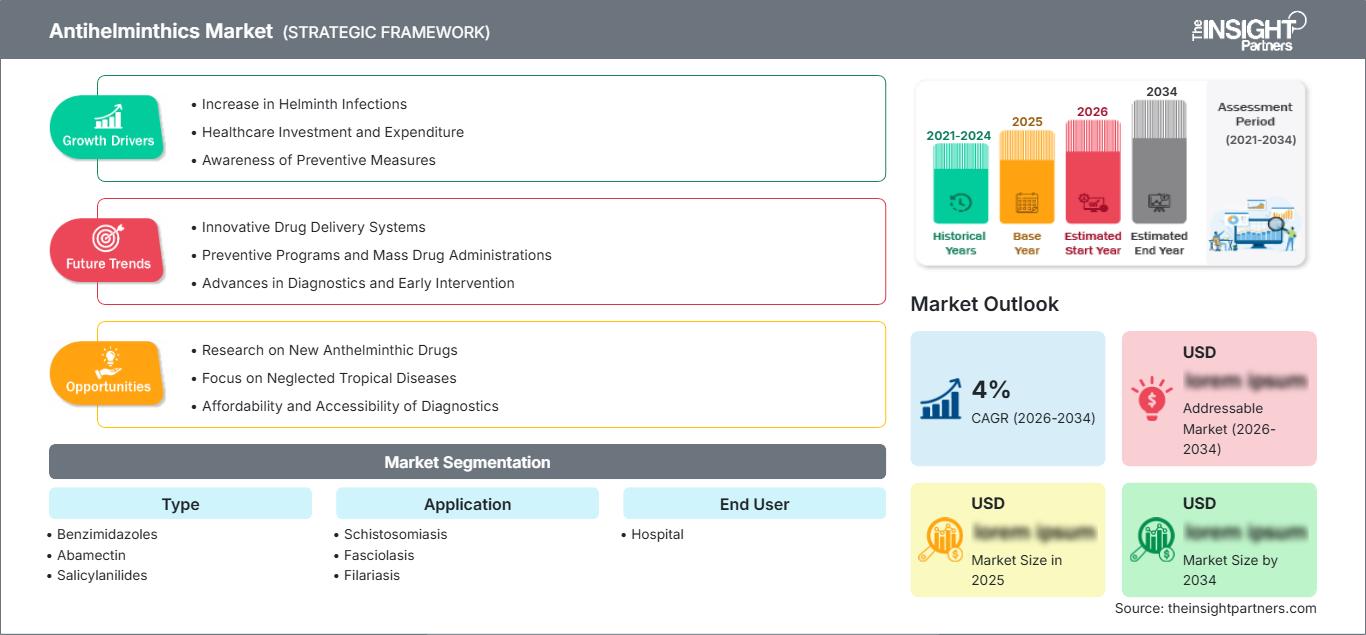
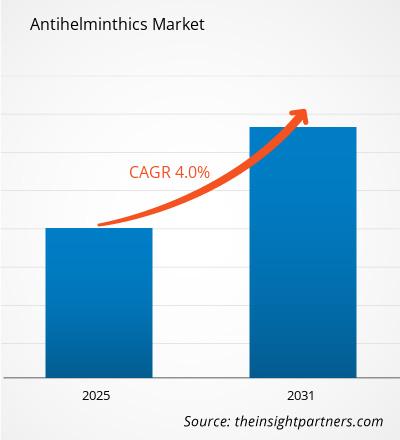
The antihelminthics market size is estimated to be at US$ 3.42 billion in 2025 and will grow to be worth US$ 5.23 billion by 2034, recording a CAGR of 4.82% from 2026 to 2034. The market includes pharmaceutical drugs for the treatment of parasitic worm infections within the realms of intestinal, tissue, and systemic diseases, driven by the prevalence of endemic diseases, preventive chemotherapy, clinical diagnosis, accessibility of drugs, and development of new treatments.
North America is expected to have the growth rate of 3.8%–4.6% between 2026 and 2034. The antihelminthics market value in North America is fueled by strong existing infectious disease infrastructure, diagnosis of travel-related and imported cases of parasitic infection, and sustained supply of prescription drugs and generic drugs. Infectious disease specialty practice, hospital pharmacy, and public health programs create steady routes, whereas research on resistant parasites generates business opportunities.
Antihelminthics Market Assessment and Insights
- North America: North America represented a 20–24% antihelminthics market share in 2025 and is projected to grow at a CAGR of 3.8–4.6% during 2026–2034. Demand is supported by hospital treatment, imported infections, specialist diagnosis, and established pharmaceutical distribution infrastructure.
- US: The US accounted for 16–19% of the North American market in 2025 and is expected to expand at a CAGR of 3.7–4.5% through 2034, led by clinical treatment and travel-related infections.
- Europe: Europe held a 22–26% share in 2025 and is projected to register a CAGR of 4.1–4.9%. Germany, France, the UK, Italy, and Spain contribute through infectious-disease treatment, public procurement, generic availability, and surveillance of imported parasitic infections.
- Asia Pacific: Asia Pacific represented 29–33% of 2025 revenue and is expected to grow at a CAGR of 5.2–6.1%. China, India, Japan, and South Korea provide substantial demand, while endemic disease programs and expanding healthcare access support consumption.
- Largest Segment: Benzimidazoles represented a modelled 41–45% market share in 2025 and are projected to register 4.6–5.1% CAGR during 2026–2034, supported by albendazole and mebendazole use in soil-transmitted helminth control.
- High Growth Segment: Praziquantel represented a modelled 20–24% market share in 2025 and is projected to register 5.6–6.2% CAGR during 2026–2034, reflecting continuing schistosomiasis treatment programs and pediatric access expansion.
- Key companies analyzed in detail: Abbott Laboratories, Novartis AG, Johnson & Johnson Services, Inc., Sanofi, Merck & Co., Inc., GlaxoSmithKline plc, Astellas Pharma Inc., Bayer AG, Cipla Limited, Sun Pharmaceutical Industries Limited.
Source: The Insight Partners' analysis based on proprietary research, government publications, company annual reports, investor presentations, industry databases, and expert interviews.
The antihelminthic market has moved from the use of traditional broad-spectrum products towards differentiated treatment of parasites and disease indications. Benzimidazoles will continue to have significance due to the low-cost oral delivery and broad activity in the intestine. The development of drugs targeting schistosomes using praziquantel and macrocyclic lactones will continue to be important in disease-specific control efforts. Production will focus more on scalability, generics, pediatric suitability, and consistent formulations for mass purchase.
According to the antihelminthics market report, disease elimination efforts, improved diagnostics, and maintenance of efficacy are expected to become major drivers of innovation. The developing countries that have significant endemic problems will continue to be important volume markets, while the developed countries will be valuable prescribers for difficult-to-treat cases. Attention of the regulators to neglected diseases, pediatric products, patient access, and antimicrobial stewardship is motivating innovation in new compounds and combinations.
Antihelminthics Market Report Scope
| Report Attribute | Details |
|---|---|
| Market size in 2025 | US$ 3.42 Billion |
| Market Size by 2034 | US$ 5.23 Billion |
| Global CAGR (2026 - 2034) | 4.82% |
| Historical Data | 2021-2024 |
| Forecast period | 2026-2034 |
Antihelminthics Market Analysis
Demand, ecosystem, and supply dynamics
Antihelminthics market growth is driven by the presence of high levels of disease prevalence across the globe. WHO states that about 1.5 billion individuals were infected with soil-transmitted helminths, and more than 883 million children needed to be subjected to prophylactic chemotherapy for the diseases in 2024. The business ecosystem includes providers of active pharmaceutical ingredients, generic manufacturers, branded pharmaceutical firms, government buyers, hospitals, community programs, and international organizations for health care.
Market demand is highly responsive to treatment campaigns and endemicity of the diseases and not to discretionary health care spending. WHO reported that about 506.6 million children underwent prophylactic chemotherapy for soil-transmitted helminthiases in 2024. As a result, supply issues depend upon high-volume production of albendazole, mebendazole, ivermectin, and praziquantel. Firms capable of producing the medicines at low unit economics and with constant quality will be critical in endemic regions.
Competitive landscape and strategic positioning
Antihelminthics market competitive positioning includes branded drugs, generics, public health contributions, and pipeline innovations. Abbott Laboratories and Cipla Limited belong to more generic pharmaceutical companies that have antiparasitics and use their production facilities and distribution channels. Novartis AG, Sanofi, and Astellas Pharma Inc. have more advanced infectious diseases capabilities, while Merck & Co., Inc. has strong public health influence due to ivermectin access programs.
Bayer AG develops differentiated innovation in the form of emodepside development for soil-transmitted helminths with involvement of the Swiss Tropical and Public Health Institute in the process of innovation. GlaxoSmithKline plc is still an important player in the form of providing albendazole for global disease control programs. Sun Pharmaceutical Industries Limited increases the presence of generics. In other words, strategic investments should be balanced between cheaper and already proven medicines and innovative more expensive projects.
● REPORT CUSTOMIZATION
Tailor This Report To Align With Your Specific Business Requirements
This report can be customized to align precisely with your business objectives, scope, and target markets. Customization options include tailored segmentation, geography, competitive analysis, and strategic insights to support informed decision-making.
Customize This Report →WHAT YOU CAN ADJUST
- ● Segmentations
- ● Geography
- ● Competitive Analysis
- ● Language Preferences
Antihelminthics Market: Strategic Insights
Regional Insights
North America antihelminthics market
North America is expected to contribute about 20–24% to revenues in 2025 and have a CAGR of 3.8–4.6% until 2034. The US is considered the key market owing to advanced infectious disease services, extensive distribution of pharmaceuticals, and relatively good diagnostic capacities. Canada is represented through hospital-based treatment and health care facilities. The demand does not rely as much on the use of mass deworming, whereas clinical diagnosis of the infection is more relevant.
The region's market is driven by international tourism, migrations, and awareness of parasitic diseases among travelers. Hospitals and specialty clinics need drugs to treat intestinal and tissue infections, while pharmacies distribute the existing prescription drugs. Generic competition restricts prices, thus reducing value growth, though treatment volumes do not change. Research organizations still observe treatment effectiveness and parasites' epidemiology, which creates a smaller yet significant market for new treatments. North America CAGR is lower than that of the global one since baseline treatment access is more developed there.
U.S. antihelminthics Market
North America provides about 78%-82% of total revenues generated in North America with a CAGR of 3.7-4.5% over the forecast period up to 2034. Leading pharmaceutical companies such as Abbott Laboratories, Johnson & Johnson Services, Inc., Merck & Co., Inc., and others offer well-established commercial infrastructure though individual product participation depends on the type of indications and portfolio strategy. Hospitals, infectious-disease specialists, and outpatients are important sales channels.
Application trends may be different from those in endemic areas since there is often a connection between infections and their importation into the region, foreign travel, immunosuppressed patients, and complex diseases. Ascariasis, strongyloidiasis, and other types of parasitic infections may need targeted treatment upon diagnosis. Factors such as insurance reimbursement, generic alternatives, and hospital formularies will affect the buying process. There are advanced laboratory facilities capable of identifying rare infections that ensure proper choice of treatment.
Europe antihelminthics Market
Europe was 22-26% of worldwide revenues in 2025 and projected growth at a CAGR of 4.1-4.9%, with Germany being the key market. Europe combines a mature system for pharmaceutical procurement with a continuous need for clinical needs from foreign infections, GI infections, and tissue parasites. Public health bodies also have monitoring capacity for travel-linked diseases and emerging trends in epidemics.
The UK and Germany are relatively advanced in their systems for handling infectious diseases, with hospitals and specialty centers aiding in decision-making on complicated cases. France, Italy, and Spain are part of the equation through hospitals, community prescribing, and travel infections. Harmonized regulations help to distribute the pharmaceuticals, though reimbursement and procurement practices vary by country. Generic competition is important, but differentiation can be done via products for complicated infections.
APAC antihelminthics Market
APAC accounted for 29–33% of 2025 revenue and is expected to grow at a CAGR of 5.2–6.1%, making it the fastest-growing major region. China and India are the leading markets, supported by large populations, endemic infections, public-health initiatives, and improving healthcare access. Japan, South Korea, and Australia provide mature clinical channels.
Pharmaceutical manufacturing capability in India and China allows for economical manufacture of generics, while public programs provide better access to antiparasitic drugs. Deworming at schools and community treatments are still important in endemic regions. Urbanization, investments into health care systems and diagnostic centers are developing more formal approaches to treatment. India is especially important due to its manufacturing facilities and domestic disease burden.
Middle East & Africa antihelminthics Market
Demand in Middle East and Africa is restricted to endemic regions, with Saudi Arabia, UAE, and South Africa being the key structured pharmaceutical markets in the region. The region is expected to expand at a CAGR of 5.0-5.8%, with Africa contributing significantly towards public health treatment needs. Government programs, donor-funded procurement and international collaborations affect access to medicines.
In the case of Saudi Arabia and UAE, there are strong healthcare infrastructures, whereas in the case of South Africa, there is strong hospital and pharmaceutical logistics infrastructure. The Rest of MEA depends more on public health programs and international procurement. Infrastructural development, disease surveillance, sanitization programs, and increased access to primary healthcare can enhance the ability to diagnose and treat.
Segmentation Analysis
Type
Type is projected to register a modelled 4.7–5.2% CAGR during 2026–2034. The Antihelminthics Market scope spans drug classes with different mechanisms and parasite targets. Treatment selection depends on species, disease manifestation, resistance considerations, patient characteristics, geographical epidemiology, and whether therapy is delivered individually or through population-scale preventive chemotherapy.
- Benzimidazoles: Albendazole and mebendazole represent established broad-spectrum therapies for soil-transmitted helminths and are particularly important within school-based and community deworming programs in endemic countries.
- Abamectin: This class includes macrocyclic lactone-related antiparasitic compounds, with ivermectin providing an important reference for filarial disease control through established preventive chemotherapy and donation programs.
- Salicylanilides: Salicylanilide derivatives occupy more specialized anti-parasitic niches and remain relevant where parasite-specific therapeutic characteristics, resistance patterns, or alternative treatment requirements influence clinical selection.
- Praziquantel: Praziquantel is WHO's recommended medicine against all forms of schistosomiasis and therefore remains strategically significant across large-scale preventive treatment programs in endemic countries.
Application
Application is expected to register a modelled 4.8–5.3% CAGR during 2026–2034. Treatment demand varies substantially according to disease geography and transmission pathway. Schistosomiasis and filariasis remain major public-health targets, while ascariasis contributes to the broader soil-transmitted helminth burden.
- Schistosomiasis: Periodic praziquantel administration is central to disease control, with at least 253.7 million people requiring preventive treatment worldwide in 2024 according to WHO.
- Fasciolasis: Triclabendazole is the only medicine recommended by WHO for fascioliasis and is effective against both immature and adult liver flukes, making access strategically important.
- Filariasis: Mass drug administration combines medicines according to co-endemic disease patterns, with WHO regimens including albendazole, ivermectin, diethylcarbamazine, or combinations of these agents.
- Angiostrongylosis: Treatment typically requires individualized clinical assessment because disease severity and neurological involvement vary, supporting a comparatively specialized hospital and infectious-disease treatment pathway.
- Ascariasis: Ascariasis is among the principal soil-transmitted helminth infections and contributes materially to demand for inexpensive benzimidazole medicines delivered through treatment and preventive deworming programs.
- Giardiasis: Giardiasis is managed with several prescription options. CDC identifies tinidazole, nitazoxanide, and metronidazole as effective medicines while listing albendazole and mebendazole among additional treatment options.
End User
End User is projected to register a modelled 4.6–5.1% CAGR during 2026–2034. Hospitals account for diagnosis-led treatment of severe, complicated, imported, or uncertain parasitic infections, whereas community programs, outpatient channels, public-health initiatives, and pharmacies support broader deworming access.
- Hospital: Hospitals manage severe infections, diagnostic uncertainty, treatment complications, neurological manifestations, hepatobiliary disease, imported infections, and patients requiring specialist infectious-disease, gastroenterology, or tropical-medicine assessment.
- Dermatology Clinics: Dermatology clinics contribute to demand where parasitic or differential skin conditions require specialist assessment, although fungal infections should be distinguished from helminth-related diseases during product selection.
Opportunity Snapshot
| Application | Revenue Contribution | Trend Tag | Adoption Stage |
|---|---|---|---|
| Schistosomiasis | High | Praziquantel MDA | Mature |
| Fasciolasis | Medium | Targeted Therapy | Scaling |
| Filariasis | High | Triple Therapy | Scaling |
| Angiostrongylosis | Low | Specialist Care | Emerging |
| Ascariasis | High | School Deworming | Mature |
| Giardiasis | Medium | Primary Care | Scaling |
Antihelminthics Market Growth Drivers and Impact Analysis
Large untreated populations sustain recurring preventive treatment
WHO estimates that 1.5 billion people are infected with soil-transmitted helminths, demonstrating the structural scale of the treatment requirement. In 2024, more than 883 million children required preventive chemotherapy, while approximately 506.6 million received treatment. Such programs create recurring procurement cycles for albendazole and mebendazole, particularly across countries where prevalence remains above public-health thresholds. The commercial effect is different from conventional chronic-disease markets because volume can be concentrated in government tenders, donor-supported programs, and periodic campaigns. Manufacturers with predictable production capacity and regulatory-compliant supply chains can therefore secure large institutional orders. Continued progress toward elimination may eventually reduce volumes in successfully controlled geographies, but untreated populations and reinfection risk sustain medium-term demand across endemic countries.
Schistosomiasis control expands demand for praziquantel supply
Schistosomiasis remains a major parasitic disease burden, with WHO estimating that 253.7 million people required preventive treatment in 2024. More than 100 million people received preventive chemotherapy that year, leaving a substantial treatment gap. Because praziquantel is the recommended medicine for all forms of human schistosomiasis, procurement programs directly influence demand for this drug. The market impact extends beyond tablet production to pediatric formulations, dose optimization, distribution planning, and reliable delivery to remote communities. Expanding treatment coverage can increase near-term pharmaceutical volumes, while disease-control success could gradually shift demand toward surveillance and targeted treatment. Companies capable of supplying large quantities while maintaining quality and affordability are positioned to participate in government and international procurement channels.
Resistance concerns increase the value of differentiated mechanisms
Long-term preventive chemotherapy creates a strategic requirement for maintaining drug effectiveness. WHO has highlighted the potential risk that expanded chemotherapy programs could contribute to anthelmintic resistance, although resistance is not currently considered a major public-health problem for human helminthiases. This creates an innovation opportunity around compounds with new mechanisms, broader parasite activity, and improved safety profiles. Bayer AG and the Swiss Tropical and Public Health Institute have advanced emodepside development for soil-transmitted helminths, illustrating the transition from conventional mass-market medicines toward differentiated therapies. Successful development could diversify treatment options and reduce dependence on a limited number of established agents. Commercial value would be strongest where new therapies address documented treatment gaps or resistance while retaining practical oral administration.
Antihelminthics Market Future Trends
Novel anthelmintics will move toward resistance-resilient mechanisms
The antihelminthics market trends are expected to increasingly favor molecules designed around differentiated mechanisms rather than incremental reformulations of established drugs. Research organizations and pharmaceutical companies are likely to prioritize compounds capable of addressing parasites insufficiently controlled by current preventive chemotherapy. Development programs will also place greater emphasis on pediatric usability, dosing simplicity, pharmacokinetic predictability, and compatibility with community treatment. Regulatory strategies may increasingly incorporate neglected-disease pathways and public-health evidence alongside conventional clinical endpoints. If novel compounds demonstrate superior efficacy against difficult parasite species, their initial use may focus on specialist treatment before broader programmatic deployment. Partnerships between pharmaceutical companies, academic institutions, tropical medicine centers, and international health organizations should remain important for trial recruitment and access planning.
Integrated parasite surveillance will influence treatment selection
Future procurement decisions are likely to incorporate epidemiological surveillance more systematically, linking treatment coverage, diagnostic results, parasite prevalence, and response data. Digital reporting systems can help health authorities identify geographic pockets where infection remains persistent despite repeated chemotherapy. Such information may allow treatment frequency to be adjusted according to disease prevalence rather than applying uniform schedules. Diagnostic improvement can also reduce inappropriate therapy by distinguishing helminth infections from fungal, bacterial, or protozoal diseases with similar symptoms. Pharmaceutical suppliers may consequently compete on evidence supporting targeted deployment rather than volume alone. Data generated through national programs could also improve forecasting, reduce stock-outs, and strengthen assessment of whether emerging therapies should be reserved for difficult infections or introduced into broader population-level interventions.
Antihelminthics Market Opportunities
Localized manufacturing can strengthen endemic-market supply security
The antihelminthics market Forecasts indicate meaningful opportunities for manufacturers that establish production or packaging capacity close to high-burden markets. Localized manufacturing can reduce transportation exposure, improve responsiveness to government tenders, and support continuity during procurement disruptions. India and China are particularly relevant because both have extensive pharmaceutical manufacturing ecosystems and established generic capabilities. Companies can further differentiate through pediatric tablets, dispersible formulations, packaging suited to community programs, and serialization systems that support public procurement. Partnerships with national health authorities may provide clearer demand visibility, while regional manufacturing can lower dependence on long international supply chains. The strongest opportunities will combine competitive pricing with validated quality systems, reliable regulatory documentation, and demonstrated ability to scale output during mass-treatment campaigns.
Specialized therapies can address underserved parasite indications
Investment opportunities also exist in therapies for infections where established medicines have limited efficacy, inconvenient dosing, safety constraints, or inadequate evidence. Sponsors developing new compounds can target parasites that receive substantial clinical attention but limited commercial innovation because affected populations are concentrated in lower-income countries. Public-private partnerships can reduce development risk by combining pharmaceutical capabilities with academic trial networks and global-health organizations. A differentiated medicine could initially target refractory infections or specialist treatment before expanding into broader indications. Commercial strategy should therefore consider tiered pricing, procurement agreements, regulatory support, and access commitments from the earliest development stages. Companies with existing tropical-disease portfolios may have an advantage because they can leverage clinical expertise, distribution relationships, and pharmacovigilance infrastructure across endemic regions.
Recent Developments
- November 2025: Merck & Co., Inc. extended its Mectizan donation commitment through 2030, pledging up to 100 million ivermectin treatments annually to support lymphatic filariasis elimination through WHO-recommended triple-drug therapy. The company also reported that the program had reached five billion donated treatments over its history, reinforcing ivermectin’s role in large-scale disease-control initiatives.
- March 2026: Bayer AG reported continued advancement of its soil-transmitted helminth program with the Swiss Tropical and Public Health Institute. The collaboration moved toward Phase III development of emodepside for human soil-transmitted helminth infections, reflecting efforts to create a new treatment option beyond established anthelmintic medicines and address potential future resistance concerns.
- June 2026: GlaxoSmithKline Pharmaceuticals Limited reported that it supplied 30 million albendazole tablets during FY2025–26 as part of its long-term partnership supporting lymphatic filariasis elimination in India. The company stated that cumulative contributions had reached 4.01 billion tablets, demonstrating the continuing importance of large-scale albendazole supply to national elimination programs.
Frequently Asked Questions

- Comprehensive Market Sizing and Forecast Analysis
- Detailed Segmentation Analysis
- In-Depth Market Dynamics Assessment
- Regional and Country-Level Insights
- Competitive Landscape and Company Benchmarking
- Strategic Business Intelligence
Recent Reports
Testimonials

The Insight Partners provided valuable market intelligence that supported our global go-to-market strategy. Their team was professional, responsive, and attentive to our feedback, providing thoughtful analysis and helpful methodological clarifications throughout the project.
Junmo Kim Chief Financial Officer (CFO), Enertech Co., Ltd.
The Insight Partners' SCADA System Market report is comprehensive, with valuable insights on current trends and future forecasts. The team was highly professional, responsive, and supportive throughout. We are very satisfied and highly recommend their services.
RAN KEDEM Partner, Reali Technologies LTDs
I requested a report on a very specific software market and the team produced the report in a few days. The information was very relevant and well presented. I then requested some changes and additions to the report. The team was again very responsive and I got the final report in less than a week.
JEAN-HERVE JENN Chairman, Future Analytica
We worked with The Insight Partners for an important market study and forecast. They gave us clear insights into opportunities and risks, which helped shape our plans. Their research was easy to use and based on solid data. It helped us make smart, confident decisions. We highly recommend them.
PIYUSH NAGPAL Sr. Vice President, High Beam Global
The Insight Partners delivered insightful, well-structured market research with strong domain expertise. Their team was professional and responsive throughout. The user-friendly website made accessing industry reports seamless. We highly recommend them for reliable, high-quality research services
YUKIHIKO ADACHI CEO, Deep Blue, LLC.
This is the first time I have purchased a market report from The Insight Partners.While I was unsure at first, I visited their web site and felt more comfortable to take the risk and purchase a market report.I am completely satisfied with the quality of the report and customer service. I had several questions and comments with the initial report, but after a couple of dialogs over email with their analyst I believe I have a report that I can use as input to our strategic planning process.Thank you so much for taking the extra time and making this a positive experience.I will definitely recommend your service to others and you will be my first call when we need further market data.
JOHN SUZUKI President and Chief Executive Officer, Board Director, BK Technologies
I wish to appreciate your support and the professionalism you displayed in the course of attending to my request for information regarding to infectious disease IVD market in Nigeria. I appreciate your patience, your guidance, and the fact that you were willing to offer a discount, which eventually made it possible for us to close a deal. I look forward to engaging The Insight Partners in the future, all thanks to the impression you have created in me as a result of this first encounter.
DR CHIJIOKE ONYIA MANAGING DIRECTOR, PineCrest Healthcare Ltd.Reason to Buy
- Informed Decision-Making
- Understanding Market Dynamics
- Competitive Analysis
- Identifying Emerging Markets
- Customer Insights
- Market Forecasts
- Risk Mitigation
- Boosting Operational Efficiency
- Strategic Planning
- Investment Justification
- Tracking Industry Innovations
- Aligning with Regulatory Trends





 Get Free Sample for