
Antiviral Combination Therapies Market Size, Growth & Trends by 2034
Coverage: By Drug Combination ( NRTI/NNRTI, Integrase Inhibitor/NRTI, NRTI, NRTI/Protease Inhibitor, Others ); Type ( Branded, Generic ); Indication ( HIV, Hepatitis, Others ); Route of Administration ( Oral, Intravenous ); Distribution Channel ( Hospital Pharmacies, Retail Pharmacies, Others ), and Geography (North America, Europe, Asia Pacific, and South and Central America)
- Status : Data Released
- Report Code : TIPRE00015971
- Category : Life Sciences
- No. of Pages : 150
- Available Report Formats :


- Last update date : August 24, 2026


2025 Market Size
US$ 26.27 Bn
Base year value
2034 Forecast
US$ 43.98 Bn
Projected by 2034
CAGR 2026-2034
5.89 %
Growth rate
Addressable Market
US$ 318.21 Bn
(2026-2034)
The antiviral combination therapies market size is poised at US$ 26.27 Billion in 2025 and is likely to grow to US$ 43.98 Billion by 2034, growing at a CAGR of 5.89% from 2026-2034. Growth will be driven by continuous demand for HIV therapies, rising usage of simplified multi-drug regimens, wider availability of antiretroviral therapies, and constant developments in long-acting and FDCs.
North America continues to be strategically important due to the rise in prescription of simplified regimens with high resistance barriers and prolonged virological suppression. North America antiviral combination therapies market is driven by solid reimbursement systems, strong clinical acceptance, specialty care system, and continuous investments in long-acting HIV therapies and prevention products. North America region is estimated to register growth at 5.6-6.4% CAGR until 2034.
Antiviral Combination Therapies Market Assessment and Insights
- North America: North America is expected to hold a 39–43% antiviral combination therapies market share in 2025, supported by established HIV treatment infrastructure, specialist prescribing, and access to advanced regimens, with the market growing at a 5.6–6.4% CAGR between 2026–2034.
- US: The US is expected to represent 88–92% of North American revenue in 2025, supported by broad ART adoption and premium branded regimens, with a 5.5–6.3% CAGR during 2026–2034.
- Europe: Europe is projected to account for 24–28% share in 2025, led by Germany, the UK, France, Italy, and Spain, with mature treatment access and public procurement supporting a 5.1–5.9% CAGR through 2034.
- Asia Pacific: Asia Pacific is estimated at a 19–23% share in 2025, led by China, Japan, India, South Korea, and Australia, while expanding diagnosis and treatment access support a 6.4–7.3% CAGR between 2026–2034.
- Largest Segment: Antiviral combination therapies are led by NRTI/NNRTI, with a 34–38% market share in 2025 and an estimated 5.0–5.8% CAGR through 2034.
- High Growth Segment: Integrase Inhibitor/NRTI combinations represent a 20–24% share in 2025 and are expected to grow at a 6.8–7.7% CAGR through 2034.
- Key companies analyzed in detail: Celltrion, Inc.; GSK plc; Gilead Sciences, Inc.; AbbVie Inc.; Bristol-Myers Squibb Company; Janssen Global Services, LLC; Cipla Limited; Viatris Inc.; Merck & Co., Inc.; F. Hoffmann-La Roche Ltd.; Daiichi Sankyo Company, Limited.
Source: The Insight Partners' analysis based on proprietary research, government publications, company annual reports, investor presentations, industry databases, and expert interviews.
The market has progressed from its use of multi-pill regimens to fixed-dose combinations, which increase adherence and lower pill burden, and combine complementary modes of action. Integrase inhibitors have gained importance in newer regimens, but NRTI backbone continues to be an important component. At the same time, manufacturing has progressed from low-volume production to volume and quality manufacturing. Original brand manufacturers are increasingly trying to balance innovation and generics competition.
The antiviral combination therapies Market trends indicate that future development is predicted to focus on extended dose frequency, combination products with increased resistance barrier, and formulations based on adherence issues. In emerging markets, incremental volume will be obtained as the market penetration increases for diagnosis and treatment of patients. The regulatory authorities are increasingly focusing on comparative efficacy, resistance profile, drug interaction, and safety.
Antiviral Combination Therapies Market Report Scope
| Report Attribute | Details |
|---|---|
| Market size in 2025 | US$ 26.27 Billion |
| Market Size by 2034 | US$ 43.98 Billion |
| Global CAGR (2026 - 2034) | 5.89% |
| Historical Data | 2021-2024 |
| Forecast period | 2026-2034 |
Antiviral Combination Therapies Market Analysis
The demand will be driven by the fact that HIV management is a long-term process and continuous use of antiretroviral therapy will be required to keep the virus suppressed. Market growth for the antiviral combination therapies will thus be determined by patient population, initiation of therapy, switch from older therapies, resistance management and simplification to fixed dose combinations. As of 2024, 31.6 million people were being treated using antiretroviral therapy according to UNAIDS, indicating the large installed base for treatment. The value chain includes suppliers of active pharmaceutical ingredients, formulations, clinical development, regulatory authorities, distributors, healthcare providers and procurement programs. Supply dynamics are shifting in favor of firms that can deliver consistent quality amidst combination manufacturing complexities.
Positioning is influenced by portfolio breadth, intellectual property rights, evidence from clinical studies, regulatory jurisdiction, and access deals. Competitive positioning of Gilead Sciences, Inc., GSK plc, Janssen Global Services, LLC, and Merck & Co., Inc. is based on their HIV franchises, whereas the companies contributing the capability in pharmaceuticals include AbbVie Inc., Bristol-Myers Squibb Company, and F. Hoffmann-La Roche Ltd. Cipla Limited and Viatris Inc. increase competition within generics and access space. The report about the antiviral combination therapies market also demonstrates an upward trend towards the investments into long-acting regimens, resistance management, and extension of life cycles. Differentiation efforts now go further than individual molecule development into platform solutions for HIV treatments.
The focus of investment becomes more centered on technologies allowing decreasing dosing frequency and improving adherence to the medication without affecting the effectiveness of viral suppression. Partnerships will help to gain faster access to the required manufacturing facilities, regulatory experience, and emerging markets distribution networks. Licensing can be used by firms with complementary portfolios as a way to expand geographically and avoid development duplication.
● REPORT CUSTOMIZATION
Tailor This Report To Align With Your Specific Business Requirements
This report can be customized to align precisely with your business objectives, scope, and target markets. Customization options include tailored segmentation, geography, competitive analysis, and strategic insights to support informed decision-making.
Customize This Report →WHAT YOU CAN ADJUST
- ● Segmentations
- ● Geography
- ● Competitive Analysis
- ● Language Preferences
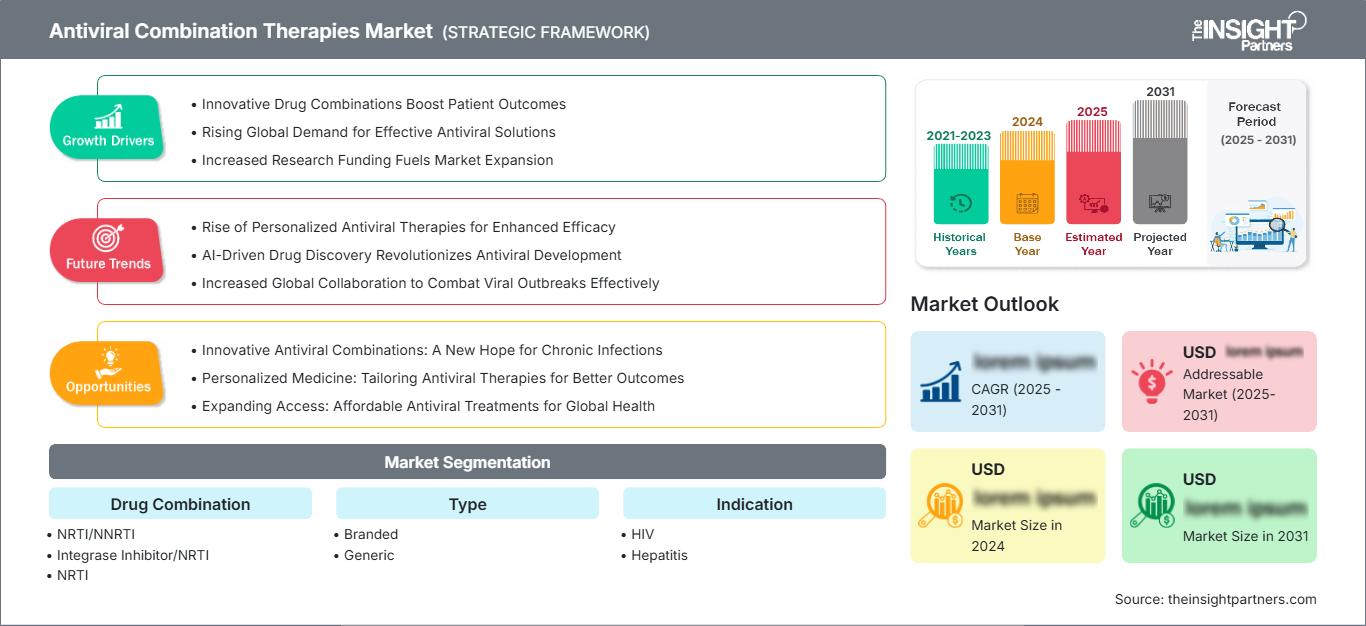
Antiviral Combination Therapies Market: Strategic Insights
Regional Insights
North America antiviral combination therapies market
North America is expected to hold a share of 39-43% of worldwide revenue in 2025 and has a forecasted growth rate of 5.6-6.4% CAGR till 2034. The US is the key demand driver due to wide specialist care coverage, reimbursement framework, penetration of treatments and fast adoption of evidence-based drugs. Canada is represented by treatment schemes funded from public budget and increased focus on maintaining the long-term viral suppression.
Innovation in long-lasting treatments and prevention solutions also drives the market within the region. Well-developed pharmaceutical research and development ecosystem helps in drug development, regulatory approval and market launch. Large healthcare spending makes possible for premium-priced medicines to prove their value when there is an observable effect from adherence improvement, resistance control and treatment simplification.
U.S. antiviral combination therapies Market
The US is expected to represent 88–92% of North American revenue in 2025, with a 5.5–6.3% CAGR through 2034. The market benefits from strong presence of Gilead Sciences, Inc., GSK plc, Janssen Global Services, LLC, Merck & Co., Inc., and other established HIV developers. Treatment decisions increasingly prioritize single-tablet convenience and resistance barriers.
Combination therapies are commonly prescribed in both the initial treatment and switching therapy scenarios, while long-acting therapies are increasing the addressable opportunity. Commercial access via private insurances, Medicare, Medicaid, and aid programs ensures several access pathways. In addition, the US market is also important as a launch market due to the possibility of generating clinical and commercial traction before international rollout.
Europe antiviral combination therapies Market
Europe is estimated to hold a 24–28% share in 2025 and expand at a 5.1–5.9% CAGR through 2034. Germany is the leading national market, supported by advanced infectious-disease care, while the UK, France, Italy, and Spain provide substantial demand through structured public healthcare systems.
In the case of the UK, there are efficient specialist services and centralized clinical guidelines, which promote consistency in evidence-based combinations. The German market is characterized by a high investment in pharmaceuticals and wide-spread specialist networks. France, Italy, and Spain have both well-established structures for drug administration and reimbursement systems. All European markets imply specific issues that producers should consider in relation to pricing, health technology assessments, tenders, and reimbursement processes.
APAC antiviral combination therapies Market
APAC is projected to represent 19–23% share in 2025 and grow at a 6.4–7.3% CAGR through 2034. China is the leading market, followed by Japan, India, South Korea, and Australia. Expanding diagnosis, treatment access, domestic manufacturing, and government HIV programs support regional development.
The industrial capability of India and China helps to make supply economics more favorable, whereas Australia and Japan offer mature clinical adoption. The focus in public health initiatives is shifting towards early diagnosis and sustained treatment. Regional producers can compete by offering low-cost fixed-dose combinations, registration capabilities and logistics. Increased investment in healthcare, along with increased accessibility of infectious disease care, will help to increase the target population.
Middle East & Africa antiviral combination therapies Market
The Middle East and Africa form an opportunity that is smaller but strategically significant with growth forecast to be in the range of 6.0-7.0% CAGR till 2034. There is good development of the healthcare infrastructure in Saudi Arabia and the UAE while South Africa continues to lead the region in treatment owing to the large number of cases of HIV as well as the existence of extensive public health programs.
MEA rest markets rely more on imports, donors, and treatment programs in each country. Investment in healthcare infrastructure in the Gulf region facilitates advanced pharmaceutical consumption while the African markets emphasize affordability, consistency in supply, and decentralized treatment. Investments in the energy sector help in enhancing logistics as well as healthcare infrastructure in some of the Gulf countries, while health budgets are the major driving force behind accessibility to treatment in Africa.
Segmentation Analysis
Drug Combination
The Drug Combination segment is central to treatment efficacy because combining agents with complementary mechanisms reduces the probability of resistance and supports durable viral suppression. The segment is projected to expand at a 5.3–6.2% CAGR during 2026–2034. Continued movement toward simplified regimens and higher-barrier combinations should support replacement demand and portfolio upgrades.
- NRTI/NNRTI: NRTI/NNRTI combinations retain an important installed base, particularly where established treatment pathways and affordability influence prescribing. Their strategic importance is strongest in markets balancing proven efficacy with treatment cost.
- Integrase Inhibitor/NRTI: Integrase Inhibitor/NRTI combinations benefit from strong contemporary clinical positioning, convenient administration, and high resistance barriers. Demand is increasingly associated with first-line and treatment-switch populations requiring durable viral suppression.
- NRTI: NRTI products remain foundational components of antiretroviral therapy and continue to support combination formulation demand. Their strategic value stems from extensive clinical experience, manufacturing scale, and compatibility with multiple therapeutic backbones.
- NRTI/Protease Inhibitor: NRTI/Protease Inhibitor combinations remain relevant for selected patients requiring established protease-inhibitor-based treatment. Their role is increasingly concentrated in specific clinical circumstances, including treatment-experienced populations.
Type
The Type segment is expected to grow at a 5.0–5.9% CAGR during 2026–2034. Branded products remain important for innovation and premium positioning, while generic products expand treatment accessibility through lower acquisition costs. Competitive intensity will depend on patent status, procurement mechanisms, regulatory approvals, and differentiated formulation strategies.
- Branded: Branded combinations command strategic importance where novel mechanisms, improved dosing convenience, clinical differentiation, or strong physician familiarity support premium positioning. Lifecycle management remains essential as intellectual-property protection changes.
- Generic: Generic combinations broaden access by lowering treatment costs and supporting public procurement. Their strategic importance is particularly high in emerging economies and donor-supported programs where affordability strongly influences treatment coverage.
Indication
The Indication segment is projected to grow at a 5.6–6.5% CAGR through 2034, with HIV representing the dominant application base. Hepatitis contributes additional demand where combination antiviral treatment is clinically appropriate. Changing treatment guidelines, diagnosis rates, resistance patterns, and access policies will influence the relative contribution of each indication.
- HIV: HIV represents the principal application because lifelong therapy requires sustained combination treatment. Expanding diagnosis and treatment coverage, regimen switching, and long-acting innovation support continued pharmaceutical demand.
- Hepatitis: Hepatitis contributes through combination antiviral approaches targeting specific viral infections and patient groups. Demand depends on screening, treatment eligibility, national elimination strategies, reimbursement, and availability of effective oral regimens.
Route of Administration
The Route of Administration segment is expected to expand at a 5.4–6.3% CAGR during 2026–2034. Oral administration remains dominant because of established adherence practices and scalable distribution, while intravenous delivery serves narrower clinical settings where supervised administration is appropriate.
- Oral: Oral administration dominates because tablets and fixed-dose combinations are convenient, scalable, and compatible with outpatient treatment. Single-tablet regimens further improve practical adherence and reduce medication-management complexity.
- Intravenous: Intravenous administration serves specialized clinical circumstances requiring controlled delivery or hospital-based management. Its strategic relevance is linked to patients unable to use conventional oral treatment and selected acute-care applications.
Opportunity Snapshot
| Segment Name | Revenue Contribution | Trend Tag | Adoption Stage |
|---|---|---|---|
| HIV | High | Long-term ART | Mature |
| Hepatitis | Medium | Elimination Programs | Scaling |
Antiviral Combination Therapies Market Growth Drivers and Impact Analysis
Expansion of Antiretroviral Treatment Coverage
Broader treatment access creates recurring pharmaceutical demand because HIV therapy is generally continuous rather than episodic. UNAIDS reported 31.6 million people accessing antiretroviral therapy at the end of 2024, compared with 7.7 million in 2010, demonstrating substantial expansion of the treated population. Further improvements in diagnosis, linkage to care, retention, and treatment initiation can increase the number of patients receiving combination regimens. The commercial impact is strongest in countries where national programs are transitioning from limited treatment access toward wider coverage. Manufacturers that combine affordability with reliable supply can capture incremental volume, while originators can retain value through differentiated formulations, improved adherence, and longer-duration technologies.
Movement Toward Simplified and Higher-Barrier Regimens
Clinical practice increasingly favors treatment combinations that maintain viral suppression while minimizing pill burden and resistance risk. Fixed-dose formulations consolidate multiple active ingredients into convenient regimens, reducing complexity for patients and healthcare providers. This trend changes competitive priorities because companies must demonstrate not only antiviral efficacy but also adherence advantages, tolerability, drug-interaction profiles, and durability. The commercial effect extends across the value chain, influencing formulation development, packaging, manufacturing, regulatory submissions, and payer negotiations. Established treatment backbones provide a platform for incremental innovation, while newer mechanisms can command strategic importance when they address resistance or adherence limitations that remain insufficiently managed by conventional daily therapies.
Growing Importance of Long-Acting Antiviral Platforms
Long-acting technologies can reshape treatment economics by reducing administration frequency and addressing adherence challenges associated with daily oral therapy. Their impact extends beyond product formulation because implementation requires injection infrastructure, appointment scheduling, patient follow-up, inventory management, and healthcare-worker training. Successful commercialization therefore depends on integration with existing care pathways rather than drug efficacy alone. The emergence of long-acting prevention and treatment programs also creates opportunities for companies to develop complementary oral and injectable portfolios. Over time, healthcare systems may increasingly evaluate these products through total treatment costs, persistence, patient preference, and service requirements, creating a broader competitive framework than conventional tablet-based pharmaceutical purchasing.
Antiviral Combination Therapies Market Future Trends
Convergence of Long-Acting Prevention and Treatment Platforms
Future product development is likely to converge around molecules and delivery technologies capable of supporting both prevention and treatment strategies. Lenacapavir illustrates this direction by combining a differentiated mechanism with extended dosing potential. The next stage will involve determining how long-acting products can be integrated with routine testing, injection services, resistance monitoring, and decentralized care. Developers are also expected to explore oral formulations with less frequent administration, potentially creating intermediate options between daily tablets and injectable products. This convergence could broaden patient choice while allowing manufacturers to leverage shared clinical, manufacturing, and regulatory platforms across multiple indications and treatment settings.
Greater Personalization of Combination Regimens
Treatment selection is expected to become more individualized as clinicians gain better visibility into resistance history, comorbidities, previous treatment exposure, adherence behavior, and patient preferences. Future combinations may therefore be differentiated by specific patient profiles rather than broad treatment categories. Digital adherence tools, laboratory monitoring, pharmacogenomic information, and real-world evidence could increasingly support regimen optimization. Manufacturers that generate comparative evidence across diverse populations will be better positioned to demonstrate value to clinicians and payers. Personalization may also encourage smaller but commercially meaningful product niches, particularly for treatment-experienced patients and populations requiring specialized dosing, tolerability, or interaction profiles.
Antiviral Combination Therapies Market Opportunities
Localized Manufacturing and Access Partnerships
The antiviral combination therapies market Forecasts indicate meaningful opportunity for companies that establish regional manufacturing, licensing, and distribution partnerships in high-burden and price-sensitive markets. Localized production can reduce logistics costs, strengthen supply continuity, and improve responsiveness to public procurement requirements. India, China, and selected African markets provide particularly relevant platforms because pharmaceutical manufacturing capabilities can be combined with expanding treatment programs. Investors should evaluate partnerships based on regulatory readiness, quality systems, API security, tender participation, and distribution reach rather than manufacturing capacity alone. A flexible model combining branded innovation with licensed or generic access products can help companies address different payer environments while preserving commercial flexibility.
Integrated Combination Therapy Platforms
A second opportunity lies in building integrated platforms around complementary antiviral mechanisms, formulations, diagnostics, and adherence services. Companies can strengthen differentiation by linking combination products with resistance testing, viral-load monitoring, patient support, and treatment-switch pathways. Such platforms may create more durable customer relationships than individual products because healthcare systems increasingly evaluate outcomes across the treatment journey. Strategic investors can prioritize assets that have multiple formulation possibilities or can be paired with established mechanisms. The greatest potential should occur where a differentiated combination reduces dosing frequency, simplifies treatment, or addresses resistance while maintaining a scalable manufacturing profile and manageable reimbursement requirements.
Recent Developments
- July 2026: Gilead Sciences, Inc. and Merck & Co., Inc. reported detailed Phase 3 ISLEND results for investigational once-weekly oral islatravir/lenacapavir. The regimen maintained high virologic suppression at Week 48 and could become a less frequent oral treatment option if approved. The companies indicated that the data would support regulatory submissions.
- June 2026: Gilead Sciences, Inc. announced that the US FDA accepted its supplemental application for a potential once-weekly oral formulation of Yeztugo, lenacapavir, for HIV prevention. The application received a February 2, 2027, PDUFA target date, extending development of the molecule beyond its twice-yearly injectable prevention formulation.
- April 2026: Gilead Sciences, Inc. announced additional investment commitments from PEPFAR and the Global Fund to expand access to twice-yearly lenacapavir for HIV prevention. The commitment was designed to reach an additional 1 million people, bringing planned access through the programs to up to 3 million people through 2028.
Frequently Asked Questions

- Comprehensive Market Sizing and Forecast Analysis
- Detailed Segmentation Analysis
- In-Depth Market Dynamics Assessment
- Regional and Country-Level Insights
- Competitive Landscape and Company Benchmarking
- Strategic Business Intelligence
Recent Reports
Testimonials

The Insight Partners provided valuable market intelligence that supported our global go-to-market strategy. Their team was professional, responsive, and attentive to our feedback, providing thoughtful analysis and helpful methodological clarifications throughout the project.
Junmo Kim Chief Financial Officer (CFO), Enertech Co., Ltd.
The Insight Partners' SCADA System Market report is comprehensive, with valuable insights on current trends and future forecasts. The team was highly professional, responsive, and supportive throughout. We are very satisfied and highly recommend their services.
RAN KEDEM Partner, Reali Technologies LTDs
I requested a report on a very specific software market and the team produced the report in a few days. The information was very relevant and well presented. I then requested some changes and additions to the report. The team was again very responsive and I got the final report in less than a week.
JEAN-HERVE JENN Chairman, Future Analytica
We worked with The Insight Partners for an important market study and forecast. They gave us clear insights into opportunities and risks, which helped shape our plans. Their research was easy to use and based on solid data. It helped us make smart, confident decisions. We highly recommend them.
PIYUSH NAGPAL Sr. Vice President, High Beam Global
The Insight Partners delivered insightful, well-structured market research with strong domain expertise. Their team was professional and responsive throughout. The user-friendly website made accessing industry reports seamless. We highly recommend them for reliable, high-quality research services
YUKIHIKO ADACHI CEO, Deep Blue, LLC.
This is the first time I have purchased a market report from The Insight Partners.While I was unsure at first, I visited their web site and felt more comfortable to take the risk and purchase a market report.I am completely satisfied with the quality of the report and customer service. I had several questions and comments with the initial report, but after a couple of dialogs over email with their analyst I believe I have a report that I can use as input to our strategic planning process.Thank you so much for taking the extra time and making this a positive experience.I will definitely recommend your service to others and you will be my first call when we need further market data.
JOHN SUZUKI President and Chief Executive Officer, Board Director, BK Technologies
I wish to appreciate your support and the professionalism you displayed in the course of attending to my request for information regarding to infectious disease IVD market in Nigeria. I appreciate your patience, your guidance, and the fact that you were willing to offer a discount, which eventually made it possible for us to close a deal. I look forward to engaging The Insight Partners in the future, all thanks to the impression you have created in me as a result of this first encounter.
DR CHIJIOKE ONYIA MANAGING DIRECTOR, PineCrest Healthcare Ltd.Reason to Buy
- Informed Decision-Making
- Understanding Market Dynamics
- Competitive Analysis
- Identifying Emerging Markets
- Customer Insights
- Market Forecasts
- Risk Mitigation
- Boosting Operational Efficiency
- Strategic Planning
- Investment Justification
- Tracking Industry Innovations
- Aligning with Regulatory Trends





 Get Free Sample for