
Artificial Blood Vessels Market Demand, Share & Growth by 2034
Artificial Blood Vessels Market Size and Forecasts (2021 - 2034), Global and Regional Share, Trends, and Growth Opportunity Analysis Report Coverage : by Application (Aortic Diseases, Peripheral Artery Diseases, Hemodialysis); Material (Polytetrafluoroethylene, Polyester); End User (Hospitals & ASCs and Specialty Cardiac Clinics & Others); and Geography (North America, Europe, Asia Pacific, and South and Central America)
- Status : Data Released
- Report Code : TIPRE00039923
- Category : Life Sciences
- No. of Pages : 150
- Available Report Formats :


- Last update date : September 02, 2026


2025 Market Size
US$ 2.57 Bn
Base year value
2034 Forecast
US$ 7.34 Bn
Projected by 2034
CAGR 2026-2034
12.37 %
Growth rate
Addressable Market
US$ 43.34 Bn
(2026-2034)
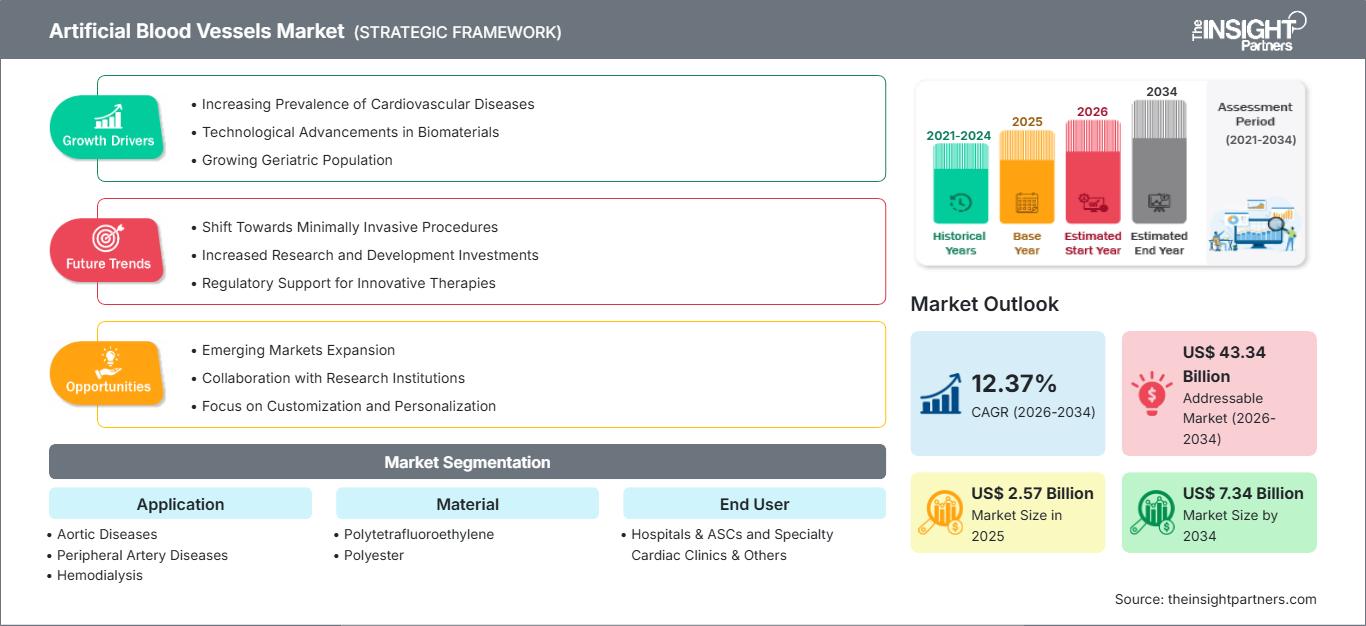
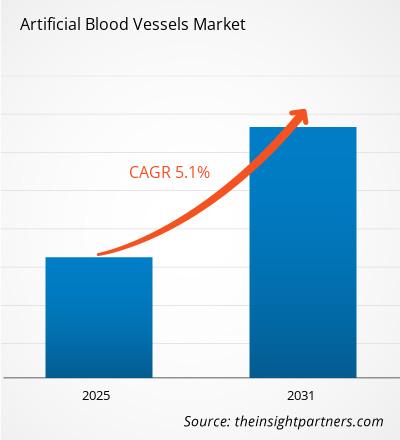
The artificial blood vessels market is valued at US$ 2.57 Billion in 2025 and is projected to reach US$ 7.34 Billion by 2034, expanding at a CAGR of 12.37% during 2026–2034. The market includes synthetic and advanced vascular conduits for application in various forms of aortic disease treatment, peripheral artery reconstruction, and hemodialysis access. Product innovation in this domain is increasingly concentrating on achieving higher patency, infection resistance, better handling, and anatomical compatibility for various vascular procedures.
North America will continue to be a significant artificial blood vessels market size in terms of demand owing to the presence of well-developed infrastructure in vascular surgery, high use of advanced graft products, and effective reimbursement framework. The global market for artificial blood vessels is likely to grow at a projected CAGR of 11.8-12.8% during 2026-2034.
Artificial Blood Vessels Market Assessment and Insights
- North America: North America is expected to retain the leading position, representing a 41–44% share in 2025 and growing at a 11.5–12.5% CAGR between 2026–2034, supported by advanced vascular centers and established reimbursement structures.
- US: The US represents 94–96% of North America's 2025 revenue and is projected to grow at a 11.6–12.6% CAGR during 2026–2034, led by vascular intervention volumes.
- Europe: Europe accounts for a 28–31% share in 2025 and is expected to grow at a 10.8–11.8% CAGR during 2026–2034. Germany, the UK, France, Italy, and Spain provide established vascular treatment capacity.
- Asia Pacific: Asia Pacific holds a 19–22% share in 2025 and is projected to grow at a 13.0–14.0% CAGR during 2026–2034, with China, Japan, India, South Korea, and Australia driving procedural expansion.
- Largest Segment: Aortic Diseases is the largest application segment, with a 40–44% market share in 2025 and an estimated 11.8–12.8% CAGR during 2026–2034.
- High Growth Segment: Hemodialysis is positioned as a high-growth application, supported by expanding dialysis access requirements and a 13.0–14.0% CAGR during 2026–2034.
- Key companies analyzed in detail: Medtronic plc, Boston Scientific Corporation, W. L. Gore & Associates, Inc., Terumo Corporation, Cook Medical, JOTEC GmbH, B. Braun Melsungen AG, Cardinal Health, Inc., Abbott Laboratories, Endologix, Inc.
Source: The Insight Partners' analysis based on proprietary research, government publications, company annual reports, investor presentations, industry databases, and expert interviews.
Product development has advanced beyond traditional polyester and expanded polytetrafluoroethylene grafts to designs that focus on enhanced compliance, surface treatments, infection prevention, and surgical placement. Manufacturing continues to be specialized, as porosity, size, sterility, and composition affect graft performance in the clinic. In this way, the artificial blood vessels market is defined not only by commodity manufacturing economics but also by engineering, documentation, clinical data, and reproducibility.
During the forecast period, spending is anticipated to diversify to include tissue engineered conduits, reduced diameter grafts, and products for challenging anatomic environments. New healthcare systems in the Asia Pacific and some Middle East countries will likely become new buyers of the artificial blood vessels as vascular expertise is expanded. Clinical safety and performance oriented regulatory pathways will continue to incentivize suppliers to integrate materials science, manufacturing expertise, and evidence generation into their product development process.
Artificial Blood Vessels Market Report Scope
| Report Attribute | Details |
|---|---|
| Market size in 2025 | US$ 2.57 Billion |
| Market Size by 2034 | US$ 7.34 Billion |
| Global CAGR (2026 - 2034) | 12.37% |
| Historical Data | 2021-2024 |
| Forecast period | 2026-2034 |
Artificial Blood Vessels Market Analysis
Demand is driven by the clinical need for vascular reconstructive surgery when the patient’s own vessels are not appropriate for harvesting, or are either not available or unsafe. Aortic disease, peripheral arterial disease, and dialysis access constitute separate purchasing groups with different product specifications. The artificial blood vessels market for artificial blood vessels will thus be driven by procedure volumes, prevalence of diseases, surgeon’s preference, hospital purchasing policies, and availability of autologous vessels.
The value chain includes polymer or biomaterial suppliers, grafts producers, sterilization service providers, regulatory bodies, distributors, vascular surgeons, hospitals, and outpatient surgeries centers. Supply will be determined by specialty in processing polymers, manufacturing textiles or membranes, coating, testing, and sterilization. Manufacturers with well-developed production lines will be able to satisfy hospitals’ specifications and deliver on time despite high acuity and repeated dialysis access procedures.
The competition is high amongst the existing cardiovascular and vascular-device firms with extensive clinical portfolios, regulatory expertise, and distribution channels. Medtronic plc and Boston Scientific Corporation hold significant market share in vascular intervention technology, whereas W. L. Gore & Associates, Inc. and Terumo Corporation hold substantial capabilities in vascular devices. The artificial blood vessels market report has started tilting in favor of companies with an ability to incorporate their graft technology into comprehensive aortic, peripheral, and endovascular therapy programs.
The strategic position is changing towards specialized clinical applications and material differentiation. Companies like Cook Medical, JOTEC GmbH, B. Braun Melsungen AG, Cardinal Health, Inc., Abbott Laboratories, and Endologix, Inc. have been part of the vascular therapies ecosystem, where clinical data, portfolio capabilities, geographic reach, and physician preference have been critical. Areas of investment interest lie with production flexibility, regulatory filings, future generation graft engineering technology, and solutions to current synthetic graft limitations.
● REPORT CUSTOMIZATION
Tailor This Report To Align With Your Specific Business Requirements
This report can be customized to align precisely with your business objectives, scope, and target markets. Customization options include tailored segmentation, geography, competitive analysis, and strategic insights to support informed decision-making.
Customize This Report →WHAT YOU CAN ADJUST
- ● Segmentations
- ● Geography
- ● Competitive Analysis
- ● Language Preferences
Artificial Blood Vessels Market: Strategic Insights
Regional Insights
North America artificial blood vessels market
The region North America is projected to have a 41-44% of the artificial blood vessels market share in 2025, and will grow at a CAGR of 11.5-12.5% till 2034. North America enjoys well-developed vascular surgical networks, catheterization infrastructure, specialist availability, and wider access to complicated cardiovascular treatments. The demand is driven by three segments, aortic surgery, peripheral arterial surgery, and hemodialysis access, resulting in diversification in the purchasing population.
The US represents 94-96% of regional revenue, while Canada is contributing a smaller but more developed market owing to the presence of universal healthcare infrastructure. Hospitals are increasingly assessing grafts on the basis of durability, infection rate, procedure efficiency, and economics of total episode. The market adoption of products is aided by specialist training and procurement process, and regulations are motivating manufacturers to build up their clinical and manufacturing evidences.
U.S. artificial blood vessels market
The USA has 94% - 96% of North American revenue in 2025 and is expected to expand at a CAGR of 11.6% - 12.6% till 2034. This is because of the large-scale presence of vascular specialists' network, high availability of facilities for performing procedures and already developed reimbursement system. Among other companies operating in the area are Medtronic plc, Boston Scientific Corporation, W. L. Gore & Associates, Inc., Abbott Laboratories, and Endologix, Inc.
Demand includes both open and endovascular aortic interventions, peripheral artery repair and creation of dialysis access. Products now more frequently evaluated by hospitals on the basis of their effectiveness, convenience, longevity, need for supply and likelihood of complications that might happen after the procedure. Academic medical centers promote the acceptance of new graft ideas by involvement in research and education of specialists.
Europe artificial blood vessels market
European share accounts for 28–31% in 2025 and projected growth of 10.8–11.8% CAGR. Top markets include Germany, United Kingdom, France, Italy, and Spain. The market enjoys considerable hospital capacities, as well as availability of specialized vascular services, while procurement focuses on clinical evidence and traceability and lifecycle management.
Demand in the UK remains stable owing to centralized healthcare procurement and specialized vascular centers. Germany creates opportunities for relatively advanced procedures and knowledge of vascular devices. France, Italy, and Spain offer additional demand through cardiovascular treatment networks and elderly patients. Both European manufacturers and international providers have to comply with tough regulations and evidence requirements and rigorous procurement process.
APAC artificial blood vessels market
APAC will have a market share of 19-22% and record fastest regional growth rate of 13.0-14.0% CAGR in 2034. China is the largest market followed by Japan, South Korea, India, and Australia. Increasing vascular care capacities and specialists are helping in increasing the adoption.
China and India are providing opportunities in terms of procedures over a long period of time, while Japan and South Korea are offering advanced healthcare infrastructures. Australia has developed its hospital system and has universal healthcare coverages. Industrial localization, domestic production of medical devices, investments in public hospitals, and modernization of healthcare system will drive adoption.
Middle East & Africa artificial blood vessels market
Middle East and Africa represents a smaller addressable market but is expected to expand at a 9.5–10.5% CAGR through 2034. Saudi Arabia is the leading Gulf market, supported by tertiary-care expansion, while the UAE functions as a regional medical hub. South Africa remains the principal sub-Saharan demand center.
Specialized hospital construction, development of cardiovascular infrastructure, and referral services are contributing toward the better availability of vascular procedures. Energy sector earnings help in building health care infrastructures within Gulf countries, though procurement of products is dependent upon their cost, distribution capability of suppliers, and training requirements for physicians. Demand from the rest of MEA region is centered at large urban hospitals.
Segmentation Analysis
Application
The Application segment is expected to expand at an 11.8–12.8% CAGR during 2026–2034. Aortic Diseases represents the largest demand pool, while hemodialysis provides recurring access requirements and peripheral artery disease creates sustained surgical demand. Clinical severity, procedure frequency, availability of autologous vessels, and graft durability influence purchasing decisions across these applications. The artificial blood vessels market scope therefore extends from high-acuity cardiovascular reconstruction to repeat access procedures.
- Aortic Diseases: Aortic applications maintain the strongest commercial position because aneurysm and dissection management requires dependable vascular conduits. Procurement emphasizes anatomical compatibility, deployment characteristics, durability, and evidence supporting procedural safety.
- Peripheral Artery Diseases: Peripheral applications address chronic ischemic disease and complex revascularization needs. Demand is shaped by disease severity, bypass strategy, availability of suitable veins, and physician preference for synthetic alternatives.
- Hemodialysis: Hemodialysis applications generate recurring demand for vascular access creation and revision. Hospitals prioritize graft availability, infection considerations, cannulation performance, and practical handling characteristics when selecting access materials.
Material
The Material segment is projected to grow at a 10.8–11.8% CAGR from 2026–2034. Polytetrafluoroethylene remains important because of established vascular applications and manufacturing familiarity, while polyester continues serving procedures where mechanical strength and established clinical experience are valued. Material selection depends on anatomy, indication, surgeon preference, handling characteristics, and expected durability. Innovation increasingly targets surface properties and biological integration.
- Polytetrafluoroethylene: Polytetrafluoroethylene maintains strong clinical relevance across peripheral and dialysis-access applications. Its established manufacturing base and recognized handling characteristics support continued procurement, while surface modifications remain an important differentiation pathway.
- Polyester: Polyester provides a durable, established option for vascular reconstruction and remains strategically relevant where mechanical strength and long-standing clinical familiarity influence product selection and hospital purchasing decisions.
End User
The End User segment is forecast to grow at an 11.2–12.2% CAGR through 2034. Hospitals & ASCs remain the principal purchasing environment because they perform the broadest range of vascular interventions. Specialty Cardiac Clinics & Others contribute through focused procedures and referral-based care. Procurement decisions increasingly incorporate clinical outcomes, inventory efficiency, sterilization assurance, and supplier support.
- Hospitals & ASCs: Hospitals and ASCs represent the dominant purchasing channel because they manage complex vascular interventions and maintain multidisciplinary teams. Procurement increasingly evaluates clinical performance alongside supply continuity and total procedure economics.
- Specialty Cardiac Clinics & Others: Specialty cardiac clinics and related facilities serve concentrated patient populations requiring vascular intervention. Their purchasing decisions emphasize product availability, physician familiarity, procedural specialization, and dependable technical support.
Opportunity Snapshot
| End User | Revenue Contribution (High/Medium/Low) | Trend Tag | Adoption Stage |
|---|---|---|---|
| Hospitals & ASCs | High | Vascular Surgery | Mature |
| Specialty Cardiac Clinics & Others | Medium | Specialty Care | Scaling |
Artificial Blood Vessels Market Growth Drivers and Impact Analysis
Rising Burden of Peripheral and Aortic Vascular Disease
Increasing clinical demand for vascular reconstruction is a fundamental driver because peripheral artery disease, aneurysmal disease, and other vascular disorders require durable methods of restoring blood flow. The impact is strongest in healthcare systems where specialist vascular services and diagnostic capabilities are expanding simultaneously. Hospitals require graft options for patients who lack suitable autologous veins or require complex reconstruction. This supports demand for established synthetic materials while creating opportunities for products designed to reduce thrombosis, infection, and stenosis. The driver also influences purchasing criteria, shifting procurement from simple unit-price comparisons toward evaluation of procedural reliability and downstream complications. Suppliers able to demonstrate consistent manufacturing quality and clinically relevant performance can therefore strengthen their position across multiple vascular procedure categories.
Expansion of Hemodialysis Vascular Access Requirements
Growth in the population requiring long-term renal replacement therapy supports recurring demand for vascular access solutions. Hemodialysis access can require initial creation, revision, or replacement when native access is unsuitable or fails, producing a different demand profile from one-time cardiovascular reconstruction. Hospitals consequently value grafts that offer practical implantation, dependable availability, and suitable handling during repeated procedures. The commercial impact extends beyond product volume because access-related interventions create continuing relationships between manufacturers, dialysis providers, and vascular specialists. As dialysis infrastructure expands in Asia Pacific, Latin America, and selected Middle Eastern markets, suppliers with scalable distribution and localized training can address new purchasing centers. Product differentiation around infection management and access durability may further influence adoption as healthcare systems focus on reducing avoidable access complications.
Advances in Tissue Engineering and Graft Surface Engineering
Innovation in vascular biomaterials is changing the competitive basis of the sector. Conventional synthetic grafts remain clinically established, but research increasingly targets endothelialization, biological integration, infection resistance, and improved performance in smaller-diameter applications. Recent clinical development of tissue-engineered vessels demonstrates that the technology pathway is moving beyond laboratory experimentation toward regulated commercial products. The impact is potentially significant because successful bioengineered conduits could address patient populations for whom conventional synthetic or autologous options are inadequate. At the same time, development costs, manufacturing complexity, sterility requirements, and long-term clinical evidence requirements create substantial barriers to entry. Established manufacturers may therefore pursue partnerships, licensing, or internal platform development to participate without disrupting existing synthetic-graft franchises.
Artificial Blood Vessels Market Future Trends
Transition Toward Biologically Integrated Vascular Conduits
The artificial blood vessels market trends are expected to increasingly favor conduits designed to interact constructively with surrounding tissue rather than functioning solely as inert structural replacements. Tissue engineering, regenerative biomaterials, endothelialization strategies, and controlled surface modification may gradually expand the addressable technology set. Future products are likely to emphasize biological integration, resistance to thrombosis, and improved performance in smaller-diameter vessels. Commercial success will depend on demonstrating durable clinical outcomes rather than short-term procedural feasibility. Manufacturers may therefore combine biomaterial science with manufacturing automation, controlled cell-processing methods, and advanced quality systems. As regulatory agencies accumulate experience with tissue-engineered vascular products, clearer development pathways could encourage additional investment while preserving stringent requirements for safety, sterility, manufacturing consistency, and long-term surveillance.
Greater Product Personalization Through Advanced Manufacturing
Advanced manufacturing could enable vascular conduits to become more anatomically specific, particularly for complex reconstruction and smaller patient populations. Digital imaging, computer-assisted design, additive manufacturing, and controlled surface fabrication may allow future products to accommodate unusual vessel geometry without requiring entirely bespoke production lines. The opportunity is particularly relevant for complex aortic and peripheral procedures where standard dimensions may not optimally address anatomy. Manufacturers could combine modular components with patient-specific planning to improve procedural efficiency while maintaining regulatory control. Adoption will depend on production economics, turnaround time, sterilization compatibility, and evidence that customization improves outcomes. Over time, manufacturing platforms capable of producing validated configurations at scale may provide a competitive advantage over suppliers dependent on limited standardized dimensions.
Artificial Blood Vessels Market Opportunities
Localized Manufacturing and Distribution in Emerging Healthcare Systems
The artificial blood vessels market Forecasts indicate that emerging healthcare systems could provide attractive investment opportunities as vascular surgery capacity expands. Local manufacturing partnerships can reduce import dependence, improve inventory availability, and align product specifications with national procurement requirements. China, India, Southeast Asia, and Gulf markets are particularly relevant because hospital modernization is increasing access to specialist procedures. Investors and manufacturers can prioritize partnerships with established medical-device distributors, contract manufacturers, and tertiary-care networks rather than building complete commercial infrastructure independently. Localization can also improve responsiveness to public tenders and regional purchasing requirements. However, quality-system equivalence, sterilization validation, regulatory registration, and consistent raw-material sourcing should remain central investment criteria to avoid compromising product reliability or creating fragmented manufacturing standards.
Strategic Expansion Into Regenerative Vascular Technologies
Investment opportunities are emerging around technologies that address limitations of conventional synthetic grafts, particularly infection, thrombosis, and poor performance in small-diameter vessels. Companies with established vascular portfolios can use existing surgeon relationships and regulatory expertise to evaluate tissue-engineered or biologically active conduits as complementary technologies. Strategic partnerships with biotechnology companies, academic institutions, and biomaterials developers may reduce development timelines while providing access to specialized capabilities. The commercial model should prioritize indications where unmet need is demonstrable, and clinical differentiation can support premium pricing. Investors should assess manufacturing scalability early because tissue-engineered products can require specialized production controls. Successful platforms may eventually extend beyond trauma into dialysis access, peripheral reconstruction, and selected cardiovascular applications, broadening their strategic value.
Recent Developments
- March 2026: W. L. Gore & Associates, Inc. received FDA approval for a supplement concerning the GORE TAG Conformable Thoracic Endoprosthesis, reflecting continued manufacturing and product-support activity around its thoracic vascular portfolio. The regulatory action covered an additional manufacturing-related change and demonstrates ongoing investment in maintaining and expanding established graft platforms.
- October 2025: Medtronic plc announced FDA labeling approval for its Endurant stent graft system, adding clinical evidence for ruptured abdominal aortic aneurysm treatment and removing the associated treatment warning. The decision strengthens the product's positioning in emergency aortic care and reinforces the importance of clinical evidence in vascular-device adoption.
- April 2025: Terumo Corporation reorganized parts of its Cardiac and Vascular Company, renaming its Vascular Graft Division as Terumo Aortic and aligning business brands with its global vascular portfolio. The organizational change was accompanied by revised disclosure segments for the company's Blood and Cell Technologies business.
Frequently Asked Questions

- Comprehensive Market Sizing and Forecast Analysis
- Detailed Segmentation Analysis
- In-Depth Market Dynamics Assessment
- Regional and Country-Level Insights
- Competitive Landscape and Company Benchmarking
- Strategic Business Intelligence
Recent Reports
Testimonials

The Insight Partners provided valuable market intelligence that supported our global go-to-market strategy. Their team was professional, responsive, and attentive to our feedback, providing thoughtful analysis and helpful methodological clarifications throughout the project.
Junmo Kim Chief Financial Officer (CFO), Enertech Co., Ltd.
The Insight Partners' SCADA System Market report is comprehensive, with valuable insights on current trends and future forecasts. The team was highly professional, responsive, and supportive throughout. We are very satisfied and highly recommend their services.
RAN KEDEM Partner, Reali Technologies LTDs
I requested a report on a very specific software market and the team produced the report in a few days. The information was very relevant and well presented. I then requested some changes and additions to the report. The team was again very responsive and I got the final report in less than a week.
JEAN-HERVE JENN Chairman, Future Analytica
We worked with The Insight Partners for an important market study and forecast. They gave us clear insights into opportunities and risks, which helped shape our plans. Their research was easy to use and based on solid data. It helped us make smart, confident decisions. We highly recommend them.
PIYUSH NAGPAL Sr. Vice President, High Beam Global
The Insight Partners delivered insightful, well-structured market research with strong domain expertise. Their team was professional and responsive throughout. The user-friendly website made accessing industry reports seamless. We highly recommend them for reliable, high-quality research services
YUKIHIKO ADACHI CEO, Deep Blue, LLC.
This is the first time I have purchased a market report from The Insight Partners.While I was unsure at first, I visited their web site and felt more comfortable to take the risk and purchase a market report.I am completely satisfied with the quality of the report and customer service. I had several questions and comments with the initial report, but after a couple of dialogs over email with their analyst I believe I have a report that I can use as input to our strategic planning process.Thank you so much for taking the extra time and making this a positive experience.I will definitely recommend your service to others and you will be my first call when we need further market data.
JOHN SUZUKI President and Chief Executive Officer, Board Director, BK Technologies
I wish to appreciate your support and the professionalism you displayed in the course of attending to my request for information regarding to infectious disease IVD market in Nigeria. I appreciate your patience, your guidance, and the fact that you were willing to offer a discount, which eventually made it possible for us to close a deal. I look forward to engaging The Insight Partners in the future, all thanks to the impression you have created in me as a result of this first encounter.
DR CHIJIOKE ONYIA MANAGING DIRECTOR, PineCrest Healthcare Ltd.Reason to Buy
- Informed Decision-Making
- Understanding Market Dynamics
- Competitive Analysis
- Identifying Emerging Markets
- Customer Insights
- Market Forecasts
- Risk Mitigation
- Boosting Operational Efficiency
- Strategic Planning
- Investment Justification
- Tracking Industry Innovations
- Aligning with Regulatory Trends





 Get Free Sample for