2025 Market Size
US$ 1.94 Bn
Base year value
2034 Forecast
US$ 2.95 Bn
Projected by 2034
CAGR 2026-2034
4.77 %
Growth rate
Addressable Market
US$ 22.20 Bn
(2026-2034)
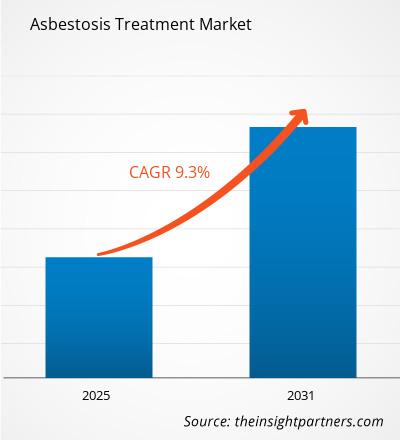
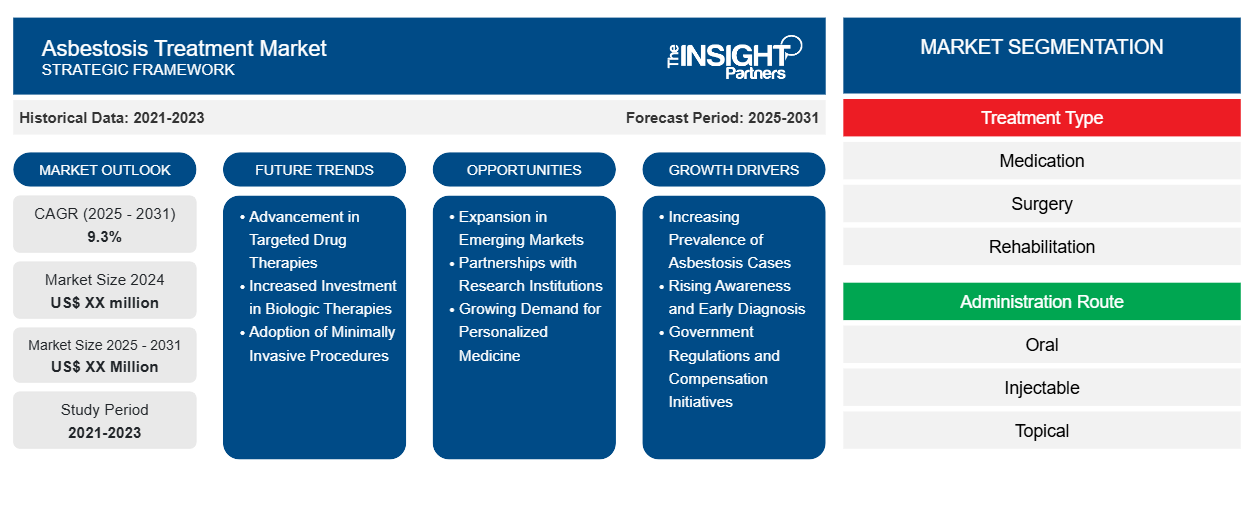
The asbestosis treatment market is valued at US$ 1.94 Billion in 2025 and is projected to reach US$ 2.95 Billion by 2034, expanding at a CAGR of 4.77% during 2026–2034. The market operates in the area of chronic respiratory diseases, with the demand driven by the long latency period of asbestos-related lung diseases, ongoing occupational exposure, and the requirement for supportive therapy. Growing importance of symptom management, respiratory rehabilitation, and a multidisciplinary approach will foster the growth of the market.
North America appears as a strategically important market, driven by the existing respiratory care infrastructure, occupational disease monitoring, and fairly widespread access to specialists' services. Factors influencing the asbestosis treatment market size include the aged population with occupational exposure in their history, growing prevalence of asbestos-related lung diseases, and increased use of pulmonary rehabilitation and oxygen therapy. The CAGR in the regional market over 2026-2034 is expected to be 5.0-5.4%.
Asbestosis Treatment Market Assessment and Insights
- North America: North America is expected to account for a 39–43% share in 2025 and expand at a 5.0–5.4% CAGR between 2026–2034, supported by specialist respiratory care, established occupational health systems, and continued management of legacy asbestos exposure.
- US: The US is expected to represent 78–82% of North America's 2025 share, with growth of 5.0–5.4% CAGR between 2026–2034, reflecting specialist pulmonary services and long-term supportive treatment.
- Europe: Europe is projected to hold a 29–33% share in 2025 and grow at a 4.4–4.8% CAGR between 2026–2034, led by the UK, Germany, France, Italy, and Spain, where occupational exposure legacies support continuing clinical demand.
- Asia Pacific: Asia Pacific is estimated to capture a 20–24% share in 2025 and register a 5.8–6.3% CAGR between 2026–2034, with China, Japan, India, South Korea, and Australia benefiting from expanding respiratory-care capacity and occupational health awareness.
- Largest Segment: Medication is expected to command a 55–60% market share in 2025, with a 4.2–4.6% CAGR between 2026–2034, reflecting its central role in symptom-oriented and complication management.
- High Growth Segment: Rehabilitation is estimated at a 15–20% market share in 2025, with a 6.0–6.5% CAGR between 2026–2034, driven by increasing emphasis on functional capacity and quality of life.
- Key companies analyzed in detail: Bristol Myers Squibb Company, F. Hoffmann-La Roche Ltd, AstraZeneca PLC, Merck & Co., Inc., Novartis AG, Boehringer Ingelheim International GmbH, Pfizer Inc., Johnson & Johnson, GSK plc, and AbbVie Inc.
Source: The Insight Partners' analysis based on proprietary research, government publications, company annual reports, investor presentations, industry databases, and expert interviews.
Trends in the clinical history of asbestosis drug therapy have become increasingly centered on monitoring and management rather than curative pharmacological therapy. Oxygen, pulmonary rehabilitation, smoking cessation, vaccinations, nutrition, and symptom relief medication are key. High-resolution computed tomography and pulmonary function tests are becoming increasingly helpful in early recognition of disease severity and distinction from other forms of fibrotic lung disease.
Future innovation will be based on a clearer distinction between stable asbestos-induced fibrosis and progressive fibrotic disease. Respiratory disease specialists, occupational health services, and multidisciplinary clinics may become more established in referral processes. Regulatory involvement in occupational exposure, asbestos removal, and chronic lung diseases will help to ensure demand for these services. Pharmaceutical companies are becoming increasingly interested in antifibrotic mechanisms in progressive pulmonary fibrosis patients.
Asbestosis Treatment Market Report Scope
| Report Attribute | Details |
|---|---|
| Market size in 2025 | US$ 1.94 Billion |
| Market Size by 2034 | US$ 2.95 Billion |
| Global CAGR (2026 - 2034) | 4.77% |
| Historical Data | 2021-2024 |
| Forecast period | 2026-2034 |
Asbestosis Treatment Market Analysis
Growth in the asbestosis treatment market is aided by a treatment ecosystem involving pulmonologists, occupational physicians, hospitals, diagnostic centers, rehabilitation centers, oxygen vendors, and drug producers. The demand comes largely from those patients who require ongoing treatment rather than a short-term cure. According to the World Health Organization, asbestos exposure is a cause of asbestosis and other diseases.
Routes of treatment will include procedures like exposure testing, lung testing, observation, oxygen therapy, rehabilitation, medication, and palliative treatments. With regards to supply, this will not be dependent on the mode of treatment but rather specialized procedures, breathing apparatus, medication, and diagnostics.
Asbestosis treatment market report suggests competition involving big pharmaceutical companies whose portfolio includes respiratory and immunology therapies rather than companies that focus only on treatments for asbestos-induced diseases. The development of admilparant in the case of pulmonary fibrosis is under the responsibility of Bristol Myers Squibb Company, while AstraZeneca PLC conducts research in the area of respiratory and fibrosis therapies.
The company F. Hoffmann-La Roche Ltd possesses development expertise in the sphere of respiratory medicines; therefore, the technologies may spill over into the asbestosis treatment. Other pharmaceutical companies like Merck & Co., Inc., Novartis AG, Pfizer Inc., GSK plc, AbbVie Inc., Johnson & Johnson, and Boehringer Ingelheim International GmbH provide expertise via respiratory medicines or immunology or pulmonology research.
● REPORT CUSTOMIZATION
Tailor This Report To Align With Your Specific Business Requirements
This report can be customized to align precisely with your business objectives, scope, and target markets. Customization options include tailored segmentation, geography, competitive analysis, and strategic insights to support informed decision-making.
Customize This Report →WHAT YOU CAN ADJUST
- ● Segmentations
- ● Geography
- ● Competitive Analysis
- ● Language Preferences
Asbestosis Treatment Market: Strategic Insights
Regional Insights
North America asbestosis treatment market
North America is projected to hold a 39–43% share in 2025 and expand at a 5.0–5.4% CAGR through 2034. The region benefits from mature pulmonary medicine, occupational disease monitoring, specialist referral networks, and comparatively strong availability of long-term respiratory support. Historical asbestos exposure among construction, manufacturing, shipyard, and industrial workers continues to create a clinical burden requiring surveillance and symptom management.
US is the largest regional market due to the availability of significant infrastructure for specialists and reimbursement procedures for chronic respiratory disorders. The Canadian market benefits from occupational healthcare as well as provincial healthcare. There is demand mainly in pulmonology clinics and hospitals, while rehabilitation facilities and domiciliary oxygen therapies increase the environment for treatment. The present regional market potential is found in identifying patients with progressive fibrosis diseases and their appropriate management.
U.S. asbestosis treatment Market
North America's US is believed to have a 78-82% of the asbestosis treatment market share and a CAGR of 5.0-5.4% from 2025-2034. This is attributed to the presence of specialized pulmonology centers, extensive diagnostic tests, occupational medicine programs, and availability of supportive therapies. In-patient hospitals serve severe cases, while outpatient pulmonary practices take care of monitoring and management of symptoms.
The need in clinical practice includes oxygen therapy, pulmonary rehabilitation, drugs for co-occurring conditions, and palliative care. Some companies like Bristol Myers Squibb Company, AstraZeneca PLC, F. Hoffmann-La Roche Ltd, and Boehringer Ingelheim International GmbH offer broad pulmonology research or commercial portfolio for treatment of fibrotic lung diseases. More emphasis is being placed on disease progression, co-morbidities, functional ability, and referral for specialist consultation.
Europe asbestosis treatment Market
The estimated share for Europe in 2025 is 29–33%, growing at 4.4-4.8% CAGR through 2034. The most promising markets in this region are Germany and the UK. It is a combination of well-developed occupational health system and long-term asbestos exposure that creates continuous demand for respiratory diseases treatment.
In the UK there are structured approaches to treating occupational lung diseases, and Germany possesses extensive experience of managing occupational respiratory diseases. France, Italy, and Spain provide the demand through their health care systems, pulmonary care facilities, and occupational diseases surveillance. Rehabilitation, oxygen therapy, monitoring, and palliative care contribute to demand in the region. Emphasis on work place protection and asbestos management makes demand stable in the long run. Germany is expected to be a leading national market.
APAC asbestosis treatment Market
The APAC region is expected to have a 20-24% share and grow at a CAGR of 5.8-6.3% until 2034. The major markets in the region include China, Japan, South Korea, India, and Australia. This growth will be driven by the presence of industrialization, past work experience, and advanced pulmonary care infrastructure.
The opportunities in China and India are considerable, as there are more opportunities available for diagnostics, whereas the opportunities in Japan and Australia are greater owing to their sound systems of diagnosing occupational diseases. The government can also use its money on developing infrastructure for healthcare. Awareness regarding occupational lung diseases will also help drive growth.
Middle East & Africa asbestosis treatment Market
Middle East and Africa is expected to expand at a 4.0–4.5% CAGR through 2034. Saudi Arabia and the UAE are supported by comparatively developed tertiary healthcare infrastructure, while South Africa retains relevance because of historical mining and industrial exposure. Rest of MEA remains more fragmented.
Saudi Arabia is projected to be the leading force in the market region, owing to advancements in the field of healthcare and capacity building of specialists. UAE will benefit from private sector funding and advanced hospital facilities. Occupational diseases in South Africa will provide support for specialized respiratory facilities. Energy and industrial activities within the region will ensure continuous demand for occupational health facilities.

Segmentation Analysis
Treatment Type
Treatment Type is expected to expand at a 4.2–4.6% CAGR during 2026–2034. The category remains centered on long-term symptom management, functional preservation, complication prevention, and individualized supportive care. Medication represents the largest component, while rehabilitation is gaining importance as providers increasingly incorporate structured exercise and education into chronic respiratory management. The asbestosis treatment market scope therefore extends beyond pharmaceuticals into multidisciplinary clinical services.
- Medication: Medication remains the principal treatment approach because clinicians frequently require symptom-directed management for cough, breathlessness, inflammation-related complications, and associated respiratory conditions within individualized care plans.
- Surgery: Surgery is generally reserved for selected complications or advanced clinical circumstances, making specialized expertise and careful patient selection important determinants of utilization across tertiary-care settings.
- Rehabilitation: Rehabilitation supports exercise tolerance, breathing techniques, education, and daily-function preservation, making it strategically important for patients requiring prolonged management of respiratory limitation.
- Palliative Care: Palliative care addresses symptom burden, advance-care planning, psychosocial needs, and quality-of-life priorities, particularly when respiratory impairment becomes advanced or progressively disabling.
Administration Route
Administration Route is projected to grow at a 4.5–4.9% CAGR during 2026–2034. Oral administration retains importance because many supportive medicines can be delivered conveniently through outpatient pathways. Injectable treatments remain relevant for selected complications and associated conditions, while topical administration has a comparatively narrow role. Route selection is primarily determined by therapeutic indication, patient tolerance, disease severity, and care setting.
- Oral: Oral administration supports outpatient management and medication continuity, offering practical advantages for patients receiving long-term symptom-directed therapy and associated chronic respiratory medicines.
- Injectable: Injectable administration remains concentrated in treatments requiring parenteral delivery, particularly where clinical supervision, rapid systemic exposure, or hospital-based management is necessary.
- Topical: Topical administration occupies a specialized position and is primarily relevant when local treatment is clinically appropriate for associated symptoms or supportive care requirements.
End user
End user is expected to grow at a 4.8–5.2% CAGR during 2026–2034. Hospitals retain a central role because advanced diagnosis, multidisciplinary assessment, and severe respiratory complications require specialized resources. Outpatient clinics increasingly manage longitudinal monitoring, rehabilitation referrals, and stable patients, while specialized treatment centers support complex occupational and pulmonary cases.
- Hospitals: Hospitals provide comprehensive diagnostics, specialist consultations, acute respiratory support, and multidisciplinary management for patients with advanced disease or significant complications.
- Outpatient Clinics: Outpatient clinics support recurring assessment, medication management, pulmonary-function monitoring, rehabilitation coordination, and routine follow-up for clinically stable patients.
- Specialized Treatment Centers: Specialized centers concentrate pulmonary expertise, occupational disease evaluation, rehabilitation, and complex case management, supporting coordinated care for patients with persistent respiratory impairment.
Opportunity Snapshot
| End user | Revenue Contribution (High/Medium/Low) | Trend Tag | Adoption Stage |
|---|---|---|---|
| Hospitals | High | Specialist Care | Mature |
| Outpatient Clinics | Medium | Chronic Monitoring | Scaling |
| Specialized Treatment Centers | Medium | Fibrosis Clinics | Scaling |
Asbestosis Treatment Market Growth Drivers and Impact Analysis
Persistent burden from historical occupational asbestos exposure
The continuing clinical consequences of historical asbestos exposure provide a durable patient base for long-term respiratory management. WHO identifies occupational asbestos exposure as a major cause of asbestosis and other serious diseases, while asbestos-related conditions can emerge decades after initial exposure. This latency means that treatment demand can persist even where new exposure has declined substantially. The commercial effect is most visible in diagnostic surveillance, pulmonary consultations, oxygen support, rehabilitation, and symptom-management services. Healthcare systems with established occupational disease registries can identify affected populations more effectively, supporting earlier intervention. For manufacturers, this creates a relatively stable demand environment centered on chronic care rather than episodic treatment, although treatment intensity varies significantly according to disease severity and comorbid respiratory conditions.
Expansion of multidisciplinary pulmonary rehabilitation and supportive care
Greater recognition of functional impairment is increasing the importance of rehabilitation, oxygen assessment, nutritional support, vaccination, smoking cessation, and palliative care within chronic fibrotic lung management. Pulmonary rehabilitation can improve exercise tolerance and quality of life while helping patients manage breathlessness and conserve energy. Its expansion creates demand across hospitals, outpatient clinics, specialized centers, therapists, respiratory equipment suppliers, and home-care providers. The impact is particularly relevant because asbestosis often requires prolonged management rather than a short therapeutic course. Providers that integrate rehabilitation with pulmonary-function monitoring and individualized care planning can improve continuity while reducing fragmented referrals. For market participants, this broadens the addressable opportunity beyond conventional pharmaceutical treatment and increases the importance of service integration in mature healthcare systems.
Advances in progressive pulmonary fibrosis research
Research into progressive pulmonary fibrosis is creating a potential pathway for improved treatment strategies even though asbestosis remains clinically distinct from idiopathic pulmonary fibrosis. Pharmaceutical developers are investigating molecular mechanisms associated with fibrotic progression, including pathways involving lysophosphatidic acid signaling and inflammatory processes. Bristol Myers Squibb Company is advancing admilparant in phase 3 studies for idiopathic and progressive pulmonary fibrosis, illustrating the level of investment directed toward antifibrotic biology. Such research can improve understanding of patient phenotypes and disease progression, potentially supporting future evidence-based treatment approaches for selected asbestos-related fibrosis populations. The market impact is therefore linked less to immediate approved indications and more to the possibility of translating broader fibrosis research into differentiated management strategies.
Asbestosis Treatment Market Future Trends
Biomarker-led identification of progressive fibrosis
The asbestosis treatment market trends are expected to increasingly incorporate biomarkers, quantitative imaging, and longitudinal pulmonary-function data to distinguish stable fibrosis from clinically meaningful progression. Future care models may combine imaging characteristics, physiological decline, symptom trajectories, and molecular indicators to improve referral decisions. This could reduce reliance on isolated measurements and enable earlier specialist intervention. Research organizations and pharmaceutical developers are also evaluating advanced imaging approaches for monitoring fibrosis activity and treatment response. As analytical tools mature, providers may gain greater ability to identify patients who could benefit from targeted clinical trials or emerging antifibrotic strategies. The resulting market shift would favor integrated diagnostic-treatment pathways and data-enabled disease monitoring rather than isolated, episodic clinical encounters.
Home-centered chronic respiratory management
Future care delivery is likely to move further toward home-centered management for clinically stable patients requiring oxygen, rehabilitation support, medication monitoring, and symptom assessment. Digital respiratory monitoring can allow clinicians to follow functional status between scheduled appointments, while connected devices may help identify deterioration earlier. Such models could reduce unnecessary hospital visits and improve continuity for patients with mobility limitations. Home-based care also creates opportunities for specialized service providers to coordinate oxygen equipment, rehabilitation programs, nursing support, and remote consultations. Adoption will depend on reimbursement, digital literacy, broadband availability, and clinical validation. Markets with established home-care infrastructure are likely to adopt these models earlier, while emerging healthcare systems may initially focus on strengthening outpatient and specialist capacity.
Asbestosis Treatment Market Opportunities
Develop specialized occupational lung disease centers
Healthcare providers and investors can develop specialized centers combining occupational exposure assessment, pulmonary diagnostics, rehabilitation, and long-term respiratory management. Such centers can address fragmented care by coordinating pulmonologists, occupational physicians, radiologists, respiratory therapists, and palliative-care professionals within a defined pathway. The opportunity is particularly relevant in regions with large historical industrial workforces and established compensation or occupational disease systems. Integrated centers can also create structured databases that support longitudinal disease monitoring and research recruitment. For pharmaceutical and diagnostic companies, partnerships with these centers may provide opportunities to generate real-world evidence and improve patient identification. The asbestosis treatment market Forecasts will increasingly depend on the capacity of healthcare systems to integrate specialist expertise with longitudinal chronic disease management.
Build partnerships around fibrosis diagnostics and clinical research
Companies can pursue partnerships with hospitals, academic institutions, imaging providers, and respiratory research networks to develop tools that identify clinically meaningful fibrosis progression. Investment priorities may include quantitative imaging, biomarker panels, digital pulmonary-function monitoring, and patient stratification platforms. These capabilities can support clinical trials across broader fibrotic lung disease populations while creating potential applications in asbestos-related pulmonary disorders. Strategic partnerships can also reduce development risk by combining pharmaceutical expertise with specialist clinical datasets and diagnostic capabilities. The strongest opportunity is likely to emerge where companies can demonstrate measurable clinical utility rather than simply introducing additional testing. Such collaborations can create differentiated positions across diagnostics, therapeutics, monitoring, and evidence generation.
Recent Developments
- January 2026: F. Hoffmann-La Roche Ltd reported its 2025 results, with pharmaceutical sales increasing 9% at constant exchange rates. The company continued advancing its medicines and diagnostics portfolio, while its respiratory research remained relevant to broader pulmonary disease development. The update demonstrates continued investment capacity across respiratory and diagnostic technologies that can influence adjacent fibrotic lung disease research.
- May 2025: AstraZeneca PLC presented respiratory research at the American Thoracic Society meeting, including studies and pipeline programs addressing pulmonary disease and fibrosis. The company highlighted machine-learning work designed to improve understanding of disease progression in idiopathic pulmonary fibrosis and COPD, reinforcing its strategy of combining respiratory drug development with advanced analytical approaches.
- January 2025: Bristol Myers Squibb Company highlighted phase 3 development of admilparant, an LPA1 antagonist, in idiopathic pulmonary fibrosis and progressive pulmonary fibrosis. The company reported phase 2 evidence supporting continued development and identified pulmonary fibrosis as a major area of unmet need, illustrating sustained investment in antifibrotic mechanisms.
Frequently Asked Questions
- Comprehensive Market Sizing and Forecast Analysis
- Detailed Segmentation Analysis
- In-Depth Market Dynamics Assessment
- Regional and Country-Level Insights
- Competitive Landscape and Company Benchmarking
- Strategic Business Intelligence
Recent Reports
Testimonials
Reason to Buy
- Informed Decision-Making
- Understanding Market Dynamics
- Competitive Analysis
- Identifying Emerging Markets
- Customer Insights
- Market Forecasts
- Risk Mitigation
- Boosting Operational Efficiency
- Strategic Planning
- Investment Justification
- Tracking Industry Innovations
- Aligning with Regulatory Trends