
Asia Pacific Protein Binding Assay Market Growth and Recent Trends by 2028
Asia Pacific Protein Binding Assay Market Forecast to 2028 - COVID-19 Impact and Regional Analysis By Technology (Equilibrium Dialysis, Ultracentrifugation, Ultrafiltration, Surface Plasmon, and Others) and End User (Contract Research Organization, Pharmaceutical & Biotechnology Companies, and Research & Diagnostic Laboratories)
- Status : Published
- Report Code : TIPRE00025439
- Category : Life Sciences
- No. of Pages : 81
- Available Report Formats :


- Last update date : October 20, 2021


2021 Market Size
US$ 73.34 Mn
Base year value
2028 Forecast
US$ 153.72 Mn
Projected by 2028
CAGR 2022-2028
11.2 %
Growth rate
Addressable Market
US$ 802.79 Mn
(2022-2028)
The protein binding assay market in APAC is expected to grow from US$ 73.34 million in 2021 to US$ 153.72 million by 2028; it is estimated to grow at a CAGR of 11.2% from 2021 to 2028.
China, Japan, and India are major economies in APAC. Label-Free receptor assays to emerge as powerful assay platform in coming years is the major factor driving the growth of the APAC protein binding assay market. The development of pharmacological assays has resulted in the discovery of a wide range of receptor and drug molecule cellular behavior. Label-free receptor assays are growing rapidly as a powerful assay platform for studying receptor signaling and identifying critical nodes in receptor signaling networks. Drug molecules can now be categorized and characterized in novel ways due to label-free receptors. With substantial advances in biosensor instrumentation, such as the Epic system, high throughput screening of drug molecules operating on native cells, including primary cells, has become a reality. Traditional label-based techniques, such as fluorescence, are being replaced by label-free detection of molecular interactions. The label-free technique is preferred to avoid molecular labels when functional information is required. This is especially true for protein targets where labels can compromise the function of a protein. Label-free methods are compatible with real-time detection, allowing for the assessment of the rates of interacting molecules' association and dissociation. Several label-free approaches are currently available for the detection of biomolecular interactions, based on technologies—such as interferometry, diffraction, surface plasmon resonance (SPR), and quartz crystal microbalance. SPR detection is the most extensively used of them. Thus, label-free assays, which evaluate the interaction of molecules (antibodies-antigens, ligands-receptors, proteins-proteins) without the use of tags such as fluorescent dyes or radioisotopes, are expected to become a powerful assay platform in the future years, which is further anticipated to drive the market in APAC.
According to Worldometer, from its epicenter in China, SARS-CoV-2 has spread to infect ~58,231,688 people in Asia, as of July 29, 2021. Following the terrible loss of lives, economies in Asia Pacific have collapsed during the pandemic. The pandemic has emphasized health data exchange and interoperability under a microscope. The supply chain disruptions, along with the tremendous demand for efficient treatments against COVID-19, have put the healthcare research industry in a crucial situation in region. Socioeconomics in countries such as India, China, Japan, and South Korea were severely affected, resulting in rise in inflation, decrease in GDP, and surge in unemployment.Countries such as China, Japan, Singapore, and South Korea show large interest in clinical trials. High costs in western countries drives the flow of medical affairs outsourcing to Asia Pacific. Moreover, pharmaceutical companies are becoming aware of new and changing regulatory environments for drugs, devices, and in vitro diagnostics to expand sales to the Asian market. Asian countries have been at a forefront of updating GMP standards and medical device regulatory systems and introducing drug price controls. Third-party guidance and advice are required as part of any acquisition or any improvement of current standards. Increasingly, third-party outsourcing service providers are playing a greater role in supporting the protein binding assay market progress in Asia Pacific.
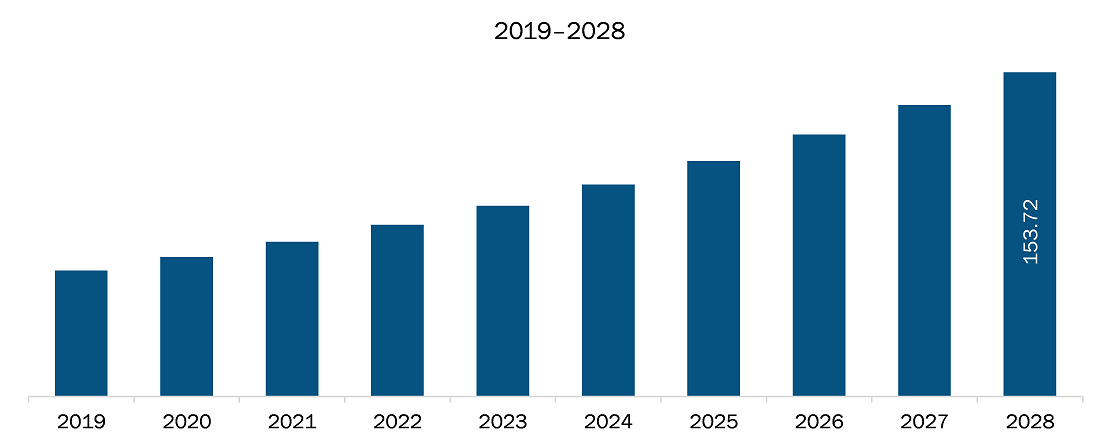
- This FREE sample will include data analysis, ranging from market trends to estimates and forecasts.
APAC Protein Binding Assay Market Segmentation
APAC Protein Binding Assay Market – By Technology
- Equilibrium Dialysis
- Ultracentrifugation
- Ultrafiltration
- Surface Plasmon
- Others
APAC Protein Binding Assay Market – By End User
- Contract Research Organization
- Pharmaceutical and Biotechnology Companies
- Research and Diagnostic Laboratories
APAC Protein Binding Assay Market– By Country
- China
- Japan
- India
- Australia
- South Korea
- Rest of APAC
APAC Protein Binding Assay Market-Companies Mentioned
- Biotium, Inc
- Eurofins Scientific
- General Electric Company
- MERCK KGaA
- MicroConstants, Inc
- Pharmaron Beijing Co., Ltd
- Sartorius AG
- SOVICELL GMBH
- THERMO FISHER SCIENTIFIC INC.
Asia Pacific Protein Binding Assay Report Scope
| Report Attribute | Details |
|---|---|
| Market size in 2021 | US$ 73.34 Million |
| Market Size by 2028 | US$ 153.72 Million |
| CAGR (2021 - 2028) | 11.2% |
| Historical Data | 2019-2020 |
| Forecast period | 2022-2028 |
| Segments Covered |
By Technology
|
| Regions and Countries Covered |
Asia-Pacific
|
| Market leaders and key company profiles |
|

- Comprehensive Market Sizing and Forecast Analysis
- Detailed Segmentation Analysis
- In-Depth Market Dynamics Assessment
- Regional and Country-Level Insights
- Competitive Landscape and Company Benchmarking
- Strategic Business Intelligence
Recent Reports
Testimonials

The Insight Partners' SCADA System Market report is comprehensive, with valuable insights on current trends and future forecasts. The team was highly professional, responsive, and supportive throughout. We are very satisfied and highly recommend their services.
RAN KEDEM Partner, Reali Technologies LTDs
I requested a report on a very specific software market and the team produced the report in a few days. The information was very relevant and well presented. I then requested some changes and additions to the report. The team was again very responsive and I got the final report in less than a week.
JEAN-HERVE JENN Chairman, Future Analytica
We worked with The Insight Partners for an important market study and forecast. They gave us clear insights into opportunities and risks, which helped shape our plans. Their research was easy to use and based on solid data. It helped us make smart, confident decisions. We highly recommend them.
PIYUSH NAGPAL Sr. Vice President, High Beam Global
The Insight Partners delivered insightful, well-structured market research with strong domain expertise. Their team was professional and responsive throughout. The user-friendly website made accessing industry reports seamless. We highly recommend them for reliable, high-quality research services
YUKIHIKO ADACHI CEO, Deep Blue, LLC.
This is the first time I have purchased a market report from The Insight Partners.While I was unsure at first, I visited their web site and felt more comfortable to take the risk and purchase a market report.I am completely satisfied with the quality of the report and customer service. I had several questions and comments with the initial report, but after a couple of dialogs over email with their analyst I believe I have a report that I can use as input to our strategic planning process.Thank you so much for taking the extra time and making this a positive experience.I will definitely recommend your service to others and you will be my first call when we need further market data.
JOHN SUZUKI President and Chief Executive Officer, Board Director, BK Technologies
I wish to appreciate your support and the professionalism you displayed in the course of attending to my request for information regarding to infectious disease IVD market in Nigeria. I appreciate your patience, your guidance, and the fact that you were willing to offer a discount, which eventually made it possible for us to close a deal. I look forward to engaging The Insight Partners in the future, all thanks to the impression you have created in me as a result of this first encounter.
DR CHIJIOKE ONYIA MANAGING DIRECTOR, PineCrest Healthcare Ltd.Reason to Buy
- Informed Decision-Making
- Understanding Market Dynamics
- Competitive Analysis
- Identifying Emerging Markets
- Customer Insights
- Market Forecasts
- Risk Mitigation
- Boosting Operational Efficiency
- Strategic Planning
- Investment Justification
- Tracking Industry Innovations
- Aligning with Regulatory Trends





 Get Free Sample for