
Avian influenza vaccines Market Size, Growth & Demand by 2034
Coverage: By Vaccine Type (inactivated vaccines, live recombinant vaccines, combination vaccines); Strain (H5 strain, H7 strain, H9 strain); Application (chicken, duck and goose, others.), and Geography (North America, Europe, Asia Pacific, and South and Central America)
- Status : Data Released
- Report Code : TIPRE00011957
- Category : Life Sciences
- No. of Pages : 150
- Available Report Formats :


- Last update date : March 18, 2026


2025 Market Size
US$ 155.10 Mn
Base year value
2034 Forecast
US$ 205.52 Mn
Projected by 2034
CAGR 2026-2034
3.18 %
Growth rate
Addressable Market
US$ 1,637.76 Mn
(2026-2034)
The global Avian influenza vaccines Market size is projected to reach US$ 205.52 million by 2034 from US$ 155.10 million in 2025. The market is anticipated to register a CAGR of 3.18% during the forecast period 2026–2034
Key market dynamics include the escalating frequency of highly pathogenic outbreaks across poultry flyways, rising government mandates for mass immunization to protect food security, and a significant shift toward biotechnology-driven solutions to replace traditional culling methods. Additionally, the market is expected to benefit from the expansion of commercial poultry operations in emerging economies, increased R&D for universal flu candidates, and the growing focus on preventing zoonotic transmission from birds to humans.
Avian Influenza Vaccines Market Analysis
The avian influenza vaccines market analysis shows a strategic transition toward precision immunology as producers prioritize flock stability and international trade continuity. The market includes traditional government-tendered utilization of inactivated vaccines and high-growth commercial markets adopting live recombinant technologies. Strategic opportunities are emerging in the development of DIVA (Differentiating Infected from Vaccinated Animals) strategy-compliant vaccines, which allow for robust disease surveillance without triggering trade bans. The analysis also notes that market expansion depends on maintaining cold-chain integrity for rural distribution and the ability of manufacturers to keep pace with rapid antigenic drift. Competitive differentiation now stands out based on strain-agility, where companies that can quickly match vaccines to local circulating clades (such as H5N1 or H7N9) gain a significant edge in securing long-term supply contracts.
Avian Influenza Vaccines Market Overview
Avian influenza vaccines have advanced from emergency intervention tools to a mainstream pillar of modern biosecurity. Avian influenza vaccines are specialized formulations for varying production cycles, ranging from fast-growing broilers to long-lived egg layers. Both global animal health leaders and regional biotech firms compete in this market, using platforms such as egg-based production, cell-culture systems, and newer mRNA technologies. Growing demand for reliable protein sources in Asia-Pacific and South America has increased the popularity of vaccination as a proactive risk-management solution. North America leads in revenue due to its advanced regulatory infrastructure and R&D investments, while Asia-Pacific is advancing in volume adoption and localized manufacturing innovation. The US market is increasingly characterized by the inclusion of advanced adjuvants to boost long-term immunity and a move toward automated administration methods to reduce labor intensity in high-density farming operations.
Market Assessment and Insights
- Global market for Avian influenza vaccines was valued at US$ 155.10 Million in 2025
- Annual market size is expected to reach US$ 205.52 Million by 2034
- Total addressable market (TAM) during 2026-2034 is projected to reach approximately US$ 1,637.76 Million
- Market is anticipated to register a CAGR of 3.18% during the forecast period
- The United States represents a key market, supported by Advances in Vaccine Technology, Government Initiatives, Growing Need for Disease Prevention, as well as evolving industry dynamics
- Market analysis covers North America, Europe, Asia-Pacific, South and Central America, Middle East and Africa, with growth evaluated across the forecast period
- Market opportunities such as Development of New Vaccine Formulations, Sustainable and Ethical Poultry Production, Growth in Global Poultry Industry are expected to influence market dynamics and addressable market
- Report profiles industry participants, including Boehringer Ingelheim GmbH, CAVAC, CEVA, DHN, Elanco, FATRO S.p.A., Harbin Veterinary Research Institute (HVRI), Merck Animal Health (a subsidiary of Merck & Co. Inc.), Merial (a Sanofi Company), QianYuanHao Biological Corporation Limited, Ringpu Biology, The Qingdao Yebio Biological Engineering Co., Ltd.,, Zoetis, Inc., while analyzing competitive strategies and innovation developments
-
Source: The Insight Partners' analysis based on proprietary research, government publications, company annual reports, investor presentations, industry databases, and expert interviews.
● REPORT CUSTOMIZATION
Tailor This Report To Align With Your Specific Business Requirements
This report can be customized to align precisely with your business objectives, scope, and target markets. Customization options include tailored segmentation, geography, competitive analysis, and strategic insights to support informed decision-making.
Customize This Report →WHAT YOU CAN ADJUST
- ● Segmentations
- ● Geography
- ● Competitive Analysis
- ● Language Preferences
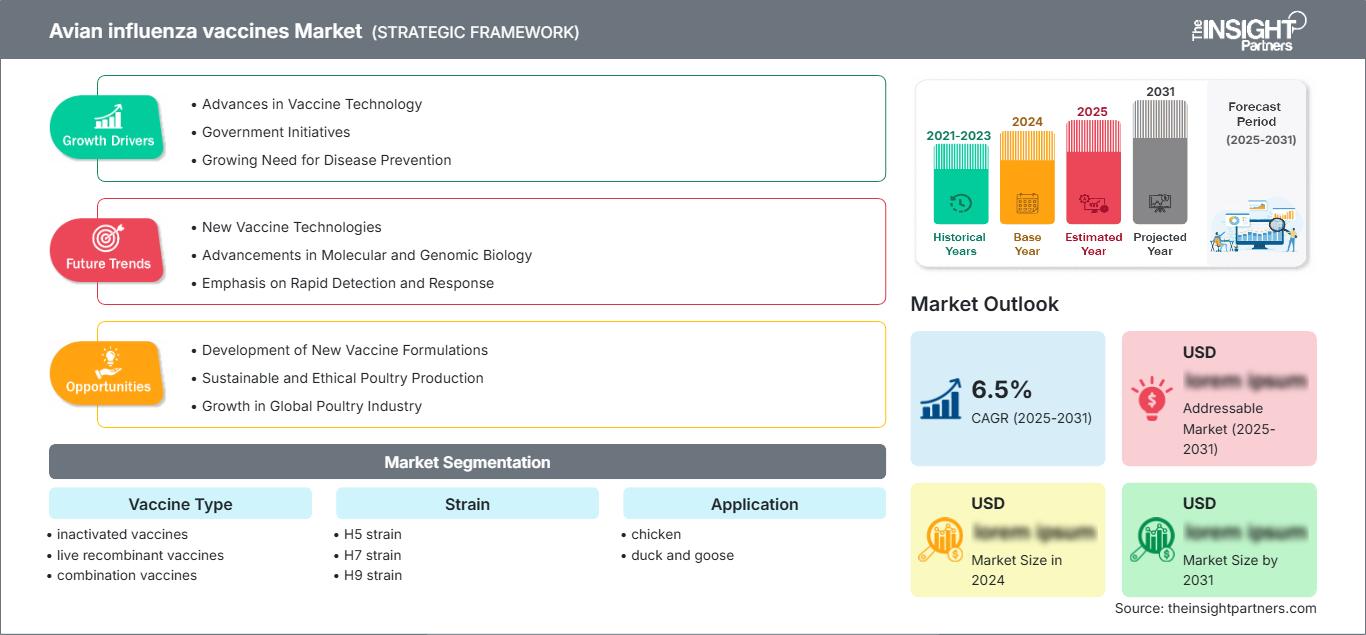
Avian influenza vaccines Market: Strategic Insights
-
Get Top Key Market Trends of this report.This FREE sample will include data analysis, ranging from market trends to estimates and forecasts.
Avian Influenza Vaccines Market Drivers and Opportunities
Market Drivers:
- Rising Global Outbreak Intensity: The unprecedented spread of H5-related strains in wild birds and poultry is forcing many countries to reconsider traditional non-vaccination policies to avoid catastrophic economic losses.
- Technological Shifts in Production: Advancements in recombinant DNA and viral-vector platforms are shortening production timelines, allowing for a faster response to emerging seasonal strains.
- Supportive Government Policies: National pandemic preparedness plans increasingly include the stockpiling of poultry vaccines to secure domestic food supplies and stabilize commodity prices.
Market Opportunities:
- Expansion of Combination Vaccines: There is a significant opportunity for products that combine avian influenza protection with other core poultry vaccines, such as those for Newcastle Disease, to streamline farm management.
- Growth in Emerging Economies: Strategic partnerships between global manufacturers and local distributors in LATAM and Africa may facilitate access to high-growth markets where poultry demand is surging.
- DIVA Strategy Implementation: Developing vaccines that support differentiation between infected and vaccinated birds offers a major competitive advantage by potentially alleviating international trade barriers.
Avian Influenza Vaccines Market Report Segmentation Analysis
The avian influenza vaccines market share is analyzed across various segments to provide a clearer understanding of its structure, growth potential, and emerging trends. Below is the standard segmentation approach used in most industry reports:
By Vaccine Type:
- Inactivated Vaccines: The largest segment by volume, favored for its proven safety profile and lower production cost. It remains the standard choice for large-scale government-led vaccination campaigns in developing regions.
- Live Recombinant Vaccines: A fast-growing segment that utilizes viral vectors to deliver targeted antigens. It is increasingly preferred in high-biosecurity settings due to its ability to stimulate robust cellular immunity.
- Combination Vaccines: An emerging and highly efficient category where avian influenza antigens are bundled with other viral protections, reducing the number of administrations required per bird.
By Strain:
- H5 Strain: Holds the largest market share due to the high pathogenicity and global prevalence of H5N1, H5N8, and H5N2 clades, which cause severe losses in poultry.
- H7 Strain: A critical segment focused on preventing the spread of H7N9 and similar subtypes, often targeted in regional outbreaks to prevent rapid virulence evolution.
- H9 Strain: Primarily focused on low-pathogenic but economically damaging strains like H9N2, which are endemic in several Asian and Middle Eastern poultry sectors.
By Application:
- Chicken: The dominant application segment, encompassing both the broiler (meat) and layer (egg) industries, is driven by the sheer scale of global chicken production.
- Duck and Goose: A significant niche segment, particularly in Asia-Pacific, where aquatic birds are often central to the epidemiology of avian influenza and require specialized vaccination protocols.
By Geography:
- North America
- Europe
- Asia Pacific
- South & Central America
- Middle East & Africa
Avian influenza vaccines Market Report Scope
| Report Attribute | Details |
|---|---|
| Market size in 2025 | US$ 155.10 million |
| Market Size by 2034 | US$ 205.52 Million |
| Global CAGR (2026 - 2034) | 3.18% |
| Historical Data | 2021-2024 |
| Forecast period | 2026-2034 |
| Segments Covered |
By Vaccine Type
|
| Regions and Countries Covered |
North America
|
| Market leaders and key company profiles |
|
Avian influenza vaccines Market Players Density: Understanding Its Impact on Business Dynamics
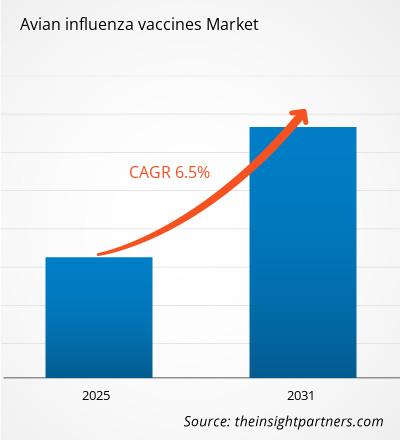
The Avian influenza vaccines Market is growing rapidly, driven by increasing end-user demand due to factors such as evolving consumer preferences, technological advancements, and greater awareness of the product's benefits. As demand rises, businesses are expanding their offerings, innovating to meet consumer needs, and capitalizing on emerging trends, which further fuels market growth.
Avian Influenza Vaccines Market Share Analysis by Geography
Asia-Pacific is expected to grow fastest in the coming years due to its status as the global hub for poultry production. Emerging markets in South & Central America and Africa also present many untapped opportunities for vaccine manufacturers as farming practices modernize.
The avian influenza vaccines market is undergoing a significant transformation, moving from reactive emergency culling to a globalized, high-value preventative strategy. Growth is driven by the rising prevalence of highly pathogenic strains, a surge in demand for food-secure animal protein, and the expansion of the commercial poultry export. Below is a summary of market share and trends by region:
North America
- Market Share: Holds a dominant revenue share, driven by a sophisticated regulatory landscape and high-value R&D.
- Key Drivers:
- Recent policy shifts by the USDA toward exploring mass vaccination for commercial flocks.
- Significant investments in next-generation mRNA and cell-based vaccine platforms by local pharmaceutical giants.
- Stringent food safety guidelines requiring robust biosecurity and preventative immunization.
- Trends: Rapid adoption of recombinant technologies and the successful integration of digital vaccination tracking systems for commercial compliance.
Europe
- Market Share: Represents a substantial and stable segment, anchored by proactive government stockpiling and high immunization rates in Western Europe.
- Key Drivers:
- Harmonized EU vaccination strategies designed to protect intra-regional poultry trade.
- Strong focus on maintaining flock health to prevent the mutation of low-pathogenic strains.
- Robust public-private partnerships supporting the development of high-performance delivery technologies.
- Trends: A strategic shift toward DIVA-compliant vaccines that allow for trade flexibility and a move away from traditional egg-based manufacturing to ensure faster pandemic response.
Asia-Pacific
- Market Share: The largest market by volume and the fastest-growing region, with China acting as a primary global supplier of avian influenza vaccines.
- Key Drivers:
- Massive consumer base in China, India, and Vietnam seeking affordable and safe poultry protein.
- Frequent exposure to migratory bird flyways necessitates large-scale government-mandated vaccination programs.
- Rapid urbanization and the transition from backyard farming to modern, high-density commercial operations.
- Trends: Heavy reliance on H5+H7 combination vaccines and the emergence of regional biotech leaders expanding their manufacturing capacity for both domestic and export markets.
South and Central America
- Market Share: An emerging market with a rapidly modernizing poultry sector in countries like Brazil and Chile.
- Key Drivers:
- The critical need to protect the status of South America as a leading global poultry exporter.
- Increasing awareness of the economic devastation caused by H5N1 outbreaks in wild bird populations.
- Growing modernization of small-scale farms into integrated commercial units.
- Trends: Increased adoption of standardized vaccination protocols across vertically integrated operations and the entry of global vaccine players into local distribution networks.
Middle East and Africa
- Market Share: A developing market with a high reliance on imported vaccines, transitioning toward formalized domestic production.
- Key Drivers:
- High demand for shelf-stable vaccines that remain effective in arid and tropical climates.
- Traditional significance of poultry as a primary protein source in regional diets.
- Trends: Implementation of modern cold-chain and refrigeration technologies to formalize the vaccine market, coupled with a focus on high-potency inactivated vaccines for the layer segment.
High Market Density and Competition
Competition is intensifying due to the presence of established leaders such as Zoetis, Boehringer Ingelheim, and Merck Animal Health. Regional experts like Ceva Santé Animale and SINOVAC Biotech, alongside innovators such as Hester Biosciences and Venky’s, also contribute to a diverse and rapidly expanding landscape.
This competitive environment pushes vendors to differentiate through:
- Technological Innovation: Transitioning from egg-based inactivated vaccines to recombinant viral vector platforms that offer higher efficacy and faster manufacturing.
- Broader Portfolio Offerings: Moving beyond monovalent vaccines to offer H5+H7 combination products that provide wider protection against multiple circulating strains.
- Supply Chain Control: Managing the entire pipeline from strain surveillance and seed development to final distribution ensures quality and helps meet ethical biosecurity standards.
Opportunities and Strategic Moves
- Partner with Government Bodies and NGOs: Tap into the surging demand for pandemic preparedness and mass immunization programs, particularly in Asia-Pacific and North American markets, where government mandates are expanding.
- Incorporate DIVA (Differentiating Infected from Vaccinated Animals) Technology: Develop and market vaccines that allow for easy diagnostic differentiation, appealing to export-heavy countries that fear trade bans associated with vaccinated poultry.
Major Companies operating in the Avian Influenza Vaccines Market are:
- Boehringer Ingelheim GmbH
- CAVAC
- CEVA
- DHN
- Elanco
- FATRO S.p.A.
- Harbin Veterinary Research Institute (HVRI)
- Merck Animal Health (a subsidiary of Merck & Co. Inc.)
- Merial (a Sanofi Company)
- QianYuanHao Biological Corporation Limited
- Ringpu Biology
- The Qingdao Yebio Biological Engineering Co., Ltd.
- Zoetis, Inc.
Disclaimer: The companies listed above are not ranked in any particular order.
Avian Influenza Vaccines Market News and Recent Developments
- In February 2025, Elanco Animal Health Incorporated announced it had entered into an agreement with South Dakota-based Medgene to leverage the company's innovative vaccine platform technology. The agreement includes the commercialization of a highly pathogenic avian influenza (HPAI) vaccine for use in dairy cattle. The USDA is allowing the company to accelerate H5N1 vaccine development. Medgene has an existing vaccine manufacturing supply ready to deploy with the ability to support the U.S. dairy herd.
- In February 2025, Boehringer Ingelheim launches a new trivalent poultry vaccine that includes protection against H5 avian influenza. VAXXITEK® HVT+IBD+H5 is a new trivalent vaccine for poultry that offers protection against Marek’s disease, Infectious Bursal Disease, and H5 avian influenza in just one shot.
Avian Influenza Vaccines Market Report Coverage and Deliverables
The Avian Influenza Vaccines Market Size and Forecast (2021–2034) report provides a detailed analysis of the market covering below areas:
- Avian Influenza Vaccines Market size and forecast at global, regional, and country levels for all the key market segments covered under the scope
- Avian Influenza Vaccines Market trends, as well as market dynamics such as drivers, restraints, and key opportunities
- Detailed PEST and SWOT analysis
- Avian Influenza Vaccines Market analysis covering key market trends, global and regional framework, major players, regulations, and recent market developments
- Industry landscape and competition analysis covering market concentration, heat map analysis, prominent players, and recent developments in the Avian Influenza Vaccines Market.
- Detailed company profiles
Frequently Asked Questions

- Comprehensive Market Sizing and Forecast Analysis
- Detailed Segmentation Analysis
- In-Depth Market Dynamics Assessment
- Regional and Country-Level Insights
- Competitive Landscape and Company Benchmarking
- Strategic Business Intelligence
Recent Reports
Testimonials

The Insight Partners' SCADA System Market report is comprehensive, with valuable insights on current trends and future forecasts. The team was highly professional, responsive, and supportive throughout. We are very satisfied and highly recommend their services.
RAN KEDEM Partner, Reali Technologies LTDs
I requested a report on a very specific software market and the team produced the report in a few days. The information was very relevant and well presented. I then requested some changes and additions to the report. The team was again very responsive and I got the final report in less than a week.
JEAN-HERVE JENN Chairman, Future Analytica
We worked with The Insight Partners for an important market study and forecast. They gave us clear insights into opportunities and risks, which helped shape our plans. Their research was easy to use and based on solid data. It helped us make smart, confident decisions. We highly recommend them.
PIYUSH NAGPAL Sr. Vice President, High Beam Global
The Insight Partners delivered insightful, well-structured market research with strong domain expertise. Their team was professional and responsive throughout. The user-friendly website made accessing industry reports seamless. We highly recommend them for reliable, high-quality research services
YUKIHIKO ADACHI CEO, Deep Blue, LLC.
This is the first time I have purchased a market report from The Insight Partners.While I was unsure at first, I visited their web site and felt more comfortable to take the risk and purchase a market report.I am completely satisfied with the quality of the report and customer service. I had several questions and comments with the initial report, but after a couple of dialogs over email with their analyst I believe I have a report that I can use as input to our strategic planning process.Thank you so much for taking the extra time and making this a positive experience.I will definitely recommend your service to others and you will be my first call when we need further market data.
JOHN SUZUKI President and Chief Executive Officer, Board Director, BK Technologies
I wish to appreciate your support and the professionalism you displayed in the course of attending to my request for information regarding to infectious disease IVD market in Nigeria. I appreciate your patience, your guidance, and the fact that you were willing to offer a discount, which eventually made it possible for us to close a deal. I look forward to engaging The Insight Partners in the future, all thanks to the impression you have created in me as a result of this first encounter.
DR CHIJIOKE ONYIA MANAGING DIRECTOR, PineCrest Healthcare Ltd.Reason to Buy
- Informed Decision-Making
- Understanding Market Dynamics
- Competitive Analysis
- Identifying Emerging Markets
- Customer Insights
- Market Forecasts
- Risk Mitigation
- Boosting Operational Efficiency
- Strategic Planning
- Investment Justification
- Tracking Industry Innovations
- Aligning with Regulatory Trends





 Get Free Sample for