
Benzene Market Growth, Share & Trends by 2034
Coverage: By Derivative (Ethylbenzene, Cumene, Cyclohexane, Alkylbenzene, Nitrobenzene, Other Derivatives); End-User Industry (Plastics & Polymers, Resins & Adhesives, Agrochemicals, Pharmaceuticals, Paints, Coatings & Solvents); and Geography (North America, Europe, Asia Pacific, South & Central America, and Middle East & Africa)
- Status : Data Released
- Report Code : TIPRE00009040
- Category : Chemicals and Materials
- No. of Pages : 150
- Available Report Formats :


- Last update date : August 27, 2026


2025 Market Size
US$ 54.41 Bn
Base year value
2034 Forecast
US$ 89.85 Bn
Projected by 2034
CAGR 2026-2034
5.73 %
Growth rate
Addressable Market
US$ 653.73 Bn
(2026-2034)
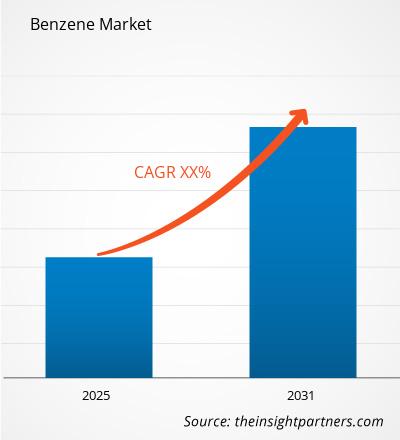
The Benzene market size was valued at US$ 54.41 Billion in 2025 and is projected to reach US$ 89.85 Billion by 2034, registering a CAGR of 5.73% during 2026–2034. Demand is closely connected with ethylbenzene, cumene, cyclohexane, alkylbenzene, nitrobenzene, and other derivative chains. Integrated refining and petrochemical facilities continue to influence production economics, regional availability, downstream conversion, international trade, and procurement strategies.
North America remains an established production and consumption center supported by refinery-petrochemical integration, Gulf Coast infrastructure, and demand from styrene, phenol, polymers, coatings, and industrial intermediates. The region is projected to register a CAGR of 4.8–5.3% during 2026–2034. Feedstock integration, plant modernization, logistics infrastructure, and diversified downstream manufacturing provide structural support for regional expansion.
Benzene Market Assessment and Insights
- North America: North America is estimated to hold a 26–28% share in 2025 and expand at a CAGR of 4.8–5.3% during 2026–2034, supported by integrated refining and downstream derivative manufacturing.
- U.S.: The U.S. represents 78–82% of North America's 2025 market and is expected to grow at a CAGR of 4.7–5.2%, supported by Gulf Coast petrochemical integration.
- Europe: Europe accounts for a 20–22% share in 2025 and is projected to grow at a CAGR of 4.2–4.8%, led by Germany, Belgium, the Netherlands, France, Italy, and Spain.
- Asia Pacific: Asia Pacific holds a 45–47% share in 2025 and is forecast to expand at a CAGR of 6.0–6.6%, led by China, Japan, South Korea, and India.
- Largest Segment: Ethylbenzene represents a 35–39% market share in 2025 and is projected to register a 5.2–5.8% CAGR, supported by styrene applications.
- High Growth Segment: Nitrobenzene accounts for a 6–9% market share in 2025 and is projected to grow at a 6.2–6.8% CAGR through diversified aniline demand.
- Key companies analyzed in detail: BASF SE, China Petroleum & Chemical Corporation, Eastman Chemical Company, ExxonMobil Corporation, LG Chem Ltd., LyondellBasell Industries N.V., Reliance Industries Limited, Shell plc, SABIC, SK Geo Centric Co., Ltd.
Source: The Insight Partners' analysis based on proprietary research, government publications, company annual reports, investor presentations, industry databases, and expert interviews.
The industry trend involves integration of aromatics processes, advanced separation technology, energy efficiency, and integration between refining and chemical manufacturing operations. The benzene recovery depends on reforming utilization, steam cracker economics, crude utilization, facility outages, and derivatives margins. Integrated producers optimize the molecule across various conversion paths, offering flexibility with minimal exposure to the merchant market and transport risks.
The future outlook will benefit the Asia-Pacific region due to increased capability for chemical manufacturing and conversions. The North American region is benefiting from feedstock and infrastructure advantages, whereas the European region focuses on efficiency of the assets, energy management, and supply. Issues of hazard from exposure to aromatics, emissions, energy usage, and chemicals need to be taken into consideration in the future.
Benzene Market Report Scope
| Report Attribute | Details |
|---|---|
| Market size in 2025 | US$ 54.41 Billion |
| Market Size by 2034 | US$ 89.85 Billion |
| Global CAGR (2026 - 2034) | 5.73% |
| Historical Data | 2021-2024 |
| Forecast period | 2026-2034 |
Benzene Market Analysis
The benzene market is driven through its use as a derivative. Ethylbenzene is used in styrene production, cumene in phenol and acetone, while cyclohexane is used for nylon intermediates. The alkylbenzene chain includes detergents and the nitrobenzene one includes aniline production. All these derivative uses tie demand to plastic, polymer, resin, adhesives, agricultural chemical, pharmaceuticals, coatings, solvent and consumer product manufacturing.
Availability is centered on refinery petrochemical complexes due to their production processes which include reforming, steam cracking and integrated aromatics production. This means that availability depends on refinery usage, cracker economics, quality of crude, scheduled maintenance and regional derivatives margins. Asia continues to install new capacities, while North American and Middle Eastern suppliers have the advantage of an integrated feedstock position.
The Benzene Market forecast indicates that positioning is one of the key aspects of market analysis, with different players classified according to their scale of operations, access to feedstock, integration, technological abilities, geographic spread, and downstream processing. Among the companies that have active participation in this area are BASF SE, China Petroleum & Chemical Corporation, ExxonMobil Corporation, LG Chem Ltd., Reliance Industries Limited, Shell plc, SABIC, and SK Geo Centric Co., Ltd.
Current investments tend to be geared towards the creation of integrated plants, debottlenecking, digital process control, energy efficiency, and downstream diversification. While ExxonMobil Corporation integrates refining and chemicals production with technology, Reliance Industries Limited possesses large-scale integrated refining and petrochemical facilities. BASF SE has made an expansion into its Asian manufacturing base, and Shell plc is investing in integrated petrochemical facilities in China.
● REPORT CUSTOMIZATION
Tailor This Report To Align With Your Specific Business Requirements
This report can be customized to align precisely with your business objectives, scope, and target markets. Customization options include tailored segmentation, geography, competitive analysis, and strategic insights to support informed decision-making.
Customize This Report →WHAT YOU CAN ADJUST
- ● Segmentations
- ● Geography
- ● Competitive Analysis
- ● Language Preferences
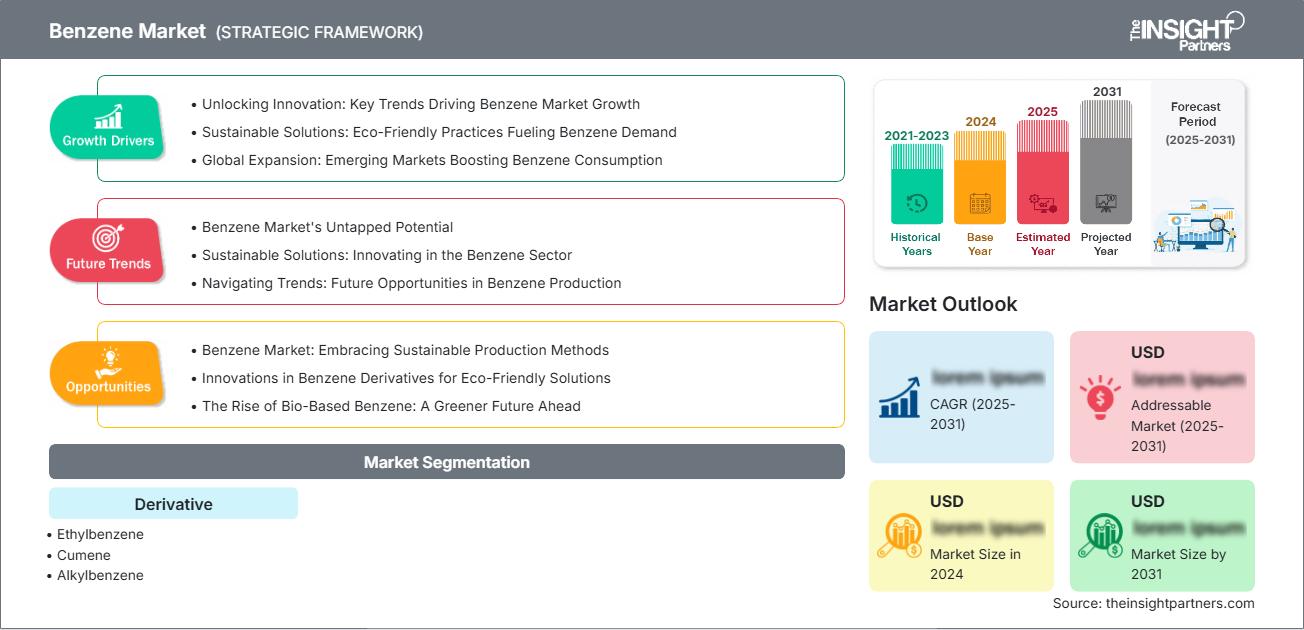
Benzene Market: Strategic Insights
Regional Insights
North America Benzene Market
North America is estimated to account for a 26–28% Benzene Market share in 2025 and is projected to register a 4.8–5.3% CAGR through 2034. The U.S. dominates regional production and consumption because Gulf Coast refineries, aromatics units, crackers, and downstream styrene and phenol facilities operate within closely connected industrial clusters.
Pipelines, storage facilities, ports, production, and downstream demand serve to improve the regional market. The consumption of plastics, polymers, resins, adhesives, paints, and industrial chemicals is also critical. The downstream market can be enhanced further by Mexico with the advent of petrochemical production. The buyers now consider supplier reliability, maintenance requirements, feedstock flexibility, transportation, and contract security while sourcing regionally.
U.S. Benzene Market
The U.S. represents 78–82% of North America's 2025 market and is forecast to expand at a 4.7–5.2% CAGR through 2034. The Gulf Coast plants have substantial integration among refining, aromatics, styrene, phenol, and polymer plants. Such a configuration makes it possible for the captive conversion and merchant business to be handled and enables producers to modify the allocation of products based on their derivatives' economics.
The demand for phenol is associated with packaging, insulation, engineering plastics, automobile, coatings, adhesives, and other industrial intermediates. The major producers will be able to coordinate their internal use and merchant sales to deal with any disruptions. Importing and exporting will continue to matter in case of price change in the region, outage in the refineries, and changes in derivatives' margins.
Europe Benzene Market
Europe accounts for a 20–22% share in 2025 and is expected to register a 4.2–4.8% CAGR through 2034. Germany is still the market leader due to its well-established chemical production facilities and industrial clusters. Belgium and the Netherlands offer significant refining, petrochemical processing, and storage facilities, as well as maritime infrastructure for international shipping.
The UK is already established as a demand center in the area of chemicals, polymers, coatings, and industrial manufacturing. Germany can boast of its diversified downstream integration; however, high energy prices force the companies to operate efficiently and optimize their assets. France, Italy, and Spain have their share due to pharmaceuticals, plastics, coatings, adhesives, and industrial chemicals.
APAC Benzene Market
Asia Pacific holds a 45–47% share in 2025 and is projected to grow at a 6.0–6.6% CAGR through 2034. China is the leading producer, followed by Japan, South Korea, and India. Growth in the manufacture of polymers and chemicals will help boost the derivative consumption, along with favorable industrial policies in the region for increased manufacturing.
China has achieved the capacity of 27.67 million tonnes per year in the benzene manufacturing by the end of 2025, experiencing an increase of 8% year on year. India enjoys integrated refinery and petrochemical investments, whereas Japan and South Korea have advanced chemical facilities. Australia, on the other hand, offers relatively lower quantities but has a long-standing industrial consumption base.
Middle East & Africa Benzene Market
The Middle East & Africa is projected to register a 4.5–5.0% CAGR through 2034, with Saudi Arabia leading regional activity. The UAE has an input in petrochemical manufacturing, logistical networks, and trade facilities, whereas the consumption of South Africa is diverse. Other regions within MEA have possibilities for development through refinery upgrading, industrial investments, and chemical conversion.
The Saudi Arabia receives advantages because of its combined hydrocarbons and petrochemical systems, while the UAE develops its chemical and logistic facilities. South African consumption is associated with plastics, paints, solvents, and chemical intermediates. Development in the region is provided by feedstock supply, export facilities, energy infrastructure, and approaches for increasing hydrocarbon value downstream.
Segmentation Analysis
Derivative
Derivative is projected to register a 5.4–5.9% CAGR during 2026–2034. Demand remains concentrated in styrene, phenol, nylon, detergent, aniline, and industrial chemical chains. Integrated producers can redirect feedstock between conversion pathways according to margins, while downstream manufacturing expansion in the Asia Pacific supports incremental consumption. Ethylbenzene remains the dominant derivative, whereas nitrobenzene benefits from diversified aniline applications.
- Ethylbenzene: Ethylbenzene maintains the leading position because styrene serves packaging, insulation, appliances, automotive components, electronics, and construction. Demand closely follows polymer manufacturing and styrene capacity utilization.
- Cumene: Cumene demand is linked with phenol and acetone production, connecting consumption with polycarbonate, bisphenol A, coatings, solvents, and pharmaceutical intermediate manufacturing.
- Cyclohexane: Cyclohexane supports nylon value chains and benefits from engineering plastics, automotive materials, tire applications, and industrial fibers requiring durable polymer intermediates.
- Alkylbenzene: Alkylbenzene demand is associated with detergent and surfactant manufacturing. Its strategic importance reflects household cleaning consumption and industrial formulation requirements across developed and emerging markets.
- Nitrobenzene: Nitrobenzene serves as an aniline precursor for polyurethane-related chemicals, dyes, rubber additives, and agricultural intermediates, providing diversified exposure to industrial demand.
End-User Industry
End-User Industry is projected to grow at a 5.1–5.6% CAGR between 2026 and 2034. The Benzene Market scope covers derivative demand across ethylbenzene, cumene, cyclohexane, alkylbenzene, nitrobenzene, and other derivatives, alongside end-user consumption from plastics and polymers, resins and adhesives, agrochemicals, pharmaceuticals, paints, coatings, and solvents. This structure provides diversified downstream exposure.
- Plastics & Polymers: Plastics and polymers represent a core consumption base through styrene, nylon, and related intermediates used in packaging, automotive components, insulation, electronics, appliances, and consumer products.
- Resins & Adhesives: Resins and adhesives use aromatic intermediates to provide adhesion, chemical resistance, durability, and thermal performance across construction, transportation, packaging, and industrial applications.
- Agrochemicals: Agrochemical applications create demand through aromatic intermediates incorporated into active ingredients and formulations, linking procurement with crop protection intensity, agricultural production, and registrations.
- Pharmaceuticals: Pharmaceutical manufacturing uses benzene-derived intermediates across synthesis pathways, with procurement influenced by generic medicines, specialty molecules, contract manufacturing, impurity control, and regulatory requirements.
- Paints, Coatings & Solvents: Paints, coatings, and solvents use aromatic intermediates where solvency and formulation performance are required, supporting construction, automotive refinishing, industrial equipment, and maintenance applications.
Opportunity Snapshot
| End-User Industry | Revenue Contribution | Trend Tag | Adoption Stage |
|---|---|---|---|
| Plastics & Polymers | High | Polymer Integration | Mature |
| Resins & Adhesives | Medium | Durable Bonding | Mature |
| Agrochemicals | Medium | Crop Protection | Scaling |
| Pharmaceuticals | Medium | Intermediate Synthesis | Scaling |
| Paints, Coatings & Solvents | Medium | Formulation Efficiency | Mature |
Benzene Market Growth Drivers and Impact Analysis
Expansion of Styrenics and High-Performance Polymer Chains
Styrenics remain a major demand transmission channel because ethylbenzene conversion into styrene connects aromatics consumption with packaging, insulation, appliances, electronics, automotive components, and construction. More output in polymers will lead to an increased need for reliable feedstocks, especially in cases where there is integration whereby aromatic recovery can be balanced with styrene use. Asia Pacific will be the region that offers the greatest growth potential due to continued development in terms of polymer capacity in China, India, and Southeast Asia. North America will still have significance because of production from the Gulf Coast. This effect is reflected in the purchasing practices of big consumers, who look for purity, reliability, accessibility, and logistical flexibility.
Integrated Refining and Petrochemical Capacity Expansion
Interconnections between refineries, crackers, aromatic plants, and derivative plants enhance the supply chain through efficient use of feedstocks and movement of molecules from one conversion route to another. Large plants can cut down on logistics costs, increase recovery efficiencies, and direct production towards derivative streams that deliver better margin profiles. Benzene capacity in China was up to 27.67 million metric tons per year at the end of 2025, which highlights the extent of capacity building in Asia. Other regions such as India, the Middle East, and North America can also impact merchant supply even when demand is rising consistently. In such cases, procurement departments must consider refinery utilization, captive usage, maintenance, storage, and exports along with capacities when analyzing the market.
Rising Chemical Manufacturing in Emerging Economies
The expansion of industrial development in India, Southeast Asia, and certain Middle Eastern countries is leading to greater consumption of plastics, coatings, adhesives, pharmaceutical products, agrochemicals, and man-made compounds that need aromatic intermediates. Downstream production facilities in these regions reduce dependency on the importation of these products but increase the demand for dependable feedstock. India is especially important due to having refinery and petrochemical production capabilities that enable the production of aromatic chemicals along with chemical transformation. Southeast Asia is also seeing diversified manufacturing capabilities and industrial park investments. This change brings consumption nearer to emerging manufacturing centers, although regional balances are still influenced by China’s capacity expansion and international movements.
Benzene Market Future Trends
Digital Optimization of Aromatics Production
Digital process control, predictive maintenance, advanced analytics, and integrated production planning are expected to gain importance across aromatics facilities. Producers can use operating data to optimize separation efficiency, inventory allocation, derivative conversion, and equipment reliability. Artificial intelligence can support anomaly detection and maintenance scheduling, reducing unplanned interruptions while improving asset utilization. One of the most significant Benzene Market trends is the integration of digital technologies across production, procurement, storage, and logistics. Digital systems can also strengthen production forecasting and improve coordination between refinery and chemical operations. Over time, operational intelligence should become a competitive capability alongside physical capacity because producers seek higher yields, lower energy consumption, improved reliability, and greater flexibility without relying exclusively on new construction.
Lower-Carbon Production and Circular Feedstock Integration
Decarbonization is expected to influence investment decisions through renewable electricity, energy-efficient separation, electrification, carbon management, and circular feedstock strategies. Large chemical producers are evaluating ways to reduce emissions associated with energy-intensive processing while maintaining product quality and commercial reliability. Circular feedstocks may gradually complement conventional refinery-derived molecules where technology, economics, and regulatory frameworks permit. The transition will not eliminate conventional production during the forecast period, but it can change procurement specifications and customer expectations. Producers able to quantify emissions, demonstrate feedstock traceability, and integrate lower-carbon utilities may gain an advantage with customers pursuing stricter sustainability targets. The main challenge will remain balancing decarbonization expenditure against commodity-market economics and competitive production costs.
Benzene Market Opportunities
Expansion of Integrated Aromatics Hubs in India and Southeast Asia
India and Southeast Asia present attractive investment opportunities where refinery integration, polymer manufacturing, and downstream chemical production can be developed within coordinated industrial clusters. Expanding local conversion capacity can reduce dependence on imported aromatic intermediates while creating additional demand for domestic feedstock. Investors should assess Benzene Forecasts alongside planned refining capacity, derivative demand, import requirements, infrastructure development, and downstream manufacturing expansion. India combines substantial refining infrastructure with growing plastics, pharmaceuticals, agrochemicals, and specialty chemical industries, while Southeast Asia benefits from manufacturing diversification and improving logistics. Opportunities extend beyond primary production into storage terminals, purification systems, derivative plants, and specialized distribution networks. Integrated hubs can strengthen supply resilience by connecting feedstock procurement with captive consumption, exports, and flexible production scheduling across multiple downstream value chains.
High-Purity and Lower-Emission Aromatics Processing
Higher-purity products and lower-emission processing systems create opportunities for producers serving pharmaceutical, electronics, specialty chemical, and advanced-material applications. Investment can focus on improved separation technology, contamination control, energy-efficient distillation, digital monitoring, and recovery systems that increase usable output from existing feedstock. Process technology can support better derivative yields and lower energy intensity while strengthening product consistency. Producers can explore renewable electricity, heat integration, and circular feedstock options where commercial conditions support implementation. These opportunities combine operational improvements with changing customer requirements. Rather than relying solely on additional capacity, producers can strengthen competitiveness by improving product quality, lowering resource intensity, increasing asset utilization, and developing differentiated supply arrangements for customers requiring demanding specifications.
Recent Developments
- May 2026: Egyptian Linear Alkyl Benzene Company (ELAB) signed a Letter of Award with Honeywell UOP for licensing, basic design, and key equipment for Front End units to produce straight-chain paraffins. The project is designed to produce approximately 80,000 tonnes of straight-chain paraffins, using kerosene as feedstock, supporting downstream linear alkylbenzene production. The development strengthens Egypt's integrated petrochemical value chain and creates additional demand potential for benzene-derived alkylbenzene applications.
- March 2026: Egyptian Linear Alkyl Benzene Company (ELAB) reported record production of 141,000 tonnes of linear alkylbenzene (LAB) in 2025, its highest production level since its establishment. The company is supplying domestic demand while exporting surplus production to international markets. The development demonstrates increasing utilization of Egypt's petrochemical infrastructure and strengthens the downstream alkylbenzene chain, which is directly connected with benzene consumption.
- February 2026: Dangote Group signed two agreements worth a combined US$750 million with China's XCMG and India's Engineers India Limited (EIL) to expand its refinery and petrochemical operations. The expansion is intended to increase refinery capacity from 650,000 barrels per day to 1.4 million barrels per day and includes diversification into polypropylene, urea, and linear alkylbenzene (LAB). This is strategically important for the benzene value chain because greater refinery integration and LAB production can increase regional demand for aromatic feedstocks and reduce Africa's reliance on imported petrochemical products.
Frequently Asked Questions

- Comprehensive Market Sizing and Forecast Analysis
- Detailed Segmentation Analysis
- In-Depth Market Dynamics Assessment
- Regional and Country-Level Insights
- Competitive Landscape and Company Benchmarking
- Strategic Business Intelligence
Recent Reports
Testimonials

The Insight Partners provided valuable market intelligence that supported our global go-to-market strategy. Their team was professional, responsive, and attentive to our feedback, providing thoughtful analysis and helpful methodological clarifications throughout the project.
Junmo Kim Chief Financial Officer (CFO), Enertech Co., Ltd.
The Insight Partners' SCADA System Market report is comprehensive, with valuable insights on current trends and future forecasts. The team was highly professional, responsive, and supportive throughout. We are very satisfied and highly recommend their services.
RAN KEDEM Partner, Reali Technologies LTDs
I requested a report on a very specific software market and the team produced the report in a few days. The information was very relevant and well presented. I then requested some changes and additions to the report. The team was again very responsive and I got the final report in less than a week.
JEAN-HERVE JENN Chairman, Future Analytica
We worked with The Insight Partners for an important market study and forecast. They gave us clear insights into opportunities and risks, which helped shape our plans. Their research was easy to use and based on solid data. It helped us make smart, confident decisions. We highly recommend them.
PIYUSH NAGPAL Sr. Vice President, High Beam Global
The Insight Partners delivered insightful, well-structured market research with strong domain expertise. Their team was professional and responsive throughout. The user-friendly website made accessing industry reports seamless. We highly recommend them for reliable, high-quality research services
YUKIHIKO ADACHI CEO, Deep Blue, LLC.
This is the first time I have purchased a market report from The Insight Partners.While I was unsure at first, I visited their web site and felt more comfortable to take the risk and purchase a market report.I am completely satisfied with the quality of the report and customer service. I had several questions and comments with the initial report, but after a couple of dialogs over email with their analyst I believe I have a report that I can use as input to our strategic planning process.Thank you so much for taking the extra time and making this a positive experience.I will definitely recommend your service to others and you will be my first call when we need further market data.
JOHN SUZUKI President and Chief Executive Officer, Board Director, BK Technologies
I wish to appreciate your support and the professionalism you displayed in the course of attending to my request for information regarding to infectious disease IVD market in Nigeria. I appreciate your patience, your guidance, and the fact that you were willing to offer a discount, which eventually made it possible for us to close a deal. I look forward to engaging The Insight Partners in the future, all thanks to the impression you have created in me as a result of this first encounter.
DR CHIJIOKE ONYIA MANAGING DIRECTOR, PineCrest Healthcare Ltd.Reason to Buy
- Informed Decision-Making
- Understanding Market Dynamics
- Competitive Analysis
- Identifying Emerging Markets
- Customer Insights
- Market Forecasts
- Risk Mitigation
- Boosting Operational Efficiency
- Strategic Planning
- Investment Justification
- Tracking Industry Innovations
- Aligning with Regulatory Trends





 Get Free Sample for