Bio-Banking Human Samples Market Size & Overview
The bio-banking human samples market was valued at US$ 4.43 Billion in 2025 and is expected to reach US$ 13.26 Billion by 2034, registering a CAGR of 12.95% during 2026–2034. Expansion is supported by precision medicine programs, longitudinal population studies, biomarker discovery, and demand for traceable biospecimens in clinical development. Increasing integration of molecular data with donor phenotypes is strengthening the research utility and commercial value of well-characterized human sample collections.
Across North America, the bio-banking human samples market size is projected to increase at approximately ~12% CAGR through 2034. The region benefits from large genomic research programs, extensive academic medical networks, and pharmaceutical demand for consented samples linked with clinical information. Investments in automated cold storage, laboratory information management systems, and decentralized collection networks are improving sample integrity, retrieval speed, interoperability, and governance across complex multicenter studies.
The bio-banking human samples market is motivated by the demand for replicable evidence from humans for drug discovery, diagnostic tests, and translational research. The supply chain process starts with donor recruitment and consent through collection, processing, annotation, preservation, storage, retrieval, and delivery. The business environment consists of hospitals, universities, cohort centers, pharmaceutical firms, equipment makers, consumables vendors, logistics firms, and informatics firms. Quality of supply relies on preanalytic controls, specimen characterization, chain of custody, continuous storage, and adequacy of clinical data. Disease-specific samples may be more useful in research than large numbers of samples with poor annotations. In addition, repository managers have to take into account the acquisition of samples, their utilization, management, and sustainability.
There are competitive activities mentioned in the bio-banking human samples market report through infrastructure, reagents, sample management, biospecimens accessibility, and research enablement. Hamilton Company, Azenta, Inc., Thermo Fisher Scientific Inc., ASKION GmbH, and VWR International, LLC offer storage, laboratory solutions, automation, and consumables services respectively. Merck KGaA, Promega Corporation, and STEMCELL Technologies Inc. provide assistance in molecular and cellular processes respectively. The Medical University of Graz and Shanghai Zhangjiang Biobank have the competences in repository operations and research accessibility. Innovations are in the field of automated storage, federated catalogs, cloud-enabled inventory platform, energy-efficient refrigeration system, and consent-aware data system. Interoperability is becoming a source of strategic advantage rather than capacity alone. Providers of bio-banking services who link their sample metadata to research datasets will benefit from higher utilization and quicker studies. Equipment providers, clinical organizations, and biopharmaceutical sponsors are joining their efforts to build an integrated collection-to-analysis model.
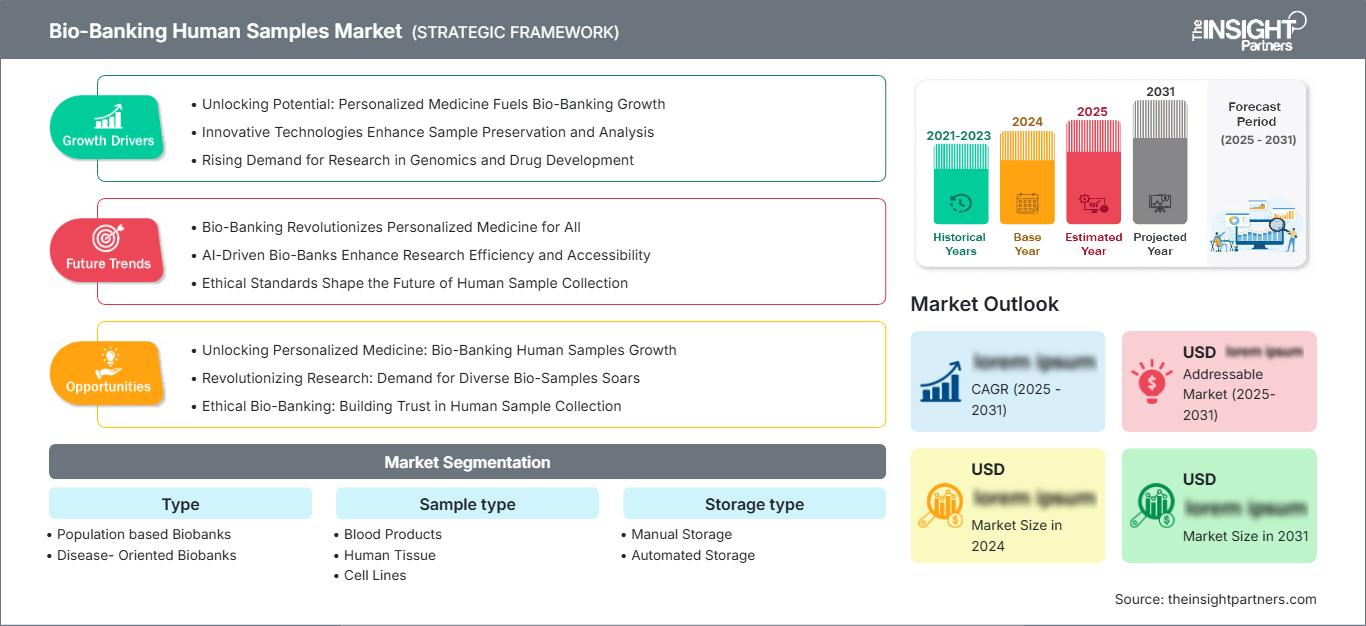
Bio-Banking Human Samples Market Assessment and Insights
Regional Outlook
- North America: ~40% of the global market in 2025 | ~12% CAGR through 2034. Market position: North America leads through its extensive biomedical research infrastructure, mature pharmaceutical sector, large clinical-study ecosystem, and sustained investment in population genomics, precision medicine, and automated sample management.
- US: ~88% of North American market revenue in 2025 | ~12% CAGR through 2034. Market position: The US anchors regional demand through federal research programs, academic medical centers, biotechnology clusters, clinical trials, and commercial biorepositories serving oncology, genomics, biomarker, and therapeutic-development workflows.
- Europe: ~31% of the global market in 2025 | ~12% CAGR through 2034. Market position: Europe combines mature national biobanks with cross-border research coordination. The UK and Germany lead regional activity, followed by France, Italy, and Spain, supported by harmonized quality and data-access frameworks.
- Asia Pacific: ~21% of the global market in 2025 | ~16% CAGR through 2034. Market position: Asia Pacific is the fastest-growing region, driven by expanding genomic cohorts, hospital digitization, and biopharmaceutical research. China leads within the region, while Japan, South Korea, India, and Australia broaden sample availability.
Segment Outlook
- Sample type: ~35% Share in 2025 | ~13% CAGR through 2034. Market position: Sample type leads because collection, processing, preservation, and analytical requirements vary materially by specimen, influencing infrastructure expenditure, quality controls, utilization frequency, and pricing.
- Storage type: ~18% Share in 2025 | ~15% CAGR through 2034. Market position: Storage type records the highest growth outlook as large repositories replace fragmented freezer operations with automated systems that improve density, auditability, retrieval consistency, temperature control, and labor efficiency.
Competitive Coverage
Hamilton Company, Merck KGaA, Promega Corporation, Azenta, Inc., STEMCELL Technologies Inc., Medical University of Graz, Shanghai Zhangjiang Biobank, Thermo Fisher Scientific Inc., ASKION GmbH, VWR International, LLC
Methodology
The Insight Partners follows Data Collection & Secondary Research, Primary Research, Data Analysis, and Data Triangulation & Final Review to validate market estimates and insights.
Source: The Insight Partners' analysis based on proprietary research, government publications, company annual reports, investor presentations, industry databases, and expert interviews.
Bio-Banking Human Samples Market Trends
Federated Biobanks and Consent-Aware Data Integration
The bio-banking human samples market trends point toward federated models that allow researchers to discover distributed samples without transferring every record into one centralized database. Shared metadata structures, privacy-preserving queries, and digital access workflows will help institutions retain governance while participating in broader research networks. Consent status will become a machine-readable component of sample eligibility, reducing manual interpretation and inappropriate secondary use. Integration with electronic health records, genomic datasets, imaging, and outcome information should raise research value, but it will also increase cybersecurity and interoperability requirements. Providers will need configurable informatics that accommodates jurisdictional rules, withdrawal requests, access committees, and evolving research purposes without weakening donor protections.
Energy-Efficient Automation and Sustainable Cold Storage
Repositories will increasingly evaluate storage capacity through total lifecycle cost, including electricity, floor space, refrigerants, maintenance, labor, and sample risk. High-density robotic systems, improved insulation, low-impact refrigeration, intelligent defrosting, and automated inventory optimization can reduce the operational burden of expanding collections. Retention policies may also become more selective as institutions identify duplicate, depleted, poorly consented, or rarely used samples. Automation will not eliminate manual infrastructure, but it should become more prominent in high-throughput facilities where retrieval volumes justify capital investment. Procurement decisions will therefore compare equipment performance with service availability, informatics compatibility, emergency access, validation requirements, and measurable sustainability outcomes.
Bio-Banking Human Samples Market Growth Factors
Expansion of Precision Medicine and Biomarker Research
Precision medicine requires biological material connected with reliable phenotypic, genomic, treatment, and outcome information. This requirement is increasing demand for prospective collections, repeated sampling, matched tissues and fluids, and repositories representing diverse populations. Pharmaceutical developers use such resources to stratify patients, validate therapeutic targets, identify response markers, and investigate resistance mechanisms. Diagnostic companies require independent sample sets to establish analytical and clinical performance. Consequently, market value is shifting toward specimens with complete metadata and appropriate consent rather than undifferentiated inventory. Biobanks that invest in standardized annotation, pathology review, molecular characterization, and longitudinal linkage can support more research programs and improve sample utilization without relying solely on continued collection growth.
Growing Clinical Trials and Translational Research Activity
Modern clinical studies increasingly collect samples for pharmacokinetic, pharmacodynamic, genomic, immune, and companion-diagnostic analysis. Multicenter trials create operational demand for standardized kits, pre-analytical procedures, temperature-controlled transport, accessioning, aliquoting, storage, and scheduled retrieval. Central biorepositories help sponsors maintain consistency across locations and preserve material for future investigations permitted by consent. The resulting market impact extends to consumables, logistics, informatics, laboratory automation, and outsourced storage services. Disease-specific banks also help researchers conduct feasibility assessments and develop preliminary evidence before prospective recruitment begins. Providers that can document custody, temperature history, freeze-thaw events, and sample disposition are better aligned with regulated development and quality-sensitive translational programs.
Need for Scalable, Traceable, and Reliable Sample Infrastructure
Large cohorts can generate millions of tubes, making spreadsheet-based inventory and fragmented freezer operations increasingly difficult to govern. Automation improves storage density, retrieval precision, auditability, and staff safety while reducing unnecessary temperature exposure. Hamilton Company describes integrated workflows covering aliquoting, rapid freezing, long-term storage, retrieval, and sample traceability, illustrating the operational breadth required in modern repositories. Infrastructure investment also incorporates backup power, redundant refrigeration, environmental monitoring, cybersecurity, and disaster recovery. These capabilities protect irreplaceable specimens and strengthen institutional confidence. Demand consequently extends beyond freezers to integrated systems that connect physical location, consent restrictions, quality records, and research requests throughout the sample lifecycle.
Bio-Banking Human Samples Market Opportunities
Integrated Sample and Data Services for Pharmaceutical Research
Pharmaceutical and diagnostic developers represent an opportunity for repositories capable of supplying research-ready packages rather than isolated specimens. Providers can combine consented samples with pathology review, clinical annotation, molecular testing, cohort selection, processing, logistics, and analytical services. This model can shorten study initiation and address internal capability gaps at biotechnology companies. Investment should prioritize quality systems, transparent access criteria, data normalization, and project-specific scientific support. The bio-banking human samples market Forecasts indicate that differentiation will increasingly depend on whether providers can answer precise research questions, document specimen provenance, and deliver consistent material across discovery, validation, and clinical-development phases.
Biobanking Infrastructure in Emerging Research Ecosystems
Healthcare and genomics investment in Asia Pacific and the Middle East creates opportunities to establish centralized repositories connected with hospitals, universities, and national precision medicine programs. Commercial participants can provide modular storage, laboratory automation, collection kits, informatics, training, maintenance, and quality-management support. Local capacity is important because cross-border shipment and genomic-data transfer can be restricted or operationally complex. Investors should initially target tertiary hospitals, oncology networks, and longitudinal cohorts with defined utilization plans. Sustainable projects require governance, donor engagement, energy resilience, and technical support alongside equipment procurement. Partnerships with local institutions can improve regulatory navigation and ensure that collection priorities reflect regional disease burdens and population diversity.
Segmentation Analysis
Type
Type determines collection strategy, donor recruitment, metadata depth, access controls, and research relevance. The bio-banking human samples market scope includes broad longitudinal cohorts and targeted collections built around defined clinical conditions. Buyers assess cohort representativeness, follow-up continuity, consent permissions, phenotype quality, and availability of matched controls. Disease- Oriented Biobanks are projected to expand at approximately ~14% CAGR during 2026–2034 as precision therapeutics and biomarker programs require deeply characterized patient specimens.
- Population based Biobanks: These repositories support epidemiology, preventive medicine, genetic association studies, and risk modeling by linking biological material with longitudinal health, lifestyle, demographic, and environmental information from broadly recruited cohorts.
- Disease- Oriented Biobanks: Condition-focused collections provide specimens associated with diagnosis, treatment, progression, and outcomes. Their value is strongest when pathology, molecular profiles, therapeutic exposure, and follow-up data are consistently annotated.
Sample type
Sample type shapes preservation temperature, stabilization methods, processing time, storage density, analytical compatibility, and quality-control expenditure. Repository investment follows expected utilization and the risk of degradation before testing. Blood products are projected to grow at approximately ~13% CAGR through 2034 because standardized collection, fractionation, and broad analytical utility support extensive use in clinical and translational studies. Buyers increasingly seek multiple specimen formats from the same donor to enable integrated molecular analysis.
- Blood Products: Blood, plasma, serum, and cellular fractions support biomarker testing, immunology, genomics, proteomics, and pharmacodynamic research. Established collection procedures make these materials suitable for multicenter studies and repeated sampling.
- Human Tissue: Frozen, fixed, and paraffin-embedded tissues provide direct insight into disease morphology and molecular mechanisms. Their utility depends on pathology review, ischemia documentation, tumor content, treatment history, and preservation quality.
- Cell Lines: Renewable cellular models permit repeat experimentation, functional testing, screening, and assay development. Authentication, contamination control, passage history, growth characteristics, and donor provenance determine confidence in downstream findings.
- Nucleic Acids: DNA and RNA collections enable sequencing, genotyping, expression analysis, and molecular validation. Extraction consistency, purity, integrity, concentration, and linkage to source specimens affect suitability for advanced analytical platforms.
- Biological Fluids: Cerebrospinal, synovial, saliva, urine, and other body fluids provide minimally invasive or organ-relevant biomarkers. Standardized collection timing and processing are essential because composition can change rapidly after collection.
- Human Waste Products: Fecal and related materials support microbiome, gastrointestinal, metabolic, and infectious-disease research. Collection kits, stabilization conditions, transport controls, and donor instructions materially influence microbial and molecular profiles.
Storage type
Storage type in the bio-banking human samples market influences capital requirements, labor intensity, retrieval accuracy, facility footprint, temperature stability, and scalability. Repository operators select infrastructure according to collection size, access frequency, sample value, and business-continuity requirements. Automated Storage is forecast to expand at approximately ~15% CAGR through 2034 as high-volume programs seek denser capacity, auditable inventory, and reduced manual exposure. Adoption remains strongest where utilization and error-reduction benefits justify integration and maintenance expenditure.
- Manual Storage: Conventional freezer and cryogenic-tank configurations remain practical for smaller collections, specialized sample formats, and facilities with limited capital budgets. Performance depends heavily on inventory discipline, monitoring, maintenance, and trained personnel.
- Automated Storage: Robotic systems improve controlled access, high-density organization, retrieval consistency, and traceability. They can reduce door openings and operator handling, although implementation requires substantial planning, validation, informatics integration, and service support.
Application
Application segment in the bio-banking human samples market connects repository design with downstream research objectives, determining consent language, characterization depth, processing protocols, and access frequency. Demand is broadening as human samples become integral to translational evidence, target validation, therapeutic development, and cell-based innovation. Clinical Research is projected to register approximately ~14% CAGR through 2034 as sponsors incorporate biomarker, pharmacogenomic, and companion-diagnostic endpoints into trials and seek standardized specimens from multiple sites.
- Clinical Research: Trial-linked repositories preserve baseline, treatment, and follow-up samples for safety, response, resistance, and biomarker analysis. Protocol consistency and custody documentation are essential for reliable multicenter comparisons.
- Life Science and Medical Research: Academic, governmental, and commercial laboratories use human specimens to study disease mechanisms, population variation, diagnostics, and therapeutic targets. Discoverability and fit-for-purpose metadata strongly influence utilization.
- Regenerative Medicine: Stem cells, primary cells, tissues, and matched biological materials support cell therapy, tissue engineering, and repair research. These applications require stringent viability, sterility, identity, and cryopreservation controls.
Opportunity Snapshot
| Application | Revenue Contribution | Trend Tag | Adoption Stage |
| Clinical Research | High | Trial Biomarkers | Scaling |
| Life Science and Medical Research | High | Multiomics Linkage | Mature |
| Regenerative Medicine | Medium | Cell Preservation | Emerging |
Regional Insights
North America bio-banking human samples market
North America accounted for approximately ~40% of worldwide revenue in 2025 and is projected to register ~12% CAGR through 2034. The bio-banking human samples market share reflects the region’s concentration of pharmaceutical research, biotechnology companies, academic medical centers, clinical laboratories, and longitudinal health programs. Extensive sequencing activity increases demand for samples linked with genomic, diagnostic, treatment, and outcome information.
There is significant investment being done in terms of automated aliquoting, ultra-low temperature storage, cryogenic facilities, and informatics which retain consent and custody information. Canada will provide population health research, healthcare data from provinces, and academic biorepositories, whereas Mexico provides the opportunity of development in terms of clinical research and hospitals. Growth will be dependent on donor participation, population representation, privacy management, and the cost of operation to maintain the samples for a prolonged period of time.
U.S. bio-banking human samples market
The USA contributed around ~88% of North America revenue in 2025 and is estimated to grow at a CAGR of ~12% through 2034. Its regional dominance is driven by substantial cohorts of researchers, government funding in biomedical sector, large-scale clinical trials, and demand from pharmaceutical companies, diagnostic, and biotech organizations. Oncology, rare disease research, immunology, neuroscience, and genomics in populations are some important application areas.
Some prominent players having exposure to sample processing, storing, and analysis in the USA include Hamilton Company, Promega Corporation, Azenta, Inc., STEMCELL Technologies Inc., Thermo Fisher Scientific Inc., and VWR International, LLC. The demand for research is shifting from physical samples towards research kits including aliquots, pathology data, longitudinal data, molecular characterization, and controlled access. Automation plays an important role for high-throughput repositories as it avoids picking errors, temperature deviation, and ensures documentation.
Europe bio-banking human samples market
Europe accounts for roughly ~31% bio-banking human samples market share of global revenue in 2025 and is projected to witness ~12% CAGR during 2034. The region possesses both national and multinational infrastructure for discovering samples, managing their quality, negotiating access, and governing ethically. The region’s existing infrastructure comprises some 500 biobanks with 29 national nodes.
UK is the dominant player in Europe on the back of large population cohorts, strong genomics research, and high capacity of sample processing. Germany offers hospital-based biobanks as well as life sciences industry. France has its biological resource centers combined with clinical research networks, while Italy and Spain build disease-specific repositories, molecular pathology, and international programs.
The route to the development of Europe is to transform distributed collections into assets that can be accessed and used effectively. Metadata standardization, quality control, consent understanding, and data exchange in a legal manner are required due to the fact that the samples might come from various institutions or countries. The Medical University of Graz has biobanking knowledge from the clinical sector, whereas Merck KGaA and ASKION GmbH provide more strength in the regional suppliers' sphere. Sustainability becomes an issue during procurement due to freezer density, cooling technology, electricity consumption, and sample storage strategy.
APAC bio-banking human samples market
Asia Pacific accounted for approximately ~21% of global revenue in 2025 and is expected to record the fastest regional CAGR of ~16% through 2034. China is the leading country in Asia Pacific, supported by large patient populations, government-backed biomedical infrastructure, hospital-based collections, and expanding biopharmaceutical research. Shanghai Zhangjiang Biobank contributes to the region’s developing repository ecosystem.
Whereas Japan offers clinical research and precision medicine, South Korea is known for hospital digitization and genomics. India is a country where there is plenty of potential owing to the diversity of population, clinical research, and laboratory facilities development. Australia is a country that can offer many contributions through longitudinal cohort studies and good governance. The growth in the area will depend on the standardization of consent, samples, and data transfer.
Middle East & Africa bio-banking human samples market
The Middle East & Africa region is projected to expand at approximately ~11% CAGR through 2034. Saudi Arabia is the leading country in the Middle East & Africa, supported by healthcare transformation, genomics investment, and tertiary hospital infrastructure. The UAE is developing precision medicine and research capacity, while South Africa contributes population diversity, infectious-disease expertise, and established academic collections.
Throughout the rest of MEA, development is still sporadic due to the lack of adequate supply of electricity, cryogenic storage, personnel expertise, and long-term funding. Resilience of energy becomes a crucial factor for repository viability. Backup mechanisms, centralized storage systems, professional transportation services, and online inventory management software help to minimize sample loss. Collaboration within the region might increase efficiency by linking small repositories with analytical centers.
Bio-Banking Human Samples Market Report Scope
| Report Attribute | Details |
|---|---|
| Market size in 2025 | US$ 4.43 Billion |
| Market Size by 2034 | US$ 13.26 Billion |
| Global CAGR (2026 - 2034) | 12.95% |
| Historical Data | 2021-2024 |
| Forecast period | 2026-2034 |
| Segments Covered | Type, Sample type, Storage type, Application |
| Region scope | North America, Europe, Asia-Pacific, South and Central America, Middle East and Africa |
Recent Developments
- November 2025: Azenta, Inc. announced a strategic partnership with the PRECEDE Foundation to provide secure biorepository storage and sample logistics for an international pancreatic cancer early-detection consortium. The program combines longitudinal clinical information with biospecimen tracking across more than 60 academic medical centers, demonstrating demand for integrated storage, logistics, and data continuity in disease-focused research.
- July 2025: Promega Corporation partnered with Addgene to launch the Promega Plasmid Collection. The initial collection included 300 plasmids offered in bacterial or purified DNA formats, with Addgene handling storage, quality controls, legal approvals, and distribution. The initiative expands researcher access to authenticated biological materials used in target engagement, protein-interaction, and drug-discovery studies.
- January 2025: Azenta, Inc., UK Biocentre selected the BioArc Ultra automated storage system to add capacity for 16 million samples at its Milton Keynes facility. The system supports high-density automated storage at -80°C and complements seven existing automated stores. The investment supports large programs, including Our Future Health, while targeting reduced space, labor, electricity use, and sample-management variability.
Frequently Asked Questions

Recent Reports






