
Biotech Ingredients Market Trends, Size & Growth by 2034
Coverage: by Type (Innovative Biotech Apis, Biosimilars); Product (Monoclonal Antibodies, Vaccines, Hormones and Growth Factors, Cytokines, Fusion Proteins, Therapeutic Enzymes, Blood Factors); and Geography (North America, Europe, Asia Pacific, and South and Central America)
- Status : Data Released
- Report Code : TIPRE00010080
- Category : Life Sciences
- No. of Pages : 150
- Available Report Formats :


- Last update date : November 05, 2026


2025 Market Size
US$ 2.55 Bn
Base year value
2034 Forecast
US$ 5.09 Bn
Projected by 2034
CAGR 2026-2034
7.98 %
Growth rate
Addressable Market
US$ 34.36 Bn
(2026-2034)
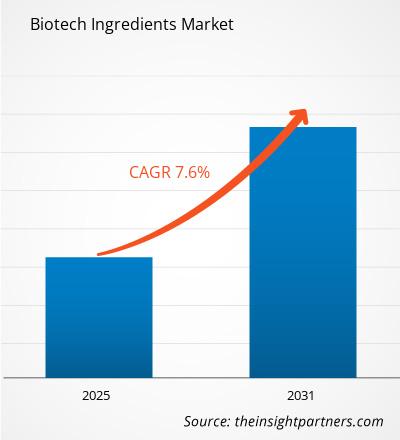
The biotech ingredients market was valued at US$ 2.55 Billion in 2025 and is projected to reach US$ 5.09 Billion by 2034, expanding at a CAGR of 7.98% during 2026–2034. Growth is supported by expanding biologics pipelines, increasing biosimilar approvals, rising demand for targeted therapies, and investment in flexible biomanufacturing. Complex molecule development is also increasing requirements for high-quality active ingredients with reproducible potency, purity, and stability.
Within North America, the biotech ingredients market size is expected to increase at approximately ~7% CAGR through 2034. The region benefits from extensive biologics research, substantial commercial manufacturing capacity, and strong demand for monoclonal antibodies, recombinant proteins, vaccines, and specialty therapeutic ingredients. Continued investment in domestic production, process intensification, and supply-chain resilience supports regional growth, although cost pressure and biosimilar competition influence capacity utilization and pricing.
Biotech Ingredients Market Assessment and Insights
Regional Outlook
- North America: ~40% of the global market in 2025 | ~7% CAGR through 2034. Market position: North America leads through extensive biologics pipelines, large-scale manufacturing, regulatory expertise, advanced research infrastructure, and the commercial presence of major pharmaceutical and biotechnology companies.
- US: ~89% of North American market revenue in 2025 | ~7% CAGR through 2034. Market position: The US anchors regional demand through innovative biologic launches, contract manufacturing, biosimilar commercialization, therapeutic protein development, and significant investment in domestic production capacity.
- Europe: ~30% of the global market in 2025 | ~8% CAGR through 2034. Market position: Europe maintains a mature position through biologics manufacturing, biosimilar adoption, vaccine capabilities, and pharmaceutical clusters led by Germany, the UK, France, Italy, and Spain.
- Asia Pacific: ~23% of the global market in 2025 | ~11% CAGR through 2034. Market position: Asia Pacific is the fastest-growing region, supported by manufacturing localization, biosimilar development, contract production, and expanding biotechnology ecosystems in China, South Korea, Japan, India, and Australia.
Segment Outlook
- Innovative Biotech Apis: ~67% Share in 2025 | ~7% CAGR through 2034. Market position: Innovative ingredients lead because targeted biologics, novel antibodies, recombinant proteins, enzymes, and advanced therapeutic platforms command high development intensity and complex manufacturing requirements.
- Biosimilars: ~33% Share in 2025 | ~11% CAGR through 2034. Market position: Biosimilars record stronger growth as reference biologics lose exclusivity, healthcare systems seek more affordable treatments, and manufacturers build comparative development, analytical, and commercial-scale production capabilities.
Competitive Coverage
Boehringer Ingelheim International GmbH, Bristol Myers Squibb Company, Eli Lilly and Company, GSK plc, Merck & Co., Inc., Novartis AG, Pfizer Inc., Sanofi S.A., Teva Pharmaceutical Industries Ltd., Amgen Inc.
Methodology
The Insight Partners follows Data Collection & Secondary Research, Primary Research, Data Analysis, and Data Triangulation & Final Review to validate market estimates and insights.
Source: The Insight Partners' analysis based on proprietary research, government publications, company annual reports, investor presentations, industry databases, and expert interviews.
Biotech-derived materials have evolved from a small group of recombinant hormones and vaccines to an extensive range of antibodies, fusion proteins, enzymes, cytokines, and therapeutic factors. This has led to innovations within manufacturing such as mammalian cell culture, microbial fermentation, high throughput purification, disposables, and advanced analytical techniques that increase production efficiency and reproducibility. Production strategies now take into account molecule-specific expression, post-translational modifications, aggregation prevention, viral clearance, and temperature controlled shipping and not the biologics materials as a whole group.
Over the period of 2019-2034, capacity building in Asia Pacific, localization policies, and high demands for cost effective biologics will change the dynamics of material supply. Manufacturers will build more modular plants, intensify processes, employ continuous analysis and geographically distributed network of manufacturing sites. Although regulatory convergence would allow material supply internationally, differences in comparability requirements, site inspections, pharmacopeia expectations, and technology transfer would still be key in determining commercialization timeline. Flexible capacity and quality systems of manufacturers would be able to facilitate innovation and biosimilar projects.
Biotech Ingredients Market Report Scope
| Report Attribute | Details |
|---|---|
| Market size in 2025 | US$ 2.55 Billion |
| Market Size by 2034 | US$ 5.09 Billion |
| Global CAGR (2026 - 2034) | 7.98% |
| Historical Data | 2021-2024 |
| Forecast period | 2026-2034 |
Biotech Ingredients Market Analysis
Market for Biotech Ingredients will be spurred by the rise in the use of large molecule drugs in oncology, immunology, metabolic disorders, rare diseases, infectious diseases, and hematology. They are products that need specific ingredients which have a defined identity, purity, bioactivity, structure and impurity profile. Consequently, demand will depend on the development of clinical pipelines, product approvals, adoption of treatments and manufacturers’ ability to increase manufacturing capabilities while maintaining critical quality attributes.
Value chain players include cell line developers, media and reagent providers, expression systems experts, bioreactor service providers, purification specialists, analytical service firms, fill-finish providers, pharmaceutical firms and cold chain logistics providers. The supply side situation will depend on manufacturing efficiency, contamination avoidance, chance of batch failures, chromatography availability, validation of storage and availability of qualified technical manpower.
According to the market analysis of biotechnology ingredients, big pharma firms use internal production and partnerships externally based on the molecule's complexity, its development stage, and scale of manufacture. Biologics production capabilities are provided by Boehringer Ingelheim International GmbH, while Bristol Myers Squibb Company, Eli Lilly and Company, GSK plc, Merck & Co., Inc., Novartis AG, Pfizer Inc., Sanofi S.A., and Amgen Inc. have a number of innovative biologics in their portfolio. Biosimilars and specialty medicines capabilities are provided by Teva Pharmaceutical Industries Ltd.
Investments focus on high titer cell cultures, flexible plants, automated quality control, digital process modeling, and regional capacity. Differentiation is based on the ability to transfer technology quickly, process robustness, regulatory experience, and supply security. Firms, which can move molecules into commercialization without redevelopment, decrease the risk of product launch and increase its economic feasibility.
● REPORT CUSTOMIZATION
Tailor This Report To Align With Your Specific Business Requirements
This report can be customized to align precisely with your business objectives, scope, and target markets. Customization options include tailored segmentation, geography, competitive analysis, and strategic insights to support informed decision-making.
Customize This Report →WHAT YOU CAN ADJUST
- ● Segmentations
- ● Geography
- ● Competitive Analysis
- ● Language Preferences
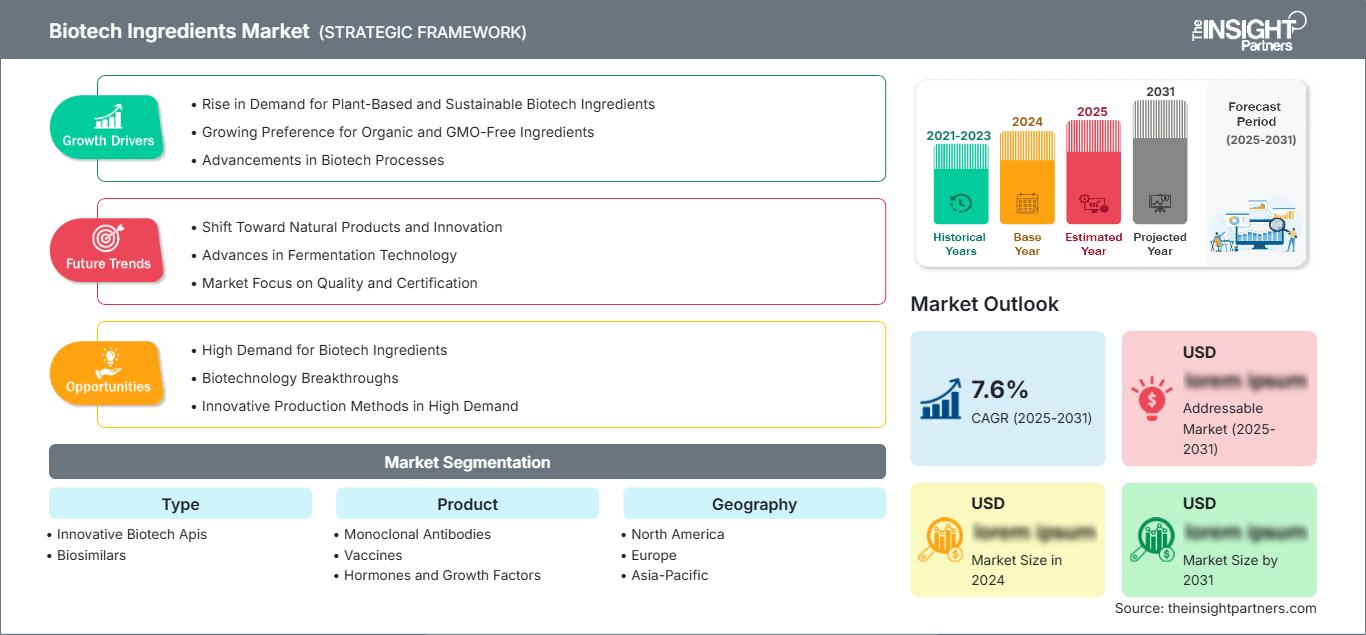
Biotech Ingredients Market: Strategic Insights
Regional Insights
North America biotech ingredients market
North America accounted for an estimated ~40% of global revenue in 2025 and is projected to register approximately ~7% CAGR through 2034. The region combines extensive biotechnology research, mature biologics manufacturing, contract development capacity, venture investment, and broad adoption of specialty therapies. Oncology, immunology, metabolic disease, and rare disorders sustain demand for complex active ingredients and recombinant products.
The proportion of biotech ingredients market share is indicative of how concentrated the commercial biologics portfolio and manufacturing operations are within the region. Consumers are focused on having regulatory paperwork, consistent processes, virus safety, temperature control, and supply continuity. Canada has made contributions through research centers, vaccine production, and public biomanufacturing investments, while the US still retains dominance within the region for pipelines, approvals, production, and outsourcing.
U.S. biotech ingredients market
The US represented approximately ~89% of North American revenue in 2025 and is forecast to expand at ~7% CAGR through 2034. This strategy stems from a significant clinical pipeline, biotech financing ecosystem, high adoption rates, and continued investment in domestic manufacturing facilities. Its scope includes commercial monoclonal antibodies, vaccines, recombinant proteins, hormones, enzymes, and blood derivatives.
The companies with Eli Lilly and Company, Merck & Co., Inc., Pfizer Inc., Bristol Myers Squibb Company, Amgen Inc., GSK plc, and Sanofi S.A. having large research facilities or commercial presence in the nation. Capacity planning takes into account geopolitical resilience, local procurement, automation, and access to unique labor. The development of biosimilars is adding to the demand for comparative analysis services and efficient scale-up, and price wars are increasing focus on yield and utilization of capacity.
Europe biotech ingredients market
Europe held approximately ~30% of global revenue in 2025 and is expected to grow at ~8% CAGR through 2034. The region combines mature pharmaceutical production, biosimilar experience, vaccine manufacturing, research universities, and biologics contract services. Germany is the leading country in Europe, supported by its industrial life-sciences base, manufacturing infrastructure, technical workforce, and presence of Boehringer Ingelheim International GmbH.
The UK has biotechnology R&D, clinical development, and advanced therapies development capabilities. France possesses vaccine manufacturing and large molecules production, which have the backing of Sanofi S.A. and a robust research framework. Italy provides pharmaceutical manufacturing and contract services, and Spain has biotechnology clusters and biologicals manufacturing capabilities.
There is a high biosimilar adoption rate, health care cost containment, and needs for regional sourcing in Europe. The companies need to make considerations regarding commercial efficiency and sustainability in relation to water, energy, solvents, and single use items. Facilities with process intensification and digital quality control can increase their yield without increasing the facility size proportionally. Regional competitiveness will be based on sustaining innovation despite high costs of operations, regulations, and labor.
APAC biotech ingredients market
Asia Pacific represented approximately ~23% of global revenue in 2025 and is projected to record the fastest CAGR of ~11% through 2034. China is the leading country in Asia Pacific due to its manufacturing scale, expanding biotechnology pipeline, domestic financing, and active biosimilar sector.
South Korea contributes large-scale contract manufacturing and biosimilar expertise, while Japan combines sophisticated research with established pharmaceutical companies. India is expanding vaccine, recombinant protein, and biosimilar production. Australia supports clinical development and biotechnology research. Regional policy incentives, skilled labor, local treatment demand, and international outsourcing should increase production, although quality consistency and regulatory alignment remain critical.
Middle East & Africa biotech ingredients market
The Middle East & Africa market is expected to expand at approximately ~9% CAGR through 2034 from a smaller production base. Saudi Arabia is positioned as the leading country in the Middle East & Africa due to pharmaceutical localization, healthcare investment, and industrial-development programs. The UAE supports biotechnology activity through research zones, specialist healthcare, and logistics infrastructure.
South Africa remains an important regional center for vaccines, pharmaceutical production, clinical research, and biomedical science. Development elsewhere will depend on dependable energy, purified water systems, cold-chain infrastructure, skilled personnel, and internationally recognized quality systems. Initial opportunities are likely to center on fill-finish, vaccines, and selected biosimilars before more complex ingredient manufacturing becomes broadly established.
Segmentation Analysis
Type
The biotech ingredients market scope includes original biotechnology-derived active ingredients and follow-on biologics developed against approved reference products. Type selection influences development cost, clinical strategy, analytical requirements, intellectual-property exposure, manufacturing economics, and commercial positioning. Innovative products retain the larger revenue base, while affordability and patent expirations support faster follow-on adoption. Biosimilars are projected to expand at approximately ~11% CAGR during 2026–2034.
- Innovative Biotech Apis: Innovative ingredients originate from proprietary research and support differentiated mechanisms, targets, or molecular architectures. Their development requires substantial discovery, clinical, regulatory, and manufacturing investment, but successful products can achieve strong value-based positioning.
- Biosimilars: Biosimilars are developed to demonstrate high similarity to approved reference biologics without clinically meaningful differences. Commercial success depends on analytical comparability, process efficiency, regulatory execution, pricing, contracting, and physician or patient acceptance.
Product
Product demand varies according to molecular complexity, therapeutic application, expression system, production yield, and required clinical dose. Procurement and capacity planning must reflect product-specific purification, formulation, analytical, and storage needs. The category encompasses both high-volume established ingredients and complex specialized molecules. Monoclonal Antibodies are projected to grow at approximately ~9% CAGR through 2034 as targeted and multispecific therapies expand.
- Monoclonal Antibodies: Monoclonal antibodies support targeted treatment across oncology, autoimmune disease, infectious disease, and other conditions. Demand is reinforced by new targets, combination regimens, subcutaneous formulations, and continued biosimilar development.
- Vaccines: Vaccine ingredients require dependable antigen production, adjuvant compatibility, potency testing, and cold-chain control. Demand reflects routine immunization, outbreak preparedness, travel health, and development of platforms adaptable to emerging pathogens.
- Hormones and Growth Factors: These ingredients include recombinant products used in diabetes, fertility, endocrine disorders, growth deficiencies, and supportive care. Manufacturing priorities include biological activity, structural consistency, impurity control, and stable formulation.
- Cytokines: Cytokines regulate immune and cellular responses and are relevant to therapeutic development, cell-culture workflows, and immune modulation. Their potency and short biological activity windows create demanding production and formulation requirements.
- Fusion Proteins: Fusion proteins combine functional domains to improve targeting, half-life, stability, or biological activity. Their complex structures require careful control of expression, folding, aggregation, purification, and product-related variants.
- Therapeutic Enzymes: Therapeutic enzymes address metabolic deficiencies, oncology applications, clot management, and other specialized indications. Production must preserve catalytic activity while controlling immunogenicity, degradation, and structural variation.
- Blood Factors: Blood factors support treatment of hemophilia and related coagulation disorders. Recombinant production enhances supply consistency and pathogen safety, while extended-half-life technologies reduce treatment frequency and influence product differentiation.
Opportunity Snapshot
| Product | Revenue Contribution | Trend Tag | Adoption Stage |
| Monoclonal Antibodies | High | Targeted Biologics | Mature |
| Vaccines | High | Platform Readiness | Mature |
| Hormones and Growth Factors | Medium | Metabolic Therapies | Mature |
| Cytokines | Low | Immune Modulation | Scaling |
| Fusion Proteins | Medium | Half-Life Extension | Scaling |
| Therapeutic Enzymes | Medium | Rare Diseases | Scaling |
| Blood Factors | Medium | Extended Protection | Mature |
Biotech Ingredients Market Growth Drivers and Impact Analysis
Expansion of targeted biologics pipelines
Drug development now has a focus on biological entities that can act upon particular disease pathways. This could involve the use of monoclonal antibodies, fusion proteins, cytokines, and enzymes to develop a therapeutic strategy with greater specificity compared to the small molecule approach. The requirement for components, cell banks, reference materials, process intermediates, and raw active pharmaceuticals becomes more pronounced as the pipeline progresses through the various stages of clinical development. There are consequences beyond those of approved products since the pipeline requires several manufacturing runs prior to commercialization.
Rising biosimilar approvals and treatment adoption
The expiry of patents on existing biologics presents chances for other firms to develop similar drugs. Biosimilars could help increase drug accessibility and save money on healthcare, yet their manufacturing poses a greater technical challenge than generic drugs. Companies have to show that their biosimilars are structurally, functionally, and clinically similar and keep batch-to-batch variation under control. It means that there is a need for effective cell lines, advanced analysis tools, purification techniques, and regulatory specialists. Market consequences are increased competition along with increased consumption of biological drugs.
Investment in flexible biomanufacturing capacity
Complex pipelines require facilities capable of handling differing molecules, production scales, expression systems, and commercial demand patterns. Flexible manufacturing allows companies to allocate capacity among products without constructing a dedicated plant for every asset. Modular equipment, single-use systems, standardized technology transfer, and automated process control can shorten changeovers and reduce project risk. This driver supports both internal facilities and outsourced manufacturing networks. Commercial impact is strongest for developers that lack sufficient in-house capacity or need regional redundancy. Suppliers that provide integrated development, analytical, manufacturing, and regulatory services can capture a larger share of each product lifecycle.
Biotech Ingredients Market Future Trends
Digital and intensified biologics manufacturing
Biotech ingredients market trends increasingly favor digital process models, advanced analytics, perfusion, continuous monitoring, and data-supported control strategies. These technologies can improve process understanding, identify deviations earlier, and increase productivity from existing facilities. Adoption will vary by molecule because intensification must preserve product quality and regulatory comparability. Digital twins and predictive maintenance may also improve scheduling and reduce unplanned downtime. Manufacturers that integrate process data across development and commercial production can accelerate investigations and technology transfers. The competitive advantage will arise from reliable implementation rather than the presence of isolated digital tools.
Greater modality diversity within large-molecule portfolios
Biological pipelines are expanding beyond conventional antibodies toward multispecific antibodies, antibody fragments, engineered enzymes, recombinant scaffolds, fusion constructs, and products combining biological and synthetic components. This diversity will require more adaptable expression, purification, and analytical strategies. Standard platform processes will remain valuable, but manufacturers will need molecule-specific capabilities for unconventional structures and impurity profiles. Capacity providers that support mammalian and microbial production, high-resolution purification, and multiple formulation formats will be better positioned. Regulatory agencies will also require clear characterization approaches for molecules that do not fit established product categories.
Biotech Ingredients Market Opportunities
Regional biosimilar manufacturing partnerships
The biotech ingredients market Forecasts indicate commercial opportunities for partnerships combining global technical expertise with regional development, manufacturing, registration, and distribution. Asia Pacific, Latin America, the Middle East, and Africa offer expanding treatment demand but differ in regulatory pathways, pricing, procurement, and local-content expectations. Companies can use licensing and technology-transfer models to improve market access without duplicating complete infrastructure in every geography. Investment should prioritize molecules with substantial unmet access needs and sufficient production scale. Partners must establish strong quality governance to ensure that localized manufacturing remains comparable across sites.
Integrated ingredient development and commercial supply
Biotechnology companies often experience risk when transferring a complex molecule among development laboratories, clinical manufacturers, and commercial facilities. An opportunity exists for providers that combine cell-line development, process optimization, analytical methods, scale-up, active ingredient production, and regulatory support. Integrated delivery can reduce repeated validation and preserve process knowledge across stages. Investment in flexible pilot and commercial capacity would allow suppliers to support clients from early development through launch. Long-term supply agreements can improve capacity visibility while giving sponsors greater confidence in technical continuity and commercial readiness.
Recent Developments
- May 2026: Eli Lilly and Company announced an additional US$ 4.5 billion investment across manufacturing sites in Lebanon, Indiana, including its first dedicated genetic medicine facility and planned active pharmaceutical ingredient capacity. The program expands advanced therapy and ingredient manufacturing infrastructure while incorporating new process designs and technologies.
- October 2025: Sanofi S.A. highlighted its Modulus facility in Singapore, designed to manufacture as many as four vaccines or biologics simultaneously through flexible, digitally enabled production modules. The platform uses automation, process data, and adaptable manufacturing architecture to reduce changeover time and support evolving biologic pipelines.
- April 2025: Boehringer Ingelheim International GmbH reported more than 460,000 liters of commercial biologics manufacturing capacity across its global contract manufacturing network. The network supports mammalian and microbial production, clinical and commercial supply, analytical services, and technology transfer for antibodies, recombinant proteins, enzymes, vaccines, and other complex ingredients.
Frequently Asked Questions

- Comprehensive Market Sizing and Forecast Analysis
- Detailed Segmentation Analysis
- In-Depth Market Dynamics Assessment
- Regional and Country-Level Insights
- Competitive Landscape and Company Benchmarking
- Strategic Business Intelligence
Recent Reports
Testimonials

The Insight Partners provided valuable market intelligence that supported our global go-to-market strategy. Their team was professional, responsive, and attentive to our feedback, providing thoughtful analysis and helpful methodological clarifications throughout the project.
Junmo Kim Chief Financial Officer (CFO), Enertech Co., Ltd.
The Insight Partners' SCADA System Market report is comprehensive, with valuable insights on current trends and future forecasts. The team was highly professional, responsive, and supportive throughout. We are very satisfied and highly recommend their services.
RAN KEDEM Partner, Reali Technologies LTDs
I requested a report on a very specific software market and the team produced the report in a few days. The information was very relevant and well presented. I then requested some changes and additions to the report. The team was again very responsive and I got the final report in less than a week.
JEAN-HERVE JENN Chairman, Future Analytica
We worked with The Insight Partners for an important market study and forecast. They gave us clear insights into opportunities and risks, which helped shape our plans. Their research was easy to use and based on solid data. It helped us make smart, confident decisions. We highly recommend them.
PIYUSH NAGPAL Sr. Vice President, High Beam Global
The Insight Partners delivered insightful, well-structured market research with strong domain expertise. Their team was professional and responsive throughout. The user-friendly website made accessing industry reports seamless. We highly recommend them for reliable, high-quality research services
YUKIHIKO ADACHI CEO, Deep Blue, LLC.
This is the first time I have purchased a market report from The Insight Partners.While I was unsure at first, I visited their web site and felt more comfortable to take the risk and purchase a market report.I am completely satisfied with the quality of the report and customer service. I had several questions and comments with the initial report, but after a couple of dialogs over email with their analyst I believe I have a report that I can use as input to our strategic planning process.Thank you so much for taking the extra time and making this a positive experience.I will definitely recommend your service to others and you will be my first call when we need further market data.
JOHN SUZUKI President and Chief Executive Officer, Board Director, BK Technologies
I wish to appreciate your support and the professionalism you displayed in the course of attending to my request for information regarding to infectious disease IVD market in Nigeria. I appreciate your patience, your guidance, and the fact that you were willing to offer a discount, which eventually made it possible for us to close a deal. I look forward to engaging The Insight Partners in the future, all thanks to the impression you have created in me as a result of this first encounter.
DR CHIJIOKE ONYIA MANAGING DIRECTOR, PineCrest Healthcare Ltd.Reason to Buy
- Informed Decision-Making
- Understanding Market Dynamics
- Competitive Analysis
- Identifying Emerging Markets
- Customer Insights
- Market Forecasts
- Risk Mitigation
- Boosting Operational Efficiency
- Strategic Planning
- Investment Justification
- Tracking Industry Innovations
- Aligning with Regulatory Trends





 Get Free Sample for