
Blood Plasma Market Size, Demand & Growth by 2034
Coverage: By Components(Albumin, Coagulation Factors, Immunoglobin, Hyperimmune and Other Plasma Fractionation Products); Application(Oncology, Rheumatology, Neurology, Transplant, Immunology, Pulmonology and Hematology); End User(Research laboratories, hospitals and clinics and academic institutions.), and Geography (North America, Europe, Asia Pacific, and South and Central America)
- Status : Data Released
- Report Code : TIPRE00003721
- Category : Life Sciences
- No. of Pages : 150
- Available Report Formats :


- Last update date : July 30, 2026


2025 Market Size
US$ 44.83 Bn
Base year value
2034 Forecast
US$ 83.02 Bn
Projected by 2034
CAGR 2026-2034
7.09 %
Growth rate
Addressable Market
US$ 577.20 Bn
(2026-2034)
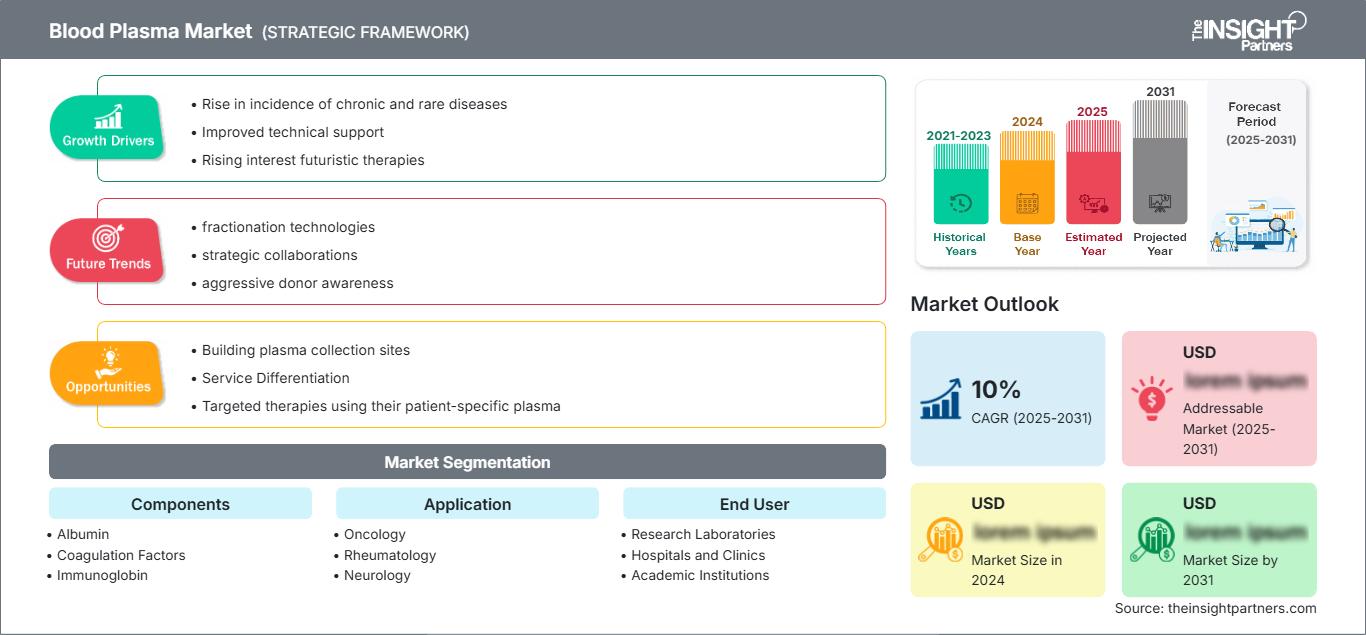
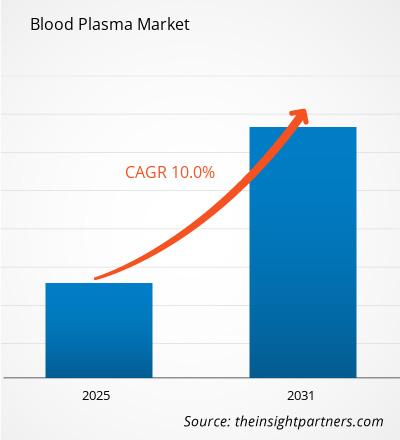
The global Blood Plasma market was valued at US$ 44.83 billion in 2025 and is expected to reach US$ 83.02 billion by 2034; it is estimated to record a CAGR of 7.09% during 2026-2034.
Blood Plasma Market Assessment and Insights
- North America held a 49–53% share in 2025 and is expected to grow at a CAGR of 7.6–8.4% during 2026–2034, supported by high plasma collection volumes, hospital demand, and therapy access.
- US represented 82–86% of North America in 2025 and is projected to grow at a CAGR of 7.5–8.3% through 2034, reflecting broad specialty-care utilization.
- Europe accounted for 24–28% share in 2025 and is expected to grow at a CAGR of 7.2–8.0% during 2026–2034, led by Germany, France, Italy, Spain, and the UK.
- Asia Pacific held 16–20% share in 2025 and is projected to grow at a CAGR of 9.0–10.0% during 2026–2034, with China, Japan, South Korea, India, and Australia expanding access.
- Largest Segment: Immunoglobin held a 38–42% market share in 2025 and is expected to grow at a CAGR of 8.3–9.1%, driven by immune and neurological indications.
- High Growth Segment: Neurology held a 13–17% share in 2025 and is projected to grow at a CAGR of 9.4–10.2%, supported by chronic inflammatory neuropathy treatment.
- Key companies analyzed in detail: CSL Limited, Grifols S.A., Takeda Pharmaceutical Company Limited, Octapharma AG, Kedrion S.p.A., LFB S.A., Biotest AG, Sanquin Blood Supply Foundation, China Biologic Products Holdings, Inc., and Bio Products Laboratory Ltd.
Source: The Insight Partners' analysis based on proprietary research, government publications, company annual reports, investor presentations, industry databases, and expert interviews.
The economic aspects of the manufacturing industry in the Blood Plasma Market have shifted from scale driven by collection to productivity integration. The fractionator companies will use automation in plasmapheresis, donor scheduling using digital techniques, cold chain tracking technology, and process optimization to lower the cost per liter produced. The long production times usually lasting up to several months make inventory management key. There is a need to balance increased plasma collection against safety concerns related to viruses, as well as quality and documentation.
In the coming forecast period, the new geographies will become relevant due to increased government efforts to improve access to rare diseases and build up the fractionating capacity. Increased hospital purchases in Asia Pacific and selected Middle Eastern countries along with the regulation changes in Europe on substances of human origins will improve supply security discussions. Strategic investment will be directed towards the development of an integrated collection network, the launch of specialty therapies, and local partnerships.
Blood Plasma Market Report Scope
| Report Attribute | Details |
|---|---|
| Market size in 2025 | US$ 44.83 Billion |
| Market Size by 2034 | US$ 83.02 Billion |
| Global CAGR (2026 - 2034) | 7.09% |
| Historical Data | 2021-2024 |
| Forecast period | 2026-2034 |
Blood Plasma Market Analysis
The Blood Plasma Market growth prospects are related to increasing numbers of people diagnosed with immune deficiencies, hemophilia, autoimmune neurological conditions, and post-transplant problems. Substitution of plasma drugs is unlikely due to the fact that plasma cannot be artificially produced for therapy with protein complexity. Therefore, demand will be defined by the number of donors, performance of centers, and fractionation output. Consumption will take place in hospitals and specialty centers, whereas research laboratories and universities will provide assay development, disease characterization, and clinical validation.
Supply dynamics are determined by the lengthy process of screening, freezing, pooling, fractionation, viral inactivation, purification, filling, and release testing of collected plasma. This leads to long cash conversion cycle and gives an advantage to vertically integrated corporations. The analysis of the Blood Plasma Market shows that supply flexibility is more likely to depend on technologies of donor retention, geographical diversification of sources, and yield improvement in manufacturing.
Competition is concentrated between CSL Limited, Grifols S.A., Takeda Pharmaceutical Company Limited, Octapharma AG, Kedrion S.p.A., LFB S.A., Biotest AG, Sanquin Blood Supply Foundation, China Biologic Products Holdings, Inc., and Bio Products Laboratory Ltd. Size advantages manifest in the form of plasma acquisition, past regulatory experience, product diversity, and agreements with hospitals. Competitors are building their positions based on immunoglobulin stability, innovative coagulation factors, and uninterrupted supply of albumin.
Investments include continued favor for capacity increases, a portfolio adjacent to recombinant technologies, and indication-specific drugs that offer consistent reimbursement. Grifols and Biotest are enhancing their bleeding-management drug portfolios, Takeda is upgrading its immunoglobulin products, and Kedrion is increasing its commercial presence in the USA. Medium competitors rely on regional regulatory compliance, manufacturing, and unique therapeutic proteins with high demand and low risk.
● REPORT CUSTOMIZATION
Tailor This Report To Align With Your Specific Business Requirements
This report can be customized to align precisely with your business objectives, scope, and target markets. Customization options include tailored segmentation, geography, competitive analysis, and strategic insights to support informed decision-making.
Customize This Report →WHAT YOU CAN ADJUST
- ● Segmentations
- ● Geography
- ● Competitive Analysis
- ● Language Preferences
Blood Plasma Market: Strategic Insights
Regional Insights
North America Blood Plasma Market
North America had a 49-53% market share in 2025 and is expected to grow at a CAGR of 7.6-8.4% between 2026 and 2034. The high density of commercial plasma collection centers, extensive physician knowledge of plasma-based treatments, and purchases of products through hospitals and specialty pharmacies help the region leverage these advantages.
The Blood Plasma Market share of North America is supported by the leading position of the USA as the main consumer of plasma collection and therapies. Canada helps with its hospitals and government purchases, while Mexico plays a small yet growing role due to clinical demand. The key growth factors are immunology prescriptions, neurological infusions, transplants, and insurance coverage for rare disease treatments.
U.S. Blood Plasma Market
North America is mainly composed of the U.S. which constitutes 82–86% of the entire continent and is anticipated to witness a growth rate of CAGR 7.5–8.3% in 2026–2034. The reasons behind its dominance include a dense network of plasma centers, a large specialty physician base, extensive use of immunoglobin in PIDD and chronic inflammatory neuropathies, and well-established reimbursement channels for both hospitals and home infusion therapy.
The company presence is very wide including CSL Limited, Grifols S.A., Takeda Pharmaceutical Company Limited, Octapharma AG, Kedrion S.p.A., and Bio Products Laboratory Ltd. The applications that drive demand include immunology, hematology, neurology, and transplant medicine. FDA regulations make batch quality, donor testing, and post-approval product lifecycle management very crucial.
Europe Blood Plasma Market
Market size: Europe was valued at 24-28% in 2025 and is expected to register a CAGR of 7.2-8.0% in 2026-2034. The most developed countries in terms of market growth are Germany with its fractionation capabilities, hospital use, and approved products. The United Kingdom is driven by centralized purchasing of albumin and immunoglobulin in line with guidelines for specialists in immunology, neurology, and hematology.
The advantages of Germany include presence of Biotest AG, Grifols S.A., Octapharma AG, and others who contribute to regional production and clinical development. In turn, France and Italy have active plasma collection in the public sector, and Spain is significant due to Grifols S.A. and hospitals that need albumin, coagulation factors, and immunoglobulin. These countries play an important role in the Blood Plasma Market.
APAC Blood Plasma Market
The Asia Pacific region had a market share of 16–20% in 2025 and is forecasted to register CAGR of 9.0–10.0% in 2026–2034. China dominates the market due to its domestic fractionation capacity, rising incidence of immune diseases, and hospital construction. Japan and South Korea witness sustained demand for specialty care, whereas India and Australia contribute to growth through improved access and adoption.
Government policies encouraging biologic manufacturing domestically, investments in hospital infrastructure, and coverage of rare diseases are increasing treatment options. China Biologic Products Holdings, Inc. is of strategic importance for domestic availability, whereas multinational companies pursue competing strategies through imports and alliances. Demand is high in immunology, hematology, neurology, and critical care albumins.
Middle East & Africa Blood Plasma Market
Middle East & Africa is expected to grow at a CAGR of 6.5–7.3% during 2026–2034. Saudi Arabia is the leading country, supported by tertiary hospital investment, national health transformation programs, and specialty-care capacity. The UAE is building advanced healthcare infrastructure, while South Africa has established public and private treatment channels for hematology and immunology needs.
The region remains import-dependent for many plasma-derived products, making supply security and procurement planning central considerations. Energy-linked fiscal capacity in Gulf countries supports hospital modernization and higher biologics spending, while broader African access varies by reimbursement and logistics. Growth is likely to concentrate in urban hospitals, transplant centers, and specialty infusion services.
Segmentation Analysis
Components
The Components segment is expected to grow at a CAGR of 7.8–8.6% during 2026–2034. The Blood Plasma Market scope across components is shaped by differentiated clinical use, manufacturing yield, and supply allocation. Immunoglobin commands the strongest position because it serves chronic immune and neurological conditions. Albumin remains essential in critical care, while coagulation factors and hyperimmune products address high-acuity, specialized needs.
- Albumin is widely used for volume expansion, liver disease support, and critical care. Demand is steady because hospitals rely on predictable availability for emergency, surgical, and intensive-care protocols.
- Coagulation Factors serve hemophilia, von Willebrand disease, fibrinogen deficiency, and bleeding-management settings. Strategic importance remains high due to clinical urgency, premium pricing, and regulatory quality expectations.
- Immunoglobin is the largest component, reflecting chronic use in primary immunodeficiency, immune thrombocytopenia, and neurological disorders. Treatment continuity makes supply reliability a decisive purchasing factor.
- Hyperimmune products address targeted infectious or exposure-related indications. Demand is narrower but strategically important where specific antibody protection is clinically necessary and alternative therapies are limited.
Application
The Application segment is projected to expand at a CAGR of 8.0–8.8% during 2026–2034. Demand is diversified across oncology, rheumatology, neurology, transplant, immunology, pulmonology, and hematology. Immunology and hematology remain core use areas, while neurology is the fastest-expanding clinical application because chronic inflammatory neuropathies require repeated immunoglobin administration and long-term patient management.
- Oncology uses plasma-derived products for supportive care, infection risk management, and bleeding complications. Demand aligns with complex cancer treatment pathways and hospital-based biologic utilization.
- Rheumatology demand is selective, linked to difficult autoimmune cases where immune modulation is needed. Strategic relevance depends on clinical evidence and specialist prescribing confidence.
- Neurology is a high-growth application because chronic inflammatory demyelinating polyneuropathy and related immune-mediated disorders require recurring immunoglobin therapy and specialist infusion infrastructure.
- Transplant applications include immune support, rejection-related management, and infection prevention. Demand is concentrated in tertiary hospitals with advanced transplant programs and multidisciplinary care teams.
- Immunology is a foundational application, led by primary and secondary immunodeficiency treatment. Long-term replacement therapy creates durable recurring demand and strong supply continuity requirements.
- Pulmonology demand is linked to alpha-1 antitrypsin deficiency and infection-prone respiratory patients. Growth depends on better diagnosis, access to specialty care, and long-term therapy adherence.
- Hematology remains central for coagulation factors, fibrinogen, and bleeding-management therapies. Clinical urgency, rare disease protocols, and hospital procurement make it strategically important.
End User
The End User segment is expected to grow at a CAGR of 7.6–8.4% during 2026–2034. Hospitals and clinics dominate consumption because plasma-derived therapies are administered through inpatient, outpatient, infusion, and specialty-care settings. Research laboratories and academic institutions contribute through diagnostics, clinical trials, and fractionation science, but direct revenue concentration remains strongly tied to patient treatment locations.
- Research Laboratories support disease testing, biomarker validation, and therapy development. Their role is strategically important for expanding indications and strengthening evidence behind plasma-derived protein use.
- Hospitals and Clinics represent the principal end-user base because they manage immunology, hematology, transplant, neurology, and critical care patients requiring recurring or urgent plasma-derived therapies.
- Academic Institutions contribute through clinical studies, rare disease registries, and guideline development. Their influence is strongest where specialist evidence shapes treatment protocols and reimbursement decisions.
Opportunity Snapshot
| Segment Name | Revenue Contribution | Trend Tag | Adoption Stage |
| Oncology | Medium | Supportive Care | Scaling |
| Rheumatology | Low | Autoimmune Use | Emerging |
| Neurology | High | Neuro Immunity | Scaling |
| Transplant | Medium | Graft Support | Scaling |
| Immunology | High | Ig Replacement | Mature |
| Pulmonology | Medium | AAT Therapy | Scaling |
| Hematology | High | Bleeding Control | Mature |
Blood Plasma Market Growth Drivers and Impact Analysis
Rising diagnosis of immune and haematological disorders
Improved recognition of primary immunodeficiency, immune thrombocytopenia, chronic inflammatory demyelinating polyneuropathy, hemophilia, and fibrinogen deficiency is increasing treated patient pools. Early diagnosis leads to the transition from episodic treatment to chronic therapy, especially for immunoglobulin replacement and neurological applications. Standardized protocols for bleeding control and transplant support are being used in hospitals, thereby making it easier to plan the products. The effect on the market will be most pronounced for recurring treatments since there is a need for continued treatment as opposed to just one-time treatment.
Expansion of plasma collection and fractionation capacity
Supply expansion still stands out as a critical growth factor, since each liter of source plasma could contribute to the production of many therapeutic proteins, provided fractionation efficiency is high. Investments in the development of collection centers, donor experiences, automated plasmapheresis, cold chain management systems, and improvements in the purification process have been underway in the industry. All these factors ensure that there is enough supply for immunoglobin and albumin in the market.
Healthcare system preference for proven biologic therapies
Clinicians continue to rely on plasma-derived products because many indications have limited substitutes and long-standing therapeutic evidence. Albumin is embedded in critical care and liver disease practice, coagulation factors remain essential in bleeding disorders, and immunoglobin is central to immune replacement and selected neurological diseases. This preference is reinforced by safety systems covering donor screening, viral inactivation, batch traceability, and regulatory release. Market impact is visible in resilient demand despite cost scrutiny. Payers may manage utilization, but medically necessary therapies retain strong access when supported by guidelines and specialist documentation.
Blood Plasma Market Future Trends
Digitalization of donor engagement and supply forecasting
Blood Plasma Market trends will increasingly center on digital collection ecosystems that combine donor recruitment, appointment optimization, health monitoring, and predictive inventory planning. Operators are expected to use analytics to reduce missed appointments, improve donation frequency within regulatory limits, and align plasma type with downstream fractionation priorities. Over time, digital systems should also support better traceability from collection to finished products. This trend could reduce supply volatility and improve ethical donor management. Companies that integrate donor data, manufacturing planning, and hospital demand signals will be better positioned to protect margins and service levels.
Shift toward differentiated plasma-derived specialty products
Future growth will not depend only on higher plasma volume. Companies are expected to prioritize differentiated formulations, targeted hyperimmune products, fibrinogen concentrates, subcutaneous delivery options, and lower-burden immunoglobin therapies. These products can improve patient convenience, reduce infusion center pressure, and create defensible positions within competitive hospital tenders. The trend also supports lifecycle management because manufacturers can extend established plasma-derived platforms into adjacent clinical needs. As payer scrutiny rises, evidence on reduced administration burden, predictable dosing, and improved patient adherence will become increasingly important for adoption.
Blood Plasma Market Opportunities
Localized supply partnerships in high-growth regions
Blood Plasma Market Forecasts point to stronger opportunities for domestic and regional collaboration in Asia Pacific, the Middle East, and selected Latin American countries. Governments are prioritizing biologics access, rare disease treatment, and critical-care readiness, creating space for joint ventures, technology transfer, and long-term supply agreements. Companies can build value by aligning with national blood systems, hospital procurement agencies, and local regulators. The opportunity is attractive because it combines volume growth with supply-security policy. Successful entrants will need transparent donor ethics, robust quality systems, and products matched to local treatment priorities.
Specialty care integration across hospitals and infusion networks
Manufacturers and distributors can capture additional value by supporting integrated care models that connect diagnosis, prescribing, infusion, patient monitoring, and adherence management. This opportunity is especially relevant for immunology and neurology patients who require recurring therapy and individual dose adjustments. Companies can work with hospitals, specialty pharmacies, and home-infusion providers to reduce administration delays and improve continuity. Better service integration can also differentiate suppliers in competitive tenders where price is only one decision factor. Evidence generation, education, and reliable delivery will be central to converting this opportunity into durable market share.
Recent Developments
- July 2026: Octapharma AG announced expanded FDA approval of wilate for von Willebrand disease prophylaxis in children younger than 6 years. The label expansion strengthens Octapharma’s bleeding-disorder portfolio and supports broader pediatric use in a rare disease area where prophylaxis options require strong safety, dosing, and physician confidence.
- May 2026: Kedrion S.p.A. announced a €150 million investment intended to triple production capacity in Italy’s “Plasma Valley.” The project is positioned to strengthen rare disease therapy production and improve European plasma-derived medicine resilience, with capacity expansion supporting immunoglobin, albumin, and specialized protein therapies.
- December 2025: Grifols S.A. and Biotest AG announced U.S. FDA approval of Fesilty, a human fibrinogen product for acute bleeding episodes in pediatric and adult patients with congenital fibrinogen deficiency. The approval supports U.S. commercialization planned for the first half of 2026 and expands bleeding-management options.
Frequently Asked Questions

- Comprehensive Market Sizing and Forecast Analysis
- Detailed Segmentation Analysis
- In-Depth Market Dynamics Assessment
- Regional and Country-Level Insights
- Competitive Landscape and Company Benchmarking
- Strategic Business Intelligence
Recent Reports
Testimonials

The Insight Partners' SCADA System Market report is comprehensive, with valuable insights on current trends and future forecasts. The team was highly professional, responsive, and supportive throughout. We are very satisfied and highly recommend their services.
RAN KEDEM Partner, Reali Technologies LTDs
I requested a report on a very specific software market and the team produced the report in a few days. The information was very relevant and well presented. I then requested some changes and additions to the report. The team was again very responsive and I got the final report in less than a week.
JEAN-HERVE JENN Chairman, Future Analytica
We worked with The Insight Partners for an important market study and forecast. They gave us clear insights into opportunities and risks, which helped shape our plans. Their research was easy to use and based on solid data. It helped us make smart, confident decisions. We highly recommend them.
PIYUSH NAGPAL Sr. Vice President, High Beam Global
The Insight Partners delivered insightful, well-structured market research with strong domain expertise. Their team was professional and responsive throughout. The user-friendly website made accessing industry reports seamless. We highly recommend them for reliable, high-quality research services
YUKIHIKO ADACHI CEO, Deep Blue, LLC.
This is the first time I have purchased a market report from The Insight Partners.While I was unsure at first, I visited their web site and felt more comfortable to take the risk and purchase a market report.I am completely satisfied with the quality of the report and customer service. I had several questions and comments with the initial report, but after a couple of dialogs over email with their analyst I believe I have a report that I can use as input to our strategic planning process.Thank you so much for taking the extra time and making this a positive experience.I will definitely recommend your service to others and you will be my first call when we need further market data.
JOHN SUZUKI President and Chief Executive Officer, Board Director, BK Technologies
I wish to appreciate your support and the professionalism you displayed in the course of attending to my request for information regarding to infectious disease IVD market in Nigeria. I appreciate your patience, your guidance, and the fact that you were willing to offer a discount, which eventually made it possible for us to close a deal. I look forward to engaging The Insight Partners in the future, all thanks to the impression you have created in me as a result of this first encounter.
DR CHIJIOKE ONYIA MANAGING DIRECTOR, PineCrest Healthcare Ltd.Reason to Buy
- Informed Decision-Making
- Understanding Market Dynamics
- Competitive Analysis
- Identifying Emerging Markets
- Customer Insights
- Market Forecasts
- Risk Mitigation
- Boosting Operational Efficiency
- Strategic Planning
- Investment Justification
- Tracking Industry Innovations
- Aligning with Regulatory Trends





 Get Free Sample for