
Botox Market Trends, Size & Growth by 2034
Coverage: By Product Type (50U, 100U); Application (Medical, Cosmetic) , and Geography (North America, Europe, Asia Pacific, and South and Central America)
- Status : Data Released
- Report Code : TIPRE00008539
- Category : Life Sciences
- No. of Pages : 150
- Available Report Formats :


- Last update date : August 05, 2026


2025 Market Size
US$ 5.78 Bn
Base year value
2034 Forecast
US$ 13.57 Bn
Projected by 2034
CAGR 2026-2034
9.96 %
Growth rate
Addressable Market
US$ 86.16 Bn
(2026-2034)
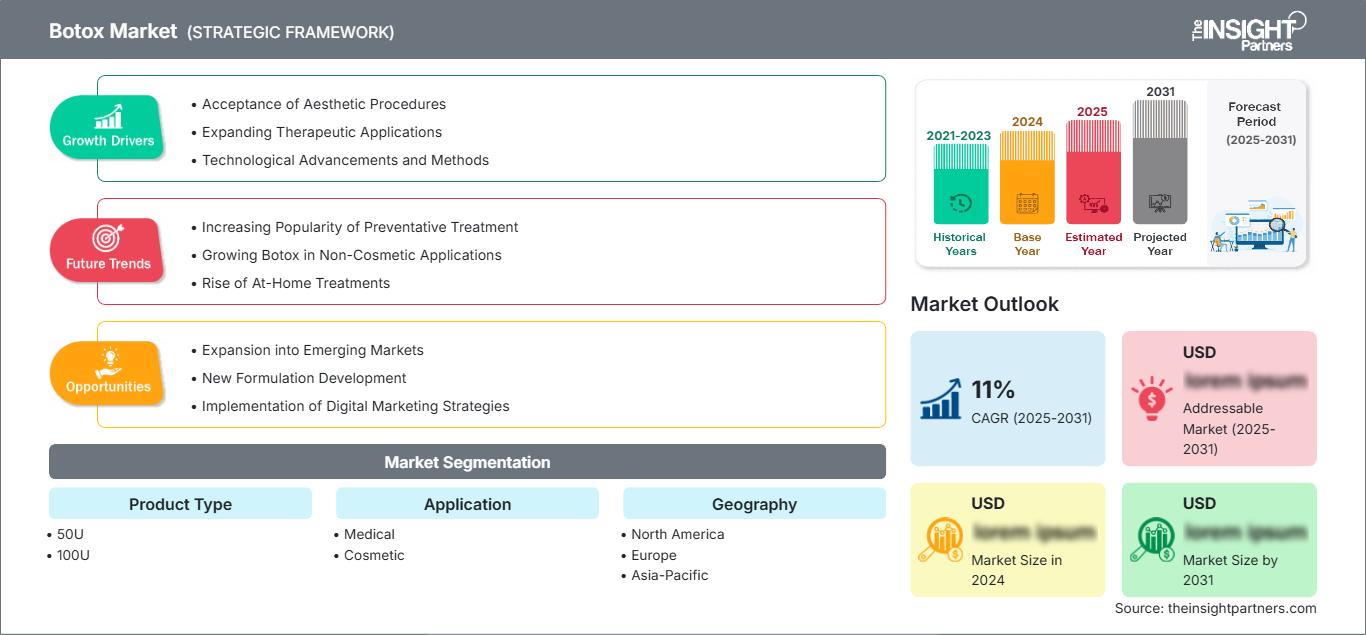
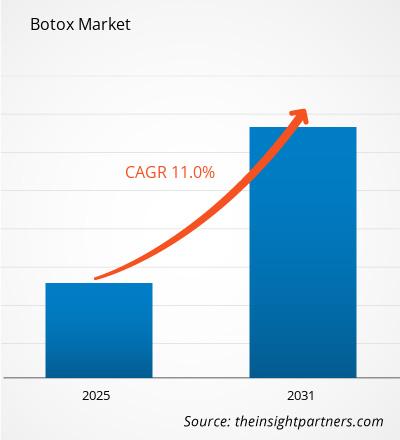
The Botox Market is positioned for sustained expansion, with the market size expected to grow from US$ 5.78 Billion in 2025 to US$ 13.57 Billion by 2034. The market is predicted to grow at a CAGR of 9.96% between 2026-2034, which is propelled by the increased therapeutic applications, recurrent use for cosmetic purposes, clinical evidences in the neurological indications, and greater acceptance by physicians across healthcare setups.
Market size in North America for Botox is bolstered by the high procedure volumes for injectables, broad reimbursement pathways for the approved indications, and extensive network of specialists. The region is predicted to grow at a CAGR range of 9.1-9.7% between 2026-2034, owing to chronic migraines treatment, spasticity disorders, medspas consolidation, and adult consumers for minimally invasive aesthetic treatments.
Botox Market Assessment and Insights
- North America: Botox Market accounted for 41–44% share in 2025 and is expected to grow at a CAGR between 9.1–9.7% during 2026–2034, supported by high neurology use, established injectables training, and payer coverage.
- US: The US represented 84–87% of North America in 2025 and is projected to grow at a CAGR between 9.0–9.6% during 2026–2034, led by therapeutic reimbursement and aesthetics penetration.
- Europe: Europe held 24–27% share in 2025 and is estimated to grow at a CAGR between 8.7–9.3% during 2026–2034, with Germany, the UK, France, Italy, and Spain leading procedure volume.
- Asia Pacific: Asia Pacific captured 21–24% share in 2025 and is forecast to grow at a CAGR between 10.8–11.6% during 2026–2034, led by China, Japan, South Korea, India, and Australia.
- Largest Segment: 100U held 62–66% market share in 2025 and is projected to grow at a CAGR between 9.7–10.3% during 2026–2034, reflecting multi-indication dosing and clinic purchasing efficiency.
- High Growth Segment: Cosmetic held 47–51% market share in 2025 and is expected to expand at a CAGR between 10.4–11.2% during 2026–2034, supported by younger adult acceptance and repeat treatment cycles.
- Key companies analyzed in detail: AbbVie Inc., Ipsen Pharma SAS, Merz Therapeutics GmbH, Medytox Inc., US WorldMeds, LLC, Lanzhou Institute of Biological Products Co., Ltd., Daewoong Pharmaceutical Co., Ltd., Huons Global Co., Ltd., EU Biologics Co., Ltd., Hugel, Inc., Evolus, Inc., Crown Laboratories, Inc., Galderma S.A.
Source: The Insight Partners' analysis based on proprietary research, government publications, company annual reports, investor presentations, industry databases, and expert interviews.
The Botox Market trend involves purity, stability in vials, temperature-controlled supply chain, and doctor’s preferences for a more predictable diffusion profile. Manufacturing is still complex as botulinum toxins have requirements for biological fermentation, assay methods of potency, sterile fill-finish operations, and pharmacovigilance systems. The Botox companies are improving the formulating of 50U and 100U formats to minimize wastage in aesthetics and neurology centers. In larger centers, more standardized injection protocols will enhance usage and scheduling of treatment sessions.
Demand will increase in the future due to growth in private aesthetics centers and access to specialist neurology in Asia Pacific, Latin America, and the Middle East. Positive regulatory headwinds are seen from approvals, similar to biosimilars in some countries, and clinical studies in migraine, hyperhidrosis, and spasticity. Development activities include long-lasting toxins, less immunogenicity, and engagement of patients digitally, putting Market players into a position where they can compete on efficacy, accessibility, educational, and post-treatment outcomes.
Botox Market Report Scope
| Report Attribute | Details |
|---|---|
| Market size in 2025 | US$ 5.78 Billion |
| Market Size by 2034 | US$ 13.57 Billion |
| Global CAGR (2026 - 2034) | 9.96% |
| Historical Data | 2021-2024 |
| Forecast period | 2026-2034 |
Botox Market Analysis
Growth in Botox Market is driven by two continuous sources of demand which are approved medical uses and elective cosmetic uses. Therapeutic use gains advantage from chronic migraines, cervical dystonias, spasticity, overactive bladder, and hyperhidrosis routes, where multiple doses facilitate treatment continuity. Elective uses gain advantage from the botulinum toxin being the most commonly performed nonsurgical procedure class in global plastic surgery surveys involving millions of procedures per year. Value chain components include strain control for the toxin, biologics production, regulatory release testing, physician purchases, and patient follow-up.
Some of the factors influencing supply include expertise concentration and entry into new regions. AbbVie Inc. continues to benefit from the diversity of indications for both therapeutic and cosmetic uses of Botox, while Ipsen Pharma SAS, Merz Therapeutics GmbH, Daewoong Pharmaceutical Co., Ltd., Hugel, Inc., and Evolus, Inc. compete with their differentiating products. Proper inventory control is important since constant demand depends on physician education, payment methods, consumer confidence, and price visibility.
Botox Market report shows that competitive positioning now depends not only on brand history but on indication range, injection training, publications in clinics, and business elasticity in dermatology, plastic surgery, neurology, urology, and rehabilitation markets. AbbVie Inc. is endowed with size strengths, whereas Ipsen Pharma SAS and Merz Therapeutics GmbH are developing pipeline in neurotoxin for migraine. Crown Laboratories, Inc. provides a boost to the long-lasting toxins area owing to Revance products.
Investor interest goes towards companies which have ability to bring together regulatory reliability and procedure-based assistance. Medytox Inc., Daewoong Pharmaceutical Co., Ltd., Huons Global Co., Ltd., and Hugel, Inc. mirror South Korea's significant toxin manufacturing infrastructure, whereas Lanzhou Institute of Biological Products Co., Ltd. and EU Biologics Co., Ltd. are providing regional production facilities. Galderma S.A. continues to be important due to its injectable distribution capability.
● REPORT CUSTOMIZATION
Tailor This Report To Align With Your Specific Business Requirements
This report can be customized to align precisely with your business objectives, scope, and target markets. Customization options include tailored segmentation, geography, competitive analysis, and strategic insights to support informed decision-making.
Customize This Report →WHAT YOU CAN ADJUST
- ● Segmentations
- ● Geography
- ● Competitive Analysis
- ● Language Preferences
Botox Market: Strategic Insights
Regional Insights
North America Botox Market
The North America share of Botox Market is forecasted to grow between 41-44% in 2025, registering a CAGR between 9.1-9.7% in 2026-2034. North America is favored by clinical pathway development for chronic migraines, spasticity, cervical dystonia, and overactive bladders, as well as significant penetration of non-surgical aesthetics. Repeat treatment protocols have been standardized via professional associations and specialized clinics, forming a predictable reordering cycle and physician familiarity.
Demand is driven by dermatology practices, plastic surgery clinics, neurology clinics, urology practices, and med spas working under the supervision of physicians. Private insurance payments for approved indications and out-of-pocket expenses for facial wrinkles also drive the market. The competition is expanding due to toxins which compete on duration, speed of onset, and value-conscious accounts; however, evidence and education infrastructure still play into premium brands in complex indications.
U.S. Botox Market
The U.S. accounted for 84–87% of North America in 2025 and is expected to grow at a CAGR range of 9.0–9.6% during 2026–2034. The country leads regional demand because it combines high specialist density, strong consumer awareness, payer-recognized therapeutic indications, and broad availability of aesthetic injectors. Market adoption is especially strong in migraine clinics, dermatology practices, and plastic surgery offices.
The company’s reach is quite large, including companies such as AbbVie Inc., Merz Therapeutics GmbH, Ipsen Pharma SAS, Evolus, Inc., Crown Laboratories, Inc., and Hugel, Inc., all working through sales professionals or agents. The applications have moved away from treating wrinkles in one part of the face to treating the whole face for balance, treating young people for preventive purposes, and managing chronic neurological diseases.
Europe Botox Market
The share of Europe is estimated at 24–27% in 2025 and expected to witness growth at a CAGR between 8.7–9.3% from 2026 to 2034. Germany is the market leader owing to well-developed neurology infrastructure, specialization of reimbursement, and extensive adoption at movement disorder clinics. The UK has considerable private aesthetics needs that are backed by training programs for practitioners and increasing consumer preference for non-invasive facial rejuvenation.
France, Italy, and Spain contribute on the basis of dermatological aesthetics and therapy in hospitals but there are varying reimbursement scenarios depending on indication and geography. There is increased sensitivity to private pay in Southern Europe and increased clinical governance in Northern and Western Europe. Ipsen Pharma SAS and Merz Therapeutics GmbH leverage their European origin and established network of physicians, whereas AbbVie Inc. enjoys good brand presence in both segments.
APAC Botox Market
APAC had a market share of 21–24% in 2025, and is projected to grow at a CAGR of 10.8–11.6% during 2026–2034. China is identified as the leading country by growth opportunities, while Japan and South Korea provide matured aesthetic ecosystem. India and Australia generate more demand by means of dermatologists and tourism.
Policy factors consist of faster approval of biologicals in select nations, increasing private healthcare, and more stringent safety norms for injectables. Manufacturing ecosystem in South Korea aids competitive environment through Medytox Inc., Daewoong Pharmaceutical Co., Ltd., Huons Global Co., Ltd., and Hugel, Inc. Industry capacity, training of doctors, and social acceptance of nonsurgical treatments are likely to support the demand for high-end and mid-segment products.
Middle East & Africa Botox Market
The Middle East & Africa region will experience a CAGR growth rate of 8.9-9.5% during the forecast period 2026-2034, driven by Saudi Arabia and UAE. The region has the advantage of premium private clinics, medical tourism, high concentration of urban disposable income, and increasing dermatology treatment options. South Africa drives the regional demand by means of its specialist healthcare facilities.
Investments in infrastructure have helped increase hospital capabilities and doctor training programs, while the energy economy continues to drive premium healthcare spending. The aesthetics market in Saudi Arabia has become more competitive due to new toxin launches. The Rest of MEA is comparatively smaller but is growing slowly with the increase in urban clinics offering cosmetic injectables and neurology treatments.
Segmentation Analysis
Product Type
Product Type is projected to grow at a CAGR range of 9.5–10.1% during 2026–2034. Botox Market scope across vial strengths is shaped by dose flexibility, clinical workflow, wastage control, and ordering economics. Larger clinics typically prefer 100U for multi-area aesthetic sessions and therapeutic treatment, while 50U supports precise inventory management in lower-volume settings or smaller treatment areas.
- 50U: The 50U vial serves clinics requiring dose flexibility, lower upfront inventory exposure, and reduced residual wastage, especially for focused facial areas or low-volume therapeutic appointments.
- 100U: The 100U vial remains strategically important for multi-indication treatment, higher patient throughput, and cost-efficient procurement by dermatology, neurology, urology, and rehabilitation practices.
Application
Application is estimated to grow at a CAGR range of 9.8–10.4% during 2026–2034. Demand is balanced between medical use, where outcomes are tied to symptom relief and guideline-supported care, and cosmetic use, where repeat treatments and broader demographic acceptance raise visit frequency. The segment benefits from clinician education, procedural standardization, and product differentiation around duration, onset, and diffusion.
- Medical: Medical application demand is supported by chronic migraine, spasticity, overactive bladder, cervical dystonia, and hyperhidrosis treatment, where repeat administration improves long-term patient management and specialist engagement.
- Cosmetic: Cosmetic application is strategically important due to recurring glabellar, forehead, and crow’s feet treatments, supported by social acceptance, minimally invasive preferences, and expanding clinic networks.
Opportunity Snapshot
| Application | Revenue Contribution | Trend Tag | Adoption Stage |
| Medical | High | Migraine Care | Mature |
| Cosmetic | High | Facial Balancing | Scaling |
Botox Market Growth Drivers and Impact Analysis
Expanding Therapeutic Indications Strengthen Recurring Demand
Therapeutic demand creates a durable base because botulinum toxin treatments are administered repeatedly under specialist supervision. Chronic migraine, spasticity, cervical dystonia, overactive bladder, and severe sweating require structured follow-up, which stabilizes purchasing patterns beyond discretionary aesthetics. The WHO’s emphasis on neurological disorders as a major global disability burden supports continued interest in symptom-relief interventions. Payers in mature markets generally distinguish approved medical use from cosmetic treatment, making evidence quality central to access. For Botox suppliers, the impact is significant: therapeutic indications support premium positioning, strengthen physician loyalty, and reduce exposure to consumer spending cycles. Companies with broad labels, post-market safety data, and specialist education programs are better placed to defend share as new toxins enter.
Minimally Invasive Aesthetics Move into Mainstream Care
Consumer demand for procedures with limited downtime continues to support injectable growth. Professional society data show botulinum toxin remains the most common nonsurgical aesthetic procedure globally, reflecting high repeatability, relatively short treatment sessions, and visible but temporary effects. Clinics increasingly bundle toxins with fillers, skin boosters, lasers, and skincare plans, making neuromodulators a gateway service in medical aesthetics. The real-world impact is higher visit frequency and stronger patient lifetime value for providers. Botox companies benefit when training programs help injectors deliver consistent outcomes across facial areas. However, mainstream adoption also increases regulatory scrutiny around provider qualifications, counterfeit products, and advertising claims, making safety governance a competitive differentiator.
Manufacturing Barriers Preserve Value in Regulated Markets
Botulinum toxin production requires specialized biological handling, potency testing, sterile facilities, cold-chain control, and regulatory documentation. These barriers limit rapid commoditization, even as more regional companies pursue approvals. Regulators require product-specific safety and efficacy evidence because toxin units are not interchangeable across brands. This protects established manufacturers with validated processes and pharmacovigilance records. Market impact is visible in price resilience for clinically trusted products, especially in therapeutic indications where switching risk is higher. For newer entrants, investment in manufacturing credibility, batch consistency, and physician education is essential. Market competition will widen, but quality systems and regulatory confidence will continue to determine adoption speed.
Botox Market Future Trends
Longer-Duration and Precision Formulations
Botox Market trends point toward formulations offering longer duration, faster onset, lower protein load, or more predictable spread. Longer-duration toxins may reduce annual injection frequency for selected patients, while precision formulations could support advanced facial balancing and complex neurology applications. Clinical programs in migraine and other neurological conditions show that companies are seeking differentiation beyond wrinkle reduction. The opportunity is not only product substitution but treatment plan redesign, where fewer visits may improve adherence in medical care and appeal to time-sensitive aesthetics consumers. Still, adoption will depend on safety, dose conversion clarity, injector confidence, and whether patients prefer longer effects for reversible cosmetic decisions.
Digitalized Injectable Practices and Outcome Tracking
Digital transformation will reshape how injectable clinics manage consultation, consent, photography, dosing history, follow-up, and loyalty. Standardized facial imaging and electronic treatment maps can improve repeatability, reduce dosing errors, and support individualized treatment planning. In therapeutic settings, digital headache diaries, bladder symptom tracking, and spasticity assessments can strengthen outcome documentation for reimbursement and clinical review. This trend favors companies that support providers with education platforms, patient engagement tools, and data-backed treatment protocols. Over time, digital records may also expose differences in real-world durability and satisfaction across brands, making evidence generation more continuous and commercially important for Market participants.
Botox Market Opportunities
Emerging Market Access Through Specialist Training
Emerging markets offer strong upside where aesthetics demand is rising faster than injector availability. Botox Market Forecasts favour companies that build structured training, medical affairs support, and distributor controls rather than relying only on product registration. China, India, Southeast Asia, Saudi Arabia, and parts of Latin America are attractive because urban income growth is expanding private healthcare spending. The actionable opportunity is to develop tiered provider education, regional centers of excellence, and anti-counterfeit verification systems. These measures protect patient safety while improving brand confidence. Companies that combine regulatory discipline with localized pricing and reliable supply can capture growth without eroding long-term clinical trust.
Therapeutic Expansion in Migraine and Movement Disorders
Neurology remains an underpenetrated opportunity because migraine and movement disorders affect large patient populations, yet specialist access and diagnosis rates vary widely. Companies advancing trials in episodic migraine, chronic migraine, and spasticity can expand addressable demand if outcomes support label extensions. The investment case is strongest where neurotoxin treatment reduces symptom burden, lowers rescue medication use, or improves functional outcomes. Commercial execution should focus on neurologist education, referral pathways from primary care, and reimbursement evidence. This opportunity is distinct from aesthetics because adoption depends on clinical endpoints, patient selection, and payer acceptance rather than consumer preference alone.
Recent Developments
- July 2026: Ipsen Pharma SAS announced positive topline Phase III results for Dysport in episodic and chronic migraine prevention. The BEOND program met primary endpoints for reduction in monthly migraine days versus placebo, positioning Dysport as the first botulinum toxin with positive Phase III evidence across both migraine forms and supporting future regulatory filing plans.
- August 2025: Merz Therapeutics GmbH enrolled the first patients in two global Phase III trials, MINT-E and MINT-C, evaluating XEOMIN for prevention of episodic and chronic migraine. The studies are designed to enroll about 1,770 adults across North America and Europe, with monthly migraine days as the primary endpoint through Month 6.
- March 2025: Hugel, Inc. and BENEV launched Letybo in the U.S. market following FDA approval for 50U and 100U presentations. The launch made Letybo one of the few botulinum toxin products commercialized in the U.S. for glabellar lines, supported by clinical evidence and Hugel’s international treatment experience.
Frequently Asked Questions

- Comprehensive Market Sizing and Forecast Analysis
- Detailed Segmentation Analysis
- In-Depth Market Dynamics Assessment
- Regional and Country-Level Insights
- Competitive Landscape and Company Benchmarking
- Strategic Business Intelligence
Recent Reports
Testimonials

The Insight Partners' SCADA System Market report is comprehensive, with valuable insights on current trends and future forecasts. The team was highly professional, responsive, and supportive throughout. We are very satisfied and highly recommend their services.
RAN KEDEM Partner, Reali Technologies LTDs
I requested a report on a very specific software market and the team produced the report in a few days. The information was very relevant and well presented. I then requested some changes and additions to the report. The team was again very responsive and I got the final report in less than a week.
JEAN-HERVE JENN Chairman, Future Analytica
We worked with The Insight Partners for an important market study and forecast. They gave us clear insights into opportunities and risks, which helped shape our plans. Their research was easy to use and based on solid data. It helped us make smart, confident decisions. We highly recommend them.
PIYUSH NAGPAL Sr. Vice President, High Beam Global
The Insight Partners delivered insightful, well-structured market research with strong domain expertise. Their team was professional and responsive throughout. The user-friendly website made accessing industry reports seamless. We highly recommend them for reliable, high-quality research services
YUKIHIKO ADACHI CEO, Deep Blue, LLC.
This is the first time I have purchased a market report from The Insight Partners.While I was unsure at first, I visited their web site and felt more comfortable to take the risk and purchase a market report.I am completely satisfied with the quality of the report and customer service. I had several questions and comments with the initial report, but after a couple of dialogs over email with their analyst I believe I have a report that I can use as input to our strategic planning process.Thank you so much for taking the extra time and making this a positive experience.I will definitely recommend your service to others and you will be my first call when we need further market data.
JOHN SUZUKI President and Chief Executive Officer, Board Director, BK Technologies
I wish to appreciate your support and the professionalism you displayed in the course of attending to my request for information regarding to infectious disease IVD market in Nigeria. I appreciate your patience, your guidance, and the fact that you were willing to offer a discount, which eventually made it possible for us to close a deal. I look forward to engaging The Insight Partners in the future, all thanks to the impression you have created in me as a result of this first encounter.
DR CHIJIOKE ONYIA MANAGING DIRECTOR, PineCrest Healthcare Ltd.Reason to Buy
- Informed Decision-Making
- Understanding Market Dynamics
- Competitive Analysis
- Identifying Emerging Markets
- Customer Insights
- Market Forecasts
- Risk Mitigation
- Boosting Operational Efficiency
- Strategic Planning
- Investment Justification
- Tracking Industry Innovations
- Aligning with Regulatory Trends





 Get Free Sample for