
Botulinum Neurotoxins Market Share, Demand & Growth by 2034
Coverage: By Product (Botulinum toxin A, Botulinum toxin B); Application (Medical, Aesthetic); Gender (Female, Male); End- Use (Hospitals, Dermatology Clinics, Spas and cosmetic centers) , and Geography (North America, Europe, Asia Pacific, and South and Central America)
- Status : Data Released
- Report Code : TIPRE00018824
- Category : Life Sciences
- No. of Pages : 150
- Available Report Formats :


- Last update date : August 05, 2026


2025 Market Size
US$ 7.83 Bn
Base year value
2034 Forecast
US$ 12.24 Bn
Projected by 2034
CAGR 2026-2034
5.09 %
Growth rate
Addressable Market
US$ 91.07 Bn
(2026-2034)
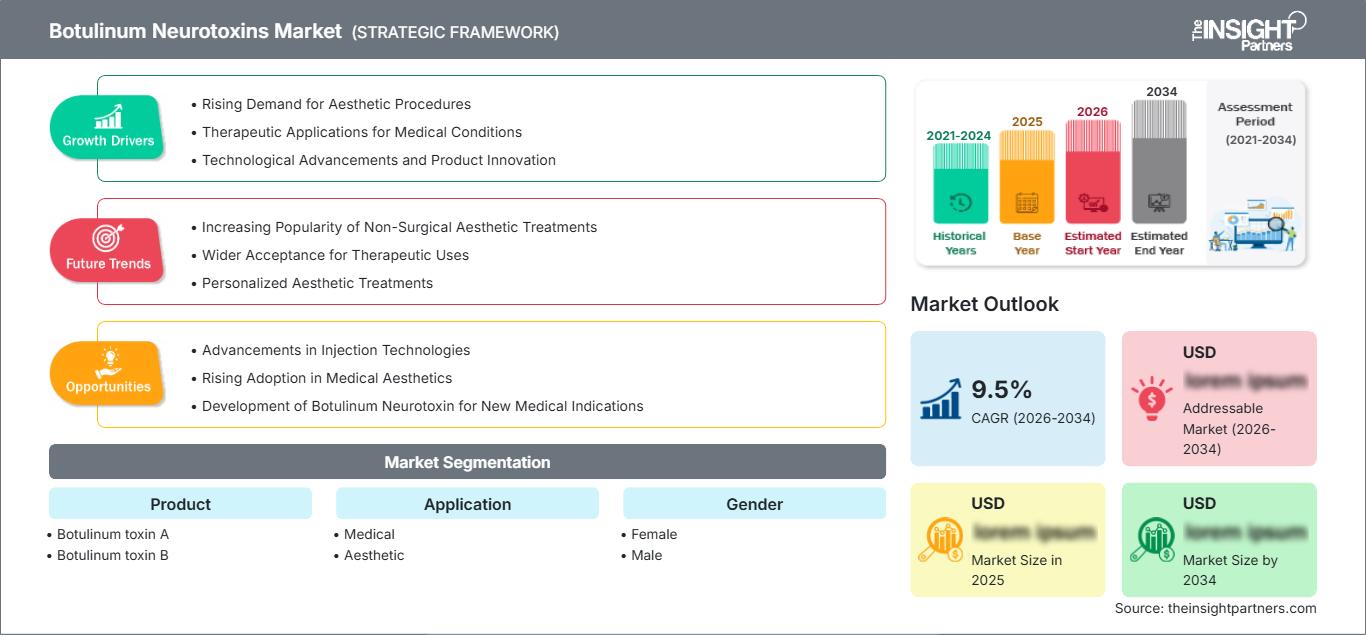
The global Botulinum Neurotoxins market was valued at US$ 7.83 billion in 2025 and is expected to reach US$ 12.24 billion by 2034; it is estimated to record a CAGR of 5.09% during 2026-2034.
Botulinum Neurotoxins Market Assessment and Insights
- North America accounted for 44–46% share in 2025 and is expected to grow at a CAGR range of 5.2–5.8% during 2026–2034, supported by strong neurology utilization and high aesthetic procedure frequency.
- US represented 83–86% of North America in 2025 and is projected to grow at a CAGR range of 5.1–5.7% during 2026–2034, with demand led by migraine and facial injectable use.
- Europe held 27–29% share in 2025 and is expected to grow at a CAGR range of 4.8–5.4% during 2026–2034, with Germany, the UK, France, Italy, and Spain leading adoption.
- Asia Pacific captured 20–22% share in 2025 and is projected to grow at a CAGR range of 6.6–7.2% during 2026–2034, led by China, Japan, South Korea, India, and Australia.
- Largest Segment Botulinum toxin A accounted for 88–92% market share in 2025 and is expected to grow at a CAGR range of 5.6–6.1% during 2026–2034.
- High Growth Segment Aesthetic applications held 38–42% market share in 2025 and are projected to grow at a CAGR range of 6.3–6.9% during 2026–2034.
- Key companies analyzed in detail: Allergan Aesthetics, an AbbVie company; Merz Pharma GmbH & Co. KGaA; Eisai Co., Ltd.; Galderma S.A.; Hugel Inc.; Medytox Inc.; Hugh Source International Ltd.; Ipsen S.A.; Revance Therapeutics, Inc.; Lanzhou Institute of Biological Products Co., Ltd.
Source: The Insight Partners' analysis based on proprietary research, government publications, company annual reports, investor presentations, industry databases, and expert interviews.
Biologics manufacture has moved from relatively standardized production of vials to varied formulations, strain, purity levels, stabilization properties, and disease-specific clinical evidence. In the market place, manufacturers are adopting greater discipline in their cold-chain management, potency testing, and lot consistency as prescribers demand predictability in the onset, efficacy, and safety of the products. The biologics industry value chain consists of manufacturing, clinical trial planning and execution, physician education, specialty distribution, and customer loyalty program.
Future growth is seen to come from regulated aesthetics chains in Asia Pacific, medical tourism markets in the Middle East, and increasing availability of neurology treatment options in developing countries. Investment is being made in short-duration toxins, long-acting formulations, preventive migraine treatments, post-stroke spasticity, and digital marketing of patients. Regulatory authorities are helping future growth in neurotoxins through biosafety requirements, pharmacovigilance guidelines, and indications expansion in already established platforms.
Botulinum Neurotoxins Market Report Scope
| Report Attribute | Details |
|---|---|
| Market size in 2025 | US$ 7.83 Billion |
| Market Size by 2034 | US$ 12.24 Billion |
| Global CAGR (2026 - 2034) | 5.09% |
| Historical Data | 2021-2024 |
| Forecast period | 2026-2034 |
Botulinum Neurotoxins Market Analysis
Botulinum Neurotoxins Market growth can be attributed to repeat-use economics since repeat administrations are necessary for most treatments. The market is high where expertise, reimbursement, and medical aesthetic infrastructure converge. Neurology clinics facilitate medically necessary treatment, while dermatology clinics and cosmetic centers provide the means of access for facial rejuvenation treatments.
The supply of this product will always be constrained owing to biological production, potency testing, and distribution of botulinum neurotoxins. Competition among suppliers is based on brand loyalty, reputation among physicians, duration of effects, dosage, and indications as opposed to price.
According to the Botulinum Neurotoxins Market report, the market is highly competitive based on the differentiations of product portfolios rather than single products. The leading organizations in the market include Allergan Aesthetics and Ipsen S.A. which rely on comprehensive clinical data. On the other hand, Merz Pharma GmbH & Co. KGaA capitalizes on purified product formulations. Other players such as Galderma S.A., Hugel Inc., Medytox Inc., and Revance Therapeutics, Inc. are growing through geographical, technology-led, and aesthetic differentiations.
In terms of strategic investments, the most targeted areas include the treatment of migraines, spasticity, upper facial lines, and new facial indications. Eisai Co., Ltd., Hugh Source International Ltd., and Lanzhou Institute of Biological Products Co., Ltd. increase their presence in the regions, while others engage in licensing, medical education, and regulatory submissions.
● REPORT CUSTOMIZATION
Tailor This Report To Align With Your Specific Business Requirements
This report can be customized to align precisely with your business objectives, scope, and target markets. Customization options include tailored segmentation, geography, competitive analysis, and strategic insights to support informed decision-making.
Customize This Report →WHAT YOU CAN ADJUST
- ● Segmentations
- ● Geography
- ● Competitive Analysis
- ● Language Preferences
Botulinum Neurotoxins Market: Strategic Insights
Regional Insights
North America Botulinum Neurotoxins Market
North America held a market share of 44-46% in 2025 and is estimated to witness a CAGR of 5.2-5.8% in the forecast period of 2026-2034. North America is favored due to its FDA approved indications, injector certification, and acceptance for chronic migraines, cervical dystonias, blepharospasms, spasticities, and facial aesthetics. High customer awareness ensures repeat procedures at dermatology practices and medical spas.
North American Botulinum Neurotoxins Market share is further strengthened by premium prices, specialty physician density, and post-marketing surveillance system. Growth will be stable rather than rapid as the penetration is high in North America. New duration curves, migraine protocols, and male patients are anticipated to help growth through procedure volume.
U.S. Botulinum Neurotoxins Market
The U.S. represented 83–86% of North America in 2025 and is expected to grow at a CAGR range of 5.1–5.7% during 2026–2034. Demand is supported by a mature aesthetic injector base, high neurologist participation, and payer recognition for approved therapeutic uses such as chronic migraine and spasticity management.
Company presence is broad, with Allergan Aesthetics, Merz Pharma GmbH & Co. KGaA, Ipsen S.A., Revance Therapeutics, Inc., Galderma S.A., and Hugel Inc. competing across aesthetics and specialty care. Application trends show rising interest in natural-looking outcomes, combination treatments, and longer-lasting treatment intervals, particularly among recurring aesthetic patients.
Europe Botulinum Neurotoxins Market
Europe held a 27-29% share in 2025 and will grow in the range of 4.8-5.4% CAGR between 2026-2034. Germany leads due to the presence of dedicated networks for neurology, reimbursement for therapeutic applications, and procedure discipline in medical aesthetics. The UK market is influenced by private pay aesthetics and more stringent injector regulations.
France boasts of robust dermatology involvement along with conservative consumer acceptance, while Italy and Spain have the advantage of private clinic network and medical tourism. Harmonization of regulations in Europe helps in building confidence in products while different reimbursement policies in various nations impact therapeutic adoption. The market is likely to register steady growth with expanding evidence in migraine, spasticity, and facial injectables.
APAC Botulinum Neurotoxins Market
APAC had 20–22% market share in 2025 and is expected to witness growth at a CAGR of 6.6–7.2% from 2026 to 2034. China leads the pack based on scale of operations, demands for urban aesthetics, and regulatory relaxation for approved toxins. Japan and South Korea are still procedure-oriented markets with well-trained physicians.
India and Australia are growing markets based on dermatology chains, medical tourism, and willingness of the consumer for minimal invasive therapies. Emphasis on biologics’ quality and infrastructure for healthcare is making a difference in policy. This region represents the best opportunities for branded and regional players.
Middle East & Africa Botulinum Neurotoxins Market
Middle East & Africa is expected to grow at a CAGR range of 5.9–6.5% during 2026–2034. Saudi Arabia and the UAE lead regional adoption due to premium aesthetic clinics, specialist hospitals, and high medical tourism activity. South Africa remains the most structured access point in Sub-Saharan Africa.
Energy-linked public investment in healthcare infrastructure, private hospital expansion, and specialty dermatology centers support demand in Gulf states. Rest of MEA growth is gradual because affordability, cold-chain reliability, and specialist availability remain constraints. Regulatory approvals in the UAE are improving confidence for new entrants.
Segmentation Analysis
Product
The Product segment in the market is expected to grow at a CAGR range of 5.4–6.0% during 2026–2034. The Botulinum Neurotoxins Market scope across products is dominated by type A formulations because they have wider clinical acceptance, broader indication coverage, and stronger physician familiarity. Type B remains clinically relevant for selected patients, particularly where response patterns or therapeutic needs differ.
- Botulinum toxin A leads demand due to extensive use in aesthetics and therapeutic indications, supported by repeat injection protocols, broad approval history, and stronger availability across hospitals and dermatology clinics.
- Botulinum toxin B serves a narrower but important clinical role, especially in selected neurological cases where alternative serotype use may support treatment continuity and differentiated physician decision-making.
Application
The Application segment is expected to grow at a CAGR range of 5.7–6.3% during 2026–2034. Medical use remains the procedural foundation because approved neurological and muscular indications support clinical legitimacy. Aesthetic use is expanding faster as patients seek non-surgical facial rejuvenation, shorter downtime, and preventive wrinkle management through trained injectors.
- Medical applications include chronic migraine, spasticity, cervical dystonia, blepharospasm, and related neuromuscular disorders, creating stable prescription demand supported by specialist assessment and documented treatment outcomes.
- Aesthetic applications are advancing through facial line correction, patient loyalty programs, combination injectable regimens, and growing acceptance among younger adults seeking subtle, repeatable outcomes.
Gender
The Gender segment is expected to grow at a CAGR range of 5.1–5.8% during 2026–2034. Female patients remain the largest user base, particularly in aesthetic treatments, but male adoption is increasing as stigma declines and clinics tailor consultation language. Therapeutic use is less gender-skewed because eligibility is driven by diagnosis, disease severity, and clinician recommendation.
- Female patients represent the core aesthetic demand base, with repeat utilization influenced by facial rejuvenation preferences, social visibility, and established comfort with minimally invasive cosmetic procedures.
- Male patients are an emerging opportunity as clinics promote natural outcomes, workplace appearance confidence, and condition-specific medical treatment without relying on traditional beauty-focused messaging.
End- Use
The End- Use segment is expected to grow at a CAGR range of 5.5–6.2% during 2026–2034. Hospitals remain essential for therapeutic administration, while dermatology clinics and cosmetic centers drive higher aesthetic procedure frequency. Spas and cosmetic centers are gaining relevance where physician oversight, regulated supply, and patient screening standards are clearly maintained.
- Hospitals support complex therapeutic use, including neurology and rehabilitation cases requiring diagnosis, dosing precision, multidisciplinary care, and documentation for payer or institutional treatment pathways.
- Dermatology Clinics are strong growth contributors because they combine medical oversight with high-volume facial injectable workflows, patient retention systems, and cross-selling of complementary skin treatments.
- Spas and Cosmetic Centers expand consumer access in cash-pay aesthetics, although growth depends on qualified injectors, regulatory compliance, authentic product sourcing, and complication management protocols.
Opportunity Snapshot
| End-Use | Revenue Contribution | Trend Tag | Adoption Stage |
| Medical | High | Migraine Care | Mature |
| Aesthetic | High | Facial Injectables | Scaling |
Botulinum Neurotoxins Market Growth Drivers and Impact Analysis
Rising Therapeutic Use in Neurology and Rehabilitation
Neurological indications are becoming a major demand stabilizer because they are linked to diagnosed clinical need rather than discretionary spending. Chronic migraine, cervical dystonia, blepharospasm, and post-stroke spasticity require structured assessment, repeat dosing, and measurable patient outcomes. This creates predictable utilization for hospitals, specialty clinics, and rehabilitation centers. The World Health Organization has consistently identified neurological disorders as a major cause of disability burden, strengthening policy attention toward symptom control and functional recovery. In the market, this driver improves resilience during weaker consumer cycles because therapeutic procedures are less sensitive to household spending than aesthetic treatments. Manufacturers benefit when expanded indications are supported by real-world evidence, clinician training, and payer documentation.
Expansion of Medical Aesthetics Infrastructure
Medical aesthetics is shifting from fragmented physician offices toward organized clinic chains, dermatology networks, and digitally enabled patient journeys. This improves injector access, appointment frequency, treatment reminders, and standardized protocols. Consumers increasingly prefer minimally invasive procedures that fit within normal work routines, and botulinum neurotoxins meet this preference because treatment sessions are short and recovery time is limited. The market gains from this infrastructure shift because repeat treatments generate recurring revenue for clinics and distributors. Higher procedure visibility on digital platforms also improves patient education, although regulatory oversight remains important to prevent inappropriate use. Markets with strong training standards are likely to capture better long-term retention.
Product Differentiation Through Duration and Purification
Formulation differentiation is becoming more important as clinicians compare onset, duration, diffusion profile, immunogenicity considerations, and patient satisfaction. Longer-acting products may appeal to patients seeking fewer annual visits, while shorter-duration candidates can attract first-time users preferring reversibility and lower commitment. Purification claims, stability attributes, and injection comfort are also influencing brand positioning. These factors encourage premium segmentation and reduce direct commoditization. Companies that generate credible comparative evidence can strengthen physician confidence and payer discussions. The impact is especially visible in mature markets, where growth depends less on first-time awareness and more on switching, retention, and indication extension.
Botulinum Neurotoxins Market Future Trends
Personalized Dosing and Outcome-Based Treatment Planning
The next phase of Botulinum Neurotoxins Market trends will involve more individualized dosing based on facial anatomy, muscle strength, prior response, gender-specific patterns, and therapeutic severity scales. Clinics are expected to use standardized photography, digital records, and patient-reported outcomes to refine retreatment intervals. In medical settings, outcome tracking will become more important for migraine frequency, spasticity reduction, and functional improvement. This trend will support better clinical consistency and may reduce underdosing or overtreatment. Manufacturers that provide training tools, dosing algorithms, and evidence-based education will be better positioned with specialist networks and high-volume aesthetic practices.
Broader Serotype and Duration Innovation
Innovation is moving beyond established type A products toward differentiated serotypes, modified protein structures, and duration-specific positioning. Short-duration products could lower barriers for new aesthetic patients, while longer-acting formulations could improve convenience for therapeutic users requiring repeated injections. Serotype innovation may also support patients with inadequate response to existing options, although safety and potency standards will remain strict. The market is likely to see more pipeline competition around onset speed, duration flexibility, and indication expansion. Successful candidates will need strong clinical evidence because physicians are cautious when switching products used near sensitive muscles or neurological pathways.
Botulinum Neurotoxins Market Opportunities
Expansion in Regulated Emerging Aesthetic Markets
Botulinum Neurotoxins Market Forecasts point to attractive whitespace in emerging economies where disposable income, dermatology clinic formation, and social acceptance of injectables are increasing together. China, India, Brazil, Saudi Arabia, and the UAE offer stronger growth prospects when products receive formal approvals and distribution is controlled. Companies can invest in physician training, cold-chain verification, and localized patient education to reduce counterfeit risks. A disciplined entry model is critical because price-only competition can weaken brand trust. Firms that combine regulatory compliance with premium but accessible positioning can capture recurring aesthetic demand while building credibility for future therapeutic indications.
Deeper Penetration of Hospital-Based Therapeutic Pathways
Hospitals and specialty centers present an opportunity to expand beyond aesthetics by embedding neurotoxin treatment into care pathways for spasticity, migraine, dystonia, and rehabilitation. This requires investment in clinician education, patient identification protocols, documentation systems, and multidisciplinary referral networks. Manufacturers can support adoption by generating real-world evidence on function, pain reduction, and quality-of-life outcomes. The market can gain more stable revenue if therapeutic use expands in markets where aesthetic adoption already supports brand familiarity. Partnerships with neurology departments, rehabilitation hospitals, and payer bodies can improve continuity of treatment and strengthen long-term market access.
Recent Developments
- July 2026: Ipsen S.A. announced positive topline Phase III results from the BEOND migraine program evaluating Dysport for prevention of episodic and chronic migraine in adults. Both studies met primary endpoints, positioning Dysport as the first botulinum toxin program to report positive Phase III results across both migraine categories.
- May 2026: Allergan Aesthetics, an AbbVie company received a positive CHMP opinion for Boey, or trenibotulinumtoxinE, for temporary improvement of moderate to severe glabellar lines in adults. The opinion was based on pivotal trials showing rapid onset as early as eight hours and a short duration of two to three weeks.
- January 2025: Hugel Inc. received United Arab Emirates approval for Botulax in 50IU, 100IU, and 200IU formulations covering aesthetic and therapeutic indications. The approval supports its MENA expansion strategy through Medica Group and includes indications such as glabellar lines, crow’s feet, eyelid spasm, and post-stroke upper extremity spasticity.
Frequently Asked Questions

- Comprehensive Market Sizing and Forecast Analysis
- Detailed Segmentation Analysis
- In-Depth Market Dynamics Assessment
- Regional and Country-Level Insights
- Competitive Landscape and Company Benchmarking
- Strategic Business Intelligence
Recent Reports
Testimonials

The Insight Partners' SCADA System Market report is comprehensive, with valuable insights on current trends and future forecasts. The team was highly professional, responsive, and supportive throughout. We are very satisfied and highly recommend their services.
RAN KEDEM Partner, Reali Technologies LTDs
I requested a report on a very specific software market and the team produced the report in a few days. The information was very relevant and well presented. I then requested some changes and additions to the report. The team was again very responsive and I got the final report in less than a week.
JEAN-HERVE JENN Chairman, Future Analytica
We worked with The Insight Partners for an important market study and forecast. They gave us clear insights into opportunities and risks, which helped shape our plans. Their research was easy to use and based on solid data. It helped us make smart, confident decisions. We highly recommend them.
PIYUSH NAGPAL Sr. Vice President, High Beam Global
The Insight Partners delivered insightful, well-structured market research with strong domain expertise. Their team was professional and responsive throughout. The user-friendly website made accessing industry reports seamless. We highly recommend them for reliable, high-quality research services
YUKIHIKO ADACHI CEO, Deep Blue, LLC.
This is the first time I have purchased a market report from The Insight Partners.While I was unsure at first, I visited their web site and felt more comfortable to take the risk and purchase a market report.I am completely satisfied with the quality of the report and customer service. I had several questions and comments with the initial report, but after a couple of dialogs over email with their analyst I believe I have a report that I can use as input to our strategic planning process.Thank you so much for taking the extra time and making this a positive experience.I will definitely recommend your service to others and you will be my first call when we need further market data.
JOHN SUZUKI President and Chief Executive Officer, Board Director, BK Technologies
I wish to appreciate your support and the professionalism you displayed in the course of attending to my request for information regarding to infectious disease IVD market in Nigeria. I appreciate your patience, your guidance, and the fact that you were willing to offer a discount, which eventually made it possible for us to close a deal. I look forward to engaging The Insight Partners in the future, all thanks to the impression you have created in me as a result of this first encounter.
DR CHIJIOKE ONYIA MANAGING DIRECTOR, PineCrest Healthcare Ltd.Reason to Buy
- Informed Decision-Making
- Understanding Market Dynamics
- Competitive Analysis
- Identifying Emerging Markets
- Customer Insights
- Market Forecasts
- Risk Mitigation
- Boosting Operational Efficiency
- Strategic Planning
- Investment Justification
- Tracking Industry Innovations
- Aligning with Regulatory Trends





 Get Free Sample for