
Brain Metastasis Therapeutic Market Trends, Share & Demand by 2034
Coverage: By Treatment (Corticosteroids, Anticonvulsants, Targeted Therapy, Chemotherapy, Radiation Therapy); End-user (Cancer Research Centers, Cancer Hospitals, Clinics, Others) , and Geography (North America, Europe, Asia Pacific, and South and Central America)
- Status : Data Released
- Report Code : TIPRE00024321
- Category : Life Sciences
- No. of Pages : 150
- Available Report Formats :


- Last update date : August 05, 2026


2025 Market Size
US$ 3. Bn
Base year value
2034 Forecast
US$ 6.81 Bn
Projected by 2034
CAGR 2026-2034
9.54 %
Growth rate
Addressable Market
US$ 43.77 Bn
(2026-2034)
The Brain Metastasis Therapeutic Market size was assessed at US$ 3.0 Billion in 2025 and expected to be worth US$ 6.81 Billion in 2034. Market growth rate will be around 9.54% during the forecast period of 2026-2034. Factors driving demand include growing survival rates of metastatic cancer patients, increasing neuro-oncology screening procedures and increased use of systemically active drugs in treatment of brain metastases associated with lung, breast and melanoma cancers.
North America continues to lead the market as being the region with highest procedure burden and drug usage trends. Growth rate of the market in North America is expected to be in the range of 8.8-9.7% during 2026-2034, due to high MRI utilization rate, multidisciplinary tumor boards, and better access to targeted therapies for gene-defined metastatic disease.
Brain Metastasis Therapeutic Market Assessment and Insights
- North America held 39–42% share in 2025 and is expected to grow at a CAGR between 8.8–9.7% during 2026–2034, supported by guideline-led neuro-oncology care, high molecular testing penetration, and early adoption of stereotactic radiation.
- U.S. accounted for 84–87% of North America in 2025 and is projected to grow at a CAGR between 8.9–9.8% during 2026–2034, led by trial density and oncology drug access.
- Europe represented 25–28% share in 2025 and is expected to grow at a CAGR between 8.1–9.0% during 2026–2034, with Germany, the UK, and France leading adoption through structured cancer pathways.
- Asia Pacific accounted for 20–23% share in 2025 and is projected to expand at a CAGR between 10.4–11.6% during 2026–2034, led by China, Japan, South Korea, India, and Australia.
- Largest Segment Radiation Therapy held 42–46% market share in 2025 and is forecast to grow at a CAGR between 8.6–9.4% during 2026–2034 due to stereotactic radiosurgery uptake.
- High Growth Segment Targeted Therapy held 17–21% market share in 2025 and is expected to grow at a CAGR between 11.2–12.6% during 2026–2034 as genomics guides CNS-active treatment selection.
- Key companies analyzed in detail: F. Hoffmann-La Roche Ltd, Sanofi, AstraZeneca PLC, GSK plc, Eli Lilly and Company, AngioChem Inc., Merck & Co., Inc., Bayer AG, Novartis AG, Pfizer Inc.
Source: The Insight Partners' analysis based on proprietary research, government publications, company annual reports, investor presentations, industry databases, and expert interviews.
Management strategies have transitioned from symptomatic to comprehensive treatment of local and systemic issues. Radiation planning has advanced from total brain irradiation to stereotactic radiation surgery, hippocampal sparing, and repeated targeting of lesions, while pharmaceutical research is moving more towards brain permeability in drugs. Production strategies are changing too, with companies involved in oncology scaling production of antibody-drug conjugates, kinase inhibitors, and biologicals in specific plants, via cold chain transport, and coordinated with companion diagnostics for patients with brain metastasis.
During the forecast period, growth will be more widespread outside the United States and Western Europe, due to advancements in cancer screening, radiotherapy infrastructure, and health insurance in Asia Pacific and the Gulf countries. Furthermore, regulatory bodies are starting to consider intracranial response, CNS progression free survival, and real-world data as relevant endpoints for some studies. Such trends indicate that the Brain Metastasis Therapeutic Market is set for investments in the areas of precision oncology, imaging guided therapies, and hospital neuro-oncology programs.
Brain Metastasis Therapeutic Market Report Scope
| Report Attribute | Details |
|---|---|
| Market size in 2025 | US$ 3. Billion |
| Market Size by 2034 | US$ 6.81 Billion |
| Global CAGR (2026 - 2034) | 9.54% |
| Historical Data | 2021-2024 |
| Forecast period | 2026-2034 |
Brain Metastasis Therapeutic Market Analysis
The drivers for the market for brain metastasis therapeutics include increased life expectancy in metastatic cancers like lung cancer, breast cancer, and melanoma that would enlarge the pool of patients who might develop intracranial disease. The market demand is focused on MRI diagnosis, corticosteroids, anticonvulsants in patients susceptible to seizures, stereotactic radiation, and targeted therapy. The value chain players include oncologists, radiation oncologists, neurosurgeons, diagnostic laboratories, hospital pharmacies, and specialty distributors.
The dynamics of supply, however, are quite complex since the nature of the treatment is heterogeneous with regard to manufacturing complexity and the means of administration of the medication. The availability of corticosteroids and anticonvulsants is quite high, while targeted therapies and chemotherapy protocols are dependent on reimbursement and biomarker screening in cancer cases. The companies are currently aiming at CNS penetration and combinatory treatments.
Brain Metastasis Therapeutic Market report reveal a competitive scenario where there is a domination of oncology portfolios and specialist platforms. The companies that include F. Hoffmann-La Roche Ltd, AstraZeneca PLC, Merck & Co., Inc., Eli Lilly and Company, Novartis AG, Pfizer Inc., and Bayer AG develop their positions based on precision medicines, immuno-oncology, and agnostic tumors, whereas AngioChem Inc. concentrates on BBB transportation strategies.
The investments made in the industry are focused on antibody drug conjugates, tyrosine kinase inhibitors, radiotherapy workflows software, and trials in brain metastases. Sanofi and GSK plc are still in the competition because of their oncology and supportive care range. Nevertheless, the key to success is proving the intracranial effectiveness, tolerability of radiation sequence, and multidisciplinary cancer center involvement.
● REPORT CUSTOMIZATION
Tailor This Report To Align With Your Specific Business Requirements
This report can be customized to align precisely with your business objectives, scope, and target markets. Customization options include tailored segmentation, geography, competitive analysis, and strategic insights to support informed decision-making.
Customize This Report →WHAT YOU CAN ADJUST
- ● Segmentations
- ● Geography
- ● Competitive Analysis
- ● Language Preferences
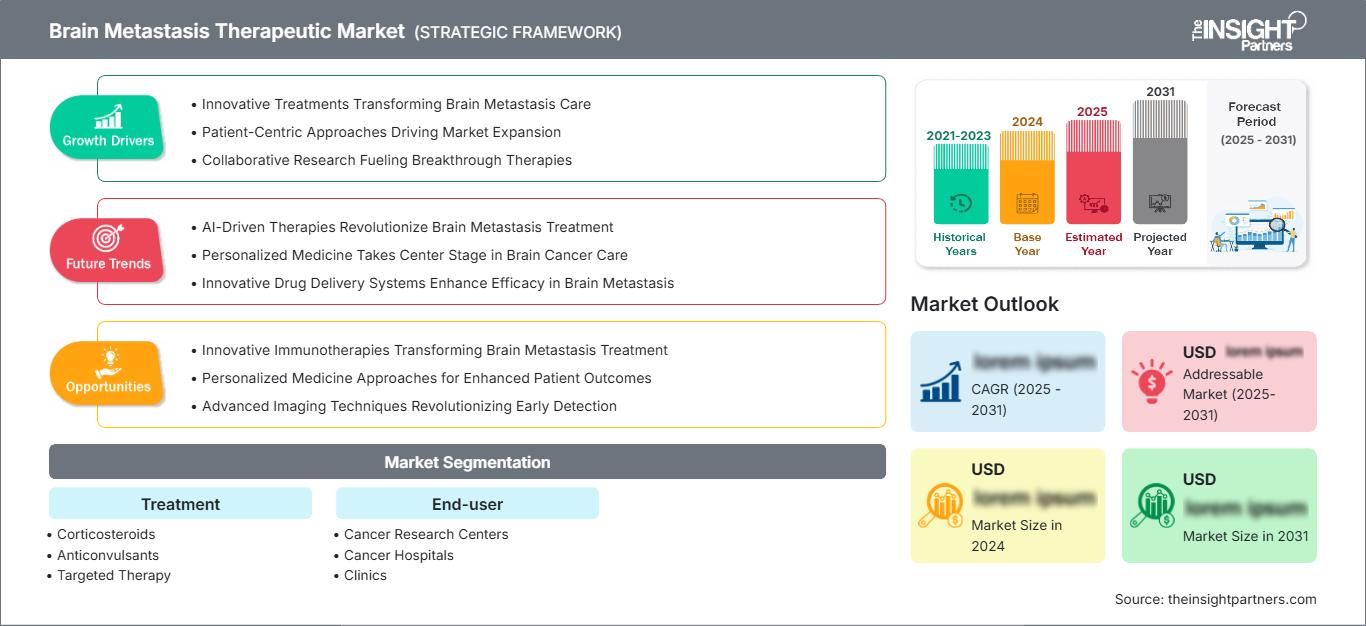
Brain Metastasis Therapeutic Market: Strategic Insights
Regional Insights
North America Brain Metastasis Therapeutic Market
North America held 39–42% of Brain Metastasis Therapeutic Market share in 2025 and is projected to grow at a CAGR range of 8.8–9.7% during 2026–2034. The region benefits from dense MRI availability, mature stereotactic radiosurgery networks, and early use of systemic therapies in oncogene-driven tumors. High cancer survivorship also increases the clinical need for repeated CNS surveillance, salvage radiation, and supportive pharmacologic management.
US contributes to majority of regional demand; Canada introduces organized buying from cancer agencies and radiotherapy planning schemes. WHO cancer burden patterns, trial infrastructure supported by National Cancer Institute, and NCCN treatment guidelines support evidence-based uptake. Market accessibility is highest in academic medical centers for targeted therapies and high-end radiotherapy technologies, whereas community oncology networks are increasingly developing standardized referral pathways for complicated intracranial metastasis.
U.S. Brain Metastasis Therapeutic Market
The US holds an 84-87% share of North America in 2025 and is projected to expand with a CAGR of 8.9-9.8% over 2026-2034. The leadership is attributable to high levels of clinical trial operations, comprehensive oncology drugs formularies, and lesion-monitoring protocols using MRI. In large and integrated healthcare organizations, tumor board processes are adopted to sequence corticosteroids, stereotactic radiation, targeted therapies, chemotherapeutic drugs, and seizure medications based on histology, molecular status, and intracranial burden.
Company strength is apparent in commercial, clinical, and diagnostics. Merck & Co., Inc., Pfizer Inc., Eli Lilly and Company, AstraZeneca PLC, F. Hoffmann-La Roche Ltd, and Novartis AG have considerable oncology presence which supports quick implementation following any regulatory action. Trends in application are focused on CNS active medications in lung and breast cancers, reduced cognitive neurotoxicity in radiation planning, and real-world evidence gathering for optimizing post-approval treatments.
Europe Brain Metastasis Therapeutic Market
Europe represented 25-28% share in 2025 and is projected to expand at a CAGR range of 8.1-9.0% during 2026-2034. Germany was the market leader, thanks to radiotherapy facilities, reimbursement of molecular diagnostics and university hospitals' oncology network. The UK is driven by cancer pathways, NICE health technology assessments and referral network for neuro-oncology.
The two markets exhibit significant uptake of stereotactic radiosurgery and targeted therapies in case of clear biomarker criteria. France provides access to the treatment via its oncology centers and reimbursement of innovative treatments. Italy and Spain will continue developing regional radiotherapy centers; uptake of the technologies varies based on hospital funding and access to high-throughput genomic testing.
Overall, the EMA approval process, national reimbursement processes and cross-border clinical trials impact therapy availability in Europe. The demand is focused on differentiated products providing survival benefit, intracranial response and/or neurocognitive benefit. European payers are increasingly demanding evidence of therapeutic benefit versus established radiation and systemic therapy standards.
APAC Brain Metastasis Therapeutic Market
APAC held 20–23% share in 2025 and is projected to expand at a CAGR range of 10.4–11.6% during 2026–2034, making it the fastest-growing regional cluster. China is the leading country by patient volume, while Japan and South Korea show strong precision oncology adoption.
India and Australia strengthen growth through private cancer networks, national screening initiatives, and radiotherapy modernization. Policy support for domestic oncology manufacturing, broader insurance coverage, and expanding genomic testing improve treatment access. Rising lung cancer incidence and HER2-positive breast cancer management are key disease-specific drivers.
Middle East & Africa Brain Metastasis Therapeutic Market
The Middle East & Africa region is expected to grow at a CAGR range of 7.2–8.4% during 2026–2034. Saudi Arabia is the leading country, supported by oncology infrastructure investment, tertiary hospital expansion, and national cancer care modernization. The UAE adds medical tourism, high-end imaging, and private oncology services.
South Africa contributes through referral hospitals and academic oncology programs, while Rest of MEA remains constrained by radiotherapy access and specialist shortages. Energy-backed fiscal capacity in Gulf countries supports procurement of MRI, linear accelerators, and oncology medicines. Infrastructure gaps, however, keep adoption focused on major urban centers.
Segmentation Analysis
Treatment
Treatment is projected to grow at a CAGR range of 9.0–10.1% during 2026–2034. The Brain Metastasis Therapeutic Market scope across treatment is widening as care teams combine symptom control with durable intracranial disease management. Radiation remains the backbone, but targeted therapy is increasing its role where actionable mutations or receptor profiles support CNS-active systemic treatment.
- Corticosteroids are widely used for edema reduction, rapid neurologic stabilization, and bridging patients toward radiation or systemic therapy. Their strategic role remains essential despite limited disease-modifying activity.
- Anticonvulsants support seizure-risk management in selected patients with cortical involvement, prior seizure history, or treatment-related neurologic instability, making them important in supportive neuro-oncology protocols.
- Targeted Therapy is gaining strategic importance as molecular profiling identifies oncogenic drivers in lung, breast, melanoma, and tumor-agnostic settings, supporting more personalized intracranial disease control.
- Chemotherapy remains relevant for tumor types without actionable biomarkers, combination regimens, and salvage settings, although blood-brain barrier limitations continue to shape clinical selection.
- Radiation Therapy holds the largest position due to stereotactic radiosurgery, whole-brain radiotherapy refinements, repeat-treatment feasibility, and strong integration with surgical and systemic treatment sequencing.
End-user
End-user is expected to grow at a CAGR range of 8.7–9.8% during 2026–2034. Demand is concentrated in institutions able to integrate imaging, pathology, radiation planning, systemic therapy, and neurologic support. Cancer hospitals dominate treatment delivery, while research centers shape trial enrollment and protocol innovation. Clinics expand follow-up, toxicity monitoring, and maintenance care access.
- Cancer Research Centers drive biomarker discovery, CNS-specific trial design, and translational studies evaluating intracranial response, resistance biology, and treatment combinations for difficult metastatic disease.
- Cancer Hospitals contribute the highest revenue intensity because they manage complex diagnosis, radiation planning, inpatient stabilization, drug infusion, specialty pharmacy services, and multidisciplinary follow-up.
- Clinics support longitudinal patient management, symptom monitoring, oral therapy adherence, seizure-risk review, and referral coordination, especially in community-based oncology networks linked to larger hospitals.
Opportunity Snapshot
| Segment Name | Revenue Contribution | Trend Tag | Adoption Stage |
| Cancer Research Centers | Medium | CNS Trials | Scaling |
| Cancer Hospitals | High | Integrated Care | Mature |
| Clinics | Medium | Oral Follow-up | Scaling |
Brain Metastasis Therapeutic Market Growth Drivers and Impact Analysis
Rising Survival in Metastatic Cancers Expands CNS Treatment Need
Longer survival in metastatic lung cancer, breast cancer, melanoma, and renal cancers is increasing the number of patients who live long enough to develop or be diagnosed with brain metastases. This changes demand from one-time palliative intervention to longitudinal intracranial disease management. The impact is visible in repeated MRI surveillance, more stereotactic retreatment, broader use of corticosteroids for edema episodes, and higher demand for systemic therapies with CNS activity. It also raises the need for neurologic adverse-event monitoring as patients receive multiple treatment lines. Hospitals are therefore building pathways that coordinate medical oncology, radiation oncology, neurosurgery, neuroradiology, and pharmacy. This structural shift supports recurring treatment volume and strengthens the clinical relevance of therapies that can delay CNS progression without adding substantial neurocognitive burden.
Precision Oncology Improves Patient Selection for Systemic Therapy
Molecular testing is becoming central to treatment decisions because brain metastases often arise from tumors with targetable drivers, including EGFR, ALK, HER2, BRAF, RET, and other alterations. Improved testing access allows oncologists to identify patients who may benefit from therapies with measurable intracranial activity, rather than relying only on local therapies after neurologic progression. The market impact is a shift toward biomarker-linked prescribing, companion diagnostics, and tumor board review before treatment sequencing. Pharmaceutical companies are responding by designing trials that include patients with stable or active brain metastases and by reporting CNS response metrics. This deepens product differentiation and can support premium positioning when evidence shows durable intracranial control, reduced need for whole-brain radiation, or better quality-of-life outcomes.
Radiotherapy Modernization Supports Safer Repeat Treatment
Advances in stereotactic radiosurgery, image-guided planning, hippocampal avoidance, and adaptive radiotherapy are improving the ability to treat multiple lesions while reducing exposure to healthy brain tissue. This is important because patients increasingly receive systemic therapy for longer periods and may require more than one intracranial intervention. The commercial impact includes higher utilization of advanced radiation platforms, planning software, dosimetry services, and multidisciplinary care models. Radiation modernization also complements drug adoption because targeted agents and immunotherapies are often sequenced around local treatment. As hospitals upgrade equipment, standardized protocols help reduce variability in outcomes and improve referral confidence. The driver is especially influential in developed regions, but emerging markets are beginning to invest in linear accelerator capacity and radiosurgery capabilities.
Brain Metastasis Therapeutic Market Future Trends
CNS-Specific Endpoints Will Redefine Evidence Standards
Brain Metastasis Therapeutic Market trends will increasingly be shaped by trial designs that measure intracranial response, CNS progression-free survival, neurocognitive outcomes, and steroid-sparing effects. Conventional systemic endpoints are no longer sufficient for therapies aimed at patients with brain involvement because extracranial response may not predict neurologic benefit. Regulators and clinicians are expected to give greater weight to prospective CNS cohorts, standardized MRI assessment, and real-world registries. This trend will favor companies able to show clinically meaningful intracranial activity across active lesions, previously treated disease, and multiple tumor origins. It will also raise evidence requirements for combination strategies involving radiation and systemic therapy.
Integrated Digital Monitoring Will Strengthen Follow-up Care
Remote symptom tracking, electronic patient-reported outcomes, and AI-supported MRI review are expected to improve follow-up between oncology visits. Patients with brain metastases require rapid recognition of headache, seizure, focal weakness, cognitive decline, and steroid toxicity, making digital monitoring clinically valuable. Over time, oncology networks may combine imaging schedules, pharmacy refill data, and symptom alerts to identify progression earlier and reduce emergency admissions. This trend supports service models that connect clinics with tertiary cancer hospitals. It may also improve adherence to oral targeted therapies, help manage neurologic adverse effects, and generate real-world datasets that inform reimbursement, protocol refinement, and post-marketing evidence development.
Brain Metastasis Therapeutic Market Opportunities
Expansion of Multidisciplinary Neuro-Oncology Programs
Cancer hospitals can create high-value growth by formalizing neuro-oncology programs that integrate diagnostic imaging, neurosurgery, stereotactic radiation, systemic therapy, rehabilitation, and palliative care. Such programs reduce fragmented decision-making and improve patient routing from diagnosis to stabilization and treatment. Brain Metastasis Therapeutic Market Forecasts indicate that institutions with coordinated pathways will be better positioned to adopt complex targeted therapies and manage repeat intracranial interventions. Investment priorities include MRI capacity, radiation planning systems, molecular testing partnerships, specialty pharmacy workflows, and nurse-led toxicity monitoring. For manufacturers, these programs provide concentrated access points for education, clinical trials, and real-world evidence generation.
Broader Access to Biomarker Testing in Emerging Markets
Emerging markets offer a significant opportunity where cancer diagnosis is rising but genomic testing remains uneven. Expanding affordable biomarker panels can identify patients eligible for CNS-active targeted therapies and improve treatment sequencing before neurologic decline. Companies can partner with laboratories, hospital groups, and public health systems to create testing pathways linked to therapy access programs. The opportunity is strongest in China, India, Southeast Asia, and Gulf countries where oncology infrastructure is being upgraded. Commercial success will depend on pricing, reimbursement, education, and turnaround time. Stakeholders that align diagnostics with treatment availability can improve outcomes while expanding addressable demand for targeted agents and advanced care services.
Recent Developments
- July 2026: Eli Lilly and Company received FDA traditional approval for selpercatinib for adult and pediatric patients aged two years and older with locally advanced or metastatic RET fusion-positive solid tumors that progressed after systemic treatment or lacked satisfactory alternatives, reinforcing tumor-agnostic targeted therapy relevance in metastatic oncology care.
- April 2026: Merck & Co., Inc. and Daiichi Sankyo announced that the FDA accepted and granted Priority Review to ifinatamab deruxtecan for previously treated extensive-stage small cell lung cancer, based on IDeate-Lung01 Phase 2 data that included patients with baseline brain metastases and CNS efficacy signals.
- December 2025: AstraZeneca PLC and Daiichi Sankyo received U.S. approval for ENHERTU plus pertuzumab as first-line therapy for unresectable or metastatic HER2-positive breast cancer, following DESTINY-Breast09 results showing a 44% reduction in risk of progression or death versus THP.
Frequently Asked Questions

- Comprehensive Market Sizing and Forecast Analysis
- Detailed Segmentation Analysis
- In-Depth Market Dynamics Assessment
- Regional and Country-Level Insights
- Competitive Landscape and Company Benchmarking
- Strategic Business Intelligence
Recent Reports
Testimonials

The Insight Partners' SCADA System Market report is comprehensive, with valuable insights on current trends and future forecasts. The team was highly professional, responsive, and supportive throughout. We are very satisfied and highly recommend their services.
RAN KEDEM Partner, Reali Technologies LTDs
I requested a report on a very specific software market and the team produced the report in a few days. The information was very relevant and well presented. I then requested some changes and additions to the report. The team was again very responsive and I got the final report in less than a week.
JEAN-HERVE JENN Chairman, Future Analytica
We worked with The Insight Partners for an important market study and forecast. They gave us clear insights into opportunities and risks, which helped shape our plans. Their research was easy to use and based on solid data. It helped us make smart, confident decisions. We highly recommend them.
PIYUSH NAGPAL Sr. Vice President, High Beam Global
The Insight Partners delivered insightful, well-structured market research with strong domain expertise. Their team was professional and responsive throughout. The user-friendly website made accessing industry reports seamless. We highly recommend them for reliable, high-quality research services
YUKIHIKO ADACHI CEO, Deep Blue, LLC.
This is the first time I have purchased a market report from The Insight Partners.While I was unsure at first, I visited their web site and felt more comfortable to take the risk and purchase a market report.I am completely satisfied with the quality of the report and customer service. I had several questions and comments with the initial report, but after a couple of dialogs over email with their analyst I believe I have a report that I can use as input to our strategic planning process.Thank you so much for taking the extra time and making this a positive experience.I will definitely recommend your service to others and you will be my first call when we need further market data.
JOHN SUZUKI President and Chief Executive Officer, Board Director, BK Technologies
I wish to appreciate your support and the professionalism you displayed in the course of attending to my request for information regarding to infectious disease IVD market in Nigeria. I appreciate your patience, your guidance, and the fact that you were willing to offer a discount, which eventually made it possible for us to close a deal. I look forward to engaging The Insight Partners in the future, all thanks to the impression you have created in me as a result of this first encounter.
DR CHIJIOKE ONYIA MANAGING DIRECTOR, PineCrest Healthcare Ltd.Reason to Buy
- Informed Decision-Making
- Understanding Market Dynamics
- Competitive Analysis
- Identifying Emerging Markets
- Customer Insights
- Market Forecasts
- Risk Mitigation
- Boosting Operational Efficiency
- Strategic Planning
- Investment Justification
- Tracking Industry Innovations
- Aligning with Regulatory Trends





 Get Free Sample for