
Buspirone Market Trends, Share & Demand by 2034
Coverage: By Product (5mg, 10mg, 15mg, 30mg); Application (Anxiety, Psychosis, Others); End User (Hospitals, Clinics, Others) , and Geography (North America, Europe, Asia Pacific, and South and Central America)
- Status : Data Released
- Report Code : TIPRE00019745
- Category : Life Sciences
- No. of Pages : 150
- Available Report Formats :


- Last update date : August 12, 2026


2025 Market Size
US$ 11.96 Bn
Base year value
2034 Forecast
US$ 24.27 Bn
Projected by 2034
CAGR 2026-2034
8.18 %
Growth rate
Addressable Market
US$ 162.79 Bn
(2026-2034)
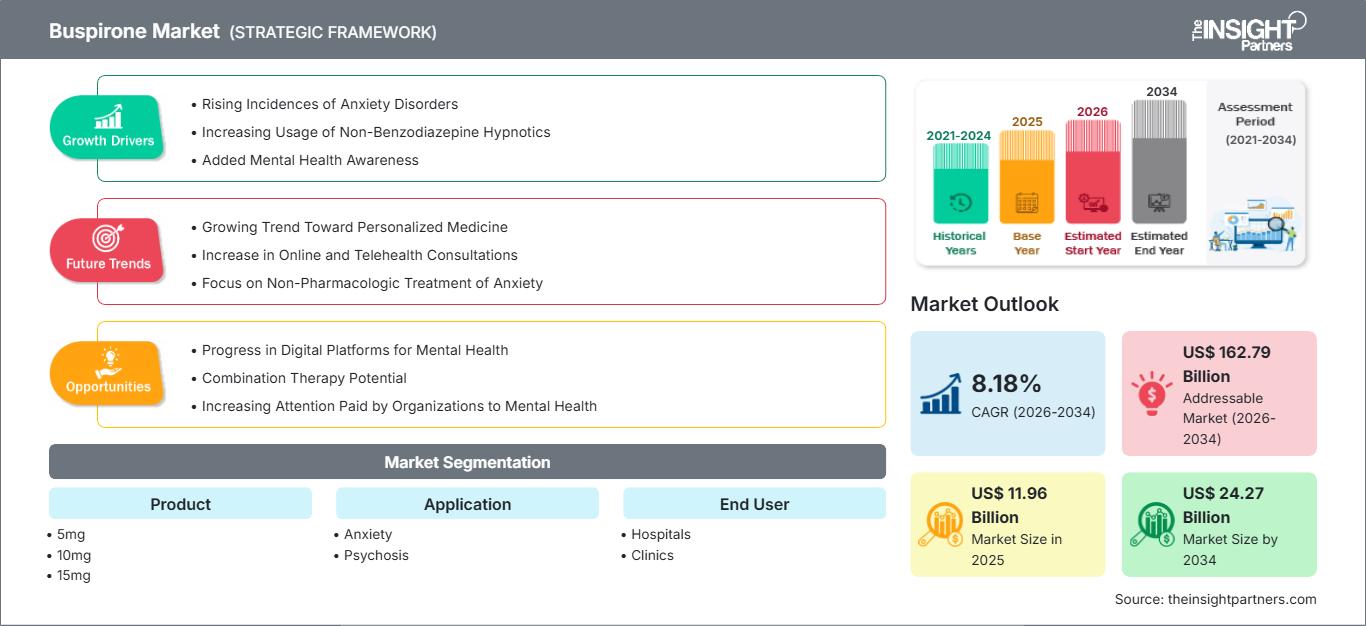
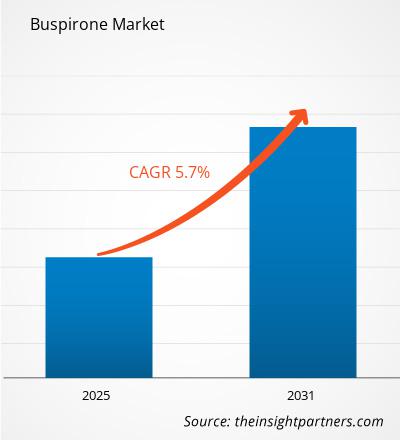
The Buspirone Market is forecasted to increase from US$ 11.96 billion in 2025 to US$ 24.27 billion by 2034, representing a CAGR of 8.18% from 2026 to 2034. The Market is indicative of ongoing demand for non-benzodiazepine anxiolytic treatment due to the medication’s clinical experience, dose adjustment capabilities, and generic offerings.
North America is a strategically significant region where the Buspirone Market size has been enabled through extensive primary care prescribing, developed behavioral healthcare services, and a preference for low-cost generic medications. North America is anticipated to grow at a CAGR of 7.7-8.3% during 2026-2034 on account of high anxiety diagnosis and refills via pharmaceutical assistance programs.
Buspirone Market Assessment and Insights
- North America accounted for 38–41% share in 2025 and is projected to grow at a CAGR between 7.7–8.3% during 2026–2034, supported by high prescription penetration, structured mental-health screening, and strong generic distribution.
- US represented 82–86% of North America share in 2025 and is likely to grow at a CAGR between 7.8–8.4% during 2026–2034, led by large outpatient anxiety-treatment volumes.
- Europe held 24–27% share in 2025 and is expected to grow at a CAGR between 7.1–7.7% during 2026–2034, with Germany, the UK, France, Italy, and Spain leading stable prescribing demand.
- Asia Pacific captured 20–23% share in 2025 and is forecast to grow at a CAGR between 8.8–9.4% during 2026–2034, with China, Japan, India, South Korea, and Australia expanding treated-patient access.
- Largest Segment Anxiety held 76–80% market share in 2025 and is projected to grow at a CAGR between 8.0–8.6% during 2026–2034, reflecting core labeled use.
- High Growth Segment Clinics held 39–43% market share in 2025 and is expected to grow at a CAGR between 8.5–9.1% during 2026–2034, driven by outpatient psychiatric care.
- Key companies analyzed in detail: Bristol Myers Squibb Company, Apotex Inc., Dr. Reddy's Laboratories Ltd., Les Laboratoires Servier SAS, Teva Pharmaceutical Industries Ltd., AMAG Pharmaceuticals, Inc., Mylan Inc., Novartis AG, Hikma Pharmaceuticals PLC, Amneal Pharmaceuticals, Inc., Aurobindo Pharma Limited.
Source: The Insight Partners' analysis based on proprietary research, government publications, company annual reports, investor presentations, industry databases, and expert interviews.
Manufacturing trends are geared towards producing tablets in large scalable quantities and formulation processes are becoming more focused on disintegration and ease of swallowing. Buspirone is marketed as a non-controlled medication to provide room for repeat prescriptions as part of the continuum of care. Manufacturing trends are determined by the availability of the active pharmaceutical ingredient, uniformity in dissolution, bioequivalence concerns, and packaging compatible with pharmacy dispensaries.
In terms of growth over the next five years, emerging economies will benefit from increased diagnoses, telemedicine and essential medicine procurement programs. Regulations governing bioequivalence requirements for tablets and capsules will make it easier for companies seeking to enter into the market. Companies will invest in unique dosage forms and patient assistance plans.
Buspirone Market Report Scope
| Report Attribute | Details |
|---|---|
| Market size in 2025 | US$ 11.96 Billion |
| Market Size by 2034 | US$ 24.27 Billion |
| Global CAGR (2026 - 2034) | 8.18% |
| Historical Data | 2021-2024 |
| Forecast period | 2026-2034 |
Buspirone Market Analysis
Growing number of diagnosed anxiety cases is the major Buspirone Market driver since doctors require non-sedative solutions that can be prescribed in extended course of therapy. According to WHO, there were 359 million people suffering from anxiety disorders in 2021, while according to the NIMH, 31.1% of adults in the USA experience anxiety disorder throughout their lives.
The \ market ecosystem consists of API providers, formulations producers, generic drug manufacturers, wholesalers, retailers, hospital formularies, psychiatric clinics, and payers. The availability of product will depend on high-quality batches, proven dissolution testing method and various dosages of medication – 5mg, 10mg, 15mg, and 30mg pills for titration.
Buspirone Market report shows that it is an oligopoly market because of the developed generic product portfolio as opposed to monopoly. There are several companies involved in the competition including Teva Pharmaceutical Industries Ltd., Mylan Inc., Dr. Reddy's Laboratories Ltd., Apotex Inc., Hikma Pharmaceuticals PLC, Amneal Pharmaceuticals, Inc., and Aurobindo Pharma Limited through supply chain reliability, pharmaceutical collaboration, and doses.
Strategy positioning moves towards innovations in adherence and unique delivery systems. Historically important companies in the sector are represented by Bristol Myers Squibb Company (BuSpar) and Les Laboratoires Servier SAS, Novartis AG, and AMAG Pharmaceuticals, Inc. Areas of investment interest encompass controlled-release technology, capsules, and payer affordability programs.
● REPORT CUSTOMIZATION
Tailor This Report To Align With Your Specific Business Requirements
This report can be customized to align precisely with your business objectives, scope, and target markets. Customization options include tailored segmentation, geography, competitive analysis, and strategic insights to support informed decision-making.
Customize This Report →WHAT YOU CAN ADJUST
- ● Segmentations
- ● Geography
- ● Competitive Analysis
- ● Language Preferences
Buspirone Market: Strategic Insights
Regional Insights
North America Buspirone Market
The market share in North America stood at 38% to 41% in 2025 and is estimated to grow at a CAGR of 7.7% to 8.3% from 2026 to 2034. The regional base is underpinned by primary-care prescribing, psychiatry network, high level of generic substitution, and benefit designs in the pharmacies favoring mature oral anxiolytics over newer and costlier brands.
The Buspirone Market share in North America is underpinned by diagnosis of anxiety, refill-based demand and low abuse liability compared to benzodiazepines. Stock management in the local region is still necessary as there are cases when a patient requires a consistent strength availability in the titration process.
U.S. Buspirone Market
The US market holds an 82-86% share of North America’s market and is expected to grow with a CAGR of 7.8-8.4% between 2026 and 2034. Market demand is found in the outpatient setting, where primary care doctors and psychiatrists employ buspirone for treatment of generalized anxiety disorder.
The companies in the industry include Teva Pharmaceutical Industries Ltd., Mylan Inc., Amneal Pharmaceuticals, Inc., Aurobindo Pharma Limited, and Hikma Pharmaceuticals PLC, which supply the generics. The applications of interest are in anxiety management, and there is demand for the drug in one-a-day dosage and capsule format.
Europe Buspirone Market
Market share for Europe stood at 24-27% in 2025 and will have a CAGR growth of 7.1-7.7% during 2026-2034. United Kingdom demonstrates demand through guidelines-driven primary care and referrals to mental health, which is aided by generic prescribing due to budget-conscious national health systems and awareness of anxiety disorders.
Germany is the dominant country in Europe, owing to robust pharmacy framework, disciplined reimbursement, and consistent outpatient psychiatric treatments. France, Italy, and Spain add to this market through wider availability of community mental health care services, even though prescribing differs owing to the preference for selective serotonin reuptake inhibitors over anxiolytics in local clinics.
APAC Buspirone Market
APAC captured 20–23% share in 2025 and is forecast to grow at a CAGR of 8.8–9.4% during 2026–2034. China is the leading country, supported by expanding psychiatric capacity, local generic manufacturing, and policy attention to mental-health service inclusion.
Japan and South Korea contribute mature prescribing systems, while India benefits from affordable manufacturing and improving urban diagnosis. Australia adds stable reimbursement access. Regional industrial drivers include API scale-up, contract manufacturing, and domestic procurement models designed to reduce dependence on imported finished formulations.
Middle East & Africa Buspirone Market
CAGR growth rate for the Middle East & Africa region between 2026-2034 is expected to be 6.6–7.2%, with the lead from Saudi Arabia. Growth is supported by hospital procurement, health insurance, and nationwide mental health programs in the region.
UAE demonstrates stronger private sector reach, whereas South Africa makes its contribution due to pharmacy networks and specialty clinics. ROAMEA is limited by low density of psychiatrists. Investments in infrastructure, growth of e-pharmacies, and registration of medicines would gradually increase treatment continuity for chronic anxiety disorders..
Segmentation Analysis
Product
Product is projected to record a CAGR of 7.8–8.4% during 2026–2034, as dose flexibility remains essential for initiation, titration, and maintenance. The Market scope across tablet strengths is shaped by physician preference for gradual escalation, pharmacy stocking patterns, and patient tolerability. Multi-strength portfolios also help manufacturers defend formulary relevance.
- 5mg tablets serve initiation and dose-adjustment needs, particularly for patients who require conservative titration, elderly care, or combination regimens where tolerability must be monitored closely.
- 10mg tablets hold a strong position in routine outpatient prescribing, balancing ease of administration with flexible daily dosing schedules across primary-care and psychiatric treatment pathways.
- 15mg tablets are strategically important for maintenance therapy and bioequivalence reference studies, supporting standardized formulation development and efficient patient transition from lower strengths.
- 30mg tablets address higher daily-dose requirements and reduce pill burden for stabilized patients, making them relevant in long-term treatment where adherence influences refill persistence.
Application
Application is expected to grow at a CAGR of 8.1–8.7% during 2026–2034, with anxiety representing the dominant clinical use. Psychosis-related use remains more selective, generally tied to adjunctive prescribing where anxiety symptoms coexist with complex psychiatric conditions. Growth will depend on physician confidence, patient monitoring, and evidence-based treatment sequencing.
- Anxiety remains the core application, supported by demand for non-benzodiazepine treatment, long-term tolerability, and suitability for patients where sedation or dependency concerns influence prescribing decisions.
- Psychosis represents a narrower application area, typically involving adjunctive management of anxiety symptoms in specialist-supervised care, where medication interactions and psychiatric stability are closely assessed.
End User
End User is forecast to grow at a CAGR of 8.2–8.8% during 2026–2034, reflecting the shift toward outpatient behavioral-health management. Hospitals remain important for diagnosis, acute stabilization, and formulary inclusion, while clinics increasingly drive repeat prescribing, follow-up visits, and treatment adjustments for chronic anxiety care.
- Hospitals contribute through psychiatric departments, emergency evaluations, and inpatient discharge prescriptions, creating structured entry points for therapy initiation and continuity planning after acute care episodes.
- Clinics are gaining strategic relevance as outpatient psychiatry, primary-care mental-health integration, and telehealth-supported follow-ups increase refill consistency and improve chronic therapy management.
Opportunity Snapshot
| Application | Revenue Contribution | Trend Tag | Adoption Stage |
| Anxiety | High | Non-sedating | Mature |
| Psychosis | Low | Adjunctive Care | Emerging |
Buspirone Market Growth Drivers and Impact Analysis
Rising Anxiety Diagnosis and Long-Term Treatment Need
The persistent nature of the patient pool in anxiety disorders stems from the need for chronic treatment as opposed to sporadic treatment in most cases. This helps Buspirone because it does not have any restrictions in terms of control, abuse issues, and ability to suit the out-patient model. This trend has more pronounced effects in markets where the diagnosis and treatment of anxiety disorders is being brought down to primary healthcare, worksite wellness plans, and telepsychiatry practices. The need for early intervention requires treatment modalities that can be used persistently without the risk of abuse associated with sedative anxiolytics.
Generic Manufacturing Scale and Multi-Strength Availability
The fact that there are many generic manufacturers improves the supply chain's resilience and ensures buspirone remains available throughout price-sensitive markets. The value of multi-strength formulations in business terms lies in the fact that the drug is frequently prescribed at different strengths depending on tolerability, delay in efficacy, and personalized therapy goals. The availability of 5 mg, 10 mg, 15 mg, and 30 mg tablets enables pharmacists to prescribe patients individual doses without having to make adjustments that could affect compliance. As far as the market is concerned, the economies of scale ensure tender competitiveness, inventory stock levels, and wider geographical distribution. Manufacturers with good production processes, dissolving properties, and wholesale contacts can preserve their market share despite low margins.
Shift Toward Outpatient and Telehealth-Based Mental Care
Outpatient behavioral health delivery is growing in importance due to health system pressures related to managing anxiety, reducing specialist shortages, and avoiding use of acute care environments. Telehealth systems and office-based treatment systems are best suited for oral drugs that are easily prescribed and have known safety profiles. Buspirone is ideal for this scenario as it is not a scheduled drug and is familiar to practitioners and can also be refilled using conventional pharmacy systems. The commercial benefits will include improved prescription adherence, increased titration possibilities, and greater involvement of the clinic in chronic treatment management. With the increasing adoption of telemedicine check-ups, therapy adherence could improve, generating incremental demand without hospitals or patient education being necessary.
Buspirone Market Future Trends
Development of Adherence-Focused Oral Formulations
Future Buspirone Market trends are expected to center on formulations that reduce daily dosing complexity and improve patient persistence. Capsule formats, controlled-release concepts, and timed-release technologies could address a known limitation of conventional buspirone therapy, where multiple daily administration may affect real-world adherence. FDA guidance for tablets and capsules signals regulatory attention to bioequivalence pathways, giving developers clearer routes for differentiated generic or 505(b)(2)-style products. The market effect will not depend solely on premium pricing; it will depend on whether new forms demonstrate practical advantages in tolerability, swallowing, onset consistency, or refill persistence. Manufacturers that combine formulation science with payer access programs may gain defensible positions.
Localization of Supply Chains in Emerging Markets
Emerging markets are likely to prioritize local production and regional sourcing of essential psychiatric medicines as governments address healthcare resilience. Buspirone manufacturers may increasingly use contract manufacturing, local packaging, and API-diversification models to satisfy procurement rules and reduce currency-linked import exposure. This trend matters because mental-health demand is rising faster than specialist capacity in many lower- and middle-income countries. Reliable supply of affordable oral anxiolytics can support primary-care treatment pathways when psychiatric referrals are limited. Companies that build regulatory dossiers country by country, align with domestic partners, and maintain batch-quality consistency should be better positioned to participate in public tenders and private pharmacy expansion.
Buspirone Market Opportunities
Clinic-Centered Access Programs and Refill Management
Clinics offer a focused opportunity because anxiety treatment depends on consistent follow-up, dose adjustment, and adherence counseling. Manufacturers and distributors can develop clinic-centered education, refill reminder systems, and patient affordability support that reduce therapy discontinuation. Buspirone Market Forecasts indicate stronger upside where outpatient psychiatry and primary-care behavioral-health integration expand together. Investment should prioritize partnerships with clinic networks, pharmacy chains, and telehealth providers that can identify gaps in refill behavior without altering clinical decision-making. Commercial execution must remain compliant and evidence-based, but operational support can differentiate suppliers in a mature generic category. This opportunity is most attractive in North America and urban APAC markets.
Differentiated Dosage Forms for Patient Convenience
Patient convenience creates an actionable opportunity for companies seeking growth beyond standard generic tablets. Capsules, orally flexible formats, and controlled-release products can target patients who struggle with swallowing, pill burden, or midday dosing. The opportunity requires careful regulatory planning because bioequivalence expectations, dissolution performance, and labeling clarity will determine approval timelines. Commercial value is likely to be strongest when differentiated products are paired with savings programs and prescriber education focused on adherence rather than promotional claims. Investors should assess manufacturing complexity, patent position, and payer willingness before scaling. Products that improve persistence without materially increasing total treatment cost may gain durable acceptance.
Recent Developments
- July 2025: Pangea Pharmaceuticals launched Bucapsol, a buspirone HCl oral capsule for generalized anxiety disorder, with initial 15mg availability and planned 7.5mg and 10mg strengths. The company highlighted capsule-based swallowing convenience, optimized absorption positioning, pharmacy availability, and a copay assistance model intended to reduce access barriers for eligible patients.
- April 2025: Cingulate Inc. received a US$ 3 million grant from a private foundation to accelerate CTx-2103, its investigational once-daily buspirone formulation for anxiety. The funding is structured in milestone-based tranches and supports development of Precision Timed Release technology designed to address adherence limitations associated with conventional multiple-dose therapy.
- November 2024: The U.S. FDA issued draft product-specific guidance for buspirone hydrochloride oral capsules, outlining bioequivalence study expectations, 15mg fasting pharmacokinetic study design, and waiver considerations for lower strengths. The guidance provides developers with clearer regulatory parameters for capsule-based generic development and comparative dissolution testing.
Frequently Asked Questions

- Comprehensive Market Sizing and Forecast Analysis
- Detailed Segmentation Analysis
- In-Depth Market Dynamics Assessment
- Regional and Country-Level Insights
- Competitive Landscape and Company Benchmarking
- Strategic Business Intelligence
Recent Reports
Testimonials

The Insight Partners' SCADA System Market report is comprehensive, with valuable insights on current trends and future forecasts. The team was highly professional, responsive, and supportive throughout. We are very satisfied and highly recommend their services.
RAN KEDEM Partner, Reali Technologies LTDs
I requested a report on a very specific software market and the team produced the report in a few days. The information was very relevant and well presented. I then requested some changes and additions to the report. The team was again very responsive and I got the final report in less than a week.
JEAN-HERVE JENN Chairman, Future Analytica
We worked with The Insight Partners for an important market study and forecast. They gave us clear insights into opportunities and risks, which helped shape our plans. Their research was easy to use and based on solid data. It helped us make smart, confident decisions. We highly recommend them.
PIYUSH NAGPAL Sr. Vice President, High Beam Global
The Insight Partners delivered insightful, well-structured market research with strong domain expertise. Their team was professional and responsive throughout. The user-friendly website made accessing industry reports seamless. We highly recommend them for reliable, high-quality research services
YUKIHIKO ADACHI CEO, Deep Blue, LLC.
This is the first time I have purchased a market report from The Insight Partners.While I was unsure at first, I visited their web site and felt more comfortable to take the risk and purchase a market report.I am completely satisfied with the quality of the report and customer service. I had several questions and comments with the initial report, but after a couple of dialogs over email with their analyst I believe I have a report that I can use as input to our strategic planning process.Thank you so much for taking the extra time and making this a positive experience.I will definitely recommend your service to others and you will be my first call when we need further market data.
JOHN SUZUKI President and Chief Executive Officer, Board Director, BK Technologies
I wish to appreciate your support and the professionalism you displayed in the course of attending to my request for information regarding to infectious disease IVD market in Nigeria. I appreciate your patience, your guidance, and the fact that you were willing to offer a discount, which eventually made it possible for us to close a deal. I look forward to engaging The Insight Partners in the future, all thanks to the impression you have created in me as a result of this first encounter.
DR CHIJIOKE ONYIA MANAGING DIRECTOR, PineCrest Healthcare Ltd.Reason to Buy
- Informed Decision-Making
- Understanding Market Dynamics
- Competitive Analysis
- Identifying Emerging Markets
- Customer Insights
- Market Forecasts
- Risk Mitigation
- Boosting Operational Efficiency
- Strategic Planning
- Investment Justification
- Tracking Industry Innovations
- Aligning with Regulatory Trends





 Get Free Sample for