
Cancer Pain Management Solutions Market Share, Growth & Forecast by 2034
Coverage: by Pain Management Type (Acute Pain Management, Moderate Pain Management, and Severe Pain Management); Treatment Type (Medications, and Devices or Systems); Disease Indication (Lung Cancer, Colorectal Cancer, Breast Cancer, Prostate Cancer, Blood Cancer, and Others); End Use (Hospitals, Clinics, and Others), and Geography (North America, Europe, Asia Pacific, and South and Central America)
- Status : Data Released
- Report Code : TIPRE00022897
- Category : Life Sciences
- No. of Pages : 150
- Available Report Formats :


- Last update date : August 12, 2026


2025 Market Size
US$ 8.05 Bn
Base year value
2034 Forecast
US$ 14.8 Bn
Projected by 2034
CAGR 2026-2034
7.0 %
Growth rate
Addressable Market
US$ 103.17 Bn
(2026-2034)
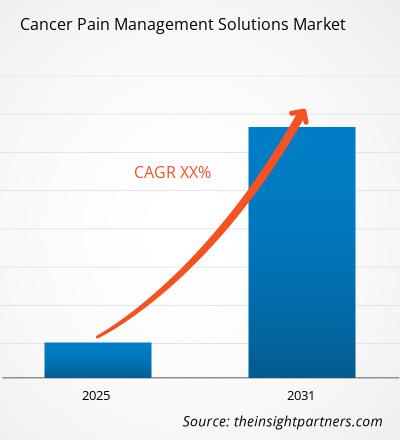
The Cancer Pain Management Solutions market was valued at US$ 8.05 billion in 2025 and is expected to reach US$ 14.8 billion by 2034; it is estimated to record a CAGR of 7.0% during 2026-2034.
Cancer Pain Management Solutions Market Assessment and Insights
- North America accounted for 38–41% share in 2025 and is projected to grow at a CAGR of 7.4–7.8% between 2026–2034, supported by oncology reimbursement, opioid stewardship, interventional pain services, and hospital-integrated palliative care.
- US represented 82–85% of North America in 2025 and is expected to grow at a CAGR of 7.5–7.9% between 2026–2034, driven by comprehensive cancer centers and specialty pharmacy access.
- Europe held 25–28% share in 2025 and is projected to expand at a CAGR of 6.8–7.2% between 2026–2034, with Germany, the UK, France, Italy, and Spain leading structured cancer care pathways.
- Asia Pacific captured 21–24% share in 2025 and is forecast to grow at a CAGR of 8.6–9.2% between 2026–2034, led by China, Japan, India, South Korea, and Australia.
- Largest Segment Medications held 69–73% market share in 2025 and is expected to grow at a CAGR of 7.3–7.7% during 2026–2034 due to established clinical use.
- High Growth Segment Devices or Systems held 27–31% market share in 2025 and is projected to grow at a CAGR of 9.0–9.6% during 2026–2034, driven by infusion and neuromodulation adoption.
- Key companies analyzed in detail: Teva Pharmaceutical Industries Ltd., Eli Lilly and Company, Pfizer Inc., Johnson & Johnson, Purdue Pharma L.P., Endo International plc, AbbVie Inc., GSK plc, F. Hoffmann-La Roche Ltd, Baxter International Inc., Bausch Health Companies Inc., Daiichi Sankyo Company, Limited, Grünenthal GmbH, Hisamitsu Pharmaceutical Co., Inc., Insys Therapeutics, Inc., Mundipharma International Limited, Orexo AB, Aoxing Pharmaceutical Company, Inc., and BioDelivery Sciences International, Inc.
Source: The Insight Partners' analysis based on proprietary research, government publications, company annual reports, investor presentations, industry databases, and expert interviews.
From single-agent opioid up-titration to a multi-modal approach that involves opioids, non-opioid analgesics, adjuvant therapy, regional anesthetic methods, and interventions, cancer pain management has changed. In addition, Cancer Pain Management Solutions Market penetration depends on the availability of controlled drug supplies, hospital formulary evaluation, and e-drug monitoring systems. In terms of production factors, producers who have proper opioid control systems, abuse-deterrent skills, transdermal technologies, and ability to inject drugs will prevail.
During the forecast period, new geographic markets will make their contribution in terms of increased demand due to improvements in screening services, radiation treatment, and survivorship services. Regulatory considerations concerning safe prescription of opioids will not decrease the demand for treatment but will direct procurement to those products that provide risk mitigation, dose accuracy, and quality systems.
Cancer Pain Management Solutions Market Report Scope
| Report Attribute | Details |
|---|---|
| Market size in 2025 | US$ 8.05 Billion |
| Market Size by 2034 | US$ 14.8 Billion |
| Global CAGR (2026 - 2034) | 7.0% |
| Historical Data | 2021-2024 |
| Forecast period | 2026-2034 |
Cancer Pain Management Solutions Market Analysis
Drivers of Growth for Cancer Pain Management Solutions Market are an increasing number of people being treated for cancer, increased longevity, and increased awareness about pain management during therapy and after treatment. According to WHO there were 20 million cases and 9.7 million deaths from cancer in 2022, whereas according to IARC, there will be 35 million cases annually by 2050.
This value chain includes suppliers of active ingredients, manufacturers of controlled substances, manufacturers of devices, oncology hospitals, specialty pharmacies, palliative care units, and home health care providers. The demand is higher in those areas where treatment requires quick titration, effective breakthrough pain management, and monitoring of comorbid diseases of kidneys and liver.
Cancer Pain Management Solutions Market Report reveals that the competition is divided into major pharmaceutical companies and pain management specialists. Pfizer Inc., Johnson & Johnson, Eli Lilly and Company, Teva Pharmaceutical Industries Ltd., and F. Hoffmann-La Roche Ltd engage in competition via comprehensive oncology partnerships, whereas Grünenthal GmbH, Mundipharma International Limited, Orexo AB, and BioDelivery Sciences International, Inc. engage in their specialty in pain formulations.
Trends in investments are geared towards abuse-deterrent formulations, mechanisms that are non-opioid, delivery methods, and hospitals that are capable of documenting pain relief. The strategic emphasis is moving away from product availability to collecting evidence, meeting payer mandates, educating doctors, and integration into cancer care pathways. Organizations with drug product lines that can be delivered through delivery devices are expected to enjoy a competitive edge in pain management.
● REPORT CUSTOMIZATION
Tailor This Report To Align With Your Specific Business Requirements
This report can be customized to align precisely with your business objectives, scope, and target markets. Customization options include tailored segmentation, geography, competitive analysis, and strategic insights to support informed decision-making.
Customize This Report →WHAT YOU CAN ADJUST
- ● Segmentations
- ● Geography
- ● Competitive Analysis
- ● Language Preferences
Cancer Pain Management Solutions Market: Strategic Insights
Regional Insights
North America Cancer Pain Management Solutions Market
North America led with 38–41% share in 2025 and is projected to grow at a CAGR of 7.4–7.8% during 2026–2034. The region benefits from high oncology treatment intensity, established palliative care reimbursement, and systematic screening for pain across hospitals and cancer centers. The Cancer Pain Management Solutions Market share is also supported by specialty pharmacy networks and strong access to interventional pain procedures.
Regional perspective will still be based on opioids management, e-prescribing, and multidisciplinary approach. NCI guidelines focus on routine testing, pain classification, pharmacologic treatments, and non-pharmacologic treatment, allowing protocol-based implementation of drugs and devices. Health facilities are more interested in suppliers who offer product consistency, risk management, and patient education.
U.S. Cancer Pain Management Solutions Market
The United States constitutes 82% – 85% share of North America in 2025, and is forecast to have a CAGR growth of 7.5% – 7.9% from 2026 to 2034. The availability of comprehensive cancer centers, high oncology drugs usage and skilled pain specialists facilitates adoption of opioids, adjuvant analgesics, infusion and implants. NCCN cancer pain adult guidance in 2025 reports that 59% of patients receiving treatment and 64% patients with advanced condition are affected by pain.
Market players include Pfizer Inc., Johnson & Johnson, Eli Lilly and Company, Teva Pharmaceutical Industries Ltd., Purdue Pharma L.P., Endo International plc, Baxter International Inc. and Bausch Health Companies Inc. These companies operate in branded segment, generics, injectables and delivery system categories. Breakthrough pain, chemotherapy induced neuropathic pain, bone metastasis pain and outpatient dispensing are applications.
Europe Cancer Pain Management Solutions Market
The European region has a market share of 25-28% and is expected to experience an annual growth rate of 6.8-7.2% from 2026 to 2034. Germany will have the largest market due to its well-developed oncology centers, structured reimbursement systems, and presence of pain management solutions provided by Grünenthal GmbH.
Both Germany and the UK play vital roles in driving regional adoption through the use of specialty oncology hospitals, hospices, and clinical pharmacy regulation. Other important contributors include France, Italy, and Spain, because of their survivorship programs, aging populations, and higher incidence of breast cancer, lung cancer, colorectal cancer, and prostate cancer. Price restrictions limit the growth of the market, whereas guidelines for analgesics create demand.
Regional companies that influence the market dynamics are Baxter International Inc., Mundipharma International Limited, GSK plc, Teva Pharmaceutical Industries Ltd., and F. Hoffmann-La Roche Ltd. The European market development will rely on balancing the use of opioids and ensuring access to pain relief treatments in outpatient settings.
APAC Cancer Pain Management Solutions Market
APAC accounted for 21-24% in 2025 and will maintain a CAGR of 8.6-9.2% from 2026-2034. Leading countries in the region are China, followed by Japan, India, South Korea, and Australia due to growing capacities of oncology hospitals and cancer control programs in huge patient populations. In 2024, Asia accounted for over half of the total cancer incidences in the world as per WHO’s 2026 cancer status report.
Industry drivers are domestic generic production, change in hospital buying, and oncology diagnostic uptake. Industry policy drivers include cancer screening, pilot projects on universal health care, and palliative care education programs. The rate of adoption differs in that urban tertiary hospitals implement more sophisticated procedures than rural ones.
Middle East & Africa Cancer Pain Management Solutions Market
MEA is expected to witness a CAGR of 7.0–7.6% from 2026 to 2034, with Saudi Arabia being the leader in the region for adoption, followed by the UAE, South Africa, and the Rest of MEA. Investment in cancer centers, medical cities, and private hospitals is improving access to oncology pain services in Gulf countries.
Fiscal capability owing to energy resources in Saudi Arabia and UAE helps develop specialty hospitals' infrastructure, South Africa having more expertise but less access, whereas the Rest of MEA's growth will be contingent on availability of opioids, provision of palliative care, and distribution. Demand remains the highest in hospitals dealing with advanced cancer cases.
Segmentation Analysis
Pain Management Type
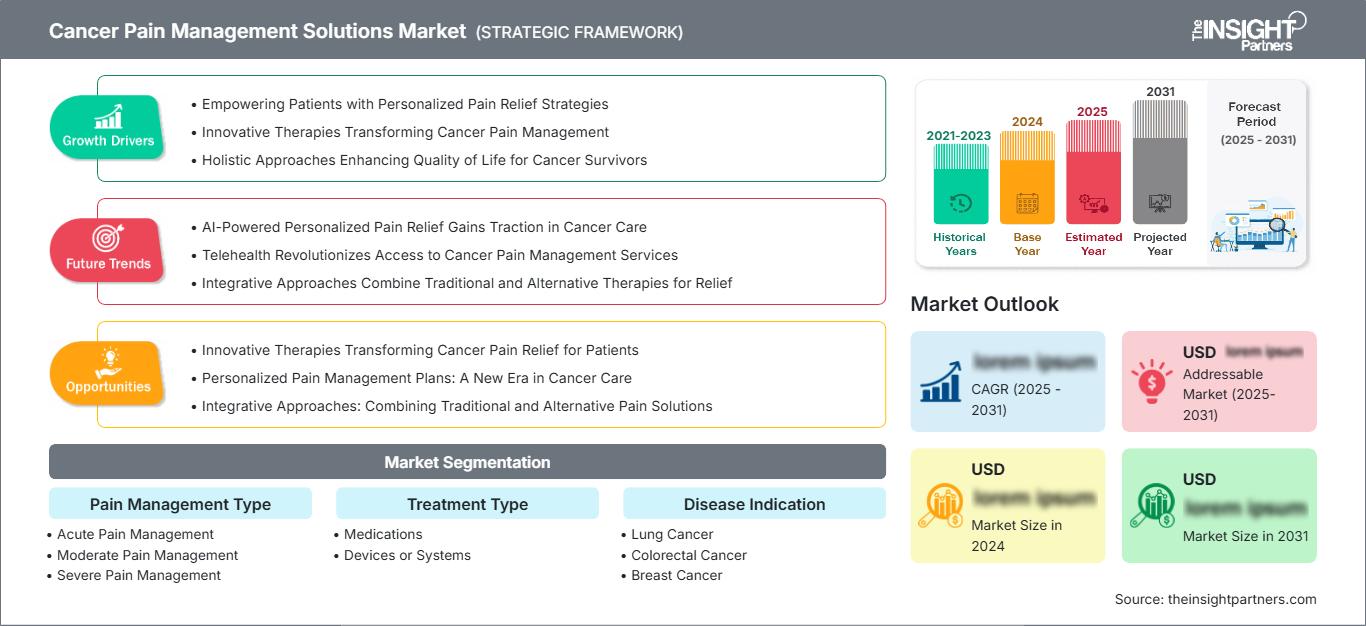
Pain Management Type is projected to grow at a CAGR of 7.6–8.0% during 2026–2034. This segment defines clinical intensity and product selection across acute, moderate, and severe pain. Cancer Pain Management Solutions Market scope is expanding as providers use stepwise protocols, rescue medication, adjuvant therapies, and device-based options to manage pain arising from tumor burden, surgery, radiation, chemotherapy, and metastasis.
- Acute Pain Management supports procedure-related, postoperative, and treatment-associated pain control, with demand linked to biopsies, surgery, infusion reactions, radiotherapy, and short-duration analgesic protocols in oncology hospitals.
- Moderate Pain Management represents a broad outpatient and clinic-based category, where non-opioid analgesics, weak opioids, adjuvants, and careful titration are used to maintain function and treatment adherence.
- Severe Pain Management is strategically important in advanced cancer, bone metastasis, breakthrough pain, and palliative care, requiring stronger opioids, controlled delivery, and frequent monitoring.
Treatment Type
Treatment Type is projected to grow at a CAGR of 7.8–8.2% during 2026–2034. Medications dominate due to prescriber familiarity and rapid symptom control, while devices or systems gain traction in patients needing localized, continuous, or refractory pain management. Purchasing decisions increasingly consider clinical evidence, diversion controls, infusion safety, and compatibility with hospital workflows.
- Medications remain the largest treatment category, including opioids, non-opioid analgesics, adjuvants, and rescue therapies used across disease stages, care sites, and pain severity levels.
- Devices or Systems include infusion pumps, drug-delivery systems, neuromodulation tools, and monitoring platforms that help manage complex pain, reduce dosing variability, and support specialist-led care.
Disease Indication
Disease Indication is projected to grow at a CAGR of 7.5–7.9% during 2026–2034. Pain burden varies by tumor biology, treatment modality, metastatic pattern, and survivorship status. Lung, breast, colorectal, prostate, and blood cancers drive substantial demand because they combine high incidence with procedure-related pain, neuropathy, bone involvement, mucositis, and long-term supportive care needs.
- Lung Cancer generates high demand due to advanced-stage diagnosis, thoracic symptoms, bone metastasis, treatment-related neuropathy, and intensive palliative care needs.
- Colorectal Cancer supports medication and device use through surgery, chemotherapy-induced neuropathy, abdominal pain, ostomy-related complications, and metastatic disease management.
- Breast Cancer is a major indication because of surgery, radiotherapy, aromatase inhibitor pain, neuropathy, bone metastasis, and long survivorship-related pain needs.
- Prostate Cancer creates sustained demand through bone metastasis, androgen-deprivation effects, radiotherapy pain, and chronic symptom management in older patient populations.
- Blood Cancer requires pain support for bone pain, mucositis, neuropathy, transplant-related complications, and treatment-intensive hematology oncology care.
End Use
End Use is projected to grow at a CAGR of 7.7–8.1% during 2026–2034. Hospitals remain central for severe pain, parenteral therapy, surgery, and palliative care, while clinics expand access for moderate pain, survivorship, and chronic symptom monitoring. Adoption depends on prescriber training, reimbursement, controlled-substance compliance, and the ability to coordinate oncology and pain-specialist input.
- Hospitals contribute high revenue because they manage severe cancer pain, inpatient titration, infusion therapy, procedures, and complex palliative cases requiring multidisciplinary oversight.
- Clinics support continuity of care through follow-up prescribing, moderate pain management, survivorship services, patient education, and referral to specialist pain or palliative teams.
Opportunity Snapshot
| End Use | Revenue Contribution | Trend Tag | Adoption Stage |
| Hospitals | High | Palliative Teams | Mature |
| Clinics | Medium | Survivorship Care | Scaling |
Cancer Pain Management Solutions Market Growth Drivers and Impact Analysis
Rising Cancer Burden and Longer Treatment Pathways
Cancer incidence and survivorship are expanding the treated population that requires pain control across diagnosis, active therapy, relapse, and end-of-life care. WHO estimated 20 million new cancer cases in 2022 and reported 53.5 million people alive within five years of diagnosis, creating a larger pool needing symptom management. The practical impact is higher recurring demand for analgesics, rescue medication, neuropathy treatments, and specialist services. Market vendors benefit when oncology departments standardize pain assessment and link supportive care to chemotherapy, radiotherapy, surgery, and immunotherapy pathways. Demand also rises because untreated pain can reduce function, adherence, and quality of life, making pain control a core clinical performance measure rather than an optional supportive service.
Shift Toward Multimodal and Risk-Controlled Analgesia
Clinical practice is increasingly balancing therapeutic access with opioid-risk management, creating demand for multimodal regimens and safer delivery approaches. NCI’s professional guidance highlights assessment of pain type, prognosis, comorbidities, patient preference, and misuse risk when selecting pharmacological and nonpharmacological options. This driver supports broader uptake of adjuvant analgesics, non-opioid agents, controlled-release formats, abuse-deterrent formulations, and devices that improve dosing precision. Market impact is visible in hospital formulary reviews, payer scrutiny, and purchasing preference for suppliers with compliance support. Companies that provide clinical education and risk-mitigation documentation can improve acceptance among oncologists, pain specialists, pharmacists, and palliative care teams.
Expansion of Palliative Care in Oncology Systems
Palliative care integration is becoming a practical growth driver as cancer centers recognize pain management as a determinant of treatment tolerance and patient experience. WHO’s survey across 115 countries found that only 28% covered palliative care for people requiring pain relief, indicating a major access gap and policy opportunity. As countries add palliative care to health benefit packages, procurement expands for analgesics, delivery devices, and training programs. The commercial effect is strongest in hospitals establishing dedicated supportive oncology units. Market suppliers that can serve both inpatient and outpatient settings are positioned to capture demand created by earlier referral, home-based care, and survivorship follow-up.
Cancer Pain Management Solutions Market Future Trends
Non-Opioid Innovation Will Reshape Severe Pain Pathways
Cancer Pain Management Solutions Market trends will increasingly center on non-opioid mechanisms that can reduce reliance on traditional opioid escalation while preserving meaningful pain relief. Sodium-channel targets, localized delivery, cannabinoids where legally permitted, and adjuvant combinations will attract development interest. Grünenthal GmbH’s 2026 advancement of a NaV 1.8 inhibitor into Phase I underscores wider industry movement toward differentiated pain biology. Over time, severe pain protocols may evolve from opioid-first escalation to mechanism-based sequencing. This trend will not eliminate opioids in advanced cancer, but it will raise expectations for safety, functional outcomes, and evidence supporting combination use.
Digitally Monitored Pain Care Will Enter Routine Oncology
Digital pain scoring, electronic prescribing, remote symptom reporting, and medication adherence tools are expected to become routine in oncology practices. These systems can detect uncontrolled pain earlier, guide dose adjustments, and support compliance with controlled-substance rules. The trend is particularly relevant for clinics managing patients between chemotherapy cycles or after discharge. Cancer centers will likely prioritize platforms that integrate patient-reported outcomes into electronic health records. For suppliers, the opportunity is to pair drug or device products with education, monitoring data, and real-world evidence that demonstrates improved pain control, fewer emergency visits, and better continuity between hospital and home care.
Cancer Pain Management Solutions Market Opportunities
Integrated Hospital Pain Programs
Hospitals offer the most actionable investment opportunity because they manage high-acuity cancer pain, complex comorbidities, and procedure-related analgesia. Suppliers can strengthen adoption by supporting protocols that combine medications, infusion systems, interventional referrals, and pharmacist-led monitoring. Cancer Pain Management Solutions Market Forecasts indicate that hospital-centered models will remain the revenue anchor as cancer centers expand palliative care and survivorship services. Commercial teams should prioritize formulary access, clinician education, product availability, and real-world outcomes documentation. Partnerships with oncology departments can also improve pathway compliance, especially for severe pain, breakthrough episodes, chemotherapy-induced neuropathy, and bone metastasis-related pain.
Access Expansion in Emerging Oncology Networks
Emerging oncology networks in Asia Pacific, the Middle East, and parts of Latin America create opportunity for companies that can combine affordability, regulatory support, and clinician training. Demand is rising as diagnostics and treatment capacity expand, yet palliative care and controlled-medicine access remain uneven in many markets. Manufacturers can invest in tiered portfolios, generic availability, training partnerships, and reliable distribution aligned with national cancer plans. The strongest returns are likely in tertiary hospitals first, followed by clinics as outpatient oncology matures. This opportunity favors companies that can manage compliance while improving access to essential cancer pain therapies.
Recent Developments
- February 2026: Grünenthal GmbH announced that first healthy volunteers were enrolled in a Phase I trial of its orally administered NaV 1.8 inhibitor, designed as a potential non-opioid therapy for acute and chronic pain conditions. The study includes 70 volunteers and is expected to generate safety, tolerability, pharmacokinetic, and pharmacology data in the second half of 2026.
- July 2025: Eli Lilly and Company reported positive topline results from the Phase 3 BRUIN CLL-314 trial of Jaypirca versus ibrutinib in chronic lymphocytic leukemia or small lymphocytic lymphoma. While oncology treatment rather than analgesia, the development is relevant to supportive care demand because longer disease control increases survivorship-related symptom management needs.
- April 2025: Pfizer Inc. announced that more than 60 company-sponsored, investigator-sponsored, and collaborative oncology abstracts would be presented at ASCO 2025, including data across breast, genitourinary, hematologic, thoracic, and colorectal cancers. Broader oncology pipeline activity supports future demand for integrated supportive care, including pain-management products and services.
Frequently Asked Questions

- Comprehensive Market Sizing and Forecast Analysis
- Detailed Segmentation Analysis
- In-Depth Market Dynamics Assessment
- Regional and Country-Level Insights
- Competitive Landscape and Company Benchmarking
- Strategic Business Intelligence
Recent Reports
Testimonials

The Insight Partners' SCADA System Market report is comprehensive, with valuable insights on current trends and future forecasts. The team was highly professional, responsive, and supportive throughout. We are very satisfied and highly recommend their services.
RAN KEDEM Partner, Reali Technologies LTDs
I requested a report on a very specific software market and the team produced the report in a few days. The information was very relevant and well presented. I then requested some changes and additions to the report. The team was again very responsive and I got the final report in less than a week.
JEAN-HERVE JENN Chairman, Future Analytica
We worked with The Insight Partners for an important market study and forecast. They gave us clear insights into opportunities and risks, which helped shape our plans. Their research was easy to use and based on solid data. It helped us make smart, confident decisions. We highly recommend them.
PIYUSH NAGPAL Sr. Vice President, High Beam Global
The Insight Partners delivered insightful, well-structured market research with strong domain expertise. Their team was professional and responsive throughout. The user-friendly website made accessing industry reports seamless. We highly recommend them for reliable, high-quality research services
YUKIHIKO ADACHI CEO, Deep Blue, LLC.
This is the first time I have purchased a market report from The Insight Partners.While I was unsure at first, I visited their web site and felt more comfortable to take the risk and purchase a market report.I am completely satisfied with the quality of the report and customer service. I had several questions and comments with the initial report, but after a couple of dialogs over email with their analyst I believe I have a report that I can use as input to our strategic planning process.Thank you so much for taking the extra time and making this a positive experience.I will definitely recommend your service to others and you will be my first call when we need further market data.
JOHN SUZUKI President and Chief Executive Officer, Board Director, BK Technologies
I wish to appreciate your support and the professionalism you displayed in the course of attending to my request for information regarding to infectious disease IVD market in Nigeria. I appreciate your patience, your guidance, and the fact that you were willing to offer a discount, which eventually made it possible for us to close a deal. I look forward to engaging The Insight Partners in the future, all thanks to the impression you have created in me as a result of this first encounter.
DR CHIJIOKE ONYIA MANAGING DIRECTOR, PineCrest Healthcare Ltd.Reason to Buy
- Informed Decision-Making
- Understanding Market Dynamics
- Competitive Analysis
- Identifying Emerging Markets
- Customer Insights
- Market Forecasts
- Risk Mitigation
- Boosting Operational Efficiency
- Strategic Planning
- Investment Justification
- Tracking Industry Innovations
- Aligning with Regulatory Trends





 Get Free Sample for